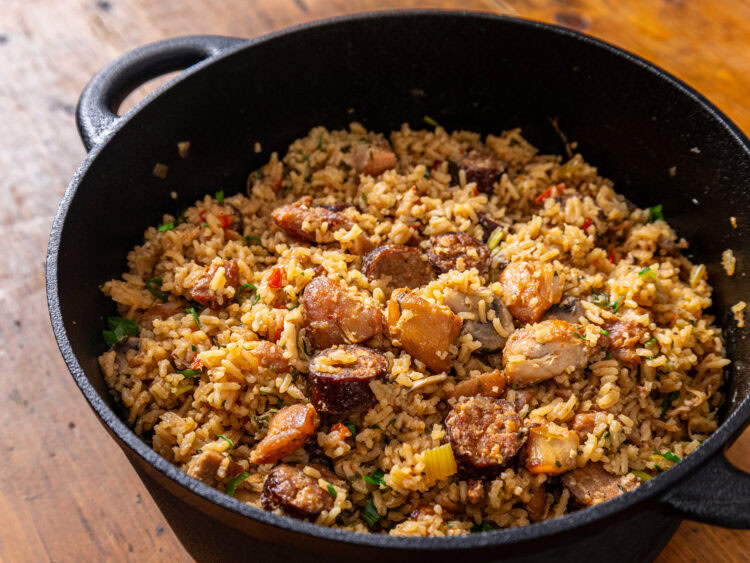
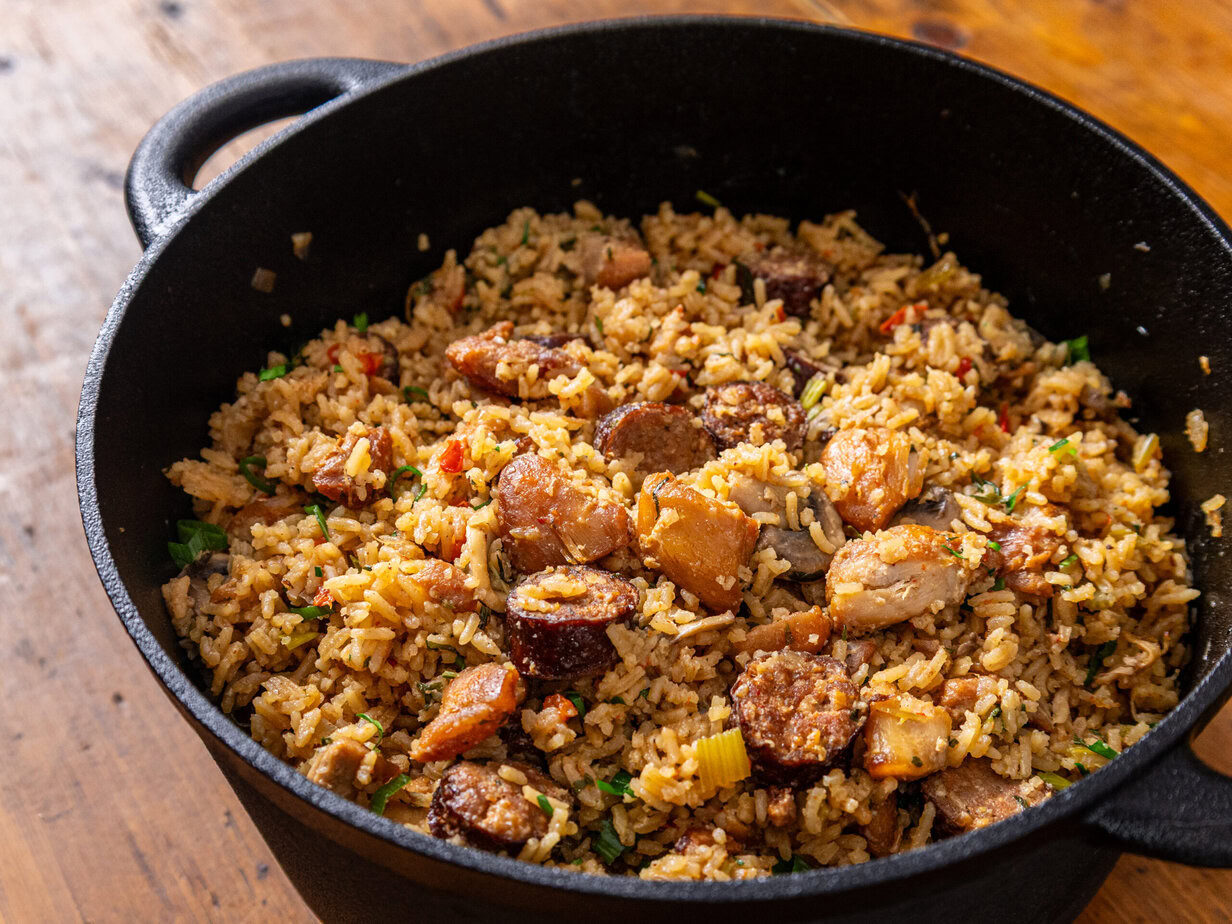
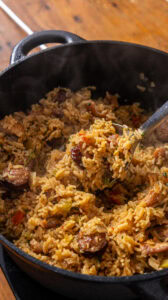
The Cajun “brown” jambalaya of rural Louisiana: chicken, smoked sausage, onion, celery, bell pepper and long-grain rice cooked in a single cast-iron pot, serving 15 to 20 people.
A big crowd is on its way, and a single pot is going to feed everyone. The chicken sizzles in the cast iron until it sticks to the bottom, the smoked sausage browns in turn, then the onion, celery and bell pepper lift those browned bits. The broth takes them up, and every grain of rice ends up tasting of them.
You lift the lid on amber rice studded with sausage and flecks of green, and the pot empties faster than it was filled.
What Is Jambalaya?
Jambalaya is a Louisiana rice dish cooked in a single pot: raw long-grain rice goes into a seasoned broth and takes on the flavor of the meat. This recipe is the Cajun version known as “brown,” with no tomato, no roux and no shrimp, its color coming from chicken seared until it sticks to the bottom, then from the smoked sausage. The Creole version from New Orleans, known as “red,” adds tomato and often seafood.
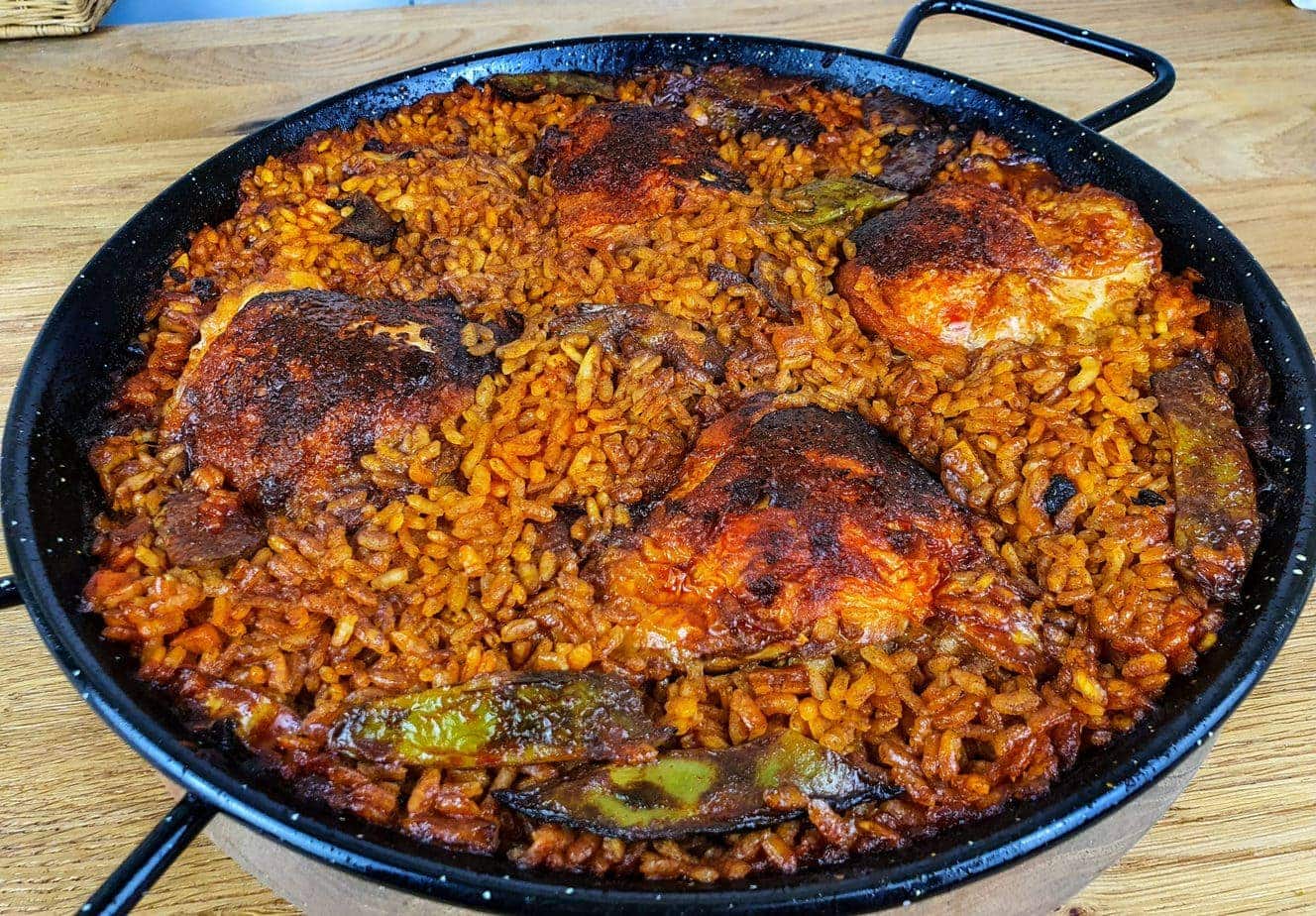
The origin of the name is still debated. You often read that it combines Spanish jamón and paella, but the strongest lead is Provençal: there, jambalaia means a mixture, and also a rice dish with chicken and vegetables. The word appears in a Provençal poem by Fortuné Chailan published in 1837.
A Louisiana Rice Dish with African, Spanish and French Roots
West African one-pot rice dishes, such as jollof or thieboudienne, already cook the rice with meat and spices. In the 18th century, Spanish settlers in New Orleans wanted to recreate their paella without saffron, which was too expensive, and used tomato instead. The French brought smoked sausage and mirepoix, which in Louisiana became the trio of onion, celery and bell pepper.
The first printed recipe, made with chicken and oysters, appeared in 1878 in Mobile, Alabama. While New Orleans was adding tomato, the Cajuns of Acadiana’s rural parishes, descendants of the Acadians expelled from Canada, cooked what they raised, hunted or smoked, and their jambalaya stayed brown.
Gonzales, in Ascension Parish, bills itself as the Jambalaya Capital of the World and has held a competition every spring since 1968 where everyone cooks outdoors in big cast-iron pots.
This dish from the Southern side of American cuisine is still the one for big gatherings: parish fairs, college football tailgates, family reunions.
The Main Ingredients in Jambalaya
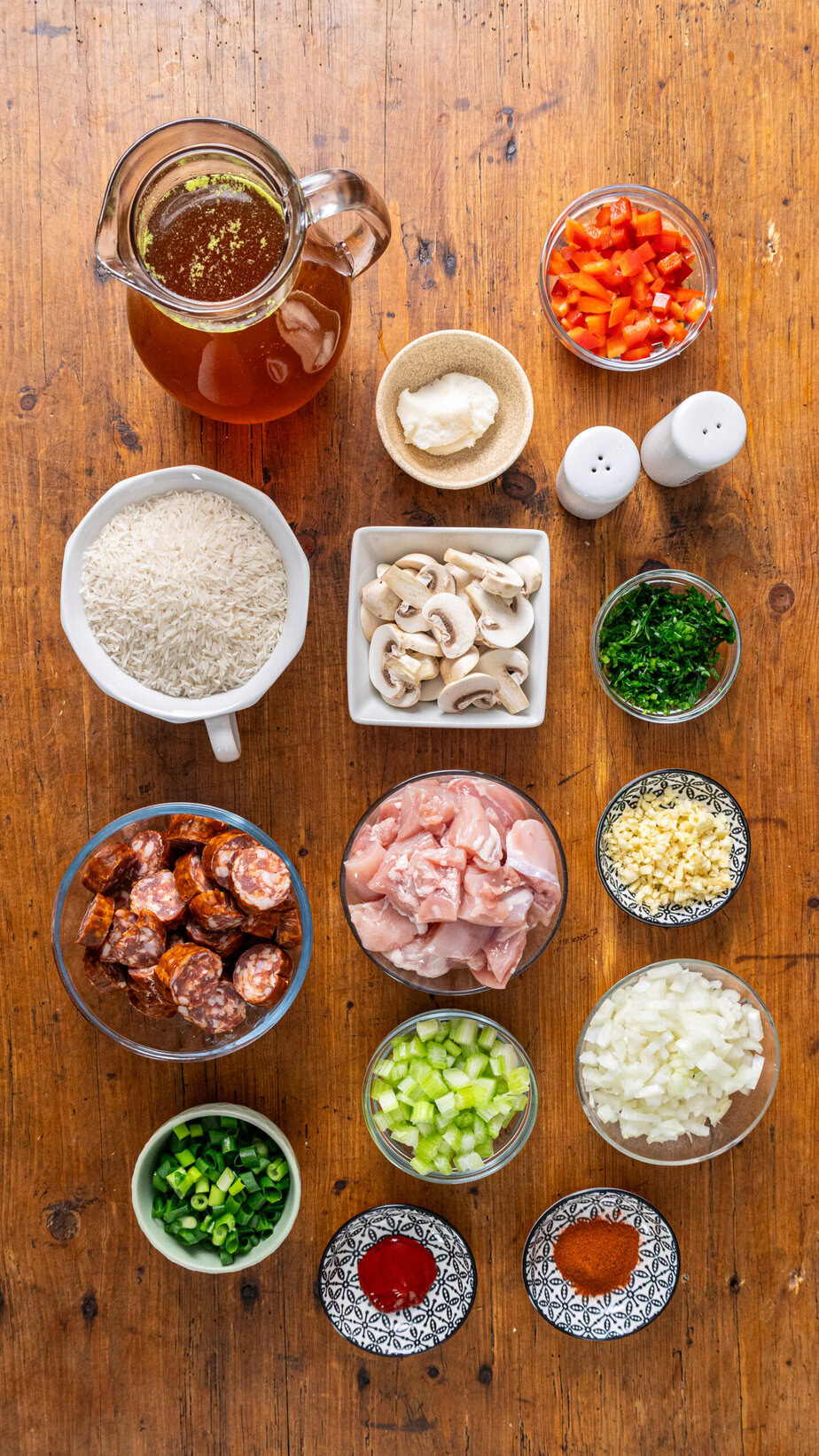
Cubed chicken is the base of the dish and gives it its color. The smoked sausage brings fat, smoke and spice. In Louisiana, it’s often Cajun andouille, a spicy smoked pork sausage that’s hard to find in Europe: a smoked Polish kielbasa comes closest. Long-grain white rice, added raw, keeps its grains nicely separate.
Onion, celery and bell pepper make up the “holy trinity” of Louisiana cooking, here with plenty of garlic. Their moisture lifts the browned bits left by the meat. Beef or chicken broth picks up those bits and flavors the rice, the mushrooms add body, and the green onions and parsley add freshness.
The seasoning stays simple: salt, cayenne pepper and Louisiana hot sauce, a pepper-and-vinegar sauce that’s thinner and tangier than sriracha. Cayenne pepper is made from chile alone, not to be confused with chili powder, a milder spice blend.
Technique Tips for a Well-Browned Jambalaya
It all comes down to browning. The chicken sears for about 30 minutes, until it browns and sticks to the bottom of the pot: it isn’t burned, and cutting this step short gives you a pale jambalaya. The sausage then browns for 10 to 15 minutes.
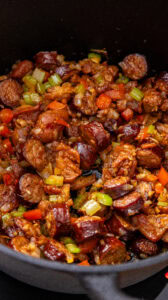
Next, spoon off the rendered fat, keeping just a big spoonful, then add the vegetables to the meat, which stays in the pot. Scrape the bottom while the vegetables caramelize: those browned bits are what give the dish its color.
Before the rice goes in, the broth should taste a little too seasoned, since the rice will absorb a good part of it. Once the rice is in, cover, cook over low heat and lift the lid only every 15 minutes to bring the rice from the bottom up to the top.
A heavy cast-iron Dutch oven holds steady heat and browns the meat without burning it. The recipe quantities fill a 6.5 L Dutch oven, enough to serve 15 to 20 people.
Ingredients
Meat and Vegetables
- 50 g vegetable shortening, or bacon grease
- 1.4 kg chicken, cut into cubes
- 900 g smoked sausage, sliced into rounds
- 300 g onions, diced
- 200 g celery, diced
- 150 g bell pepper, diced
- 70 g garlic, minced
Broth and Seasoning
- 1.9 L beef broth, or chicken broth
- 140 g mushrooms, sliced
- 100 g green onions, sliced
- 30 g parsley, chopped
- salt, to taste
- cayenne pepper, to taste
- Louisiana hot sauce, to taste
Rice
- 925 g long-grain rice, uncooked
Instructions
Meat and Vegetables
- Heat the fat over medium-high heat in a 6.5 L cast-iron Dutch oven.50 g vegetable shortening,
- Add the chicken and sauté for about 30 minutes, until it is dark brown on all sides and starts to stick to the bottom of the pot. It isn’t burnt: this browning is what gives jambalaya its brown color, so don’t cut this step short.1.4 kg chicken,
- Add the smoked sausage and brown it for 10 to 15 minutes, stirring.900 g smoked sausage,
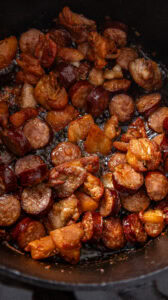
- Tilt the pot to one side to pool the rendered fat.
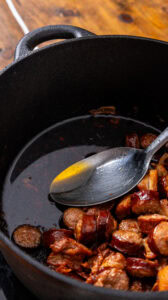
- Ladle out all of this fat except for one large serving spoonful, which you leave in the pot with the meat.
- Add the onions, celery, bell pepper and garlic to the meat.300 g onions,, 200 g celery,, 150 g bell pepper,, 70 g garlic,
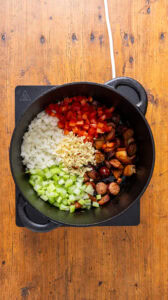
- Keep cooking, stirring and scraping the bottom with a wooden spatula: the moisture from the vegetables loosens the browned bits left by the meat. Cook until all the vegetables are tender and well caramelized, a deep brown, taking care not to burn them.
Broth and Seasoning
- Pour the broth into the pot.1.9 L beef broth,
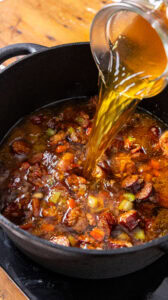
- Bring to a rolling boil, then lower the heat to maintain a gentle simmer.
- Let simmer for 15 minutes so the flavors can develop.
- Stir in the mushrooms, green onions and parsley.140 g mushrooms,, 100 g green onions,, 30 g parsley,
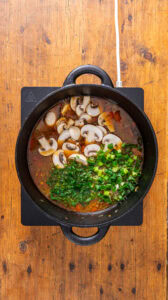
- Season with the salt, cayenne pepper and hot sauce, then taste the broth.salt,, cayenne pepper,, Louisiana hot sauce,
- If you like, go a little heavy on the seasoning: the broth may taste slightly overseasoned, because the rice, which hasn’t been added yet, will absorb a good deal of it.
Rice
- Add the rice and stir it into the broth so it is fully submerged.925 g long-grain rice,
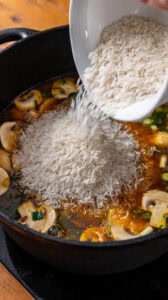
- Reduce the heat to low.
- Cover and cook for 30 to 45 minutes, until the rice is tender and has absorbed the broth.
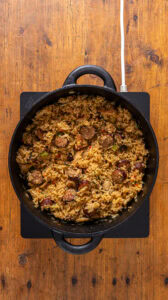
- Stir gently every 15 minutes, bringing the rice up from the bottom to the top.
- Don’t lift the lid at any other time: the steam would escape and the rice could stay hard in the center.