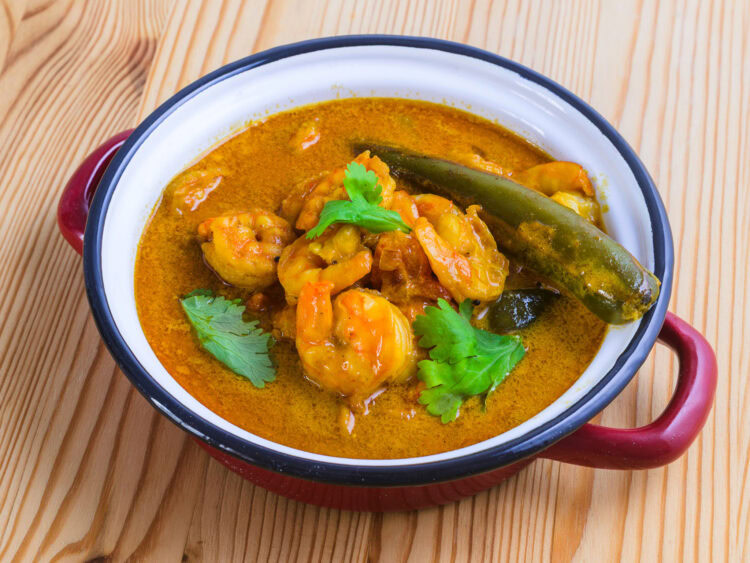
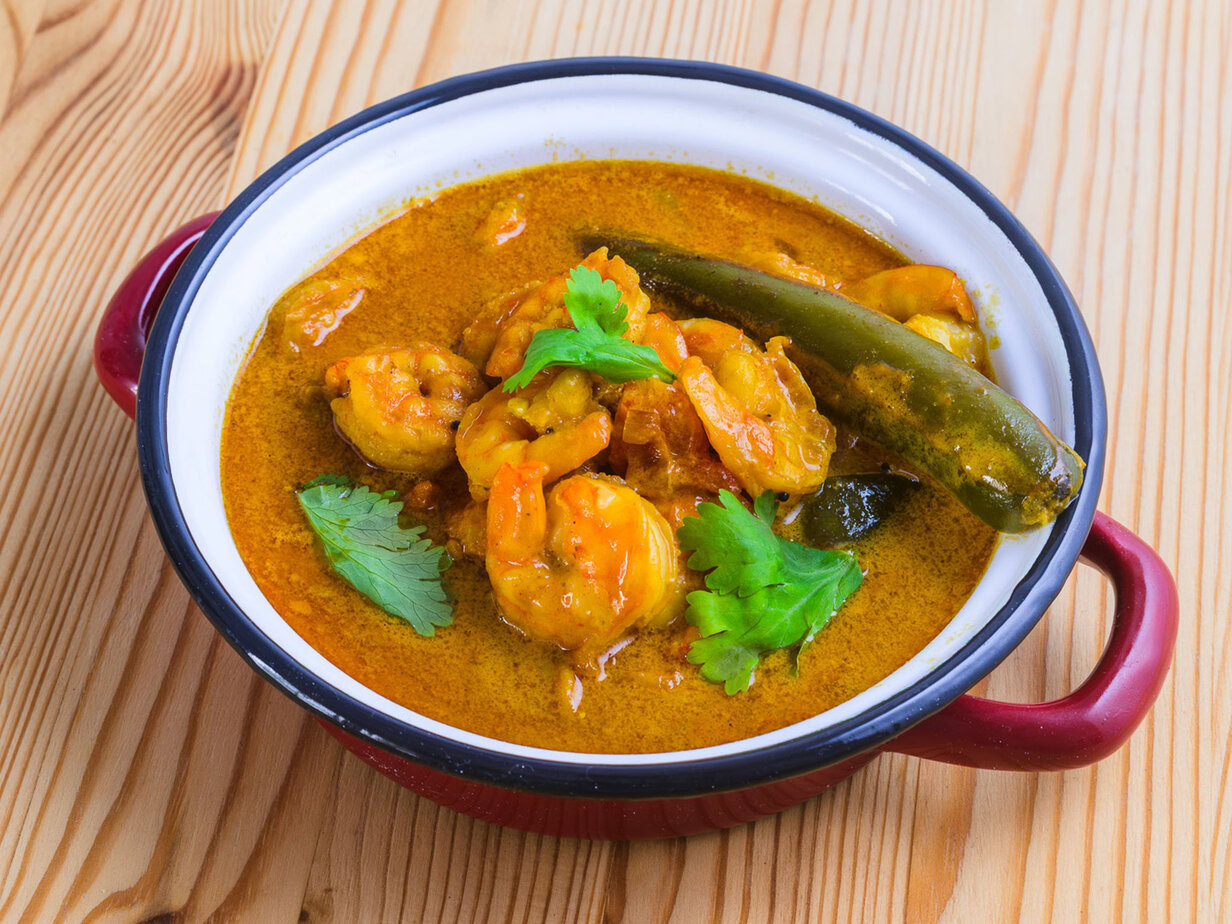
Tender shrimp in a Kerala coconut milk curry, scented with curry leaves and given a tangy kick with Malabar tamarind.
Craving a dish with a sauce you’ll want to mop up to the very last spoonful? The shrimp are perfectly tender, coated in coconut milk, with that little tang that keeps you coming back for more.
Ginger and green chilies bring warmth to every bite, while curry leaves perfume the whole pot. There’s always a good reason to help yourself to a little more rice.
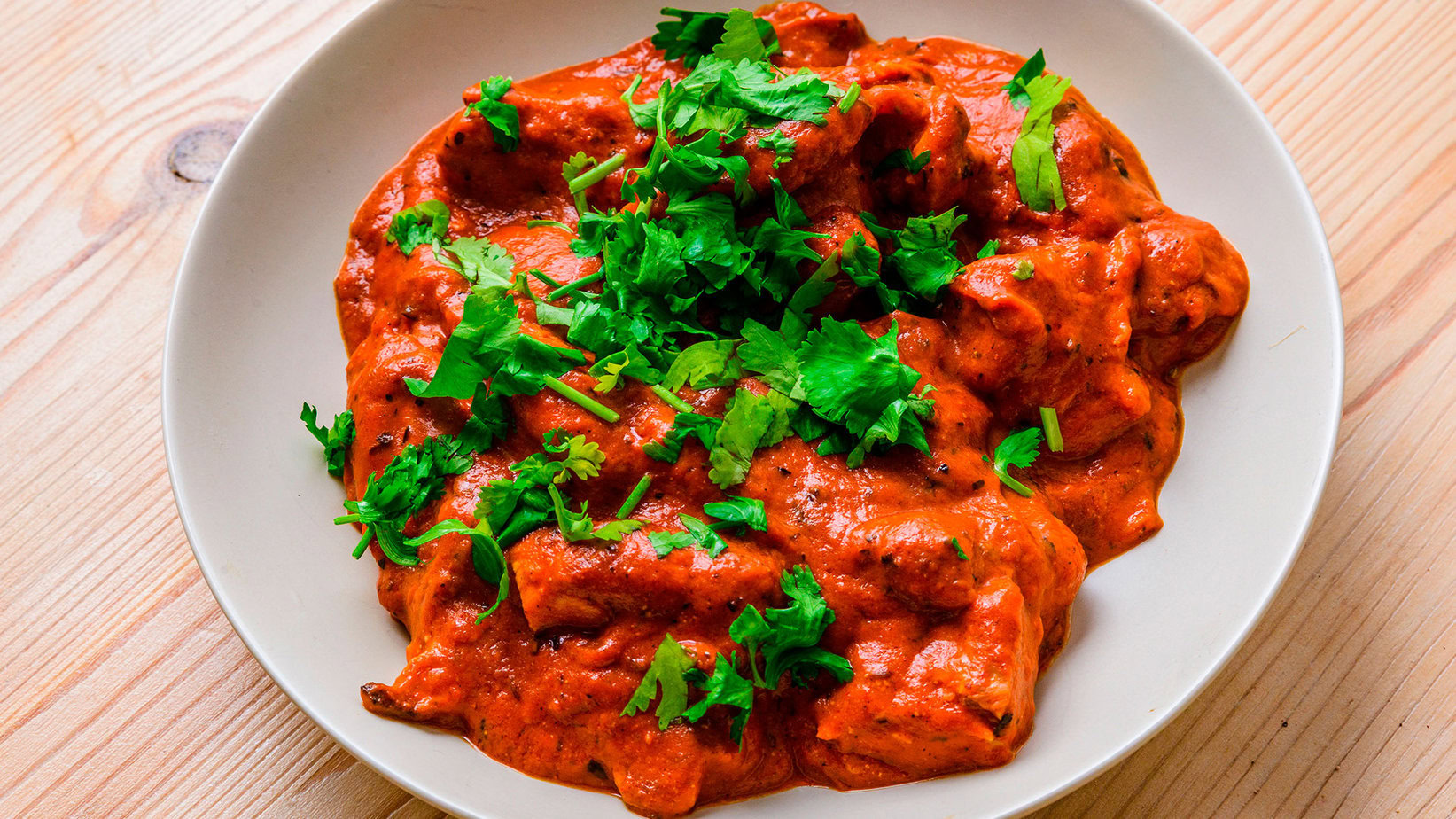
What is coconut shrimp curry?
This recipe is a chemmeen curry from Kerala, on the Malabar Coast. In Malayalam, chemmeen means shrimp; kudampuliyitta indicates the addition of kudampuli, a tangy fruit known as Malabar tamarind. This curry from Indian cuisine combines coconut milk, spices and shrimp, with a lightly smoky tang.
A curry from the Malabar Coast
In Kerala, seafood curries make generous use of coconut, both as oil and as milk. Here, black mustard seeds and fenugreek seeds crackle in the oil before the aromatics are added.
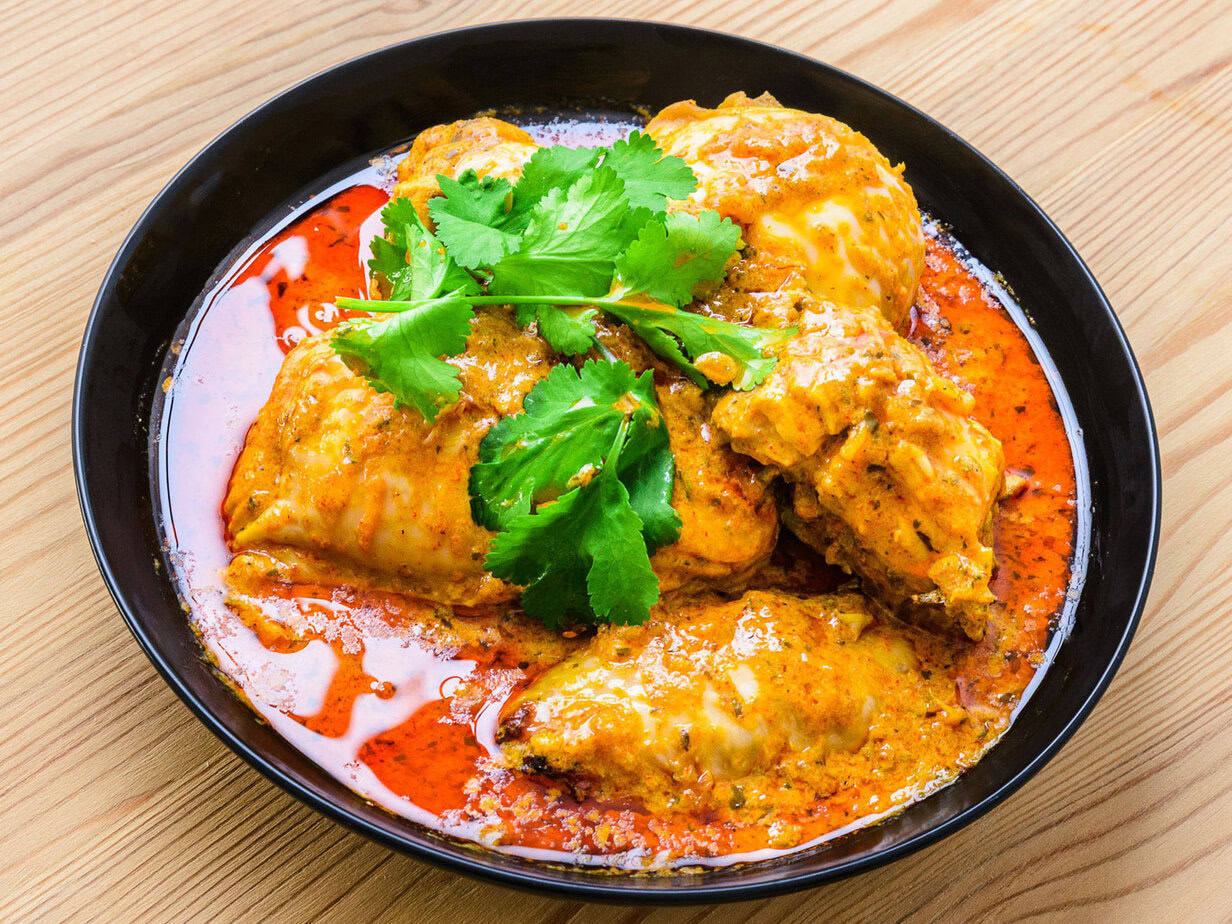
Coconut milk creates a velvety sauce, quite different from the dairy-based sauces of butter chicken or chicken korma.
Key ingredients for coconut shrimp curry
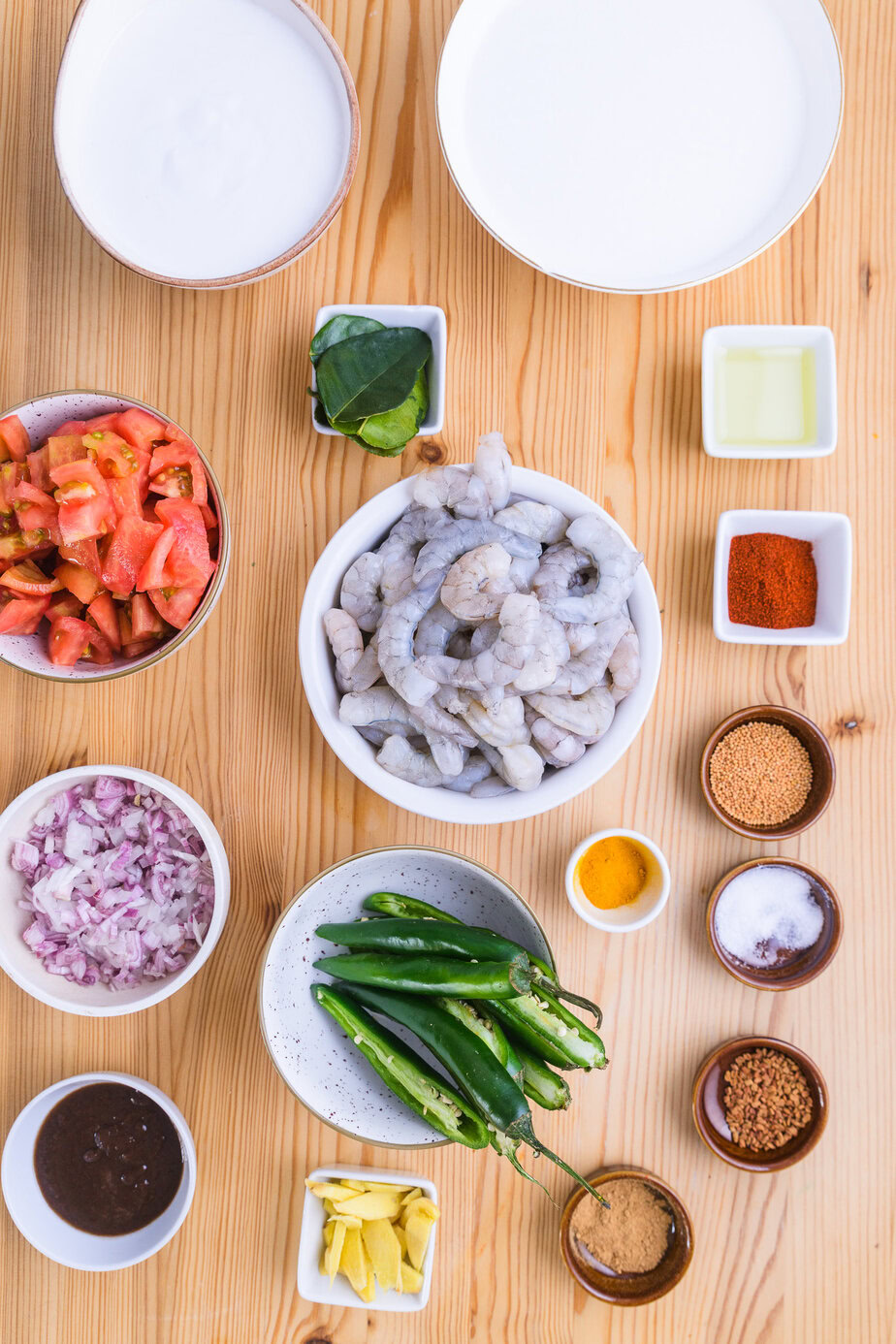
The peeled shrimp should stay tender, just like in my salt and pepper shrimp. Shallots and tomatoes give the sauce body, green chilies bring heat, and curry leaves add their fragrance. The sliced ginger comes through in every bite, much like in ginger chicken.
The coconut milk is added in two stages: thin milk to cook the aromatics, then thick milk to finish the sauce. If using a can, the liquid portion and the cream on top can serve these two purposes; you can also thin a little coconut milk with water. Turmeric, ground coriander and chili powder season this base.
Kudampuli brings the smoky tang that sets this curry apart. Hard to find in France, it can be replaced with the tamarind paste listed in the recipe. Alternatively, a squeeze of lime added at the end of cooking gives a brighter, less smoky flavor.
Tips for tender shrimp
The sauce should be boiling before you add the shrimp: cook for 3 minutes from that point. After adding the thick coconut milk, take the pot off the heat as soon as it comes to a boil, add a drizzle of coconut oil and let it rest briefly, covered.
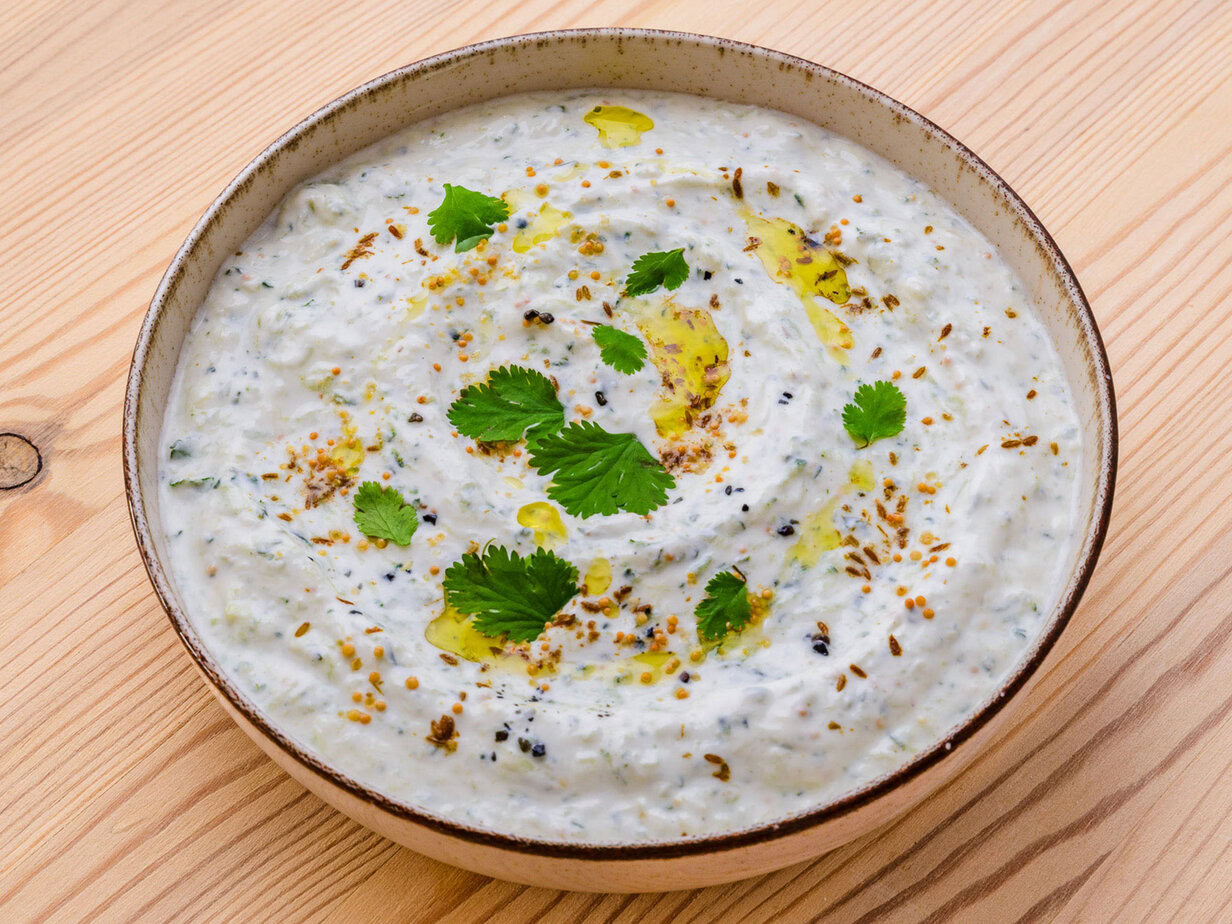
Serve with jasmine rice or yellow rice to soak up the sauce. A naan and a cucumber raita, or a few samosas as a starter, round out the meal.
Ingredients
- 750 g shrimp, peeled and deveined
- 10 shallots, finely chopped
- 5 green chilies, slit
- 2 tomatoes, chopped
- 4 pieces of kudampuli (Malabar tamarind), or 1 tablespoon tamarind paste
- 1 large piece of ginger (about 30 g), thinly sliced
- 2 sprigs of curry leaves
- 480 ml thin coconut milk , or coconut milk diluted with a little water
- 240 ml thick coconut milk , or coconut cream
- 0.5 teaspoon ground turmeric
- 2 teaspoons ground coriander
- 2 teaspoons chili powder
- 0.25 teaspoon fenugreek seeds
- 0.5 teaspoon black mustard seeds
- 3 tablespoons coconut oil
- Salt, to taste
Instructions
Préparation
- Clean and devein the shrimp.
- Soak the kudampuli in a little water.
- Heat the coconut oil in a pot.
- Add the fenugreek and mustard seeds and let them splutter.
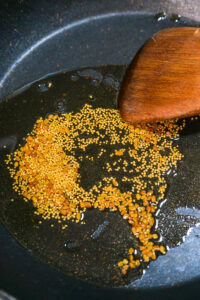
- Add the shallots and sauté.
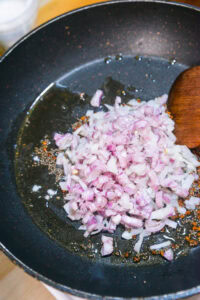
- Add the curry leaves, ginger, green chilies and tomatoes.

- Continue cooking until the tomatoes soften.
- Add the ground turmeric, coriander and chili powder, then stir.
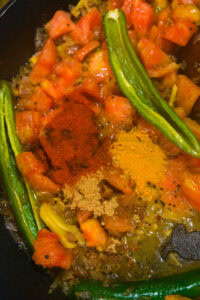
- Add the soaked kudampuli along with its soaking water.
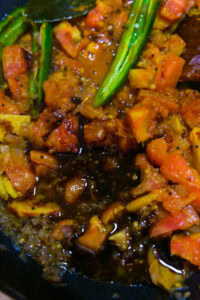
- Pour in the thin coconut milk and stir.
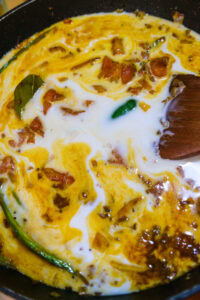
- Cover and bring to a full boil.
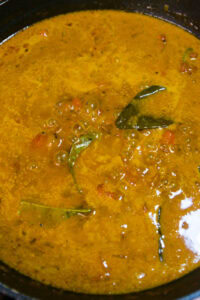
- Add the shrimp and stir.
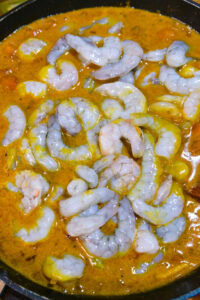
- Cook for 3 minutes.
- Pour in the thick coconut milk and stir.
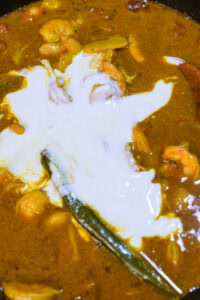
- Remove from the heat as soon as it comes to a boil.
- Add a drizzle of coconut oil, cover and let rest briefly.
- Serve hot with rice.