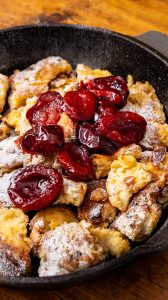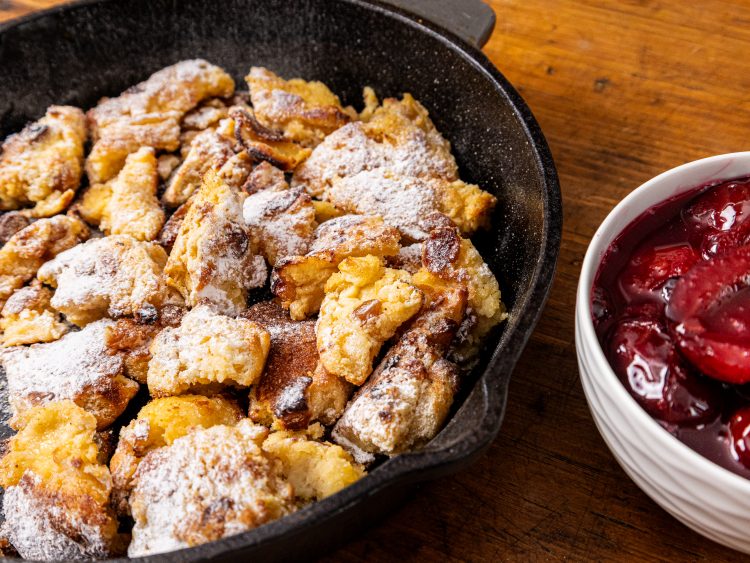
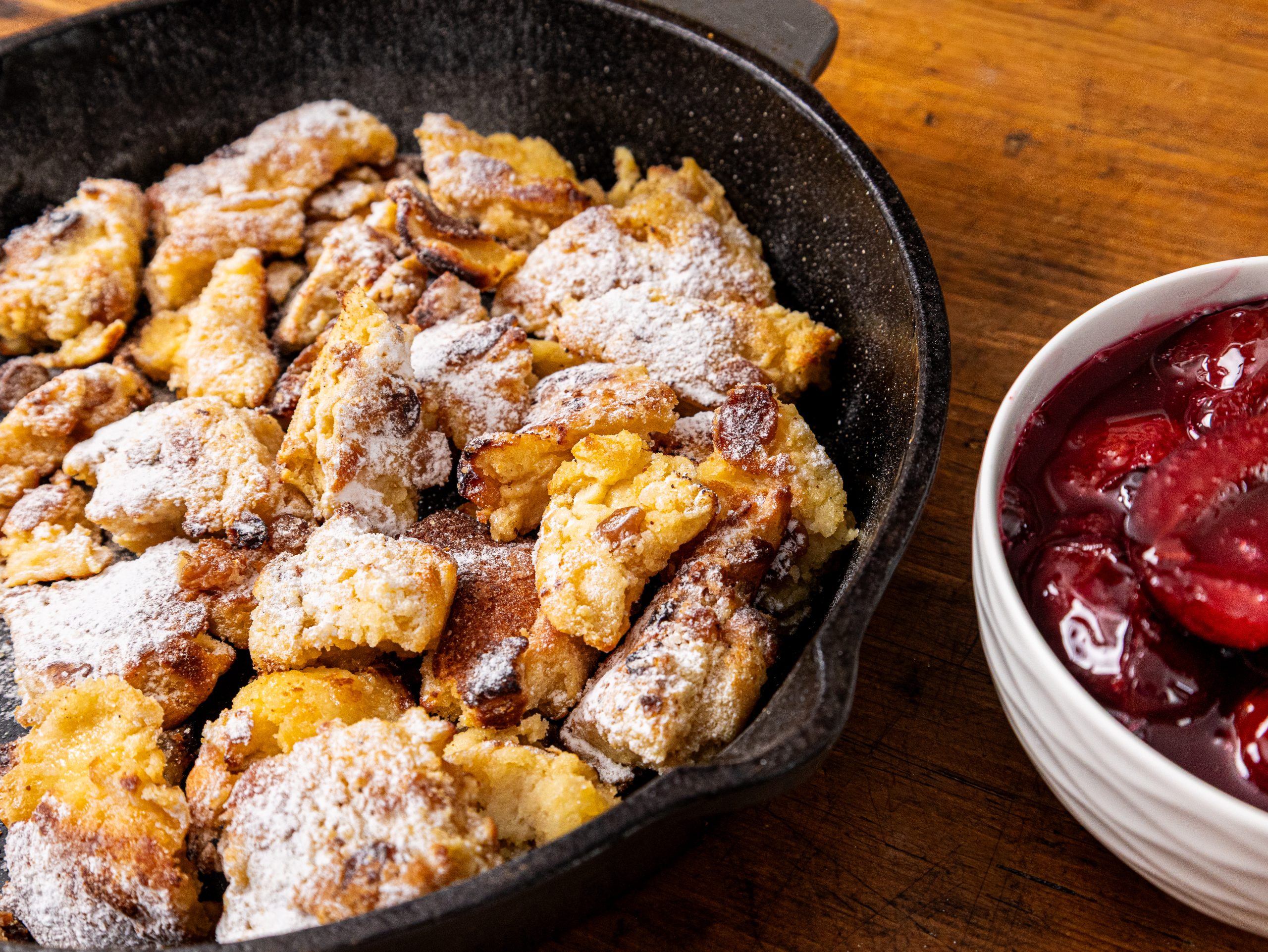
A thick, airy Austrian pancake, torn apart with a fork in the pan, caramelized with butter and sugar, and served with a prune plum compote.
It’s cold out, the walk has been long, and nothing sounds better than a warm dessert shared straight from the pan. Kaiserschmarrn comes to the table in big, golden, irregular pieces under a veil of powdered sugar.
Your fork first breaks through a crisp, caramelized edge, then into a soft center that smells of butter and vanilla. Add a spoonful of warm, tangy prune plums on top, and the pan is empty within minutes.

What Is Kaiserschmarrn?
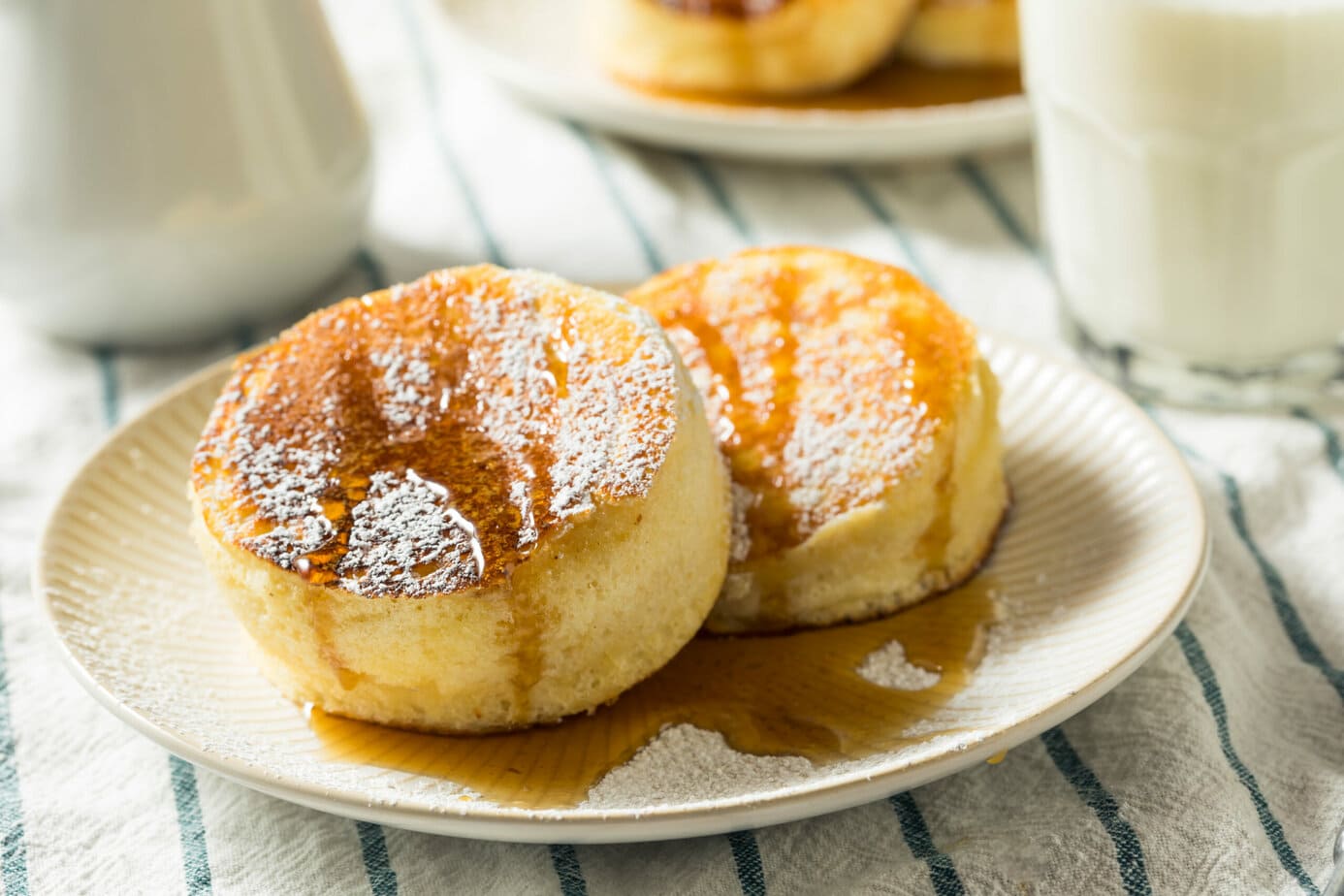
Kaiserschmarrn is a thick, very airy pancake that is torn into pieces in the pan, then caramelized with butter and sugar. Its batter combines eggs, milk and flour, like the batter for American pancakes, but with more eggs than flour. Egg whites beaten to soft peaks make it light without any baking powder, and its texture is reminiscent of Japanese soufflé pancakes.
In German, Kaiser means “emperor.” Schmarrn is a colloquial word from Austria and Bavaria for a dish of batter broken into pieces, and also, in everyday speech, nonsense. So the name can be translated as “the emperor’s mishmash.”
From Alpine Huts to the Legend of Franz Joseph
Kaiserschmarrn belongs to Austrian cuisine, and it is also very popular in Bavaria. It descends from the rustic Schmarrn of Alpine farmers and woodcutters, batter dishes made with whatever was on hand: flour, milk and eggs. It is linked to the Viennese pastry tradition of the 19th century, with no precise date for its first appearance.
Several legends connect it to Emperor Franz Joseph. In the best known, a cook botches a pancake meant for the emperor, tears it up and sugars it to save it, and the emperor likes it. In another, Empress Elisabeth, known as Sisi, refuses this overly rich dessert and her husband eats it in her place. None of these stories has been verified.
Today it is eaten for dessert, as a sweet meal in its own right, or after a day of skiing. In mountain huts, the eggs are often beaten whole and the batter is cooked gently with a lid on, which gives a denser Schmarrn. The Viennese version in this recipe separates the eggs and finishes with caramelizing over high heat for nice, crisp edges.
The Main Ingredients in Kaiserschmarrn
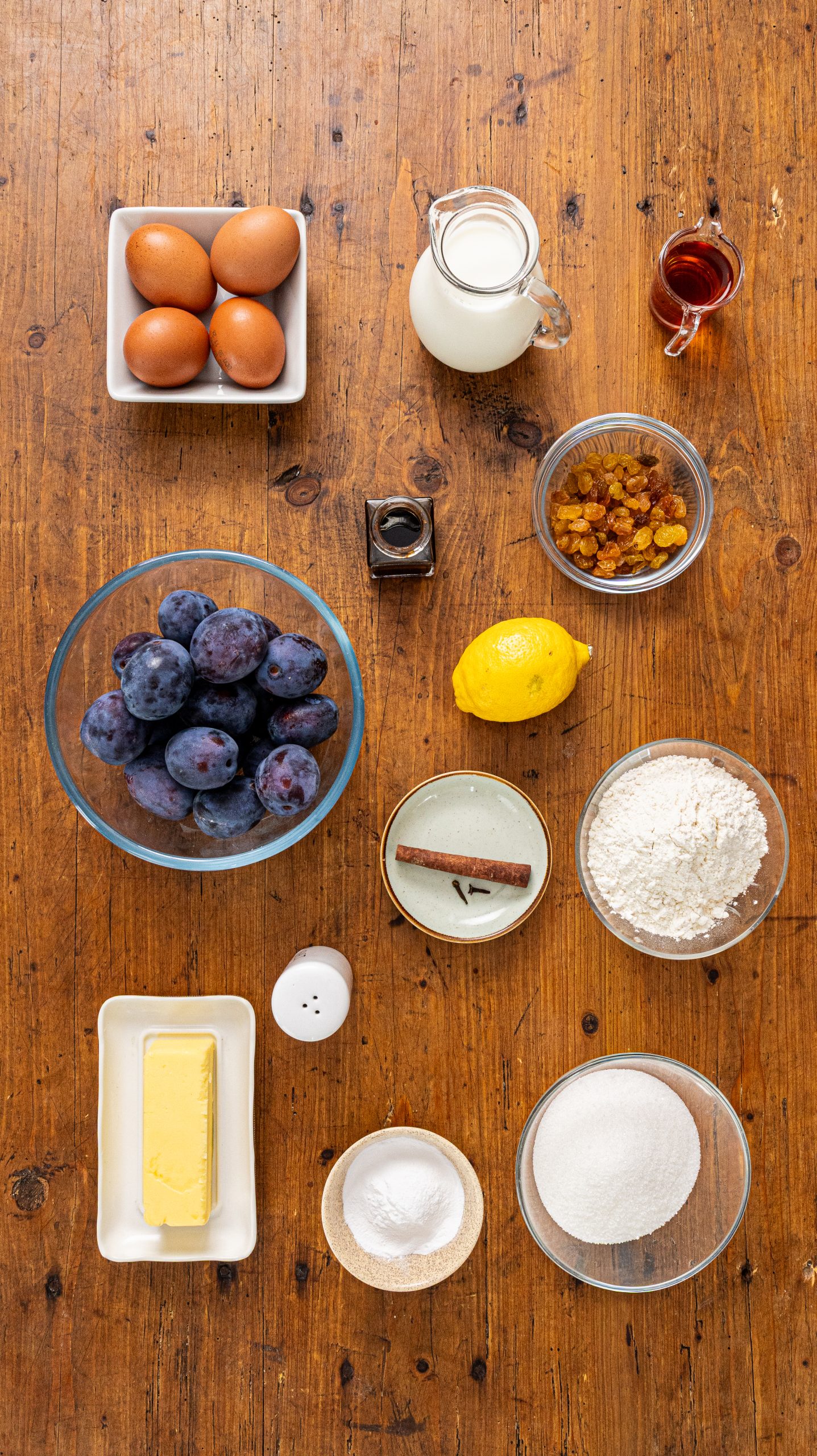
The eggs do most of the work. The yolks enrich the batter, and the whites, beaten to soft peaks, give it volume, as in Japanese cheesecake. Milk, preferably whole, hydrates regular all-purpose flour (T45, T55 or 00), and a little sugar, vanilla and salt are enough to flavor it all.
The unsalted butter is used twice: for cooking, then for caramelizing with the granulated sugar, which clings to the torn edges. The powdered sugar goes on at the very end. Raisins soaked in rum are traditional but optional, and apple juice replaces the rum for an alcohol-free version.
For the compote, you need prune plums, sugar, a cinnamon stick, two whole cloves and the juice of half a lemon.
Zwetschkenröster and How to Serve It
Zwetschkenröster is a compote of halved prune plums cooked almost dry in their own juice, with no water. The pieces stay intact and tender, not very sweet and slightly tart, which balances the butter and caramel. Prune plums are in season from August to October; the rest of the year, applesauce takes their place.
Kaiserschmarrn is served straight off the heat, right in the pan set on the table, with the compote alongside. It deflates quickly, like a soufflé. Leftovers reheat well in a buttered frying pan.
Technical Pointers for a Light Kaiserschmarrn
A heavy-bottomed frying pan 26 to 28 cm across is right for 4 eggs. A smaller pan makes the layer of batter too thick, and the bottom burns before the center sets. Fold in the whites with a rubber spatula in three additions, stopping while a few white streaks are still visible. Then tear the pancake apart with two forks, never a knife, so the ragged edges catch the caramel.
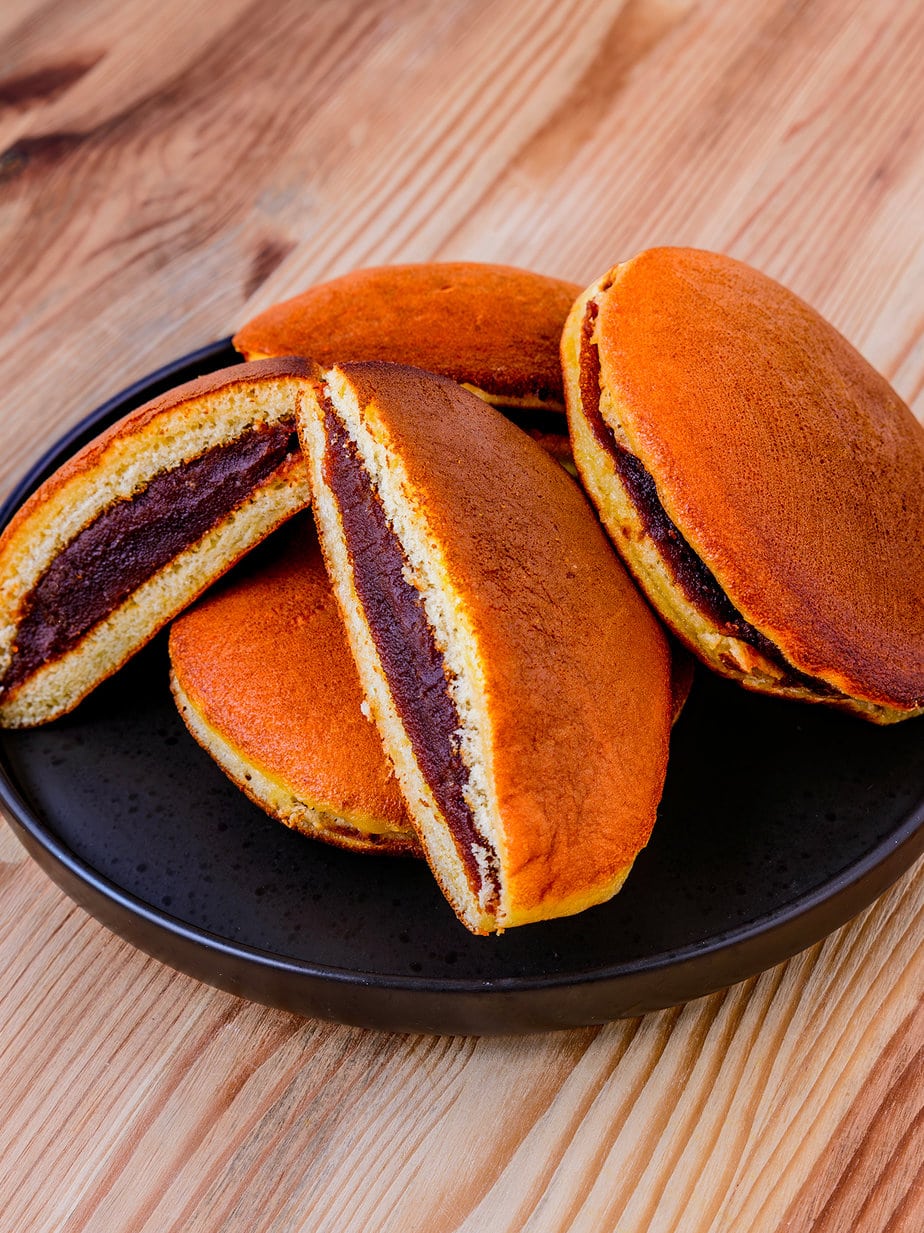
For more warm desserts, Korean hotteok are filled with sugar and cinnamon, and air fryer bugnes are eaten warm. Egg custard, cinnamon rolls and gulab jamun round out the list, along with dorayaki.
Ingredients
Zwetschkenröster (Italian plum compote)
- 500 g Italian plums
- 80 g granulated sugar
- 1 stick cinnamon
- 2 whole cloves
- 0.5 lemon, juiced
Batter
- 4 eggs medium
- 250 ml whole milk, at room temperature, or 2% milk
- 30 g granulated sugar
- 1 teaspoon vanilla extract
- 1 pinch salt
- 120 g flour T45 or T55 wheat flour, or 00 flour
Rum raisins
- 50 g raisins, optional
- 2 tablespoons rum, optional
Whipped egg whites
- 1 pinch salt
Cooking
- 40 g unsalted butter
Caramelizing and serving
- 2 tablespoons granulated sugar
- 2 tablespoons powdered sugar
Instructions
Zwetschkenröster (Italian plum compote)
- Cut the plums in half.500 g Italian plums
- Remove the pits.
- Put the plum halves in a saucepan with the sugar, cinnamon stick, cloves and lemon juice, without adding any water.80 g granulated sugar, 1 stick cinnamon, 2 whole cloves, 0.5 lemon,
- Cover the saucepan.
- Cook over low heat for 15 to 20 minutes, shaking the pan from time to time, until the fruit is tender but still whole.
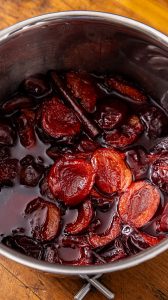
- Remove the cinnamon stick and cloves.
- Set the compote aside until serving.
Batter
- Separate the whites from the yolks.4 eggs
- Set the whites aside in a clean mixing bowl, ready for whipping.
- Put the yolks in a large mixing bowl.
- Add the milk, vanilla, sugar and the pinch of salt.250 ml whole milk,, 1 teaspoon vanilla extract, 30 g granulated sugar, 1 pinch salt
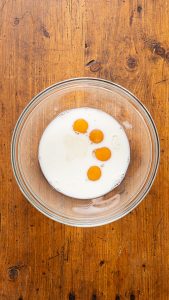
- Whisk.
- Add the flour.120 g flour
- Whisk just until the batter is smooth, and no longer.
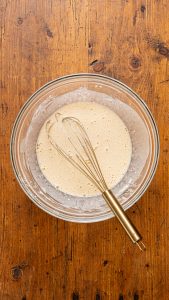
- Let the batter rest for 15 minutes.
Rum raisins
- While the batter rests, put the raisins in a bowl.50 g raisins,
- Pour the rum over them.2 tablespoons rum,
- Let them soak until it’s time to cook.
Whipped egg whites
- Add the pinch of salt to the whites.1 pinch salt
- Beat the whites with an electric mixer until they form soft peaks that curl over at the tip of the whisk.
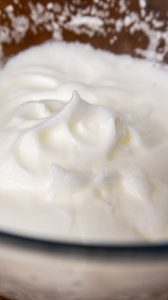
- Gently fold the whites into the rested batter in three additions, using a rubber spatula.
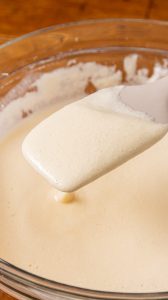
- Stop while there are still a few white streaks in the batter.
Cooking in the pan
- Drain the raisins.
- Melt half the butter over medium heat in a heavy-bottomed, ovenproof frying pan, 26 to 28 cm in diameter.40 g unsalted butter
- Pour the batter into the pan.
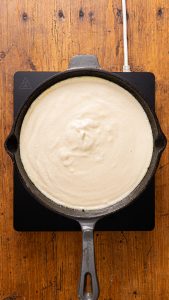
- Scatter the drained raisins over the batter.
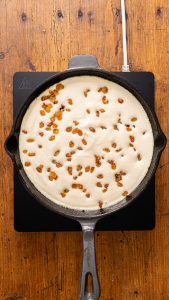
- Cover the pan.
- Cook for 6 to 8 minutes, until the underside is golden and the top is just starting to set around the edges.
- Cut the pancake into quarters in the pan with a spatula.
- Flip each quarter.
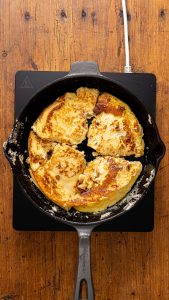
- Add the rest of the butter to the pan.
- Cook for another 3 to 4 minutes, until the second side is golden.
Tearing and caramelizing
- To caramelize under the broiler, preheat the oven broiler while the pancake is cooking.
- Tear the pancake into irregular, bite-size pieces in the pan using two forks.
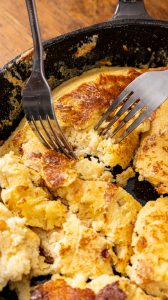
- Check the inside of the pieces: it should still be slightly moist, since it finishes cooking during caramelization.
- Sprinkle the pieces with granulated sugar.2 tablespoons granulated sugar
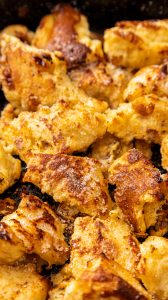
- Toss the pieces over high heat for 2 minutes, or slide the pan under the very hot broiler for 60 to 90 seconds.
- Stop when the edges of the pieces are crisp and caramel brown.
Serving
- Dust generously with powdered sugar.2 tablespoons powdered sugar
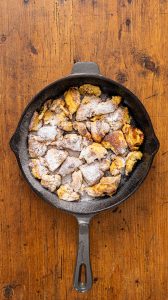
- Serve immediately, straight from the pan, with the Zwetschkenröster or with applesauce.