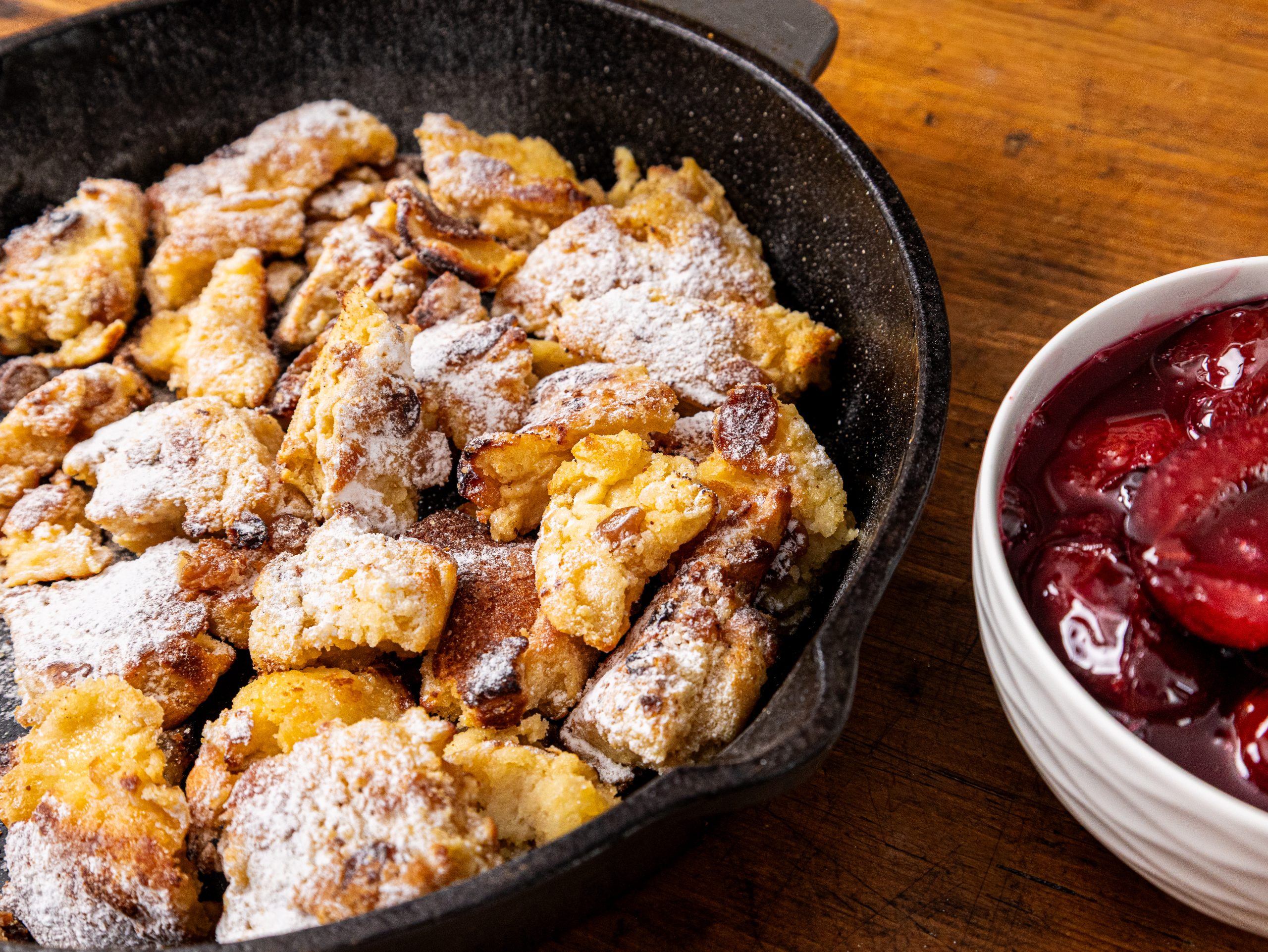
Servings: 3 servings
Ingredients
Zwetschkenröster (Italian plum compote)
- 500 g Italian plums
- 80 g granulated sugar
- 1 stick cinnamon
- 2 whole cloves
- 0.5 lemon, juiced
Batter
- 4 eggs medium
- 250 ml whole milk, at room temperature, or 2% milk
- 30 g granulated sugar
- 1 teaspoon vanilla extract
- 1 pinch salt
- 120 g flour T45 or T55 wheat flour, or 00 flour
Rum raisins
- 50 g raisins, optional
- 2 tablespoons rum, optional
Whipped egg whites
- 1 pinch salt
Cooking
- 40 g unsalted butter
Caramelizing and serving
- 2 tablespoons granulated sugar
- 2 tablespoons powdered sugar
Procédé
Zwetschkenröster (Italian plum compote)
- Cut the plums in half.500 g Italian plums
- Remove the pits.
- Put the plum halves in a saucepan with the sugar, cinnamon stick, cloves and lemon juice, without adding any water.80 g granulated sugar, 1 stick cinnamon, 2 whole cloves, 0.5 lemon,
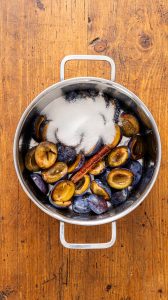
- Cover the saucepan.
- Cook over low heat for 15 to 20 minutes, shaking the pan from time to time, until the fruit is tender but still whole.
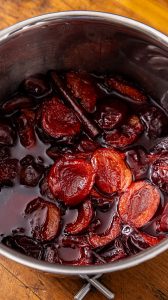
- Remove the cinnamon stick and cloves.
- Set the compote aside until serving.
Batter
- Separate the whites from the yolks.4 eggs
- Set the whites aside in a clean mixing bowl, ready for whipping.
- Put the yolks in a large mixing bowl.
- Add the milk, vanilla, sugar and the pinch of salt.250 ml whole milk,, 1 teaspoon vanilla extract, 30 g granulated sugar, 1 pinch salt
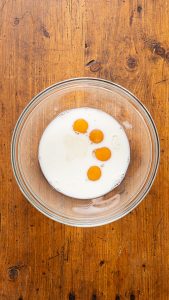
- Whisk.
- Add the flour.120 g flour
- Whisk just until the batter is smooth, and no longer.
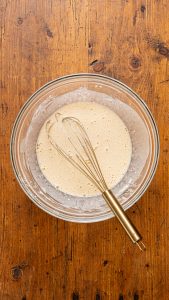
- Let the batter rest for 15 minutes.
Rum raisins
- While the batter rests, put the raisins in a bowl.50 g raisins,
- Pour the rum over them.2 tablespoons rum,
- Let them soak until it's time to cook.
Whipped egg whites
- Add the pinch of salt to the whites.1 pinch salt
- Beat the whites with an electric mixer until they form soft peaks that curl over at the tip of the whisk.
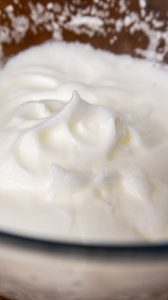
- Gently fold the whites into the rested batter in three additions, using a rubber spatula.
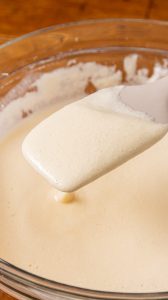
- Stop while there are still a few white streaks in the batter.
Cooking in the pan
- Drain the raisins.
- Melt half the butter over medium heat in a heavy-bottomed, ovenproof frying pan, 26 to 28 cm in diameter.40 g unsalted butter
- Pour the batter into the pan.
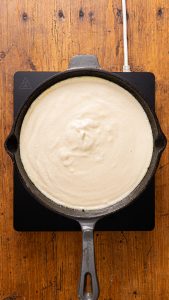
- Scatter the drained raisins over the batter.
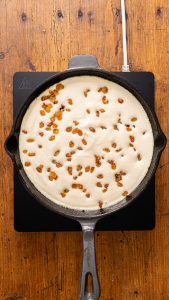
- Cover the pan.
- Cook for 6 to 8 minutes, until the underside is golden and the top is just starting to set around the edges.
- Cut the pancake into quarters in the pan with a spatula.
- Flip each quarter.
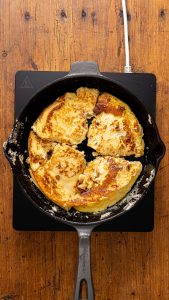
- Add the rest of the butter to the pan.
- Cook for another 3 to 4 minutes, until the second side is golden.
Tearing and caramelizing
- To caramelize under the broiler, preheat the oven broiler while the pancake is cooking.
- Tear the pancake into irregular, bite-size pieces in the pan using two forks.
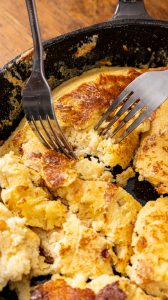
- Check the inside of the pieces: it should still be slightly moist, since it finishes cooking during caramelization.
- Sprinkle the pieces with granulated sugar.2 tablespoons granulated sugar
- Toss the pieces over high heat for 2 minutes, or slide the pan under the very hot broiler for 60 to 90 seconds.
- Stop when the edges of the pieces are crisp and caramel brown.
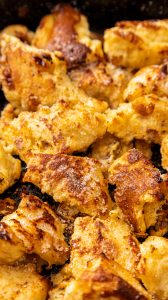
Serving
- Dust generously with powdered sugar.2 tablespoons powdered sugar
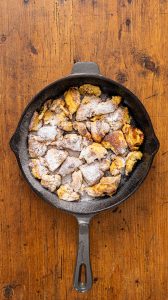
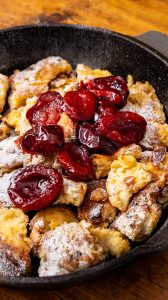
- Serve immediately, straight from the pan, with the Zwetschkenröster or with applesauce.
Notes
Two schools of thought: in mountain huts, the eggs are beaten whole without being separated and the batter is cooked gently with the lid on, which gives a denser Schmarrn. The Viennese version in this recipe separates the eggs, rests the batter and finishes with caramelizing over high heat or under the broiler, for really crisp edges.
Flipping in quarters or finishing in the oven: this recipe flips the pancake in four pieces in the pan, the way it's done at home in Austria. Some Viennese kitchens finish it in the oven instead, pan and all, without flipping it. Either way, use an ovenproof frying pan, since the caramelizing can be done under the broiler: be careful, the handle gets scorching hot.
The pan: 26 to 28 cm in diameter for 4 eggs. In a smaller pan, the layer of batter is too thick and the bottom burns before the center has set: in that case, it's better to cook the batter in two batches.
The 15-minute rest relaxes the batter and makes the Schmarrn noticeably lighter. The batter (without the whites) can be made up to 2 hours ahead: whip and fold in the whites just before cooking.
A dense Kaiserschmarrn almost always comes from overmixed whites. Fold them in three additions with a rubber spatula and stop while a few white streaks are still visible.
Tear with a fork, never with a knife: the pieces should be irregular, and their torn edges catch the caramel.
The rum raisins are traditional but optional. You can soak them in apple juice instead of rum, or leave them out. Scattering them over the batter once it's in the pan keeps them from sinking to the bottom or burning.
Flour: regular wheat flour, T45 or T55 in France, Type 405 in Germany, glattes Mehl in Austria, or 00 flour. Milk: whole milk gives the best result, but 2% milk works too. The Kristallzucker in Austrian recipes is ordinary granulated sugar.
Zwetschkenröster isn't jam: it's Italian plums cut in half and cooked almost dry in their own juice with a little sugar and spice, tender but whole, not very sweet and slightly tart. Italian plums are available from August to October. Applesauce is the usual alternative to serve with it. No syrup: the caramel and powdered sugar are enough.
Kaiserschmarrn won't wait: it falls like a soufflé, so serve it the moment it comes out of the pan. Leftovers reheat well in a buttered frying pan.
Did you make this recipe?Tag @marcwiner on Instagram!