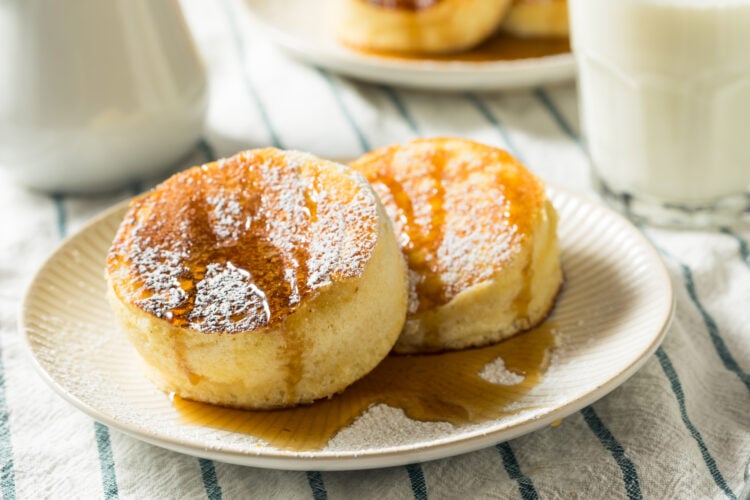
These ultra-soft Japanese pancakes feel like eating clouds, and they’re even better with homemade whipped cream!
Japanese cuisine takes pancakes to new heights. Think soft, pillowy clouds that melt in your mouth… tempting, isn’t it? You’ve almost certainly seen these super fluffy Japanese soufflé pancakes (スフレパンケーキ) making the rounds on social media. Or maybe you’ve even tasted them at one of the many cafés and restaurants that now serve them?
They’re airy, delicate, and a little too fancy for a weekday breakfast, but impossible to resist making on the weekend. These impossibly fluffy pancakes are a must.
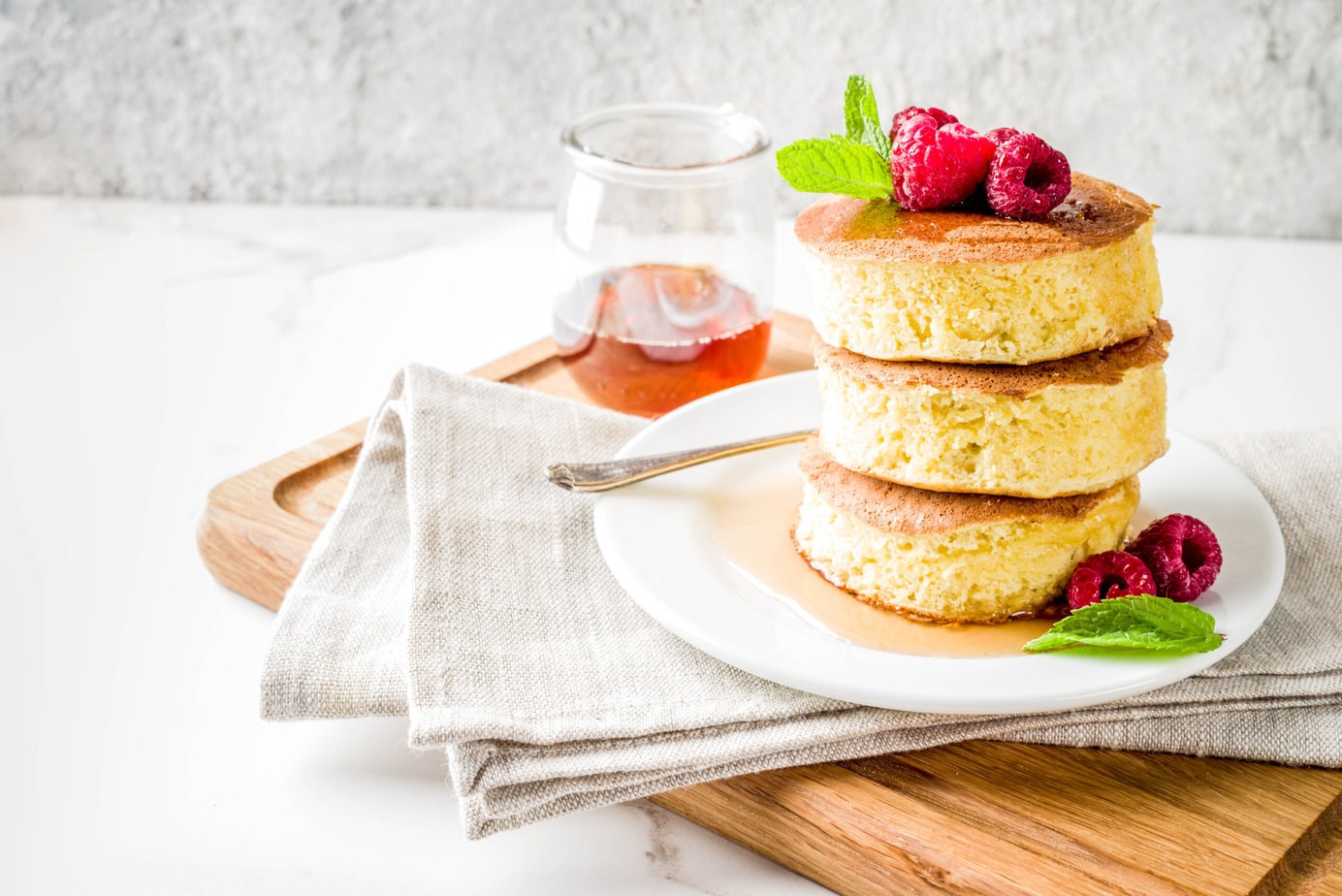
What are Japanese pancakes?
The ingredients in soufflé pancakes are very similar to those in regular American pancakes, so what makes them different? What makes these pancakes so tall, fluffy, and delicious?
Japanese soufflé pancakes are all about eggs. The egg yolks and whites are separated, then the whites are whipped into a meringue, just as they are for sweet or savory soufflés.
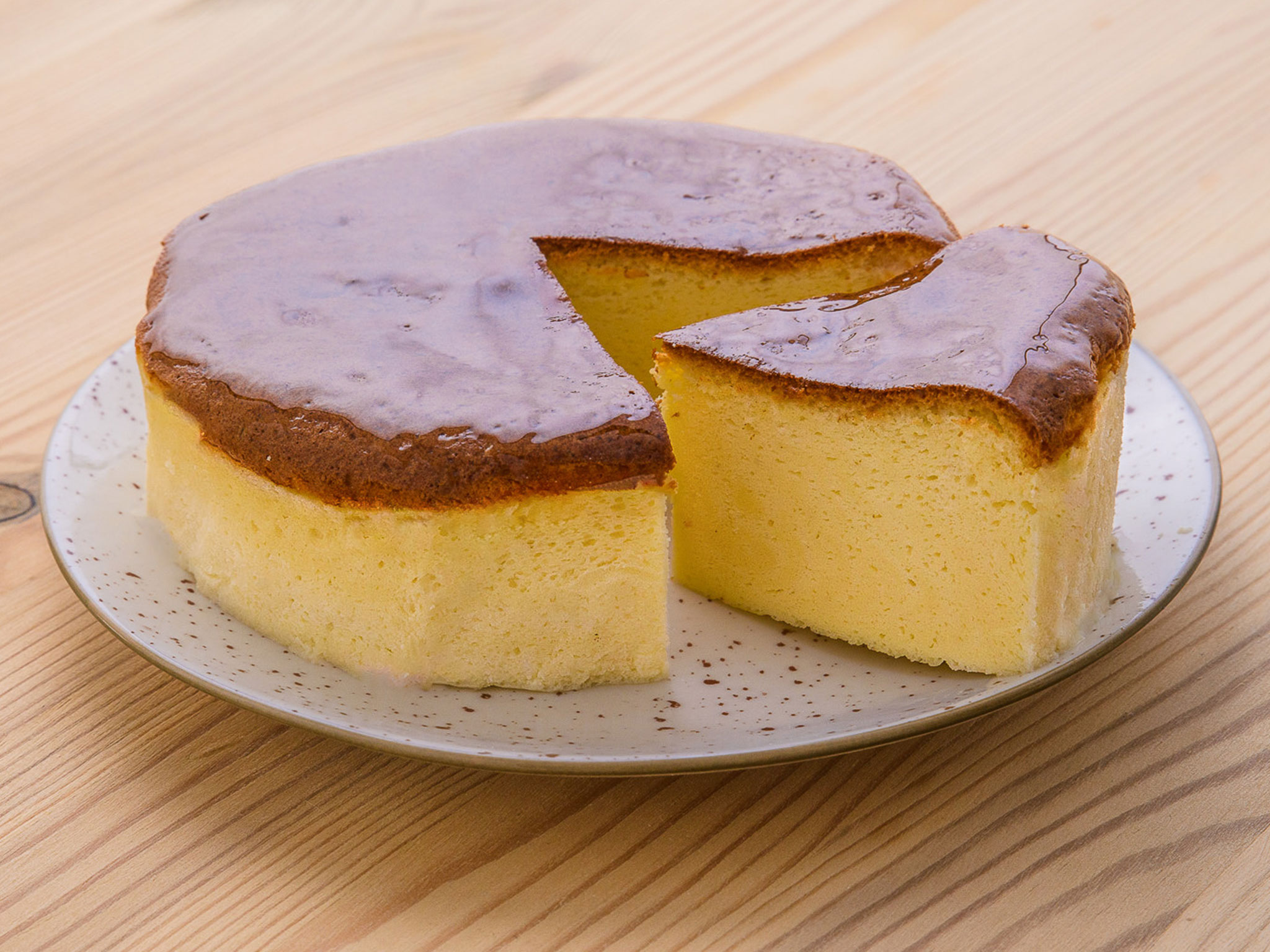
The egg whites are beaten until they form stiff peaks, then gently and carefully folded into the rest of the batter. That’s why Japanese pancakes are so soft and fluffy: the air bubbles hold their shape inside the batter.
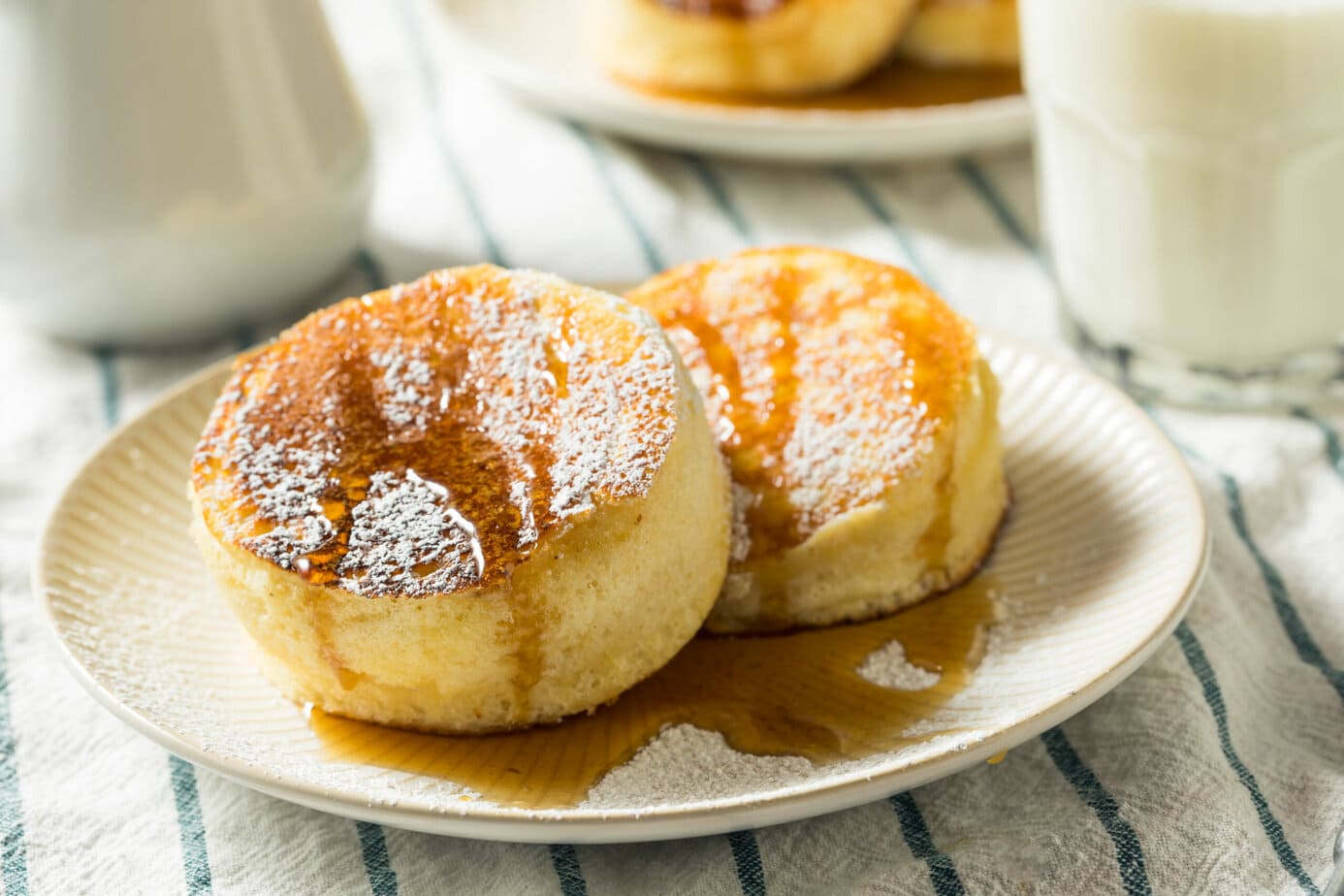
The result is incredibly airy, almost like a soufflé. When you cut into the pancakes, you can even hear the air bubbles escaping! Top them with homemade whipped cream or an Algerian spread, and you’re all set!
A fairly recent Japanese trend
A few years ago, most of us had never heard of them. It was really the rise of social media, along with Japan’s recent pancake craze, that made this dish famous at incredible speed (much to our delight).
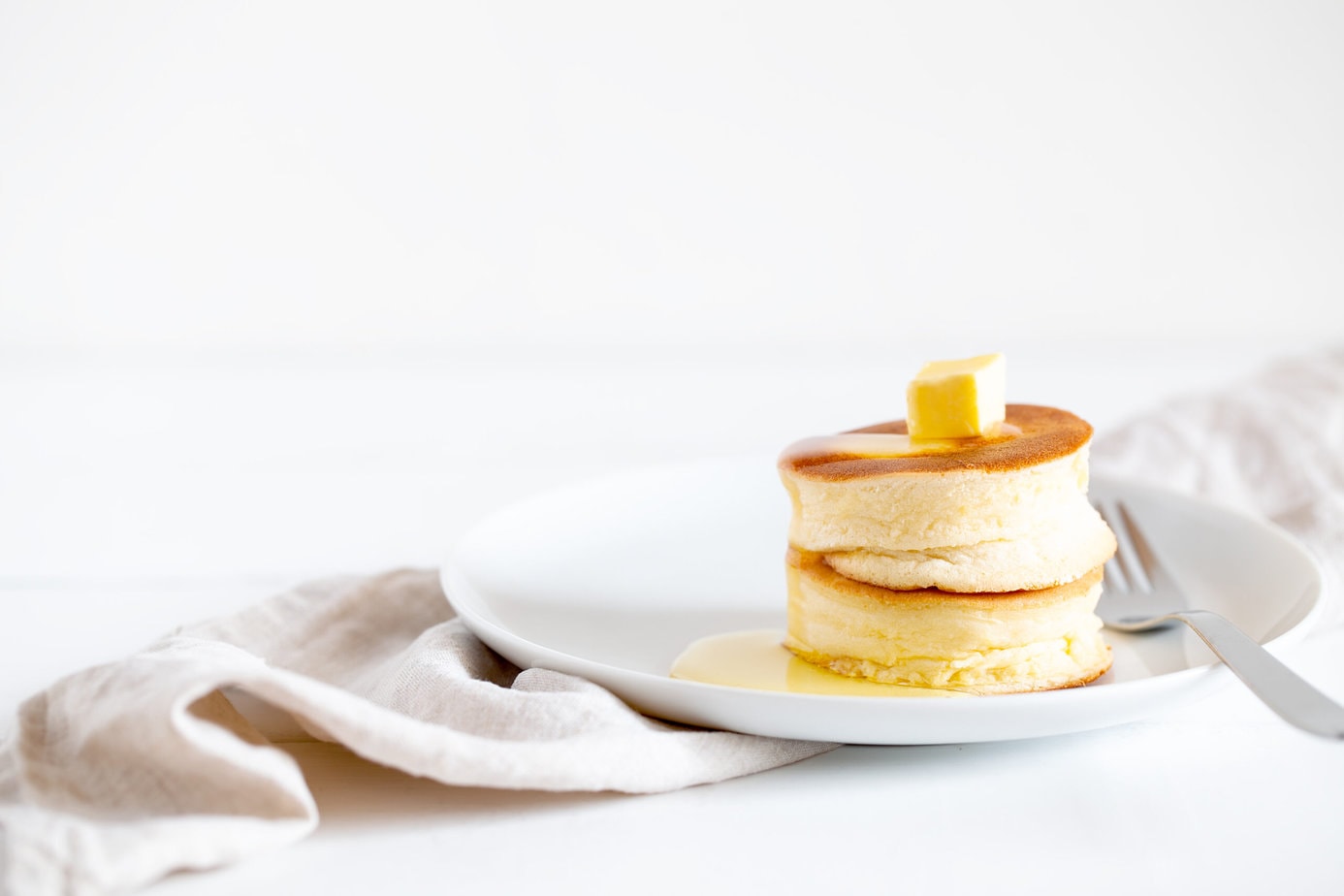
Tips for mastering this fluffy Japanese pancake recipe
Beat the egg whites (meringue) properly
To be honest, making meringue takes practice. But I promise it gets easier once you have a little experience and understand how to reach the right texture. This Japanese soufflé pancake recipe is easy…except for that part. I’m impatient, and sometimes I mess them up. Oops.
You’re looking for stiff peaks with tips that just curl over. When you lift the whisk, the egg whites should stand up firmly, but the very tip should fold over. If you overbeat the egg whites, they will turn grainy and separate. If you underbeat them, there won’t be enough air bubbles, and the pancakes won’t be fluffy.
Preheat the pan over low heat
Even heat is essential so the pancakes cook properly all the way through. Preheat your frying pan over the lowest heat to avoid hot spots, where one part of the pan is cooler and another is too hot. This gives you full control over the cooking time and the final result.
Stack the batter vertically (very, very high)
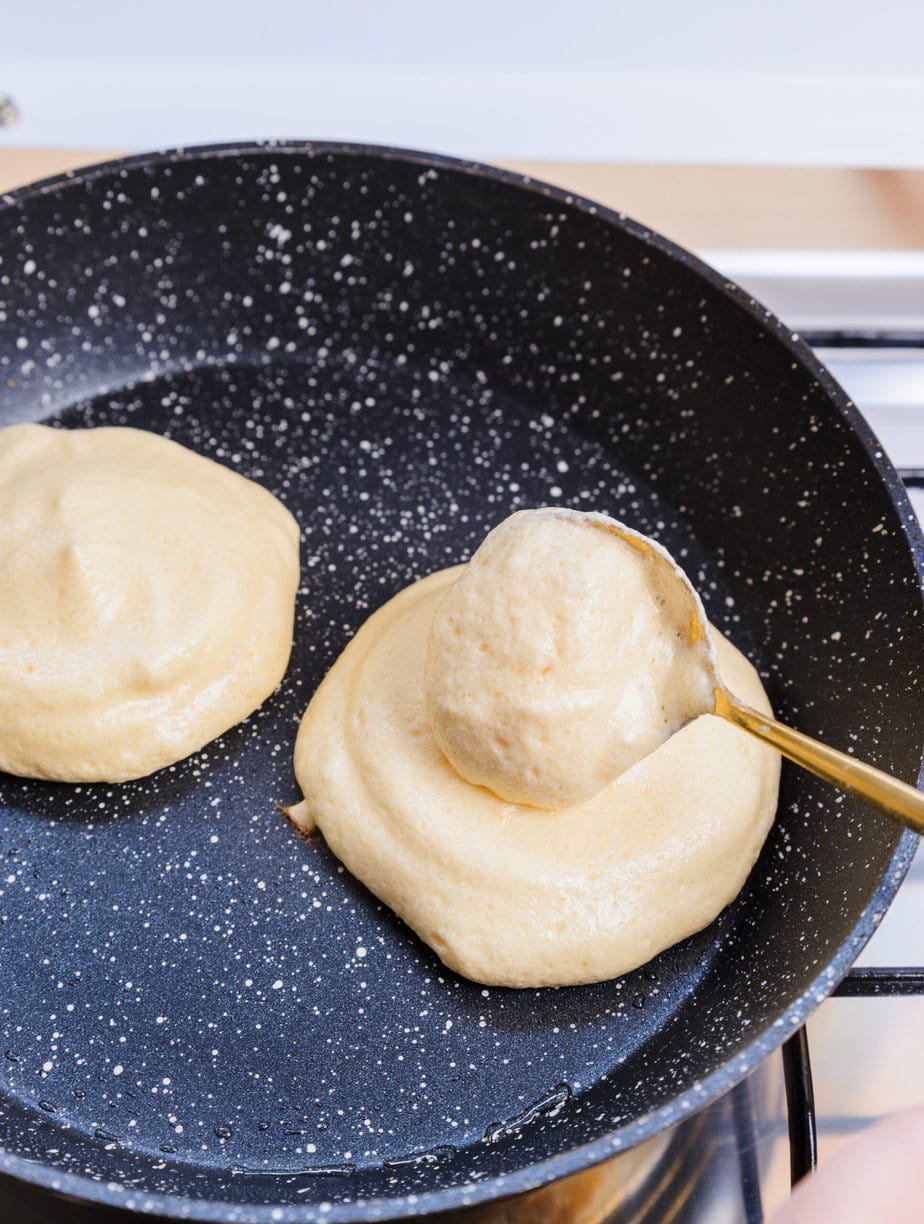
The key to making very tall pancakes is to add another portion of batter on top of the batter already in the pan, once it starts to set into a pancake.
Cook slowly, covered, over low heat
Unlike regular pancakes, these fluffy Japanese pancakes need to cook much longer. If you use higher heat, the pancakes may look done on the outside, but the inside will still be raw.
That’s why slow, steady cooking over low heat is essential. To trap heat and moisture inside the pan, cover it with a lid.
Add water to create a little steam
I’ve tried making them without adding water, and the difference can be subtle, but it helps. Since adding water is so easy, I include this step in my recipe. Simply add 1 tablespoon of water to the empty spaces in the pan to create a little moisture. Believe me, it’s a game changer.
Why isn’t my Japanese pancake fluffy? Why does it deflate?
When making Japanese pancakes, one of the most common issues is that the pancakes deflate after cooking. Is this normal? No: a soufflé, including soufflé pancakes, should still hold its shape once you transfer it to a plate.
What went wrong? What can you do to keep your soufflé from collapsing?
- You probably underbeat or overbeat the egg whites. The goal is to create air bubbles in the batter, which give the pancake its structure. Without them, the pancake will deflate.
- The pan was too hot. Just because the pancake is nicely browned doesn’t mean it’s cooked through. The inside may still be undercooked, and if you remove the pancakes from the pan too early, the trapped air will escape. Properly cooked Japanese pancakes have a sturdy structure and impressive height. They will hold for 10 to 15 minutes while warm (just like hot air balloons).
Ingredients
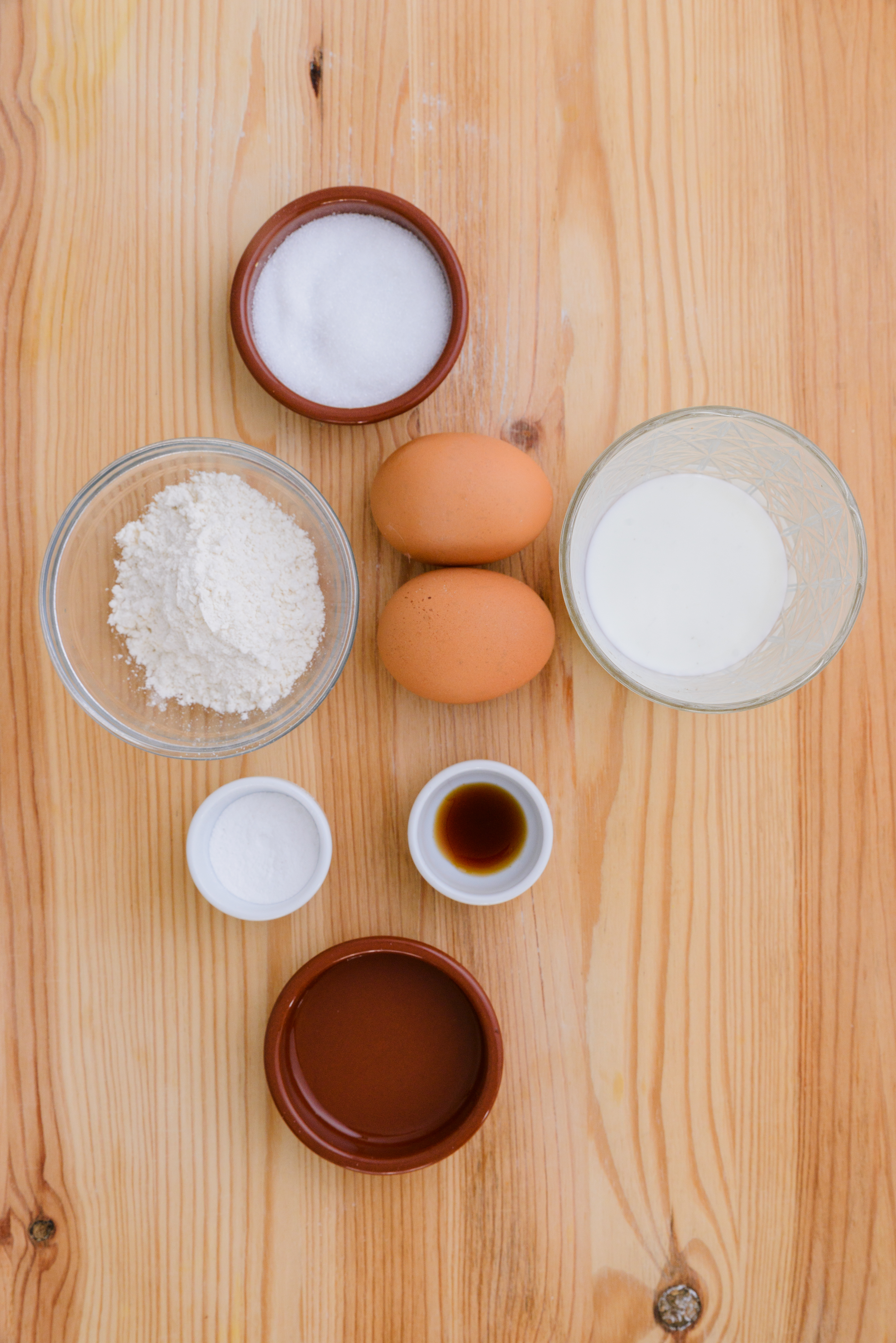
- 2 eggs
- 23 ml whole milk
- 0.25 teaspoon vanilla extract
- 30 g all-purpose flour
- 2 g baking powder
- 26 g sugar
- 1 tablespoon oil neutral-flavored
- 30 ml water for steaming
For the homemade whipped cream
- 120 ml heavy cream for whipping (36% fat or higher)
- 20 g sugar
Instructions
- Prepare all the ingredients. You will also need a 30 cm nonstick skillet with a lid, large enough to cook 2-3 pancakes at once.
To make the fresh whipped cream (optional)
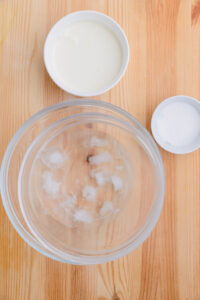
- First, prepare an ice bath: fill a large bowl with ice cubes and water, then set a clean, dry medium bowl over the ice water. Add the heavy cream and sugar to the medium bowl to keep them chilled.120 ml heavy cream, 20 g sugar
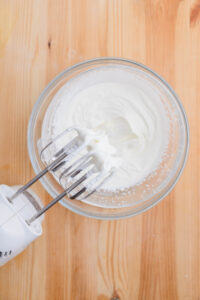
- Whisk on high speed until medium to firm peaks form. The whipped cream should not be runny; it should be soft, fluffy, and firm. Keep the whipped cream chilled until you are ready to serve the pancakes.
For the batter
- Separate the egg whites and egg yolks into two separate bowls. Place the bowl of egg whites in the freezer for 15 minutes.2 eggs
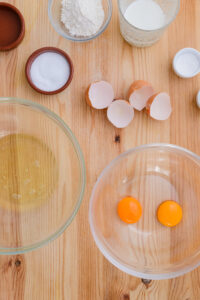
- Meanwhile, add the milk and vanilla to the egg yolks and whisk by hand until thick and frothy.0.25 teaspoon vanilla extract, 23 ml whole milk
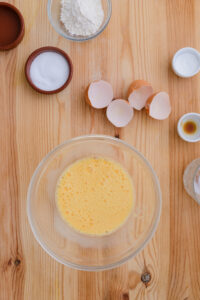
- Sift the flour and baking powder into the bowl.30 g all-purpose flour, 2 g baking powder
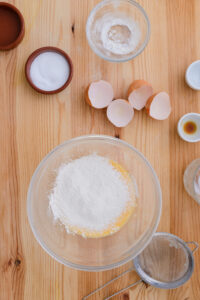
- Whisk until just combined; do not overmix. Set aside while you make the meringue.
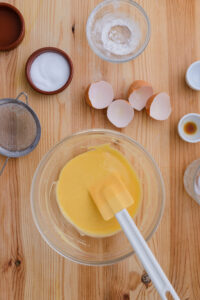
For the meringue
- After 15 minutes, remove the bowl of egg whites from the freezer. The egg whites should be partially frozen. Begin beating the egg whites with a mixer.
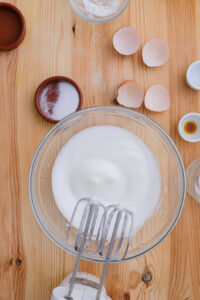
- When the egg whites turn foamy and opaque, gradually add the sugar, about one-third at a time. Increase the mixer speed to high (the highest setting) and beat vigorously until firm peaks form. This should take about 2 minutes on high speed. Remove the whisk attachment from the mixer and use it to gently mix the looser egg whites around the edge of the bowl into the firmer whites in the center until the texture is even. Reattach the whisk and continue beating.26 g sugar
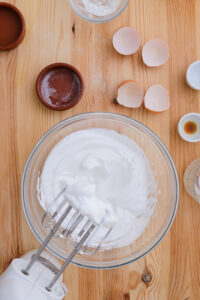
- To check for firm peaks, stop whisking and lift the beaters or whisk. The meringue in the bowl or on the whisk should be firm enough to hold a peak pointing upward, though the very tip may fold over slightly. At this stage, the meringue should also look glossy. Tip: If you overbeat the meringue, it will become very stiff and grainy, and it will not fold properly into the batter.
- Heat a large nonstick skillet over low heat. Brush it with cooking oil, then lightly wipe away any visible oil with a paper towel; otherwise, the pancakes may have a mottled surface. Keep the skillet over low heat while you combine the egg whites and egg yolk mixture in the next step.1 tablespoon oil
To "fold" the meringue
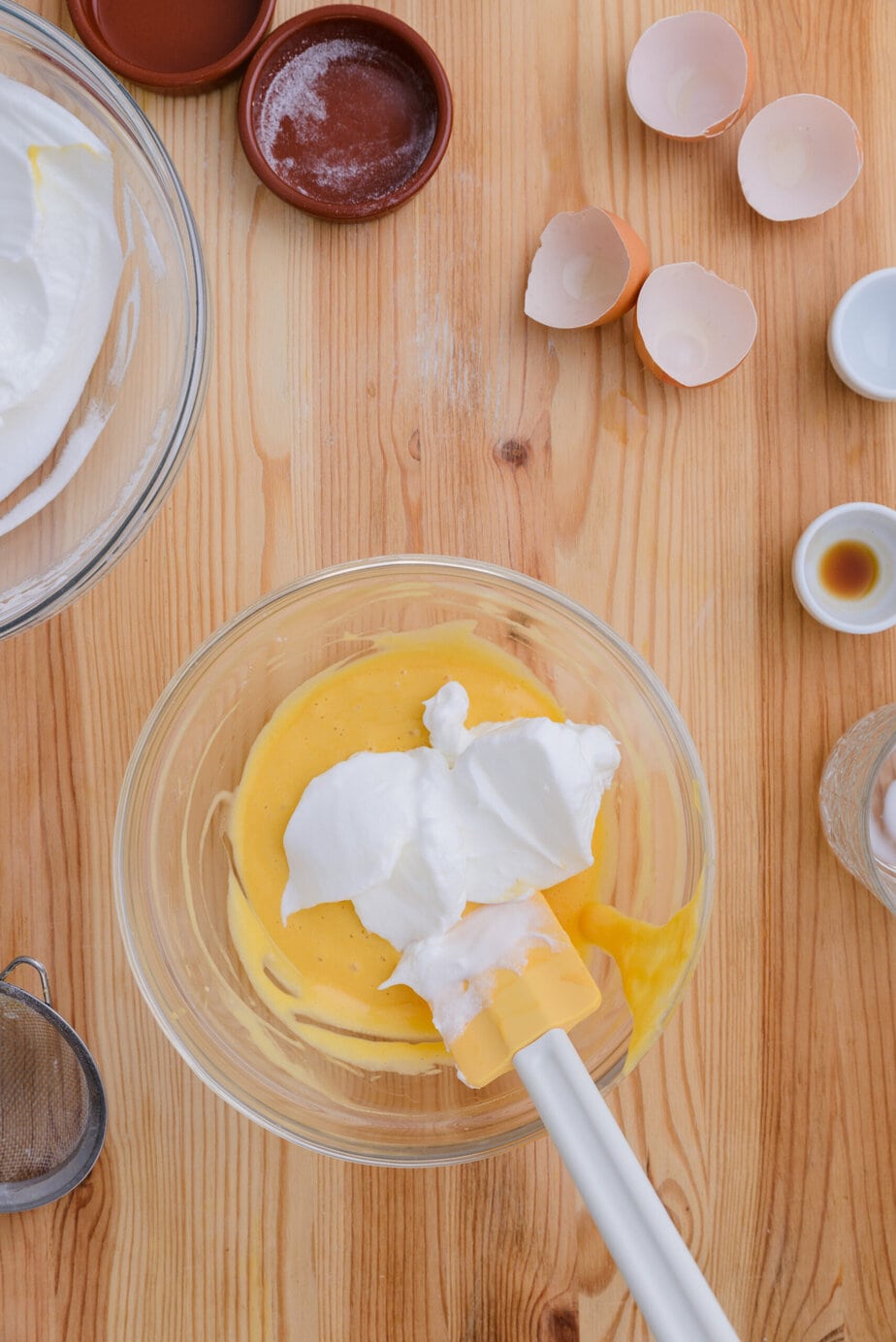
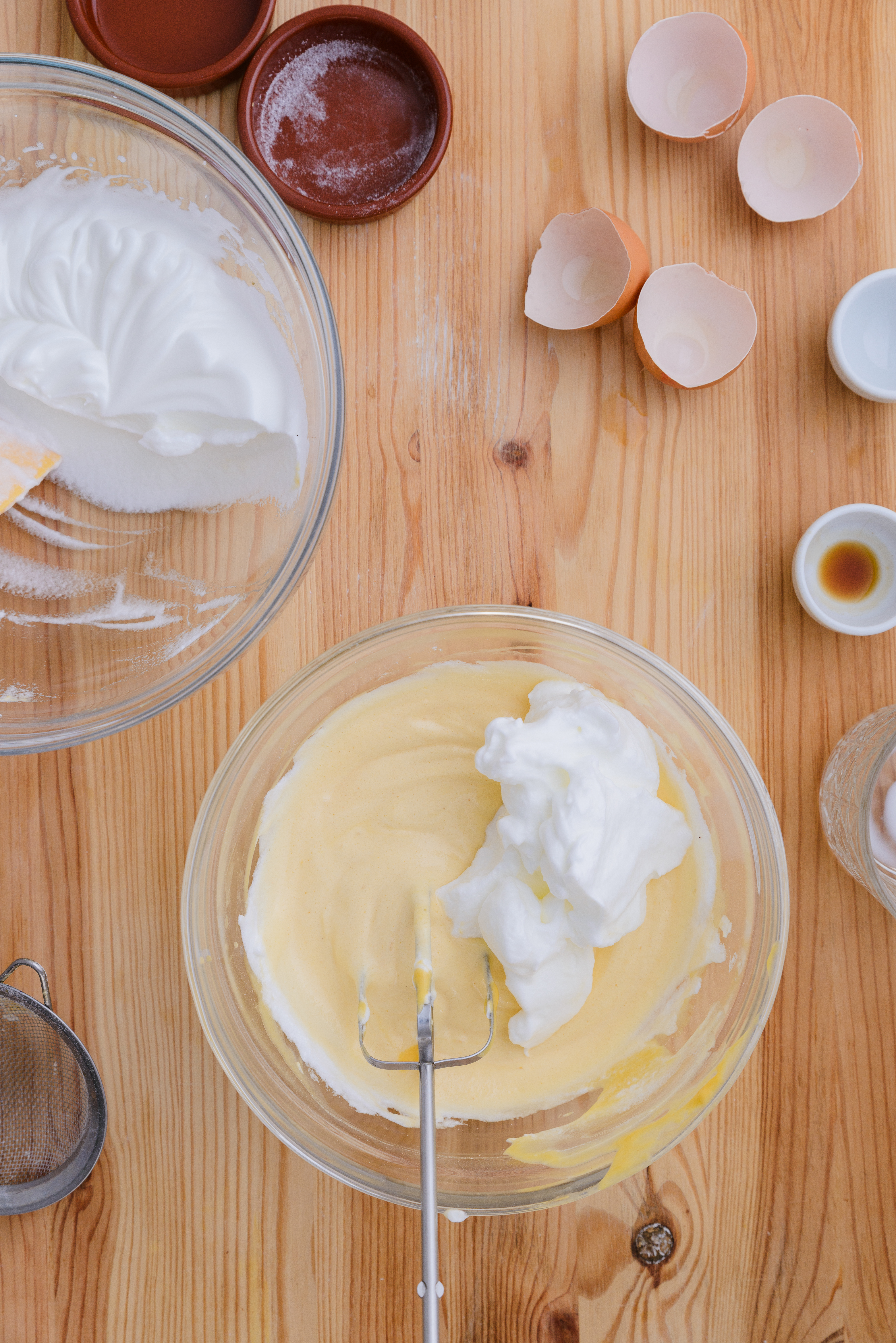
- Add one-third of the egg whites to the egg yolk mixture. Whisk together by hand; do not worry too much about deflating the air bubbles at this stage.
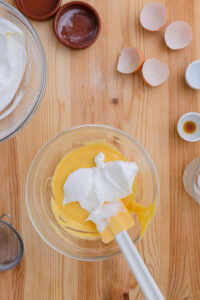
- Next, add half of the remaining meringue to the egg yolk mixture. Using a hand whisk, gently fold it in without deflating the air bubbles in the egg whites.
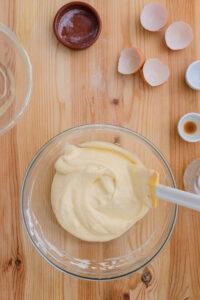
- Now transfer the egg yolk mixture to the bowl with the remaining meringue. Very gently fold the two mixtures together, taking care not to deflate the air bubbles in the meringue and batter. Mix gently until the batter is well combined and smooth.
To cook the Japanese pancakes
- Keep the skillet at 150 ºC over low heat the entire time. Remember that each pancake will use about four small scoops of batter, and you will make three pancakes. For the first pancake, use a small ladle to add one scoop of batter to the skillet, forming a tall mound.
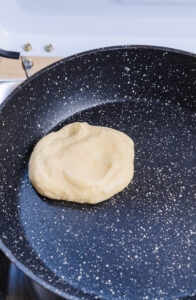
- Next, stack another scoop of batter on top of the first. Repeat with the next two pancakes, giving each pancake two scoops of batter.
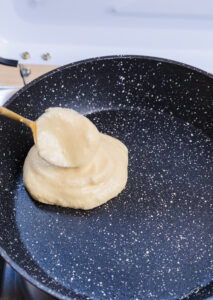
- By the time each pancake has two scoops, the surface of the batter will already be slightly dry. At this point, add another scoop to each pancake, keeping the batter stacked upward. You should still have about three scoops left in the bowl; if you have a little more, that is fine.
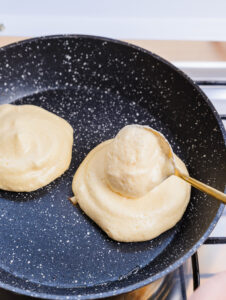
- Set a timer for 6 to 7 minutes, add 1 tablespoon of water to the empty spaces in the skillet, and cover with a lid. The steam will keep the pancakes moist as they cook. Note: The suggested time is only a guide; the exact cooking time depends on the temperature of your skillet.30 ml water
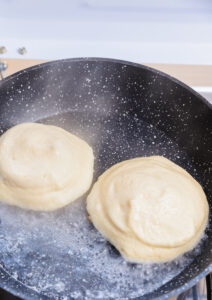
- After 2 minutes, remove the lid and add one final spoonful of batter to each Japanese pancake, or several spoonfuls if you have extra batter. Make sure to build the batter upward, not outward. If the water has evaporated, add a little more. Cover again and continue cooking.
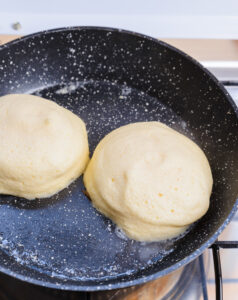
- After 6-7 minutes, lift each pancake VERY GENTLY with an offset spatula. If a pancake is stuck, leave it until it firms up a little. If you force it, it will crack in the middle. When a pancake is ready, you will be able to move and flip it easily.
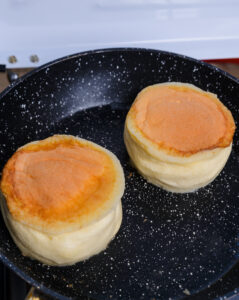
- Add more water to the empty spaces in the skillet and cover. Set a timer for 4 to 5 minutes to cook the other side over the lowest heat setting.
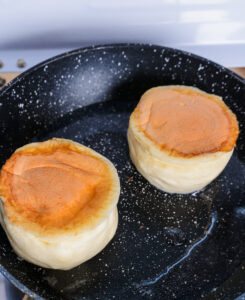
- Once the pancakes are nicely golden brown, transfer them to plates and serve.
Notes
- Soufflé pancakes can be tricky to make, especially for beginner cooks, so be sure to read my tips in the post carefully before you start cooking.
- Beat the egg whites properly. Underbeating or overbeating will cause the pancakes to deflate after cooking.
- Cook over low heat and make sure the pancakes are fully cooked through. If the centers are undercooked, there will not be enough structure to support the pancakes, and they will collapse as soon as the temperature drops.