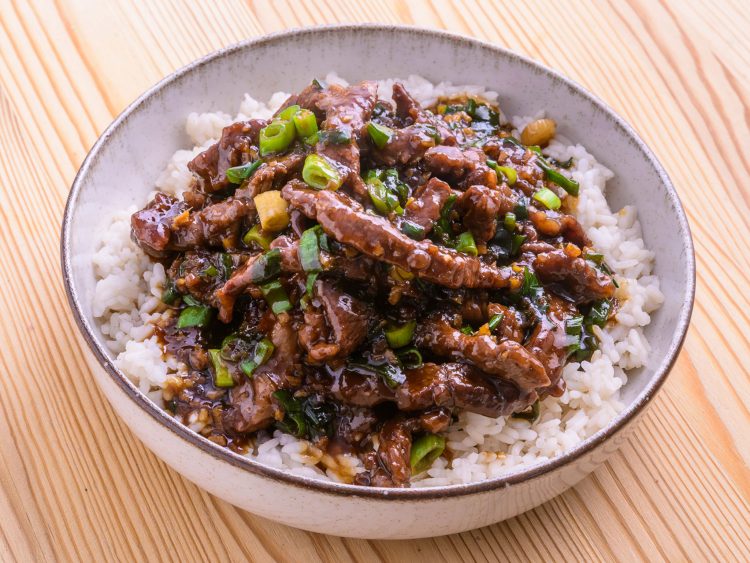
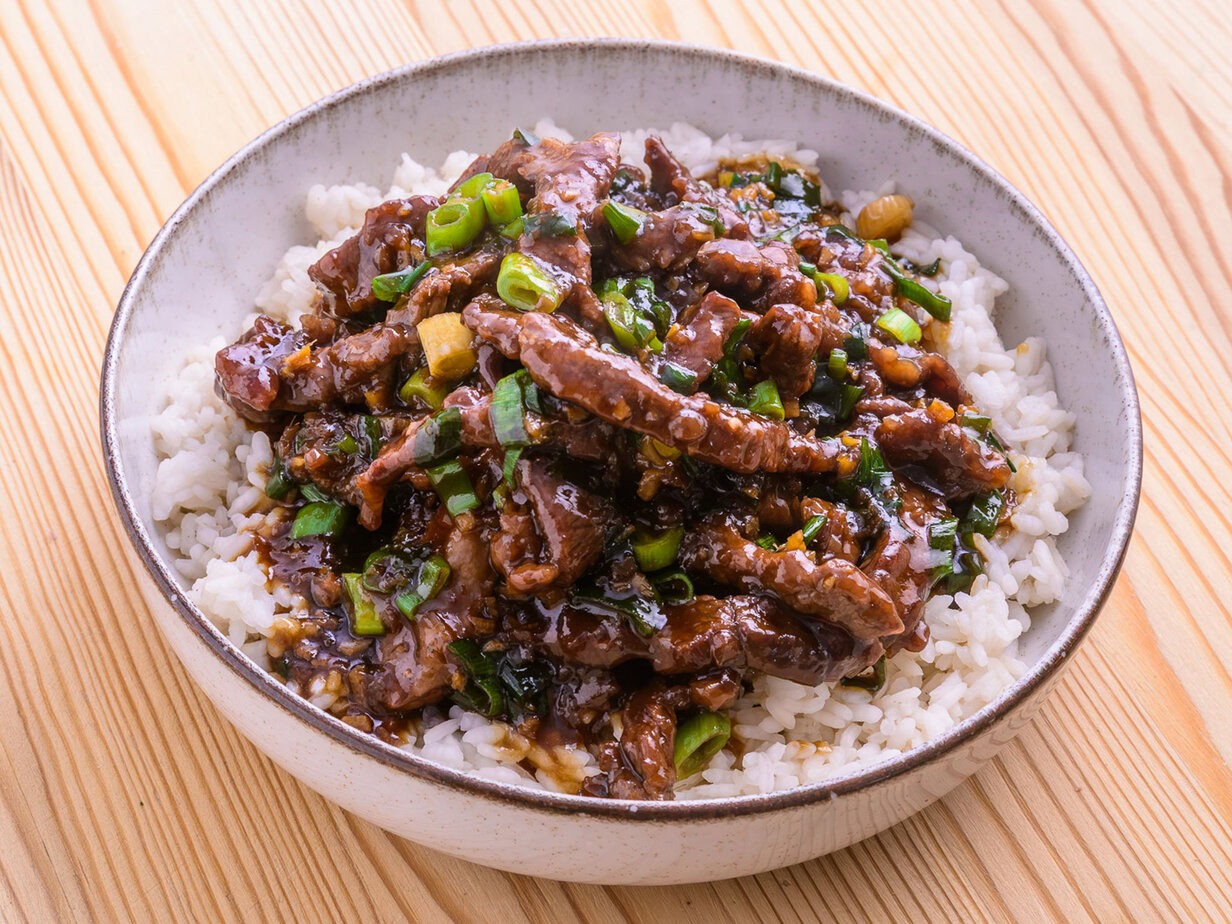
Crispy fried strips of beef glazed in a brown sugar, garlic and ginger soy sauce, to serve over white rice.
On a Friday night, when the craving for Chinese takeout hits, this is often the dish you order. The strips of beef are still sizzling, and their golden edges crunch at first bite, then give way under a glossy glaze of soy sauce and brown sugar, lifted with garlic and ginger.
The green onions add freshness, and the sauce trickles down into the steaming rice. When you make it at home, you eat it straight from the wok, while the beef is still crispy under the sauce.
What Is Mongolian Beef?
Mongolian beef is a classic at Chinese restaurants in the United States. Thinly sliced strips of beef are coated in dry cornstarch, fried for a few minutes, then tossed in a sauce made of soy sauce, water, brown sugar, garlic and ginger. The cornstarch coating the meat thickens the sauce in seconds and makes it glossy. It’s a cousin of beef and broccoli, Chinese beef with onions and stir-fried beef with ginger and scallions, with a sweeter sauce and crispier beef.
The name is misleading: Mongolian cuisine is built on meat from herd animals, boiled or cooked with hot stones, a far cry from the wok, soy sauce and sugar. The word “Mongolian” comes from a 1950s restaurant in Taipei.

Born in Taipei, Adopted by American Restaurants
In 1951 in Taipei, Wu Zhaonan, a restaurateur and comedian born in Beijing who had taken refuge in Taiwan after the civil war, opened a stall serving meat grilled on a large round griddle. He reportedly wanted to call it “Beijing barbecue,” but the name of Communist China’s capital was a problem in Taiwan. He chose “Mongolian barbecue,” an exotic name that offended no one. Customers picked their meat, vegetables and sauces, which were seared right in front of them.
With Chinese and Taiwanese immigration, the concept made its way to the United States. In Chinese American restaurants, one of the most requested combinations, sliced beef with soy sauce, garlic, ginger and sugar, became a dish in its own right. Big Chinese American restaurant chains spread it in the 1990s and 2000s, and it’s this version that goes by the name almost everywhere today. It belongs to Chinese cuisine as it adapted to American tastes.
The Main Ingredients in Mongolian Beef
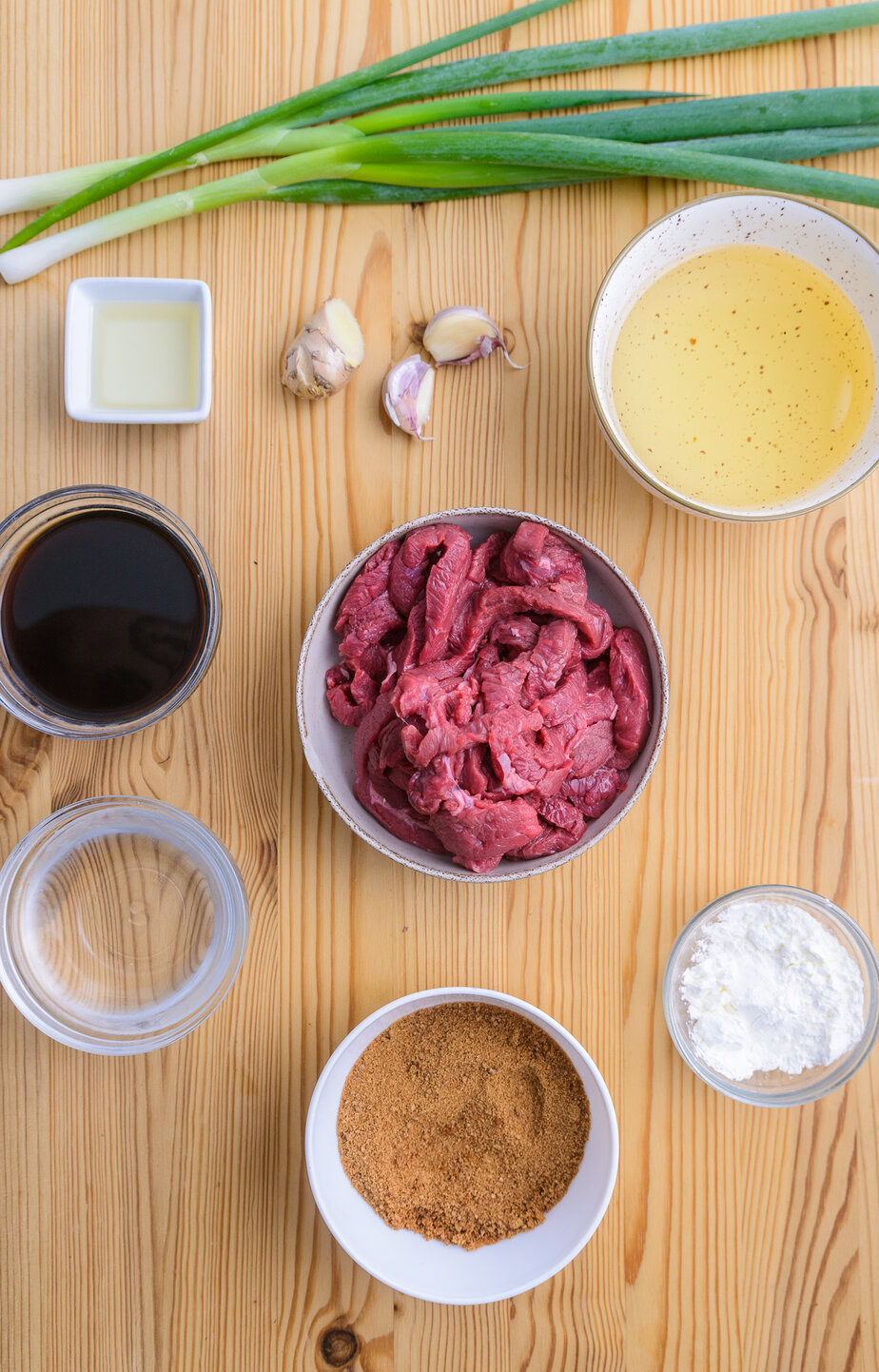
The beef is a quick-cooking cut, sliced thin and against the grain so it stays tender; in the United States, it’s almost always flank steak. The cornstarch is used dry: it forms a thin crust when fried, then thickens the sauce. Very hot neutral oil, with enough of it to fry in, gives the edges their crunch.
The sauce brings together reduced-sodium soy sauce, water and a generous amount of brown sugar, whose molasses notes give it its lacquered finish. Fresh garlic and ginger, sautéed in a little oil, flavor it, and the soy sauce adds umami and color. The restaurant version skips hoisin sauce, which keeps the sauce simple.
The green onions, added at the end, stay crunchy and cut through the richness of the glaze. The dish is served over white rice; jasmine rice works very well and soaks up the sauce.
Technique Tips for Good Mongolian Beef
It all comes down to the crunch. Slice the meat thin, on the bias and against the grain, using the same cutting technique as for other Asian dishes. Then fry it in shimmering oil without crowding the strips: packed too tightly, the meat releases its water and steams. A wok or a wide sauté pan gives it room.

The sauce stays runny until the very last moment: it’s the cornstarch on the beef that thickens it in a few seconds. So serve it right away, while the beef is still crispy. With Cantonese fried rice on the side, the meal has all the makings of a takeout order, only crispier.
Ingredients
Sauce
- 2 teaspoons oil
- 2 cloves garlic, minced
- 1 teaspoon ginger fresh, minced
- 120 ml soy sauce reduced-sodium
- 120 ml water
- 165 g sugar brown, cane sugar style
Beef
- 450 g beef, a quick-cooking cut (flank steak, strip steak, rib eye, sirloin…)
- 30 g cornstarch
- 250 ml oil for frying in a wok, or 350 ml in a sauté pan, more if needed
To Serve
- 2 green onions, thinly sliced
- White rice cooked, for serving
Instructions
Sauce
- In a small saucepan, heat the oil over medium-low heat.2 teaspoons oil
- Add the garlic and ginger and whisk as they sizzle.2 cloves garlic,, 1 teaspoon ginger
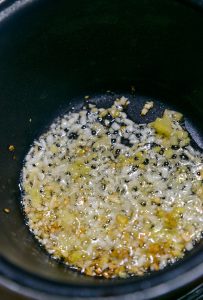
- Add the soy sauce, water, and brown sugar.120 ml soy sauce, 120 ml water, 165 g sugar
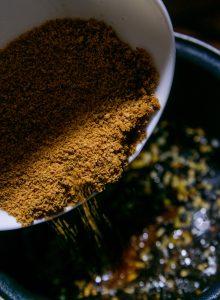
- Bring to a boil and let it boil for about 5 minutes.
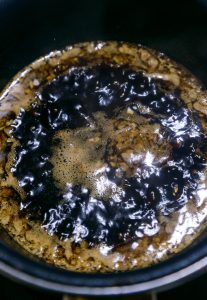
- Remove from the heat: the sauce is still thin at this point, and it will thicken once it meets the cornstarch-coated beef.
Beef
- Slice the beef into 6 mm thick strips, on a 45-degree bias, against the grain.450 g beef,
- Place the beef in a mixing bowl and coat it with the cornstarch.30 g cornstarch

- Let it sit for about 10 minutes so the cornstarch sticks well to the meat.
- Heat the frying oil in a wok or large sauté pan over medium-high heat until its surface shimmers.250 ml oil
- Add the beef to the hot oil.
- Fry for 2 to 3 minutes, stirring, until the edges are golden and crispy.
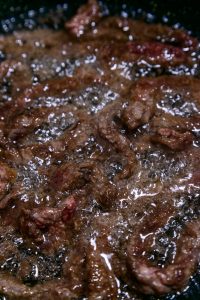
- Lift the beef out with a skimmer and transfer it to paper towels.
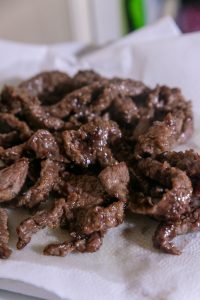
- Discard the cooking oil.
To Serve
- Return the empty wok or sauté pan to medium heat.
- Add the beef back for about 1 minute, tossing it to warm it through.
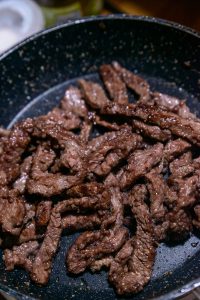
- Add the sauce and green onions.2 green onions,
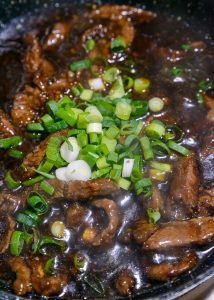
- Stir to coat the beef well: the sauce thickens almost immediately.
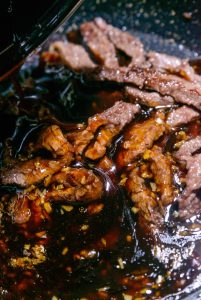
- Remove from the heat and serve right away over the rice, while the beef is still crispy.White rice