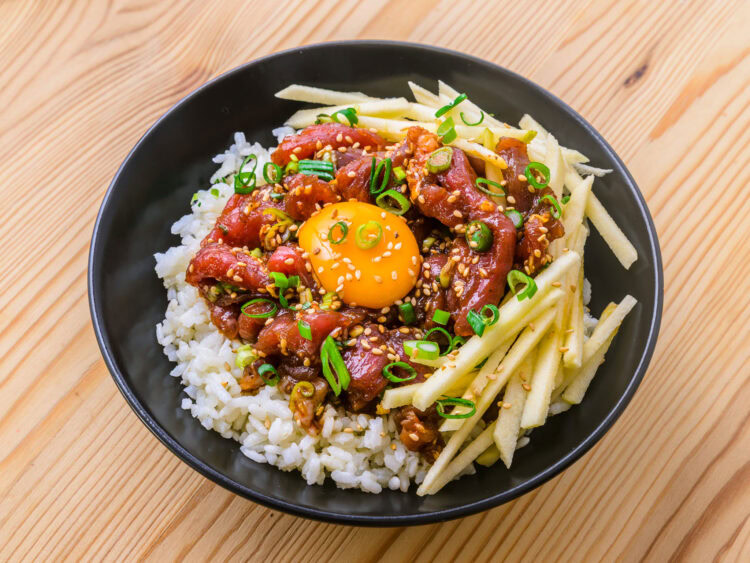
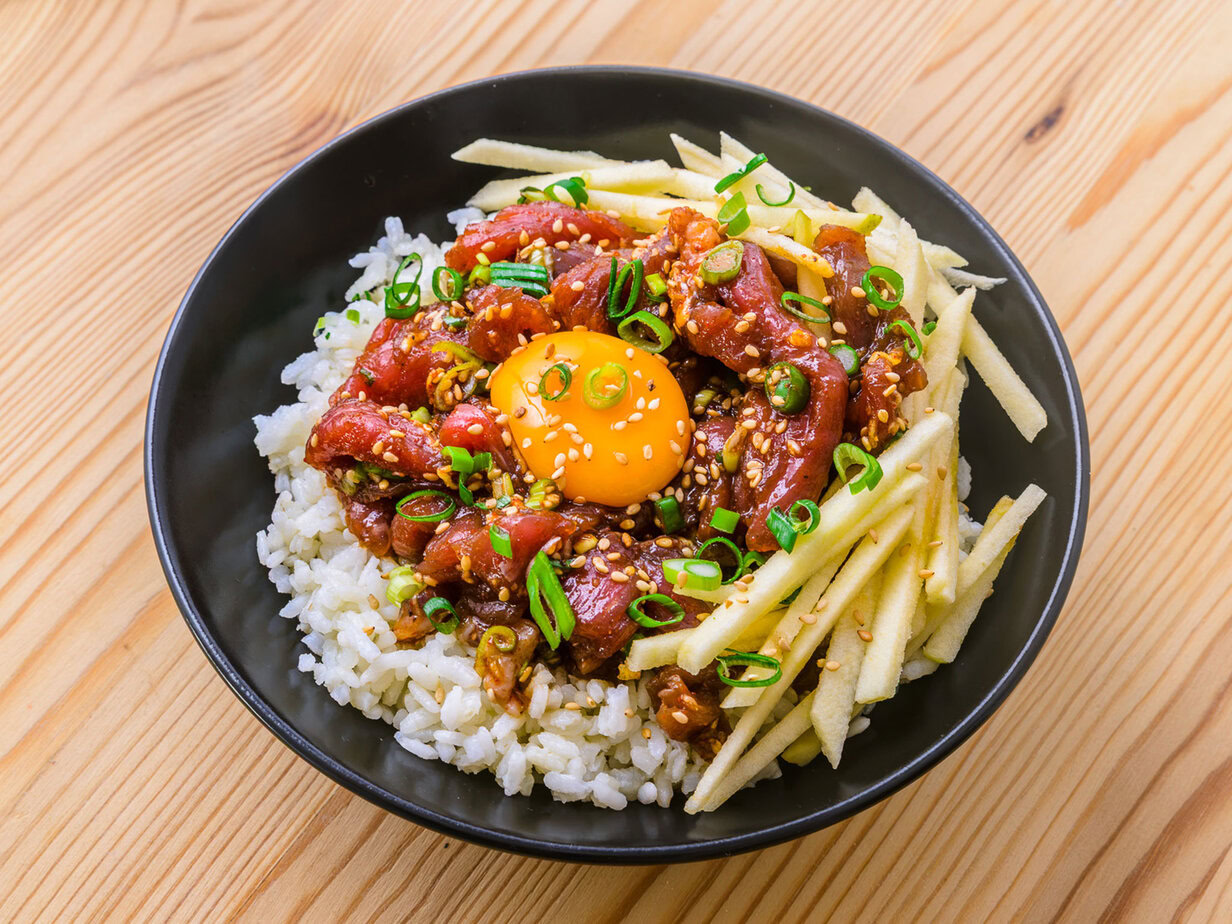
A comforting Japanese rice bowl of hot rice topped with yukke-style seasoned raw beef, crisp nashi pear, and a luscious egg yolk.
The rice is still steaming as the slices of beef land on top, glossy with sesame oil and garlic. Break the yolk, mix it through, and everything comes together in just a few flicks of the chopsticks.
The nashi pear adds crunch between bites and brightens the sesame. It’s a no-cook bowl, ready in minutes and gone even faster.
What Is Yukke Don ?
Yukke don is a Japanese rice bowl topped with seasoned raw beef. Yukke is the Japanese reading of the Korean yukhoe, from yuk, meaning meat, and hoe, meaning raw; don is short for donburi, a topped rice bowl.
The meat is hand-cut into thin strips, never minced, then tossed with sesame oil, garlic, honey or sugar, and soy sauce. It’s topped with a raw egg yolk, julienned nashi pear, and sesame seeds.
The name can be confusing, because versions of the dish exist on both sides of the sea. In Korea, yukhoe is served on its own or at the center of a bibimbap ; in Japan, it first became a staple at yakiniku tables before turning into a rice bowl in its own right. The touch of gochujang found in many Japanese versions is a later borrowing from Korea.
From Courtly Beef to the Bowls of Besieged Jinju
Under the Joseon dynasty, cattle were used mainly for fieldwork and their slaughter was tightly regulated, which made raw beef a dish for the royal court and the wealthy.
A cookbook from the late 19th century, the Siuijeonseo, already sets out the method: well-drained meat, hand-cut, and lightly seasoned with scallion, garlic, pepper, honey, pine nuts, and sesame. The meat stays center stage; the sauce is there only to support it.
The bowl version comes from Jinju. Local tradition traces it back to the sieges of 1592 and 1593, when women combined rice, vegetables, and freshly sliced beef in a single bowl so soldiers could eat quickly and return to the front. The city thrived on the cattle trade and held beef markets, so the meat arrived fresh enough to be eaten raw.
Two historic restaurants in the city, Cheonhwang Sikdang and Jeil Sikdang, still keep the classic presentation: the namul arranged around the rice, the beef in the center, the egg yolk on top, and pine nuts as a finishing touch.
In Jinju, the dish as a whole is called chilbohwaban, the seven-treasure flowered dish, an echo of Korea’s five traditional colors. The house sauce there is yeotkojang, a gochujang cooked in beef tallow and loosened with broth, and it is served with seonjitguk, a beef blood soup, on the side.
The Main Ingredients in Yukke Don
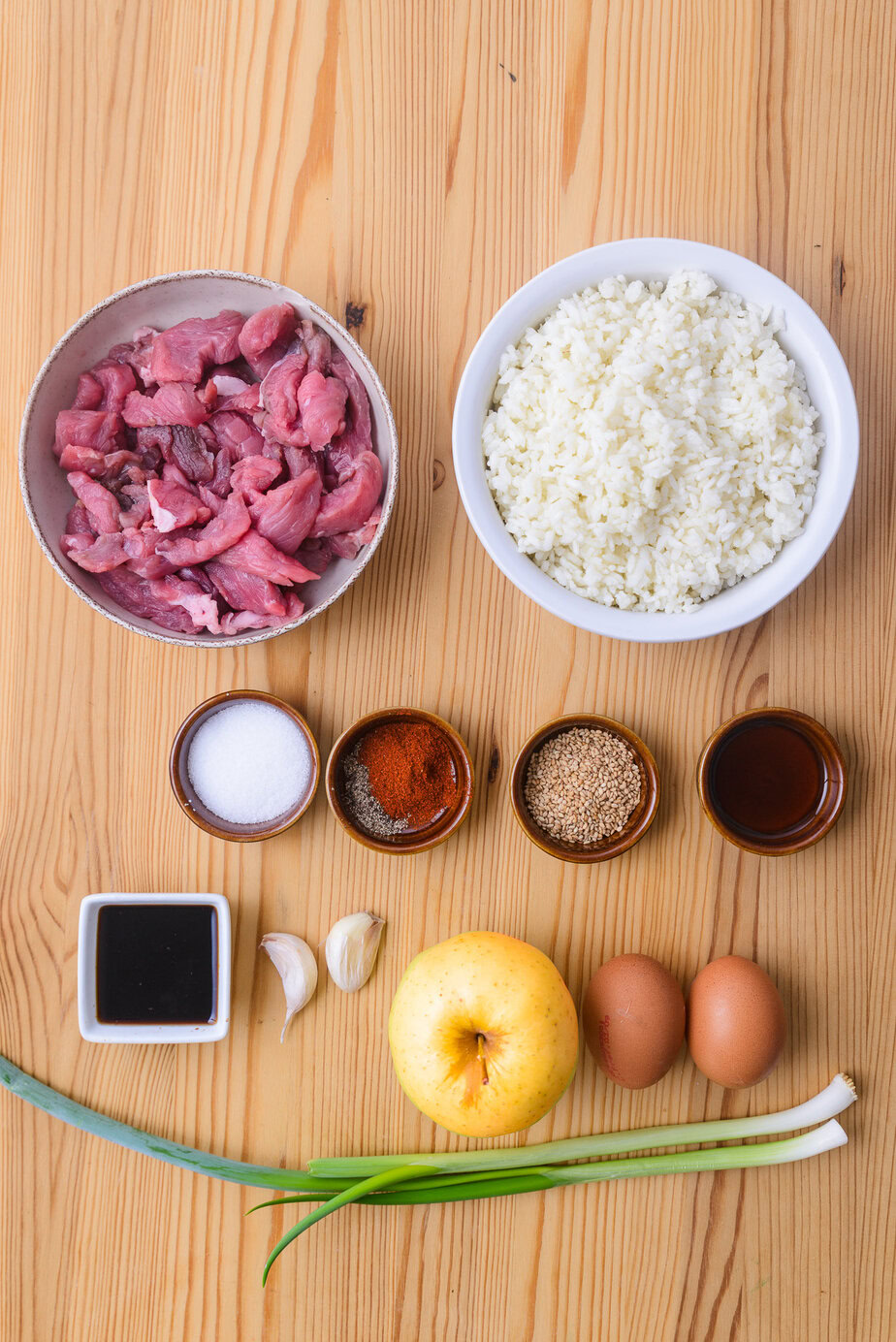
Extra-lean beef is the star, usually tenderloin or eye of round, trimmed of fat and sinew, then cut by hand. Japanese short-grain rice is served hot, sometimes cooked in a light beef broth : it should warm the meat without cooking it. Nashi pear brings sweet crunch and tenderizing enzymes; that contrast is what makes the bowl work.
The seasoning stays restrained. Toasted sesame oil adds sheen and an aroma that blooms against the hot rice; soy sauce or salt provides savoriness; honey balances it out; and garlic, scallion, and black pepper bring everything to life. A heavy sauce, especially one that is too sweet or too spicy, overwhelms the flavor of the beef.
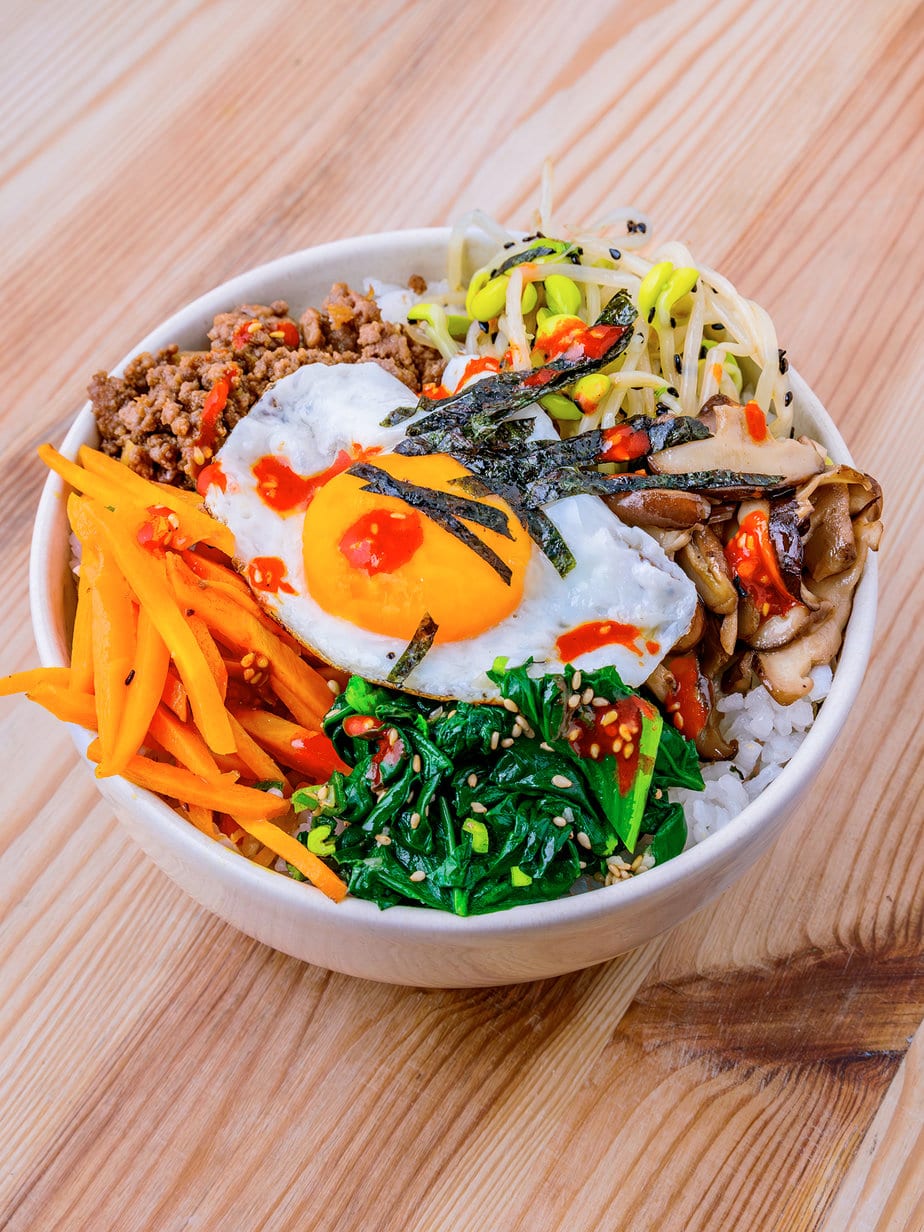
The raw egg yolk coats both the rice and the beef, while pine nuts and toasted sesame leave a nutty finish. The Jinju version adds namul, mung bean sprouts, bracken, spinach, and bellflower root, all chopped fairly fine so each spoonful picks up a bit of everything.
There, yeotkojang replaces plain gochujang and gives the umami a depth the Japanese version doesn’t have.
Ingredients
Seasoned beef (yukke)
- 300 g lean sashimi-grade beef (tenderloin, rump steak, or round)
- 2 tablespoons Japanese soy sauce (such as Kikkoman)
- 1 tablespoon sesame oil
- 1 tablespoon sugar or honey
- 2 cloves garlic grated
- 2 stalks green onion thinly sliced
- 1 tablespoon sesame seeds toasted
- 1 teaspoon gochujang optional
- 1 pinch black pepper
For serving
- 400 g cooked Japanese rice hot
- 2 egg yolks very fresh (ideally pasteurized)
- 0,5 Asian pear (nashi) cut into a fine julienne
- sesame seeds for garnish
- green onion thinly sliced, for garnish
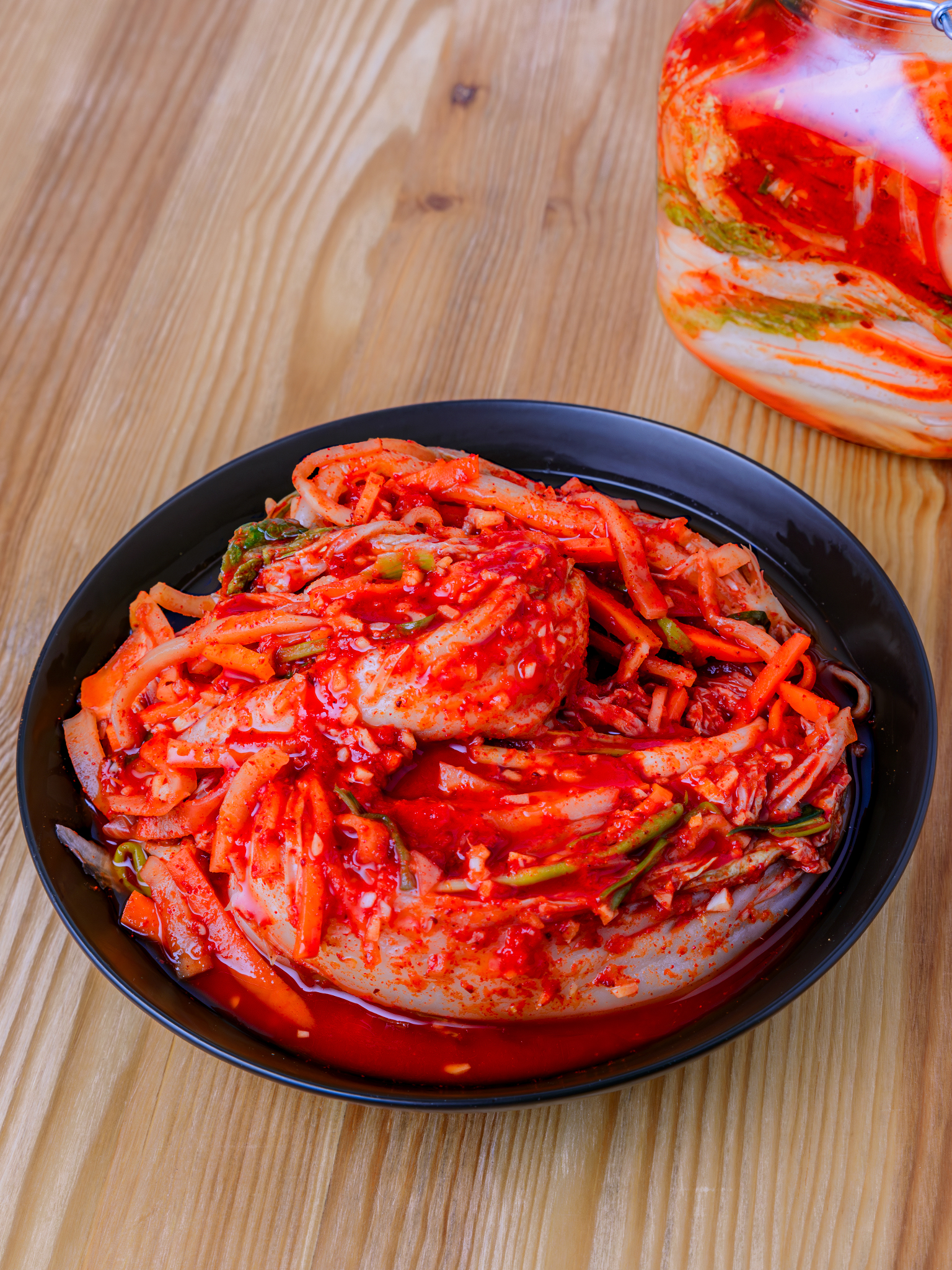
- kimchi optional, on the side
Instructions
Preparation
- Freeze the beef for 1 to 2 hours, until firm and very cold.300 g lean sashimi-grade beef (tenderloin, rump steak, or round)
- Rinse the beef under cold water, then pat it completely dry.
- Slice the beef thinly, then cut it into matchsticks.
- In a bowl, combine the soy sauce, sesame oil, sugar (or honey), garlic, green onion, sesame seeds, and black pepper.2 tablespoons Japanese soy sauce (such as Kikkoman), 1 tablespoon sesame oil, 1 tablespoon sugar, 2 cloves garlic, 2 stalks green onion, 1 tablespoon sesame seeds, 1 pinch black pepper
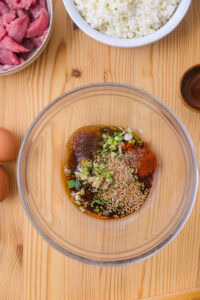
- Stir in the gochujang if you want a spicier version.1 teaspoon gochujang
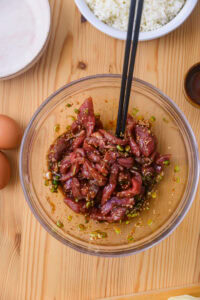
- Add the beef to the seasoning mixture.
- Gently toss with chopsticks, without using your hands, so the meat keeps its color.
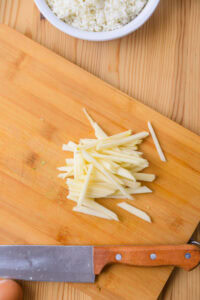
- Cut the pear into a fine julienne.0,5 Asian pear (nashi)
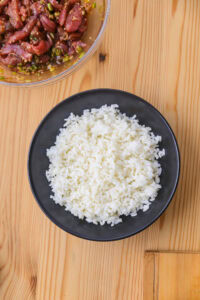
- Divide the hot rice between two bowls.400 g cooked Japanese rice
- Top the rice with the seasoned beef.
- Add the julienned pear.
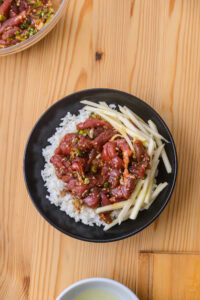
- Make a small well in the center and place an egg yolk inside.2 egg yolks
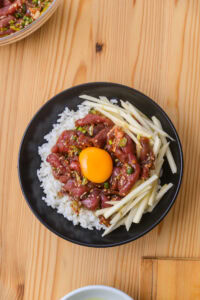
- Finish with sesame seeds and green onion, and serve immediately with kimchi, if desired.sesame seeds, green onion, kimchi
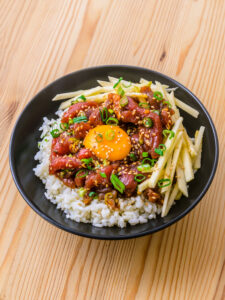
- Mix just before eating: the egg yolk coats the beef and rice.