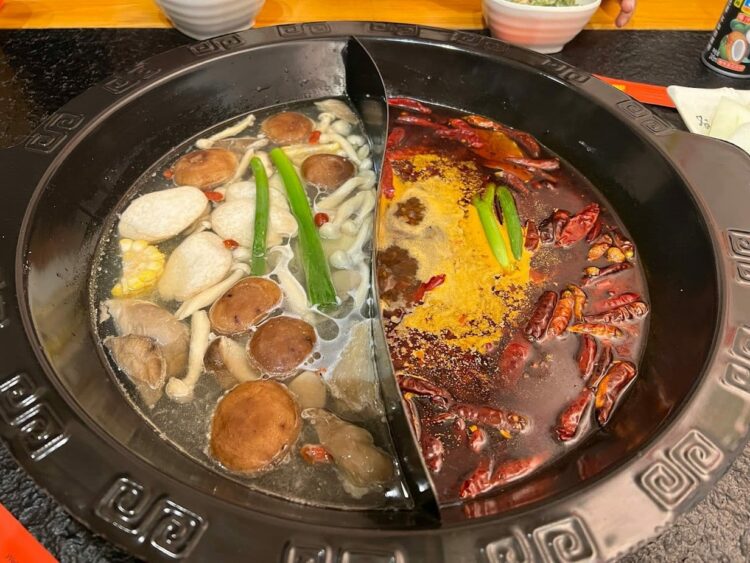
What is Chinese hot pot?
Chinese hot pot, often referred to simply as hot pot, is a traditional meal from China. In Mandarin, it is called Huo Guo (火锅), which literally means “fire pot.” This iconic dish is a staple of Chinese cuisine and is best known for its wonderfully communal nature.
How it works and how to enjoy it
Chinese hot pot is a very common style of meal built around a pot of broth kept simmering over a heat source throughout the meal. Around the pot, you arrange a variety of ingredients, ready for each guest to cook in the broth.
Ingredients can include vegetables, slices of meat, seafood, tofu, and noodles. Once cooked, they are often dipped into sauces for even more flavor.
Unlike many other Chinese dishes, where all the cooking is done by the cook, Chinese hot pot, much like its French counterparts, is an interactive meal where everyone cooks and eats at the table. Guests cook, chat, and share the experience together, creating a warm, lively atmosphere much like a Thai barbecue
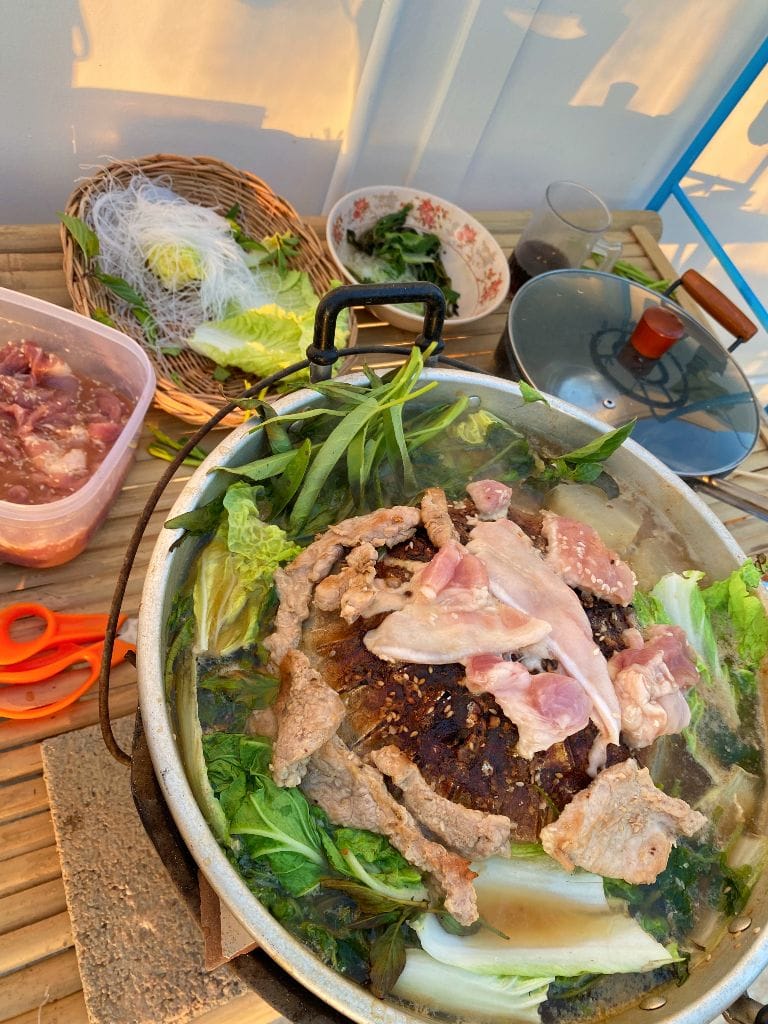
The perfect meal for entertaining
Popularity and accessibility
Chinese hot pot restaurants are popular in almost every region of China. They are everywhere, and most are very reasonably priced, making this culinary experience accessible to a wide audience.
That said, Chinese families also love enjoying hot pot in the comfort of their own homes.
Making Chinese hot pot at home is an ideal way to bring family and friends together around a relaxed, delicious meal. Ingredients can easily be tailored to each guest’s preferences and dietary needs, making the experience both personal and enjoyable for everyone.
Regional varieties and flavors
Chinese hot pot also comes in many forms, depending on the region and local traditions.
Some versions are fiery, like Sichuan hot pot, known for its spicy, fragrant broth, while others are gentler, like Cantonese hot pot, which highlights a clear, savory broth so the freshness of the ingredients can really shine. This variety allows guests to discover new flavors and enjoy a truly unique culinary experience.
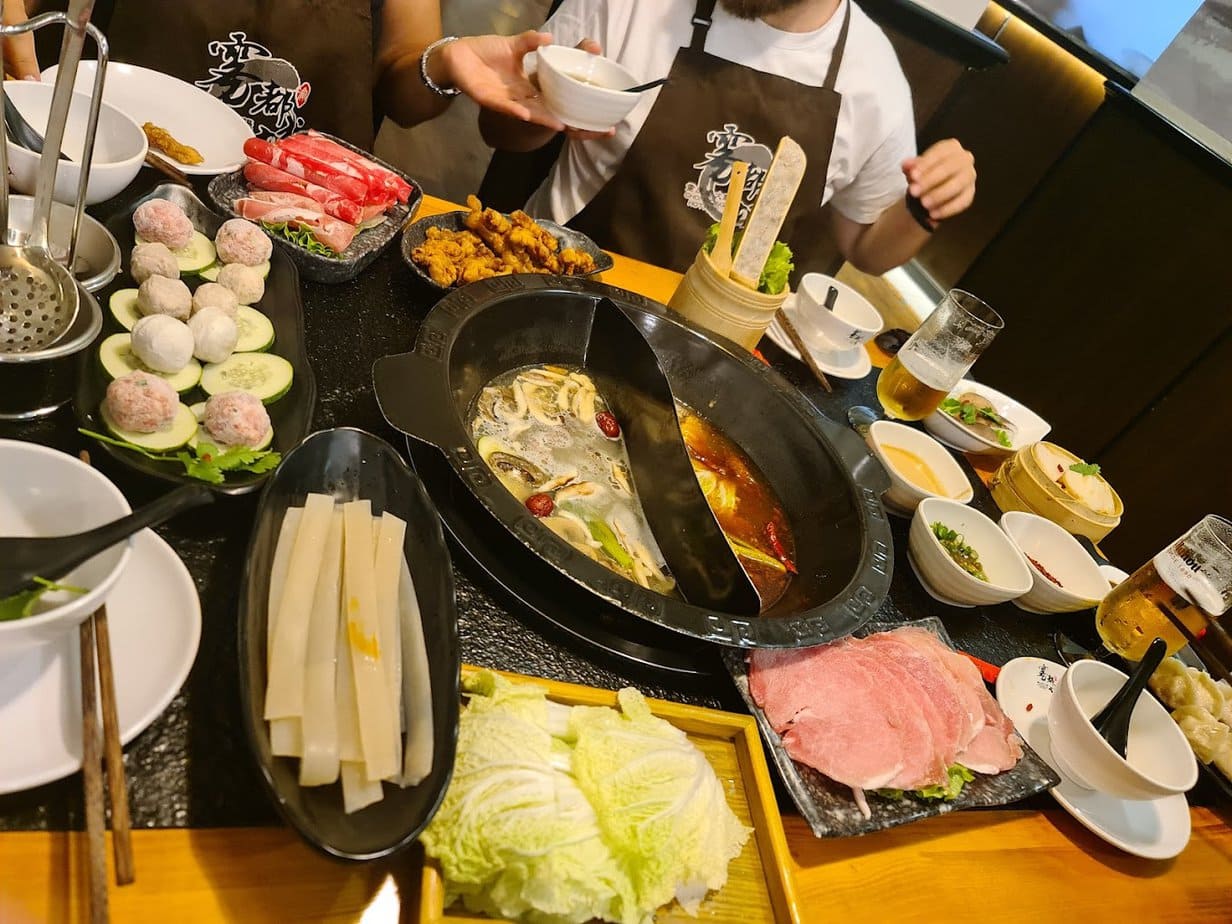
Hot pot is especially well suited to festive gatherings. Each component, from the broth to the dipping ingredients to the sauces, can be prepared ahead of time. That leaves the host free to enjoy the meal too, without spending the whole evening in the kitchen.
This homemade Chinese hot pot guide will cover the following topics :
- The equipment you’ll need
- How to prepare the broth
- What to cook in the hot pot
- Dipping sauce ideas
- How to set up the meal
- Additional tips
The necessary equipment
Before we dive in, let me first explain what equipment, kitchen utensils, and tableware you’ll need for Chinese hot pot. You can find them in most large Chinese or Asian grocery stores.
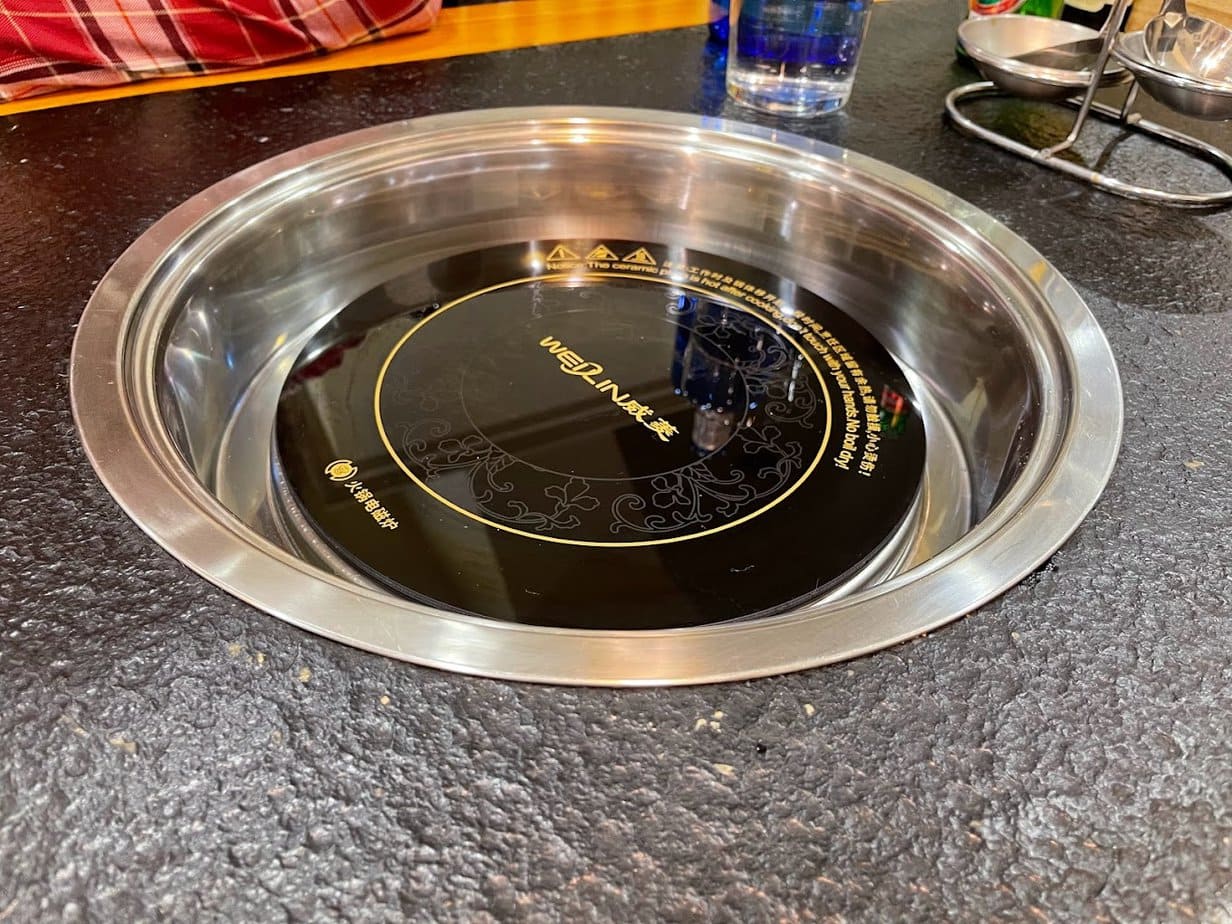
- A portable heat source. This can be a portable gas, electric, or induction burner. If you use gas, make sure it is suitable for indoor use if you plan to eat indoors.
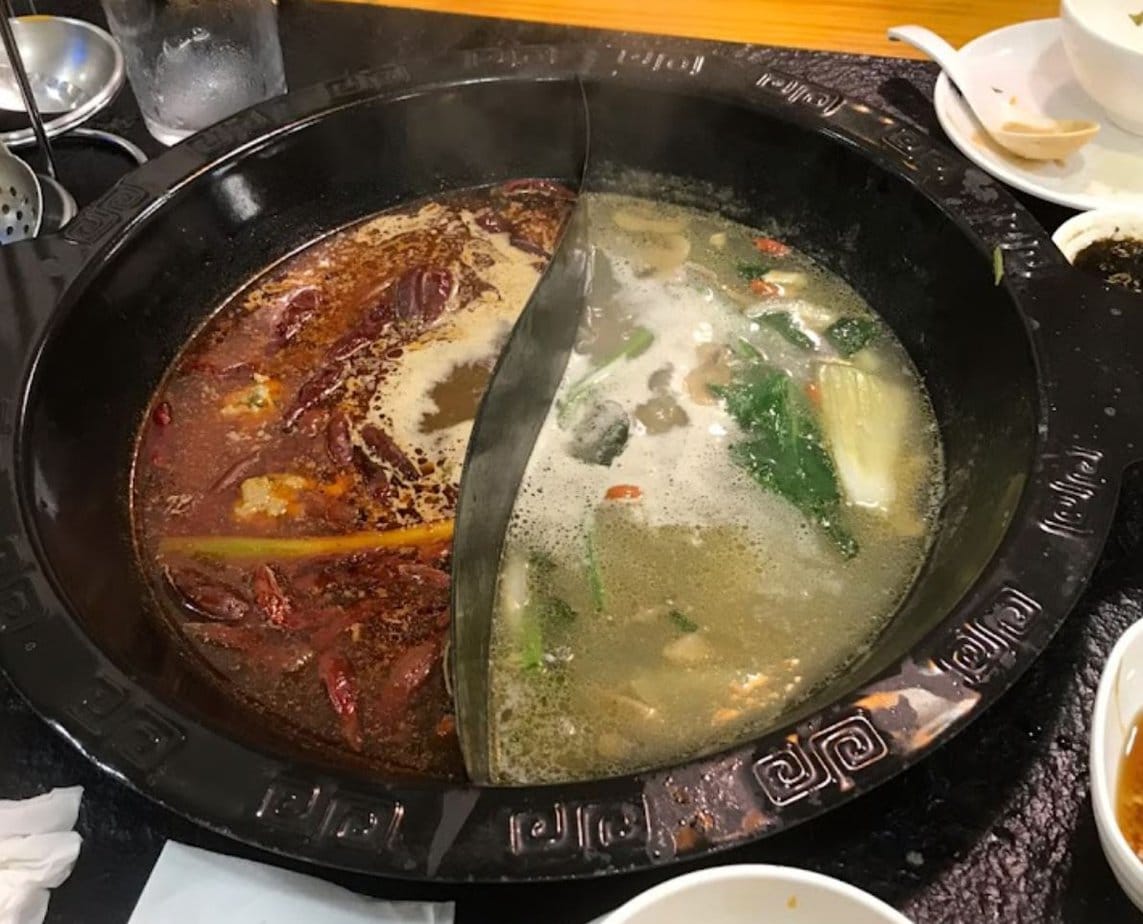
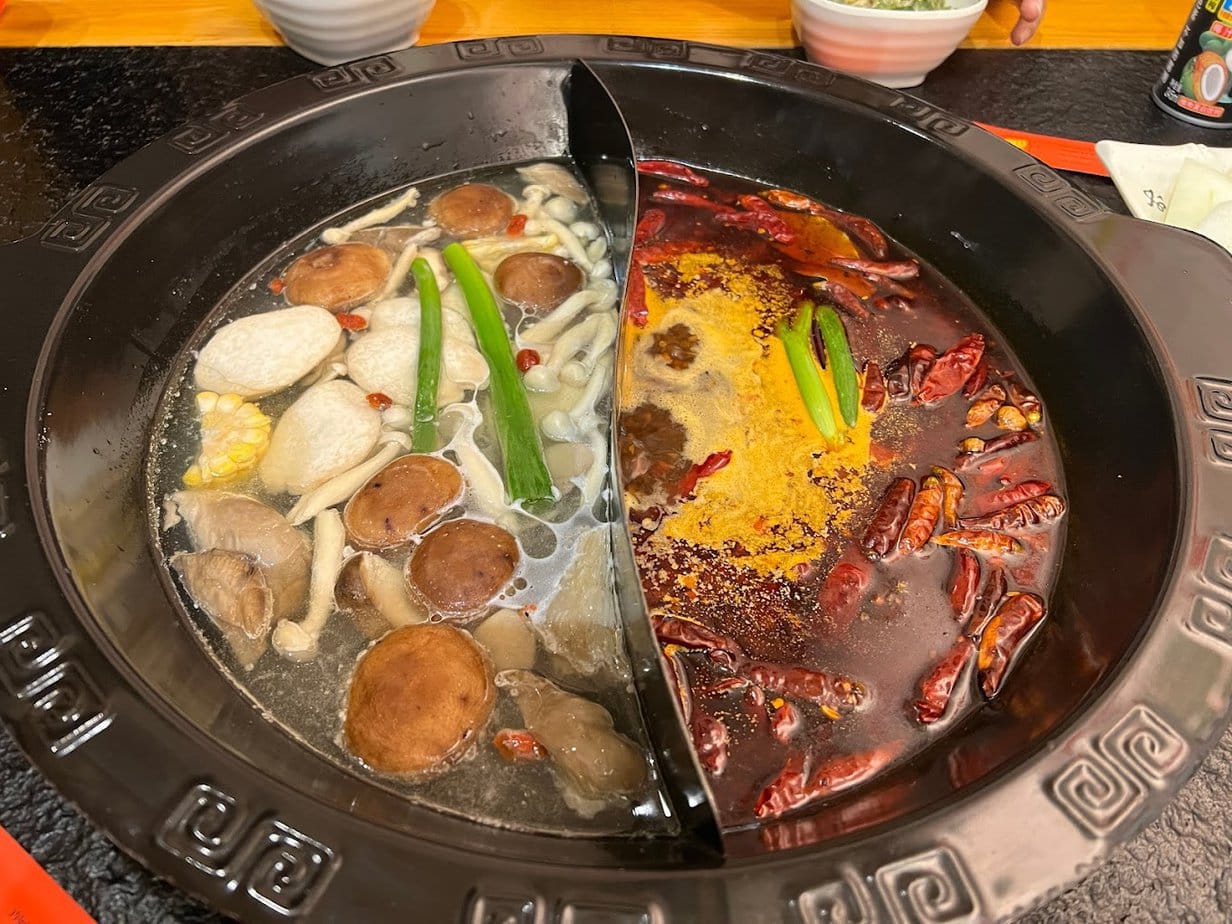
- A saucepan or wok that sits securely on the heat source. It should be shallow enough for guests to easily lift out cooked ingredients. If you want to go a step further, buy a divided pot (Yuan Yang Guo, 鸳鸯锅), which has a partition in the middle to separate two different broths (usually one spicy and one mild). It is also known as a Yin-Yang pot because it resembles the Yin-Yang symbol.
- Plates to hold the various ingredients.
- Bowls for dipping sauces (usually one bowl per guest). A few small side plates are also useful in case you do not want to dip everything into the sauce.
- Chopsticks. Use wooden or bamboo chopsticks. Plastic chopsticks may not be suitable for high heat, since the broth in the pot stays above boiling. Metal chopsticks, on the other hand, would become too hot to hold. Special extra-long Chinese hot pot chopsticks are available in Chinese stores, but they are not essential.
- Slotted spoons (optional). These are useful for fishing out slippery ingredients, but you can certainly manage without them. A long-handled spoon or a pair of tongs will also do the job.
How do you prepare the broth?
Hot pot broth (Guo Di/锅底)
Hot pot broth, or Guo Di (锅底), is the liquid in which the ingredients are cooked during the meal. Different regions of China have their own hot pot broths, ranging from simple versions made with just water and a few aromatics, such as the Beijing style, to more elaborate versions that require a long list of ingredients and even more preparation, such as the Sichuan style.
Two types of broth are especially popular in restaurants: mild broth and spicy broth:
Mild broth
Mild broth, also commonly called clear broth and known in Mandarin as Qing Tang Guo Di (清汤锅底), is an elegant broth prized for its simplicity and aromatic depth.
It is made with a liquid base, green onions, and fresh ginger, and it can also include a variety of optional dried ingredients, such as shiitake mushrooms for earthy depth, Chinese dates for a touch of natural sweetness, and goji berries for a delicate fruity note.
As for the base itself, there are several possibilities. It can be meat-based, using chicken, pork, or beef for a rich, savory broth.
There are also vegetarian alternatives, especially mushroom-based versions with pronounced umami notes, or tomato-based broths that are lightly tangy and refreshing.
This versatile broth can be used in many ways in the kitchen. It works beautifully as a soup base, enriched with noodles, vegetables, and proteins, or as a simmering liquid that gently infuses ingredients with its delicate flavor.
Mild broth is a fundamental element of Chinese cuisine, and its delicate character and layered flavor profile make it a key component in a wide variety of dishes.
Spicy broth
Spicy broth, a staple of Sichuan cuisine, is also known as red oil broth, or Hong You Guo Di (红油锅底) in Mandarin. Celebrated for its aromatic richness and exhilarating heat, this broth captures the boldness and complexity that define Sichuan cooking.
To prepare this captivating broth, start with a concentrated soup base, which can be bought ready-made for convenience or prepared from scratch for a more authentic culinary experience. This base is then mixed with water or broth to reach the desired strength.
The concentrated soup base itself is a carefully balanced blend of ingredients. Chilies play the leading role, bringing deep, lingering heat, while Sichuan peppercorns add brightness and their signature tingling sensation.
An assortment of spices adds complexity, while fermented ingredients such as Sichuan chili bean paste bring deep umami flavor. The broth is also enriched with beef tallow, which gives it extra body and richness.
However, for those following a vegetarian diet, this broth can easily be adapted by replacing the beef tallow with regular cooking oil, without sacrificing depth of flavor.
This spicy broth is often the star of a Chinese hot pot meal, serving as the cooking liquid for a wide range of ingredients and enhancing them with its bold, fragrant flavor.
One of the most appealing features of Sichuan spicy broth is how easily it can be tailored to each guest’s taste. By adjusting the amount of chilies and spices, you can control the level of heat and create an experience that feels both personal and memorable. With its bold flavors and versatility, this broth is a true culinary adventure for anyone who loves spice.
Buy ready-made broth or make it yourself
In Chinese grocery stores, you can find packets of concentrated soup base for both mild and spicy broths. All you need to do is dilute the contents of the package with water.
Your hot pot broth will be ready in just a few minutes. Reputable brands include Hai Di Lao (海底捞), Little Sheep (小肥羊), Lee Kum Kee (李锦记), Qiao Tou (桥头), Da Hong Pao (大红袍), De Zhuang (德庄), and others.
That said, I encourage anyone who wants to give it a try to make my homemade broth recipes (mild and spicy). They taste wonderful and are probably healthier too, with no additives or preservatives.
You can make them in large batches and freeze them for later. That way, homemade Chinese hot pot is always within reach!
What ingredients should you cook in the hot pot?
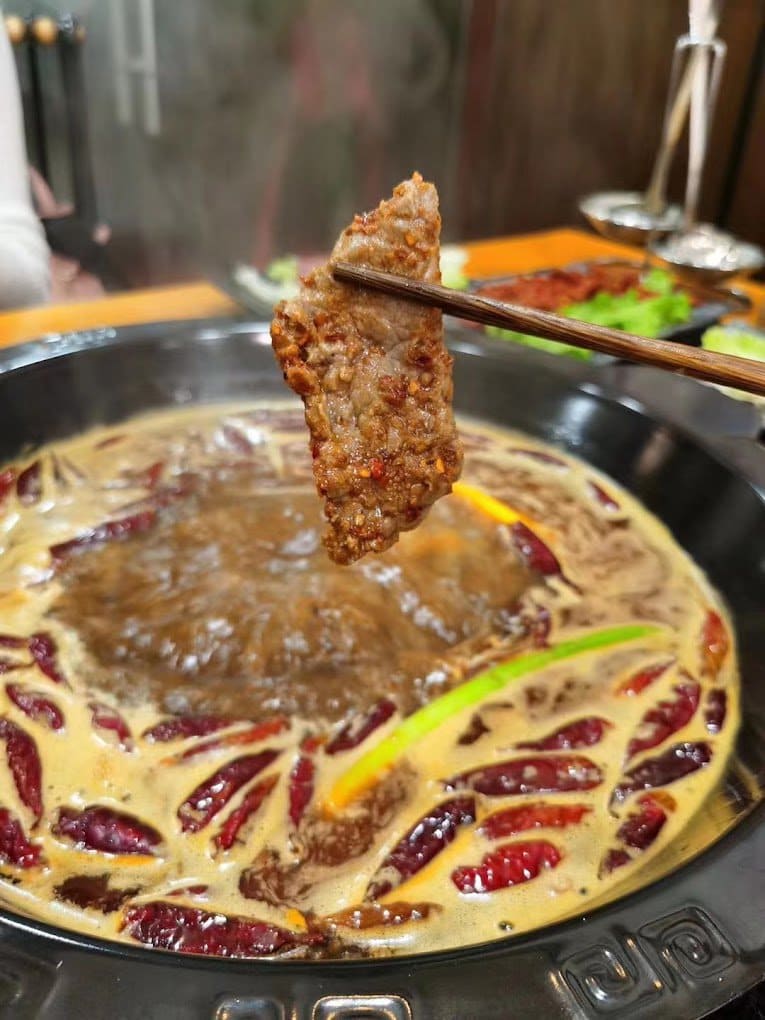
A world of options for your Chinese hot pot
There is a huge variety of ingredients you can add to a Chinese hot pot. In this article, I am highlighting the most common and typical ingredients found in Chinese hot pots, as well as those most readily available in Chinese or Asian grocery stores outside China.
That said, this list is only a starting point. Chinese hot pot is all about creativity and customization, so feel free to improvise, mix, and match according to your tastes and preferences.
Whether you want a lavish, protein-packed feast or a wholesome vegetarian spread, Chinese hot pot is a dish that can be adapted endlessly to suit every palate.
Preparing the ingredients in advance
It is best to prepare the ingredients before the meal begins, up to one day in advance if you keep them refrigerated. In most cases, this simply means washing them if needed and cutting them into bite-sized pieces for easy cooking.
Meats
- Beef, lamb, or pork. If possible, choose well-marbled cuts. Slice them thinly against the grain. To make slicing easier, place the meat in the freezer until it is half-frozen. You can also find pre-sliced hot pot meat in the frozen section of Chinese grocery stores.
- Pre-cooked meatballs, thawed if frozen
- Canned meat (Spam), known in Chinese as Wu Can Rou/午餐肉, sliced
Fish and seafood
- Fish: choose a boneless fillet and slice it thinly, such as halibut, catfish, cod, or sea bass.
- Shrimp, with or without shell and head
- Squid, sliced
- Fish balls. Ready-to-use fish balls are available in Chinese grocery stores, and they are delicious.
- Fresh fish or shrimp paste; shape it into balls during the meal for an especially delicious bite.
- Other seafood, such as crab, clams, mussels, and more.
Soy-based ingredients
- Tofu (silken, soft, or firm), sliced
- Frozen tofu, sliced
- Tofu puffs (fried tofu)
- Pressed tofu sheets (Dou Fu Pi/豆腐皮), cut into wide strips
- Dried tofu skin (Fu Zhu/腐竹), rehydrated beforehand*
- A few jujubes to add extra flavor to the broth
Mushrooms
- Oyster mushrooms, separated into small clusters
- King oyster mushrooms, sliced lengthwise
- Enoki mushrooms, with the ends removed and pulled into small bundles
- Shiitake mushrooms, fresh or dried (rehydrated beforehand)
- Shimeji mushrooms, with the ends removed
Vegetables
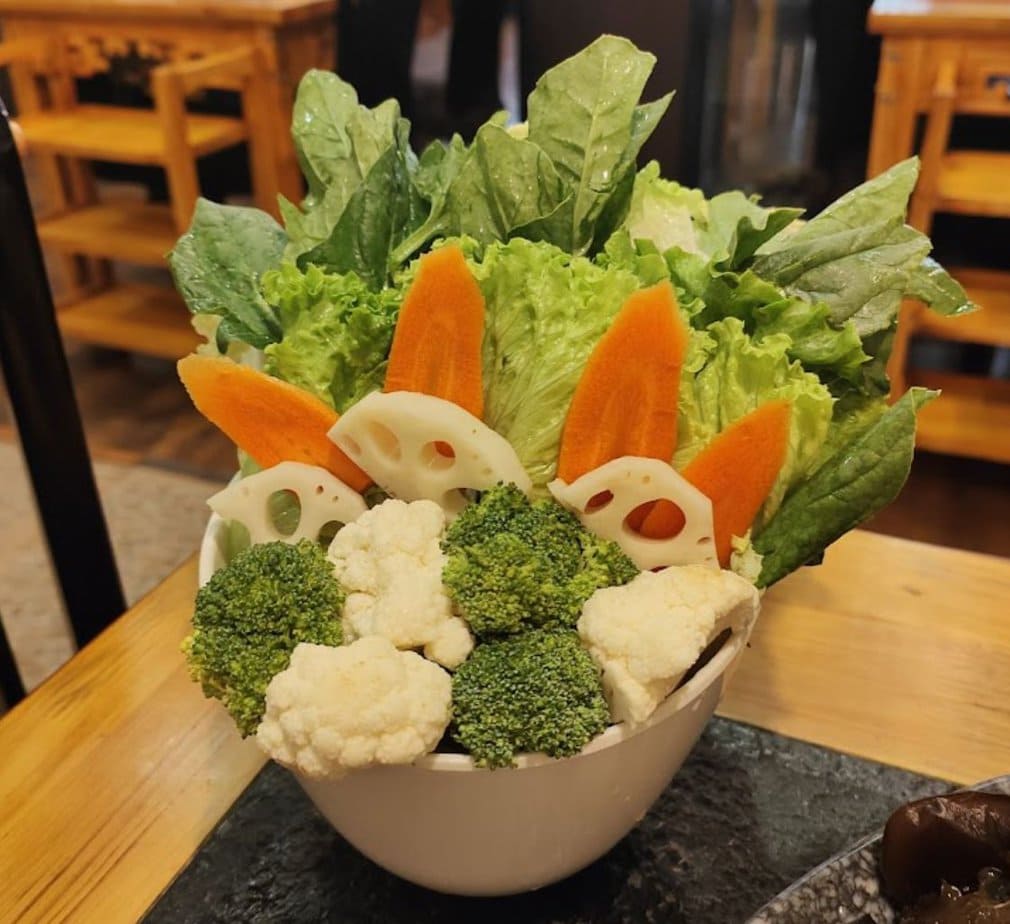
- Napa cabbage (Chinese cabbage)
- Bok choy
- Choy sum
- Gai lan
- Crown daisy (Tong Hao)
- Water spinach
- Watercress
Tubers
- Potatoes, peeled and sliced
- Sweet potatoes, peeled and sliced
- Daikon (white radish), sliced
- Lotus root, sliced
Dried ingredients
- Kelp (a type of seaweed), rehydrated and cut into strips
- Wood ear (a type of mushroom), rehydrated beforehand
Noodles and dumplings
- Fresh wheat noodles
- Instant ramen-style noodles
- Fresh rice noodles
- Mung bean vermicelli, pre-soaked
- Glass noodles made from sweet potato, pre-soaked
- Dumplings or wontons, homemade or store-bought. Be sure to cook only a few at a time.
Dipping sauce ideas
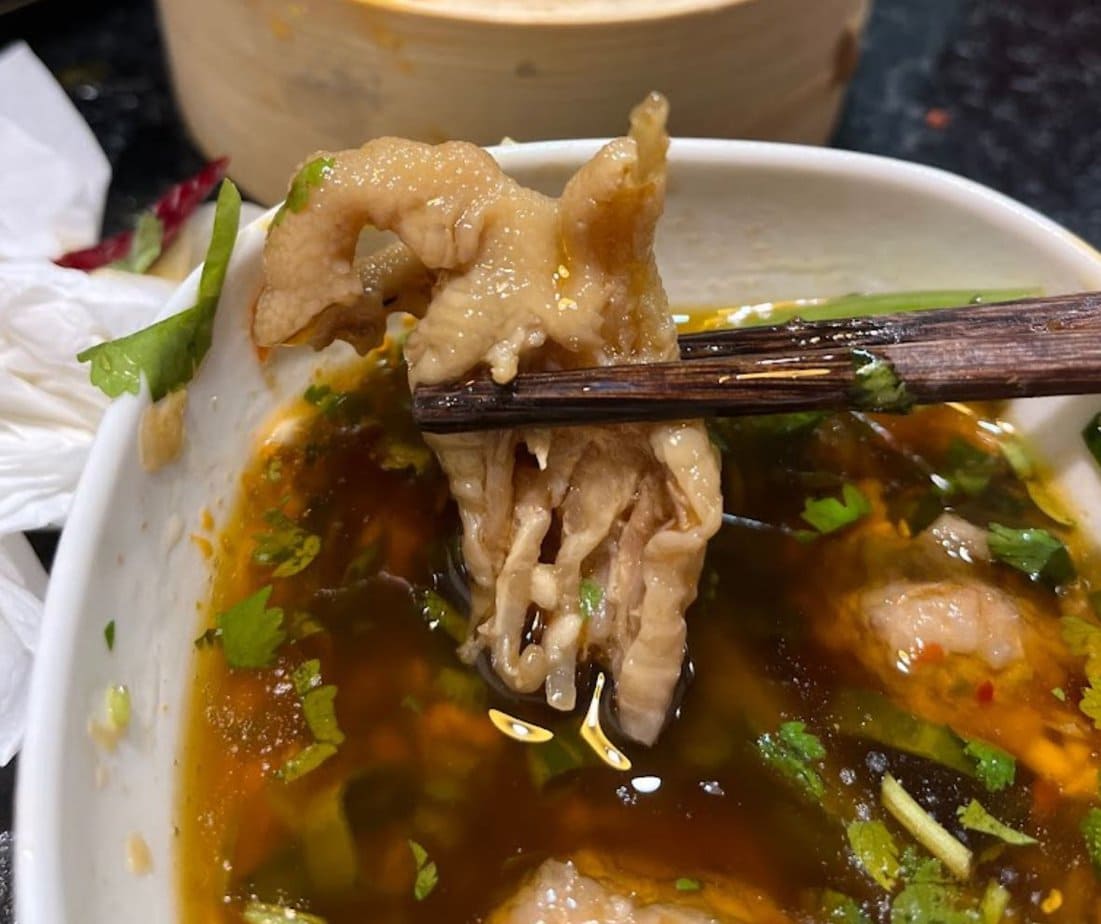
After cooking ingredients in the broth, it is common to dip them into a sauce for extra flavor, although this is not mandatory. There are many variations, often dramatically different from one region to another.
That is why some Chinese hot pot restaurants have self-serve sauce stations, where you can mix and match different ingredients to create your own.
Here is a list of condiments, aromatics, fresh herbs, and nuts that can go into a Chinese hot pot dipping sauce :
- Sauces : light soy sauce, black rice vinegar, oyster sauce, hoisin sauce, Chinese dressing
- Pastes : black sesame paste, peanut butter
- Oil : sesame oil, homemade chili oil
- Spices : chili powder, ground Sichuan pepper
- Aromatics: grated garlic, cilantro, shallots, fresh chili
- Nuts : toasted sesame seeds, roasted peanuts
How to set up Chinese hot pot
- Wash and cut all the ingredients. Arrange them on plates. You can place different ingredients on the same plate, but avoid mixing meats, fish, and seafood with other items.
- Mix the sauces and divide them among individual bowls. Keep a little extra on hand in case someone wants to adjust theirs or add green onions, cilantro, fresh chili, chili oil, salt, or anything else.
- Place the heat source and the pot in the middle of the table. Pour in the broth. Make sure all cables are positioned carefully to avoid tripping.
- Arrange the plates of ingredients around the pot, then set out the sauce bowls, chopsticks, napkins, and drinks for each guest.
- Turn on the heat. Once the broth comes to a boil, start adding ingredients to the pot. The broth will evaporate as you eat, so keep extra hot water nearby in case you need to top it up.
Tips for successful Chinese hot pot
Wait until the broth comes to a boil
Hot pot takes a little patience. Add ingredients only once the broth begins to boil. Do not add too much at once, as this will significantly lower the temperature of the broth and make everything take longer to cook. Ideally, the broth should stay at a gentle simmer throughout the meal. Lower the heat slightly if it starts boiling too aggressively.
Cook the “flavorful” ingredients first
Although there are no hard rules about what to eat first, it is generally a good idea to cook umami-rich foods first, such as meat, seaweed, and mushrooms, as they make the broth even more flavorful.
Do not overcook certain foods
For the best texture, be careful not to overcook meats, fish, and seafood. If cooked too long, they will become tough and rubbery. In general, they are ready to eat as soon as their color changes.
Cook starchy ingredients at the end
Starchy ingredients tend to thicken the broth, so it is best to cook them toward the end of the meal. Also, do not leave them in the broth for too long. This applies to potatoes, sweet potatoes, noodles, and dumplings.
Pay attention to hygiene
During a Chinese hot pot meal, chopsticks are used both to pick up raw ingredients for the broth and to retrieve cooked food to eat. It is therefore important to follow a few hygiene precautions to avoid cross-contamination.
After handling raw foods, especially meats, fish, and seafood, dip the tips of the chopsticks into the boiling broth for a few seconds. This will help ensure a safe and hygienic meal for you and your guests.
Equipment
Ingredients
Broth options (choose one or use both in a divided pot)
Meat options
- Beef, lamb, or pork, thinly sliced against the grain; choose well-marbled cuts if possible
- Precooked meatballs, thawed if frozen
- Spam, sliced
Fish and seafood
- Boneless fish fillet, thinly sliced, such as halibut, catfish, cod, sea bass, pangasius, etc.
- Shrimp, with or without shells or heads
- Squid, sliced
- Fish balls
- Fish or shrimp paste, shaped into balls at the table
- Other seafood, such as crab, clams, mussels, etc.
Soy-based ingredients
- Tofu (silken, soft, or firm), sliced
- Frozen tofu, thawed and sliced
- Tofu puffs (fried tofu)
- Pressed tofu sheets, cut into wide strips
- Dried tofu skin, rehydrated
Mushrooms
- Oyster mushrooms, separated into small clusters
- King oyster mushrooms, sliced lengthwise
- Enoki mushrooms, trimmed and separated into small bundles
- Shiitake mushrooms, rehydrated if dried
- Shimeji mushrooms, trimmed
Leafy greens
- Napa cabbage
- Bok choy
- Choy sum
- Gai lan
- Crown daisy (tong ho)
- Water spinach
- Watercress
Root vegetables
- Potatoes, peeled and sliced
- Sweet potatoes, peeled and sliced
- Daikon (white radish), sliced
- Lotus root, sliced
Dried ingredients
- Kelp, rehydrated and cut into strips
- Wood ear mushrooms, rehydrated
Noodles
- Fresh wheat noodles
- Fresh rice noodles
- Mung bean vermicelli, soaked
- Sweet potato glass noodles, soaked
- Homemade or store-bought dumplings, preferably bite-size
Dipping sauce ingredients (mix and match to taste)
- Sauces: light soy sauce, black rice vinegar, oyster sauce, hoisin sauce (Chinese barbecue sauce)
- Pastes: sesame paste, peanut butter
- Oils: sesame oil, chili oil
- Spices: chili powder, ground Sichuan peppercorn
- Aromatics: minced garlic, cilantro, shallots, fresh chili
- Crunchy toppings: sesame seeds, roasted peanuts
Instructions
- Wash and prep all the ingredients, then arrange them on plates. You can place different ingredients on the same plate, but avoid mixing meat, fish, and seafood with other items.
- Mix the sauces and divide them among individual bowls. Keep a little extra on hand in case anyone wants to adjust their sauce or add extras such as scallions, cilantro, fresh chili, chili oil, salt, etc.
- Place the heat source and the pot in the center of the table, then pour in the broth. Make sure all cords are tucked safely out of the way to prevent tripping.
- Arrange the plates of ingredients around the pot, and set out sauce bowls, chopsticks, napkins, and drinks for each guest.
- Turn on the heat. Once the broth comes to a boil, start adding ingredients to the pot. The broth will evaporate as you eat, so keep extra hot water nearby in case you need to top it up.
Notes
Nutrition
This method originally comes from Red House Spice, an excellent reference for Sichuan recipes.