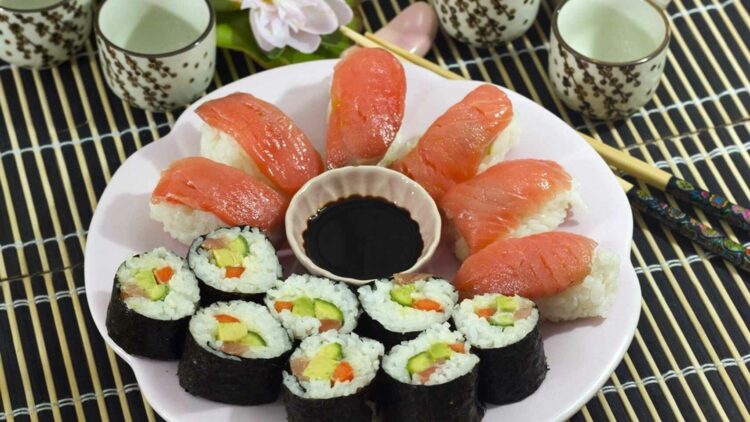
There’s no wrong way to eat sushi
Whether you like it raw, sashimi-style (even though sashimi isn’t actually sushi), fried, as maki, or chopped up in a poke bowl, eating raw fish is no longer frowned upon in our part of the world – and just about everyone has tried sushi at some point in their life.
Whether you pair it with a glass of sake, a cocktail, a glass of wine, or any other drink, sushi offers a unique and flavorful culinary experience unlike anything else in Asian cuisine. Cold, firm fish combined with perfectly seasoned rice, sauce, and other ingredients really does create a unique and delicious flavor.
Sushi quickly became one of the most popular international dishes in the world over the past century, and wherever you go, it’s easy to find a sushi restaurant. I once ate sushi in San Martin De Los Andes, a town deep in the Andes in Argentina. (don’t judge please, I really wanted some)
But how did this delicious dish conquer the world? Has the idea of eating raw fish always been accepted by the public? (spoiler: no) Who is responsible for sushi’s immense popularity?
Get the answers to all these questions (and more) by reading this article. First, I’ll give you a brief history of sushi around the world and explain why it’s so popular today.
The origins of sushi
Sushi traces its origins back thousands of years, to the rice paddies of Asia. In China, to be precise. This might surprise you, since most people assume sushi was first created in Japan. However, that isn’t the case.
While Japan is without a doubt the sushi capital of the world – and is responsible for it conquering the globe – sushi traces its origins to a Chinese dish called narezushi.
This dish was made of fermented rice and salted fish (so stop judging people who put smoked salmon in it). The earliest known origin of the dish dates back to the 2nd century BC – meaning it predates refrigerators by nearly 2,000 years.
For this reason, narezushi was actually a very practical dish: the rice was fermented to preserve it, and the fish was also heavily salted to prevent the growth of bacteria and microorganisms – thus keeping it “fresh” for longer, even when stored without any kind of refrigeration. Fun fact: the rice was usually thrown away while eating the fish. It was only used to wrap and preserve the fish.
The dish then spread from China to Japan in the 8th century. The first reference to “sushi” appeared in the Yoro code, written in the year 718.
Over the following centuries, the dish slowly began to change. The Japanese started eating three meals a day, boiling their rice, and using rice vinegar to help ferment the rice more quickly. The smell of the preserved fish was very strong, but a faster fermentation process helped reduce the time needed to make the Japanese sushi dish.
By the mid-18th century, sushi had spread to Edo, where three famous sushi restaurants – Matsunozushi, Kenukizushi, and Yoheizushi – opened. Thousands of others followed in the late 18th century. A writer in 1852 said that for every 100 square meters in Edo, you could find 1 to 2 sushi restaurants!
That said, this sushi wasn’t quite the same as the sushi we know today. It was often cooked – due to a lack of refrigeration – and served in larger pieces (in the end, I’m pretty close to the original version given how thick I make them hahaha).
If we want to trace the history of sushi as we know it today, we have to look at a chef named Hanaya Yohei, who changed the world of sushi forever.
Indeed, he discovered that instead of simply throwing away the rice, it could be mixed with a bit of vinegar and a small piece of fish could be placed on top. This made for a very tasty little appetizer, bite-sized, delicious, portable, and affordable for the masses. And so, nigiri was born – and the history of sushi as we know it in the West began in Japan. Shortly after, this dish would start spreading all over the world, much to our delight.
Sushi in Western culture
Sushi was introduced to the West in the early 1900s following Japanese immigration to the United States after the Meiji Restoration. However, apart from among the wealthier classes, it really wasn’t popular. On top of that, as Japanese immigration declined in the late 1900s, it became much rarer in Japanese restaurants.
Sushi began to become more common in the US again a few years after the end of World War II, when Japan reopened to international trade, tourism, and business. In the 1960s, this trend really started to take hold in America, and middle-class Americans began trying sushi too… and loving it. A lot.
As with all dishes, there’s a lot of debate around who introduced sushi to Western restaurants, and it’s really impossible to determine the answer for sure…
That said, the Kawafuku restaurant in Los Angeles is often credited in many sources, as it was one of the first restaurants to offer sushi, so there you go. The concept of eating raw fish took time to spread and be accepted, because it really went against our usual culinary values… Despite that, by the late 60s, sushi had become trendy for good, and sushi restaurants were opening up all across the country.
The California roll effect
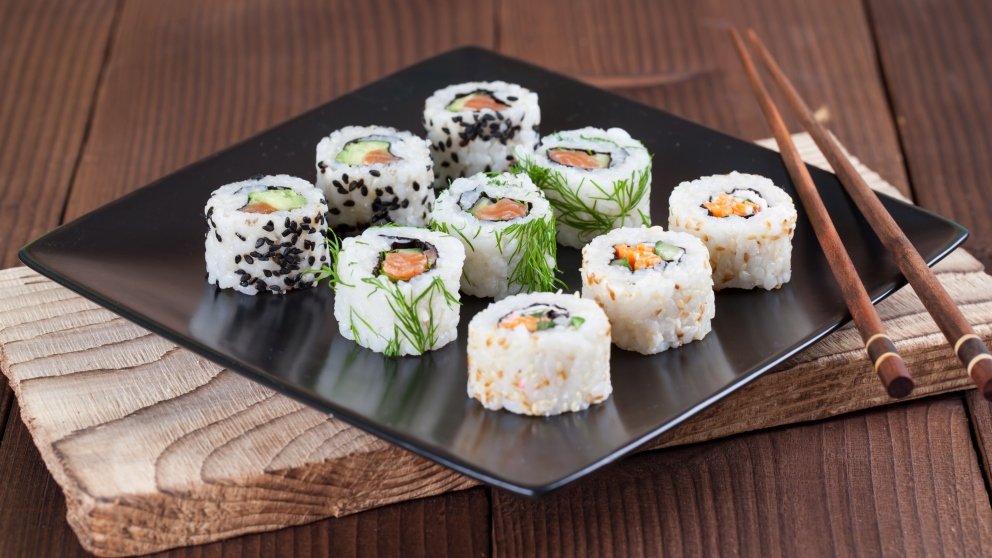
To help Americans (prudes that we are) get used to the idea of eating sushi, many restaurants began experimenting with new flavor combinations and sushi rolls. One of the rolls that became most popular among Americans was the now-ubiquitous California Roll, which is an inside-out “makizushi” roll with cucumber, crab meat (or, more often, imitation crab, called “surimi”) and avocado with white rice.
This combination of flavors immediately won over consumers. Plus, because the crab meat was cooked inside the roll, people didn’t have to be hesitant about eating raw fish. Once they got used to the idea, they were able to branch out into more traditional sashimi and nigiri dishes. In fact, in business school the concept is taught under the name “the California roll effect.”
A final word
And sooo, just like that, sushi restaurants became a national phenomenon, then an international/global one shortly after in Europe. Little tip: watch what’s currently happening in the USA and I guarantee that within the next 5 years it’ll arrive in Europe. It was the same with sushi and it’ll be the same (I hope) for cheese-flavored KFC. Soon, it’ll be California rolls with strawberry-flavored sour cream, all sprinkled with furikake
I hope you enjoyed this “little” informative article on sushi. I say little because I could have gone deeper into its introduction in Europe, or broken it down by type, but I preferred to limit myself to “sushi as we know it.” Head here to buy sushi rice
A close cousin of sushi is temaki – learn all about it here