


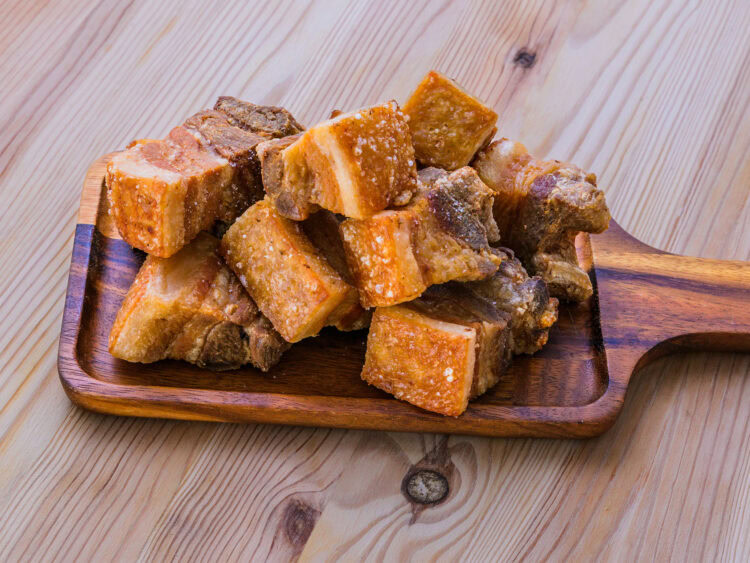
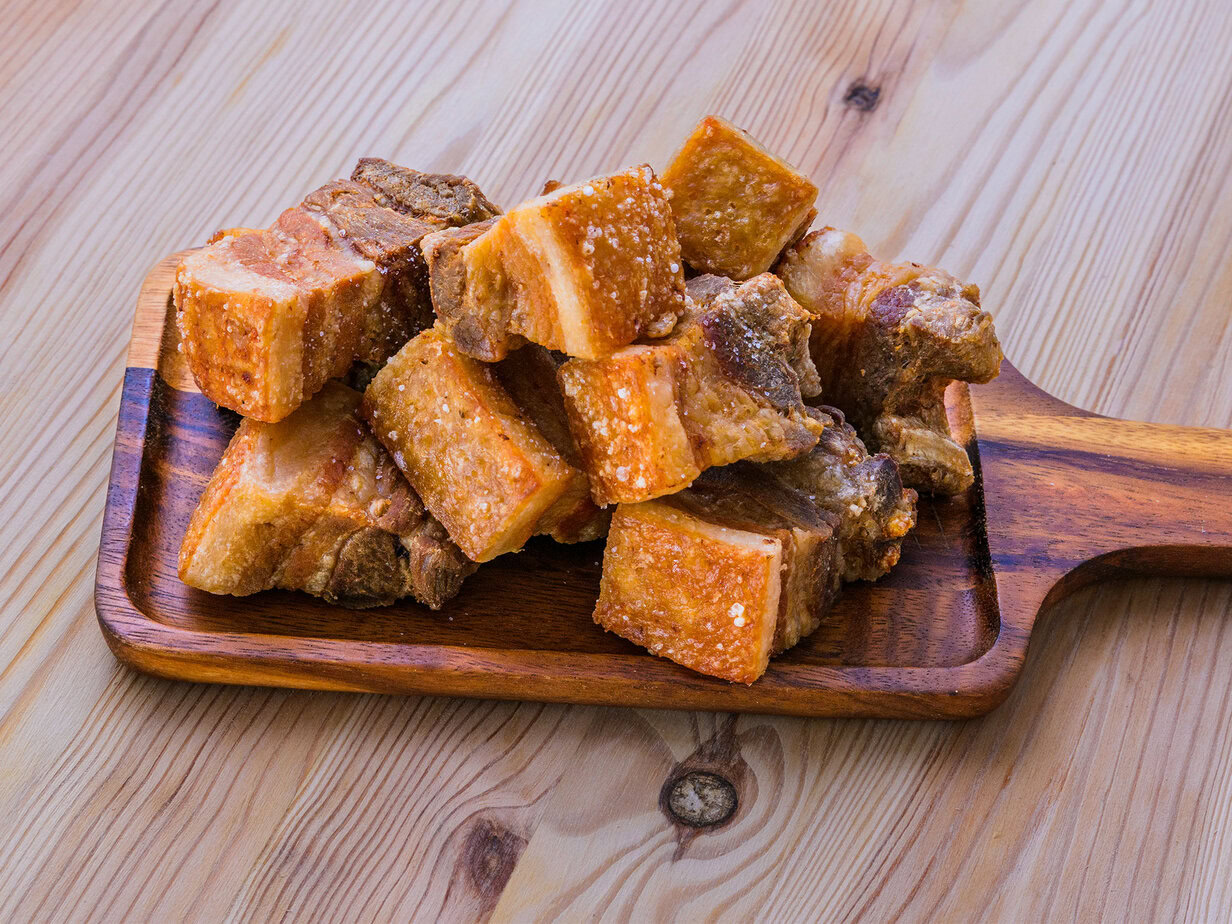
Ultra-crispy bagnet with blistered crackling—made by first simmering pork belly, then deep-frying it in two stages for a golden, irresistible finish.
The first bite delivers skin that snaps cleanly, followed by rich layers of fat and meat with that bold, unmistakable pork flavor Ilocos is known for. What makes it truly authentic isn’t just the crunch; it’s the method: choose a good skin-on cut, slowly render the fat, dry it thoroughly, then fry at 180–190 °C.
The Filipino method grew out of a practical need to preserve meat in a tropical climate—and it still shapes the dish’s texture and flavor today.
Bagnet: What Is It?
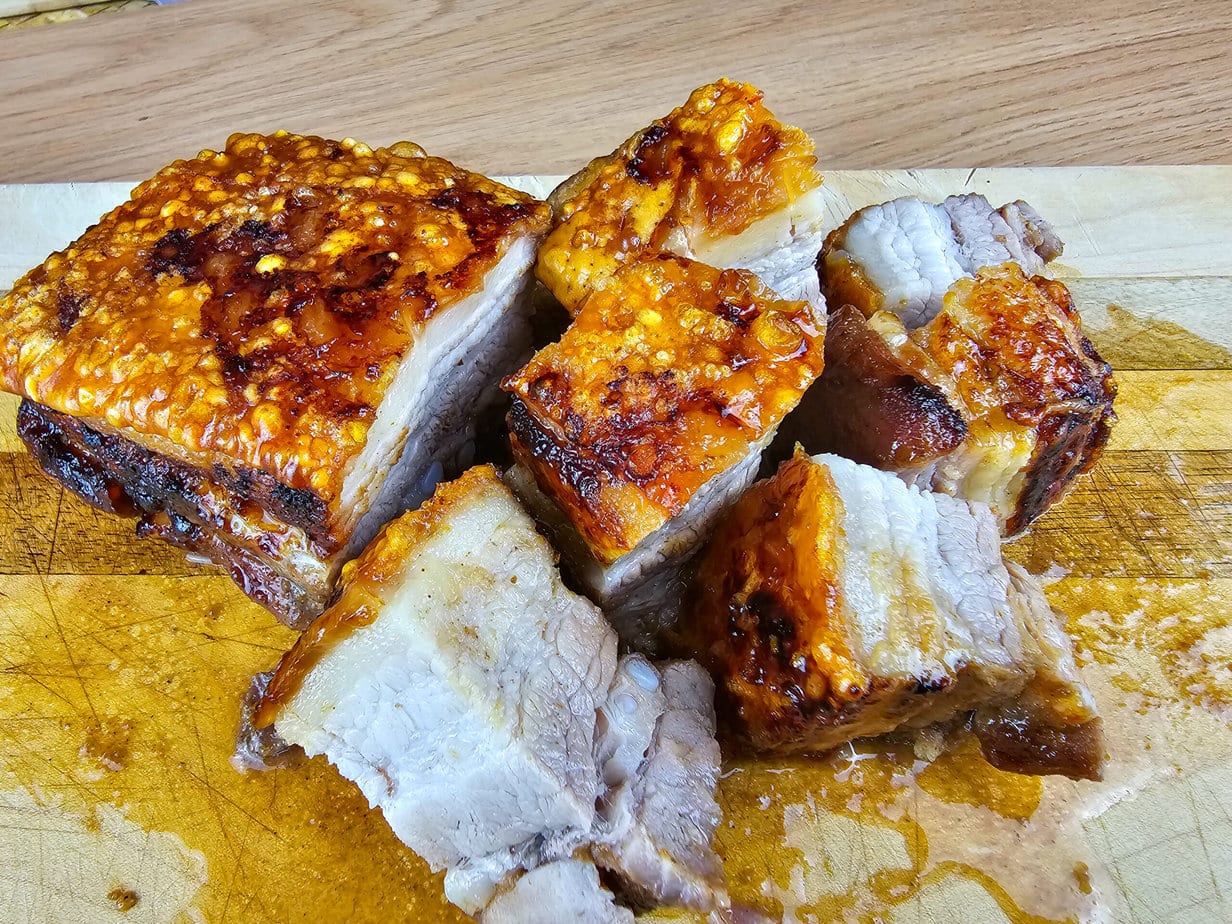
Bagnet is pork belly or pork shoulder, cooked skin-on until tender, then cooled and fried again so the skin blisters, puffs, and hardens into crackling. The name bagnet comes from the Ilocano bagnetin (“to preserve pork”), reflecting its original role before refrigeration. Its signature is contrast: shatter-crisp skin and tender, slightly dry meat, often compared to ham.
Seasoning is traditionally restrained—often none at all, or just a touch of salt—then finished at the table with Ilocos sauces such as sukang Iloko (cane vinegar) or KBL (kamatis, bagoong, lasona: tomato, fermented fish paste, and shallots). Although it’s sometimes compared to chicharon for its crackle, bagnet is a full cut of pork, not just the skin.
While it shares similarities with lechon kawali, bagnet typically leans on thorough drying and two to three frying rounds, with resting and drying between each pass, to achieve blistered, ultra-crisp crackling.
Fans of Asian pork will recognize that same focus on fat, skin, and contrast in other classics—like char siu, chashu pork, or red pork. You’ll find the same idea in rice dishes like lu rou fan and butadon.
The Origins of Bagnet
Rooted in the northern Ilocos region, bagnet is especially associated with Vigan (Ilocos Sur), Narvacan, and Batac (Ilocos Norte). It began as a practical solution: cooking large, skin-on cuts so they would keep longer in the heat.
Over time, the technique became a local culinary emblem. Narvacan hosts an annual bagnet festival in December, celebrating this point of pride. Many producers start before dawn so freshly made bagnet reaches the markets early.
Local folklore traces the dish back to the Spanish era; some stories claim Juan de Salcedo tasted an early version. It’s best read as legend rather than established fact.
What is certain is the community tradition: heavy cast-iron kawa (large cauldrons) set over steady fires, closely guarded cooking times passed down from generation to generation, and a shared expectation of blistered crackling that “rings” when tapped.
Main Ingredients for Bagnet
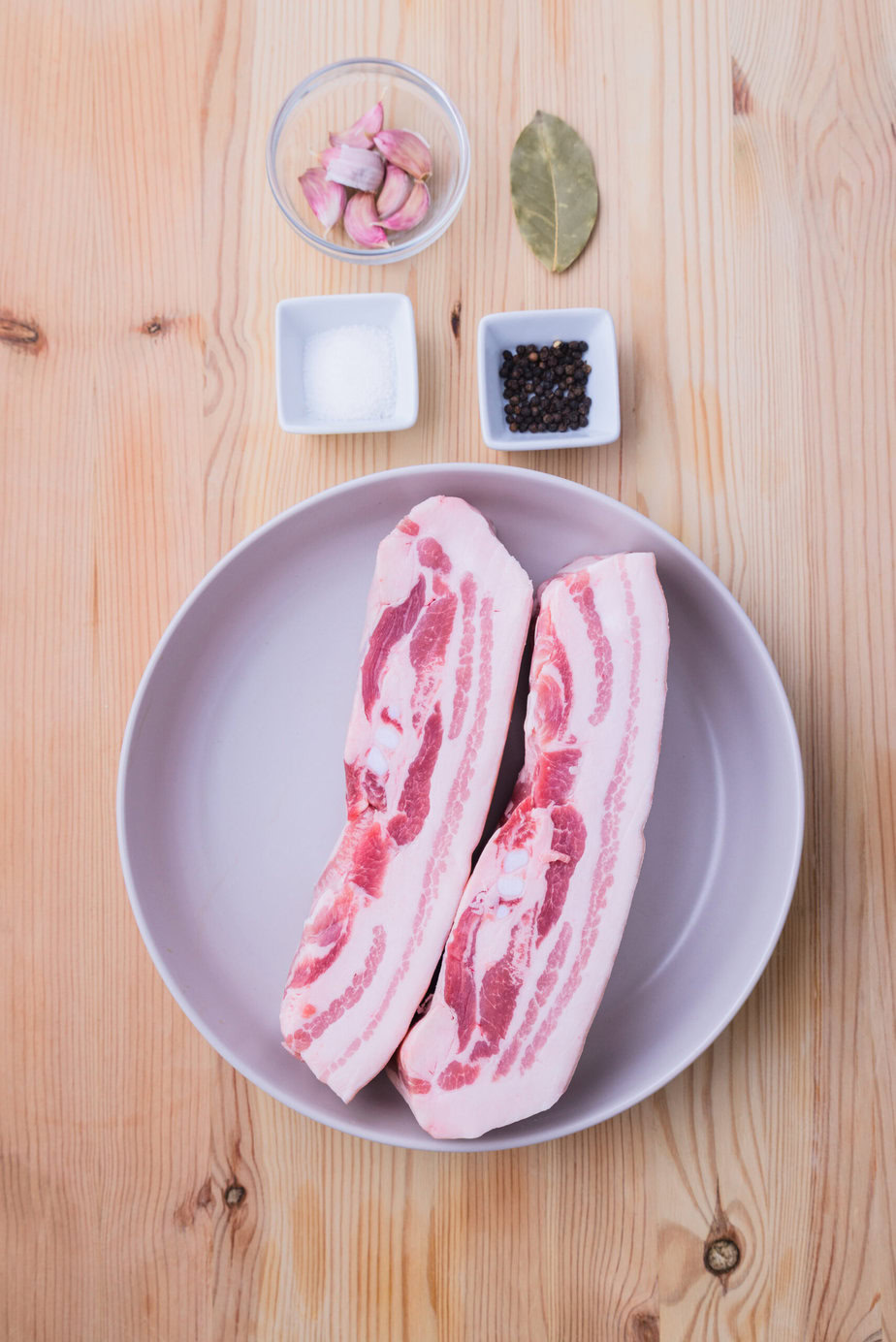
- Fresh pork belly (liempo), skin-on: gives you those alternating layers of fat and meat, plus a broad rind that turns into the dish’s signature blistered crust.
- Alternative cut: pork shoulder (kasim), skin-on: leaner, with plenty of collagen that still turns tender after a long cook; used by some producers in Ilocos Sur.
- Salt (optional, use sparingly): in some homes, a light salting draws out surface moisture and seasons the meat; in others, the pork is kept almost plain.
- Water: in the “boil then dry” approach, this is the medium for the first, tenderizing cook before the pork is dried and then fried.
- Sukang Iloko / local cane vinegar: sometimes used in small amounts depending on the cook, and very often served as a punchy dipping sauce to cut through the richness.
- Pork fat / lard (mantika ng baboy): the traditional frying fat; when the pork has rendered well and is properly dried between frying rounds, it helps keep the result crisp and not overly heavy.
Bagnet Serving Traditions and Variations
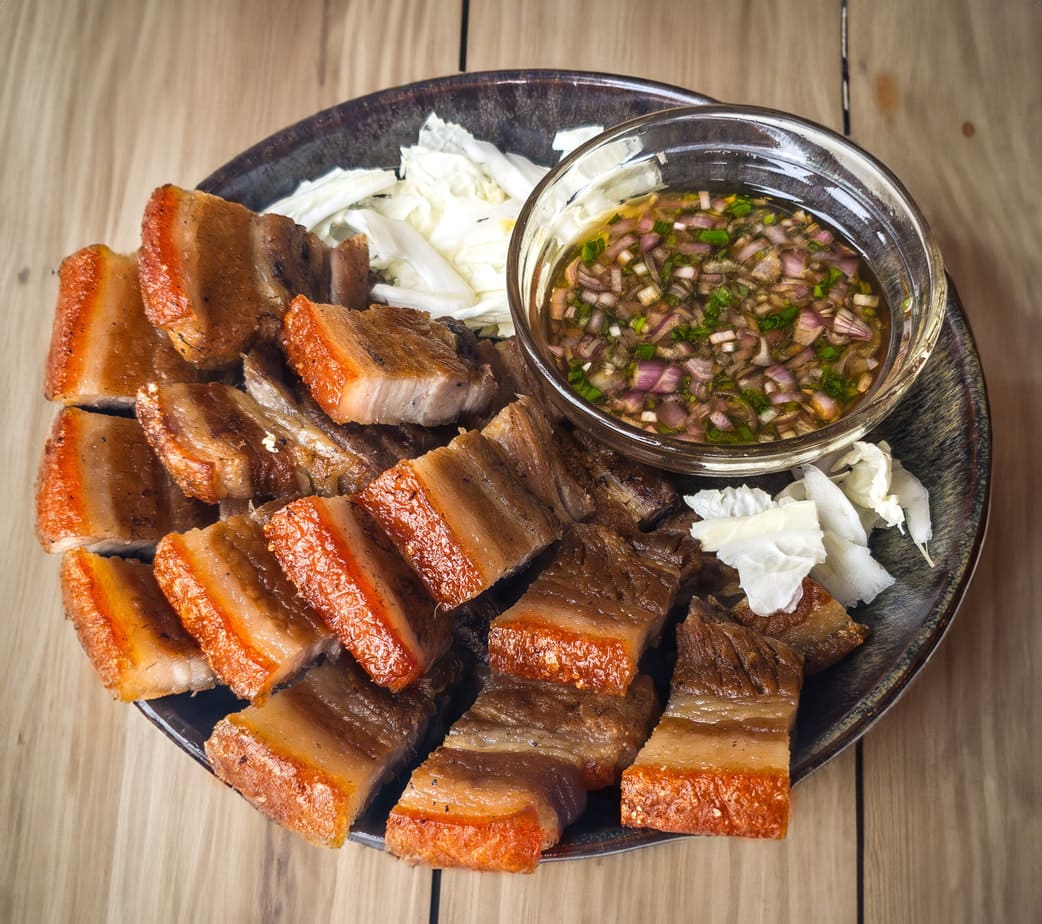
Bagnet is often cut into large squares and served hot as ulam (a main dish) with rice or as pulutan (bar snacks); some pair it with basi, a local sugarcane wine. Classic dips include sukang Iloko (often with chilies and garlic) and KBL (tomato, bagoong and shallots).
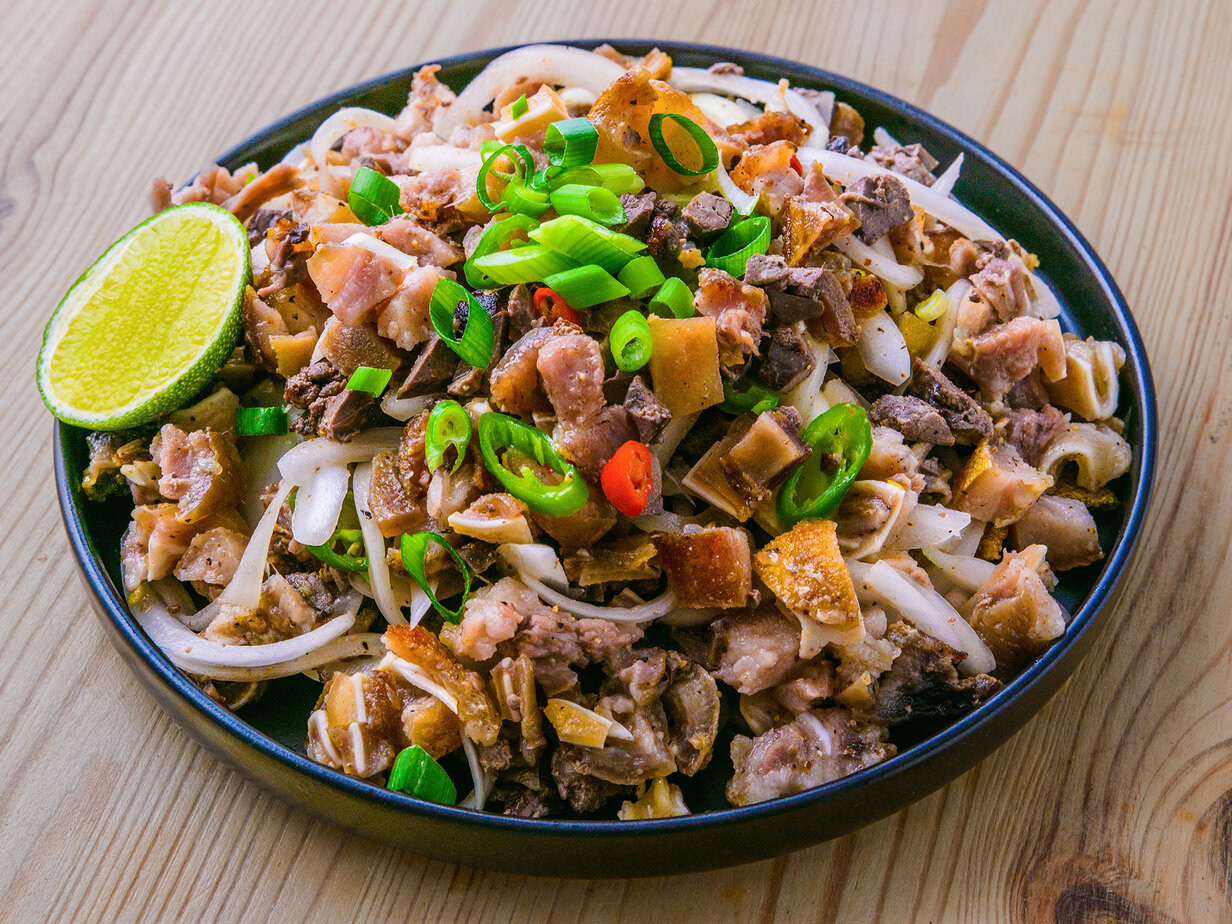
In some parts of Ilocos Sur, vendors serve crispy pork with dinardaraan (a thick blood sauce); in Vigan, this specialty is known as “Okilas.” Beyond the dish itself, bagnet tops pinakbet, shows up in kare‑kare for contrast, or is chopped for sisig. Leftovers are often seared again to bring back their crunch after refrigeration.
Many people also reach for KBL (tomatoes, fermented fish paste, and shallots), whose acidity and funky depth cut through the richness of the pork and help avoid umay—that “too much fat” fatigue. In that same spirit of “acidity that cuts,” you’ll find a similar balance in a Thai pork salad.
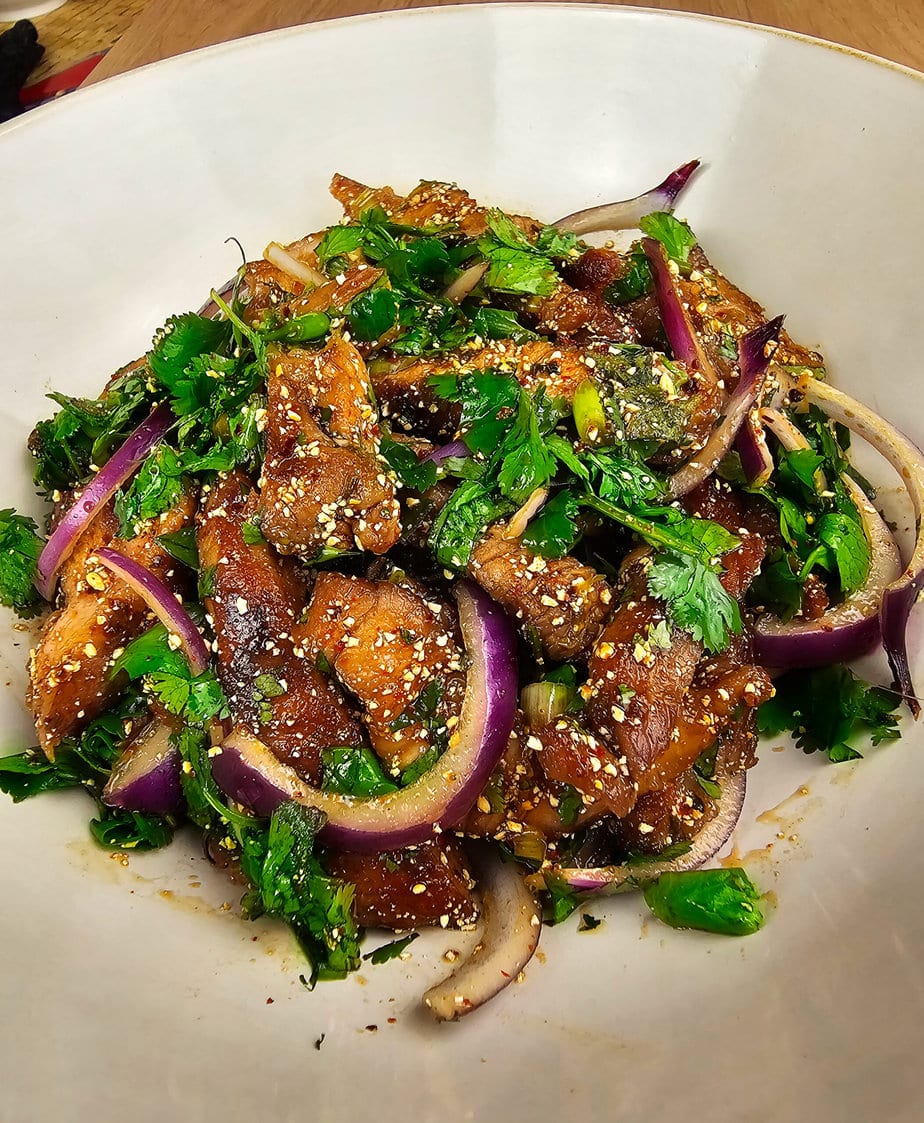
That crunch shows up in plenty of other ways, too: crumbled over pinakbet vegetables, piled generously onto peanut-sauce dishes (think satay paste) like kare-kare, or folded into modern takes. Some versions even use an air fryer instead of classic deep-frying, with an air fryer. Others are served with a sweet-and-sour sauce.
Despite these variations, “authentic” is often judged by a few recurring benchmarks:
- fresh pork, never frozen (often cooked shortly after slaughter in Narvacan);
- minimal seasoning;
- a real drying or resting period between frying rounds;
- frying traditionally done in pork fat or lard.
Versions that skip the resting step, lean heavily on bold aromatics, or swap out the frying fat can still be delicious; among purists, though, they’re less likely to be called bagnet.
To explore more of the repertoire, try other must-eat Filipino dishes: sisig, lumpia, chicken adobo, and sinigang.
Equipment
Ingredients
- 2 kg pork belly in one whole piece, skin on
- 0.5 head garlic
- 1 teaspoon peppercorns
- 2 tablespoons salt
- 1 leaf bay leaf
- cooking oil for frying (enough for deep-frying)
Instructions
Boil and dry
- Rinse the pork belly, cut it into large chunks, and place them in a large pot.2 kg pork belly
- Add enough water to fully cover the pork.
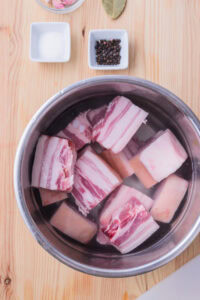
- Add the salt, peppercorns, garlic, and bay leaf. Cover and bring to a boil, then reduce the heat and simmer for 30 to 45 minutes, or until the meat is tender. Skim off any scum as needed.2 tablespoons salt, 1 teaspoon peppercorns, 0.5 head garlic, 1 leaf bay leaf
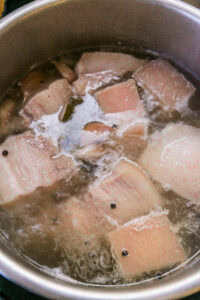
- Lift out the pork and transfer it to a colander. Let it drain for a few minutes.
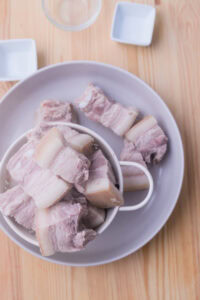
- Prick the skin all over with a fork, then pat it very dry with paper towels.
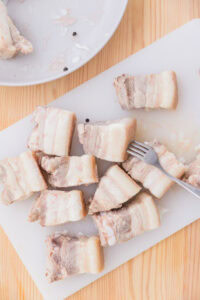
- Refrigerate the pork for several hours (ideally 4 hours) to dry the skin thoroughly.
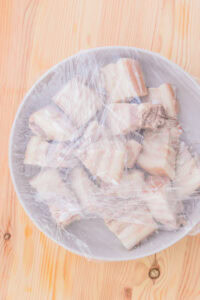
Double-frying
- Heat enough cooking oil in a large pot or deep fryer. Fry the pork over low heat for 30 to 45 minutes, or until lightly browned.cooking oil
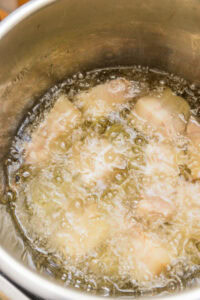
- Remove and drain in a colander or on paper towels. Let cool completely.
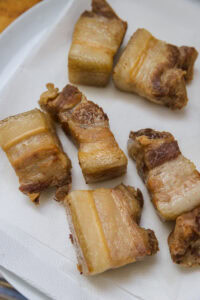
- Heat the same oil over medium heat, then fry the pork a second time for 10 to 15 minutes, until the skin is deep golden, blistered, and shatteringly crisp.
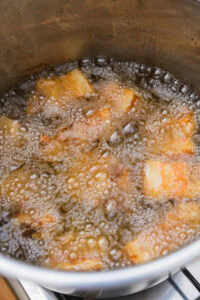
- Drain on paper towels, cut into serving pieces, and serve right away.
Notes
- For the crispiest results, make sure the boiled pork is completely dry: pat it thoroughly with paper towels before frying.
- The oil should be very hot when you add the pork. Use long tongs to reduce splatter.
- Keep a lid nearby and cover immediately if the oil starts to spit aggressively.
Culinary Sources
• Bagnét – CulturEd (Filipino)
• Narvacan Bagnet Festival, Ilocos Sur – BusinessMirror (English)
• Meet Mang Mauro, maker of Narvacan’s famous bagnet – Rappler (English)
• The secret of bagnet, okilas, and Vigan longganisa! – Our Awesome Planet (English)
• Bagnet – r/filipinofood – Reddit (English)
• Bagnet recipe – Panlasang Pinoy (English)
• Make crispy bagnet at home – Yummy (English)
• Bagnet – Wikipedia (English)


This took me right back to Sunday lunches at my lola’s house, when she’d fry bagnet until the skin crackled so loud you could hear it from the sala. The simmer then double-fry method is exactly how she did it, and dipping the crunchy pieces in sukang Iloko with garlic feels like pure childhood comfort 😊
Didn’t think I could pull off bagnet at home, but the double-fry and drying step really worked and the skin came out super crispy while the meat stayed tender. I’m still a beginner so I was nervous about the oil, yet it turned out better than expected and I’m weirdly proud of it 🙂
That blistered, deep-golden crackling looked absolutely stunning on the plate, like it came straight out of a food magazine. Had to snap a quick photo before serving because the clean cuts and glossy crisp skin were too beautiful to miss 😍
Didn’t expect my picky kid to touch pork belly, but the crackling was so shatter-crisp that they kept sneaking pieces off the plate and even asked for more with vinegar 😄