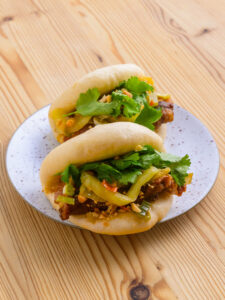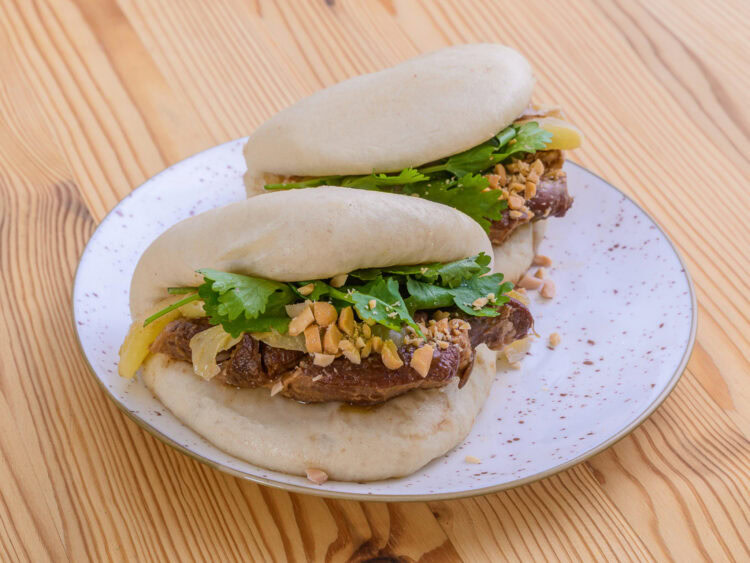
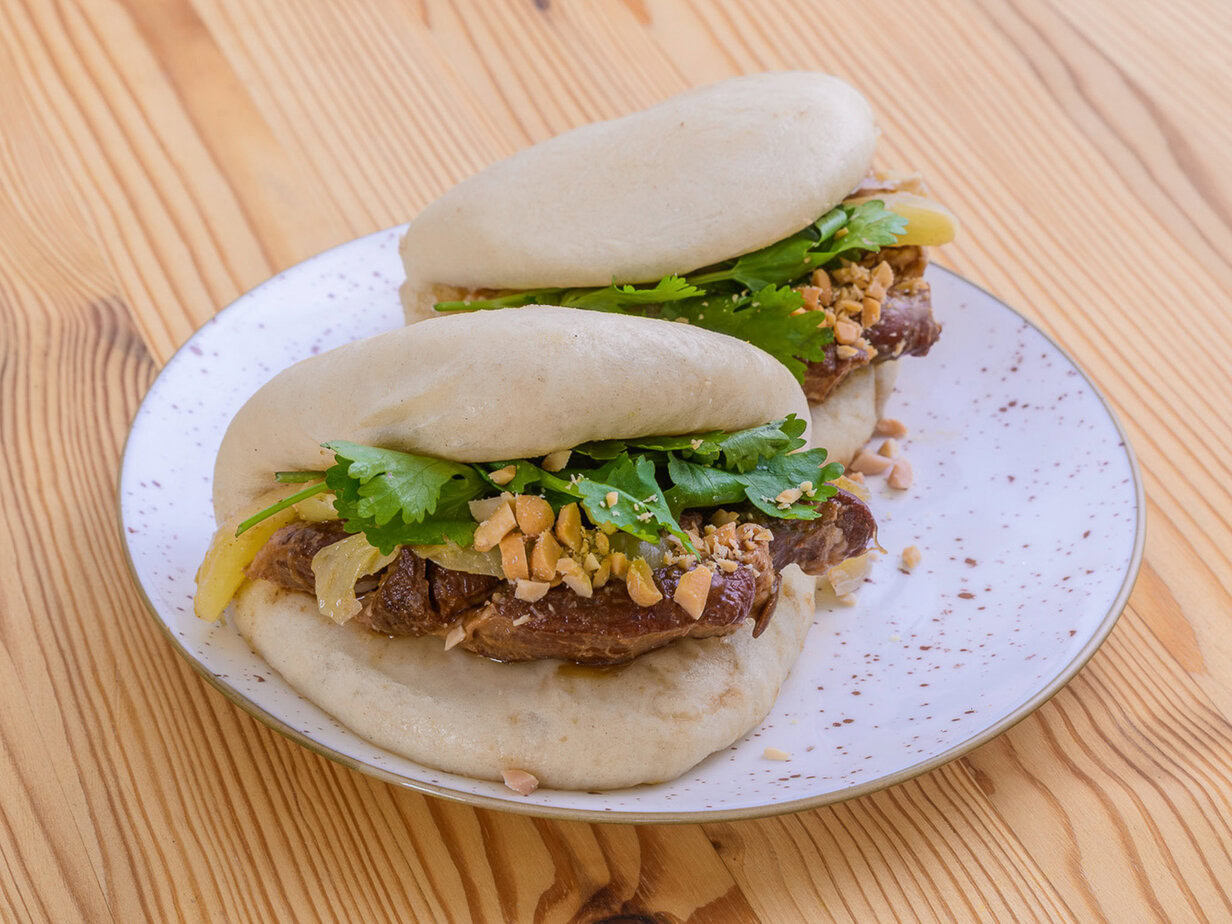
A Taiwanese steamed bun folded into a half-moon and filled with braised pork belly, stir-fried pickled mustard greens, ground peanuts and cilantro.
Some bites you eat standing up, over the cutting board, because you couldn’t wait long enough to set the table. Gua bao is one of them.
The still-warm steamed bun opens onto a glazed slice of pork that melts in your mouth. The pickled mustard greens add their tangy crunch, and the peanut powder mingles with the juices. A sprig of cilantro on top, and the first bite already has you reaching for the second.
What Is Gua Bao?
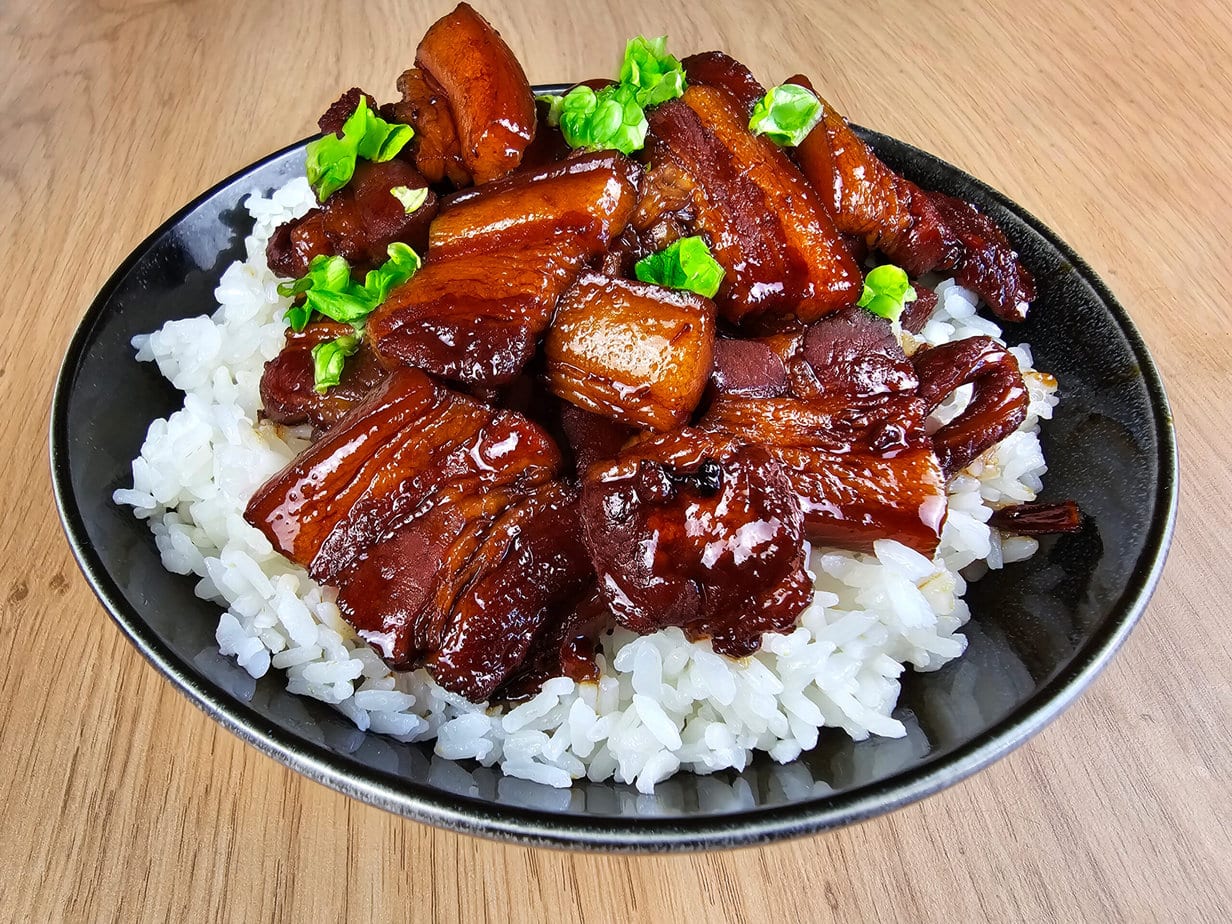
Gua bao (刈包) is a small steamed bun, shaped into an oval and then folded in half, that you open like a book to fill. In Taiwan, the classic filling comes down to four elements: a slice of pork belly braised in light soy sauce and rock sugar, stir-fried pickled mustard greens (suan cai), peanut powder and cilantro.
Restaurant versions often add hoisin sauce, mayonnaise, cucumber or five-spice powder, none of which belong to the Taiwanese version. The recipe below sticks to that base and livens up the braise with a little miso and doubanjiang.
The name comes from the Hokkien koah-pau, often linked to koah, “to cut” or “to split,” because of the slit in the bun. It is also called a lotus leaf bun, for its folded shape, and in English a “bao bun,” a phrase that says “bun” twice.
A Year-End Bite Turned Street Snack
Gua bao is most often traced back to the cooking of Fujian, on China’s southeast coast, from where it is believed to have reached Taiwan with Hokkien migrants. On the island, it is associated with wei ya (尾牙), the year-end meal that bosses treat their employees to. The filled bun is said to resemble a full purse, a good omen for the year ahead.
Its Taiwanese nickname, “tiger bites pig” (虎咬豬), comes from the image of the bun closing around the slice of pork. Today, you can find it year-round at night markets and small food stalls, and people eat it on the go.
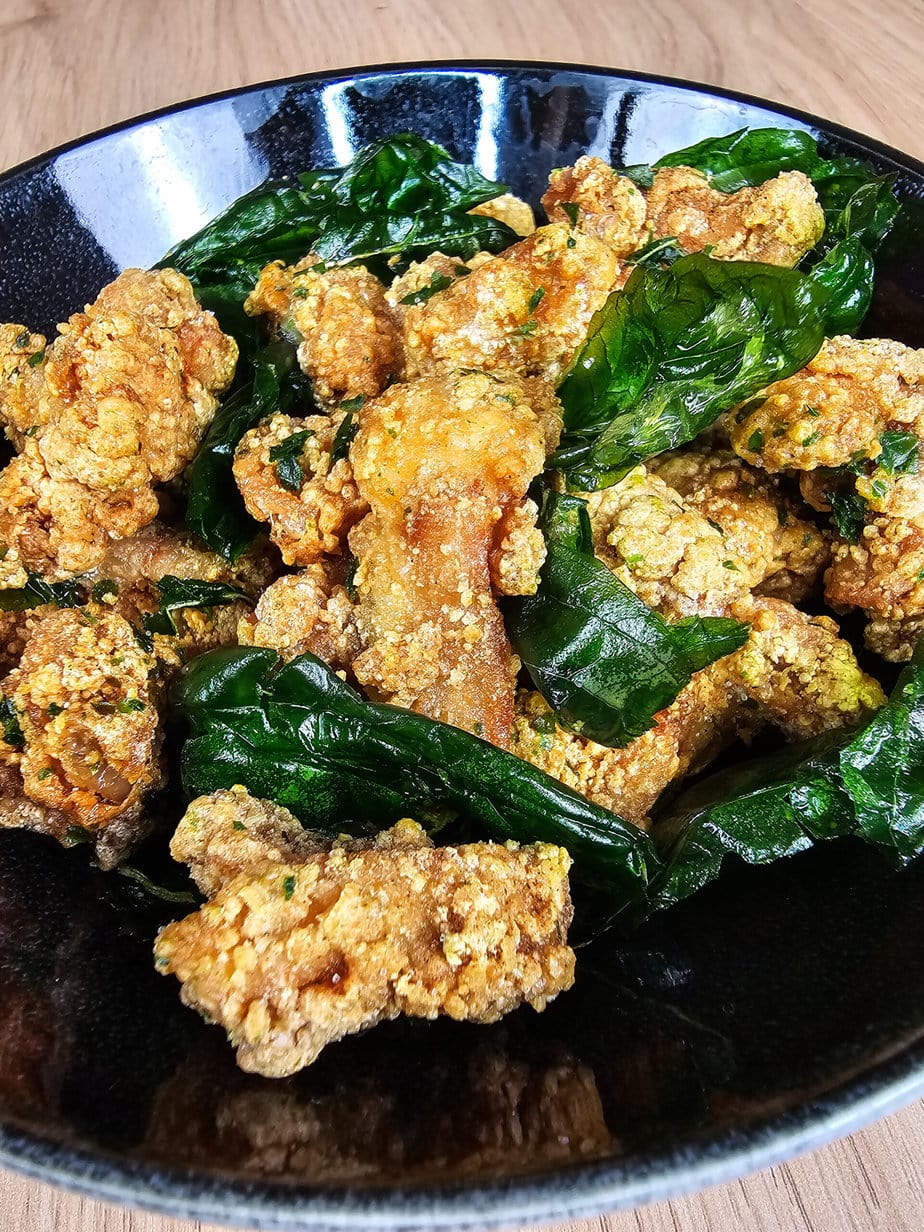
Gua bao has since traveled the world, and restaurants now fill it with fried chicken, pulled pork or tofu. These versions can be good, but they lose the Taiwanese balance between the richness of the pork, the sourness of the mustard greens and the sweetness of the peanuts.
The Main Ingredients in Gua Bao
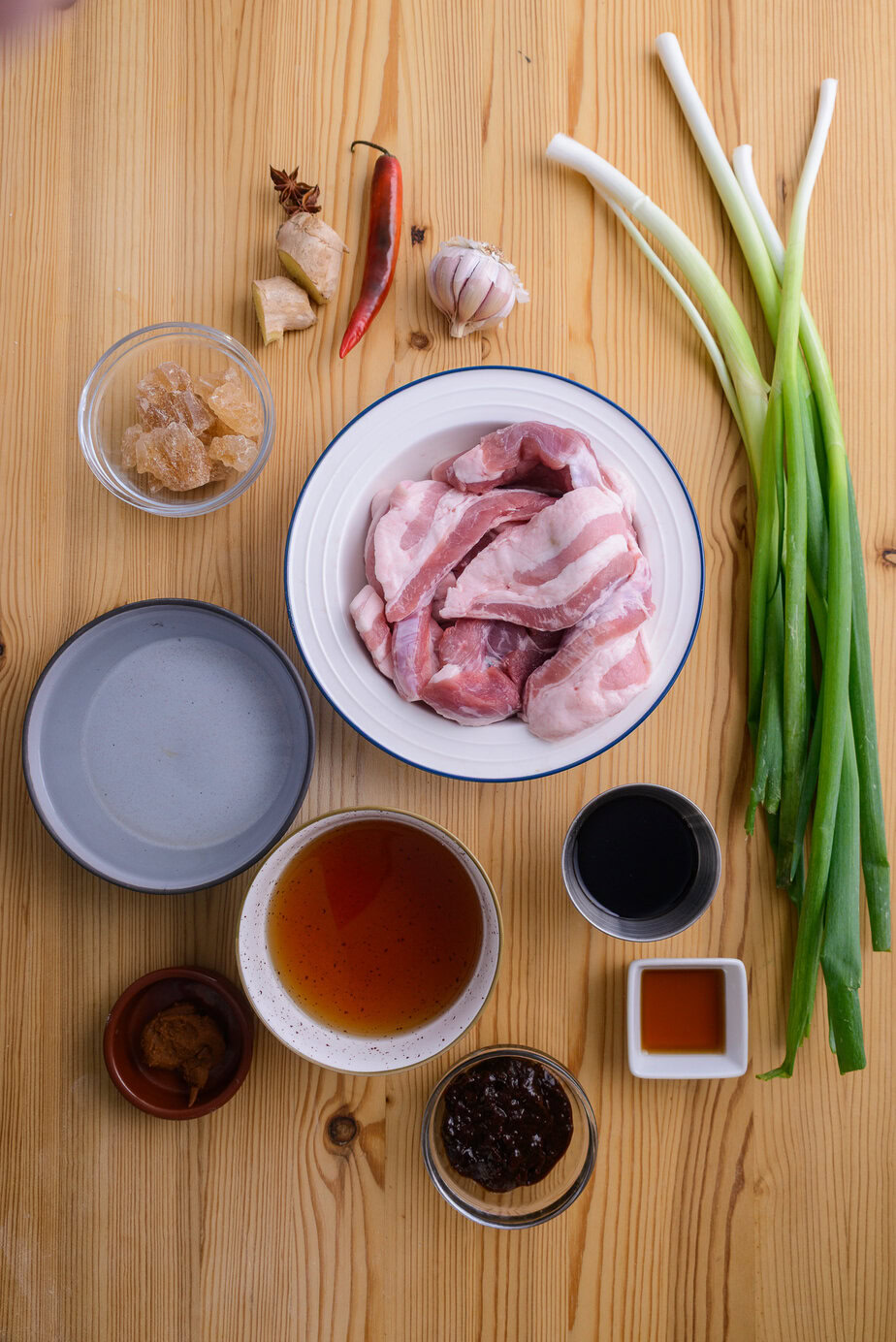
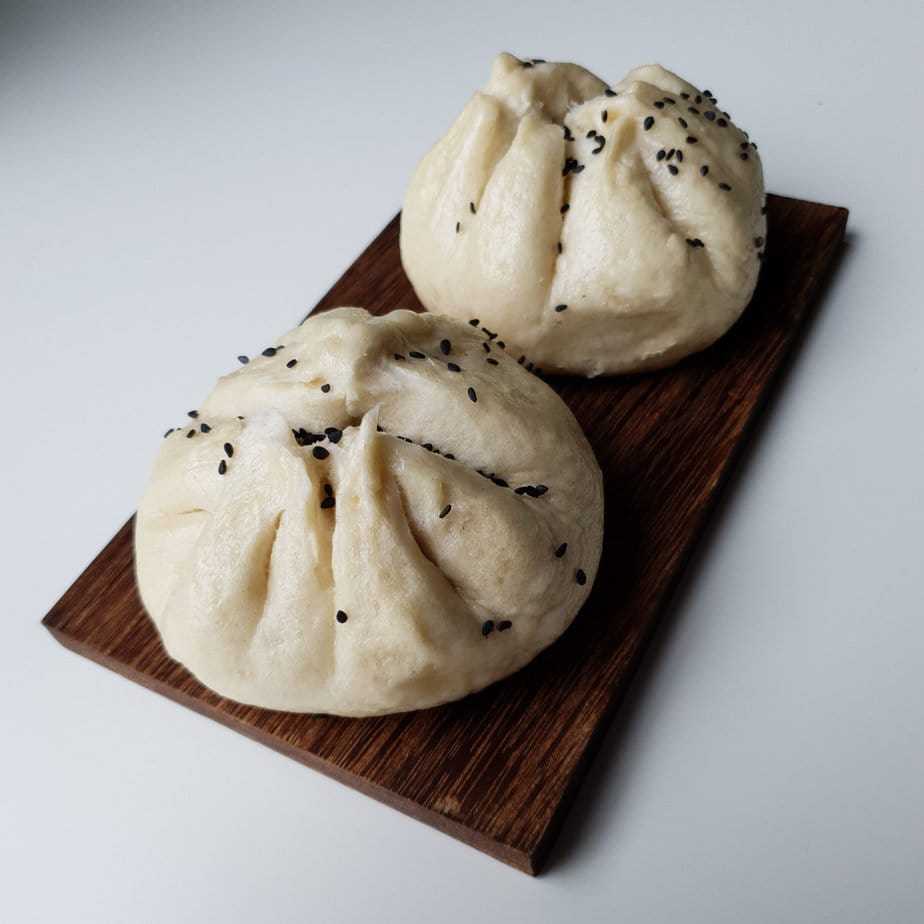
The dough is simple: flour, yeast, baking powder, sugar and lukewarm water, with no milk or fat. The two leaveners give a light, white crumb that stays supple once folded. The pork belly is sliced before braising, then simmers with Shaoxing wine, rock sugar, star anise, ginger, garlic, chiles and green onions.
Miso and doubanjiang, a spicy fava bean paste from Sichuan, give the braise a fermented depth and a little heat. The rock sugar melts into a glossy sauce that glazes the meat, and sesame oil adds a toasty note.
Suan cai, fermented Chinese mustard greens, brings what the pork lacks: acidity and crunch. Soaked to remove some of the salt, then stir-fried in lard with garlic, chile and a little sugar, it cuts through the richness of the meat. You’ll find it in packets at Asian grocery stores, along with doubanjiang. Peanut powder and cilantro finish off each bite, one sweet, the other fresh.
Technique Tips for Good Gua Bao
Knead the dough until it is very smooth, then slip a piece of parchment paper into the fold of each bun so the two halves come apart without tearing.
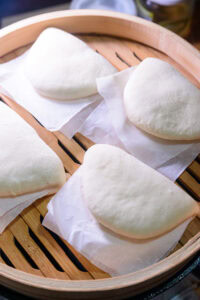
Set the steamer basket over water that is still cold, so the buns rise gently while the water heats up. For the pork, allow about 45 minutes of covered simmering, then let it rest off the heat while it finishes soaking up its juices. Serve the gua bao warm, while the buns are still soft.
Ingredients
For the dough
- 300 g flour
- 1 teaspoon baker’s yeast instant dry
- 1 teaspoon baking powder
- 1 teaspoon sugar
- 155 ml water lukewarm
For the braised pork
- 1000 g pork belly
- 100 ml soy sauce light
- 200 ml Shaoxing wine
- 1250 ml water
- 120 g rock sugar
- 2 star anise
- 20 g ginger
- 2 chili peppers
- 6 cloves garlic
- 5 green onions
- 1 tablespoon miso
- 2 tablespoons doubanjiang (spicy fava bean paste)
- 1 tablespoon sesame oil
For the stir-fried pickled mustard greens
- 200 g pickled mustard greens (suan cai)
- 3 cloves garlic
- 1 chili pepper
- 1 green onion
- 2 tablespoons lard
- 2 tablespoons sesame oil
- 1 tablespoon sugar
- 1 tablespoon Shaoxing wine
- 1 pinch salt
- 1 pinch white pepper ground
For serving
- 100 g peanuts ground
- 10 sprigs cilantro
Instructions
For the dough
- Mix the flour, yeast, baking powder and sugar.300 g flour, 1 teaspoon baker’s yeast, 1 teaspoon baking powder, 1 teaspoon sugar

- Gradually pour in the lukewarm water, mixing as you go.155 ml water
- Knead until a rough dough forms.
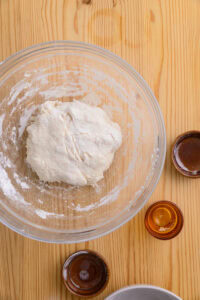
- Cover and let rest for 10 minutes.

- Knead again until the dough is very smooth, about 8 minutes in a stand mixer.
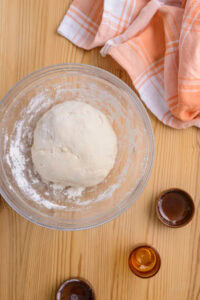
- Divide the dough into 8 portions.
- Roll each portion into a ball.
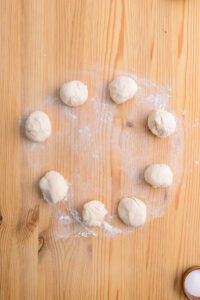
- Flatten each ball into an oval.
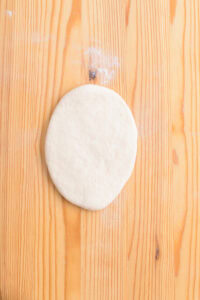
- Fold each oval in half lengthwise, slipping a piece of parchment paper inside.
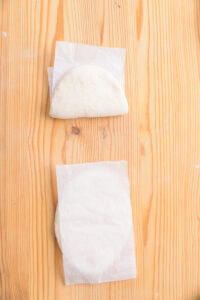
- Let rise for about 30 minutes, until the buns have puffed up slightly.
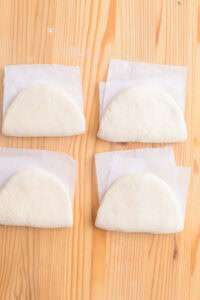
- Place the buns in a steamer basket set over cold water.
- Bring to a boil over high heat.
- Reduce the heat to medium-low and steam for 10 minutes.
For the braised pork
- Cut the pork belly into slices about 2 cm thick.1000 g pork belly
- Split the chili peppers in half, crush the garlic and cut the green onions into pieces.2 chili peppers, 6 cloves garlic, 5 green onions
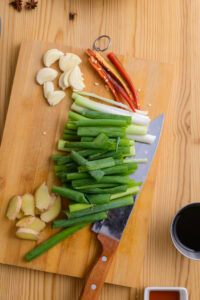
- Sauté the ginger, chili peppers, garlic and green onions.20 g ginger
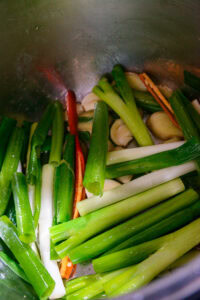
- Add the light soy sauce and the doubanjiang.100 ml soy sauce, 2 tablespoons doubanjiang
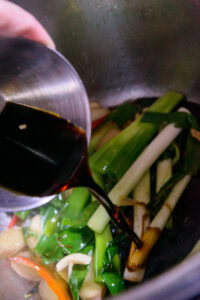
- Add the miso, rock sugar and pork.1 tablespoon miso, 120 g rock sugar
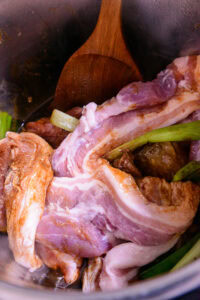
- Let the pork brown on both sides.
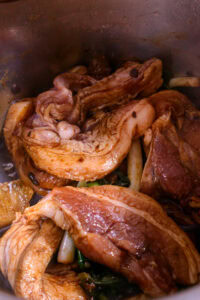
- Add the Shaoxing wine, star anise, sesame oil and water.200 ml Shaoxing wine, 2 star anise, 1 tablespoon sesame oil, 1250 ml water
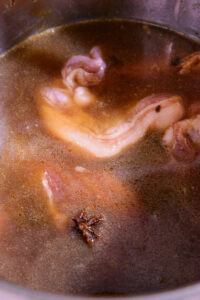
- Cover and simmer over medium heat for about 45 minutes.
- Turn off the heat and let rest, covered, for 10 to 15 minutes.
For the stir-fried pickled mustard greens
- Thinly slice the pickled mustard greens.200 g pickled mustard greens
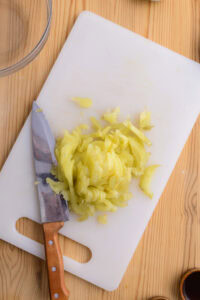
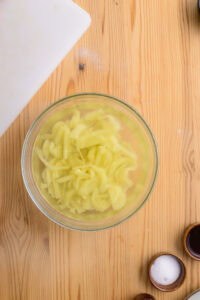
- Soak them in water to remove the excess salt, then squeeze them dry.
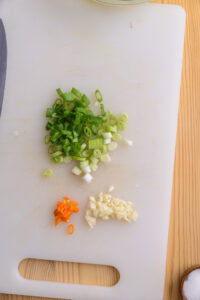
- Chop the garlic, chili pepper and green onion.3 cloves garlic, 1 chili pepper, 1 green onion
- Heat the lard and sesame oil.2 tablespoons lard, 2 tablespoons sesame oil
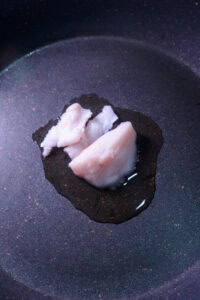
- Sauté the garlic and chili pepper.
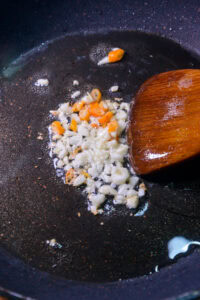
- Add the pickled mustard greens, salt, white pepper, sugar, Shaoxing wine and green onion.1 pinch salt, 1 pinch white pepper, 1 tablespoon sugar, 1 tablespoon Shaoxing wine
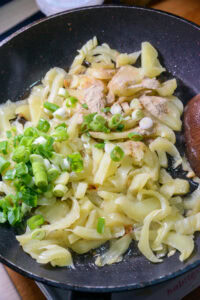
- Stir-fry until everything is fragrant.
Assembly
- Open each steamed bun.
- Fill with a slice of braised pork.
- Add some stir-fried pickled mustard greens.
- Sprinkle with ground peanuts.100 g peanuts
- Add a few sprigs of cilantro.10 sprigs cilantro
- Serve warm.