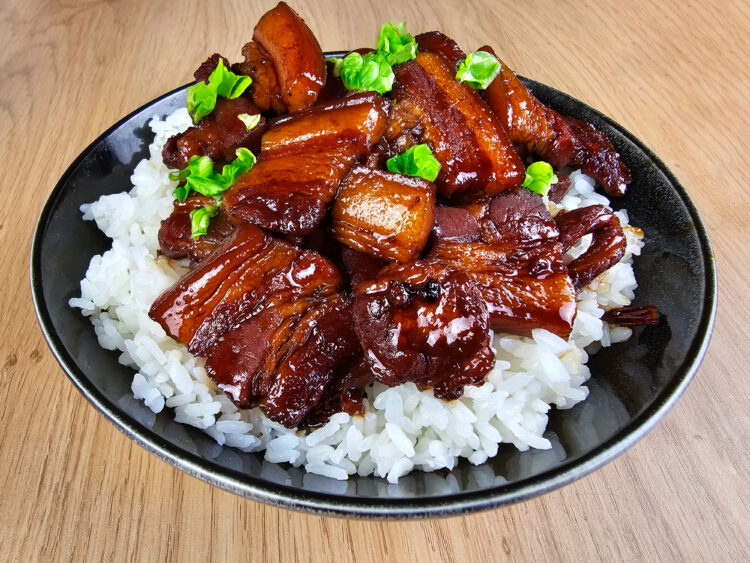
This delicious Taiwanese braised pork is the perfect comforting combination of melt-in-your-mouth meat and sweet-savory flavors
With roots in both China and Taiwan, it is one of the most popular dishes in the latter. Its origins spark plenty of debate within the Asian community. In fact, the American blog The Woks of Life shares the following anecdote in its article on Lu Rou Fan:
To set the record straight, the Taipei government actually launched a major campaign in 2011, handing out more than 1000 bowls of lu rou fan while claiming ownership of the dish.
They draw a comparison with the American government, but can you imagine the French government handing out thousands of chocolatines (just kidding, I’m on team pain au chocolat) purely as a publicity stunt?
How is Lu Rou Fan traditionally served?
Let me start by saying that if you buy Lu Rou Fan in Taiwan, the pieces of pork will be much smaller. Personally, I love big chunks of melt-in-your-mouth pork belly, as in Chinese braised pork (Hong Shao Rou), so this version is something of a middle ground.
The pieces are wide like those in red-braised pork, but very thin like traditional Lu Rou Fan. Honestly, cut them to whatever size you prefer.
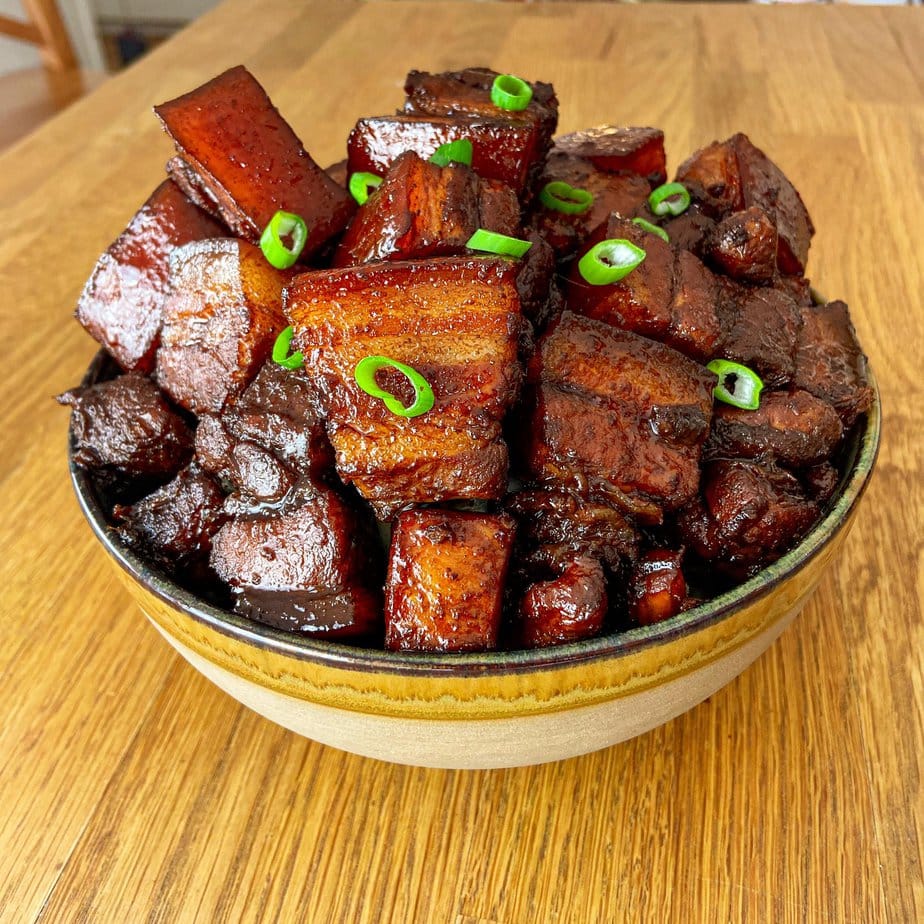
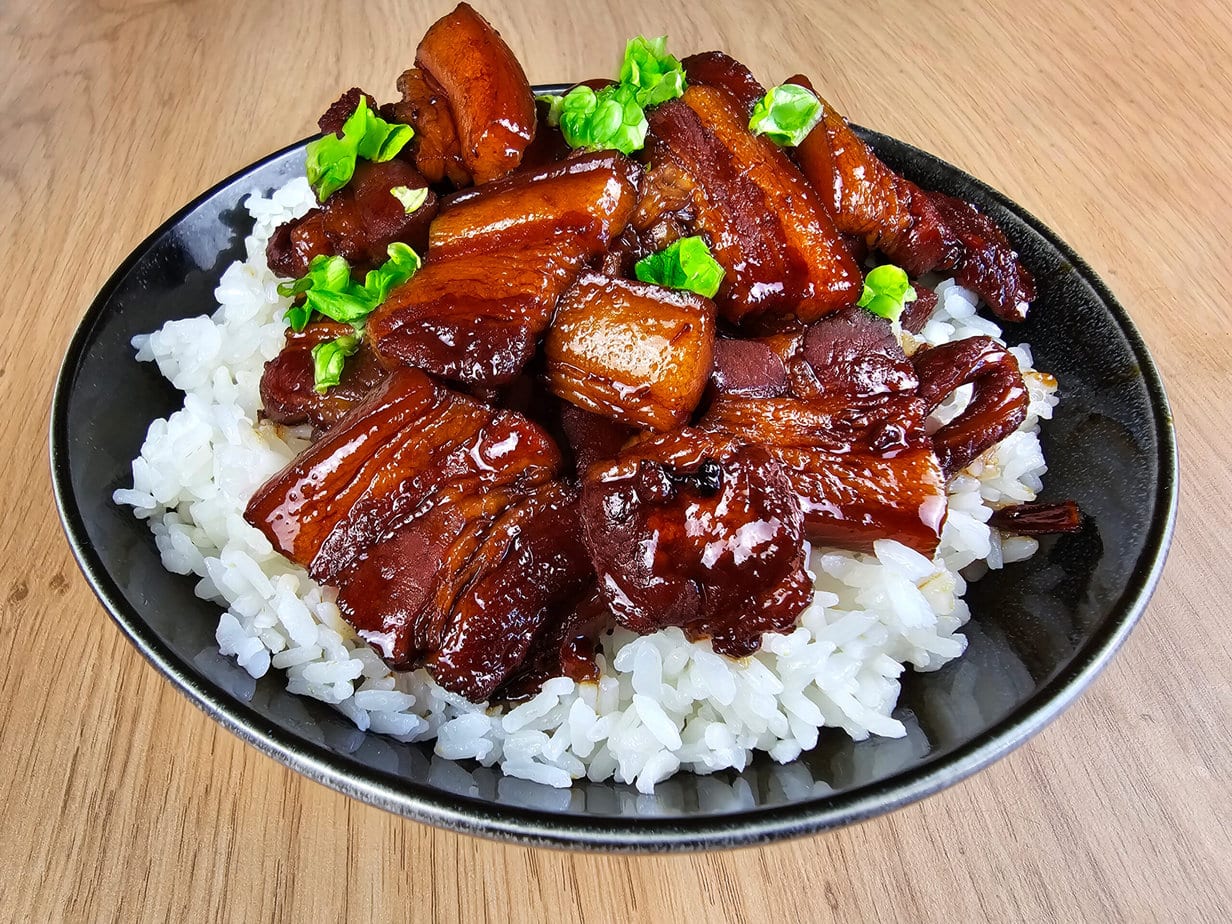
As for toppings, you usually have eggs braised for about twenty minutes in the same broth on one side, and blanched vegetables on the other. Those are missing from the photo too. Why? Just because.
Should you use dried or fresh shiitake mushrooms?
Personally, I prefer using dried mushrooms. They soak up all the juices as they cook, turning into big flavor bombs you can really sink your teeth into
The main ingredients in Lu Rou Fan
As with red-braised pork, you will find the classic Chinese cooking wine (Shaoxing), both types of soy sauce and, of course, star anise, along with cinnamon to round everything out.
For the sugar, I use palm sugar, but you can use any kind of sugar
What should you serve with Lu Rou Fan?
Well, essentially, this is a complete meal in itself. BUT, if you have guests over and are putting together a small Asian food buffet, you could jazz it up a little.
Instead of white rice, you could try Cantonese fried rice, fried rice or even yellow rice (no, not my dear fellow YouTuber Le Riz Jaune: last I heard, his recipes were excellent, but he himself is not edible)
Equipment
- 1 Wok
Ingredients
- 450 g pork belly cut into approximately 1.5 cm pieces
- 2 teaspoons oil
- 50 g sugar
- 4 dried shiitake mushrooms
- 60 ml Shaoxing wine
- 45 ml light soy sauce
- 30 ml dark soy sauce
- 500 ml water
- 4 hard-boiled eggs
Epices
- 100 g fried shallots substitute fried onions if needed
- 3 star anise pods
- 1 cinnamon stick
Garnitures (facultatives)
- Kai lan blanched for 5 minutes
- Bok choy blanched for 5 minutes
Instructions
- Cut the pork into pieces of your preferred size
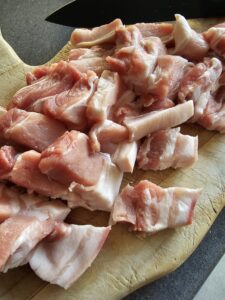
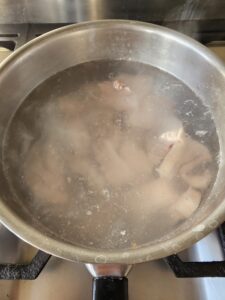
- Bring a saucepan of water to a boil and blanch the meat for 1 minute. Drain, rinse to remove any scum, and set aside.
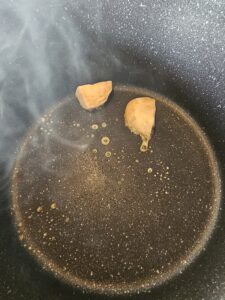
- Heat the oil in a wok over low heat and add the sugar. Cook the sugar until it starts to melt.
- Add the blanched pork belly, fried shallots, Shaoxing wine, light soy sauce, dark soy sauce, and water. Stir and bring the mixture to a boil. Once boiling, add the spices and mushrooms
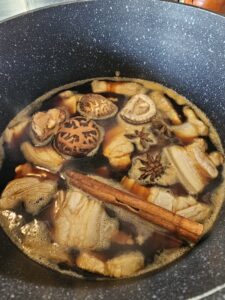
- Simmer for 2 hours over low heat, stirring occasionally to prevent sticking.
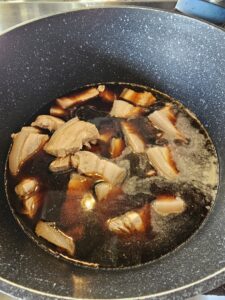
- Add the hard-boiled eggs after 1 hour and 40 minutes of cooking
- At this point, the meat should be fall-apart tender. To finish the dish, remove the spice packet and increase the heat to medium-high to thicken the sauce, stirring occasionally. This process should take about 5 minutes. The sauce should be thick enough to coat a spoon, but there should still be plenty of it.
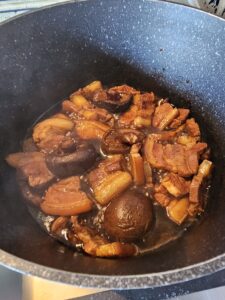
- Serve over white rice with blanched vegetables