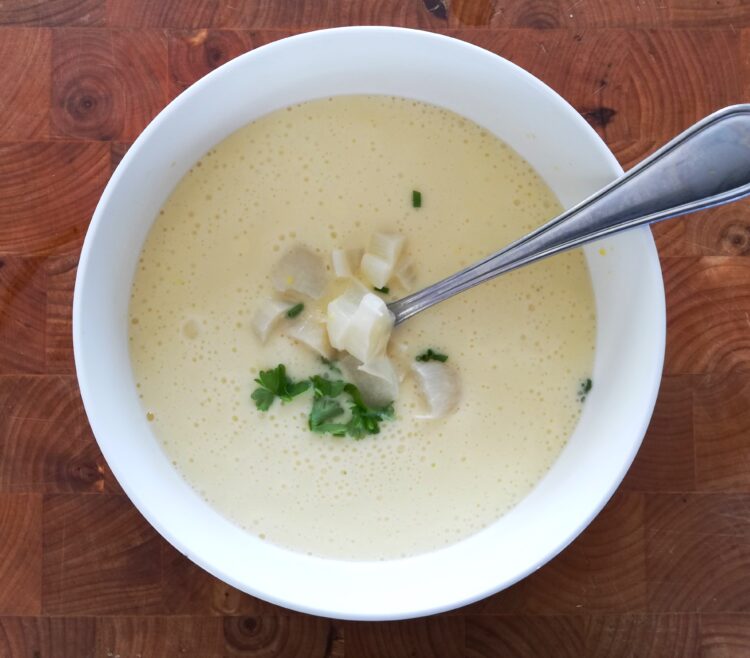
Asparagus soup with hollandaise: strained asparagus cooking water, thickened with a blender-made hollandaise, without flour or cream.
A dash of lemon brightens the warm butter, finely chopped herbs lend fragrance to the bowl, and asparagus gives the broth its gentle vegetal flavor. This soup is built on strained asparagus cooking water, enriched with a hollandaise made using an immersion blender, for a smooth texture without flour or cream. Allow 30 minutes in total for 4 servings, using a stockpot, a tall, narrow container, and an immersion blender. Find this recipe among my keto soups and salads.
What is asparagus soup with hollandaise?
The term hollandaise refers to the technique: a hollandaise sauce thickens the broth. The soup stays fluid, with a smooth texture. The asparagus spears are cooked whole, and their cooking water carries most of the aroma. The base is made with 1 liter of cooking water from 500 to 750 g of asparagus; the peelings and trimmed ends infuse the water, then are strained out. Bouillon powder, measured for 1 liter, adds salt, roundness, and body, as in other soups and broths.
The thickening mixture combines 6 egg yolks, the juice of one lemon, and 300 g of melted or clarified butter, blended in a tall container with an immersion blender until thick and pale, then loosened with a little hot broth and incorporated in several batches. The broth must be hot but never boiling, to preserve the emulsion and prevent the yolks from curdling. When serving, 2 reserved asparagus spears, cut into pieces, add texture, while fresh chives and parsley add a fresh, green note.
The idea behind the recipe
This version makes the most of good-quality leftovers. Once asparagus has been cooked, its cooking water retains plenty of flavor, especially if the peelings and ends have steeped in it. Instead of discarding this broth, you strain it, boost its flavor, then thicken it with hollandaise. The result belongs to the family of soups thickened by an emulsion: the yolks stabilize the butter in the water-based liquid, while the acidity of the lemon balances the richness. That richness pairs well with a crunchy contrast, a frisée or endive salad, or a few cheese crisps on the side.
The main ingredients
The asparagus cooking water, 1 liter, forms the flavorful base: prepared with 500 to 750 g of asparagus, including peelings and ends, it captures the flavor without adding fiber. Bouillon powder, measured for 1 liter, adds saltiness, umami, and a more defined flavor; check its ingredients for salt, sugars, starches, and allergens. The 2 cooked asparagus spears, cut just before serving, reinforce the presence of the vegetable.
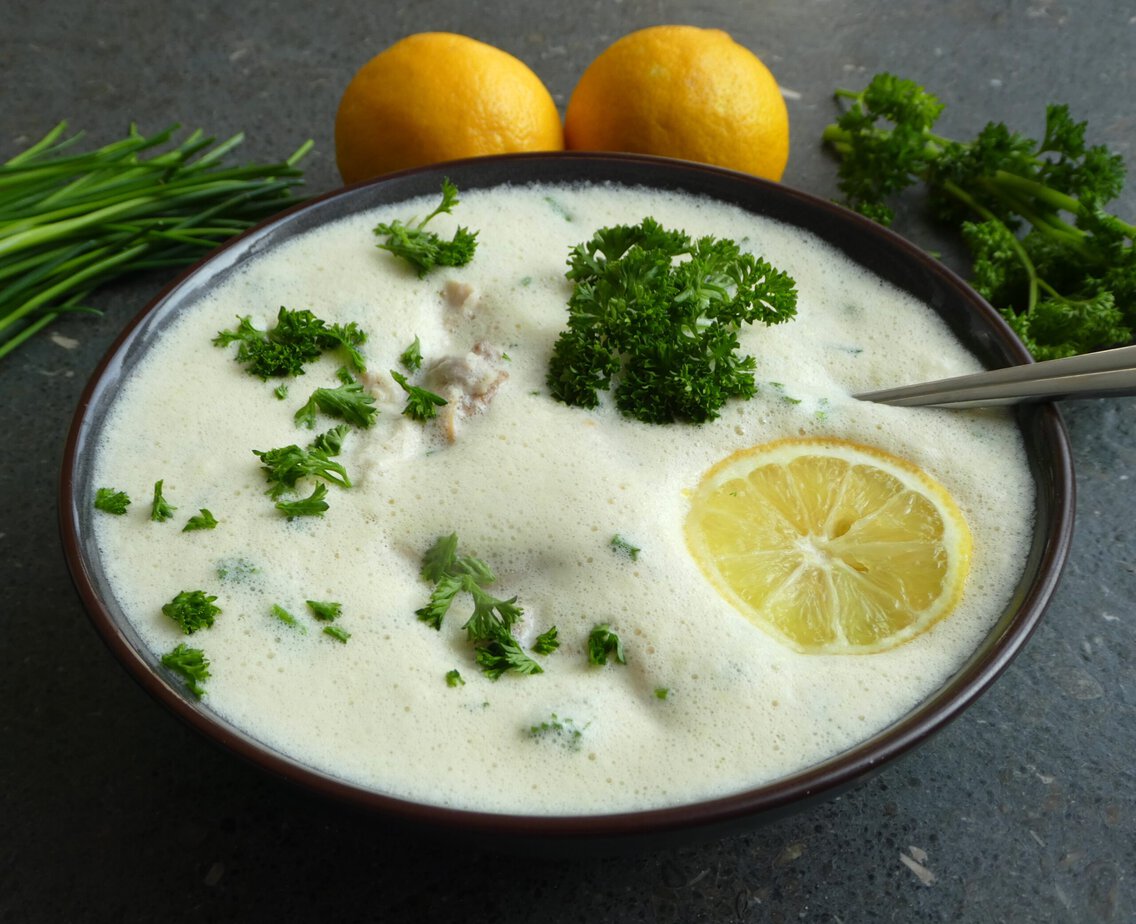
The 6 egg yolks create the emulsion and a smooth texture, much like certain egg-based preparations such as air fryer egg custard. The 300 g of butter, melted without browning, add body, shine, and richness; preferably use grass-fed or clarified butter, which plays the same flavor-building role as in buttered rice. The juice of one lemon helps emulsify the mixture and balances the butter; for a low-histamine version, replace it with 4 tablespoons of white or apple cider vinegar. Fresh chives and parsley add fragrance and color, just as chive butter demonstrates in a fat-based preparation.
Tips for success, texture, and serving
Success starts with a clear, flavorful broth: use the cooking water right away or refrigerate it overnight with the peelings, then strain it before adding the bouillon powder and bringing it to a boil. After that, keep the heat low. Melt the butter without letting it color; it may foam slightly but should not brown. In a tall container, blend the yolks with the lemon juice or vinegar until thick and pale, then slowly incorporate the butter to make a smooth, glossy sauce with no graininess.
Before adding the hollandaise to the broth, bring their temperatures closer together: loosen the sauce with a little hot broth, then stir it into the remaining broth in several batches; the mixture becomes opaque and velvety while staying fluid. Serve in 4 bowls with the reserved asparagus and herbs, with an endive or frisée salad for contrast. Thicken the soup at the last minute and serve immediately; reheat gently, without boiling. Thickening the yolks does not guarantee they are fully cooked, so use pasteurized yolks for vulnerable people. One serving provides 2 g of net carbs, or up to around 6 g depending on the bouillon, and remains rich at 645 kcal.
Find more dishes like this among my low-carb recipes.
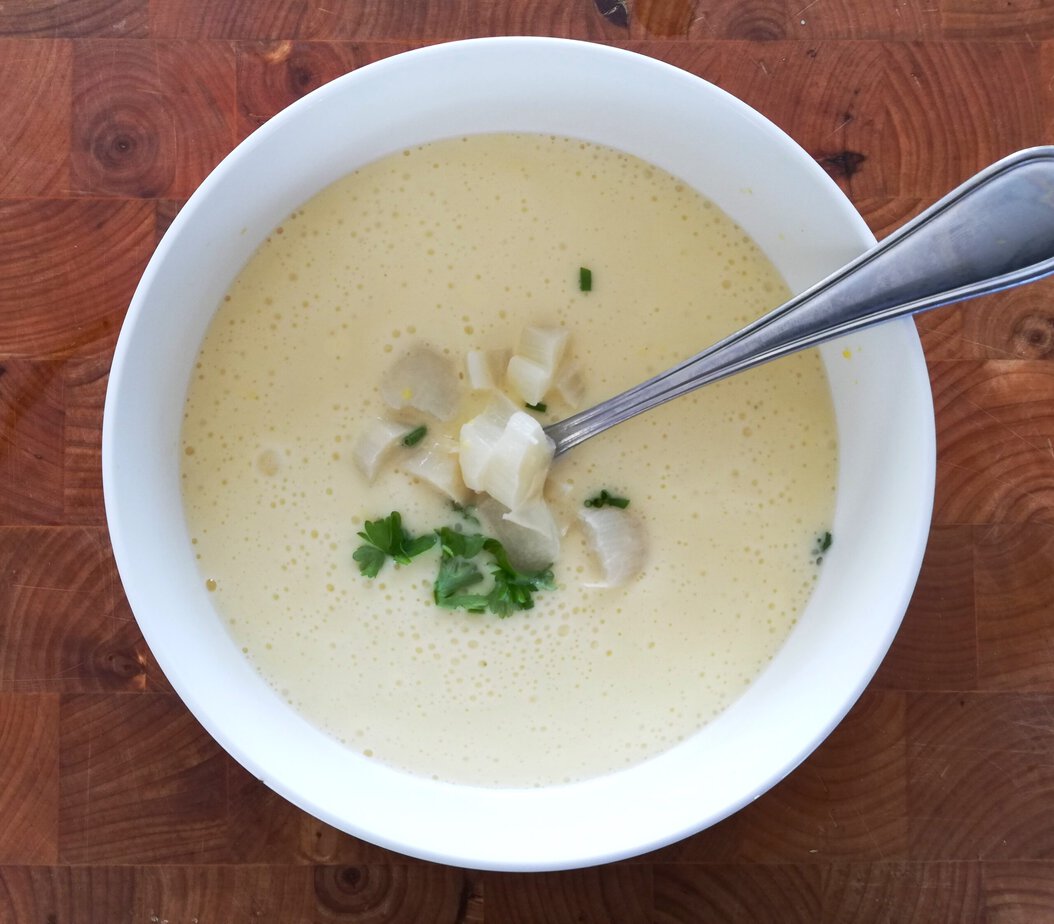
Asparagus Soup with Hollandaise
Ingredients
- 1 litre asparagus cooking water obtained by cooking 500 to 750 grams of asparagus
- stock powder enough for 1 litre
- 2 asparagus spears cooked
- 6 egg yolks
- 300 g butter (from grass-fed cows) or clarified butter
- The juice of one lemon
- chives (fresh) for garnish
- parsley (fresh) for garnish
For a low-histamine version
- 4 tablespoons white vinegar or apple cider vinegar NO lemon
Instructions
Before you start
- After cooking 500 to 750 grams of asparagus, you will have about a litre of cooking water (with the peelings and ends still in it). Use this water immediately for the soup, or refrigerate it overnight. In that case, leave the peelings and ends that cooked with the asparagus in the liquid.1 litre asparagus cooking water
- You have probably also set aside 2 or more asparagus spears: use them only once the rest of the soup is ready.2 asparagus spears
Stock
- Strain the cooking water to remove all the peelings and ends.
- Bring the cooking water to the boil with the stock powder. Then reduce the heat: the stock should be hot, but not too hot (just a little above serving temperature).stock powder
Hollandaise sauce
- Melt the butter in a small saucepan. Let it foam a little, but do not let it brown. Allow it to cool slightly, making sure it stays warm and liquid.300 g butter (from grass-fed cows)
- Separate the egg yolks from the whites. Do not use the whites. Put the yolks in the immersion blender beaker and add the lemon juice or vinegar.6 egg yolks, The juice of one lemon, 4 tablespoons white vinegar or apple cider vinegar
- Blend with the immersion blender in the beaker until the yolks thicken and turn pale. Then slowly add the butter while continuing to blend.
- Add a little stock to the sauce (to bring their temperatures closer together). Then stir the sauce into the stock in several additions.
- Cut the reserved asparagus into pieces. Divide the soup among 4 soup plates, then divide the asparagus pieces among the plates. Garnish with chives and parsley.chives (fresh), parsley (fresh)