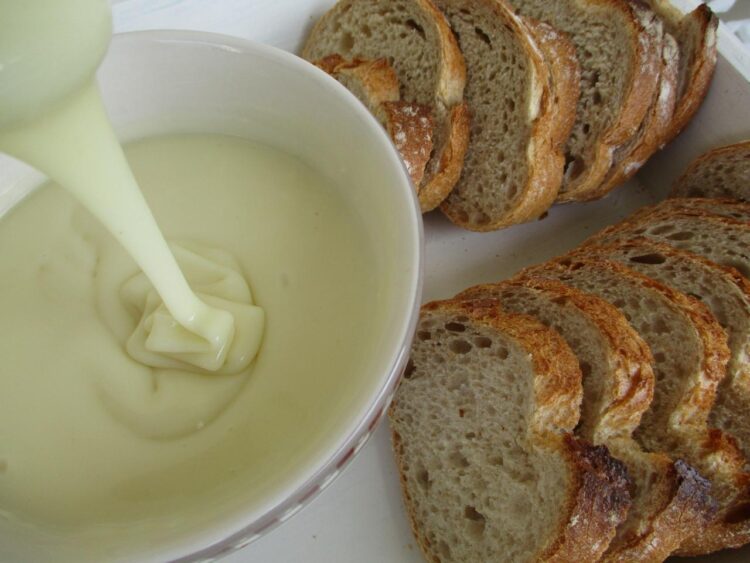
France’s lightest melted cheese, made with aged metton and a little butter.
Cancoillotte is one of those dishes everyone knows in Franche-Comté and almost no one knows elsewhere. It’s a melted cheese that’s loose, slightly tangy, and perfect spread on bread or spooned hot over potatoes. At just 120 kcal per 100 g, it’s also the leanest cheese on the board.
Making it at home couldn’t be simpler. All you need is metton, an aged skimmed-milk curd, water, butter, and salt. Everything melts gently in a saucepan in about twenty minutes. The result is far better than the industrial version, and you can adjust the texture exactly to your liking.

What is cancoillotte?
Cancoillotte is a cheese specialty from Franche-Comté made with skimmed cow’s milk. It earned PGI (Protected Geographical Indication) status in 2022. Its texture is semi-liquid, stretchy, and slightly sticky. The flavor is mild, lightly tangy, and delicately salty.
It isn’t a cheese in the usual sense. It’s made in two stages: first metton, a skimmed-milk curd left to ferment, then that metton is melted with water, butter, and salt. It’s this second stage, the melting, that you do at home.
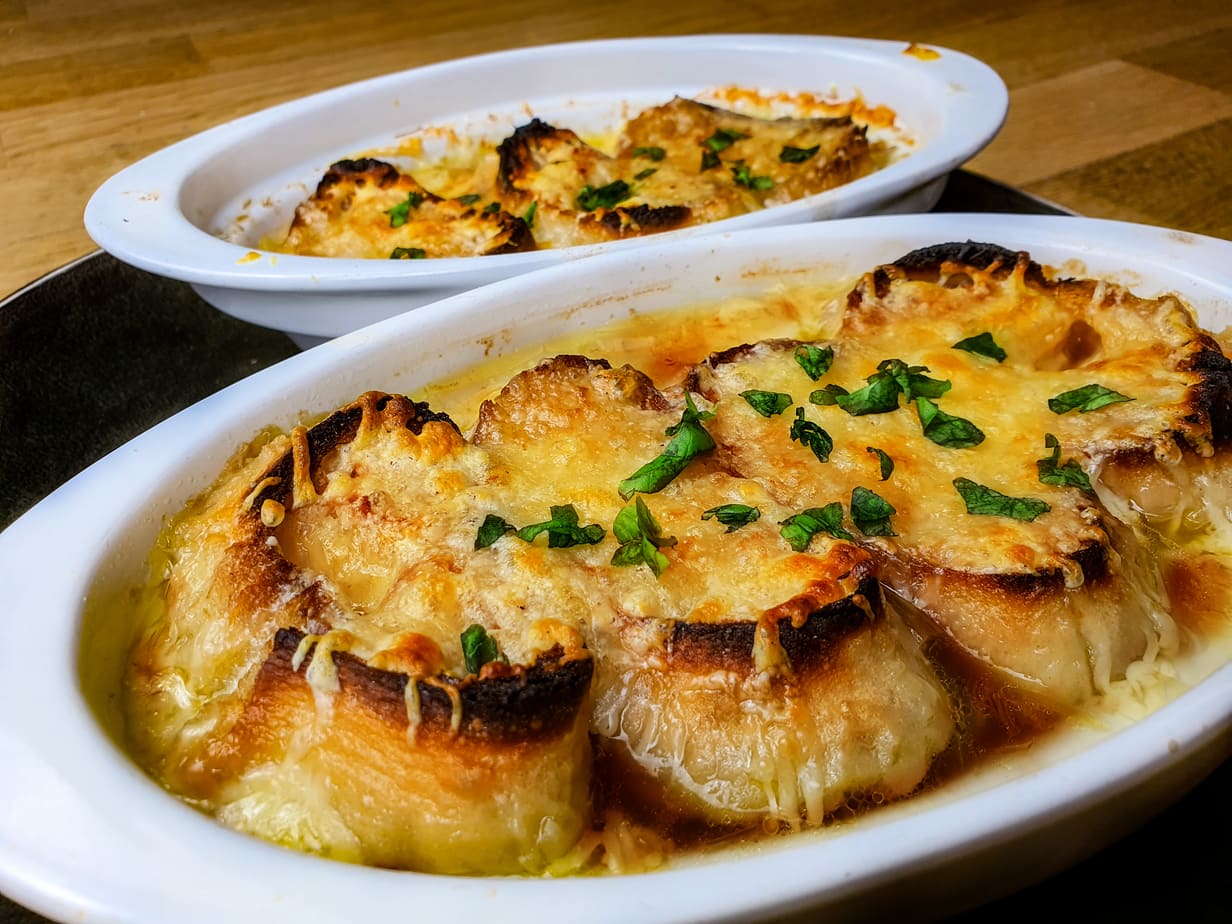
It can be eaten cold on toast, served hot over potatoes, or used in place of cream in a gratin. In Franche-Comté, the trio of Morteau sausage, potatoes, and cancoillotte is an absolute classic.
The origins of cancoillotte
Cancoillotte has existed in Franche-Comté since at least the 16th century, and probably much earlier. Some sources trace it back 2,000 years. It originated on farms in Haute-Saône, around the village of Oyrières, near Champlitte.
At the time, women on the farms used the skimmed milk left over after making butter. Rather than throwing it away, they curdled it, fermented it, then melted it with a little water and butter. It was a thrifty cheese, a “household cheese,” as it was once called. The poor man’s cheese.
Cancoillotte spread beyond Franche-Comté during the First World War. Laurent Raguin had the idea of sterilizing it and packing it in tin cans to feed soldiers from Franche-Comté at the front. That is where industrial production began.
The main ingredients in cancoillotte
Four ingredients are all you need. This recipe is simplicity itself.
Metton is the foundation of the recipe. It is a dry, granular cheese made from skimmed cow’s milk that has been curdled, then left to ferment and dry. Its smell is strong, but that is completely normal. Good metton is well aged, pale yellow, and crumbly. You’ll need 250 g for this recipe.
Water (150 to 200 ml) helps dissolve the metton as it melts. Some traditional recipes replace half of it with milk for a richer texture. The amount of water determines the final consistency: less water for a thick cancoillotte, more for a runnier one.
Butter (30 to 50 g) adds richness and creaminess. Without it, cancoillotte would be dry and grainy.
Salt should be adjusted to taste, depending on how salty the metton is. Taste as you go.
Where to find metton in France
This is the real challenge of the recipe. Metton is not easy to find outside Franche-Comté. In Bourgogne-Franche-Comté, it is stocked in most supermarkets. Elsewhere, you may have to hunt around a bit.
In supermarkets, Carrefour and Intermarché offer aged metton from Fromagerie Poitrey for click-and-collect and home delivery. It is usually stocked in the spreadable cheese section. Check availability at your local store — stock varies by region.
Online, several cheese dairies from Franche-Comté ship throughout France: Fromagerie Benoit, Doubs Direct, Fromagerie Mauron, and Fruitière des Coteaux de Seille. Metton will keep for several weeks in the refrigerator and freezes very well.
Variations and flavorings
With garlic: add 2 finely sliced garlic cloves halfway through cooking. This is the most popular variation and the one most commonly found in supermarkets.
With white wine or vin jaune: replace part of the water with white Jura wine or vin jaune. Vin jaune gives it a pronounced nutty flavor. Use 50 ml of wine for every 100 ml of water.
With shallot: sauté a sliced shallot in the butter before adding the metton and water. Other versions use cumin, Espelette pepper, wild garlic, or walnuts.
Technical notes
Temperature is the key. Metton melts between 80 and 90 °C. Below that, it stays grainy; above it, the texture can turn rubbery.
Before you start, grate the metton or cut it into small pieces. The finer the pieces, the faster and more evenly it will melt. Stir constantly throughout the process, as cancoillotte sticks easily to the bottom of the saucepan.
Without emulsifying salts, the texture will not be as perfectly smooth as the industrial version. That is normal, and the flavor will be better for it. If you want a smoother texture, add a pinch of baking soda (1 g maximum).
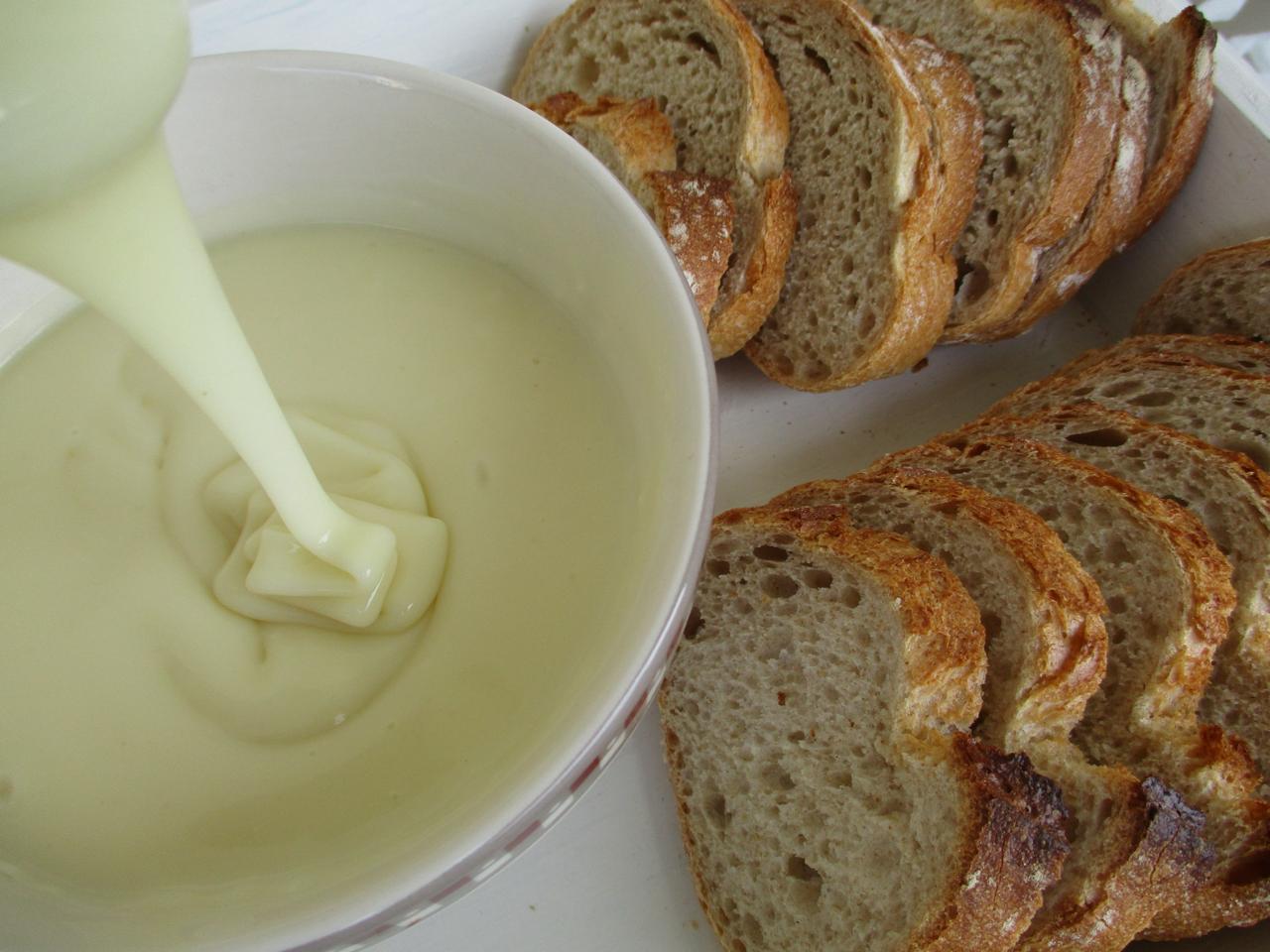
Homemade cancoillotte will keep for 5 to 7 days in the refrigerator in a sealed jar. It firms up as it cools, so simply reheat it gently to bring back its silky, pourable texture.
Ingredients
- 250 g aged metton
- 150-200 ml water or half water and half milk
- 30-50 g butter
- salt to taste
Instructions
- Grate or cut the metton into small pieces so it melts more easily.
- Pour the water (or the water-and-milk mixture) into a heavy-bottomed saucepan, then add the metton.
- Heat over low heat, stirring constantly with a wooden spoon.
- As soon as the metton begins to melt, add the butter in pieces.
- Continue stirring until smooth and uniform. The temperature should reach 80-90 °C.
- Season with salt to taste. Taste as it melts — the metton may already be salty.
- Remove from the heat once the texture is runny and uniform.
- Serve hot over potatoes with Morteau sausage, or let it cool and spread it on bread.