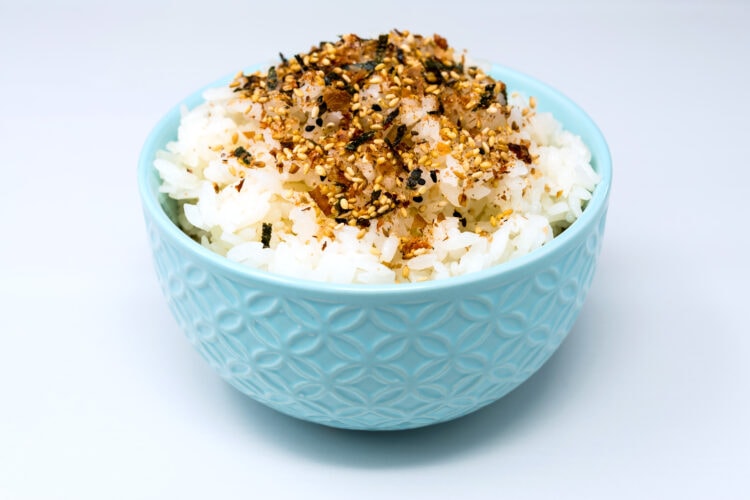
What is furikake?
You’ve probably wondered what those little flakes sprinkled over rice or fish are. Furikake is a classic condiment in Japanese cuisine.
There are many varieties, but the classic blend is mainly made with seaweed, fish, egg, dried herbs, sesame seeds, salt and sugar. “Furikake” literally means “to sprinkle” in Japanese. This seasoning blend adds a little crunch to your dish while bringing plenty of color and flavor.
History of furikake
Furikake is actually a fairly recent invention. Its predecessor is believed to have appeared in the early 20th century, at the start of Japan’s Taisho era. In the 1920s, the ravages of war caused waves of malnutrition across Asia.
In response to these deficiencies, especially calcium deficiency, pharmacist Yoshimaru Suekichi, from Kumamoto in southern Japan, created a mixture made from fish bones that was meant to be sprinkled over rice. Later, the recipe became more complex.
Sesame seeds, seaweed and dried herbs were added… Since then, many variations of furikake have appeared.

Varieties of furikake
Furikake has been built around the same basic ingredients for nearly a century, but today there are many different kinds.
It typically contains nori (dried seaweed sheets, especially used to make sushi), sesame seeds and bonito flakes (skipjack tuna soaked in soy sauce and dried), though some recipes get a little creative.
Among the varieties available today, you’ll find shiso furikake, made from dried, seasoned red shiso leaves; wasabi furikake (for those who like a bit of heat!); salmon furikake… Spicy? Citrusy? Mild? Salty? It all depends on the flavor you want to bring to your dish. There’s a whole world of possibilities.
What does furikake taste like?
The taste will obviously vary depending on the type of furikake you choose. The overall flavor profile remains similar, however, since most blends share the same basic ingredients. They include fish and dried nori, two foods that both deliver plenty of umami flavor!

Sesame seeds and egg enrich the blend with nutty, slightly smoky notes. Most furikake contains salt, sugar and monosodium glutamate, which boosts that savory umami flavor. With its crunchy texture, furikake gives your dish a deliciously flavorful finishing touch.
Cooking with furikake
In Japan, it is typically sprinkled over plain white rice, onigiri, sushi, fish dishes or vegetables. The great thing about furikake, though, is that you can use it pretty much however you like…
It’s such a versatile ingredient that it fits easily into all kinds of recipes. It works beautifully with vegetables, noodles, salads… Some people even sprinkle it over popcorn! It is also used to make flavorful crusts for fish or meat.
How can you replace furikake?
Furikake is fairly easy to replace. Just use the ingredients it is built around: salt and sesame seeds. Sprinkle your dishes with fleur de sel and toasted sesame seeds.
You can even add nori sheets if you have some in your pantry. Chop them finely before adding them to your dish. Another option: pick up some shichimi togarashi. It’s spicier, but it will also do a great job of enhancing your dish’s flavors.
Furikake and shichimi togarashi: what’s the difference?
Furikake and shichimi togarashi have a lot in common, starting with the fact that they are both Japanese condiments meant for sprinkling. They both contain chopped, ground or dried ingredients, such as seaweed, nori or sesame seeds.
And yet, the proportions and blends are not quite the same. Unlike furikake, shichimi togarashi is spicy.
This condiment contains chili peppers, and some recipes may also include chili flakes, Sichuan pepper, dried orange peel, ginger, poppy seeds… In short, a whole assortment for lovers of spicy flavors!
The benefits of furikake
Once again, it all depends on the type you choose. Since many furikake blends contain seaweed and plenty of salt, they can be a source of iodine. Still, be careful not to overdo it.
In excessive amounts, salt can have harmful effects on health. Furikake is also a good source of protein thanks to the dried fish it contains.
Where can you find furikake?
Furikake is easy to find in Asian grocery stores or online. Although it’s less common, you may also spot it in some supermarkets, but specialty shops remain your best bet.
You can also make your own blend at home! You’ll need the basic ingredients: dried bonito (also used for dashi), kombu, salt, nori and sesame seeds, plus sugar, mirin and soy sauce. There are countless ways to make furikake, so let your cravings guide you!
How do you store furikake?
Like most condiments, store your furikake in a dry place away from light. Keep it in an airtight container, and it will last for several weeks.
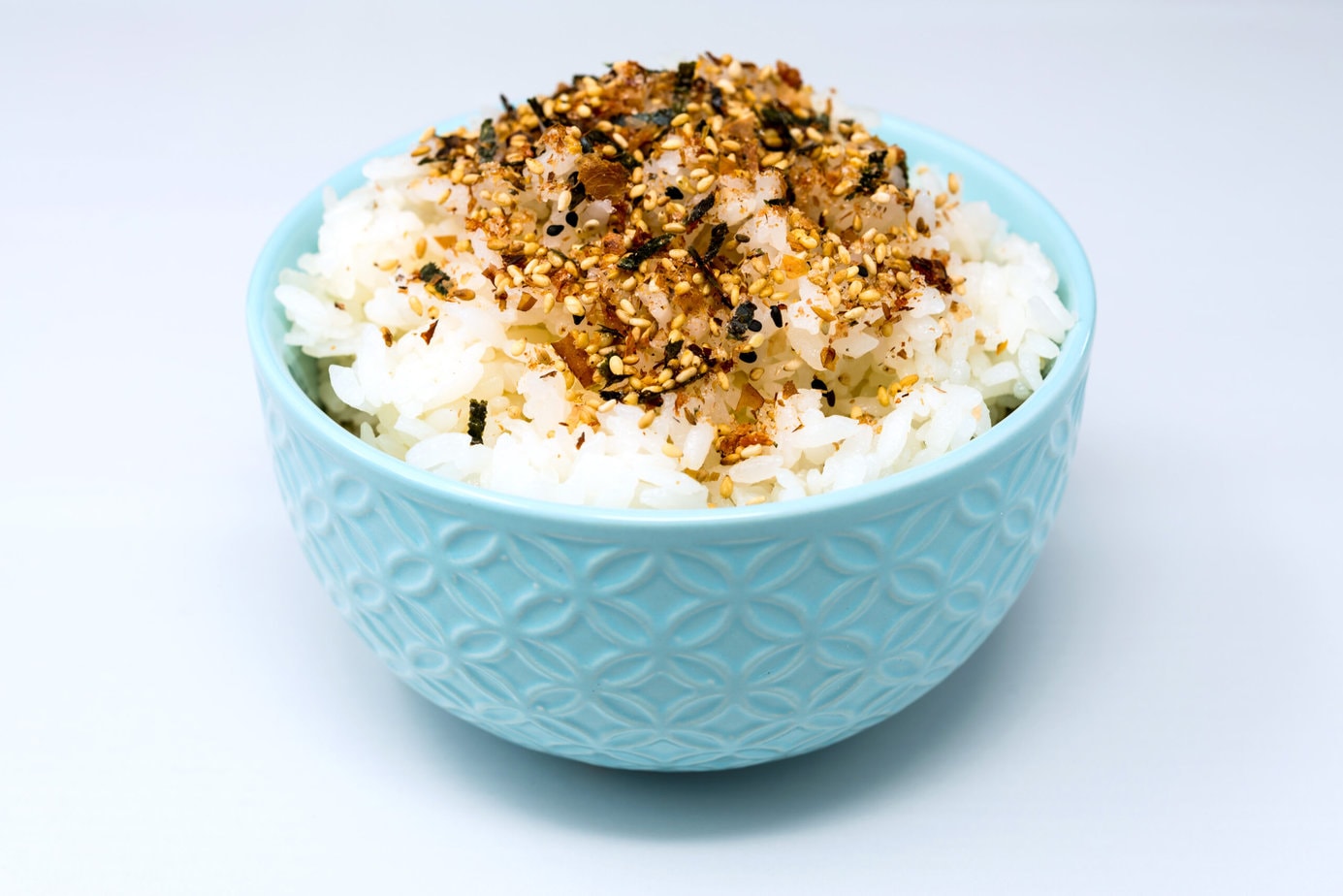
Ingredients
- 15 g katsuobushi Increase the amount by 50% if using previously used katsuobushi
- 20 g kombu You can reuse the kombu reserved after making mentsuyu or dashi
- 1 tablespoon aonori dried green seaweed
- 3 tablespoons white sesame seeds toasted beforehand
- 1 tablespoon of black sesame seeds toasted beforehand
Seasonings
- 1.5 teaspoon sugar add more to taste
- 0.25 teaspoon salt
- 1 teaspoon mirin
- 1 teaspoon light soy sauce
- 0.5 teaspoon sesame oil
Additional Ingredients (After Cooling)
- 1 sheet of nori dried seaweed
- 1 teaspoon aonori dried green seaweed
- 1 teaspoon dried shiitake powder
Instructions
- Make sure the previously used katsuobushi is well drained. Cut it into small pieces with a knife.15 g katsuobushi
- Cut the kombu into thin strips, then cut the strips into small pieces.20 g kombu
Cooking
- Add the katsuobushi, aonori, and reserved kombu to an ungreased pan.15 g katsuobushi, 20 g kombu, 1 tablespoon aonori
- Set the heat to medium-low and cook, stirring constantly, until the katsuobushi is dry and flaky.
- Add the sugar, mirin, salt, light soy sauce, and sesame oil. Lower the heat and stir frequently over low heat for a few minutes, until everything is well incorporated.1.5 teaspoon sugar, 0.25 teaspoon salt, 1 teaspoon mirin, 1 teaspoon light soy sauce, 0.5 teaspoon sesame oil
- Transfer the mixture to a baking sheet lined with parchment paper. Spread it out and let it cool completely.
- Once cooled, cut the nori sheet into small pieces.1 sheet of nori
- Add the nori pieces, shiitake powder, and extra aonori to the cooled furikake, then mix well.1 teaspoon aonori, 1 teaspoon dried shiitake powder
- Once the mixture has cooled and is fairly dry, transfer it to a blender and pulse until finely chopped. It shouldn't become a full powder, but almost.
- Taste the furikake and adjust the seasoning with more salt or sugar, if needed.
- Stir the sesame seeds into the mixture by hand; do not blend.3 tablespoons white sesame seeds, 1 tablespoon of black sesame seeds