Lotus root (yeon-geun) is widely used in Korean cooking and across many other Asian cuisines. This sweet, soy-braised dish is one of Korea’s most popular ways to prepare yeongeun.
It definitely deserves a spot on your list of go-to side dishes, because it is absolutely delicious!
As I mentioned in my article on lotus root, lotus root is the stem of the lotus plant, and it is rich in dietary fiber, vitamins, and minerals. It has a lightly sweet flavor and a crisp, starchy, pleasantly fibrous bite.
How to make yeongeun jorim
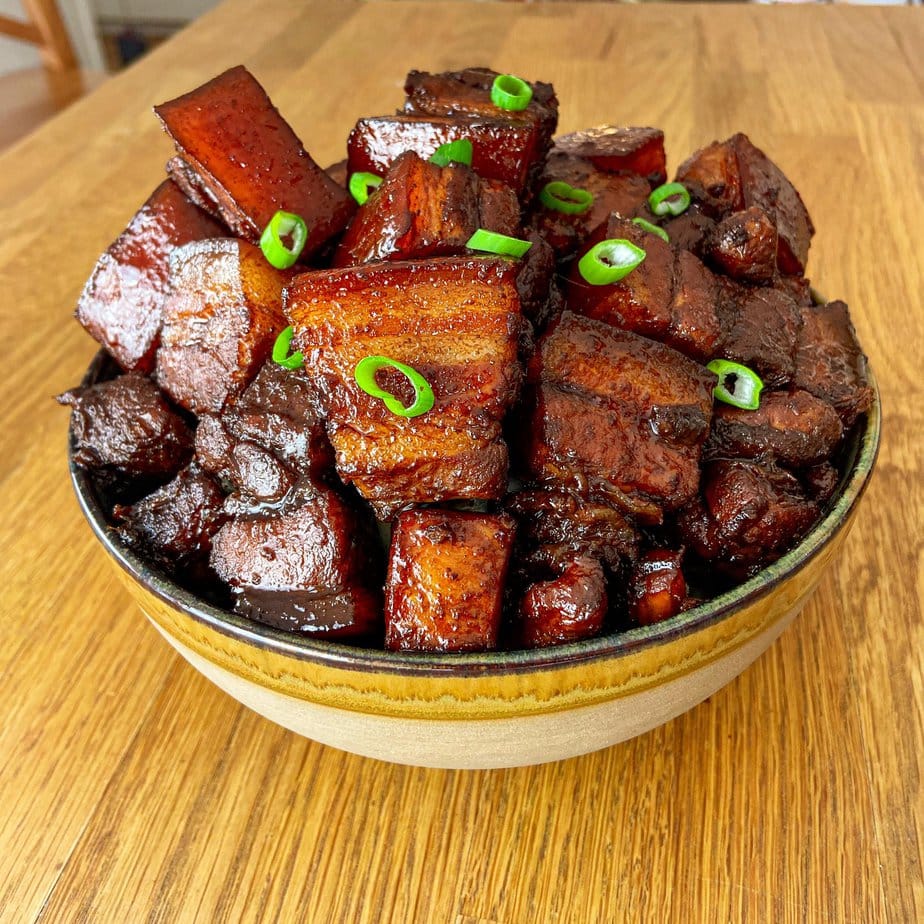
This dish is prepared much like other soy-braised dishes, such as red-braised pork (Chinese braised pork).
For yeongeun jorim, if you are starting with fresh, whole roots, first peel and slice the lotus root, then parboil it in water with a little vinegar before braising.
Korean cooks use this technique to reduce the starchiness and remove any bitterness from the lotus root.
For the braising liquid, water works perfectly well as a base, but dashima broth or the soaking liquid from dried shiitake mushrooms adds another layer of flavor to the dish.
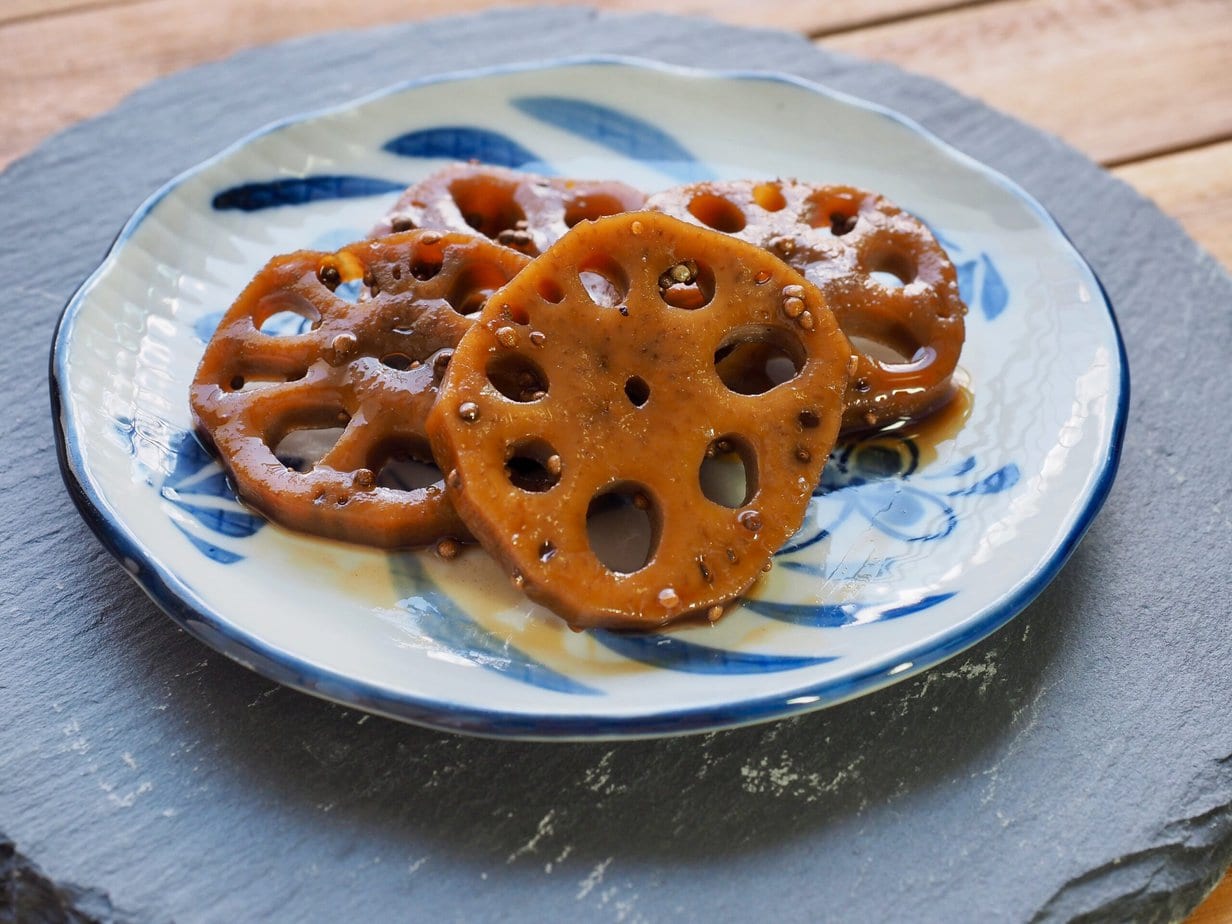
The cooking time I use here gives the lotus root just the right balance of crunch and chew for my taste. If you prefer it crisper, reduce the parboiling time in the recipe for fresh roots.
Likewise, if you prefer softer, more tender slices, boil them a little longer (if using frozen lotus root, simply add a little water and lower the temperature).
Ingredients
- 500 g frozen lotus root
- 55 g sugar
- 1 tablespoon rice vinegar
- 3 tablespoons light soy sauce
- 1 tablespoon dark soy sauce
- 1 tablespoon neutral oil corn, sunflower, etc.
- 1 clove garlic, minced
- 2 tablespoons sesame oil
- 1 pinch salt
- 0.5 cup water eyeball it
If using whole fresh lotus root, use the following ingredients:
- 500 g lotus root, peeled and trimmed
- 1 teaspoon rice vinegar
- 1 tablespoon neutral oil
- 3 tablespoons light soy sauce
- 1 tablespoon dark soy sauce
- 2 cloves garlic, minced
- 100 g sugar
- 2 teaspoons sesame oil
- 1 teaspoon sesame seeds
Instructions
- Make a dry caramel with the sugar over medium heat.55 g sugar
- Once the caramel is ready, carefully pour in the water (watch out for steam; turn on the range hood if you like). The caramel will dissolve into the water.0.5 cup water
- Add the frozen lotus root to the wok and cover with enough water to fully submerge it.500 g frozen lotus root
- Add the vinegar, soy sauce, garlic, and neutral oil.1 tablespoon rice vinegar, 3 tablespoons light soy sauce, 1 tablespoon dark soy sauce, 1 clove garlic, minced, 1 tablespoon neutral oil
- Bring to a boil over medium heat. As the liquid reduces, spoon the sauce over the lotus root so it is well coated.
- Add the sesame oil and stir well.2 tablespoons sesame oil
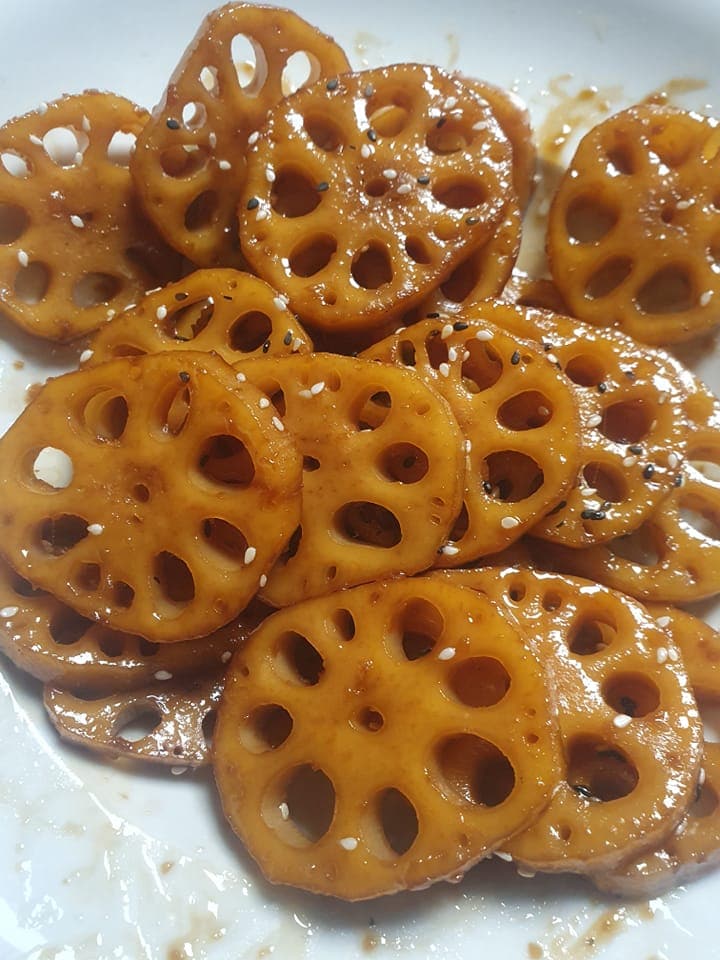
- Serve garnished with sesame seeds.1 teaspoon sesame seeds
If using whole fresh lotus root, follow these steps:
- Slice the lotus root into 0.5 cm-thick rounds. Soak in cold water for 30 minutes.500 g lotus root, peeled and trimmed
- Bring a saucepan of water to a boil. Add the vinegar and blanch the lotus root slices, uncovered, for 5 minutes.1 teaspoon rice vinegar
- Rinse under cold water and drain.
- Heat the neutral oil in a wok. Stir-fry the sliced lotus root for a few minutes, until slightly softened and translucent.1 tablespoon neutral oil
- Add enough water to almost cover, then add the garlic and soy sauce. Stir and cover.2 cloves garlic, minced, 3 tablespoons light soy sauce, 1 tablespoon dark soy sauce
- Reduce the heat to low and cook for 40 minutes. Lift the lid occasionally and turn the slices so they brown evenly. Add more water if needed.
- Add the sugar and stir to combine. Cover and simmer for another 20 minutes.100 g sugar
- Uncover and increase the heat to medium-high. Stir and gently turn the lotus root, then braise for 10 to 12 minutes, until each slice is glossy and almost all the liquid has evaporated.
- Braised lotus root
- Remove from the heat and stir in the sesame oil. Sprinkle with sesame seeds.2 teaspoons sesame oil
Notes
Nutrition
Many thanks to Carole Muhlhaeuser from the official group for allowing me to reference her recipe here.