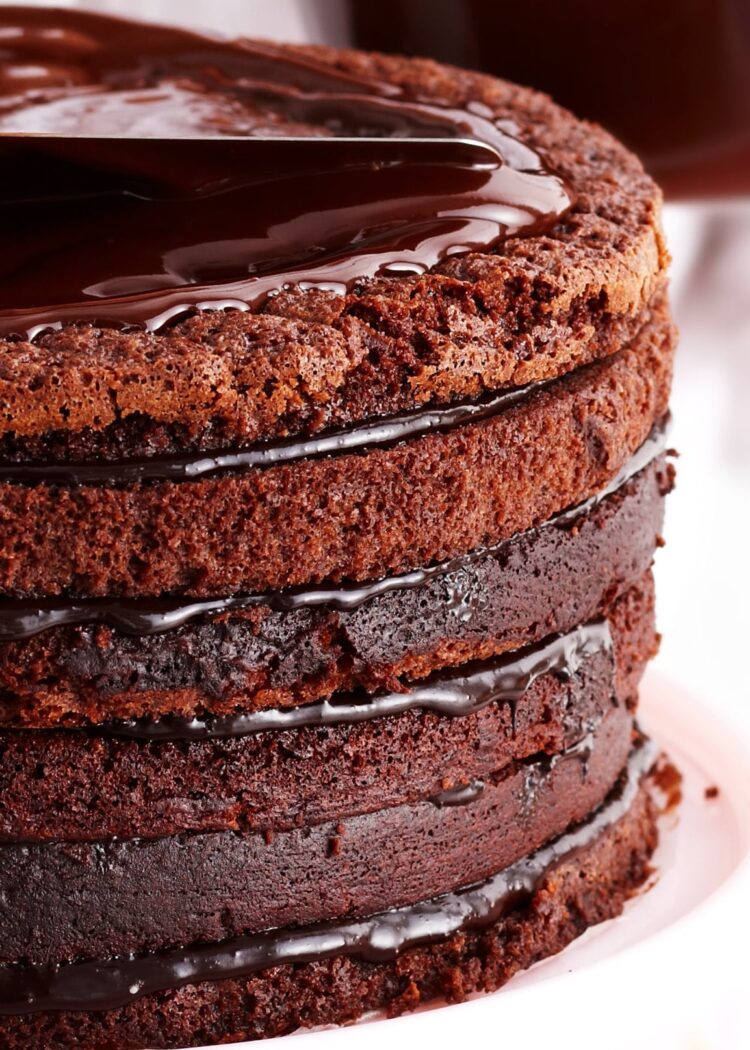
Soy helps a custard set, oat makes a moist cake, almond does almost nothing. In the oven, it is the protein and fat listed on the back of the carton that determine the result, not the word “plant-based” printed on the front. The question is which one to open for what you are making.
What really changes from one carton to another
Three numbers are enough to predict how a plant-based drink will behave in baking. Protein provides structure and color: it helps a custard set and a surface brown. Fat provides softness and delays staling in a gluten-free crumb, which dries out quickly. Sugars contribute color.
Whole cow’s milk provides around 3.4 g of protein and 3.5 g of fat per 100 ml. Soy comes close. The others are mostly water: an almond drink often contains 2 to 4% almonds, with the rest being water and an emulsifier.
One rule before all the others: choose unsweetened, unflavored versions. A carton of sweetened vanilla milk throws off a batter already measured to the gram. The other basic choices are covered in our five rules of gluten-free baking.
| Drink (100 ml) | Protein | Fat | What it does best |
|---|---|---|---|
| Plain soy | 3 to 3.5 g | 1.8 to 2 g | Custards, flans, mixtures that need to set |
| Oat | 0.5 to 1 g | 0.5 to 1.5 g (3 g in barista versions) | Cakes, loaf cakes, yeast doughs |
| Almond | 0.4 to 0.5 g | 1 to 1.5 g | Crêpe batters, muffins, no structural role |
| Rice | 0.1 to 0.3 g | around 1 g | A fallback option, adds sugar and little else |
| Coconut (full-fat, canned) | 1 to 2 g | 17 to 22 g | Ganaches, rich flans, whipped creams |
These values are approximate. Each brand has its own formula, and the label on the back of the carton remains the only reliable reference.
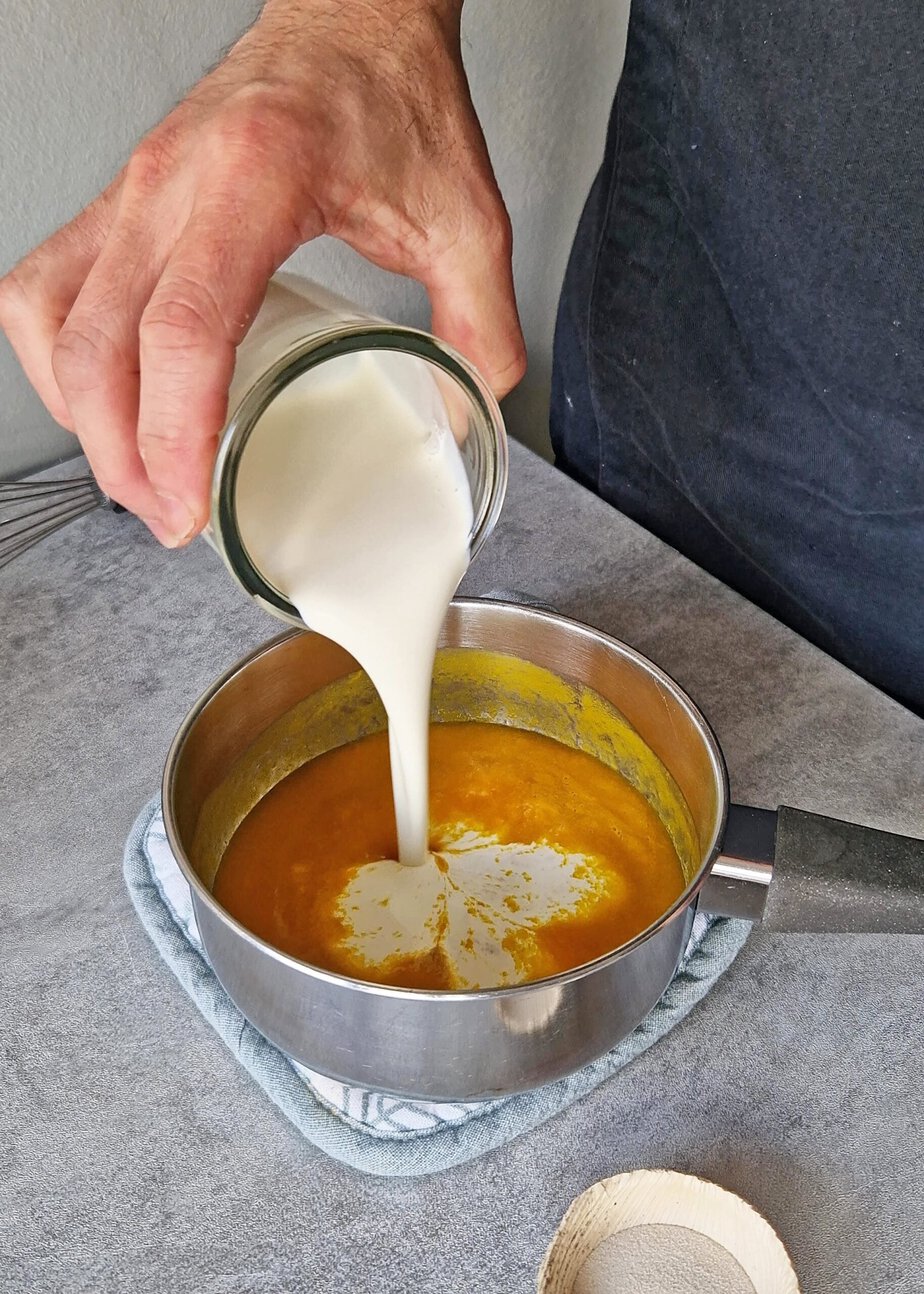
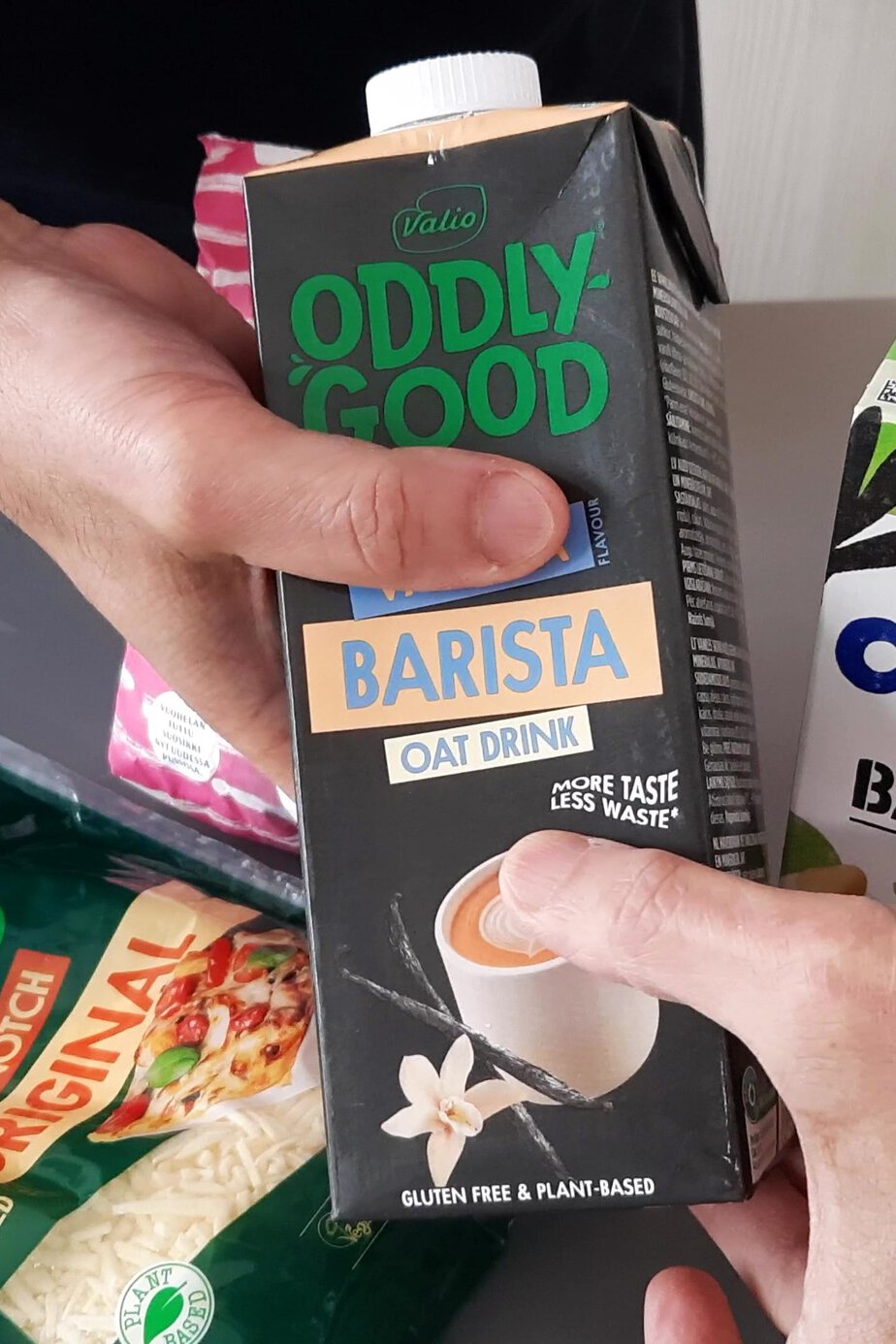
Moist cakes: choose the barista version
The “barista” label is not just for coffee. These cartons contain added fat, around 3 g per 100 ml compared with 0.5 to 1.5 g in the standard version, plus stabilizing salts that keep them from splitting when heated or exposed to acid.
In cake batter, that fat does the job of whole milk: it coats the starches, retains water and produces a crumb that is still soft the next day. In a gluten-free sponge cake, which dries out within twenty-four hours, the difference is noticeable by day two. I use it as is in the gluten-free chocolate sponge cake, replacing milk gram for gram rather than by volume, since not all cartons have the same density (see why scales make all the difference in gluten-free baking).
Oat also contributes its own sugars, 3 to 7 g per 100 ml depending on the brand, produced by the breakdown of its starch. The cake browns faster. If your oven runs hot, lower the temperature by 10 °C rather than shortening the baking time.
Custards and flans: soy sets, almond lets you down
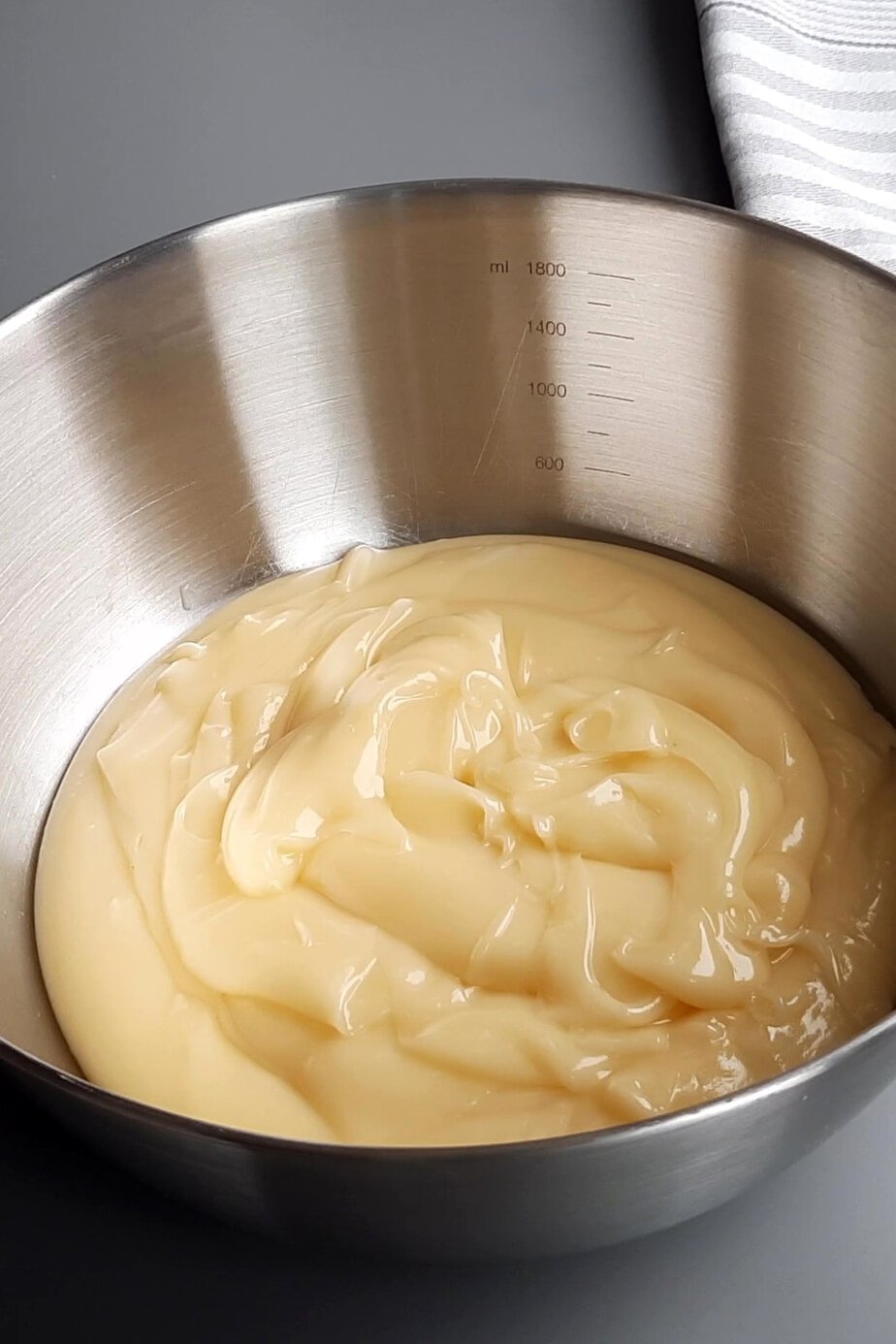
Pastry cream relies primarily on starch to set, but milk proteins give it body, that spoon-coating texture. Soy provides that body. Almond or rice produces a soft starch gel that releases water when chilled, especially after a night in the refrigerator.
Our vegan pastry cream therefore starts with plain soy, with the fat added during cooling rather than cooking.
Two useful tips. Soy splits on contact with acid: a spoonful of lemon juice or vinegar deliberately curdles it, making it a substitute for buttermilk in a batter leavened with baking powder. Conversely, in a lemon mixture, you need to cook without boiling, or switch to coconut cream, which is more stable.
Flans and crèmes brûlées need fat, not water. A can of full-fat coconut milk, or a mixture of soy and coconut cream, gives a firm set. Almond produces a weeping flan.
Whipping creams: what whips up and what falls flat
To whip up, a cream needs enough fat to form a stable network, in practice at least 25%. Cartons labeled “whipping,” whether soy- or coconut-based, contain 24 to 31%: these are the only ones that whip reliably.
So-called “cooking” creams, with 10 to 17% fat, will thicken a sauce but will never whip, no matter how long you beat them. The same goes for oat creams, which are too low in fat.
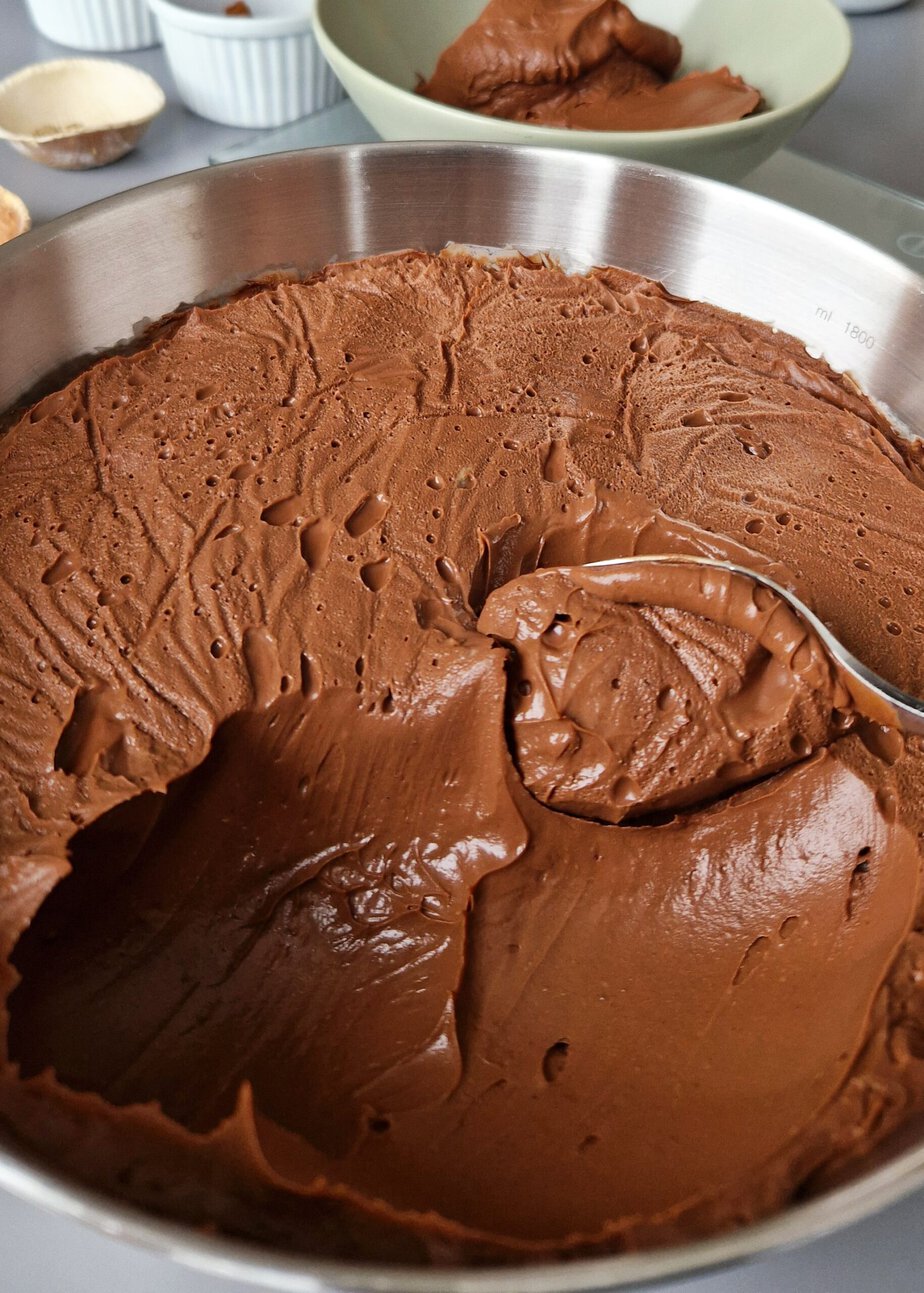
Canned coconut cream remains the simplest solution. After twelve hours in the refrigerator, scoop out the solid part and leave the water at the bottom. It whips up firm, holds its shape when chilled, and its flavor disappears behind chocolate or coffee, as in the vegan banoffee pie with coffee ganache or the 3-layer vegan chocolate mousse cake.
For a meringue, the approach changes: aquafaba whips like egg whites, provided you reduce it a little and add an acid. The vegan pavlova relies entirely on this, without a drop of cream.
Plant-based butter: format matters more than brand
Two very different products are sold under the same name. Blocks and sticks contain 75 to 80% fat. Spreadable tubs often drop to 55 or 60%, and the difference is water.
That water ruins anything that needs to stay crumbly: shortcrust pastry turns hard rather than tender, cookies spread, puff pastry becomes soggy. For laminating, you need a firm block straight from the refrigerator and a rested dough. The temperature window is narrower than with butter, because these fats—coconut, shea or rapeseed—melt at lower temperatures.
The block creams properly with sugar, making a whipped plant-based buttercream possible, like the one in the 7-layer vegan opera cake. In the gluten-free, sugar-free vegan shortcrust pastry, I work it in very cold cubes and never let it soften on the work surface.
Vegan cheeses: only the thick ones work in desserts
Cashew- or almond-based plant-based cream cheeses work in baking. Those based on coconut oil and starch, designed to melt on a croque-monsieur, liquefy during baking and have no place in a cheesecake.
Check the ingredient list: the higher the proportion of nuts and the less water there is, the better the filling holds. A vegan cheese that is too wet can be rescued by draining it overnight in cheesecloth, adding 10 g of starch per 500 g of mixture and baking gently, as in the gluten-free, lactose-free squash cheesecake.
My bare-minimum cupboard essentials: a carton of plain soy, one of barista oat, a can of full-fat coconut cream and a block of plant-based butter. With those four, everything else on the shelf becomes optional.
Guide developed with chef Rommel Reyes. Find his work on Instagram, his Substack newsletter and his YouTube channel.