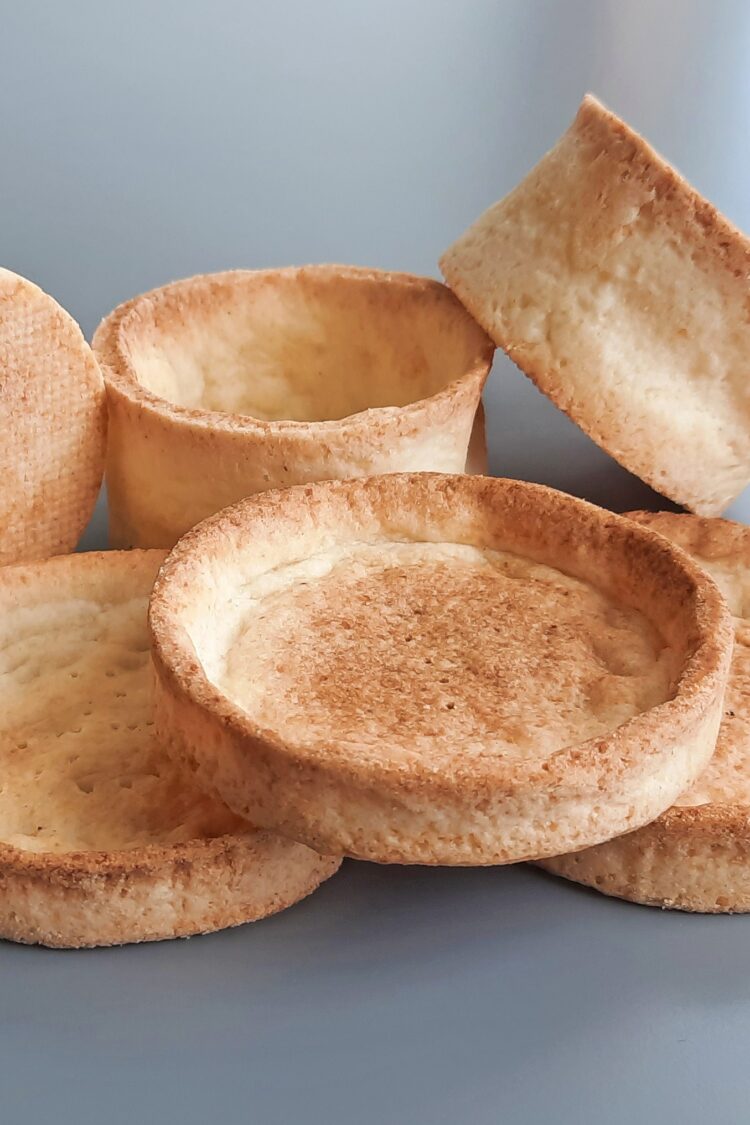
Looking for a pie dough that holds together without eggs, dairy butter, or sugar? This one snaps cleanly when you bite into it, stays pleasantly crumbly, and works just as well for a quiche as it does for a fruit tart.
The salt comes through just enough to take it in either direction, savory or sweet. It takes a little care to roll out, but nothing complicated as long as you keep everything well chilled. You’ll find the rest of my gluten-free staple recipes in the same category.
What Is Vegan Gluten-Free Shortcrust Pastry?
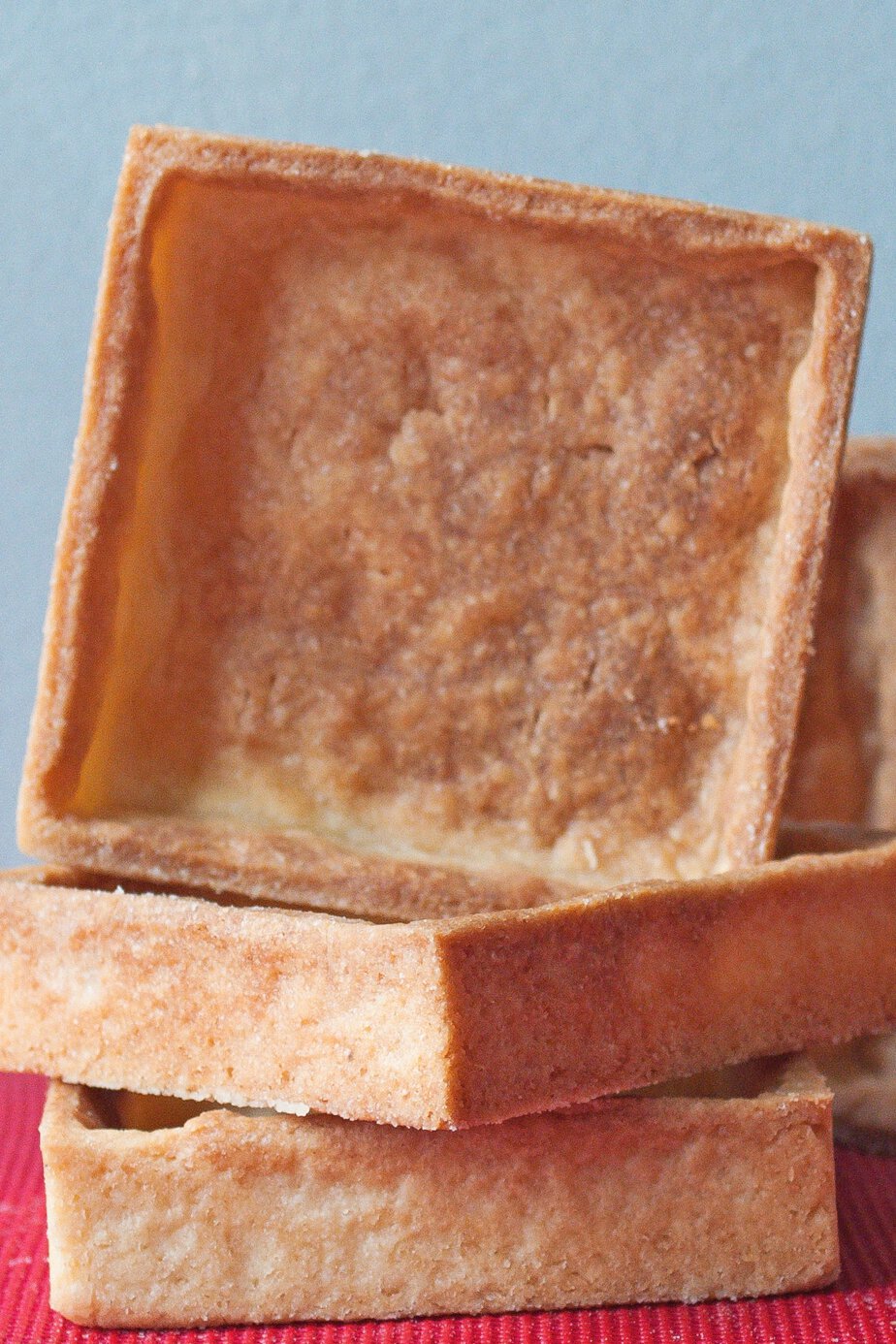
This is a gluten-free, vegan shortcrust pastry, similar to the French pâte brisée used for tarts and quiches. Because it contains no sugar, it behaves differently: the dough stays firmer and is less likely to break when rolled out, whereas sweet pastry dough is softer and more delicate.
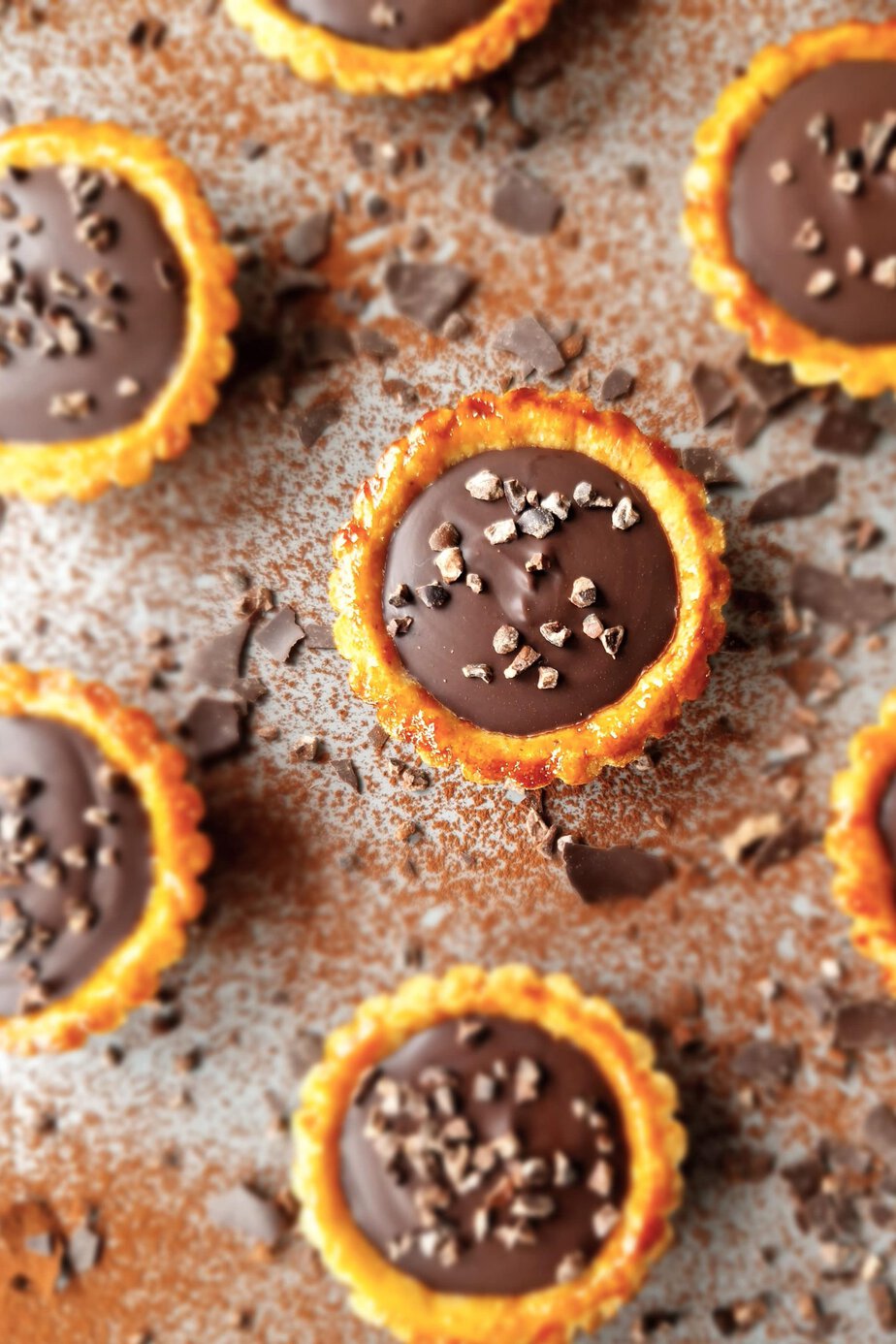
Without eggs or wheat flour, it’s more delicate than a classic pastry dough, so handle it gently to prevent crumbling or tearing. In return, its lightly savory flavor makes it perfect for quiches and savory tarts, but also for lightly sweetened chocolate tarts, clafoutis, or fruit tarts.
Key Ingredients
For accuracy, measure the flour by weight, using metric units. Schär Mix Pain works well; Schär Universal, Caputo gluten-free, and King Arthur Bread Flour also work. You can also swap in an all-purpose gluten-free flour blend that contains xanthan gum.
The vegan butter should be cold, cut into cubes, and chosen gluten-free, nut-free, and soy-free. Violife vegan butter works well. As with classic shortcrust pastry, the fat needs to stay cold and firm for as long as possible so the dough keeps its structure.
Cold water binds the ingredients and brings the dough together. It should be ice-cold so the vegan butter doesn’t soften too much. The salt seasons the dough and gives it that lightly savory edge, which works just as well in sweet bakes as it does in savory ones.
Technical Tips and Common Pitfalls
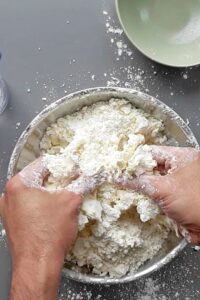
Start by mixing the gluten-free flour and salt, then add the cold cubes of vegan butter. Rub the fat into the dry ingredients with your fingertips until the mixture turns sandy.
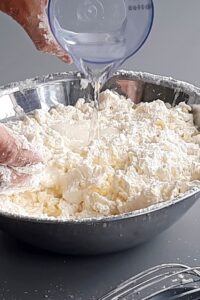
Add the water in 3 additions, mixing between each one, and use only as much as needed for the dough to start coming together. Don’t overwork it: as soon as it holds, stop.
For shaping, place the dough on a cold, lightly floured surface. Dust it only as much as needed, then knead very lightly, just enough to form a ball. Shape it into a square with rounded corners, wrap it tightly in plastic wrap with the wrap touching the dough, then chill it for at least 30 minutes, or until firm.
This chilling time firms up the fat, making the dough easier to handle and less sticky. Keep the work surface cold too, with a light dusting of gluten-free flour to prevent sticking.
Rolling It Out Without Breaking It
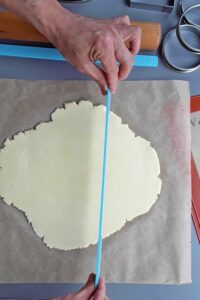
Always roll out the dough cold. Aim for a thickness of 3 to 4 mm, rolling from the center outward to keep the sheet even. The easiest method is to roll it between two sheets of parchment paper: the dough sticks less and cracks less easily.
If it starts to stick, dust a little gluten-free flour on top and underneath. Use a light hand, though, or the dough can turn dry and hard after baking. If you have them, dough thickness guides make it easier to keep an even thickness and speed things up.
Transfer and Repair
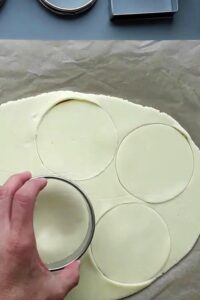
Once rolled out, cut the dough to fit your tart pan or tartlet pans. To move it, lift it gently with the rolling pin or with your hands. Gluten-free dough is more fragile than wheat-based dough, so handle it gently to avoid tearing.
If a crack or tear appears, simply patch the dough back together with your fingers. Then smooth any uneven edges for more even baking.
Blind Baking
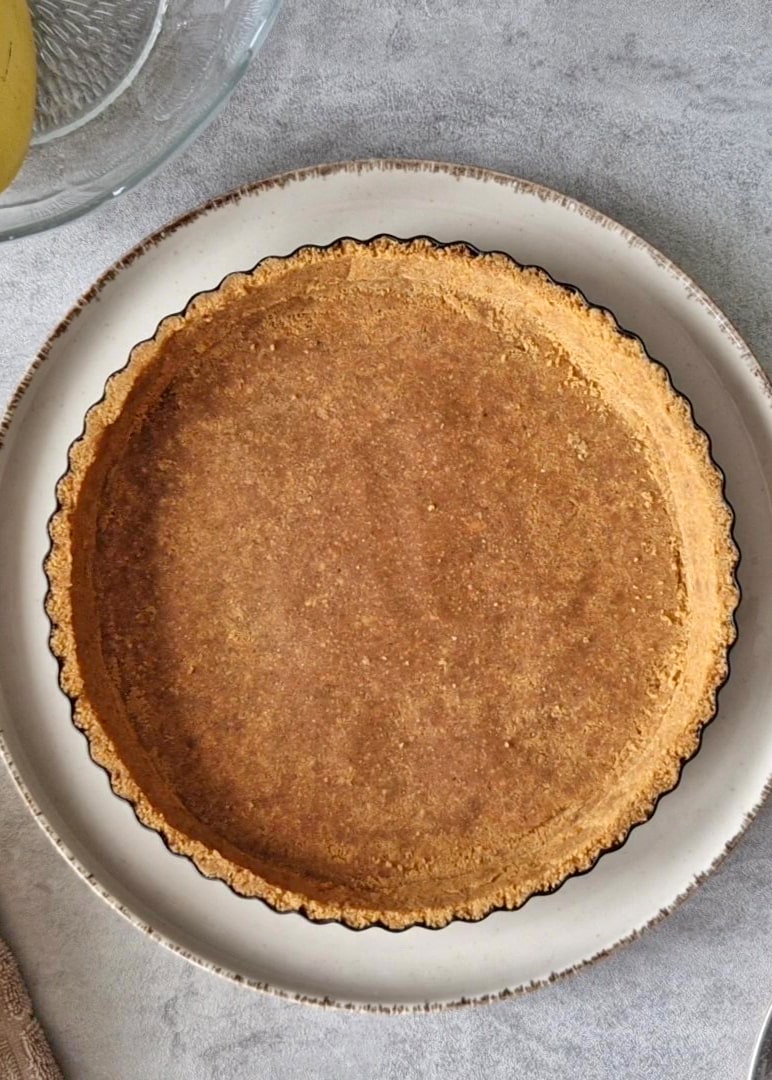
Preheat the oven to 180°C. If the recipe calls for blind baking, first line the pan with the dough, trim the excess from the edges, then prick the bottom with a fork. Place the tart shell in the freezer for 10 to 20 minutes.
This chilling step helps limit shrinkage during pre-baking. Once the dough is thoroughly cold, cover it with parchment paper and fill it with pie weights or dried beans. Blind baking helps prevent a soggy bottom, keeps the crust neat, and sets the shape before you add the filling.
For a large tart, allow 15 to 20 minutes of blind baking if needed. For small tartlets, allow 15 to 18 minutes. In all cases, let the crust cool to room temperature before filling.
Storage
Before resting, wrap the dough tightly in plastic wrap, then refrigerate it for at least 30 minutes.
If you want to keep things fully plant-based, check out my vegan recipes.
Recipe developed by chef Rommel Reyes. Find his work on Instagram, his Substack newsletter, and his YouTube channel.
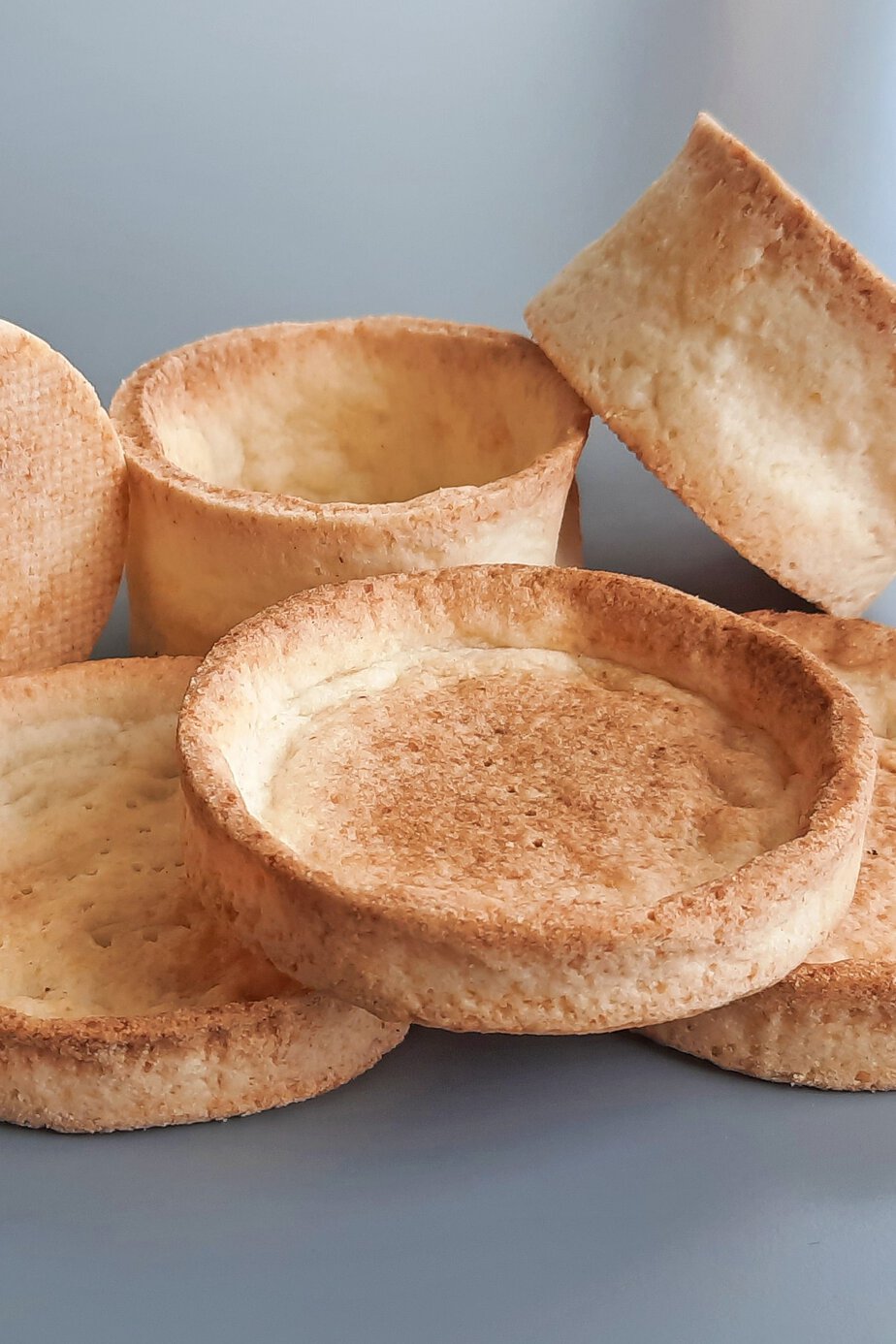
Vegan Shortcrust Pastry, Gluten-Free and Sugar-Free
Ingredients
- 50 g water cold
- 250 g Schar GF Bread Mix or all-purpose gluten-free flour with xanthan gum
- 5 g salt
- 150 g vegan butter cold, cut into cubes; preferably Violife
Instructions
Method
- Combine the gluten-free flour and salt, then add the cold butter.250 g Schar GF Bread Mix, 5 g salt, 150 g vegan butter
- Rub the cold butter into the dry ingredients with your fingertips.
- Add the water in 3 additions, mixing after each addition.50 g water
- Mix gently until the dough starts to come together.
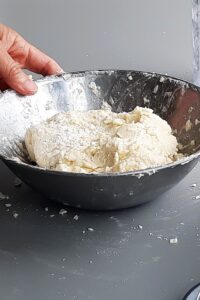
- Transfer the dough to a cold, lightly floured surface.
- Knead lightly to form a ball.
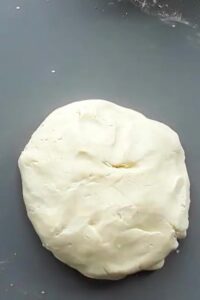
- Shape the dough into a rounded square.
- Wrap it in plastic wrap.
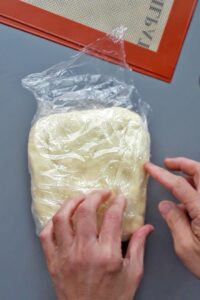
- Chill for at least 30 minutes.
- Roll out the chilled dough to about 3-4 mm thick between sheets of parchment paper to prevent it from sticking to the work surface.
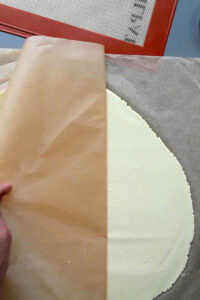
- If desired, use pastry guide strips when rolling out the dough.
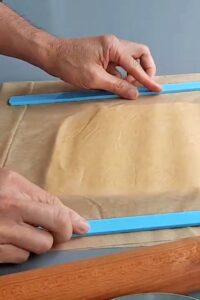
- This will give you an even thickness and save time.
- Preheat the oven to 180°C.
- Cut the rolled-out dough to fit your tart pan or tartlet molds.
- If needed, blind-bake one large tart shell for 15-20 minutes.
- Bake the tartlet shells for 15 to 18 minutes.
- Let cool to room temperature before filling.