Gluten-free bread flour is not an all-purpose blend sold in a bigger bag. It already contains the binders that replace gluten, and it is formulated to absorb much more water. Four products cover most of what is available in France: two in mainstream shops and two in organic food stores. The rest comes down to the label and the amount of water.
What bread flour contains that other blends do not
An “all-purpose” gluten-free blend is a mixture of starches and flours: rice, corn, potato, cassava. That is enough for a cake, where the structure comes from eggs, sugar and fat. For bread, two functions are missing: trapping the gas produced by the yeast, and holding the crumb together once the bread has cooled.
Bread flours therefore include a hydrocolloid. Psyllium is the most common: its fibers swell in water and form an elastic gel that acts as a gluten network. Depending on the brand, it is supported by guar gum, acacia gum or hydroxypropyl methylcellulose, the familiar HPMC on labels, which provides the best structural support during baking.
Some also add protein. Schär’s Mix Pain contains 3.6 % lentil flour, included for structure and crust color. It is this kind of ingredient that sets a bread flour apart from a cake blend.
What is actually available in France
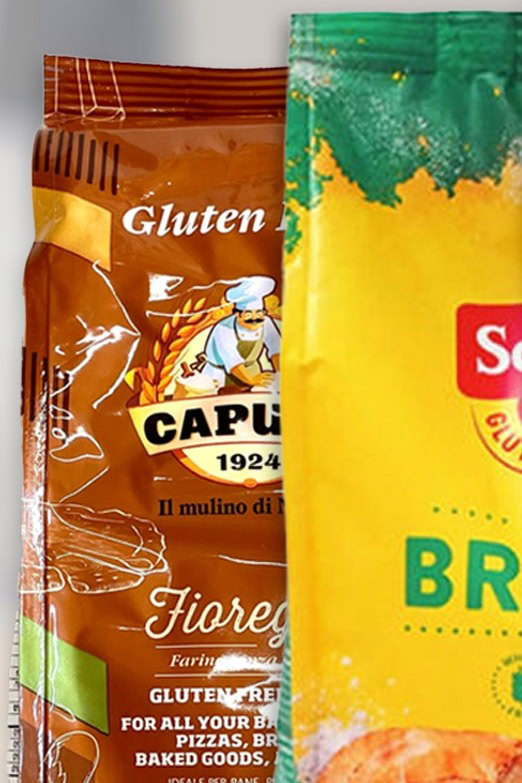
Schär’s Mix Pain, also called Mix B, is the easiest to find and the cheapest: around €6.50 per kilo in the brand’s French online shop. Corn starch, rice flour, psyllium and bamboo fibers, wholegrain rice, lentil flour, dextrose, HPMC, salt. It contains no wheat. It has the most neutral flavor and is the most consistent from one bag to the next, making it the go-to flour for most of our bread recipes.
Caputo’s Fioreglut costs around €10 per kilo, in Italian grocery stores and online. Its ingredient list starts with gluten-free wheat starch, followed by corn starch, dextrose, buckwheat flour, psyllium, rice starch and guar gum. The buckwheat gives it a more pronounced flavor and a slightly denser crumb: this is a flour for pizzas and rustic breads rather than sandwich bread.
Among organic options, Nature & Cie’s Mix Pain costs around €5.50 for 500 g: rice, cassava starch, buckwheat, guar, psyllium, and 2 % baker’s yeast already included in the bag. Ma Vie Sans Gluten’s buckwheat Mix’Pain, sold at Biocoop, contains as much as 26 % buckwheat and uses psyllium and acacia gum as binders; this one requires you to add yeast.
The American blends mentioned on English-language blogs are not sold here. There is no point looking for them.
Gluten-free wheat starch: read the label
The surprising ingredient in Caputo’s flour is the first on the list: “gluten-free wheat starch”. This is not a marketing contradiction. The starch is washed to remove the gluten proteins, then tested. In Europe, a product can only be labeled “gluten-free” if it contains less than 20 mg of gluten per kilo, regardless of the origin of its ingredients.
There are two practical takeaways. If you are allergic to wheat, this flour is off-limits, and the gluten-free label does not change that. There are plenty of wheat-free blends to choose from: Schär, Nature & Cie and Ma Vie Sans Gluten. For a medical question, the person to consult is your gastroenterologist, not a bag of flour.
The water changes with the brand
Gluten-free bread dough is much wetter than conventional wheat dough. In our no-knead gluten-free bread, 500 g of bread flour takes 375 g of water, or 75 %. For the no-knead baguette, the same amount of flour takes 400 g of water, 80 %, because we want a more open crumb. Some organic blends go even higher: buckwheat Mix’Pain calls for 450 to 500 ml per 500 g.
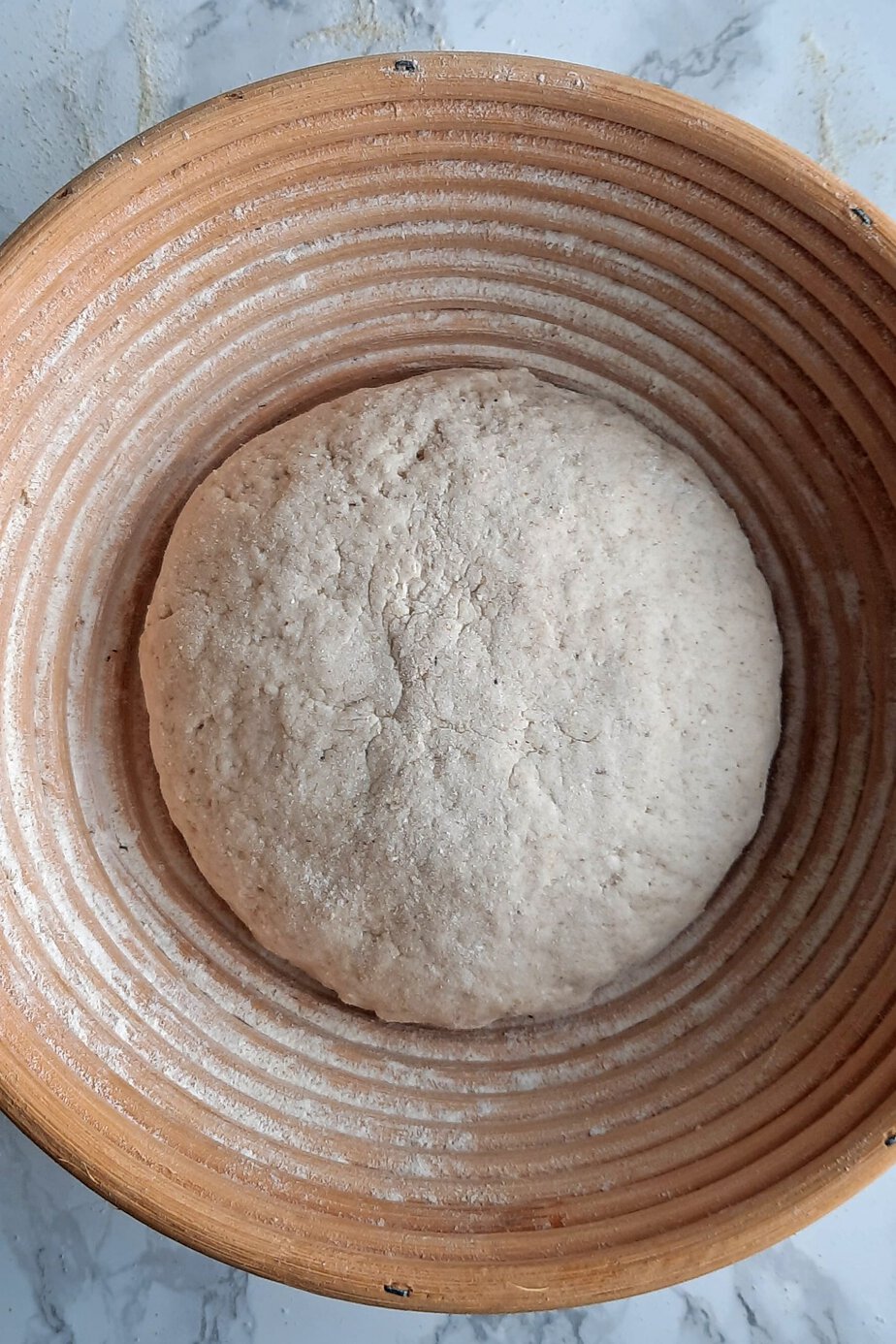
Switching brands without adjusting the water is the quickest way to ruin a loaf. If you substitute the flour specified in a recipe, hold back 25 g of water at the start, mix, then add more as needed: the dough should resemble a thick choux pastry dough, not a ball you can knead.
And weigh everything, flour and water alike: these powders vary too much in density for volume measurements to mean much, and this is where the scale determines the outcome.
Bread flour or all-purpose blend
The difference is clear in the ingredient lists of our own recipes. The no-knead bread, made with bread flour, needs no added binder: everything is already in the bag. Our gluten-free sandwich bread, based on an all-purpose blend, adds 6 g of psyllium per 300 g of flour. The orange zest buns, made with a homemade blend, need 12 g plus xanthan gum.
As a guideline: when starting with an all-purpose blend, allow about 2 % psyllium relative to the flour weight, and increase the hydration. To control everything yourself, our flour blend without gums or tapioca gives the exact proportions: sorghum, rice, potato starch, chickpea and psyllium.
Enriched breads are a special case. Even with store-bought bread flour, our yeasted bread with dried cranberries adds 9 g of psyllium per 330 g of flour, because the eggs and fat weigh the dough down.
Which flour for which bread
| What you want to make | What works |
|---|---|
| Rustic bread, baguette, Dutch oven bread | Bread flour based on corn starch and rice, the most neutral and consistent option |
| Pizza, country bread with a pronounced flavor | Buckwheat-based blend, denser crumb and stronger flavor |
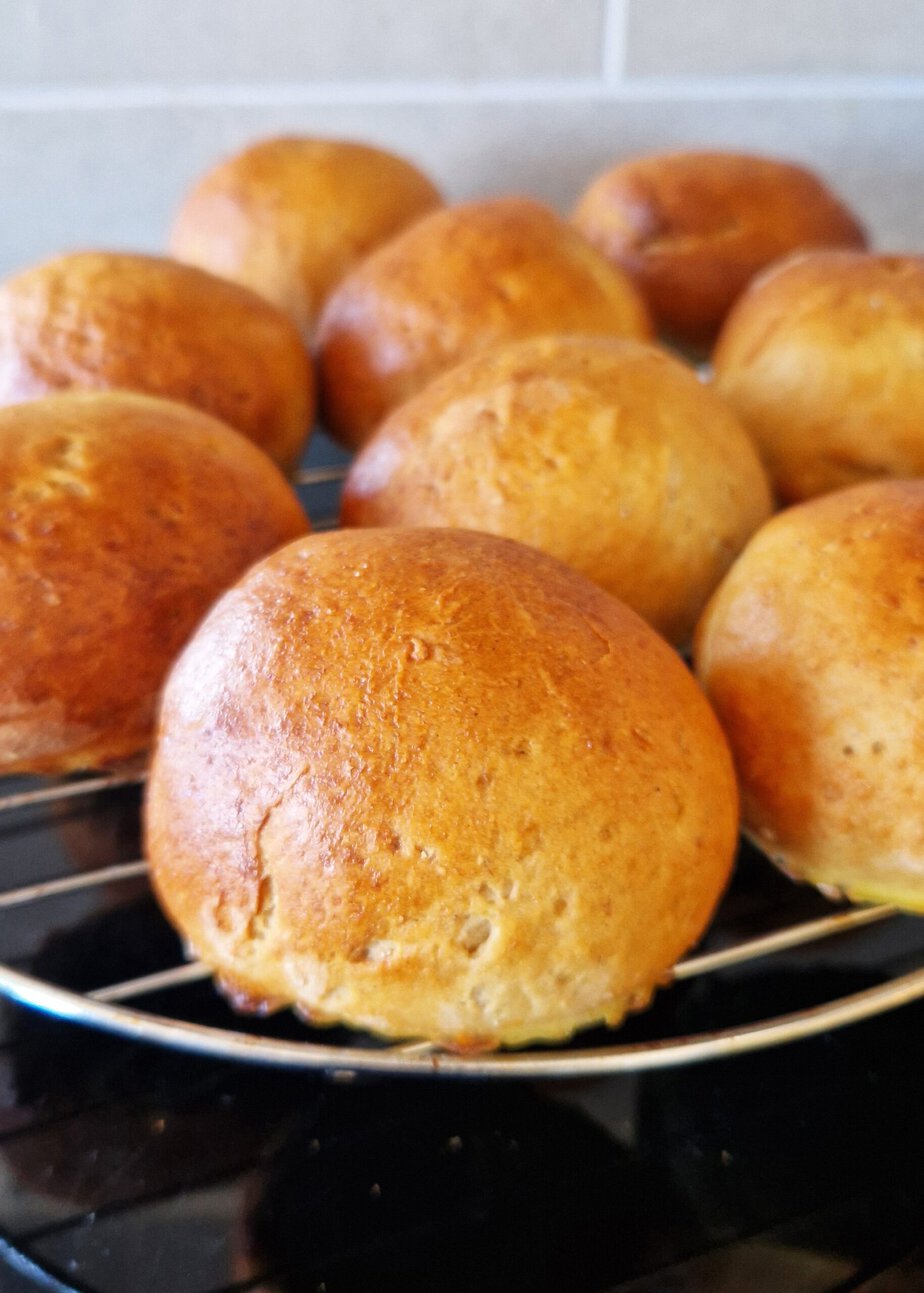
| Sandwich bread, buns, brioche-style breads | All-purpose blend plus 2 % psyllium, with eggs and fat |
| A quick loaf, without buying yeast separately | Organic blend with baker’s yeast already included |
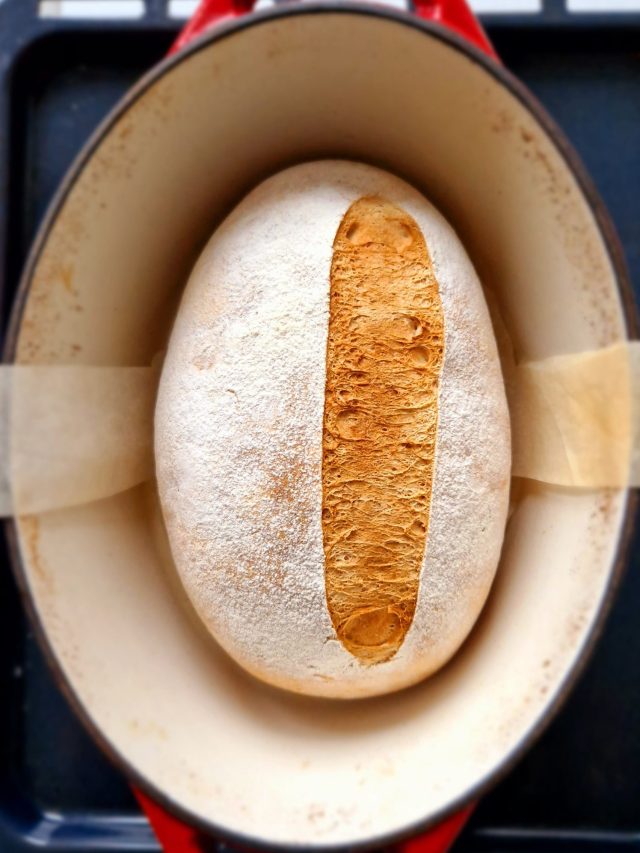
If you buy just one, choose a neutral bread flour and start with Dutch oven bread: the covered pot traps steam and produces the most consistent crust. The same bag can be used for much more than bread; our ganache-filled shortbread cookies are made with it.
Frequently asked questions
Can you replace gluten-free bread flour with an all-purpose blend?
Yes, by adding the missing binder: about 2 % psyllium powder and a little more water. The crumb will be slightly denser and will not keep as well.
Is gluten-free bread flour suitable for people with celiac disease?
The “gluten-free” label guarantees less than 20 mg of gluten per kilo, the European regulatory threshold. The issue to watch for is wheat allergy, which is distinct from celiac disease: Fioreglut, made from wheat starch, must be avoided in that case.
Do you need to add psyllium to store-bought bread flour?
No, it already contains it. The only exception is breads enriched with eggs and fat, where extra psyllium helps the dough hold together.
Why can’t I knead my gluten-free dough?
Because there is no gluten network to develop. Two to three minutes of mixing are enough, and the dough is shaped with a wet spatula rather than by hand. That is why the best gluten-free bread recipes skip kneading, and it is one of the basic habits of gluten-free baking.
Guide developed with chef Rommel Reyes. Find his work on Instagram, his Substack newsletter and his YouTube channel.