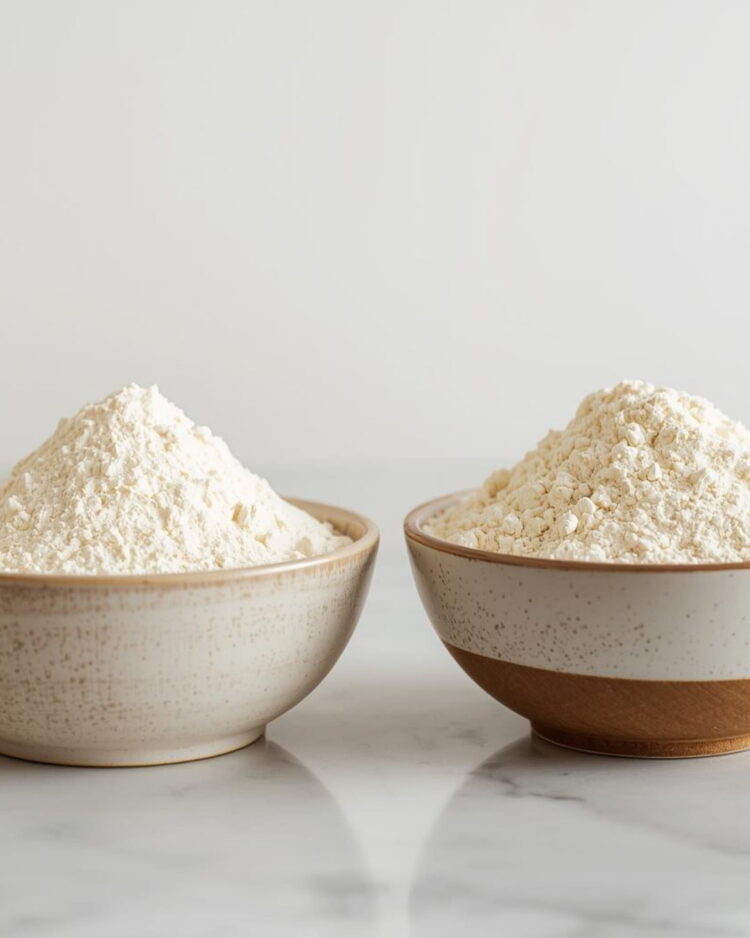
Almond flour and coconut flour are not interchangeable. Almond flour absorbs little liquid and can be substituted roughly volume for volume; coconut flour absorbs four to five times as much and requires reworking the entire recipe. The choice comes down to the texture you want: tender and rich on one side, dense and moist on the other.
Comparison at a glance
| Criterion | Almond flour | Coconut flour |
|---|---|---|
| Water absorption | Low to moderate (about 1:1) | Very high (1:4 to 1:5) |
| Browning in the oven | Fast, oven at 160-175 °C | Gradual, tolerates up to 190 °C |
| Calories per 100 g | 575 to 600 kcal | 350 to 400 kcal |
| Protein per 100 g | 21 to 24 g | 18 to 20 g |
| Fat per 100 g | about 50 g | 9 to 16 g |
| Carbohydrates per 100 g | about 20 g | about 60 g, including 35 to 40 g of fiber |
| Best for | Shortbread cookies, tart crusts, frangipane, muffins, pancakes, macarons | Dense cakes, brownies, banana bread, quick breads |
The nutritional values are approximate. They vary from brand to brand, especially depending on how much fat has been removed from the flour.
Absorption and baking behavior
Almond flour
It is made from finely ground blanched almonds that retain their oils. As a result, it absorbs little liquid, and in terms of hydration alone, you can substitute it for wheat flour volume for volume. However, you always need a binder, such as an egg, psyllium or xanthan gum, since there is no longer any gluten to hold the structure together.
Your batter or dough will need very little extra liquid. Add too much and it becomes greasy and heavy. On the plus side, the almonds’ natural fat keeps the crumb soft for several days, which explains why it works so well in cakes made the day before.
That same fat, together with the almonds’ sugars, makes it brown quickly. This is what gives shortbread cookies their golden edges and frangipane its toasted flavor. Above 175 °C, it goes from golden to burnt without warning, and the edges darken before the center is cooked. I bake between 160 and 175 °C, and cover with a sheet of foil whenever baking takes longer than 30 minutes.
Coconut flour
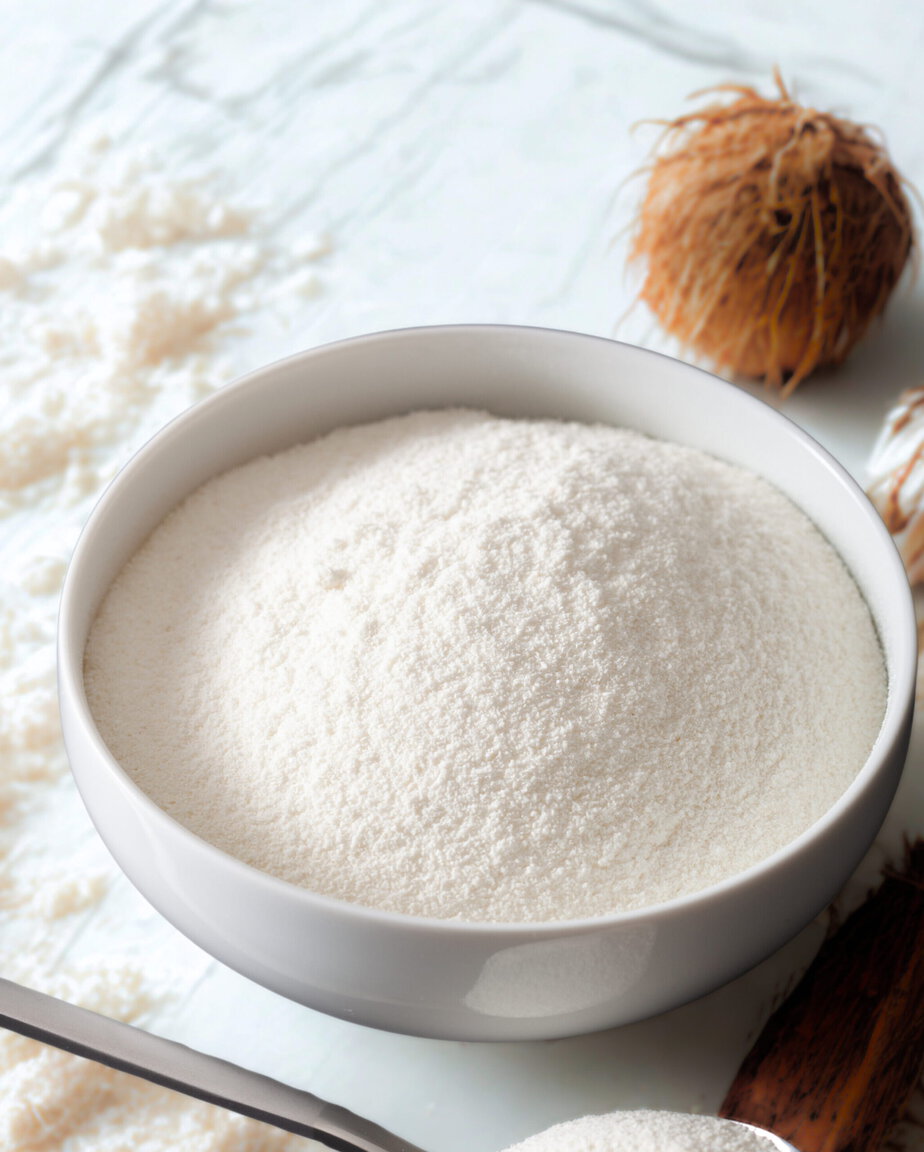
It comes from dried, defatted coconut flesh ground into a powder. Its fiber content is so high that it absorbs four to five times more liquid than wheat flour. A recipe calling for 100 g of almond flour will only need around 30 g of coconut flour.
The batter initially looks far too runny, then thickens considerably within a few minutes. Hence the rule: always let it rest for 5 to 10 minutes before baking, otherwise you will be adjusting a texture that is still changing. And only substitute coconut flour weight for weight in a recipe already tested for it, or you risk ending up with a dry, crumbly cake.
In the oven, it browns slowly and is more forgiving of high temperatures, up to 190 °C. Its pitfall lies elsewhere: it dries out without changing color. The top looks cooked while the center is still wet. Testing with a knife or toothpick is not optional with this flour.
Which flour for which recipe
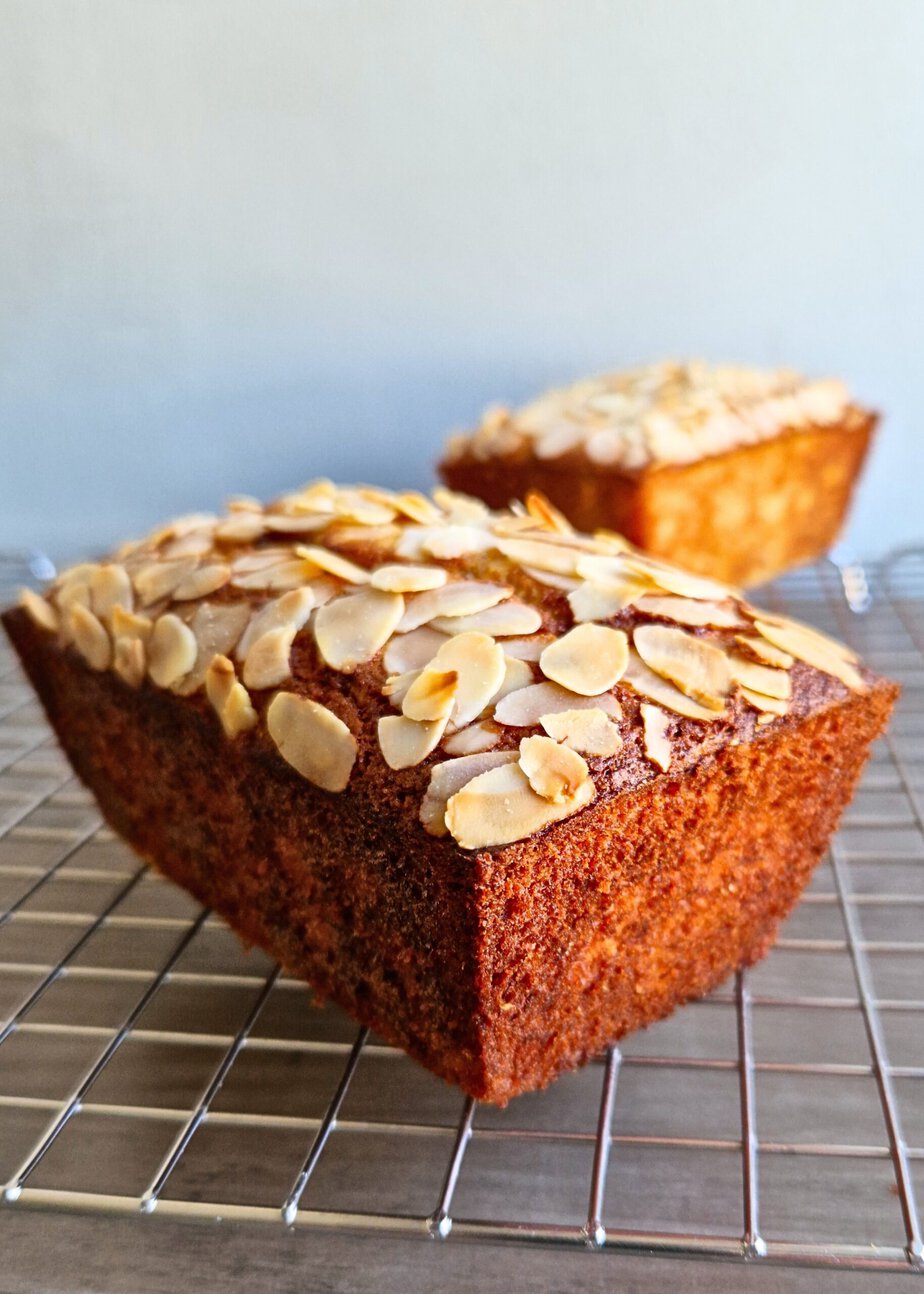
Almond flour is the flour for rich mixtures and crumbly doughs. It forms the layers of our 7-layer vegan opera cake, the frangipane in a pear tart or a pistachio, almond and raspberry tart, and the close crumb of a lemon poppy seed loaf cake. The classic macaron relies on it too, although there are other ways to make it, as in our rice flour lemon macarons.
Its oils keep baked goods tender, it provides structure without weighing them down, and its subtle flavor works just as well in savory dishes, as a breading or in a quiche crust.
Coconut flour plays the opposite role: anything that needs to be dense and moist. Fudgy brownies, dense chocolate cakes, banana bread, squash or zucchini muffins, quick breads and scones. It holds onto liquid, so baked goods stay soft for several days, and its fiber holds the crumb together as long as there are enough eggs. It also stands up to strong flavors, such as chocolate, banana and spices, that would overpower almond flour.

Adapting a recipe successfully
The substitution ratios you see are almost always given by volume, and that is where conversions go wrong. Weigh everything, including liquids if you can: in gluten-free baking, a 20 g error cannot be corrected, as I explain in the guide to gram-level precision.
To replace wheat flour with almond flour:
- Use about 100 g of almond flour for 125 g of wheat flour. The volume is the same, but the weight is not: almond flour is lighter at the same volume.
- Add a binder: 3 g of xanthan gum per 100 g of flour, or an extra egg.
- Lower the oven temperature by 10 to 15 °C compared with the original recipe.
- Expect a denser, moister texture than with wheat flour.
To replace wheat flour with coconut flour:
- Replace 125 g of wheat flour with just 30 to 40 g of coconut flour.
- Add one egg per 30 g of coconut flour, or the equivalent in a plant-based egg substitute.
- Increase the liquid by about 60 ml per 30 g of coconut flour.
- Let the batter rest for 5 to 10 minutes to thicken before baking.
Neither flour can replace a complete blend on its own. For a tart crust or cookies, a blend remains more reliable, whether it is our gum-free, tapioca-free blend or a store-bought blend, as in our gluten-free sweet shortcrust pastry. Bread requires a different combination again, detailed in the guide to gluten-free bread flours.
Verdict
Neither is better than the other; they serve different purposes. Choose almond flour for cookies, tart bases, delicate cakes, a neutral flavor that works in savory dishes and easy-to-measure substitutions. Choose coconut flour for dense, moist baked goods, more fiber and fewer calories, provided you do not mind its slight coconut flavor.
I keep both bags in my kitchen. Start with a recipe written for the flour you have, such as the chocolate and chestnut Yule log for almond flour. Substitutions come later, once you know what the right texture looks like before baking.
Frequently asked questions
Can you replace almond flour with coconut flour?
Not weight for weight. Use 30 to 40 g of coconut flour for 100 g of almond flour, add an egg and about 60 ml of liquid per 30 g, then let the batter rest. Even with these adjustments, the final texture will be different: in a precise recipe such as macarons or frangipane, the substitution does not work.
Are almond flour and ground almonds the same thing?
Almost. The ground almonds sold in supermarkets are ground blanched almonds, slightly coarser and sometimes higher in fat. What is sold as almond flour is more finely ground and sometimes partially defatted. Both can be used in the same recipes, but the fine version produces a more even crumb and smoother macarons; sift the ground almonds if that is all you have.
Why are my coconut flour baked goods dry and crumbly?
Three causes, in this order: not enough liquid, not enough eggs, no resting time. Coconut flour keeps absorbing liquid for several minutes, so a batter that seems right when mixed ends up too dry in the oven. A fourth possible cause is baking: it dries out without browning, so rely on a toothpick rather than color.
How should you store them?
Almond flour is high in fat and goes rancid quickly: keep it in an airtight container in the refrigerator, or in the freezer if you buy it in bulk. A stale oil smell means it should be thrown away, as it will spoil the entire batch. Coconut flour keeps at room temperature, away from moisture, but it absorbs moisture from the air: a poorly sealed bag leads to lumps and inaccurate measurements.
Are these two flours suitable for a gluten-free diet?
Both are naturally gluten-free. For severe intolerance or celiac disease, check for a gluten-free label on the package: many are milled in facilities that also process grains. Gluten-free does not mean binder-free, though; you still need an egg, psyllium or a gum to hold the structure together.
Guide developed with chef Rommel Reyes. Find his work on Instagram, his Substack newsletter and his YouTube channel.