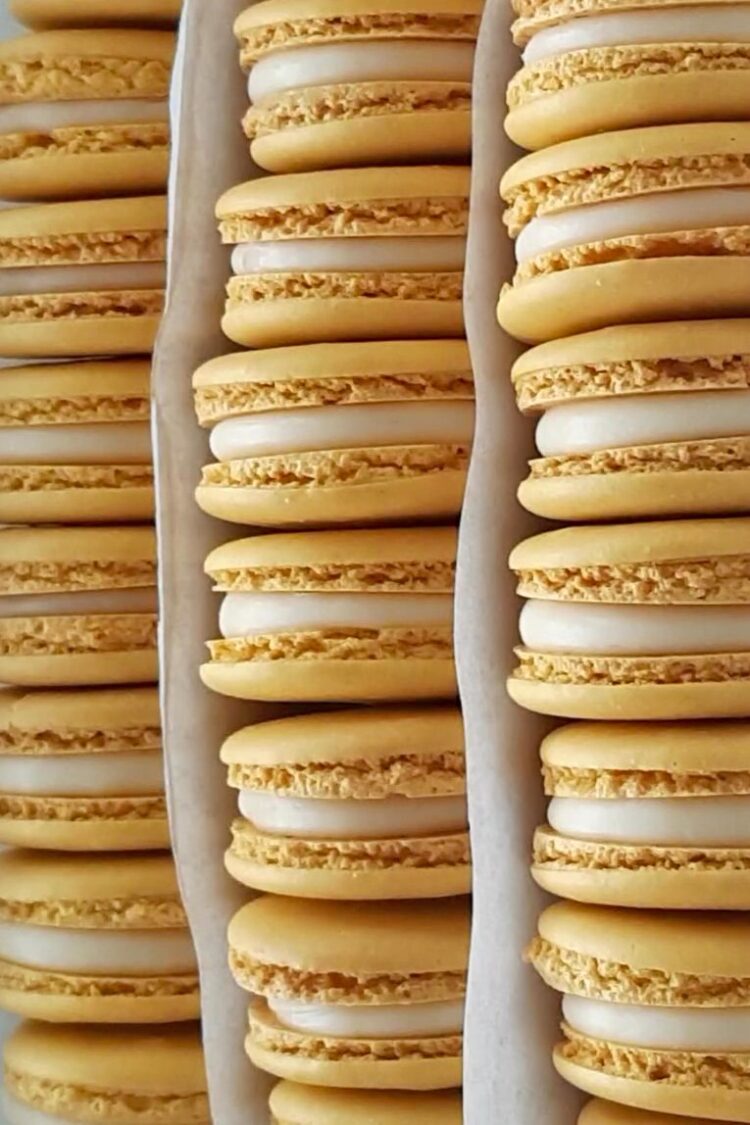
Looking for a macaron that cracks delicately at first bite, then turns pleasantly chewy, with a bright lemon filling at the center? Here, the shells stay smooth and even, while the lemon cream is chilled and firm, yet just soft enough to spread as you sandwich them together.
This is a precise dessert, measured down to the gram, but once you know what to look for, everything flows naturally. And because the macarons need an overnight rest in the fridge, you can make them ahead without any last-minute stress. You’ll find the rest of my gluten-free cookies and sweet treats all in one place.
What are lactose-free lemon macarons?
These are naturally gluten-free macarons, made with almond flour and icing sugar for the base, and filled with a cooked lemon cream made without eggs or dairy. The shells are made with Italian meringue, which means hot sugar syrup is poured over whipped egg whites. The result is a more stable, glossier meringue that helps produce beautifully smooth shells.
The recipe works in three parts: first the tant pour tant, or equal parts almond flour and icing sugar; then the Italian meringue; and finally the lemon cream. The appeal lies in the contrast: a delicate, crisp shell on the outside, a softer interior, and a clean lemony tang that lingers.
Main ingredients
The almond flour and icing sugar form the tant pour tant, which gives the shells their structure, and the fineness of that mixture shows immediately once baked. Use extra-fine blanched almond flour; Blue Diamond is a reliable choice. For color, avoid liquid food coloring, which adds moisture and can loosen the batter too much. Instead, use yellow powdered coloring, or paste or gel if preferred, ideally from a natural brand like Hobbyland.
The egg whites are used in two stages, including one portion of “aged” egg whites. Letting them rest in the refrigerator for a few days relaxes their protein structure, which helps them whip up with more volume and makes for a cleaner Italian meringue. If you’re short on time, bottled liquid egg whites work too.
The lemon cream is thickened with rice flour and agar-agar, then blended with cold vegan butter. Naturli in block form is the best option here, with Miyoko’s as an equally good alternative. For easier planning, make the cream ahead of time: it needs a few hours in the fridge to firm up enough for piping.
Technical tips and common pitfalls
Macarons leave no room for guesswork. Everything must be weighed, not measured “by the spoon.” Use a scale and measure to the gram, because volume simply isn’t precise enough.
Lemon cream: cooking, cooling, texture
In a saucepan, whisk together the rice flour, agar-agar, and sugar, then add the water, lemon zest, and lemon juice. Cook over medium heat, stirring constantly, until the mixture comes to a boil and thickens, then remove it from the heat.
Let the cream cool to about 50°C before adding the cold vegan butter. Blend until completely smooth, with no graininess.
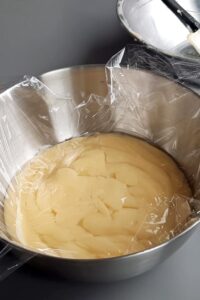
Transfer it to a container, cover directly with plastic wrap, and refrigerate for a few hours. It needs to be fully set and firm enough to hold its shape in a piping bag. (Note that some chocolate ganaches can become too firm to pipe if chilled for too long.)
Italian meringue: syrup, pouring, stopping point
The syrup is made with sugar and a small amount of water, which helps prevent crystallization. Cook it to 118-120°C, no lower and no higher.
Meanwhile, start whisking the egg whites just until slightly foamy. Reduce the mixer to low speed, then pour in the hot syrup in a steady stream. Increase to high speed and whip for 4-6 minutes. While the meringue is whipping, you can start preparing the macaron batter.
Stop as soon as the meringue is firm, glossy, and still slightly warm. If you whip it too long, you’ll lose that ideal texture. Avoid overwhipping, and aim for a meringue that still feels a little warm, as this helps produce smoother, shinier shells.
Tant pour tant and macaronage: fineness, ribbon stage, balance
For smoother shells, process the almond flour and icing sugar together as finely as possible, then sift the mixture through a fine sieve. This removes any larger bits and gives you a much more even dry mix.
Next, mix the tant pour tant with one portion of egg white to form a paste, using the paddle attachment. Add ⅓ of the meringue to this paste, then mix on low speed until fully incorporated.
Fold in the remaining meringue in two additions, stopping when the batter reaches ribbon stage. This is where balance matters most. Undermixed batter stays too thick, spreads poorly, and bakes into thick, dull shells that can look almost like burger buns. Overmixed batter becomes too fluid, spreads too quickly once piped, and produces overly thin shells. The difference shows right away: overmixed batter spreads fast, while undermixed batter barely settles at all.
Piping, drying, baking
For piping, use a No. 10 tip and aim for rounds about 4 cm in diameter. Pipe them onto a silicone mat rather than parchment paper: the batter spreads more evenly, and the shells bake up more uniformly.
Once the tray is piped, tap it a few times to flatten the batter, then pop any surface bubbles with a toothpick. Next comes the drying time: 30-60 minutes, depending on the humidity in your kitchen. Don’t bake them while they’re still damp. A skin should form on the surface, firm enough that you can lightly touch it without leaving a mark. Otherwise, the shells may crack or warp.
Bake at 150°C for 16–18 minutes, depending on their size. Let them cool completely before peeling them off the silicone mat or parchment paper, or they may tear.
Assembly and maturation
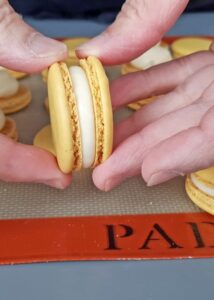
Sort the shells by size, then match them in pairs, setting one shell dome-side up and the other upside down. The lemon cream should be cold. Transfer it to a piping bag, pipe a small dollop in the center, sandwich the shells together, and press very lightly so the filling spreads evenly.
Don’t eat them the same day. Transfer them to an airtight container lined with parchment paper and refrigerate them overnight, or for at least 24 hours; 24 to 28 hours is ideal. This resting period allows the shells to absorb some of the filling, so the centers turn chewier while the outside stays lightly crisp.
Storage
Stored properly in the refrigerator, they keep for up to 7 days, and both the texture and flavor improve over time. In any case, they are not meant to be eaten the day they’re made: they need at least 24 hours of chilling and maturation.
You can also freeze them for up to 6 weeks. To serve, thaw them in the refrigerator for at least 3 hours, or overnight. This slow thaw helps the shells reabsorb the moisture released during freezing.
You’ll find all the rest of my gluten-free recipes here.
Recipe developed by chef Rommel Reyes. Find his work on Instagram, his Substack newsletter, and his YouTube channel.
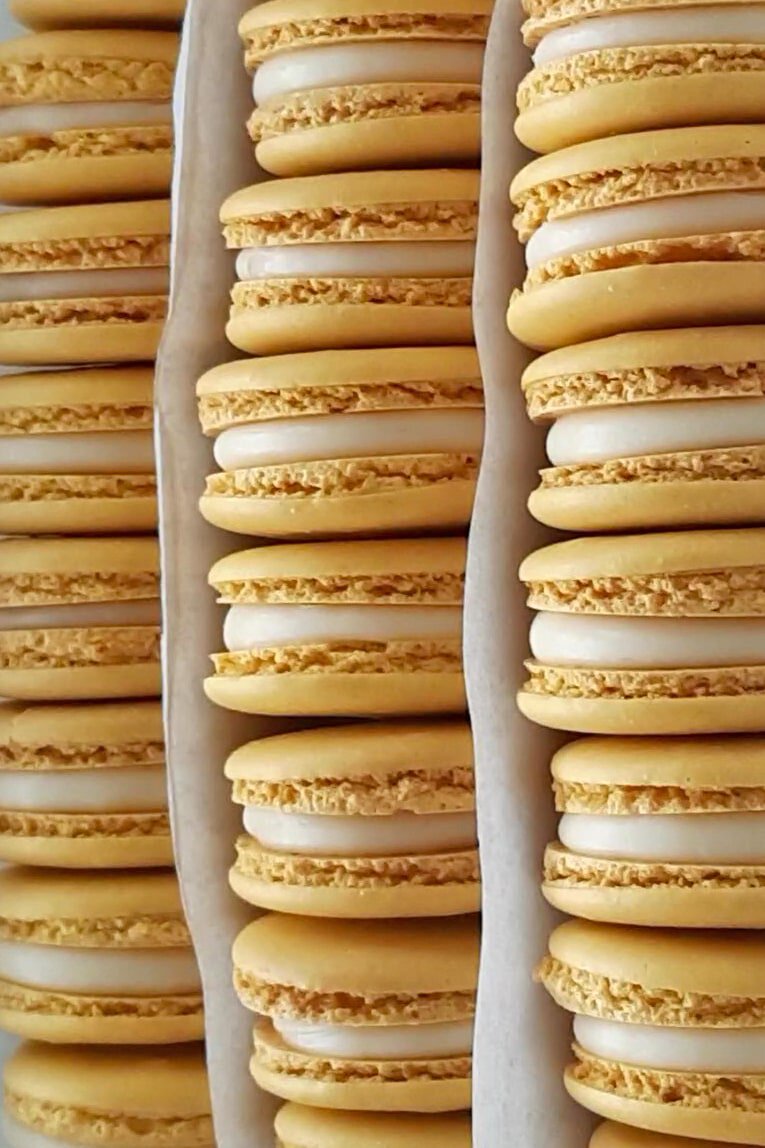
Gluten-Free, Lactose-Free Macarons with Lemon Cream
Ingredients
- 140 g lemon juice
- zest of 2 lemons
- 10 g water
- 100 g sugar
- 25 g rice flour
- 2 g agar-agar powder
- 140 g Naturli vegan butter or Miyoko’s vegan butter
- 250 g almond flour preferably Blue Diamond
- 250 g powdered sugar
- 90 g egg whites
- 0.5 g yellow food coloring (powder, paste, or gel), as needed
- 90 g egg whites aged
- 225 g sugar
- 65 g water
Instructions
Prepare the lemon cream
- Whisk the rice flour, agar-agar, and sugar together in a saucepan.25 g rice flour, 2 g agar-agar powder, 100 g sugar
- Add the water, lemon zest, and lemon juice, then cook over medium heat, stirring constantly, until the mixture comes to a boil and thickens.10 g water, zest of 2 lemons, 140 g lemon juice
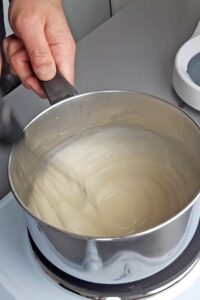
- Remove from the heat.
- Let the lemon cream cool to about 50°C.
- Blend in the cold vegan butter until smooth and silky.140 g Naturli vegan butter
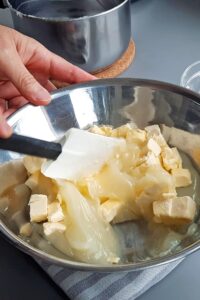
- Transfer to a container, cover with plastic wrap, then refrigerate for a few hours until set and firm enough to pipe.
Make the Italian meringue
- Bring the water and sugar to a boil in a small saucepan until the syrup reaches 118-120°C.65 g water, 225 g sugar
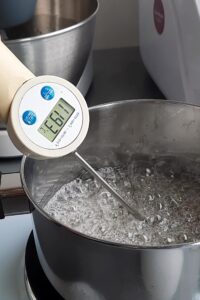
- Whisk the egg whites in a stand mixer until slightly foamy.90 g egg whites
- Reduce the speed, then slowly pour in the hot syrup in a steady stream.
- Increase the speed and continue whisking for 4-6 minutes.
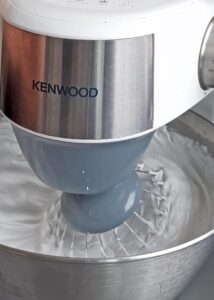
- While the meringue is whipping, begin preparing the macaron batter.
- Stop when the Italian meringue is stiff, glossy, and just slightly warm.
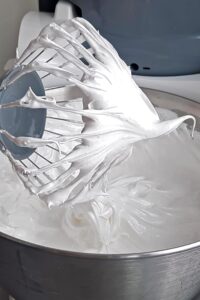
Tant-pour-tant mixture – Macaron batter
- Blend the almond flour and powdered sugar in a food processor until as fine as possible, then sift through a fine-mesh sieve.250 g almond flour, 250 g powdered sugar
- Mix the almond flour mixture with the egg white using a mixer fitted with the paddle attachment until a paste forms.90 g egg whites, 0.5 g yellow food coloring
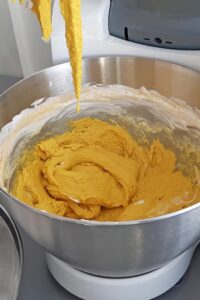
- Add 1/3 of the meringue to the almond paste, then mix on low speed until fully incorporated.
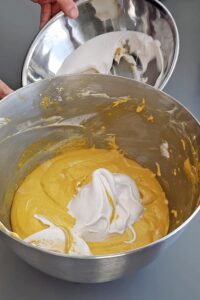
- Fold in the remaining Italian meringue in 2 additions, until the batter reaches the ribbon stage.
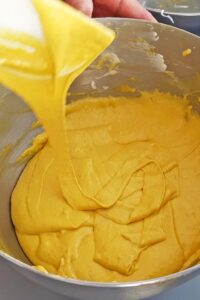
- Do not overmix, but do not undermix either.
- An overmixed batter will spread too quickly when piped, while an undermixed batter will be too thick and barely spread at all.
- Aim for the right consistency between the two.
Bake the macaron shells
- Using a No. 10 piping tip, pipe the batter into discs about 4 cm in diameter on a baking sheet lined with a Silpat or silicone mat.
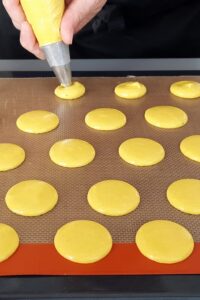
- Tap the baking sheet a few times to flatten the batter, then burst any surface bubbles with a toothpick.
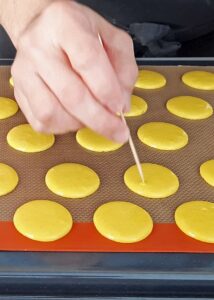
- Let the shells dry for 30-60 minutes, depending on the humidity in your kitchen.
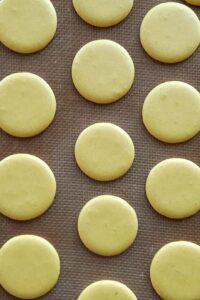
- Do not bake the shells if they are still damp.
- Once the shells are dry enough, bake at 150°C for 16–18 minutes, depending on their size.
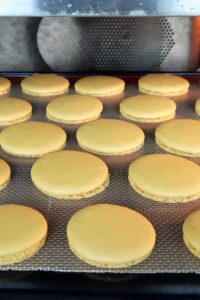
- Let them cool before peeling them away from the silicone mat or parchment paper.
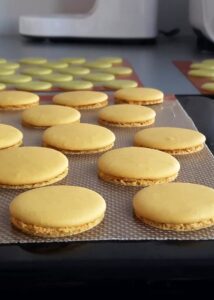
Assemble the macarons
- Match the shells by size, then arrange the pairs on a tray, alternating one shell face-up and the other face-down.
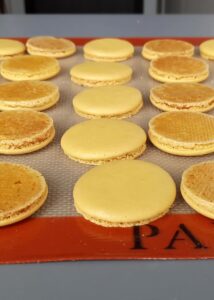
- Fill a piping bag with the chilled lemon cream, then pipe a small dollop of filling into the center of one shell.
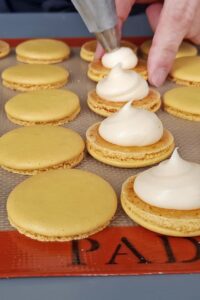
- Place the matching shell on top, then press gently to spread the lemon cream.
- Before serving, store the filled macarons in an airtight container lined with parchment paper in the refrigerator overnight, or for at least 24 hours.