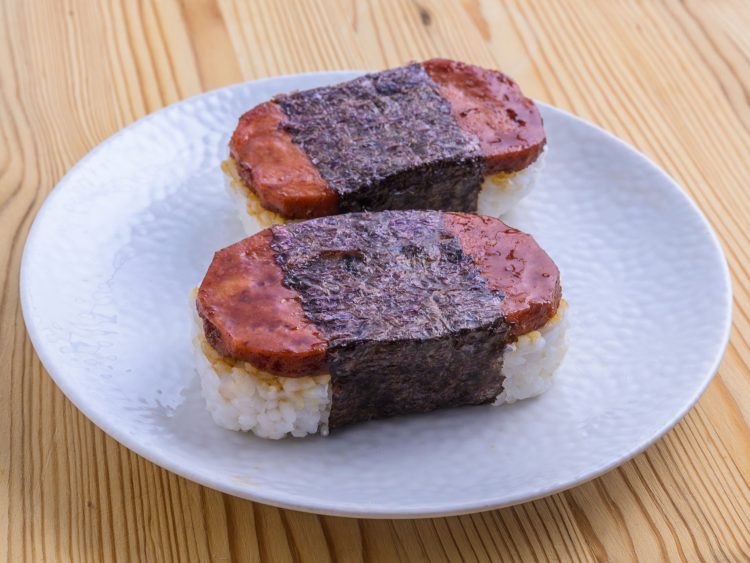
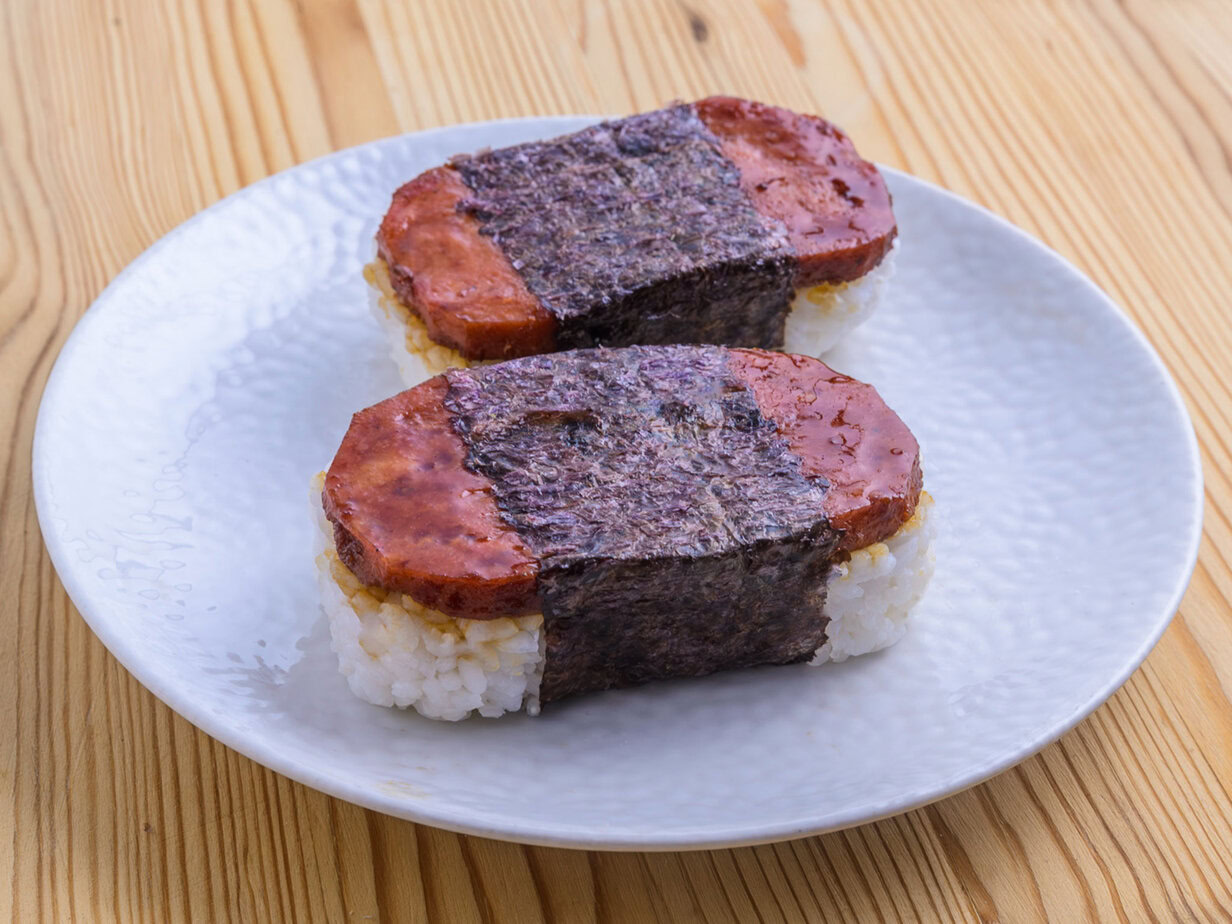
A slice of Spam glazed with soy sauce and sugar, set on a block of Japanese rice and wrapped in a strip of nori, the quintessential Hawaiian snack.
On a beach in Waikiki, at the bottom of a school bag or in the glove compartment before a long drive, Spam musubi is the snack you grab without a second thought. The slice of pork comes out glazed and glossy, with browned edges that crunch slightly as you bite in.
Underneath, the still-warm rice is packed nice and firm, and the strip of nori lets you hold the whole thing in your hand. One sweet bite, one salty bite, and you’ve already started on the second one.
What Is Spam Musubi?
Spam musubi is a block of white rice topped with a slice of Spam that’s seared, then glazed with soy sauce and sugar, the whole thing wrapped in a strip of nori. Spam is a canned pork product launched in 1937 by the American company Hormel. The rice is Japanese short-grain rice, the same kind used for sushi rice, sticky enough to hold its shape. It’s eaten by hand, warm or at room temperature.
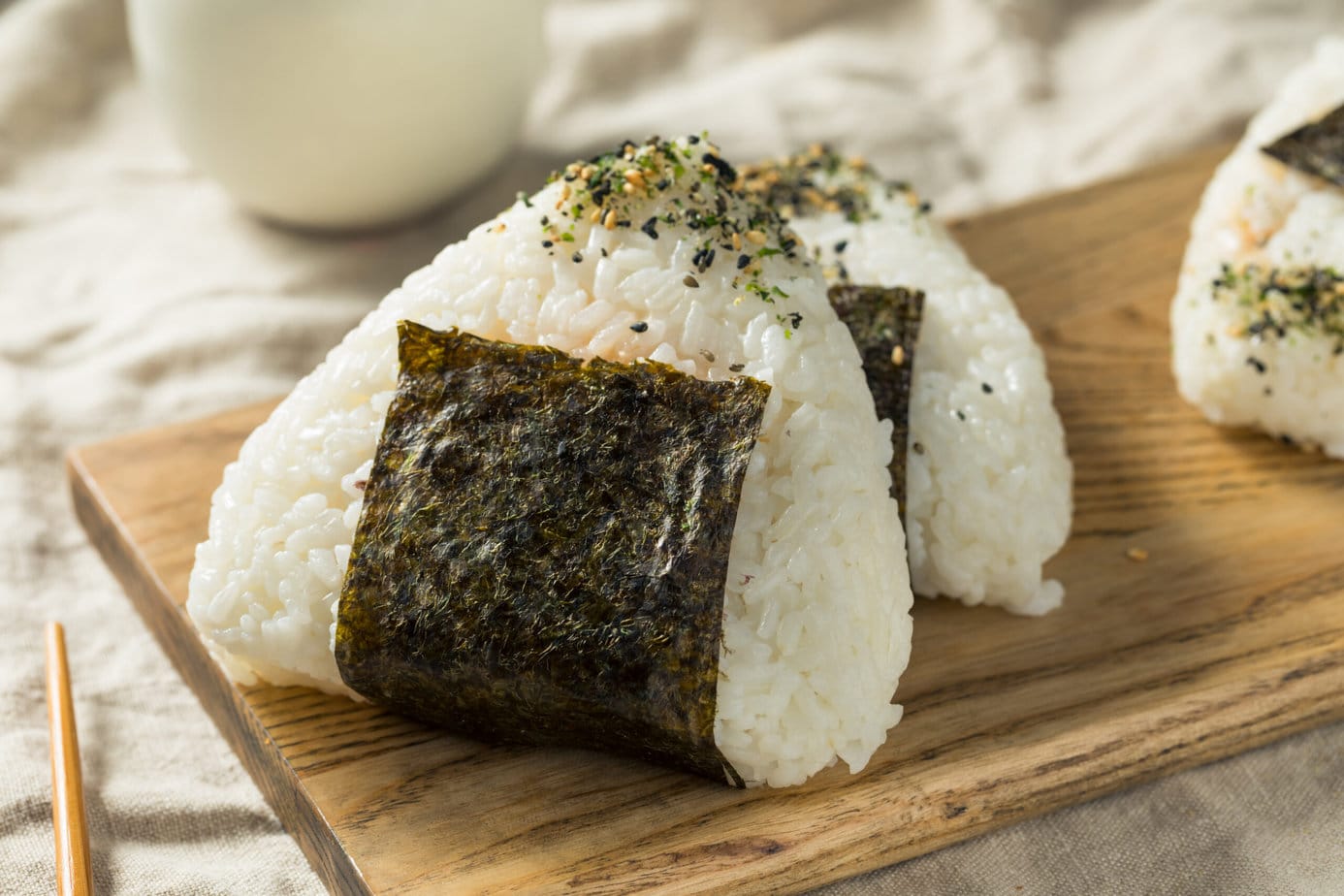
Musubi comes from the Japanese omusubi, another name for onigiri, which Japanese immigrants brought to Hawaii. Like maki, it uses a sheet of nori, except that here the rice is molded into a block instead of rolled.

Born in Postwar Hawaii
During World War II, the US military shipped millions of cans of Spam across the Pacific. In Hawaii, offshore fishing was restricted and fresh meat was hard to come by. The canned meat, which keeps without refrigeration, made its way into local kitchens and stayed there after the war, alongside the rice eaten by families of Japanese descent.
The molded, nori-wrapped version caught on in the early 1980s. Barbara Funamura, a dietitian and manager of the Joni-Hana restaurant in Lihue, on the island of Kauai, is often credited with putting it on the menu. Her first musubi were triangular, then the restaurant switched to a rectangular mold, exactly the size of a slice of Spam.
Today you’ll find it all over the islands, from beach stands to convenience stores. At 7-Eleven Hawaii, which has been selling it since 1994, a single store moves an average of 200 a day, compared with about fifty hot dogs. Hawaii goes through around seven million cans of Spam a year, roughly sixteen times more per capita than the rest of the United States.
The Main Ingredients in Spam Musubi
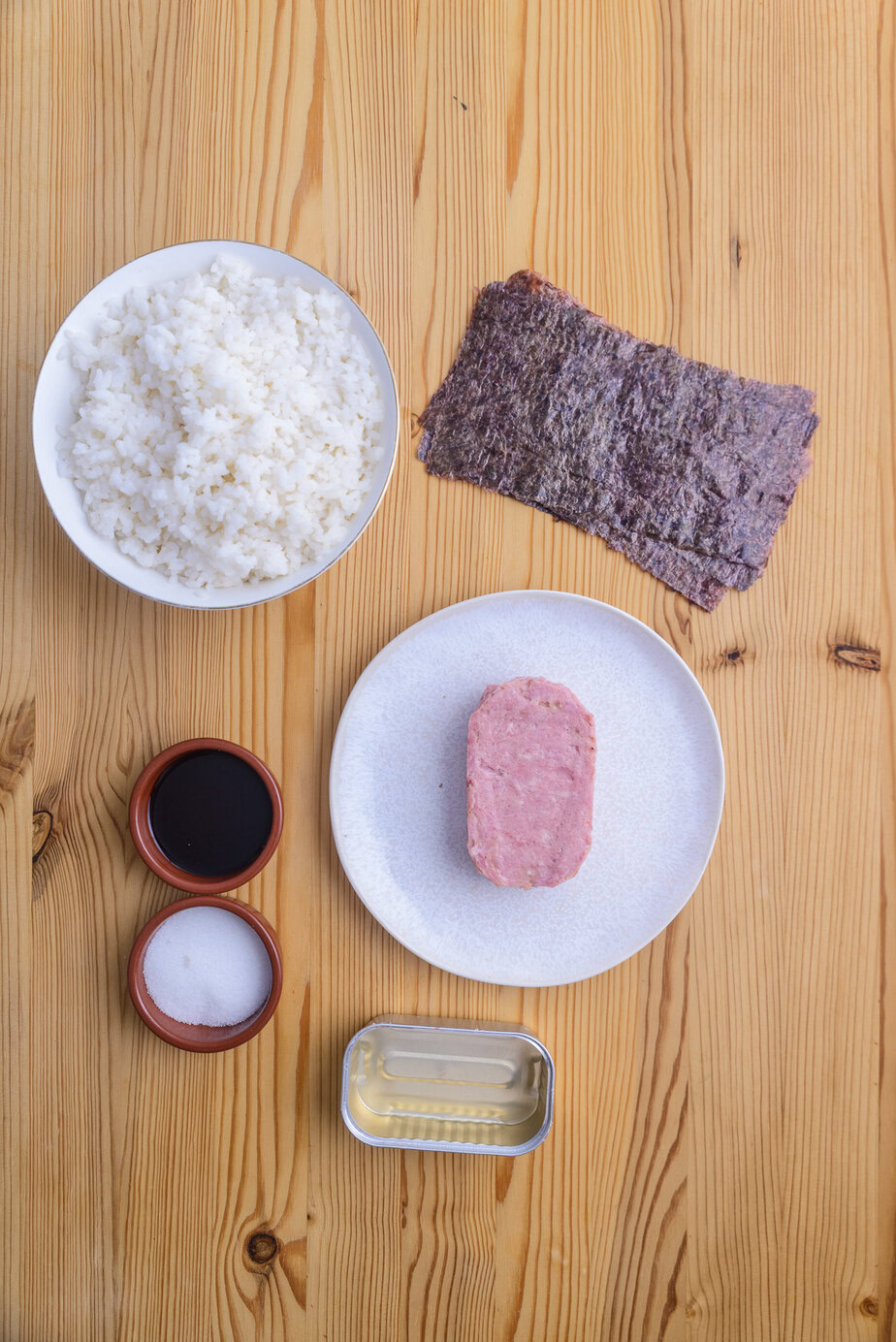
Hormel’s Spam Classic is still the benchmark, and its reduced-sodium version works just as well, since the soy sauce already provides salt. It’s mostly found in Asian grocery stores; at the supermarket, Tulip Délice de Jambon makes an easy substitute. For the rice, you need Japanese short-grain rice, high in starch, which sticks together while staying tender. Long-grain rice such as basmati or jasmine rice falls apart when you unmold it.
The glaze comes down to two ingredients in equal parts: soy sauce and sugar, which caramelizes on contact with the frying pan. A splash of mirin or oyster sauce adds extra shine without upsetting the balance. Toasted nori wraps around everything and brings a taste of the sea.
In Hawaii, many people scatter furikake over the rice, with its sesame seeds and flakes of seaweed. A thin tamagoyaki-style omelet, tucked between the rice and the Spam, makes the breakfast version, Spam and egg musubi.
Technique Tips for Good Spam Musubi
Sear the Spam until the edges turn golden before you glaze it: a pale slice straight out of the can doesn’t taste the same. Let the rice cool until just warm before assembling, since steam from piping-hot rice softens the nori, which ends up tearing. Pack it firmly, without crushing the grains.
If you don’t have a musubi mold, the empty Spam can, washed well and lined with plastic wrap, does the job perfectly. Wrapped individually in plastic wrap, musubi travel easily and should be eaten the same day.
Ingredients
Glazed Spam
- 1 can Spam (340 g)
- 2 tablespoons soy sauce light
- 2 tablespoons sugar
Assembly
- 1.5 kg short-grain rice Japanese, cooked weight (about 600 g uncooked rice)
- 3 sheets nori
- 1 musubi mold, or the empty Spam can (see Notes)
Instructions
Glazed Spam
- Cut the Spam into 8 slices.1 can Spam

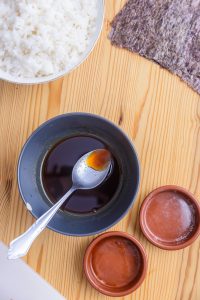
- Mix the soy sauce and sugar in a bowl.2 tablespoons soy sauce, 2 tablespoons sugar
- Arrange the Spam slices in a single layer in a frying pan over medium heat.

- Brown for 1 minute on each side.

- Pour the soy sauce and sugar mixture over the Spam.
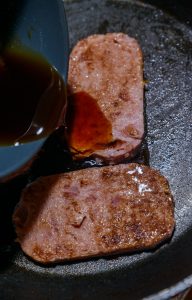
- Let the Spam soak up the sauce, which thickens and caramelizes slightly.

- Keep cooking for 2 minutes: the Spam should be slightly crisp and well coated in sauce.
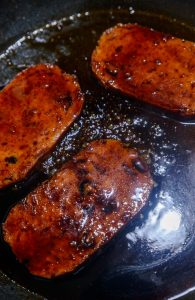
- Turn off the heat and set the Spam aside on a plate.
Assembly
- Cut each nori sheet into three long strips.3 sheets nori
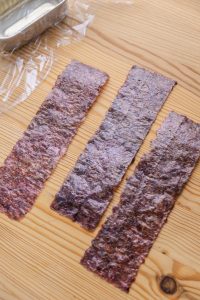
- Set the musubi mold in the center of a nori strip.1 musubi mold,
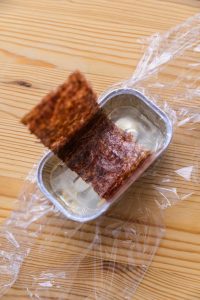
- Using a rice paddle, fill the mold with rice to a depth of about 2.5 cm.1.5 kg short-grain rice
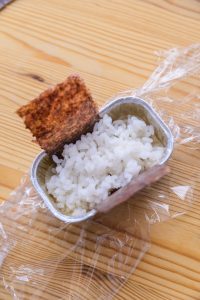
- Press the rice down firmly with the mold’s press, without mashing it: it should be compact enough not to fall apart when you lift the musubi.
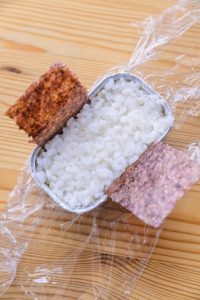
- Place a slice of Spam on the rice.
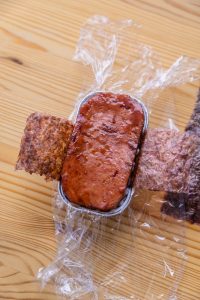
- Remove the mold.
- Fold the nori strip around the rice and Spam.
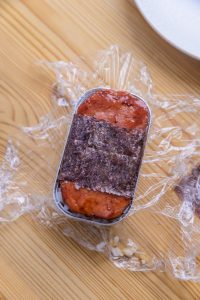
- Repeat with the remaining rice and Spam slices.