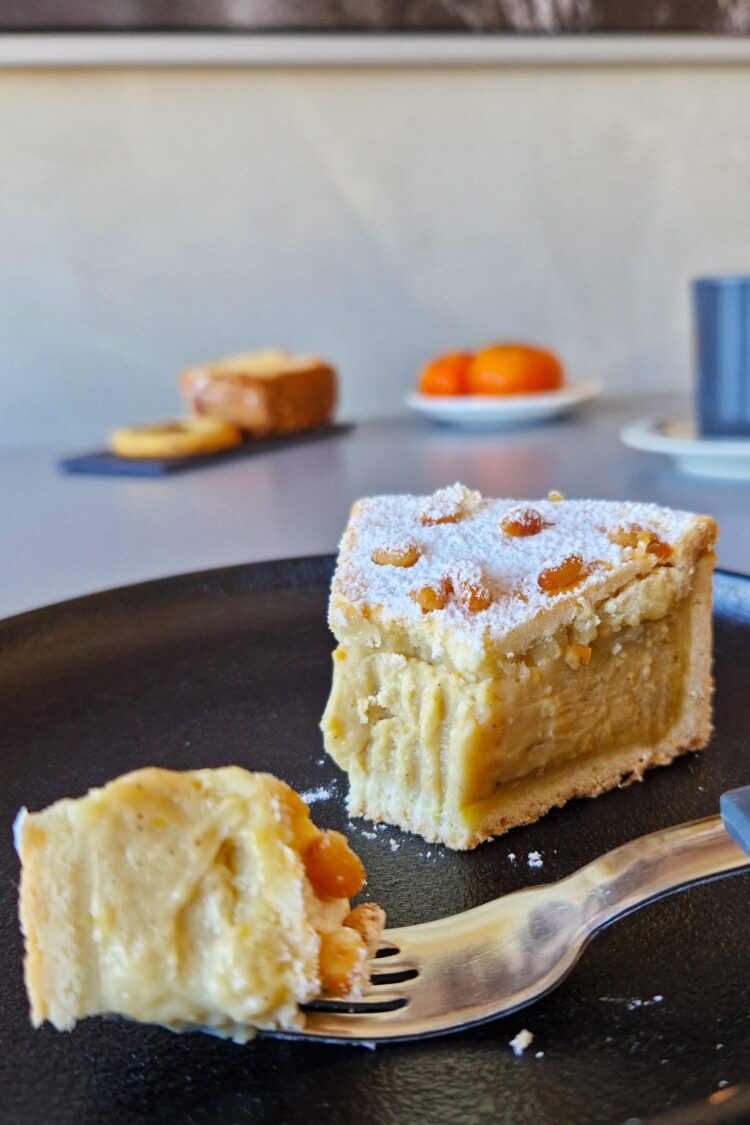
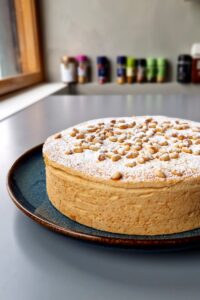
Picture a custard tart, but enclosed, with a golden crust and pine nuts toasted on top. The vanilla is full and mellow, the lemon comes through clean and bright, and the orange follows with a softer note that keeps it from veering into straight-up lemon tart territory. Let it cool, dust it with sugar, and each slice holds beautifully. You’ll find this recipe with my gluten-free entremets.
What is torta della nonna?
Torta della nonna is an Italian custard tart scented with lemon zest and topped with pine nuts. Unlike a classic custard tart, the filling is a vanilla pastry cream infused with lemon, and the tart is enclosed between two layers of pastry. In this version, the dough is gluten-free and the fat is a vegan margarine, but the spirit is the same: a tender shortcrust, silky cream, and citrus in every bite.
The main ingredients
The choice of gluten-free flour matters even more than usual here: the dough is delicate, so you need a blend with enough structure, such as Schär or Caputo gluten-free bread flour, to get a crust that rolls out well and bakes properly.
The vegan margarine stands in for butter: salted Violife is a solid option, but other gluten-free brands work too if you don’t have soy or tree nut restrictions. For the cream, barista-style oat milk gives the best results on the stove.
The zest ties everything together. Rommel Reyes combines lemon and orange in the cream because the two together bring a more nuanced citrus note and pair beautifully with vanilla. He also adds lemon zest to the dough, so the citrus aroma isn’t trapped in the center: you get it from the very first bite, right in the crust. The pine nuts, meanwhile, define the top, both visually and in flavor.
Technical notes and pitfalls to avoid
This recipe is written by weight, in metric, to keep each batch consistent. If you need to convert it, do it carefully before you begin: with gluten-free dough, even a 10 g difference shows up fast.
Pastry: rub in the fat, then stop
Start by mixing the dry ingredients, then make a well; it’s the easiest way to incorporate the rest without overworking the dough. Add the cold margarine, diced, along with the lemon zest and eggs, then rub everything together with your fingertips until you get a coarse, sandy texture. That’s your cue to stop: once it looks like coarse crumbs, don’t try to smooth it out.
Knead only briefly, just enough for the dough to come together. Shape it into a ball, wrap it tightly in plastic wrap, and chill for at least 1 hour so it firms up before rolling. If you want less mess, you can do the same step in a stand mixer fitted with the paddle attachment.
Cream: gentle heat, constant whisking, then strain
Heat the oat milk in a saucepan. Separately, whisk ⅓ of the hot—but not boiling—milk with the yolks, sugar, vanilla, and cornstarch until the starch is fully dissolved; otherwise, you’ll end up fighting lumps. Pour this mixture into the remaining warm milk and cook over low to medium heat, whisking constantly, until the cream thickens.
Take it off the heat and pass it through a sieve to remove any bits. Only then add the zests and the cold margarine. Rommel Reyes points out that there are two ways to infuse the zest, during cooking or after: here it’s added after cooking because the cream will go back into the oven inside the tart, and the citrus flavor comes through more vividly. Press plastic wrap directly onto the surface and chill before assembling.
Assembly: keep it cold, use parchment, let it rest
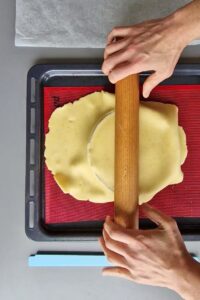
The dough needs to be cold when you roll it out. Roll it between two sheets of parchment paper; this reduces sticking and makes the gluten-free dough easier to handle. Aim for an even thickness of 3-4 mm so the baking is uniform, and if you have thickness guides, use them to keep it level all over.
To line the pan, lift the rolled dough with a rolling pin, then press it snugly against the sides of the pan or ring. Prick the bottom with a fork, then trim the edges neatly. Chill the lined dough again for 20 minutes, just long enough for it to relax and firm up.
Seal, top with pine nuts, and bake in two stages
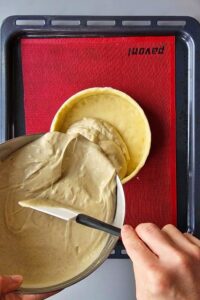
Fill the shell with the cold cream, not lukewarm. Roll out the remaining dough for the lid, lay it on top, then pinch the edges with your fingers to seal. Brush with egg wash, scatter the pine nuts evenly, and prick the top a few times with a fork to let the steam escape.
Bake in two stages: 55 minutes in a preheated 160°C oven, then raise the temperature to 180°C and bake for 8 to 10 minutes more. Let the tart cool completely before dusting with icing sugar, then slice.
For more ideas, browse my gluten-free recipes.
Recipe developed by chef Rommel Reyes. Find his work on Instagram, his Substack newsletter, and his YouTube channel.
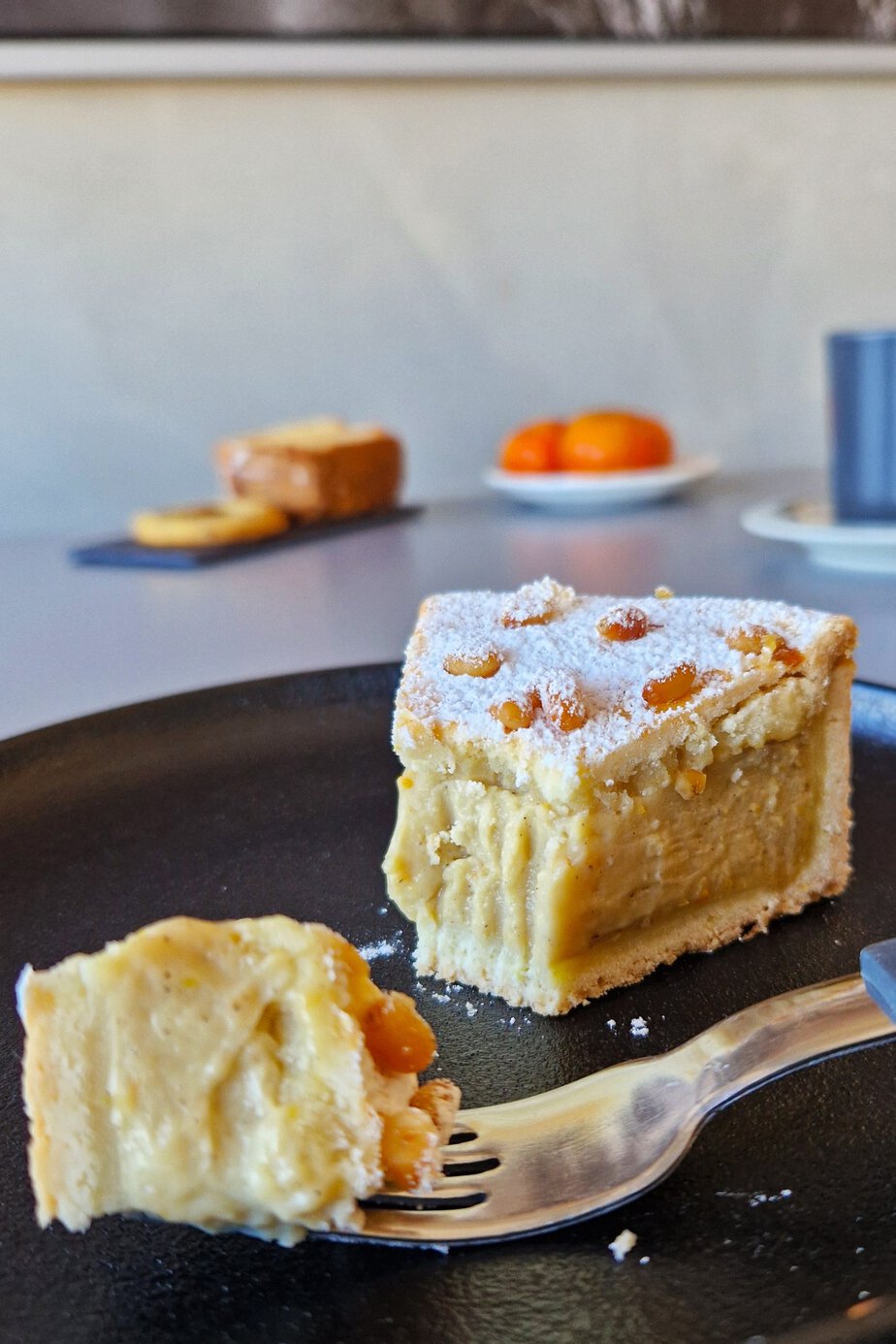
Gluten-Free Citrus Custard Tart
Ingredients
- 300 g Schar Bread GF Bread Flour
- 100 g salted vegan butter preferably Violife Salted; cold and cut into cubes
- 100 g sugar
- 1 pinch salt
- 120 g eggs 2 large eggs
- zest of 1 lemon
- 500 g oat milk barista-style gluten-free
- 120 g egg yolks
- 90 g sugar
- 50 g cornstarch
- 1 vanilla bean or 1/2 tsp. vanilla powder, or 1 tbsp. vanilla extract
- 50 g vegan butter preferably Miyokos; soft
- zest of 2 lemons and 1 orange
- 60 g pine nuts
Instructions
Shortcrust Pastry
- Combine all the dry ingredients on a work surface or in a large bowl, then make a well in the center.300 g Schar Bread GF Bread Flour, 100 g sugar, 1 pinch salt
- Add the cubed vegan butter, lemon zest, and eggs.100 g salted vegan butter, zest of 1 lemon, 120 g eggs
- Mix with your fingertips until the mixture resembles coarse sand.
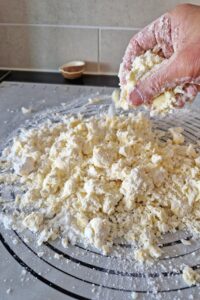
- Knead lightly just until the dough comes together, then wrap it in plastic wrap, shape it into a ball, and chill for at least 1 hour.
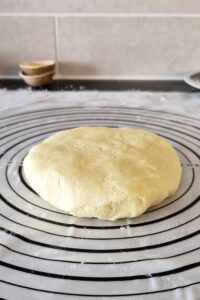
- To keep your hands clean, use a stand mixer fitted with the paddle attachment.
Pastry Cream
- Gently warm the oat milk in a saucepan.500 g oat milk
- In a bowl, whisk together 1/3 of the warm oat milk (not hot), the egg yolks, sugar, vanilla, and cornstarch.120 g egg yolks, 90 g sugar, 1 vanilla bean, 50 g cornstarch
- Whisk carefully until the cornstarch is completely dissolved.
- Pour the pastry cream mixture into the remaining warm milk.
- Cook over medium-low heat, whisking constantly, until thickened.
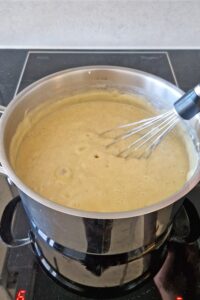
- Remove the pastry cream from the heat.
- Strain it to remove any lumps.
- Add the citrus zests and the cold vegan butter.zest of 2 lemons and 1 orange, 50 g vegan butter
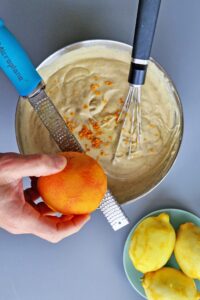
- Refrigerate until cool.
Assemble and Bake
- Roll out the chilled dough between two sheets of parchment paper to 3-4 mm thick.
- Use rolling guides for an even thickness.
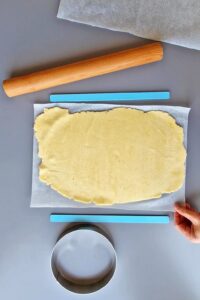
- Using a rolling pin, transfer the dough to a tart pan or tart ring.
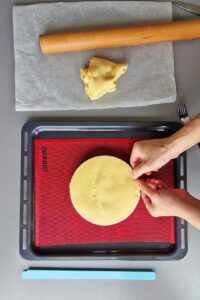
- Press the dough firmly into the sides, then prick the base with a fork.
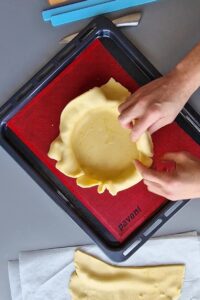
- Trim the overhang.
- Chill the dough in the refrigerator for 20 minutes.
- Pour the chilled lemon pastry cream onto the prepared crust.
- Roll out the remaining shortcrust pastry and lay it over the top.
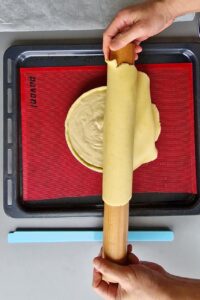
- Pinch the edges with your fingers to seal the tart.
- Brush with egg wash, scatter the pine nuts evenly over the top, then prick a few holes in the crust with a fork.60 g pine nuts
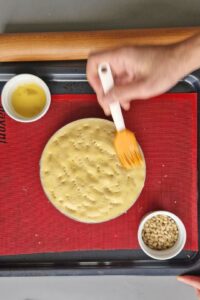
- Bake in a preheated 160°C oven for 55 minutes.
- Increase the temperature to 180°C and bake for 8 to 10 minutes more.
- Let the tart cool completely, then dust with icing sugar.
- Slice and serve.