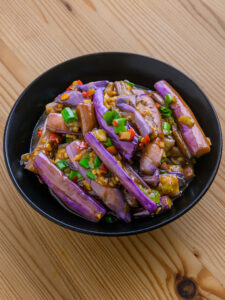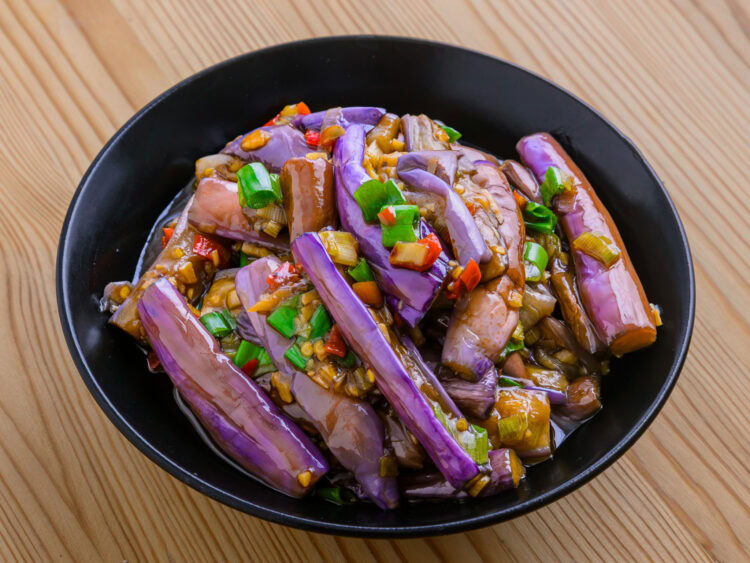
Eggplant sticks, fried and then coated in a spicy sweet-and-sour sauce with ginger, garlic and black vinegar, Sichuan style.
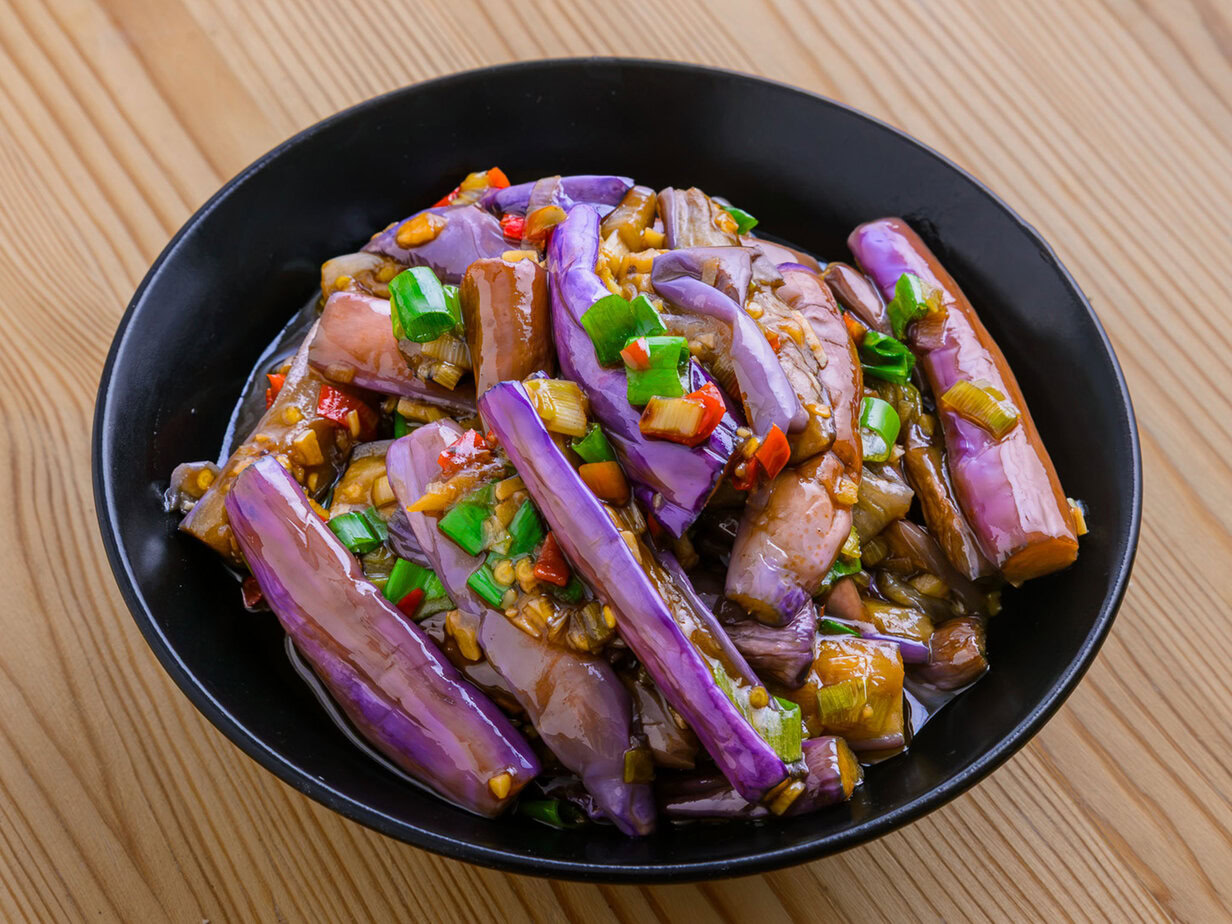
Some nights you want a bold, straightforward dish with a bit of heat, the kind you eat with lots of rice. Chinese-style eggplant comes out of the wok still glossy, its purple skin lacquered a deep red, the flesh so tender it gives way under your chopsticks.
The ginger and garlic hit first, then the black vinegar and sugar take over, and the chili finishes the job. You go back for more to finish your white rice, then once more for the sauce.
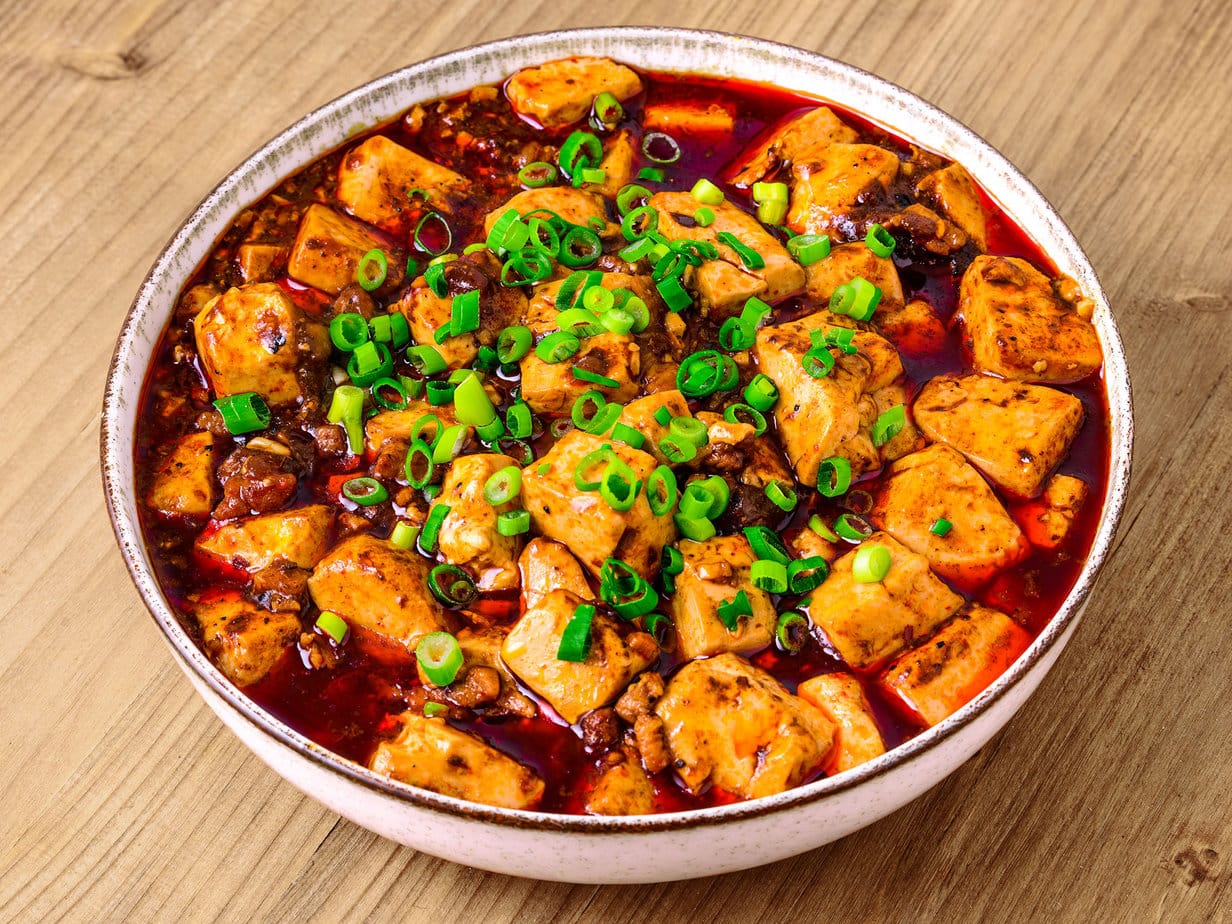
What Is Chinese-Style Eggplant?
Behind the name is yu xiang qie zi, Sichuan’s “fish-fragrant” eggplant, one of the best-known eggplant dishes in Chinese cuisine. Long eggplant sticks are salted, pressed and fried, then tossed in the wok in a glossy sauce of pickled chili paste, black vinegar and sugar.
Many restaurants add ground pork. This version leaves it out, but its sauce contains a little chicken broth, so it isn’t vegetarian.
Yu xiang means “fish fragrance,” yet the dish contains no fish at all. The name refers to a seasoning: pickled chilies, garlic, ginger, scallion, sugar and vinegar, the blend Sichuan cooks used to reserve for fish.
A Sichuan Sauce Designed for Fish
The story most often told features a Sichuan cook who hated to waste anything. She is said to have reused the aromatics prepared for braising a fish (ginger, garlic, scallion, pickled chilies, vinegar and sugar) to season another dish. The combination was such a hit that it became a style in its own right, later applied to pork and vegetables.
Sichuan cooking likes to say that a hundred dishes have a hundred flavors. Yu xiang is a good example: salty, sour, sweet and spicy in the same bite, with the umami flavor of soy in the background.
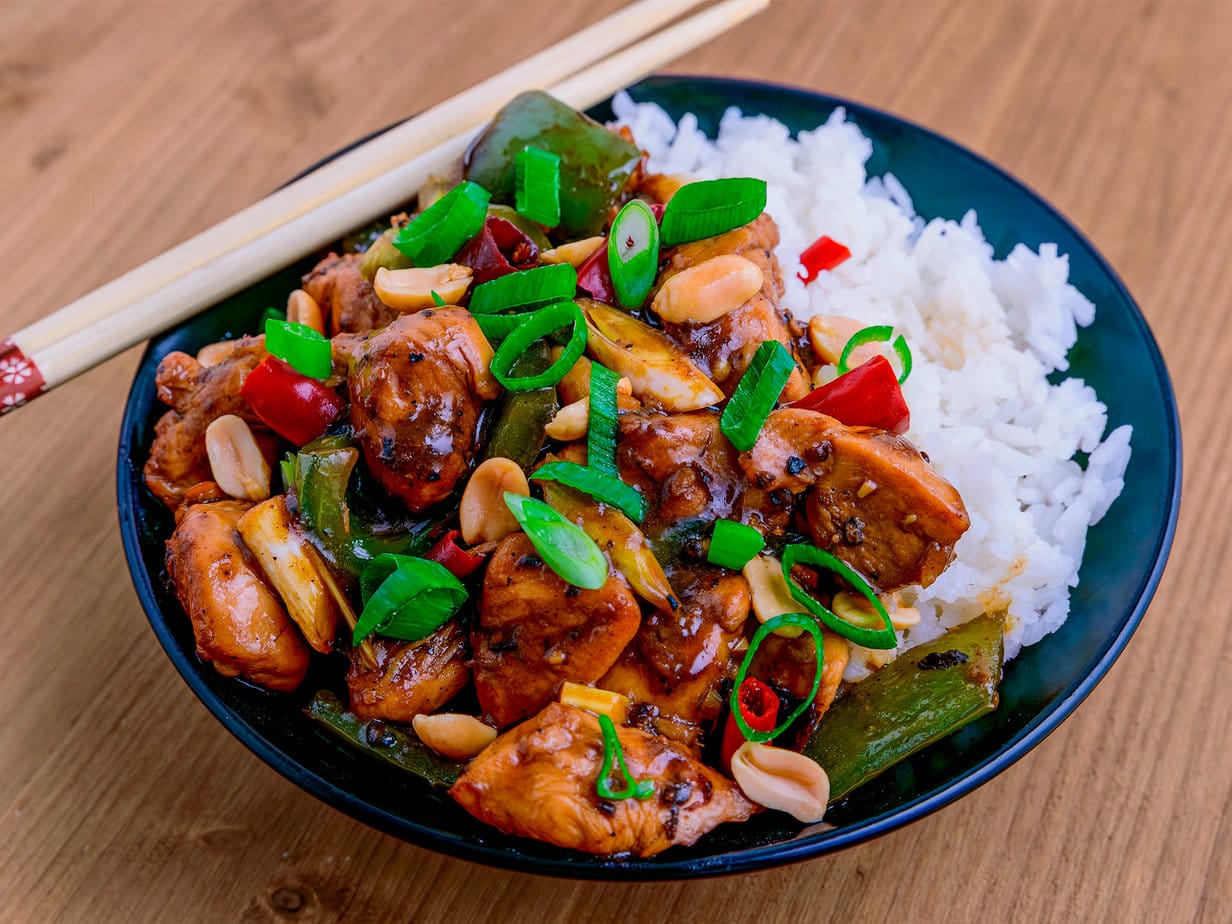
Eggplant is also cooked as hong shao qie zi, braised longer in a darker soy sauce. In Hong Kong, some menus take the name literally and add salted fish, a variation far removed from the original dish.
The Main Ingredients in Chinese-Style Eggplant
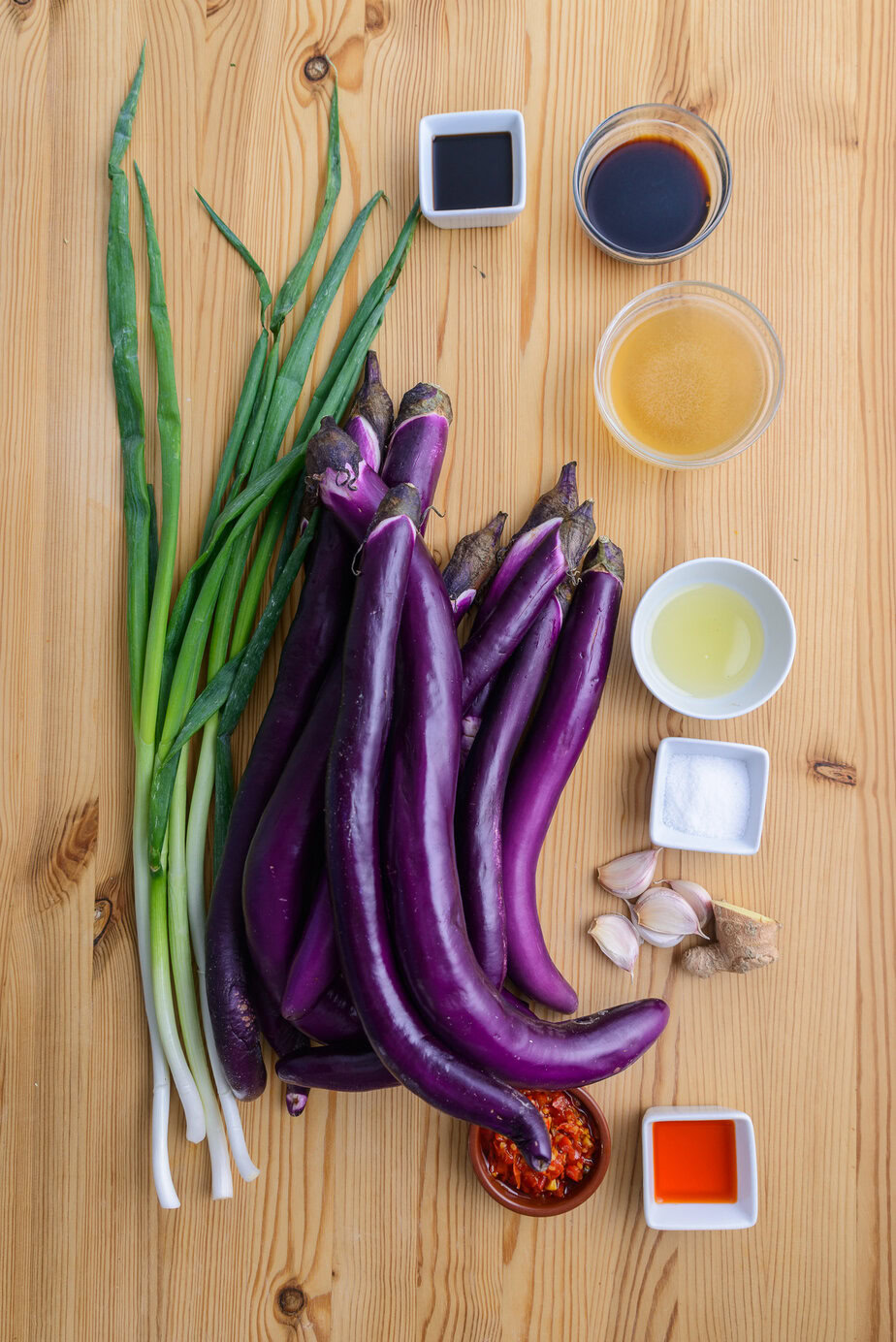
Long eggplants, known as Chinese or Japanese eggplants, have thin skin and few seeds. They stay tender when fried and soak up less oil than large round eggplants. Salting draws out their moisture before cooking: once pressed, they have lost some of their water and come out of the oil meltingly tender, without excess grease.
The sauce is built on pickled chili paste (pao jiao), bright and tangy, which you’ll find at Asian grocery stores. If you can’t find it, doubanjiang, the spicy fava bean paste, gives a deeper flavor.
Light soy sauce seasons without darkening, black vinegar brings a malty tang and sugar balances the chili. Cornstarch binds everything together and chicken broth adds body.
Ginger, garlic and scallion form the base, stir-fried for a few seconds in the oil. The scallion greens go in at the end for freshness, and a drizzle of Sichuan chili oil adds the final gloss.
Technique Tips for Melt-in-Your-Mouth Eggplant
Cut the eggplant into 6 cm sticks, salt them, wait 15 minutes, then press them well: that’s what limits how much oil they absorb. The frying is quick, about 2 minutes at 180 °C, and once is enough. With round eggplants, let them sit in the salt longer and allow about 1 extra minute of frying.
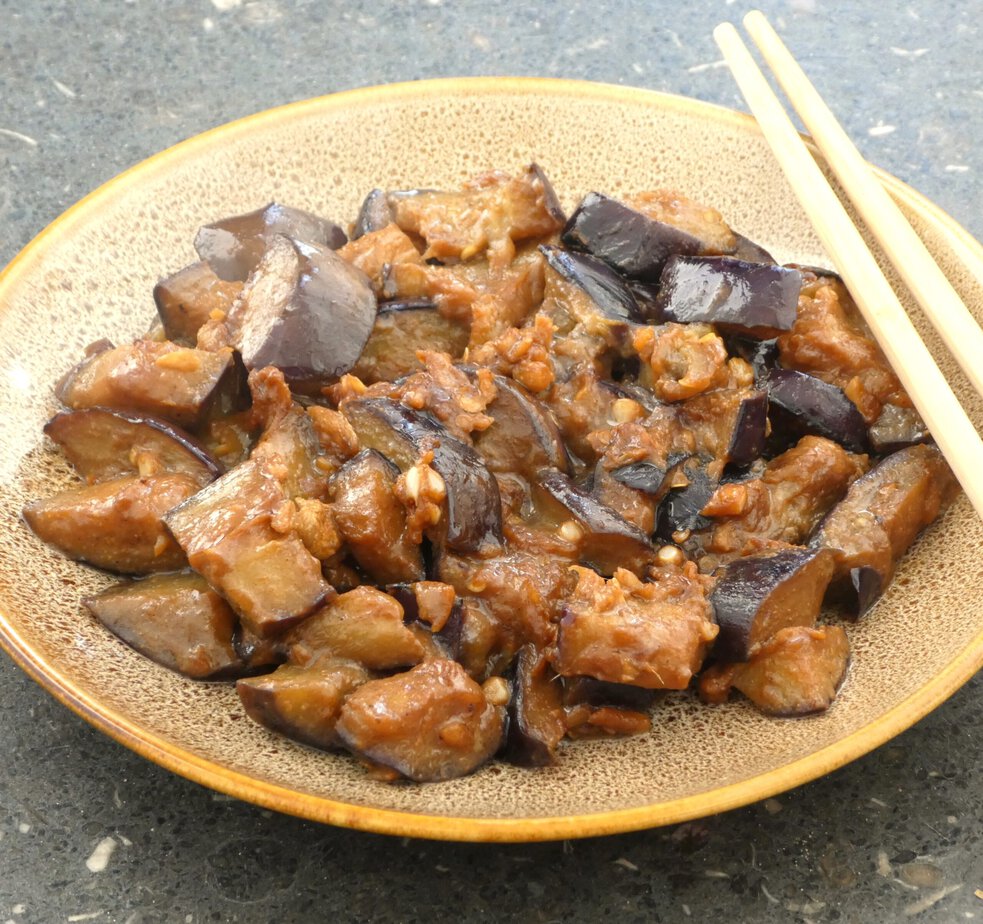
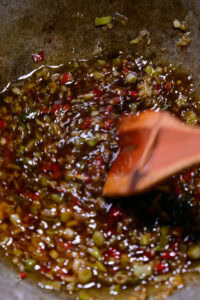
The sauce needs to reduce until it is glossy and syrupy before the eggplant goes back in, or it will stay at the bottom of the plate. This dish does without Sichuan peppercorns and Shaoxing wine. Serve it piping hot, with white rice.
Ingredients
- 400 g eggplants long
- 5 g salt
- Oil for frying
- 20 ml oil
- 15 g ginger minced
- 20 g garlic minced
- 30 g scallions thinly sliced
- 30 g scallion greens
- 5 ml chili oil
For the sauce
- 20 g pickled chili paste (pao jiao), or use doubanjiang if unavailable
- 10 ml light soy sauce
- 15 ml black vinegar
- 15 g sugar
- 5 g cornstarch
- 50 ml chicken stock
Instructions
- Cut the eggplants into sticks 6 cm long.400 g eggplants
- Toss them with the salt and let them sweat for 15 minutes.5 g salt
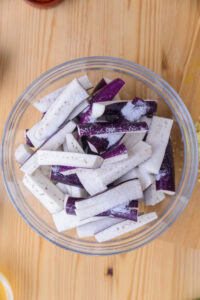
- Squeeze the sticks to press out the water.
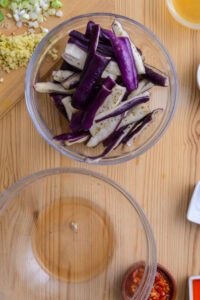
- Heat the frying oil to 180 °C.Oil for frying
- Fry the eggplant sticks for about 2 minutes, until tender and lightly golden.
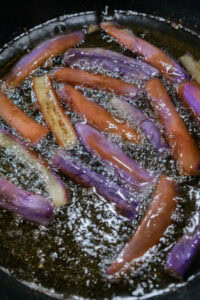
- Drain them on paper towels.
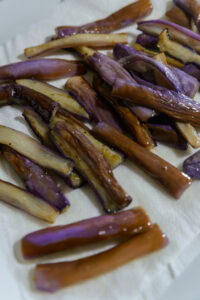
- Mix together the pickled chili paste, soy sauce, black vinegar, sugar, cornstarch, and stock.20 g pickled chili paste, 10 ml light soy sauce, 15 ml black vinegar, 15 g sugar, 5 g cornstarch, 50 ml chicken stock
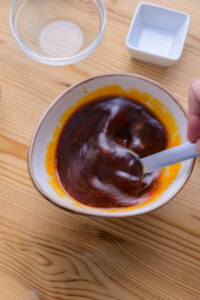
- Heat the oil in a wok.20 ml oil
- Add the ginger, garlic, and scallions and stir-fry for 30 seconds, until fragrant.15 g ginger, 20 g garlic, 30 g scallions
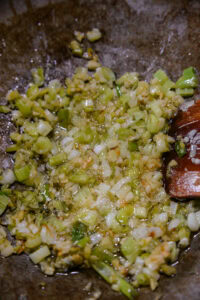
- Pour in the sauce and cook until glossy and syrupy.
- Add the eggplant sticks back in and toss gently for 1 minute to coat them well.
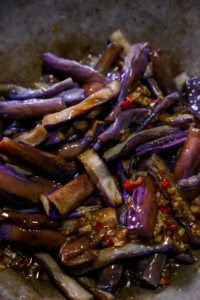
- Stir in the scallion greens.30 g scallion greens
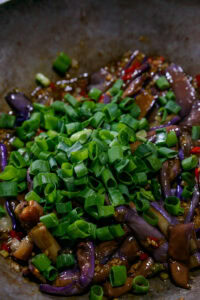
- Plate and drizzle with chili oil.5 ml chili oil