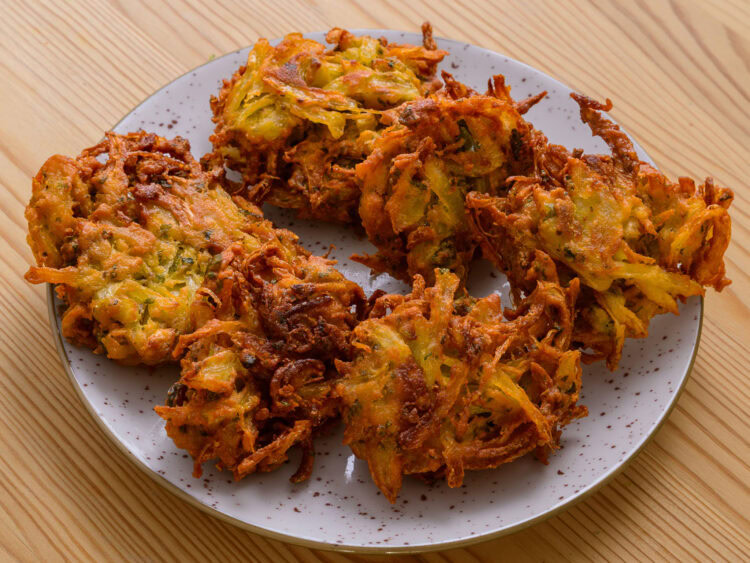
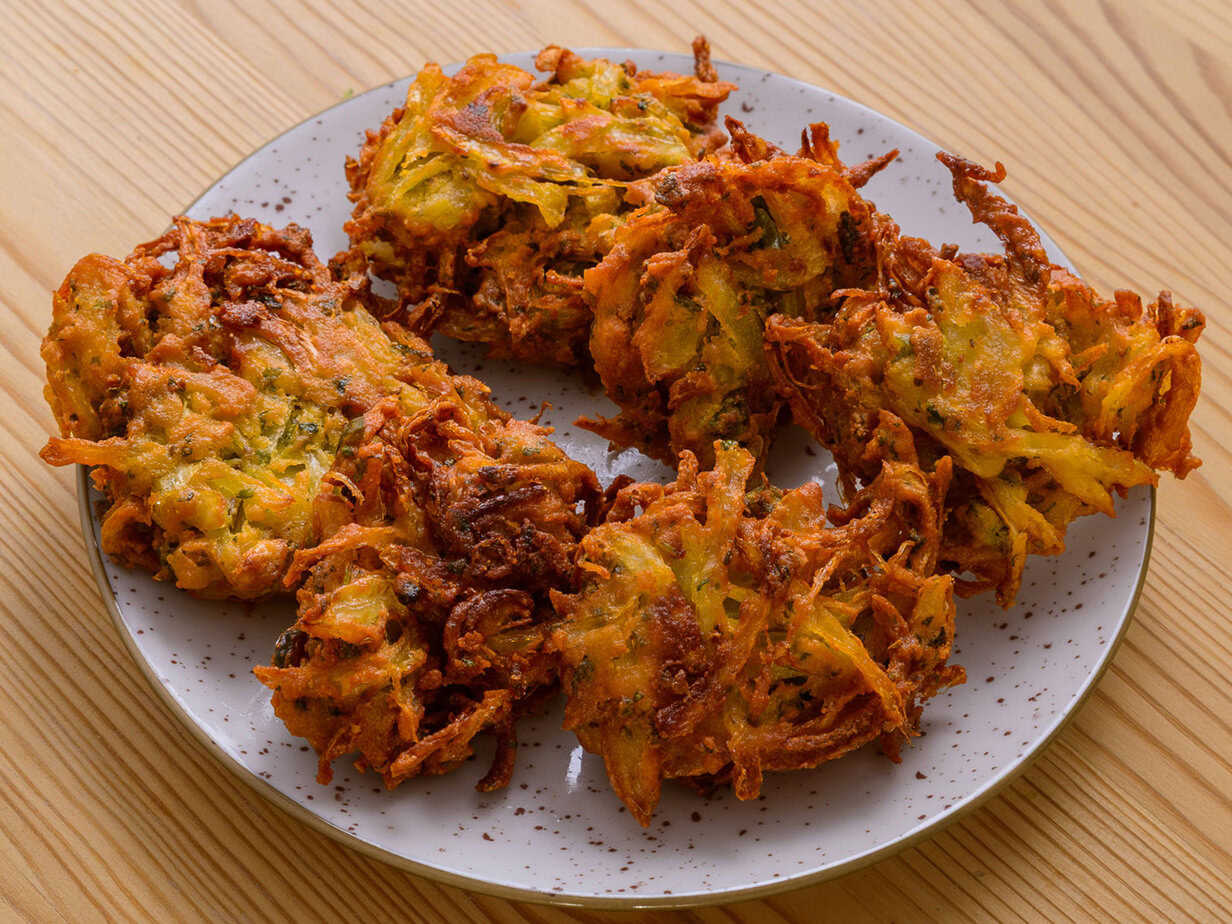
Onion pakoras from Maharashtra, bound with very little chickpea flour and fried until nice and crispy.
It’s been raining since morning, and by around five o’clock the craving for something hot and crispy becomes pressing. In India, the answer lies in a pan of oil: strands of onion barely coated in chickpea flour that come out golden, spiky, almost lacy.
There’s the scent of ajowan, curry leaf and green chili. You grab them while they’re still scorching hot, dip them in mint chutney, and the chai goes cold while you help yourself to another.
What Is an Onion Pakora?
An onion pakora is an Indian fritter: thinly sliced onions mixed with green chilies, ginger and herbs, bound with chickpea flour (besan) and a little rice flour, then deep-fried. In Maharashtra, it’s called kanda bhaji.
What sets it apart from other pakoras is the ratio: lots of onion, very little flour, and the water released by the salted onions to bind it all together. Like samosas, it’s a street food staple of Indian cuisine.
Kanda means “onion” in Marathi, and bhaji comes from the Sanskrit bharjita, “fried.” Pakora goes back to the Sanskrit pakvavata, a small cooked morsel. In Hindi, it’s also called pyaaz pakoda.
From Medieval Texts to Monsoon Street Stalls
Vegetable fritters made with chickpea flour already appear in medieval Indian texts, the Lokopakara (1025) and the Manasollasa (1130). Frying put them in the category of pakki rasoi, “well-cooked” food, less moist and easier to carry than boiled dishes.
In Maharashtra, kanda bhaji is a street snack. In Mumbai and Pune alike, it goes hand in hand with the monsoon rains: steaming stalls, sizzling oil and piping-hot chai. A well-known variation, khekda bhaji, takes its name from the Marathi word for “crab”: in the oil, the long strips of onion splay out like legs.
The same besan batter coats other vegetables: thinly sliced potato (aloo pakora), whole spinach leaves (palak pakora) or small cauliflower florets (gobi pakora). The potato and cauliflower pairing shows up again in aloo gobi, and spinach in palak paneer.
The Main Ingredients in Onion Pakoras
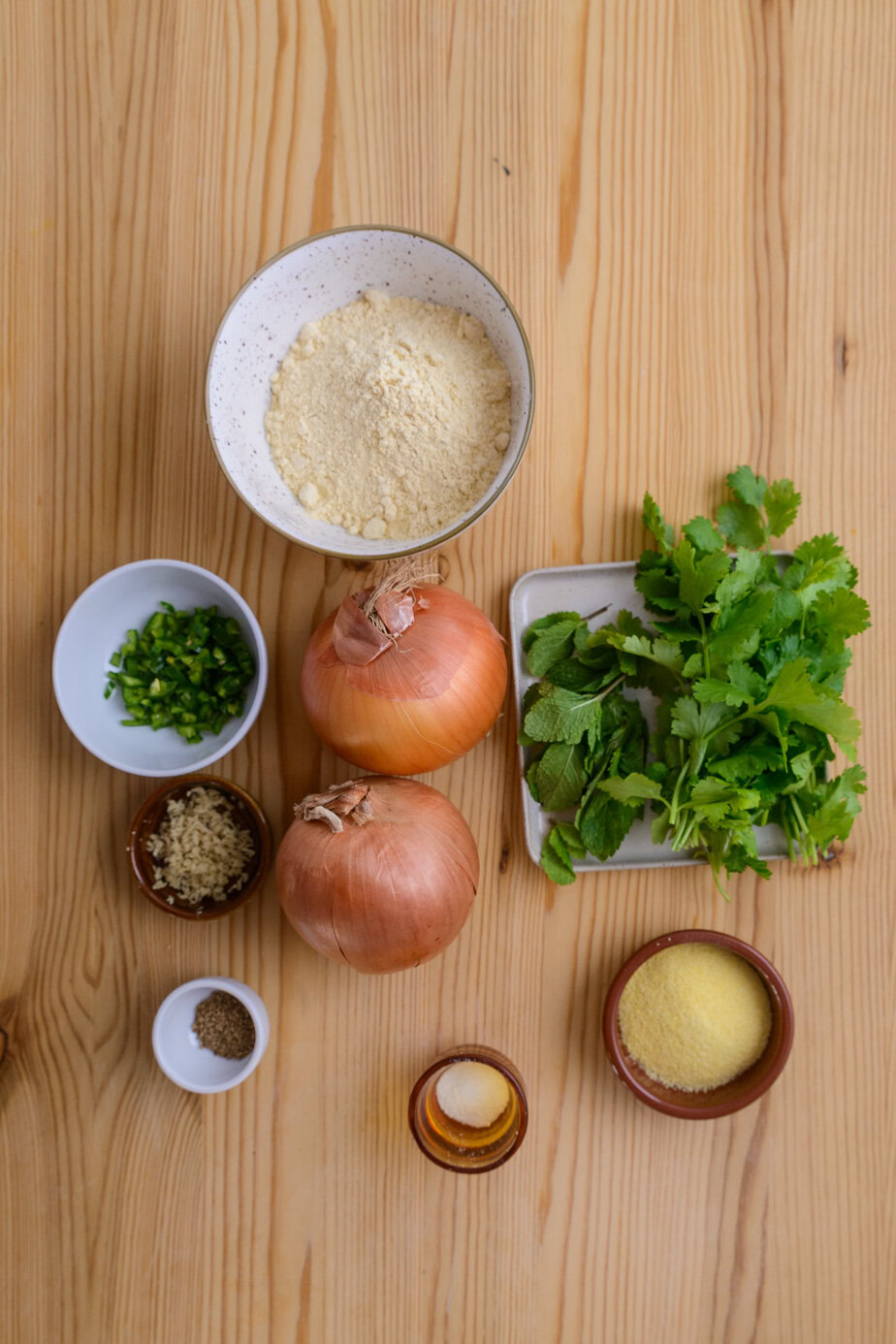
The onion does almost all the work. Thinly sliced and squeezed between your fingers with the salt, it releases its water within a few minutes, and that liquid binds the flour. Green chilies, grated ginger, curry leaves (or fresh cilantro) and a few mint leaves give it its aroma.
Chickpea flour, or besan, is sold in Indian and Asian grocery stores. It has a nutty flavor and browns quickly. A little rice flour makes the crust firmer; fine semolina or cornstarch can easily stand in for it.
Ajowan (ajwain), a small seed with a flavor close to thyme, is the quintessential pakora spice. Soaked cashews are optional and add crunchy bits. On the side, serve a mint or tamarind chutney, or a nicely chilled raita.
Technique Tips for Really Crispy Pakoras
The crispness comes from a deliberately low proportion of flour: about 150 g of besan to 300 g of onions. The mixture should stay a moist, compact mass, never a runny batter.
Water goes in two tablespoons at a time, and too much water gives you soft fritters that soak up oil. A spoonful of very hot oil poured into the mixture makes them even crispier.
For frying, keep the oil between 170 and 180 °C: a small piece of batter should float straight back up to the surface. Too hot, and the oil burns the outside before the inside cooks. Too cold, and you get greasy fritters. Kanda bhaji is fried only once and eaten right away; if you make it ahead, a double fry just before serving brings back the crunch.
Ingredients
- 300 g onions (about 2 large), thinly sliced
- 150 g chickpea flour (besan)
- 1.5 tablespoons rice flour or fine semolina, or cornstarch
- 0.75 teaspoon salt
- 2 green chilies chopped
- 0.5 teaspoon ginger grated (optional)
- 0.5 teaspoon ajowan seeds (ajwain)
- 1 sprig curry leaves chopped, or 2 tablespoons fresh cilantro
- 10 leaves mint chopped (optional)
- 35 g cashews soaked for 15 minutes, then drained (optional)
- 1 tablespoon oil very hot, for the batter
- oil for frying
Instructions
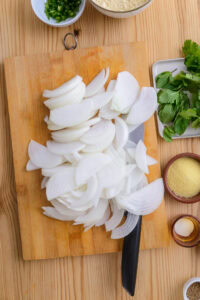
- Thinly slice the onions and put them in a mixing bowl.300 g onions
- Add the green chilies, ginger, curry leaves, mint, and salt.0.75 teaspoon salt, 2 green chilies, 0.5 teaspoon ginger, 1 sprig curry leaves, 10 leaves mint
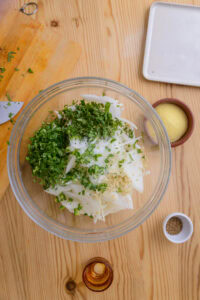
- Squeeze the onions between your fingers several times, without crushing them.
- Let rest for 5 minutes while the onions release their liquid.
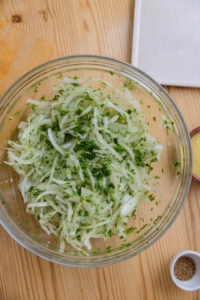
- Sprinkle in the chickpea flour, rice flour, ajowan, and cashews.150 g chickpea flour, 1.5 tablespoons rice flour, 0.5 teaspoon ajowan seeds, 35 g cashews
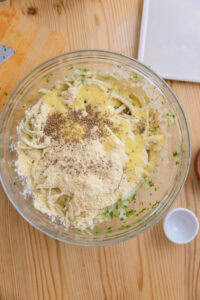
- Mix to coat the onions well; the mixture will still be fairly dry.
- Add water, 2 tablespoons at a time, mixing as you go, until the mixture forms a moist, compact mass.
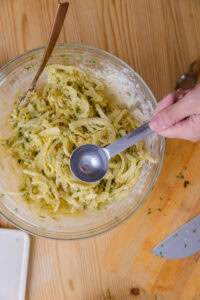
- The batter should be firm and very moist, but not runny like a fritter batter.
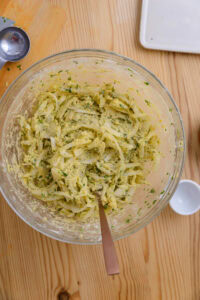
- Heat the oil set aside for the batter until very hot, then pour it over the mixture and stir with a spoon.1 tablespoon oil
- Heat oil for deep-frying in a sauté pan or wok.oil for frying
- Check the temperature by dropping in a small piece of batter: it should rise straight to the surface without sinking.
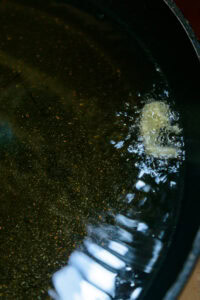
- Set the heat to medium-high, between 170 and 180°C.
- Pinch off small portions of batter with your fingertips and slide them into the oil.
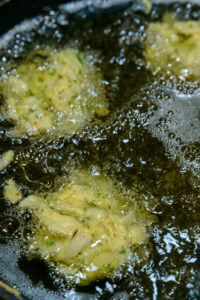
- Don’t overcrowd the pan.
- Stir and turn them occasionally so they cook evenly.
- Fry until the fritters are crispy and golden brown.
- Drain on paper towels.
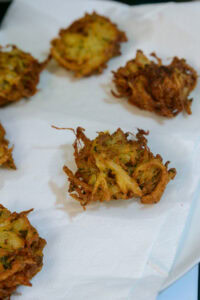
- Continue in small batches.
- Serve piping hot.