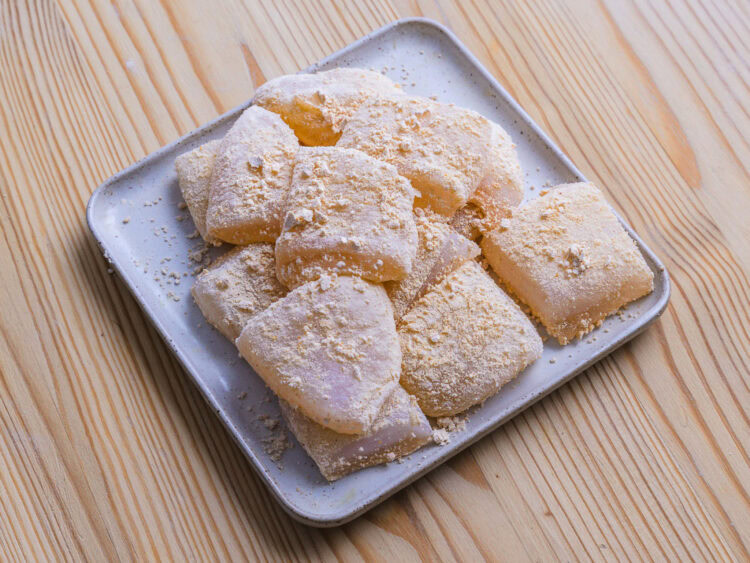
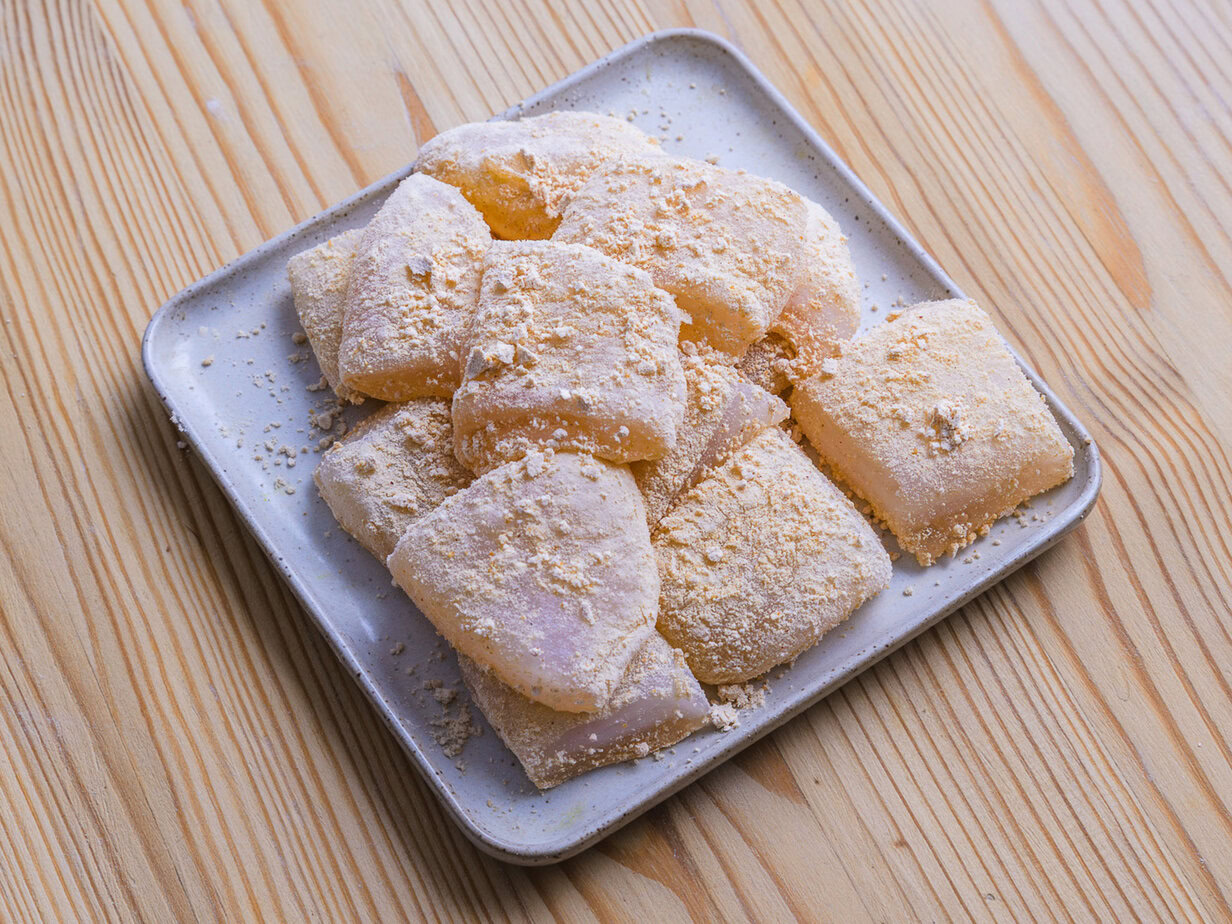
Squares of starch cooked until translucent, coated in kinako and drizzled with kuromitsu.
At the end of the day, when the heat has barely eased, a plate of warabi mochi disappears in minutes. The pieces wobble between the chopsticks, stretch a little at the first bite, then melt away, leaving a very delicate flavor.
The kinako smells of toasted hazelnuts, while the kuromitsu adds a molasses note that trails all the way to the edge of the plate. It is prepared just before serving and never stays on the table for long.
What is warabi mochi ?
Warabi mochi is a wagashi, a Japanese confection made from starch, sugar and water, cooked together to form a translucent, elastic dough. It contains no rice, unlike easy mochi made with glutinous rice flour. It is cut into pieces, coated in kinako, then drizzled with kuromitsu. Kuzumochi, made with kuzu starch, is very similar, but it is a clearer, smoother jelly, whereas warabi mochi has more chew.
Warabi refers to bracken fern, whose roots yield the original starch, warabiko. Mochi here refers not to pounded rice but to the texture, a supple chew with a little resistance to the bite. The Japanese call this elasticity koshi.
From the Heian Court to the Ferns of Nara
Warabi mochi dates back to the Heian period. Tradition has it that Emperor Daigo, who reigned from 897 to 930, loved it so much that he bestowed upon it the title of “ Tayu ”, the fifth rank at court. True or not, the anecdote reveals what this dessert once was : a rare starch and sugar, two luxury ingredients. It has since retained its place among the sweets served with tea in Japanese cuisine.
Nara also claims a part in its history. Local stories tell of monks from Tōdai-ji harvesting ferns on the slopes of Mount Wakakusa, where controlled burns encouraged them to grow back in abundance, especially since the city’s deer left them untouched. These fires became the annual Wakakusa Yamayaki. Extracting the starch, however, required an enormous amount of work : it takes around 10 kg of roots to obtain 70 g of starch.
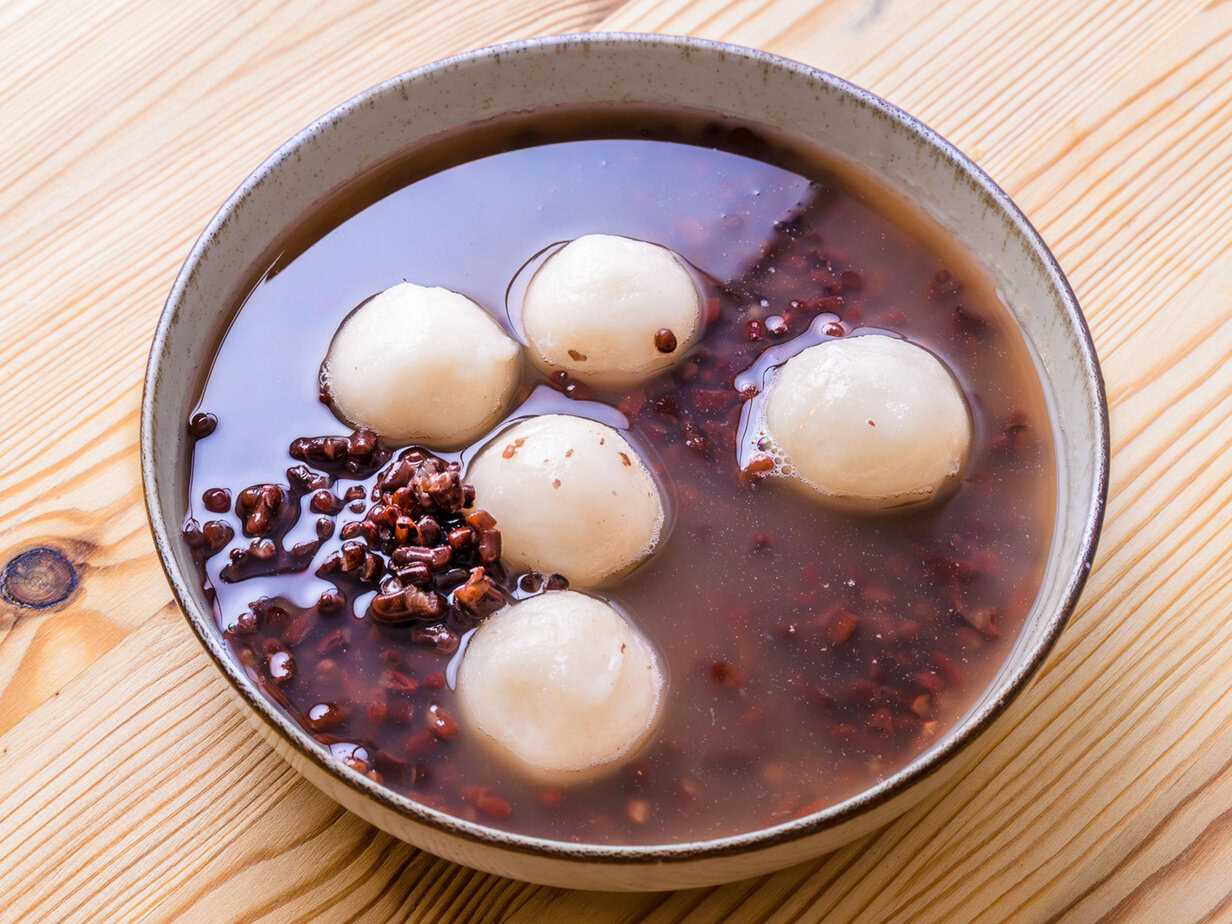
During the Edo period, warabi mochi was sold in teahouses along the Tōkaidō, and the supply of bracken starch could no longer keep up with demand. Confectioners mixed it with much cheaper sweet potato starch. Today, most commercially sold warabi mochi contains only a little bracken, if any at all, and relies on sweet potato, tapioca or potato starch.
The Main Ingredients in Warabi Mochi
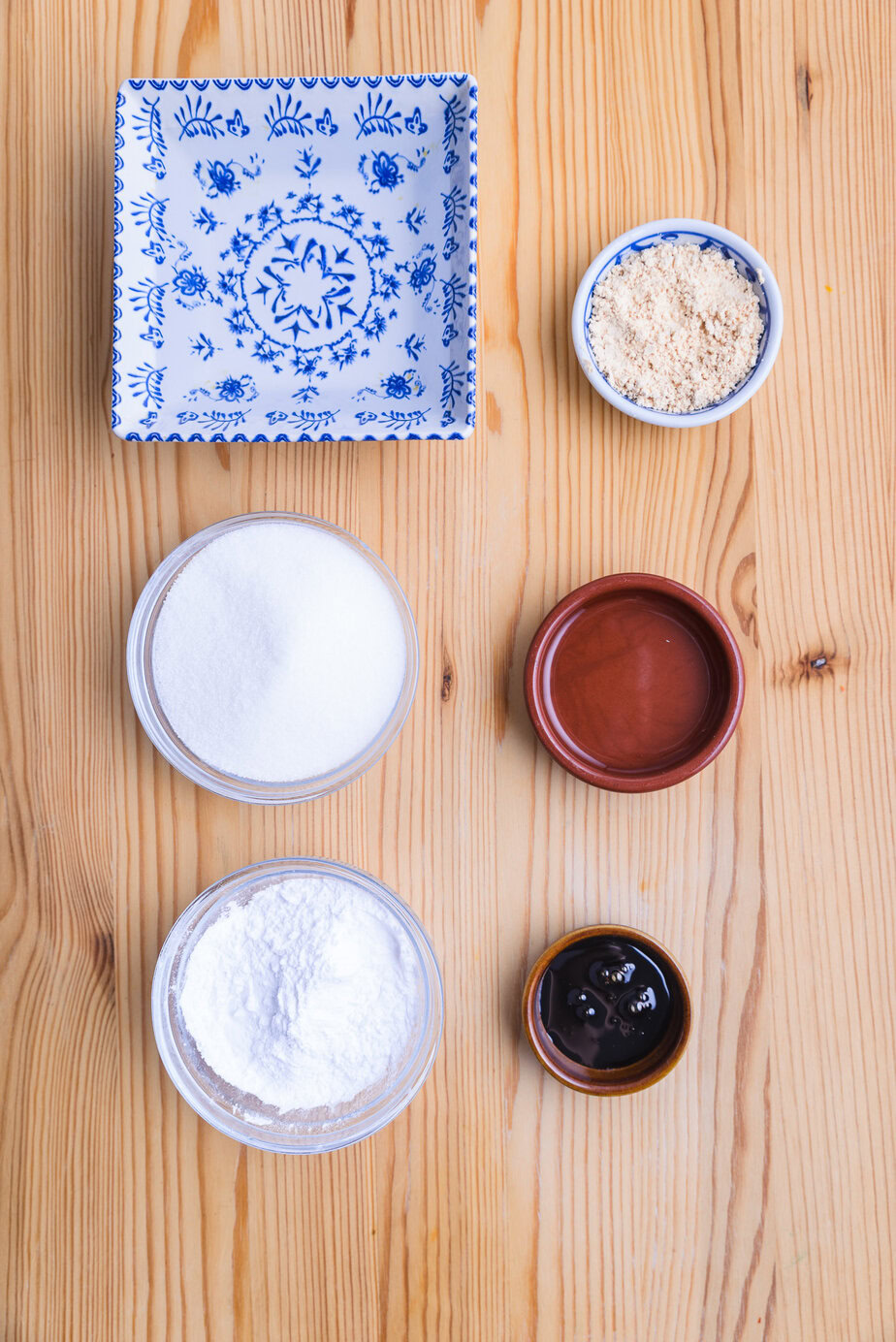
Warabiko, or bracken fern starch, is the ingredient used in traditional warabi mochi. It provides the original texture : an elastic dough that wobbles between the chopsticks and melts in the mouth, with its characteristic koshi. Hon-warabiko, pure bracken starch, produces a grayish-brown, almost black mochi. It costs around thirty times more than tapioca and is rarely found in Europe.
This recipe therefore uses tapioca starch : the mochi will be lighter in color, firmer and springier, with a more subtle flavor, and easy to cut. Tapioca requires more starch and less water, 100 g to 200 g of water ; with less starch, the dough stays soft and will not hold its shape. If you find warabiko, use 80 g to 240 g of water : this is the only way to achieve the traditional texture.
Sugar and water make up the rest of the dough. Sugar sweetens it, but also retains water and keeps the gel supple for longer. Mizuame, a Japanese sugar syrup, is added during cooking : it makes the dough smoother, glossier and more cohesive.
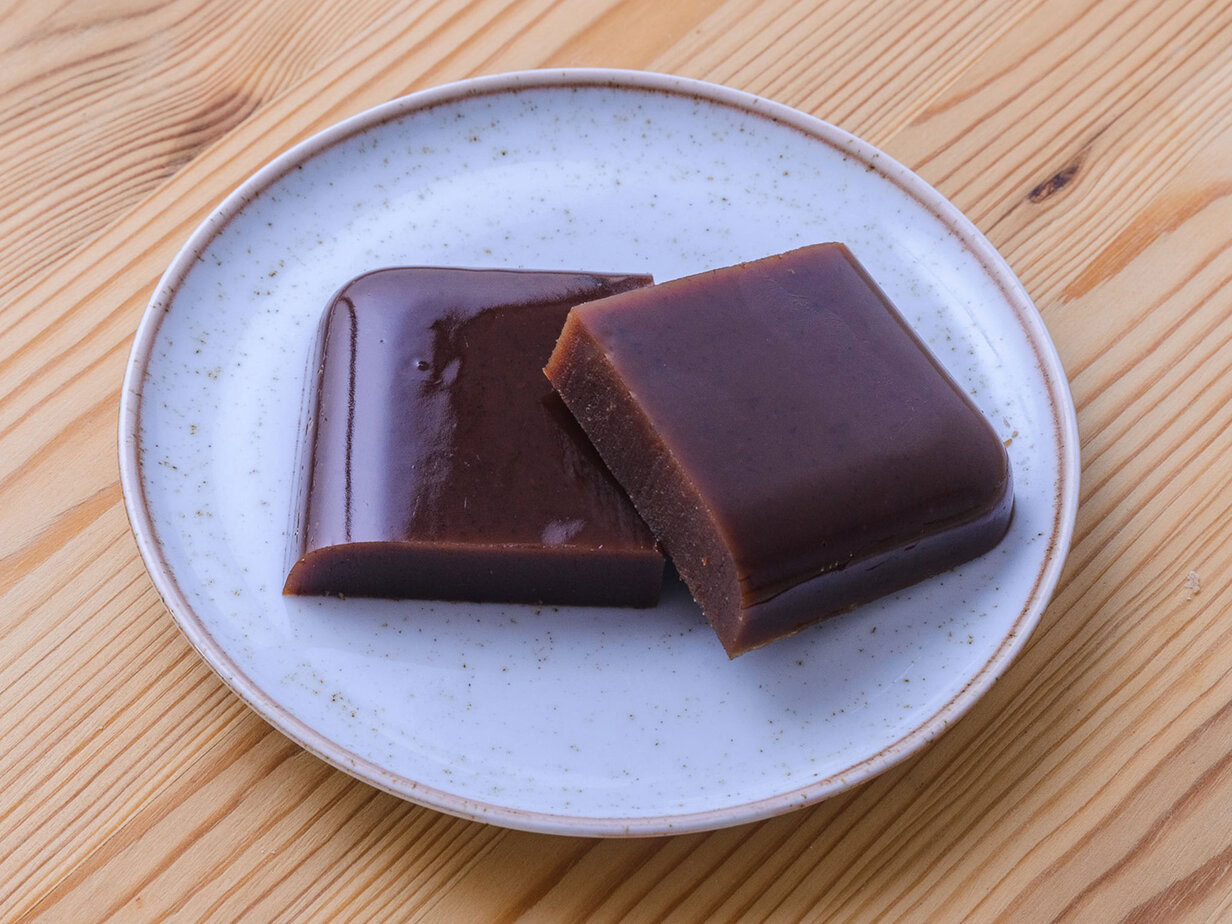
Warabi mochi is almost never eaten plain. Kinako, a sweetened roasted soybean flour, adds a nutty flavor and dries the surface, keeping the pieces from sticking together. Kuromitsu, a black sugar syrup with a molasses flavor, is drizzled on last.
Technical Tips for Great Warabi Mochi
The dough must change in appearance : white and opaque at first, it becomes translucent and glossy. This is the sign that it has finished cooking.
Working the dough over low heat matters just as much as cooking it. The more you stir the dough, the more elastic it becomes. The cold-water bath then removes residual heat before cutting.
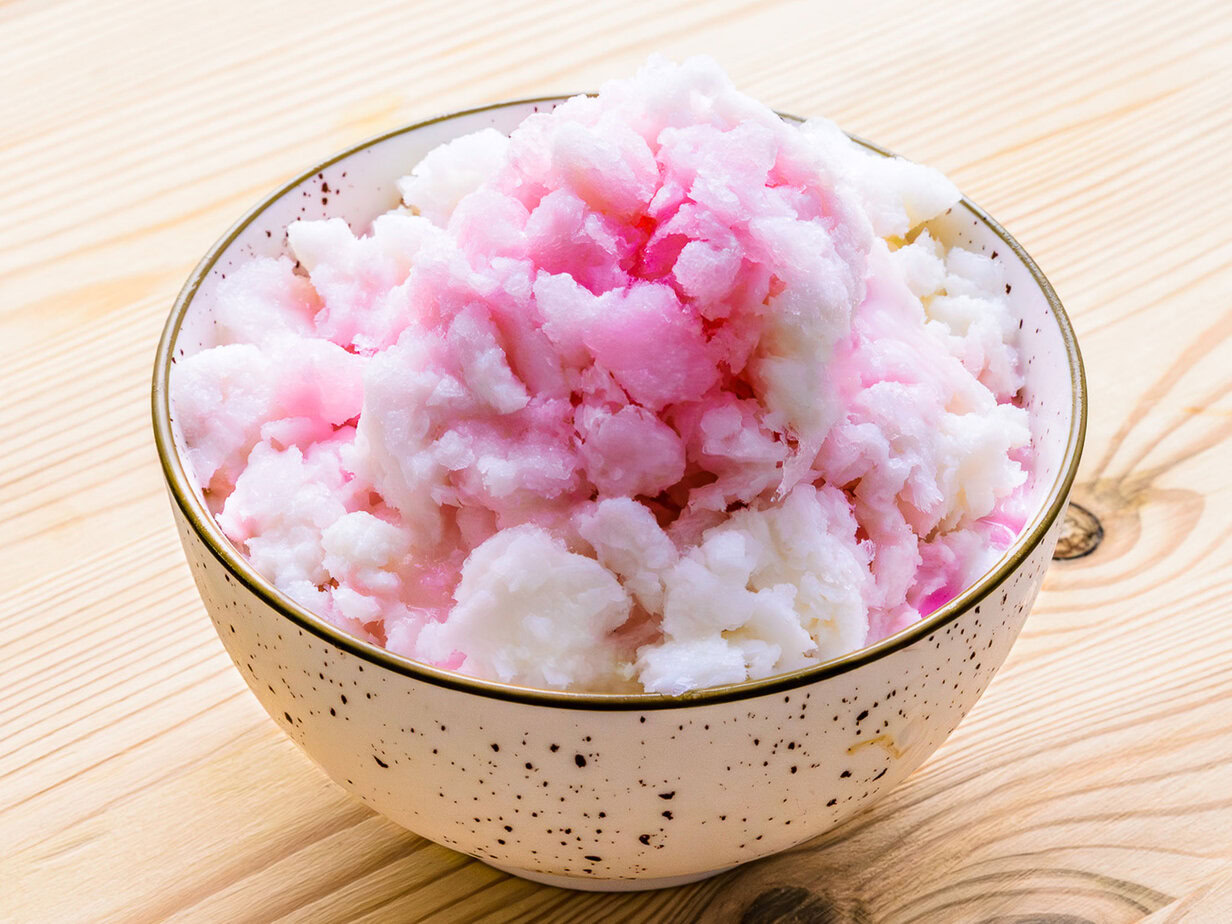
Above all, do not refrigerate it : the cold turns warabi mochi white and quickly hardens it. Serve it the same day, at room temperature, shortly after preparing it. For a complete Japanese afternoon snack, add some mitarashi dango or a dorayaki, and a kakigori when it is very hot.
Ingredients
- 100 g tapioca starch or 80 g warabiko for the traditional texture, see notes
- 128 g sugar
- 200 g water 240 g when using warabiko
- 32 g sugar syrup (mizuame)
- Sweetened kinako (roasted soybean flour), to taste
- Kuromitsu (black sugar syrup), to taste
Instructions
Preparation
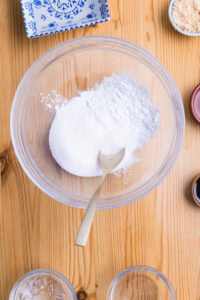
- Mix the starch and sugar.
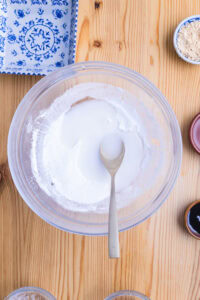
- Stir in the water a little at a time.
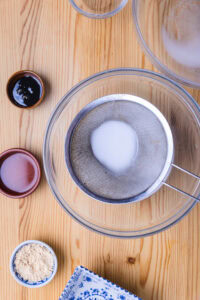
- Strain the mixture through a sieve.
- Pour into a saucepan and heat.
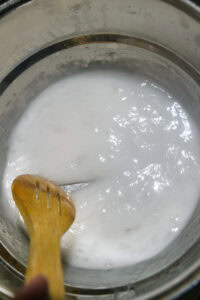
- Stir over low heat to prevent the mixture from sticking to the bottom.
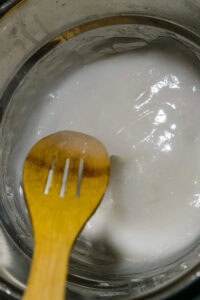
- When the mixture comes together into a mass, continue cooking for about 8 minutes, until the dough becomes translucent.
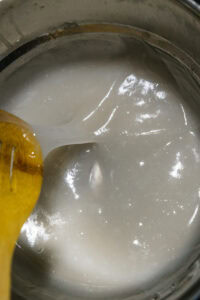
- Add the sugar syrup.
- Work the dough over low heat, stirring to develop koshi, the characteristic elasticity of warabi mochi.
- Once the dough is fully translucent, knead for about 2 more minutes.
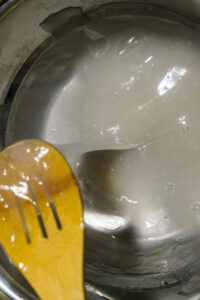
- Submerge the dough in a bowl of cold water to remove the residual heat.
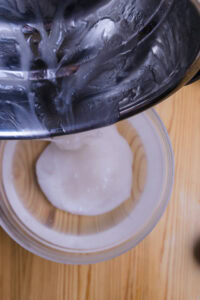
- Cut into rough squares.
- Arrange on a serving dish.
- Top with kinako and drizzle with kuromitsu, to taste.