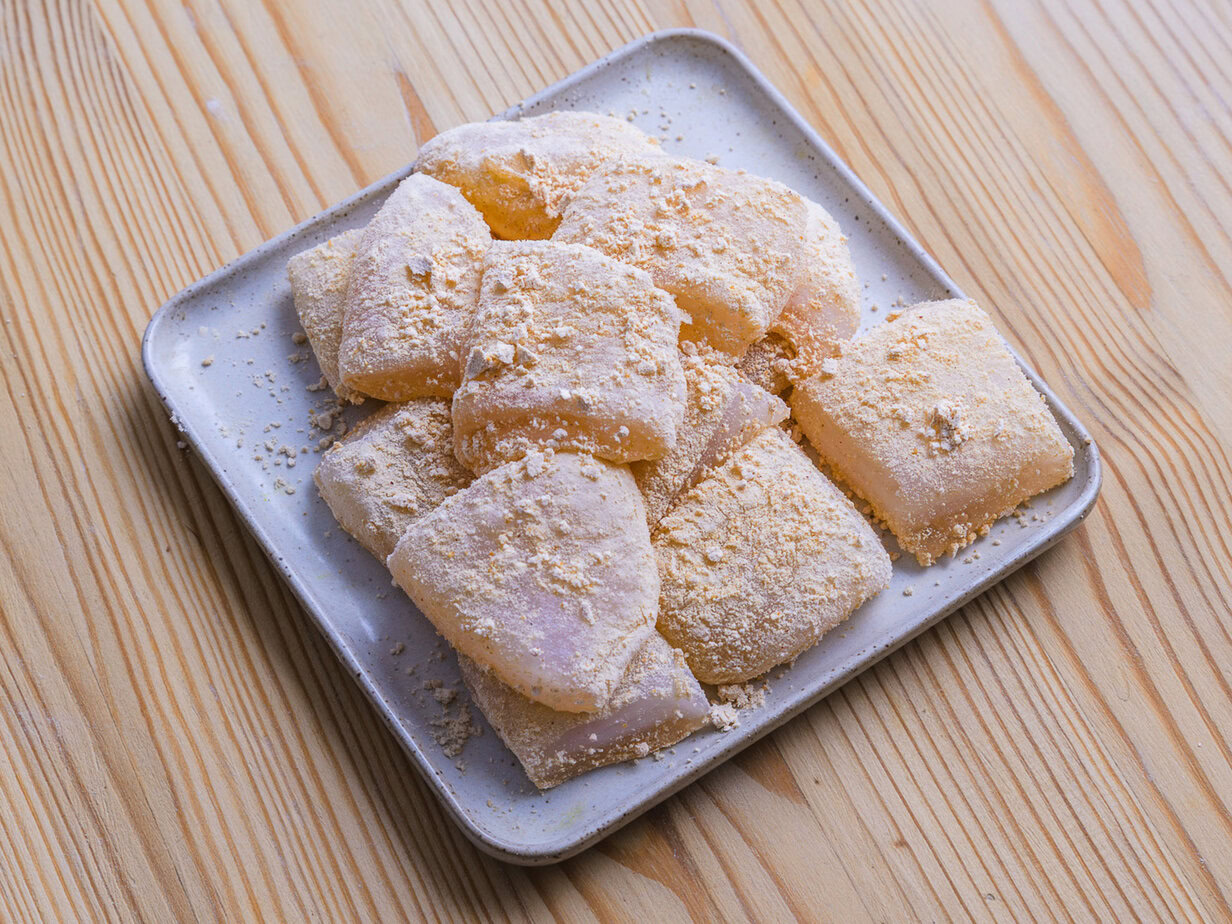
Servings: 4 servings
Ingredients
- 100 g tapioca starch or 80 g warabiko for the traditional texture, see notes
- 128 g sugar
- 200 g water 240 g when using warabiko
- 32 g sugar syrup (mizuame)
- Sweetened kinako (roasted soybean flour), to taste
- Kuromitsu (black sugar syrup), to taste
Procédé
Preparation
- Mix the starch and sugar.
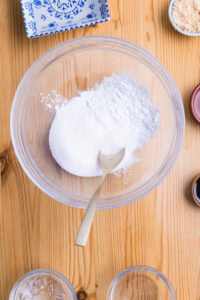
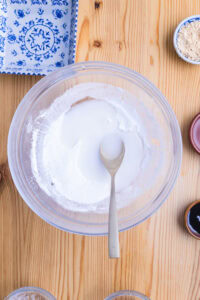
- Stir in the water a little at a time.
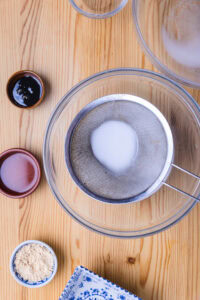
- Strain the mixture through a sieve.
- Pour into a saucepan and heat.
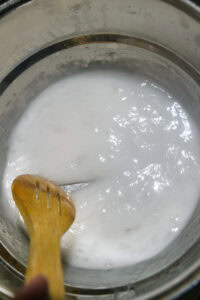
- Stir over low heat to prevent the mixture from sticking to the bottom.
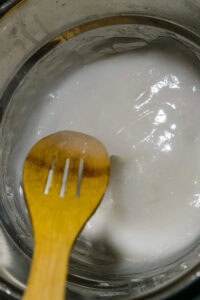
- When the mixture comes together into a mass, continue cooking for about 8 minutes, until the dough becomes translucent.
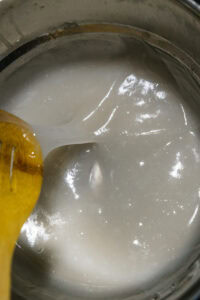
- Add the sugar syrup.
- Work the dough over low heat, stirring to develop koshi, the characteristic elasticity of warabi mochi.
- Once the dough is fully translucent, knead for about 2 more minutes.
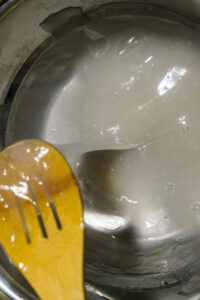
- Submerge the dough in a bowl of cold water to remove the residual heat.
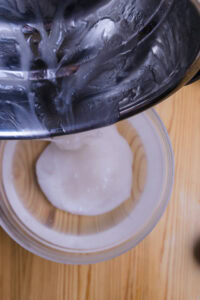
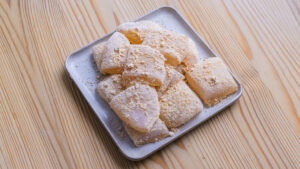
- Cut into rough squares.
- Arrange on a serving dish.
- Top with kinako and drizzle with kuromitsu, to taste.
Notes
Traditional warabi mochi is made with warabiko, bracken fern starch. This is what gives it its original texture : an elastic dough that jiggles and melts in your mouth. Hon-warabiko, pure bracken fern starch, produces darker, almost black mochi. If you can find it, use 80 g of warabiko with 240 g of water, keeping the same amounts of sugar and mizuame.
This recipe uses tapioca starch, which is much easier to find. The mochi is lighter in color, firmer and springier, and easier to cut. Do not reduce the amount of tapioca starch : with less starch, the dough stays soft and does not hold its shape.
Warabi mochi is best eaten freshly made : prepare it just before serving, as its texture deteriorates quickly. Serve it at room temperature; it does not take well to refrigeration.
Did you make this recipe?Tag @marcwiner on Instagram!