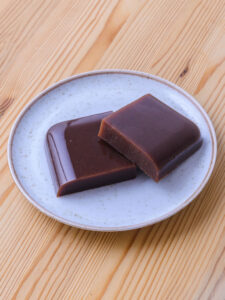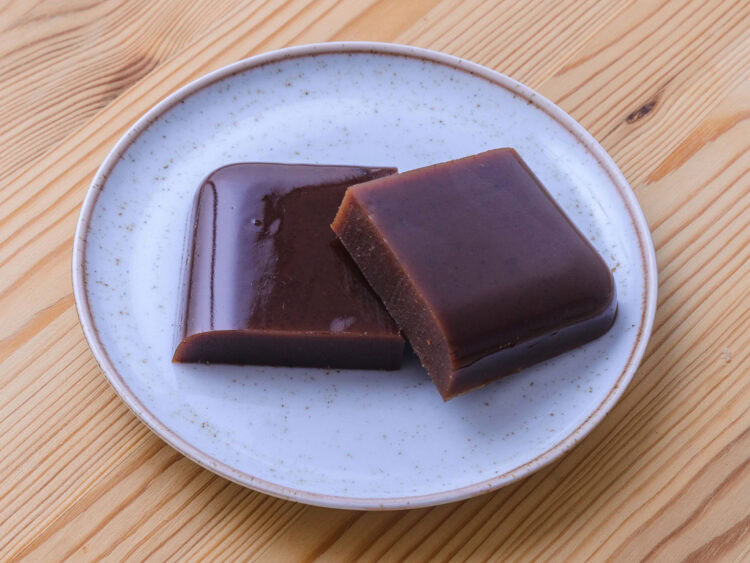
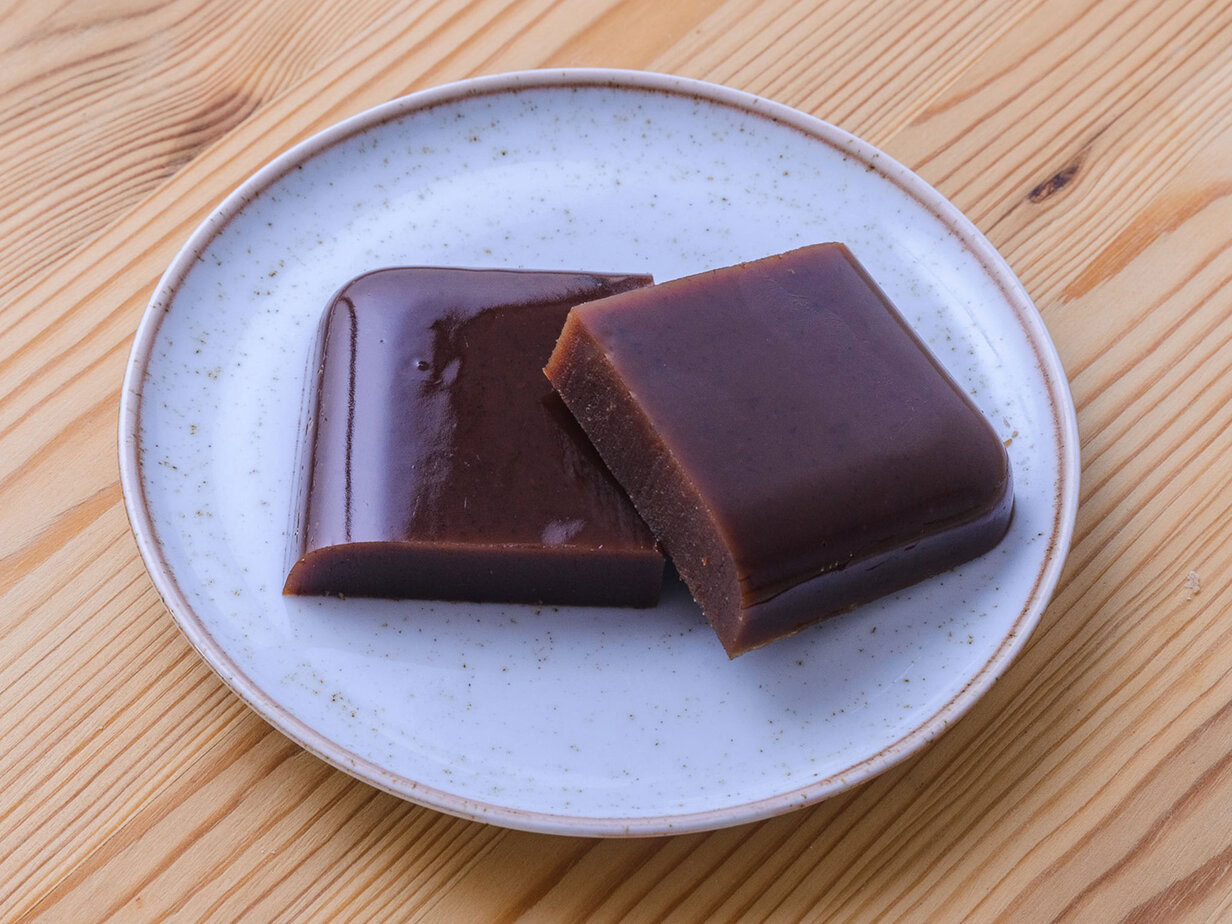
A light yōkan made with agar-agar and red bean paste, delicately sweetened and best served thoroughly chilled once fully set in the refrigerator.
The air is heavy, the appetite is lagging, and yet a slice of mizu yōkan straight from the refrigerator disappears in three bites. The block quivers on the spoon, breaks with a clean snap, then melts instantly on the tongue, leaving behind the rounded flavor of adzuki and the freshness of clear water.
There is almost nothing in it : red beans, kanten, water, a pinch of salt. It seems almost too restrained to leave an impression, until you reach for a second slice.
What is mizu yōkan ?
Mizu yōkan literally means “water yōkan.” It is a wagashi, one of the Japanese confections often served with green tea. The name says it all : it contains far more water than neri-yōkan, the dense, sweeter version designed to keep for a long time. A good mizu yōkan breaks cleanly, without elasticity, melts quickly in the mouth, and keeps an even color from top to bottom.
The word yōkan itself has distant origins. Its characters originally referred to a Chinese mutton soup that set as it cooled, brought to Japan by Zen monks. Vegetarian Buddhism did the rest : the meat gave way to adzuki beans, flour, and starch.

From mutton stew to adzuki jelly
In the kitchens of medieval temples, shōjin ryōri forbade animal flesh. Cooks therefore reworked the imported preparation into a plant-based version : adzuki for color and depth, flour and starch for structure. The result was no longer a soup, but a steamed sweet.
The Edo period changed everything. Kanten, perfected in the 17th century, made it possible to turn sweetened bean mixtures into clean-cut jellies that were easy to slice, instead of heavy blocks. By the early 19th century, the journal of Kaneko Tsurumura, from the Kaga domain, already mentioned mizu yōkan as a category in its own right : lighter, more watery, more delicate.
The paradox of seasonality remains. Department stores sell it as a July and August treat, tailor-made for ochūgen gifts, but in Fukui and Nikkō it belongs to winter: before refrigeration, only cold rooms and the brisk mountain air could protect a sweet this hydrated. Even the vocabulary changes from region to region.
In Fukui and parts of Kansai, “decchi-yōkan” refers to a particularly watery mizu yōkan, whereas in Shiga the same word refers to a steamed confection made with flour and beans, wrapped in bamboo leaves.
The main ingredients in mizu yōkan
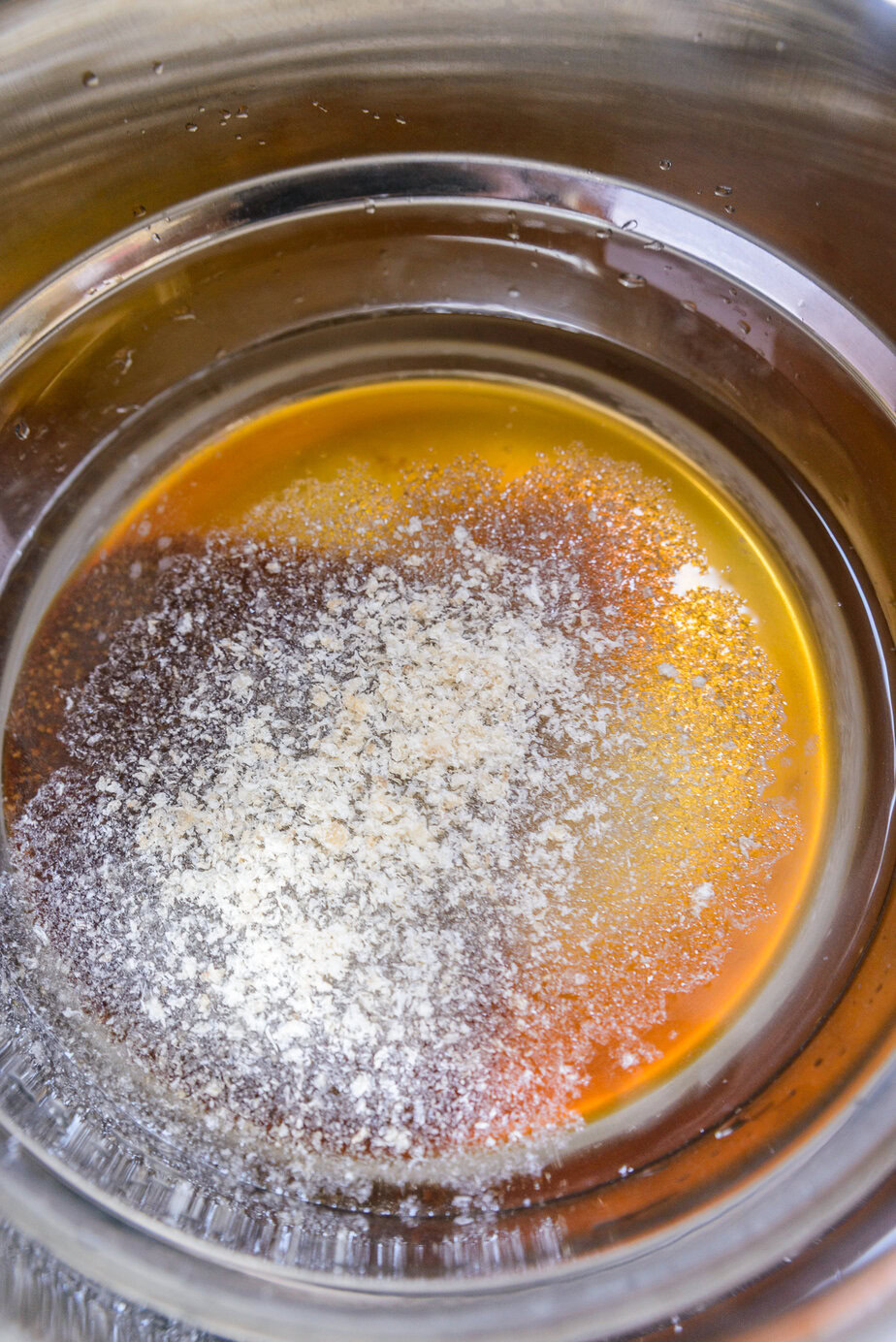
Koshian gives mizu yōkan its structure, muted reddish-brown hue, and bean flavor. The skins are removed and the paste is strained, which is why the gel is silky rather than grainy. Water, meanwhile, is the ingredient that gives the dessert its name : it makes it light and refreshing, but also highly perishable and far trickier to get right.
Kanten is the gelling agent, derived from tengusa and other red algae. It activates at a boil and sets between 30 and 40 °C, producing a firm, brittle gel that remains stable at room temperature.
Gelatin does not do the same job: because it is animal-based, it melts at body temperature and adds elasticity rather than that clean snap. Some products sold as agar-agar, when formulated differently from pure kanten, also produce a softer, wobblier texture.
Sugar is generally white, but Fukui versions often use kokutō, which is darker and carries notes of molasses. A pinch of salt sharpens the sweetness, brings out the earthy side of adzuki, and avoids a flat finish. Even the water matters : soft, low-mineral water, like that found in the mountains of Nikkō, gives a more delicate set.
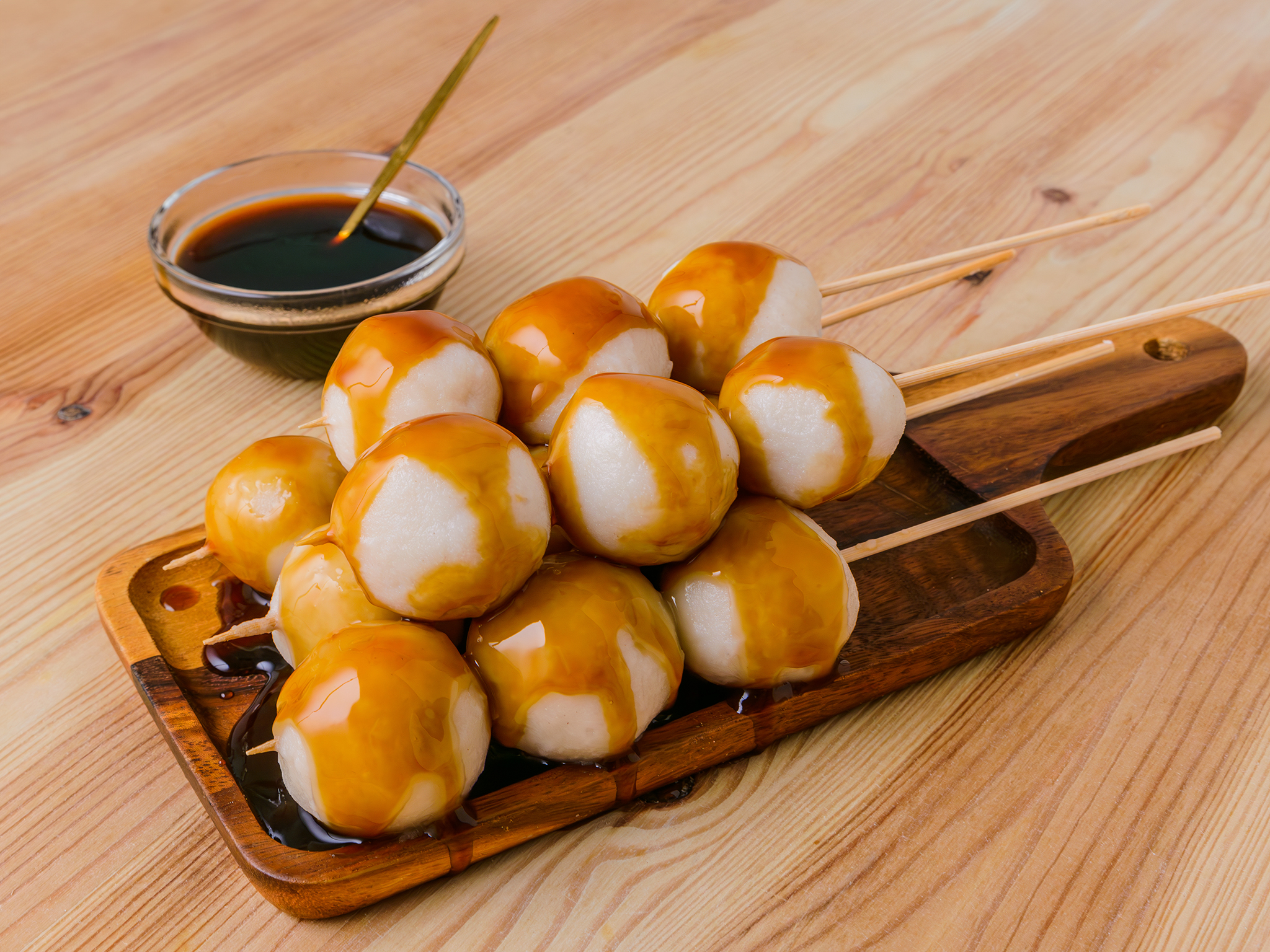
Signs of authenticity and pitfalls to avoid
Everything shows in the slice: smooth and uniform, with no pale layer on the surface and no dense band at the bottom. A two-layer block signals bunri, the separation that occurs when the bean paste sinks before the gel sets.
The fix comes down to one step: let the mixture cool while stirring until it thickens at around 40 °C, so the paste stays evenly distributed. And because the dessert is highly hydrated, it should be kept in the refrigerator and eaten within three to five days.
Ingredients
- 450 g water
- 2 g agar-agar powder
- 15 g brown sugar preferably kokutō
- 250 g koshian (smooth red bean paste)
- 0.5 g salt
Instructions
Cooking the jelly base
- Combine the water, agar-agar, and brown sugar in a saucepan.450 g water, 2 g agar-agar powder, 15 g brown sugar
- Heat, stirring, until fully dissolved.
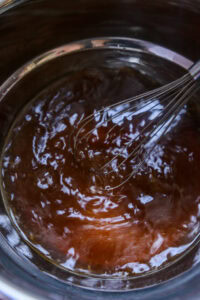
- Bring to a boil and boil for at least 1 minute (this step is essential for the jelly to set).
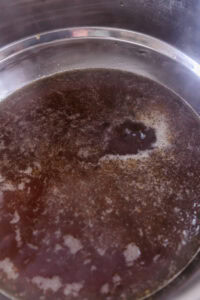
- Add the salt.0.5 g salt
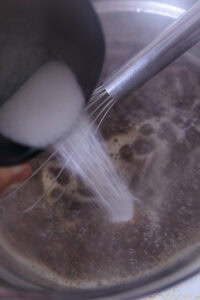
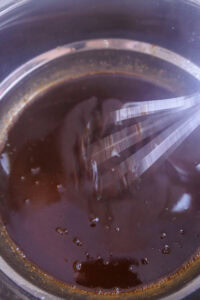
- Press the koshian through a sieve, then stir it into the mixture until smooth, as you would with miso.250 g koshian (smooth red bean paste)
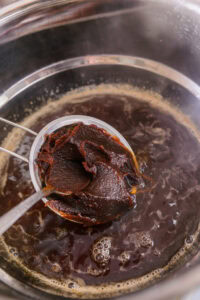
- Cook, stirring, for about 15 minutes, until slightly thickened.
Cooling, setting, and serving
- Let cool for about 20 minutes, stirring to release the residual heat (this prevents the mixture from separating into two layers).
- Pour into a rectangular dish.
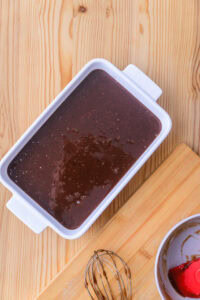
- Refrigerate until completely set.
- Cut into portions and serve well chilled.