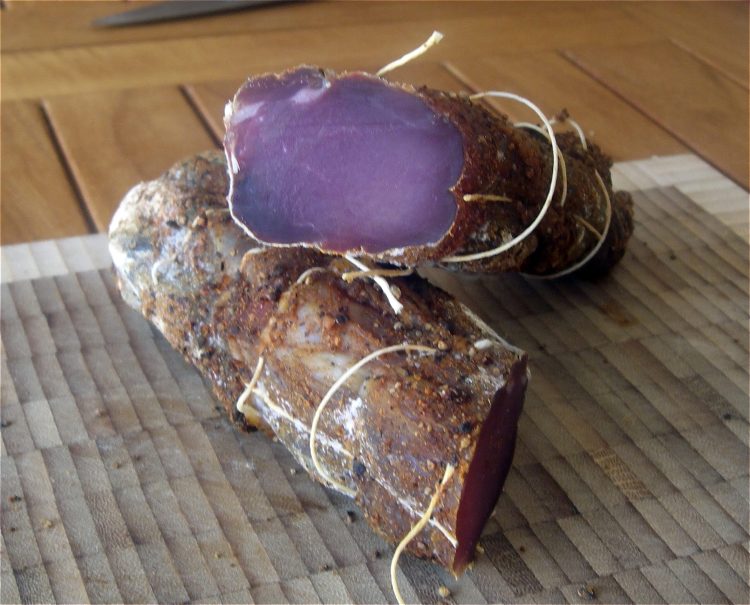
Homemade lomo made from pork tenderloin, salt-cured, seasoned with paprika and air-dried
A few thin slices of lomo on a board, a glass of wine, and the aperitif hour has begun. This Spanish cured meat is lean and tender, with a bold paprika flavor that lingers on the palate. The homemade version takes very little: a good pork tenderloin, salt, spices and a cool place to let it dry. The hardest part is waiting for it to finish drying before you cut the first slice.
What Is Lomo?
Lomo is a dry-cured meat and a specialty of Spanish charcuterie, especially popular in Andalusia. It’s a whole pork muscle that is salted, seasoned and then dried, and it’s sliced thin like salami.
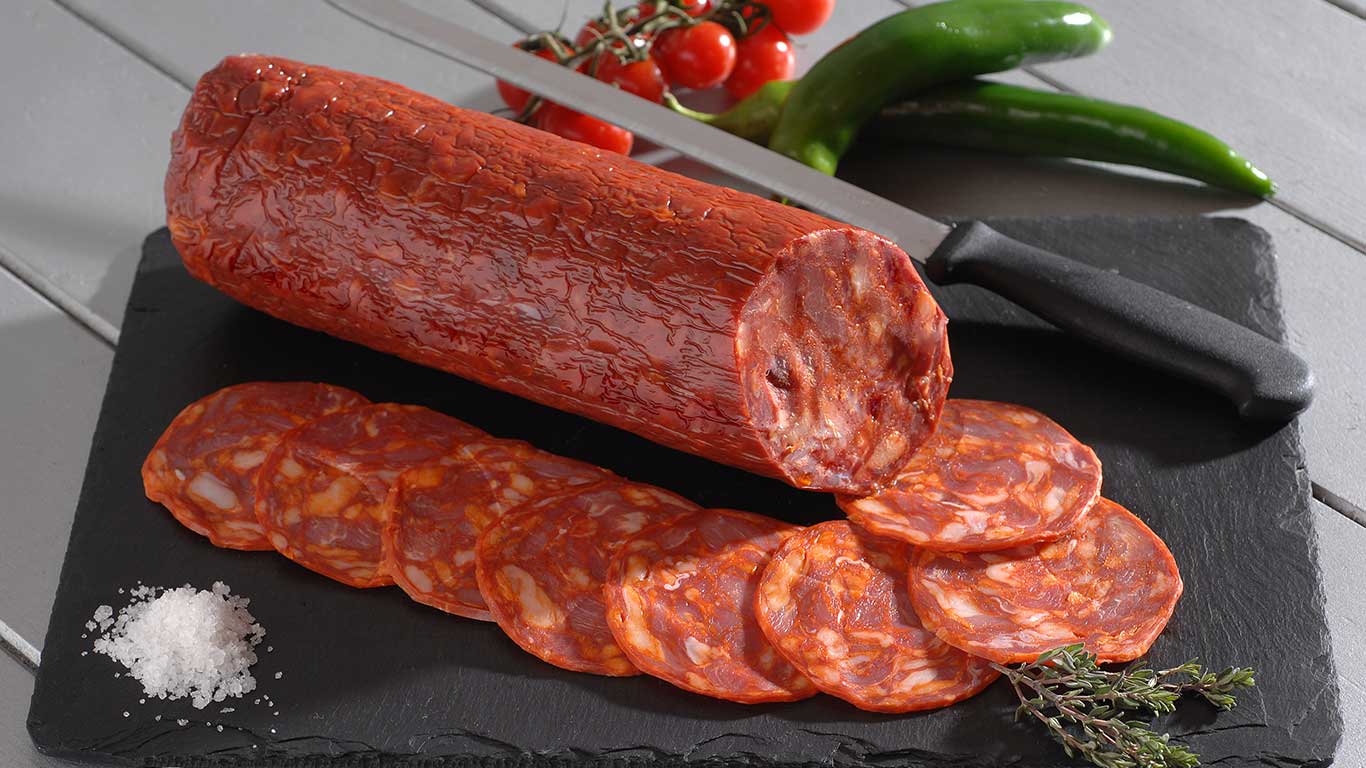
Salt and spices, especially paprika, give it its characteristic flavor and reddish color. This recipe also adds Espelette pepper.
The Loin, a Prime Cut of Spanish Pork
Traditionally, lomo is made from pork loin, known in Spanish as “lomo” and one of the finest and leanest cuts of the pig. In Spain it’s called lomo embuchado, because the loin is stuffed into a casing before drying.
This homemade version swaps the loin for the tenderloin, which is smaller and naturally tender. It’s simply tied with string, then dries in a few weeks.
The Main Ingredients for Lomo
It all comes down to the meat: choose a good-quality pork tenderloin, ideally locally and humanely raised.
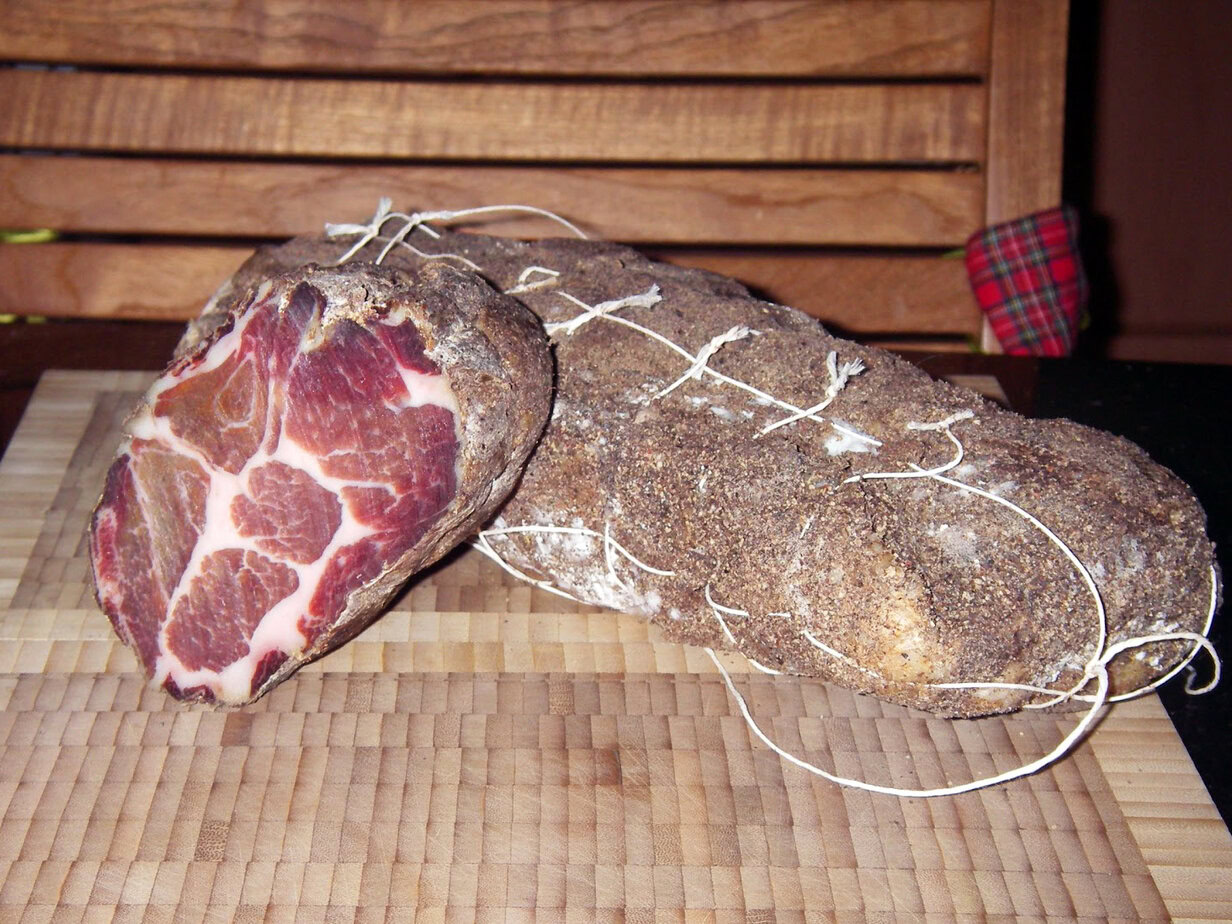
The tenderloin is rubbed with salt, a little sugar and mild chorizo seasoning, then rolled in sweet paprika and cracked pepper before drying. If you find the lomo too salty, cut the salt down to 25-30 g per kilo of meat.
Technical Tips for Successful Lomo
While the meat cures in the salt, turn it over from time to time so the salt and spices are evenly distributed.
Then hang the lomo in a cool, well-ventilated place with a steady temperature. Avoid spots that are too humid, which encourage unwanted mold.
Keep your work surface and utensils clean throughout the preparation, and wash your hands often to prevent any contamination.
Ingredients
- 1 kg pork tenderloin
- 50 g fine Guérande salt
- 3 g sugar
- 1 tablespoon mild chorizo seasoning paprika, granulated garlic, Espelette pepper, smoked chili pepper, coriander, white pepper
- Sweet paprika
- Cracked black pepper
Instructions
- Mix the salt, sugar and chorizo seasoning
- Place this mixture and the pork tenderloin in a bag
- Hold the bag closed with your hand and turn it every which way to spread the spice and salt mixture over the entire surface of the tenderloin
- Vacuum-seal the bag and refrigerate it for 3 days, turning it over from time to time (if you don’t have a vacuum sealer, press as much air as possible out of the bag)
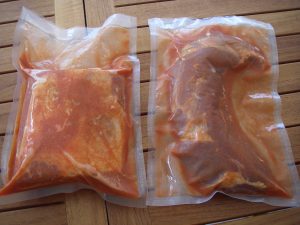
- After 3 days, rinse the tenderloin under running water
- Pat the tenderloin dry with paper towels
- Tie the tenderloin with kitchen string
- Roll the tenderloin in the mixture of sweet paprika and cracked pepper
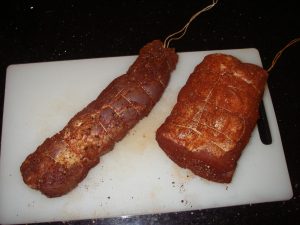
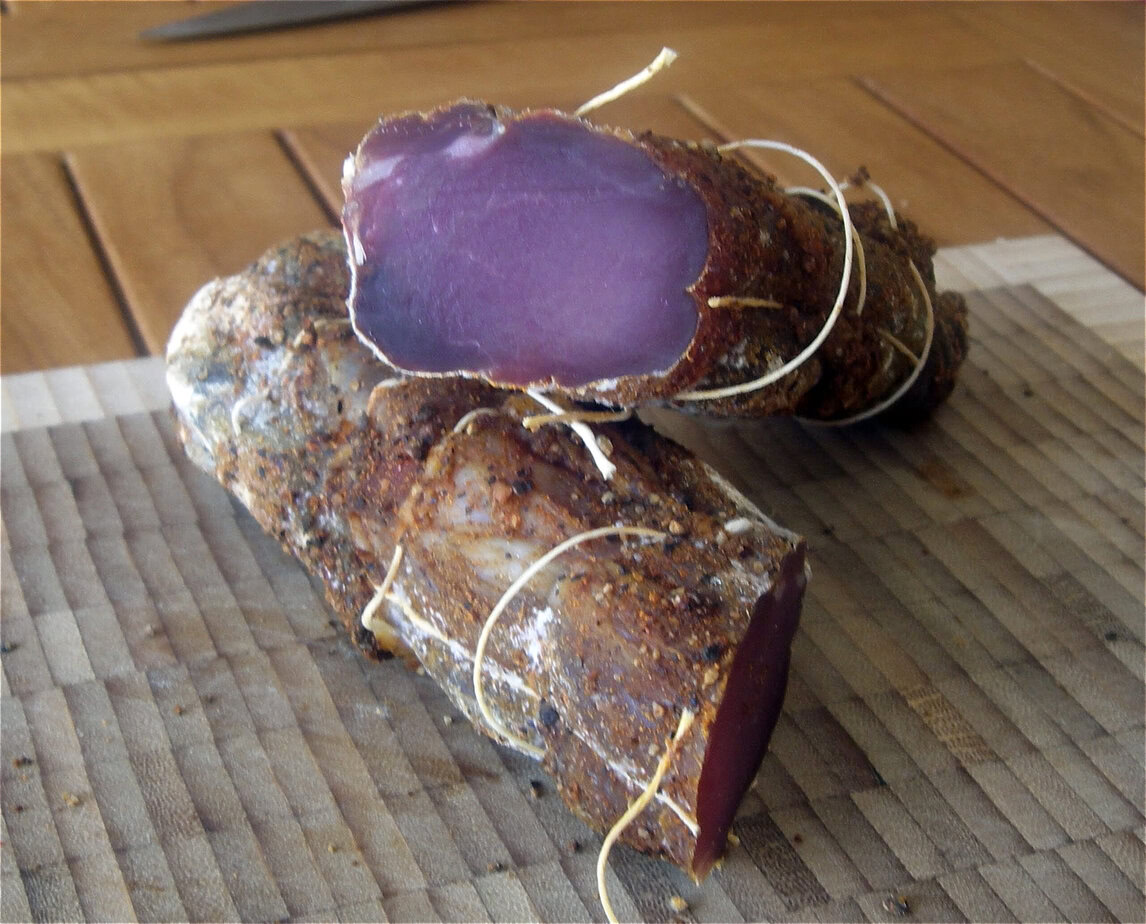
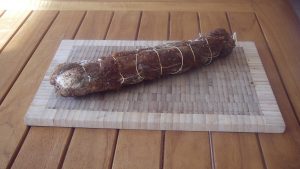
- Hang the tenderloin for 3 weeks in a cool, well-ventilated place
- A fine white bloom, dry and not sticky, appears, a sign that the drying conditions are ideal
Notes
- For a less salty flavor, reduce the salt to 25-30 g per kilo of meat
- Make sure the drying area is well ventilated to avoid dampness
- The white bloom is a sign of good fermentation and does not affect the taste of the lomo