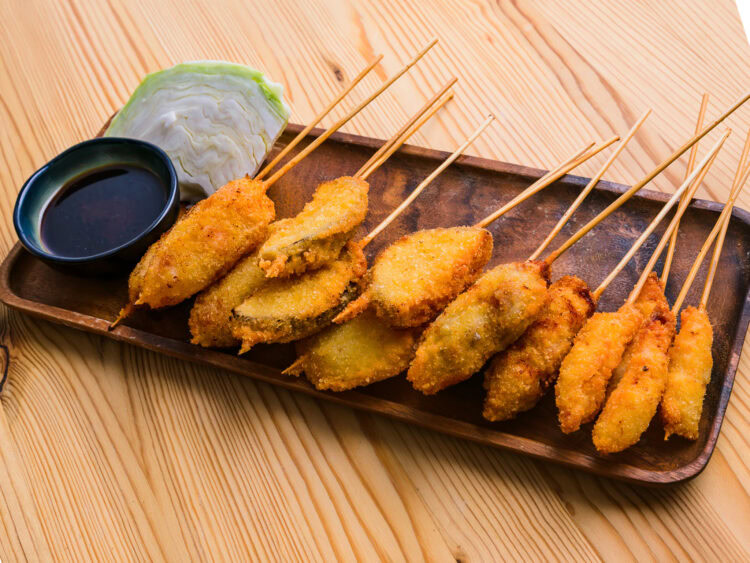
Small skewers of meat, shrimp and vegetables, coated in fine panko, deep-fried and then dipped just once into a thin, dark sauce.
A counter, an ice-cold drink, and golden skewers arriving in small batches, still piping hot.
The coating crunches as you bite into it, the beef or shrimp stays juicy inside, and the dark, tangy, slightly sweet sauce seeps into every ridge of the crust. Between bites, a piece of raw cabbage refreshes your mouth. You promise yourself the next one will be the last, then reach for another.
What is kushikatsu ?
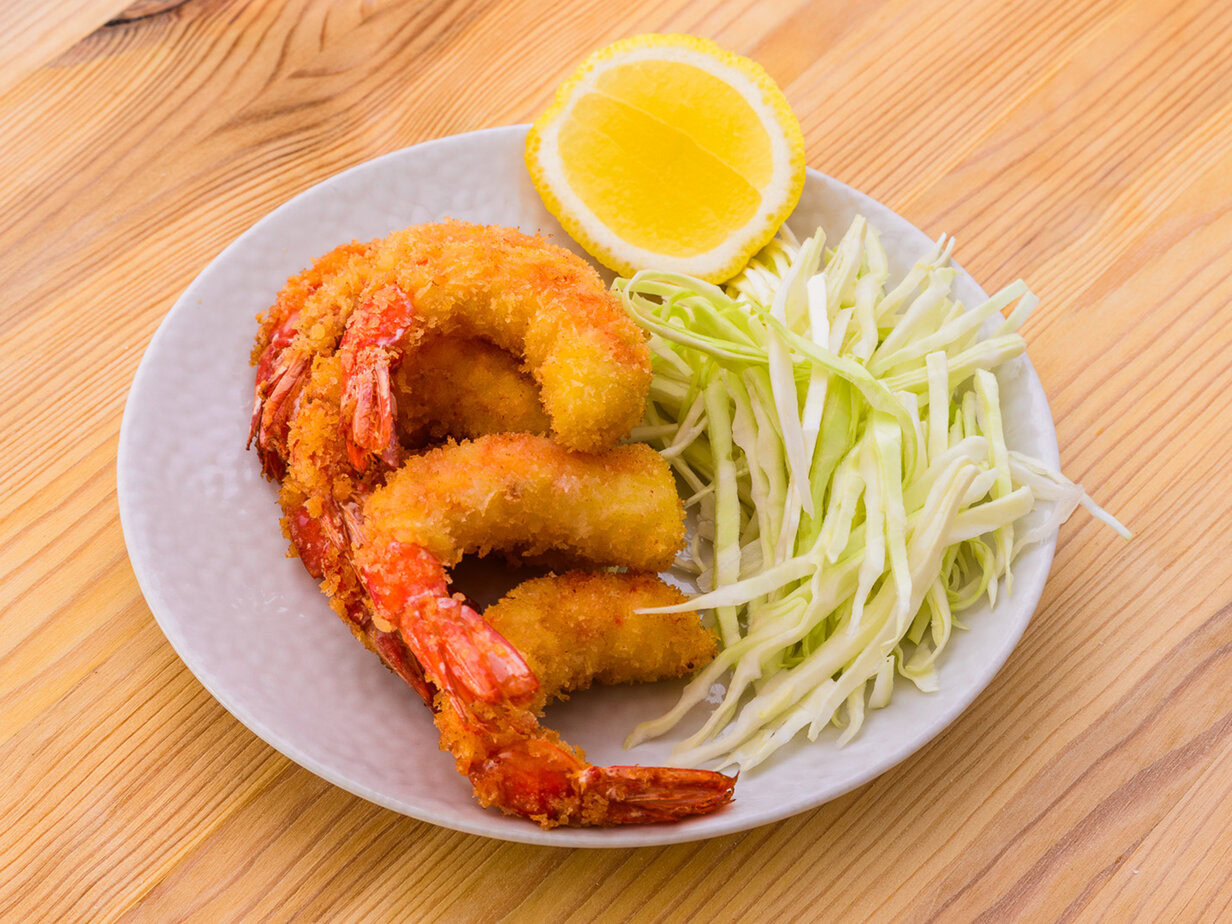
Kushikatsu is an Osaka specialty : small bites threaded onto skewers, dipped in batter, rolled in very finely sifted panko, then quickly deep-fried.
Each skewer holds just one ingredient, ensuring even cooking. They are dipped into a thin Worcestershire-based sauce, lighter than the thick tonkatsu sauce served with breaded pork cutlets. At the table, there is one rule : dip once, never twice.
The name describes the dish : kushi means “skewer” and katsu comes from the English word cutlet, itself derived from the French “côtelette”.
In Tokyo, it is more commonly called kushiage : several ingredients alternate on the same skewer, the breadcrumbs are coarser and the sauce is thicker.
Born in the working-class district of Shinsekai
Kushikatsu emerged in the late 1920s in Shinsekai, an Osaka district populated by laborers and foundry workers.
In 1929, Yoshie Hyakuno opened Kushikatsu Daruma, serving inexpensive, filling breaded skewers that could be eaten standing up, with one hand. A street vendor, Yoshinobu Matsushita, however, claimed to have been selling a similar dish as early as 1926 under the name “Nikatsu”.
One skewer, one ingredient : the rule was as practical as it was culinary. The pieces cooked evenly, and the vendor tallied the bill by counting the empty skewers left on the counter.
Kushikatsu went on to become part of Osaka’s popular comfort food scene, known as B-kyū gurume, alongside takoyaki and okonomiyaki.
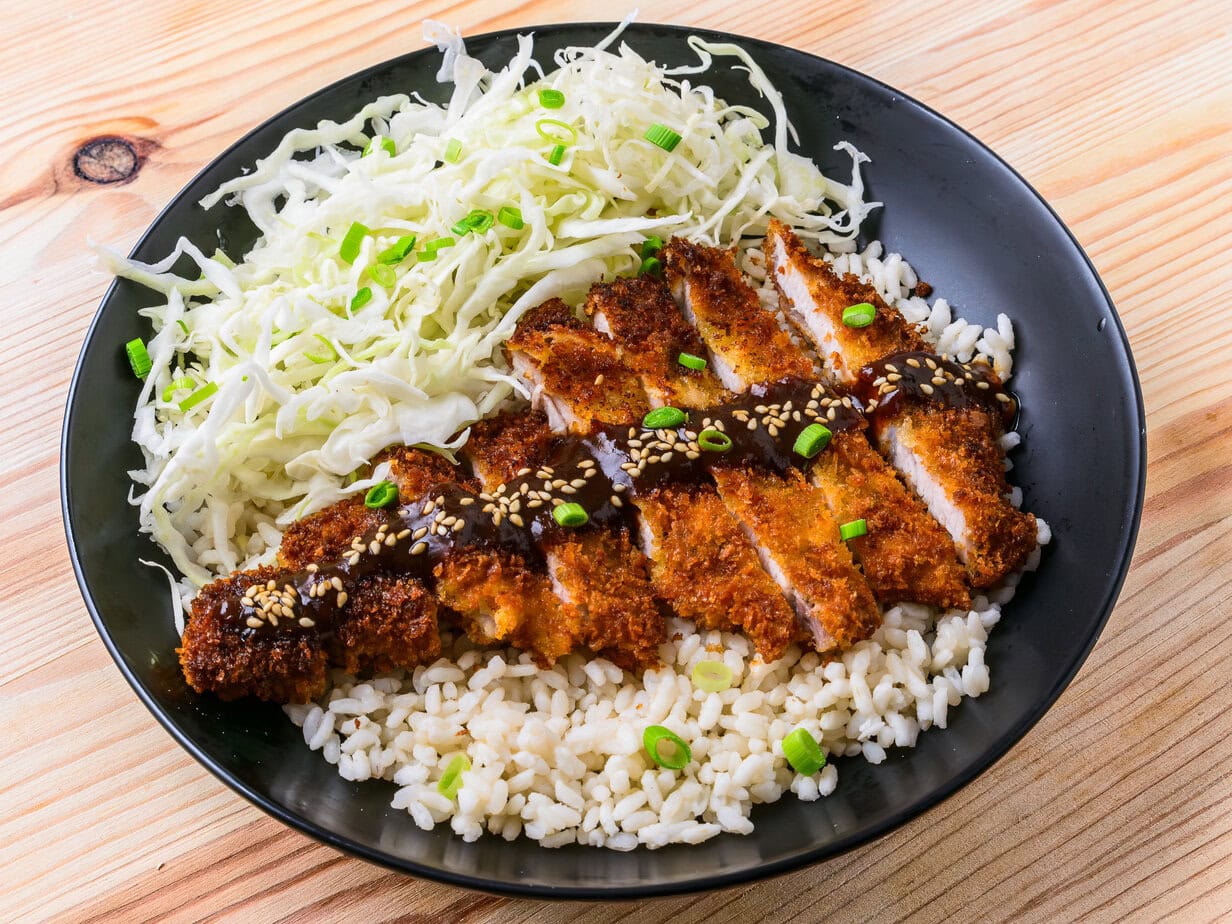
At the counter, the sauce sits in a shared stainless steel container, hence the ban on dipping a skewer again once you have taken a bite, known as nido-zuke kinshi.
Raw cabbage, served in unlimited quantities, refreshes the palate and doubles as a spoon for scooping up more sauce. Since Covid-19, many establishments have replaced the shared container with individual bottles.
The main ingredients in kushikatsu
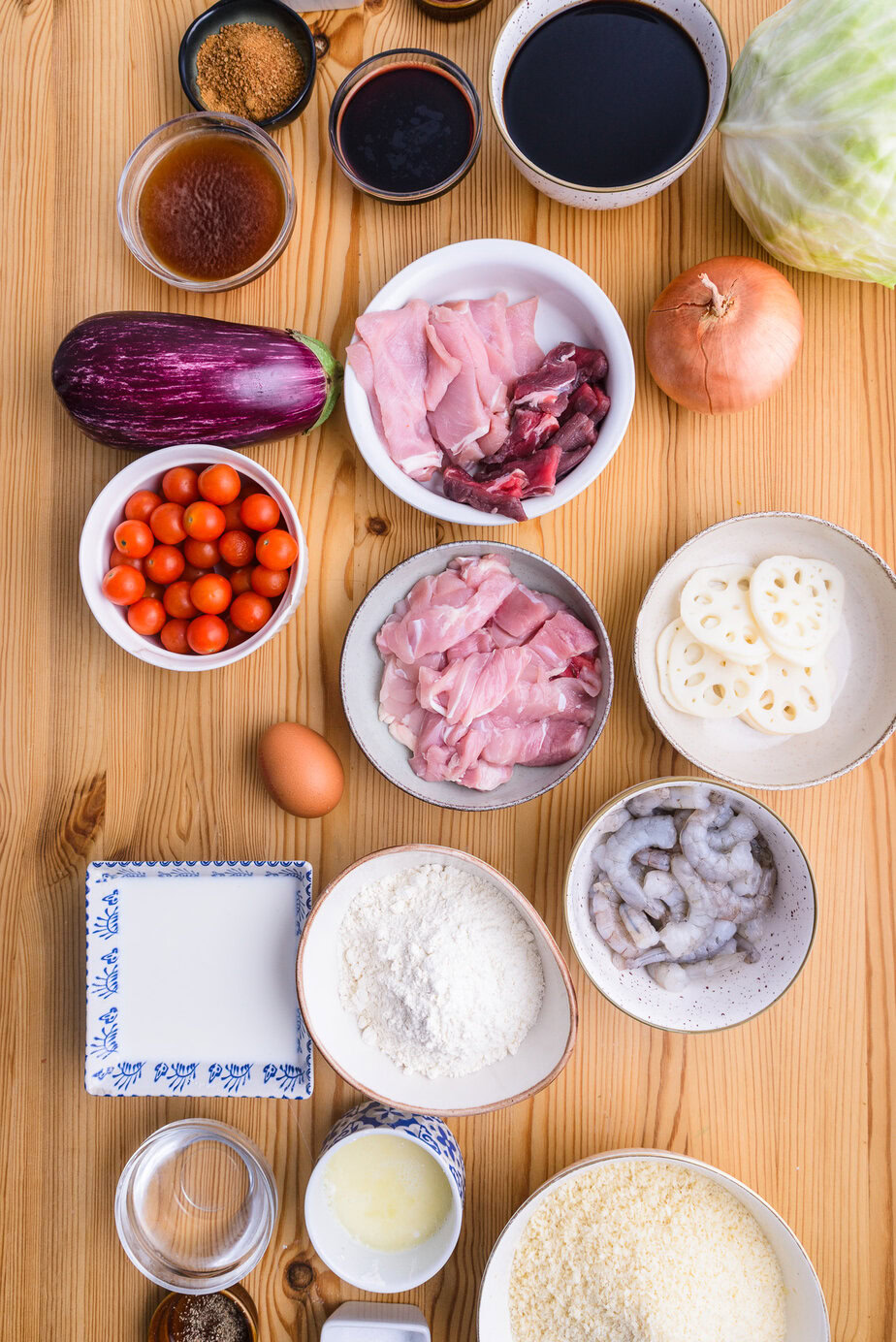
You can choose whatever ingredients you like for the skewers : cubed beef and chicken thigh, thin slices of pork wrapped around the skewer, shrimp, cherry tomatoes, asparagus, eggplant, onion, hard-boiled quail eggs or cheese-stuffed chikuwa. Cut everything into small pieces. A compact skewer fries quickly and keeps its coating crisp.
The batter combines flour, egg, milk and water, with a little grated Japanese yam, or yamaimo, which makes it light and sticky.
The panko is sifted before coating : the finer crumbs form a thin, even crust. Traditional kushikatsu counters fry in beef tallow, known as heddo, but a neutral frying oil works very well at home.
The sauce starts with red wine heated to cook off the alcohol, thinned with bonito dashi, sweetened with honey and zarame sugar, then finished with Worcestershire sauce, a little tonkatsu sauce and ketchup. It stays thin and is served well chilled, with raw green cabbage cut into large pieces.
Technical tips for great kushikatsu
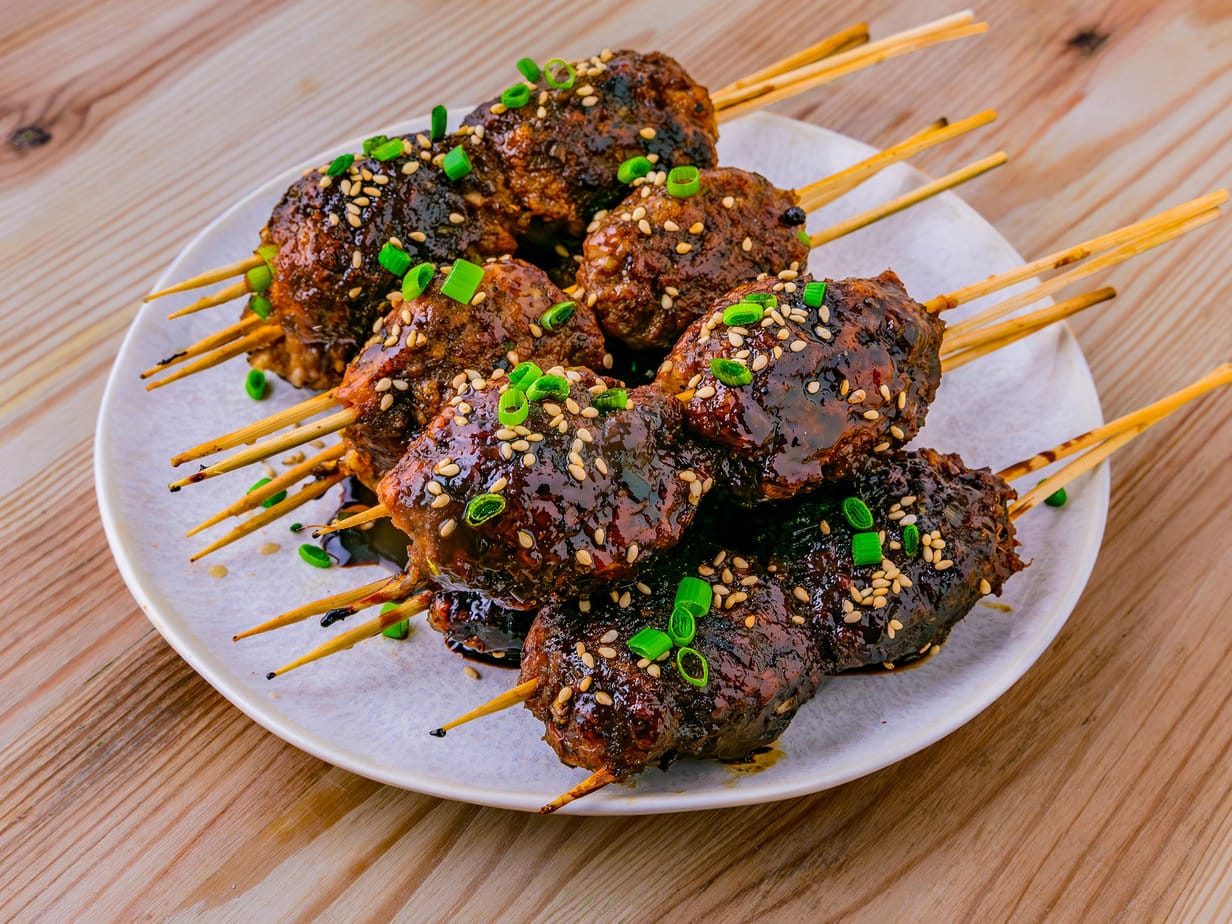
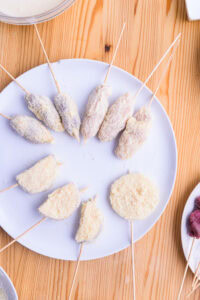
Use skewers shorter than 15 cm and bite-sized pieces weighing around 20 g. Bread about ten skewers at a time, just before lowering them into oil at 170 °C. Allow about one minute for vegetables and two for meat.
Sifted panko burns quickly. Remove the crumbs after each batch with a tea strainer, otherwise they will blacken and give the next skewers a bitter taste. Drain on a wire rack and serve immediately, with the chilled sauce and cabbage.
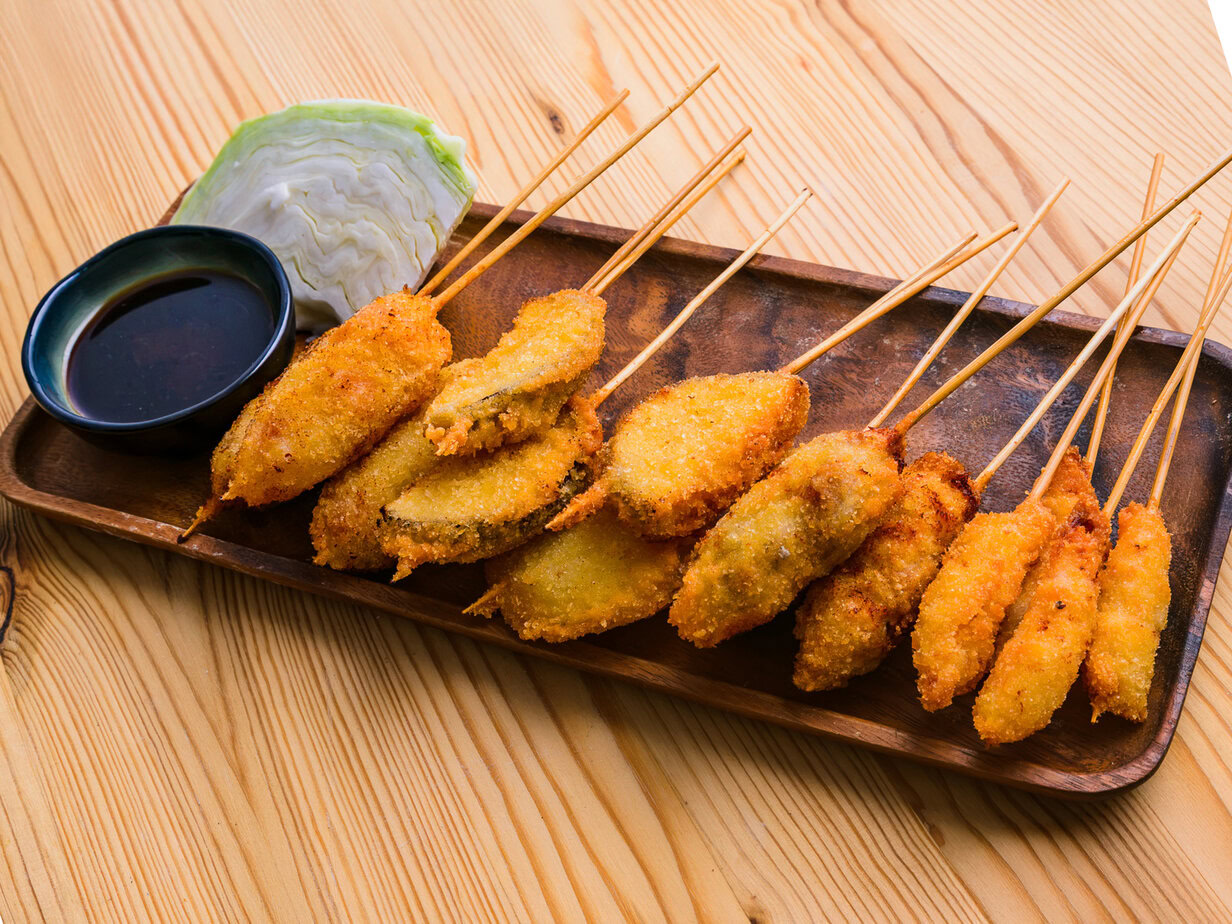
Ingredients
Sauce (interdiction de tremper deux fois)
- 80 ml red wine
- 300 ml Worcestershire sauce
- 1 teaspoon ketchup
- 1 tablespoon tonkatsu sauce
- 1 tablespoon honey
- 2 tablespoons zarame sugar or brown sugar if unavailable
- 80 ml bonito dashi
Pâte à frire
- 200 g all-purpose flour
- 1 egg
- 100 ml milk whole
- 100 ml water
- 50 g Japanese yam (yamaimo), grated
Garnitures au choix
- Cherry tomatoes, asparagus, eggplant, onion as desired
- Beef (round or chuck), thinly sliced pork (komagire), chicken thigh, shrimp as desired
- Hard-boiled quail eggs, cheese-stuffed chikuwa as desired
Panko
- 200 g panko
Autres ingrédients
- Frying oil as needed
- Green cabbage as desired
- Salt and pepper
Instructions
- Pour the panko into a sieve.200 g panko
- Rub it through the mesh to make it finer.
- Heat the red wine to evaporate the alcohol.80 ml red wine
- Add the bonito dashi.80 ml bonito dashi
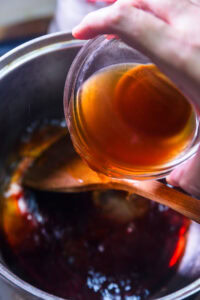
- Dissolve the honey and zarame sugar in it.1 tablespoon honey, 2 tablespoons zarame sugar
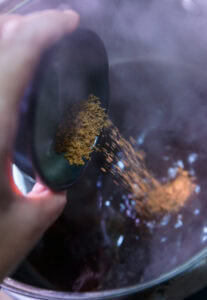
- Add the remaining sauce ingredients.300 ml Worcestershire sauce, 1 teaspoon ketchup, 1 tablespoon tonkatsu sauce
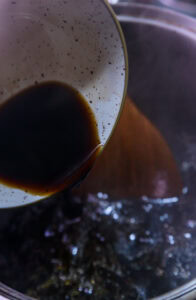
- Bring to a gentle boil.
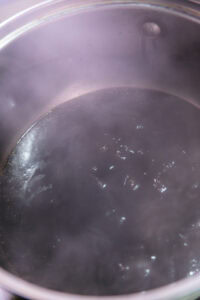
- Let cool completely.
- Beat the egg.1 egg
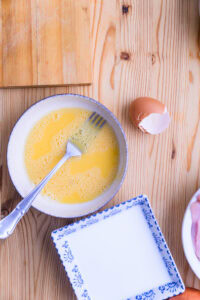
- Add the milk and water.100 ml milk, 100 ml water
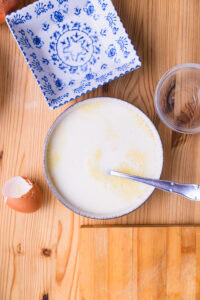
- Pour the mixture over the flour and stir until no lumps remain.200 g all-purpose flour
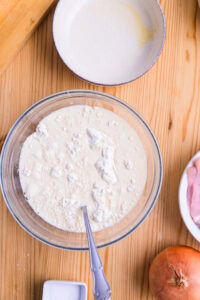
- Stir in the grated yam.50 g Japanese yam
- Choose wooden skewers less than 15 cm long.
- Cut the beef and chicken thigh into 2 cm cubes.Beef (round or chuck), thinly sliced pork (komagire), chicken thigh, shrimp
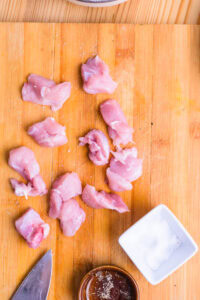
- Thread 3 cubes onto each skewer, totaling just under 20 g per skewer.
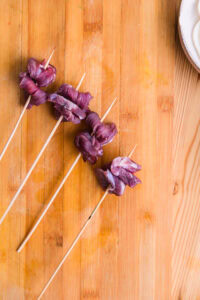
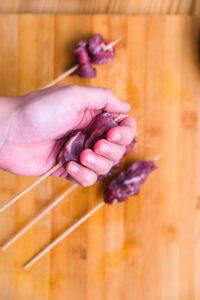
- Squeeze the skewered meat in your hand to shape it.
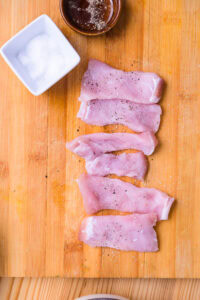
- Carefully lay out the thin slices of pork.
- Season them lightly with salt and pepper.Salt and pepper
- Wrap them around the skewer.
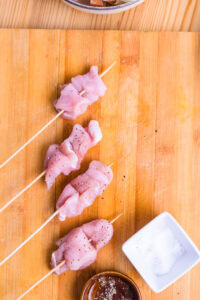
- Squeeze the skewered meat in your hand to shape it.
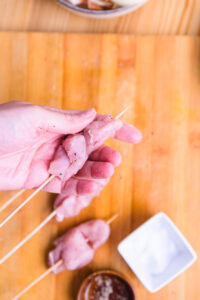
- Remove the stems from the cherry tomatoes.Cherry tomatoes, asparagus, eggplant, onion
- Thread them onto the skewers.
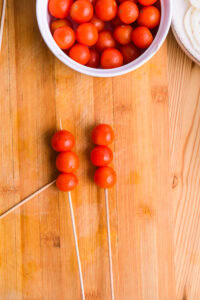
- Then pierce them in several places with a fine point to prevent them from bursting during frying.
- Shell the shrimp and remove the legs.
- Remove the dark vein.
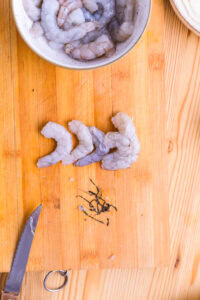
- Trim the tip of the tail.
- Straighten the shrimp and thread it onto the skewer, starting at the tail.
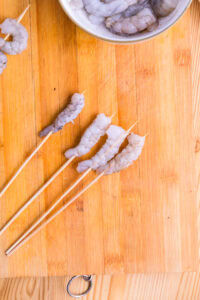
- Cut each chikuwa into 5 sections.Hard-boiled quail eggs, cheese-stuffed chikuwa
- Fill the inside with cheese.
- Thread 2 sections onto each skewer.
- Cut the cabbage into large pieces.Green cabbage
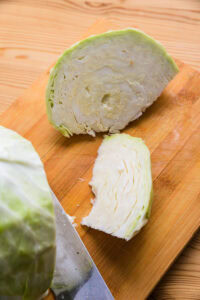
- Rinse it with water.
- Dip each skewer into the batter.
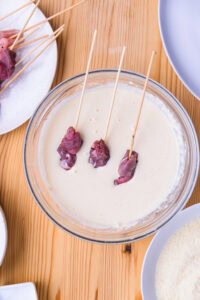
- Remove the excess batter.
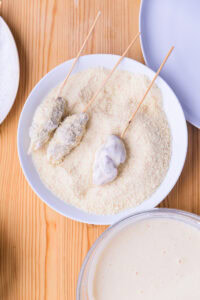
- Bury the skewer in the panko.
- Bread about ten skewers before moving on to frying.
- Heat the oil to 170 °C.Frying oil
- Fry the vegetable skewers for about 1 minute.
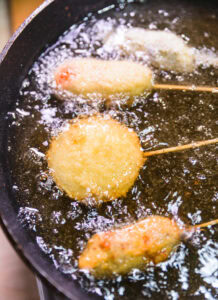
- Fry the meat skewers for about 2 minutes.
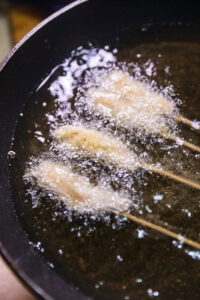
- Drain the skewers as soon as they are nice and crispy.
- Place them on a wire rack.
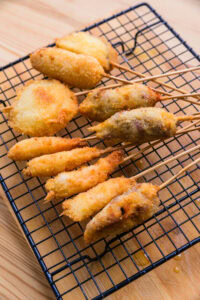
- Arrange them on a platter once the oil has drained off.
- After each batch, use a tea strainer to scoop out the panko that has fallen into the oil, as it is too fine for a standard skimmer.
- Dip each skewer generously into the sauce just before eating.
- Dip the cabbage into the sauce as well.