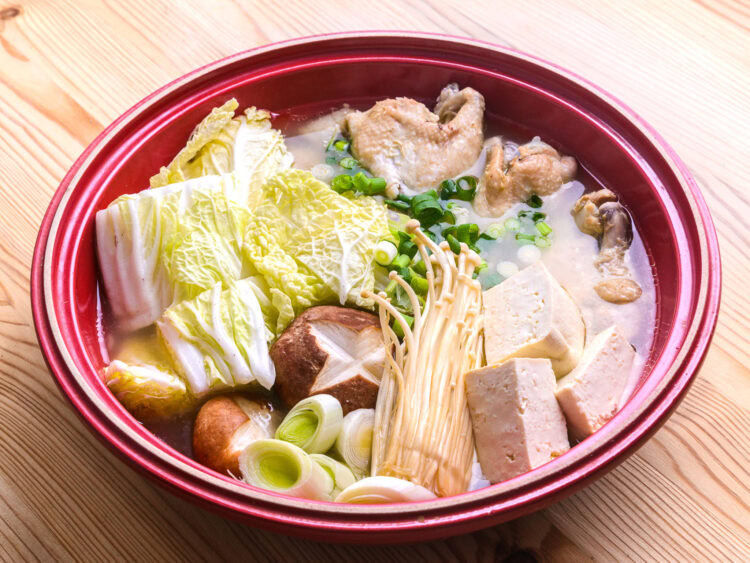
Hakata-style chicken hot pot: a crystal-clear water broth, vegetables finished at the table, and vibrant daidai ponzu for dipping.
It’s cold outside and the pot arrives in the center of the table, steam already rising. First, a small cup of plain broth, barely salted — pure, concentrated chicken with nothing to hide behind.
Then comes everything else: meltingly tender chicken, still-crisp cabbage, tofu soaked in silky, collagen-rich broth, and that daidai ponzu cutting through the richness in every bite.
At the start, there was only water and chicken. It’s the simplest hot pot in Japan — and one of the hardest to forget.
What is mizutaki?
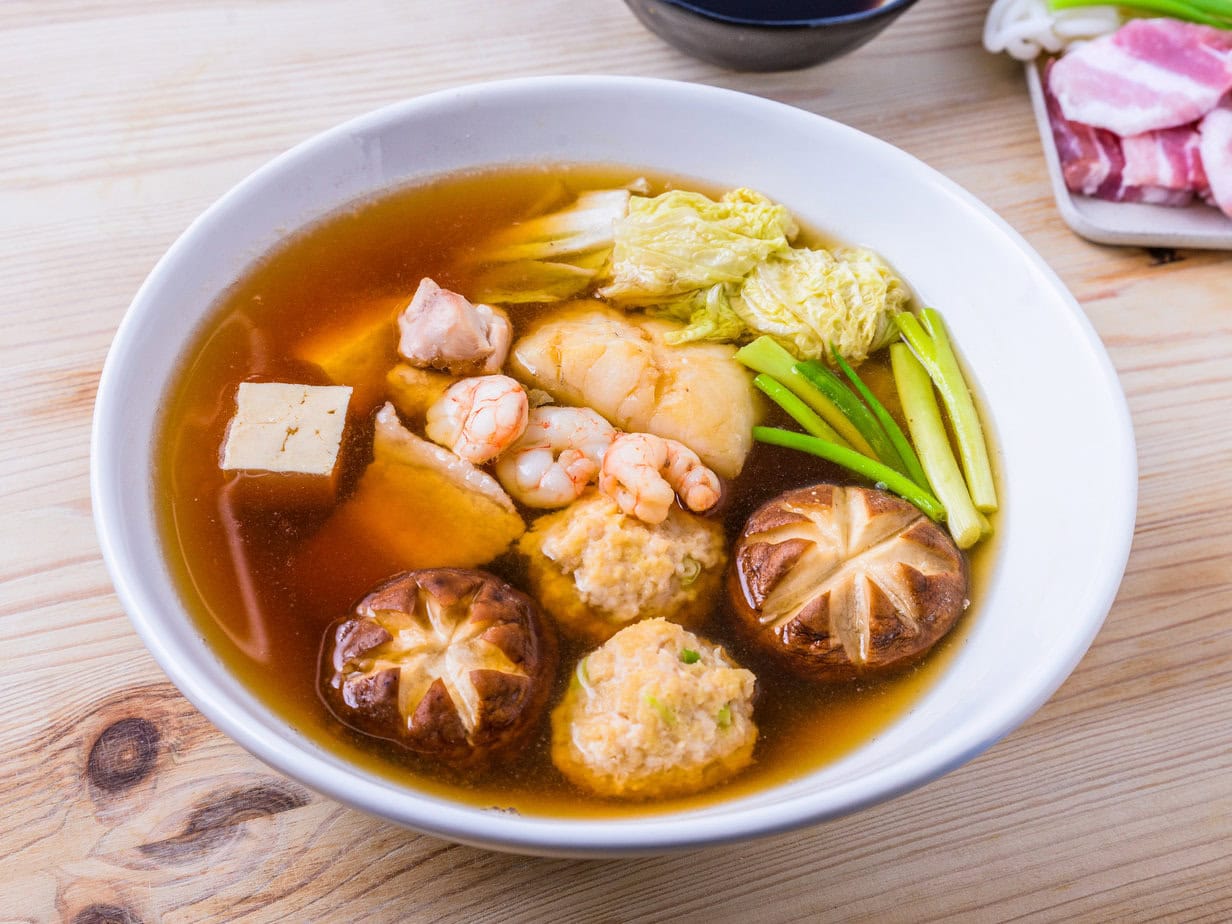
Mizutaki means “cooked in water” — mizu for water, taki for simmering. The broth starts as plain water alone, with no dashi, no bouillon cube, and no seasoning whatsoever to start.
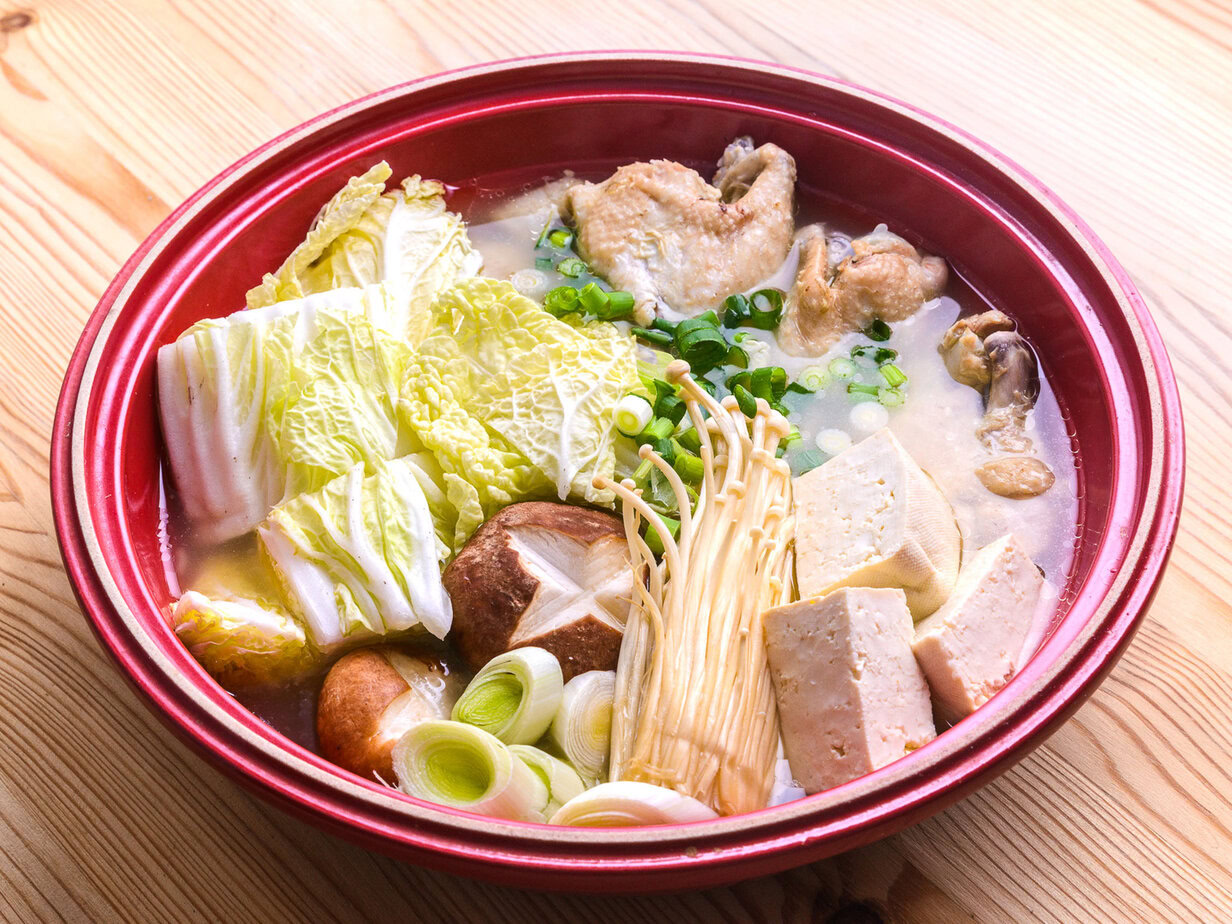
All the flavor comes from bone-in chicken — skin, collagen, and marrow. In Hakata, in Fukuoka, the pot is rounded out with bite-size pieces of boneless thigh, tsukune meatballs, green cabbage, negi, mushrooms, and tofu, seasoned at the table: a pinch of salt for that first sip, then ponzu for dipping.
Two styles coexist in Hakata. The kohaku is clear and amber, held at a bare simmer around 90 to 95 °C with frequent skimming. The paitan is white and milky, produced by a vigorous rolling boil for five to ten hours that emulsifies the fat and collagen.
Both are equally authentic. The Kansai-style pot, by contrast, is infused with kombu, and watery Chinese cabbage has no place in the Hakata version.
Born in Hakata in 1905, between Hong Kong and Nagasaki
Heisaburō Hayashida, a Nagasaki native, left for Hong Kong in 1897 at age fifteen. There he discovered two traditions: clear British-style consommés and Chinese soups long-simmered with bone-in chicken. Back in Japan, he opened the restaurant Suigetsu in Hakata’s Susaki district in 1905. His dish was first called “Hakata-ni,” then mizutaki.
The original is the clear broth: gentle heat, carefully skimmed, amber-hued with concentrated umami. In the mid-twentieth century, long-established houses such as Shinmiura, founded in 1910, established the white version — more opaque and rounder on the palate. Today, both styles are served side by side in Fukuoka.
The ponzu tells the same story of place. In some houses, Itoshima daidai, harvested in December and January, is hand-pressed to avoid bitterness from the peel oils, then aged for up to a year before blending with soy sauce. Long open to exchange with the continent, Fukuoka has made this chicken hot pot one of its signature dishes.
The main ingredients of mizutaki
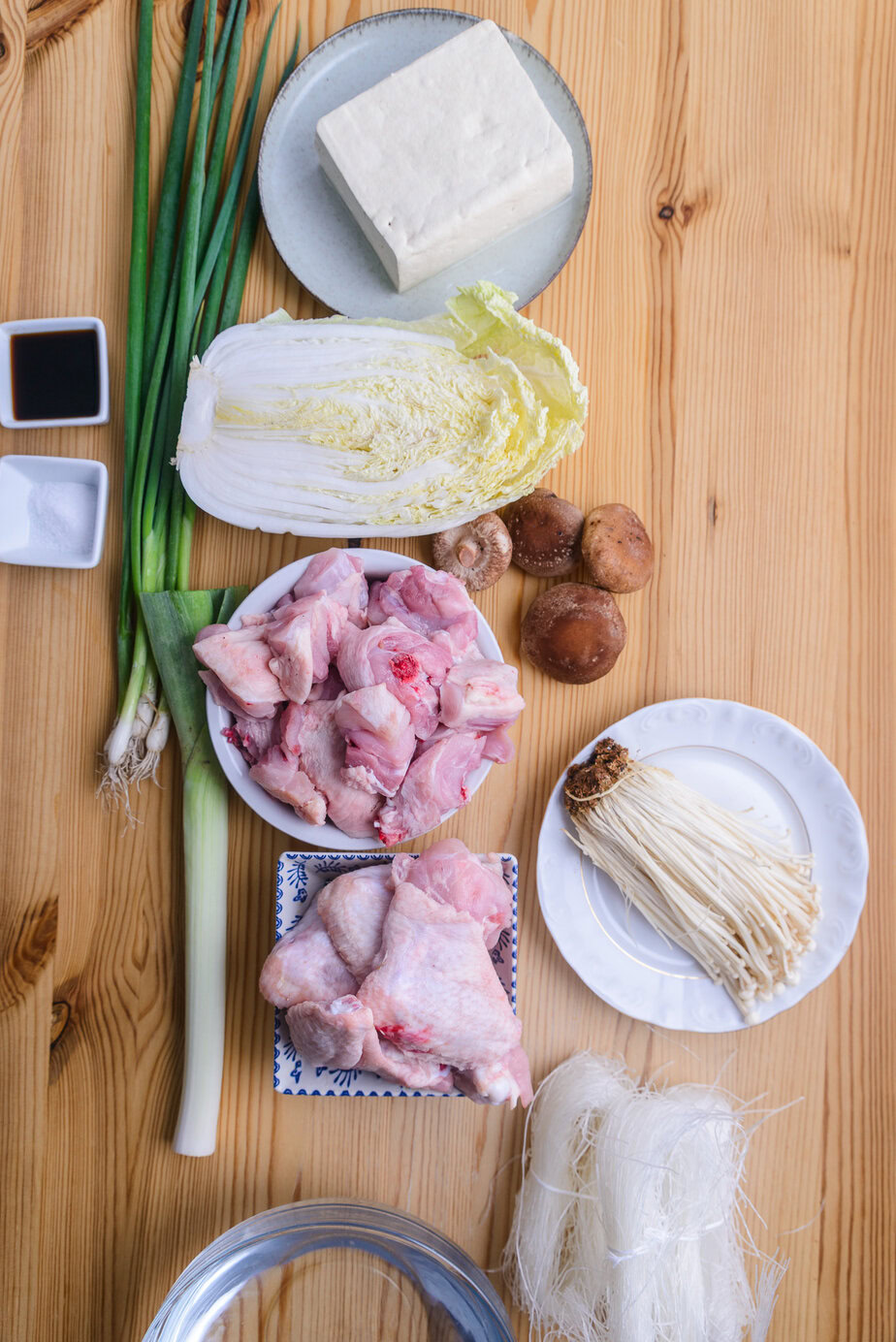
Bone-in chicken builds the broth. Thighs and wings provide the umami, fat, and collagen for a silky body. Pieces of boneless thigh, added as you eat, stay tender and deepen the meaty flavor. The tsukune enrich the pot with chicken juices while soaking up the broth around them, and cold, filtered water keeps everything pure and unmasked.
Green cabbage, or kyabetsu, stays crisp with a gentle, earthy sweetness without watering down the broth, where Chinese cabbage would release too much liquid. Negi — easily swapped for scallions — adds a fresh allium note without overpowering.
Shiitake mushrooms, enoki and shimeji add umami and textures from silky to pleasantly chewy. tofu momen, firm or medium-firm, soaks up the collagen-rich broth and softens the whole pot.
Seasoning comes down to three essentials: a pinch of sea salt for that first cup, daidai ponzu to cut the richness and lift the chicken, and a dab of yuzu kosho for citrusy heat.
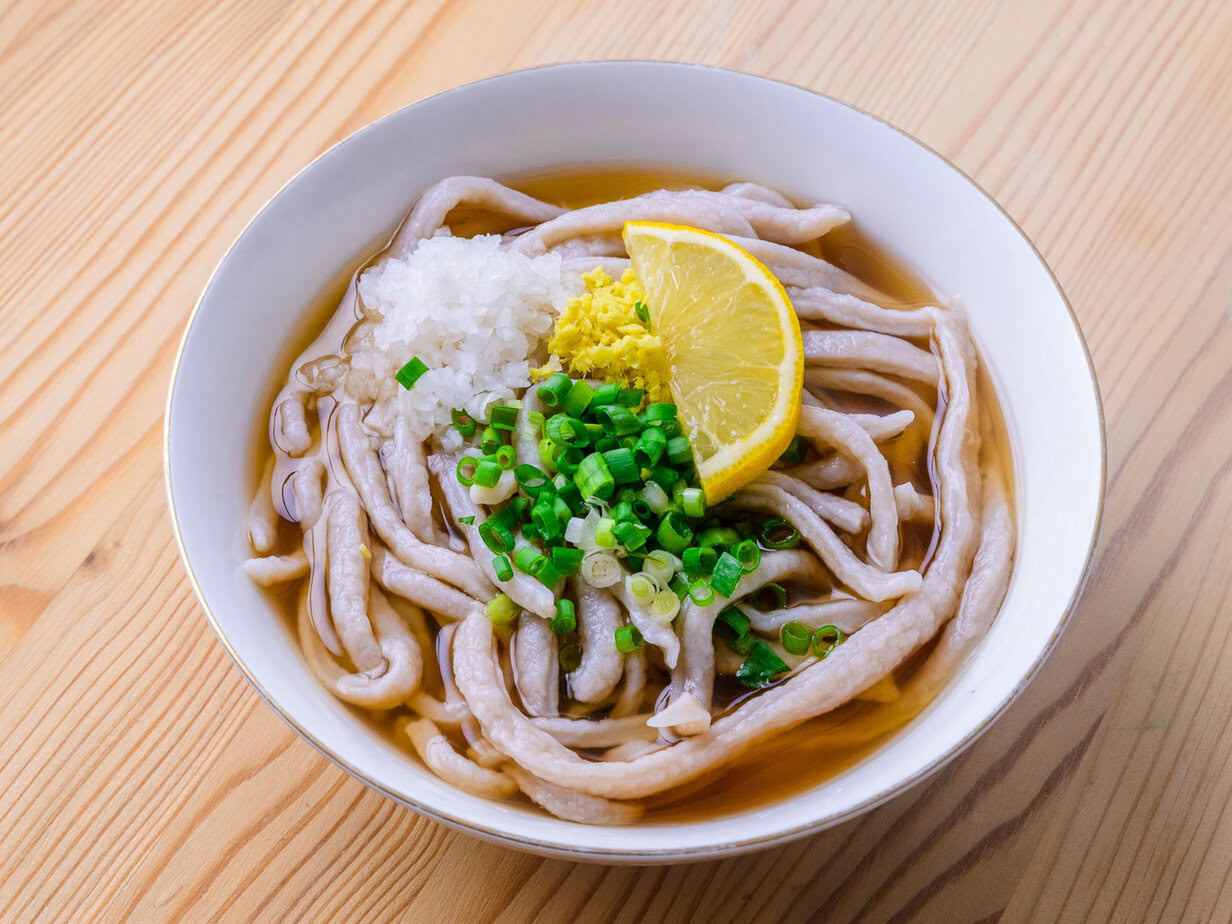
To finish, the leftover broth becomes a zosui — cooked rice simmered briefly, then finished with beaten egg stirred in off the heat. It can also take udon or champon noodles. The starch soaks up every last drop and stretches the chicken flavor to the very last bite.
Authenticity cues and pitfalls to avoid
Three signs never lie: a broth built from water alone, careful skimming throughout, and green cabbage — never Chinese cabbage.
The clear version stays between 90 and 95 °C; the white version demands a long, vigorous boil. A gray, cloudy broth means skimming was neglected; a bland broth means the chicken was too lean or simmered too briefly.
As always with chicken, aim for 74 °C at the center, with the thermometer inserted into the thickest part.
Ingredients
Broth and Chicken
- 500 g bone-in chicken thighs cut into pieces
- 6 chicken wings
- 2 L water
Hot Pot
- 1 leek thinly sliced on the diagonal
- 1/2 cabbage cut into large pieces
- 1 bunch shungiku (chrysanthemum leaves) optional
- 4 shiitake mushrooms
- 1 pack enoki mushrooms
- 1 block tofu
- kuzukiri or harusame noodles, as needed
To Serve
- ponzu for dipping
- salt to taste
- yakumi to taste, such as yuzu-koshō and thinly sliced scallions
To Finish (Zosui)
- cooked rice cooled
- 1 egg beaten
- scallions thinly sliced, to finish
- ponzu a drizzle, to finish
Instructions
Broth
- Blanch the chicken thighs and wings in boiling water for about 30 seconds to remove impurities and any odor.500 g bone-in chicken thighs, 6 chicken wings, 2 L water
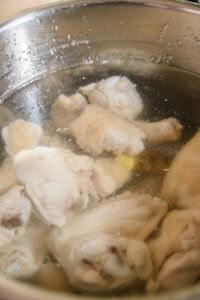
- Transfer immediately to cold water and rinse thoroughly to remove any blood and impurities.
- Combine the water, chicken thighs, and wings in a large pot over high heat.
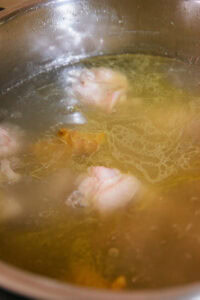
- Bring to a boil, then reduce to a gentle simmer. Skim regularly and cook for 2 to 3 hours, until the broth turns milky white.
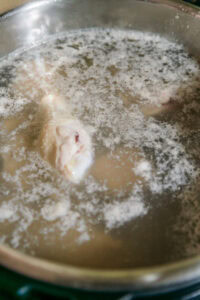
- Top up with a little water as needed to maintain the level.
Assembling the Hot Pot
- Transfer the chicken and broth to a serving pot (or keep them in the same pot) and bring back to a simmer.
- Add the vegetables in order of cooking time — cabbage, leek, shiitake and enoki mushrooms, tofu, then shungiku — and simmer until tender.1/2 cabbage, 1 leek, 4 shiitake mushrooms, 1 pack enoki mushrooms, 1 block tofu, 1 bunch shungiku (chrysanthemum leaves)
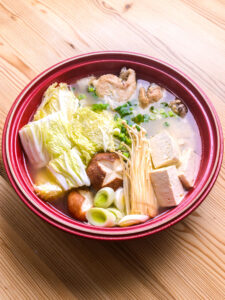
- Add the kuzukiri or harusame noodles, if using.kuzukiri
- Enjoy the chicken as is, or dip it in ponzu and season with yuzu-koshō or other yakumi to taste.ponzu, yakumi
Zosui (To Finish)
- Add the cooled cooked rice to the remaining broth and bring back to a simmer.cooked rice
- Season lightly with salt, stir in the beaten egg and sliced scallions, then finish with a drizzle of ponzu.salt, 1 egg, scallions, ponzu
Notes
- Blanching and rinsing the bone-in chicken, followed by long, gentle simmering for 2 to 3 hours, creates Hakata-style mizutaki’s signature milky-white, collagen-rich broth (白濁スープ).
- To enjoy it the traditional way: first savor the chicken broth with a pinch of salt and negi, then enjoy the tender chicken and vegetables with ponzu or yuzu-koshō, and finish with the comforting zosui.