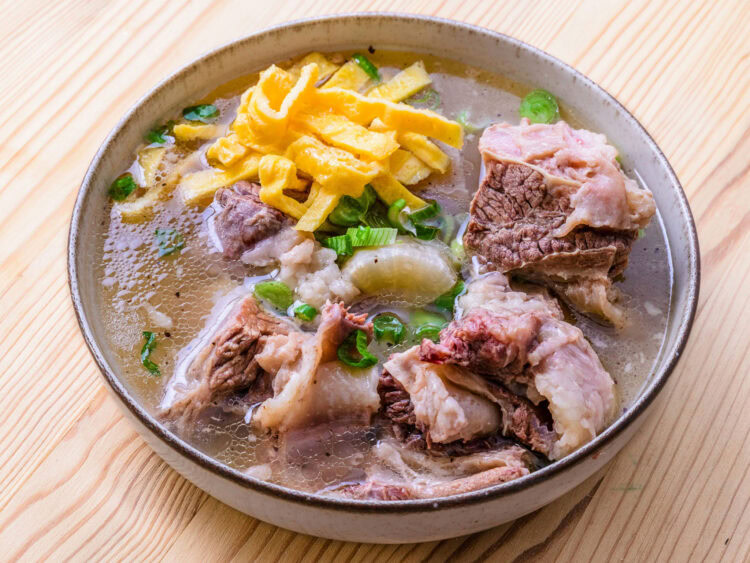
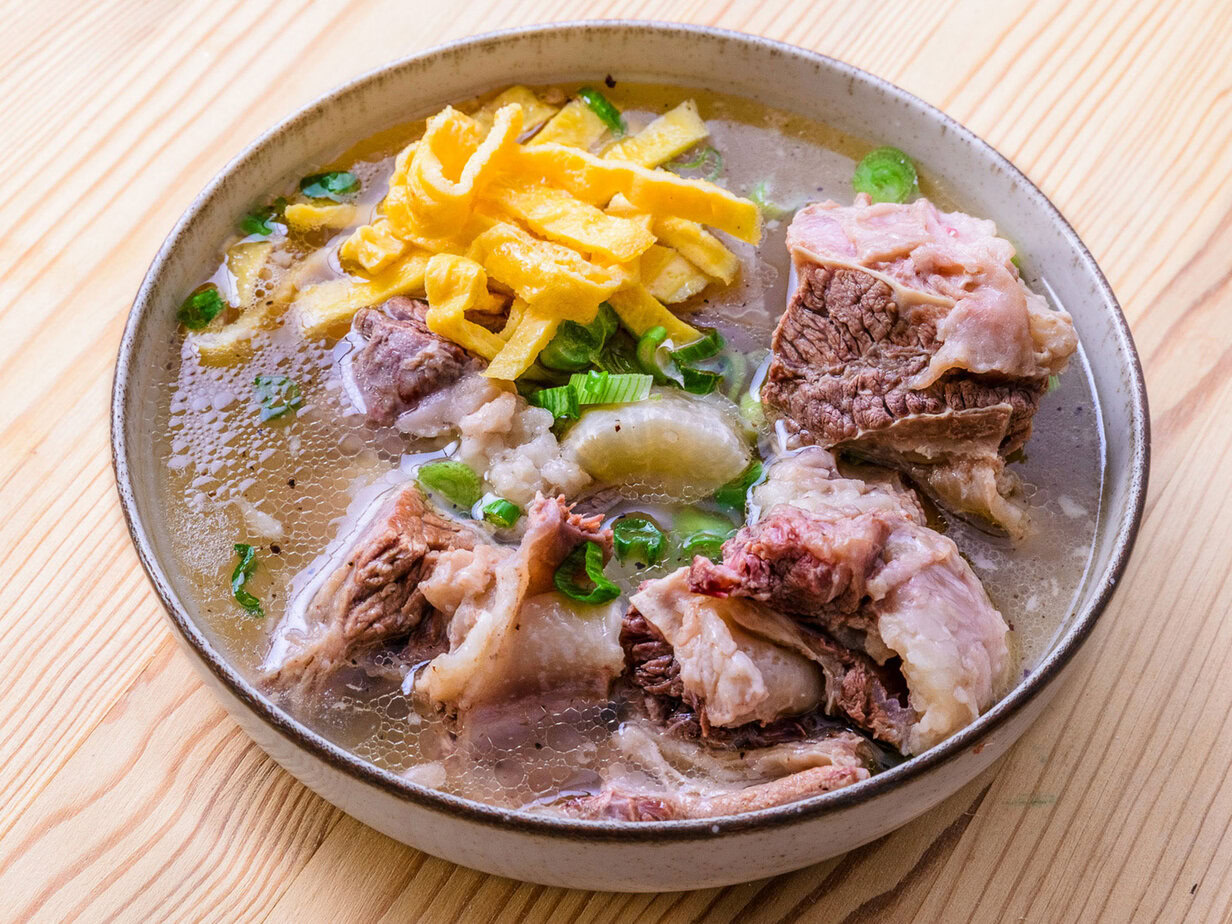
The classic Korean beef rib soup, slowly simmered into a clear, golden, deeply flavorful broth.
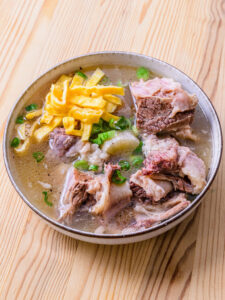
A steaming bowl arrives trailing wisps of vapor. The broth is golden, almost transparent, and the meaty ribs give way under the chopsticks. It smells of long-simmered bones and sweet radish.
Served piping hot, this staple of Korean cuisine somehow still feels clean and refreshing, with that famous siwonhada quality that refreshes the palate instead of weighing it down. A dish of banquets, hospitality, and convalescence, galbitang is judged by one thing alone: its clarity. You understand why from the very first sip.
What Is Galbitang?
The name says it all: galbi, beef ribs, and tang, soup. Its authenticity rests on two non-negotiable ingredients: bone-in ribs and Korean mu radish, along with restrained aromatics such as daepa, onion, garlic, and sometimes a hint of ginger.
The seasoning stays restrained, relying on salt or guk ganjang, the light soy sauce used for soups, which is saltier and clearer than dark soy sauces. dangmyeon noodles, common today, mainly add a supple texture.
The result is neither brown, nor red, nor milky. The broth should remain translucent, golden to amber, with deep flavor but no cloudiness. A true galbitang has no gochugaru, no gochujang, no searing in oil, and no dark soy sauce to muddy its color. The aromatics infuse the broth, then are removed. Everything depends on that clear, luminous broth, bright but never colorless.
From Scarce Beef to Suwon’s Great Stockpots
Galbitang was born in a time of scarcity. Under the Joseon dynasty, cattle were first and foremost draft animals: they plowed fields, hauled loads, and kept the rural economy running. Slaughter was regulated, sometimes forbidden, and beef remained reserved for rituals, the royal court, and yangban families. Serving a bowl of beef rib soup was therefore a sign of wealth. The term Galbiguk, attested as early as the end of Goryeo, originally referred to a simple rib soup, not always made with beef.
At court, the dish took on a lavish form: a single bowl could bring together ribs, tripe, a whole abalone, sea cucumbers, eggs, radish, and mushrooms, a marriage of land and sea worthy of a royal banquet. Cookbooks from the turn of the 20th century later brought it back to a more restrained and precise formula: about 2 kg of ribs, 300 g of radish, several liters of water, and five to six hours of cooking, with one instruction already firmly in place: remove the radish in time to preserve both its texture and the clarity of the broth.
In the 20th century, galbitang spread along with the country’s economic rise. In the 1970s and 1980s, amid the “Miracle on the Han River,” it became a celebratory dish for a middle class now able to serve beef to guests.
In Suwon, a city known for its cattle market, Wanggalbitang showcases giant ribs and crystal-clear broth taken to the extreme. Farther north, in Hamgyeong, Garitgukbap combines rice, tofu, meat, and seonji, coagulated beef blood, for a heartier, more filling version.
The Main Ingredients in Galbitang
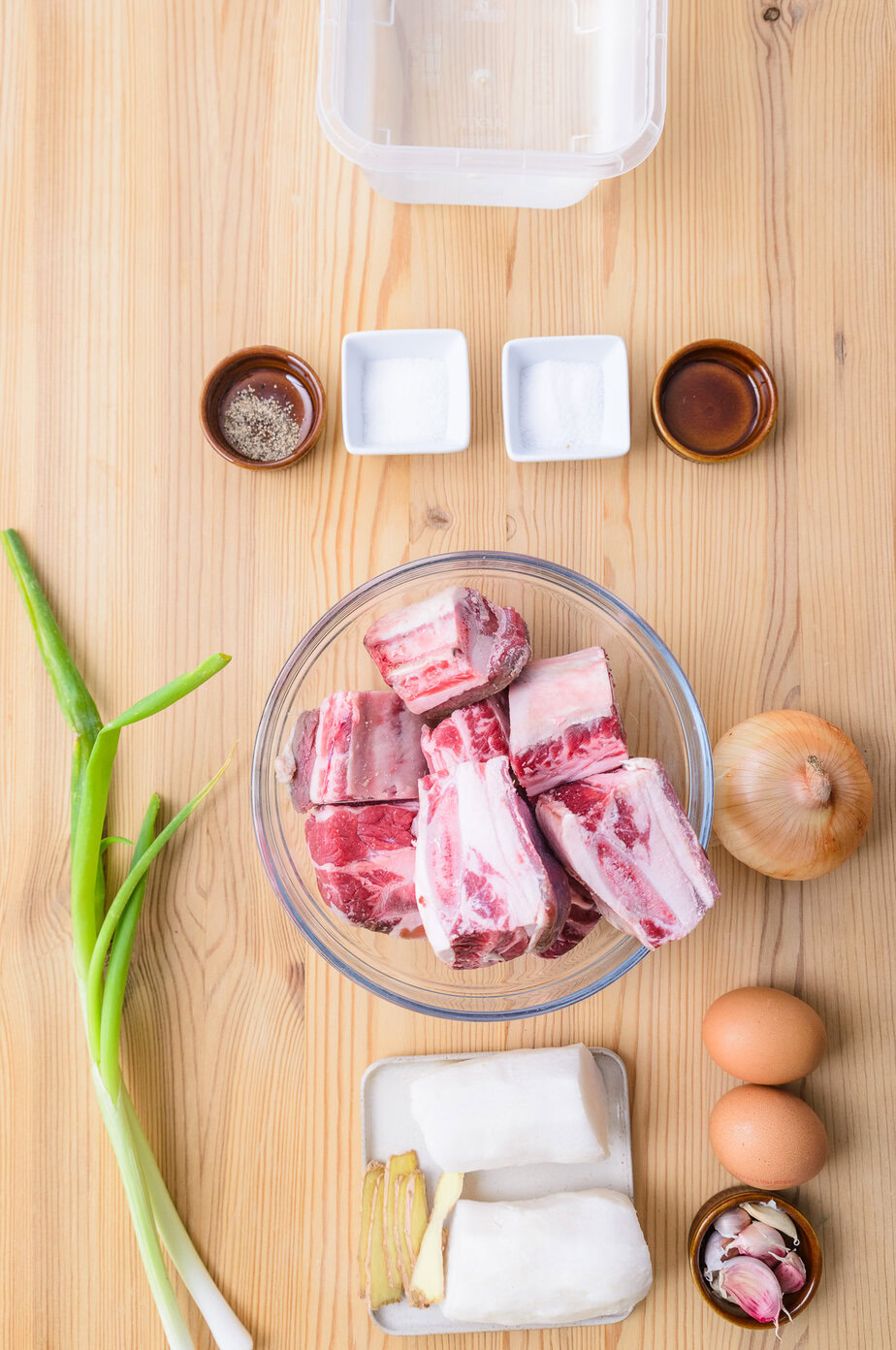
The ribs are the foundation of the dish. Thick pieces, five to six centimeters long, release collagen, gelatin, marrow, and umami over the course of a long simmer. Thin cuts in the style of LA galbi won’t stand up to this kind of cooking and simply fall apart.
Korean mu radish, meanwhile, embodies the idea of siwonhada: denser and more aromatic than Japanese daikon, it brings a fresh vegetal sweetness, absorbs some of the fat, and lightens the richness of the beef. Properly cooked, it keeps a clean bite; overcooked, it breaks down and clouds the soup.
The aromatics add fragrance without ever becoming part of the garnish: daepa, whole garlic cloves, large pieces of onion, and a touch of ginger to tame the meaty notes. They are all removed before serving. For seasoning, guk ganjang brings salt and umami while preserving the broth’s light color; sea salt, typical of certain Suwon styles, may be paired with a little sugar on the meat. A crack of black pepper, a drizzle of sesame oil, or a little chopped garlic brightens the ribs.
At serving time, dangmyeon, sweet potato starch noodles, add softness, while jidan, fine strips of egg yolk and white, recalls festive tables. More medicinal yakseon versions sometimes include astragalus, ginseng, jujubes, pine nuts, or dashima, as long as the broth stays clear.
Ingredients
- 1.5 kg of beef short ribs
- 450 g of Korean radish substitute daikon if needed
- 1 onion
- 2 stalks of scallions
- 8 cloves of garlic
- 5 slices of ginger dried
- 4 L of water
- 2 eggs
- salt a little, plus more for seasoning
- 1 tablespoon of vegetable oil
For soaking the beef ribs
- 1 tablespoon of sugar
For blanching the beef ribs
- green parts of the scallions reserved from the scallions
For seasoning the galbitang
- pepper to taste
Instructions
Soak the ribs
- Soak the beef ribs in cold water to draw out the blood.1.5 kg of beef short ribs, 4 L of water
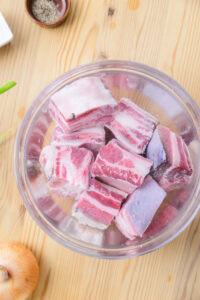
- Stir the sugar into the water to help draw out the blood, changing the water from time to time.1 tablespoon of sugar
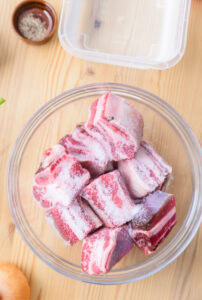
- Rinse the beef ribs under cold water, then drain well.
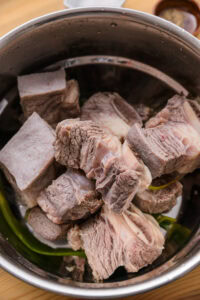
Blanch the ribs
- Place the green parts of the scallions in a pot of water and bring to a boil.green parts of the scallions
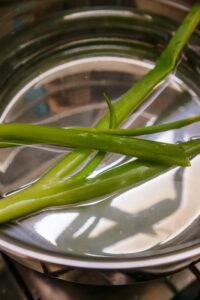
- Add the beef ribs to the boiling water. Once the water returns to a vigorous boil, turn off the heat, then rinse the ribs under cold water.
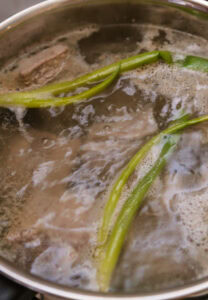
Make the broth
- Roughly chop the Korean radish, onion, garlic, dried ginger, and the white parts of the scallions; these will flavor the broth.450 g of Korean radish, 1 onion, 2 stalks of scallions, 8 cloves of garlic, 5 slices of ginger
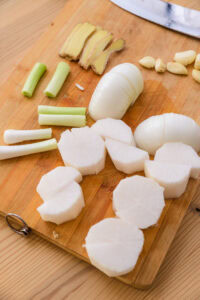
- Pour the water into a large pot, add the radish, onion, garlic, ginger, and scallions, then bring to a boil over high heat.
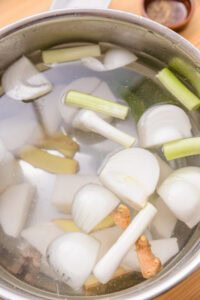
- Add the blanched beef ribs. Boil over high heat for 10 minutes, uncovered.
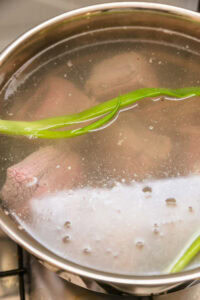
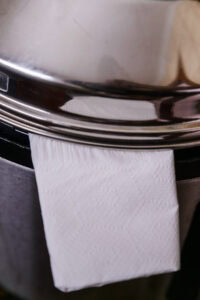
- Reduce the heat to medium-low and simmer for about 50 minutes. Tuck a paper towel between the pot and the lid to prevent the broth from boiling over.
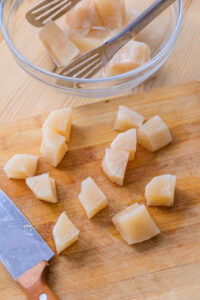
- Remove the radish after about 30 minutes and cut it into bite-size pieces.
Prepare the egg garnish
- Crack the eggs into a bowl, add a pinch of salt, and beat well. Lightly oil a hot pan, cook a thin omelet, roll it up, then slice it into fine strips.2 eggs, salt, 1 tablespoon of vegetable oil
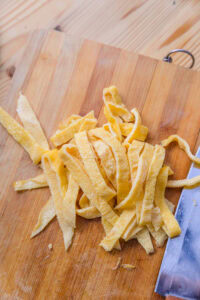
Strain and finish the soup
- After cooking, strain the broth and set the broth and beef ribs aside separately.
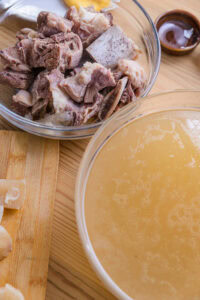
- Return the broth to the pot, add the ribs, radish, and chopped scallions, and bring to a gentle simmer.
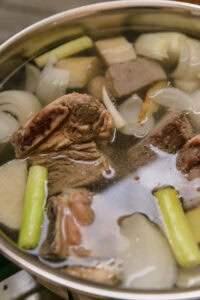
- Season with salt and pepper to taste.pepper
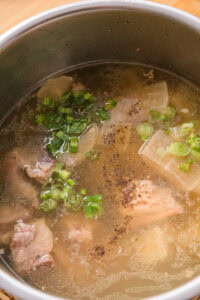
- Serve piping hot, topped with the egg strips.
Notes
- For a clearer broth, skim off any foam at the start of the boil and rinse the ribs well after blanching.
- Soaking time may vary; soak longer if the water continues to darken.