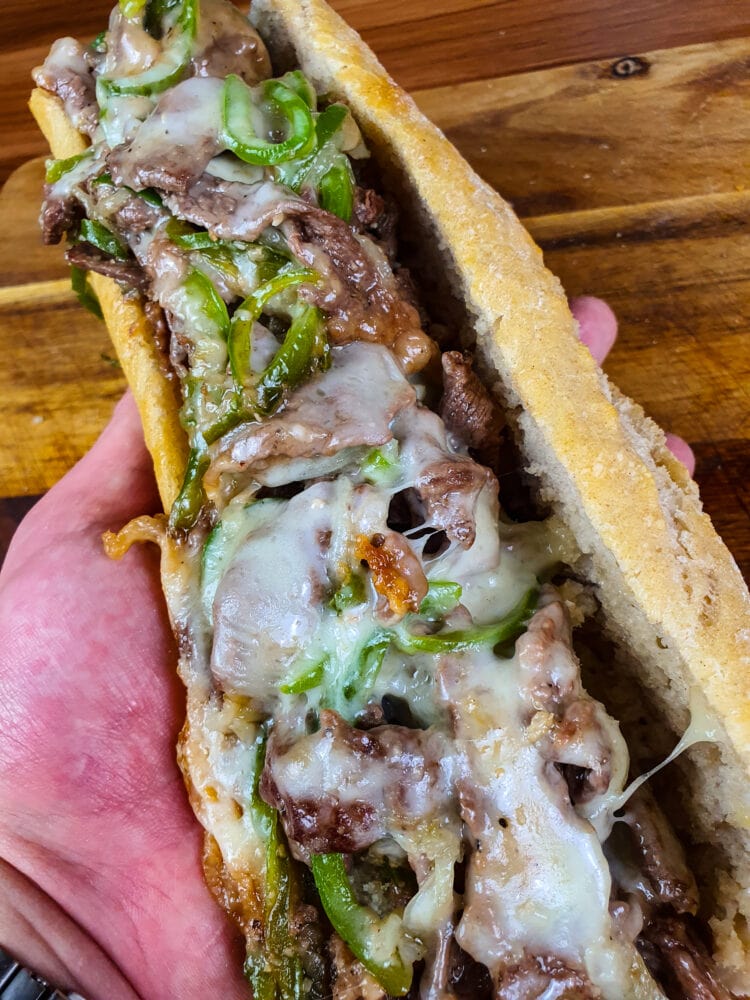
As an American, I had to share my recipe for the Philly cheesesteak. My family is from this part of the United States, so I was lucky enough to enjoy this iconic sandwich during summer visits. It may have a reputation as one of the most indulgent sandwiches in the world, but one bite is enough to understand why.
What is a Philly cheesesteak?
The name literally means “steak and cheese sandwich,” which gives you a pretty clear idea of the main components of this classic.
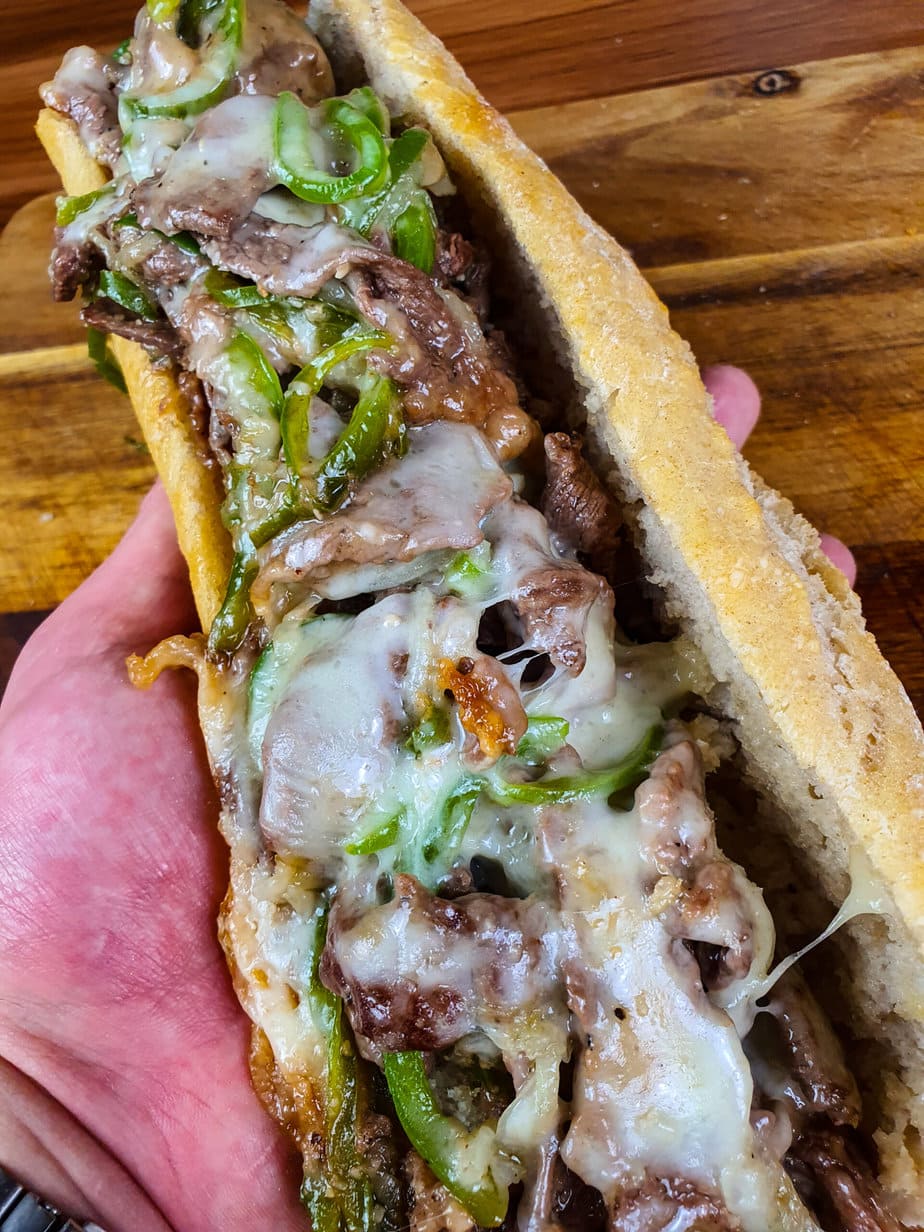
It’s a sandwich made with beef, cheese (most often provolone), and classic toppings such as peppers or caramelized onions.
Origins of the Philly cheesesteak
The cheesesteak traces its origins to two brothers, Pat and Harry Olivieri, who ran a hot dog stand near the Italian Market in South Philadelphia.
In the 1930s, they came up with the idea of creating a new kind of sandwich: beef and grilled onions served in a toasted roll, without cheese. It wasn’t until the 1940s, as the sandwich grew in popularity, that a manager at the Olivieri’s Ridge Ave. location added provolone, giving birth to the cheesesteak.
Cheesesteak fever quickly caught on, and Geno’s opened across from Pat’s in the 1960s, sparking a friendly rivalry that continues to this day. Over the decades, many restaurants in Philadelphia have put their own spin on the cheesesteak.
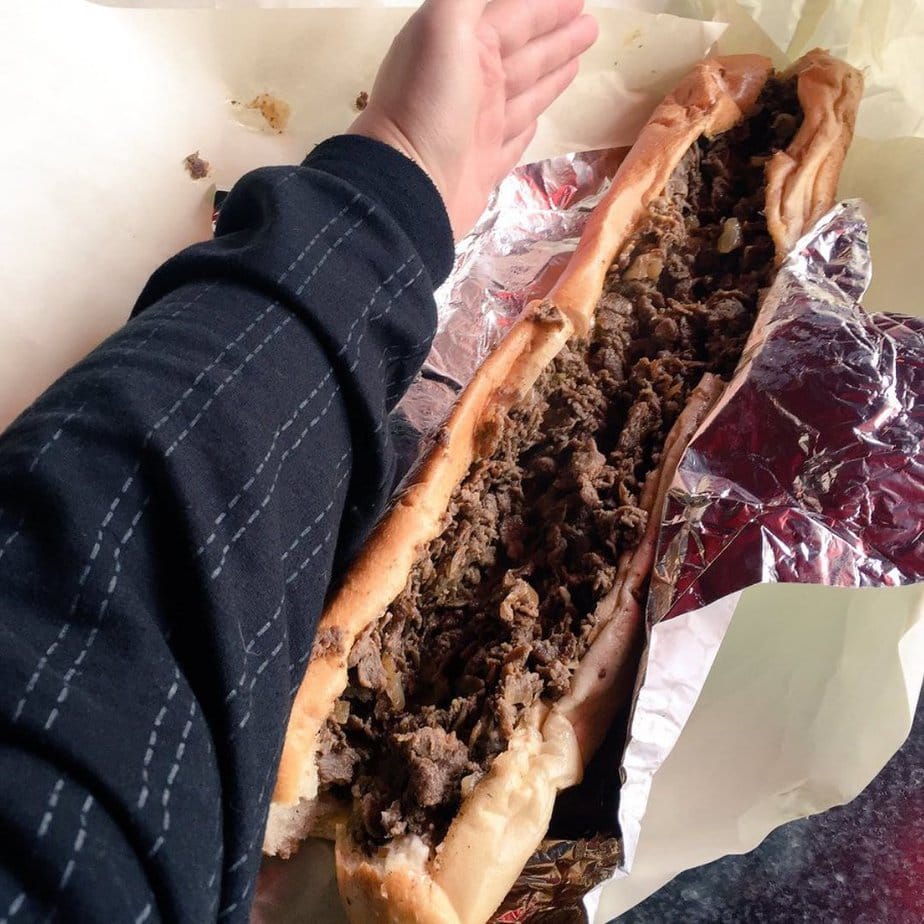
From John’s Roast Pork, known for its cheesesteaks, roast pork sandwiches, and chicken cutlets, to Max’s Steaks, where you can dig into an arm-length cheesesteak in North Philadelphia, these spots, along with many others, have reinterpreted the original recipe and won generations of devoted fans.
Ingredients
- 250 g steak, very thinly sliced
- 0.5 onion, thinly sliced
- 0.5 green bell pepper, very thinly sliced
- 1 tbsp garlic powder
- 1 tsp salt
- 1 tsp black pepper
- 200 g provolone, grated or sliced
- 1 baguette
Instructions
- Sauté the onion over high heat for 2-3 minutes.
- Add the bell pepper and sauté for 2 minutes. Set aside.
- Sauté the steak with the salt, black pepper, and garlic powder for 3-4 minutes.
- Add the vegetables back to the pan.
- Arrange the meat in a line the length of the baguette.
- Top with the cheese, then cover for 1-3 minutes to let it melt.
- Using a spatula, transfer to the baguette.
Nutrition
The content of this promotional campaign reflects only the author’s views and is his sole responsibility. The European Commission and the European Research Executive Agency (REA) accept no responsibility for any use that may be made of the information contained herein.