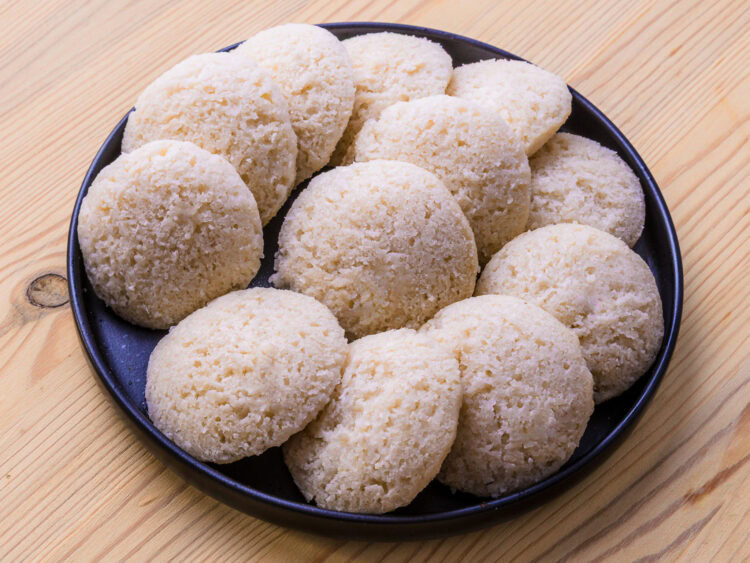
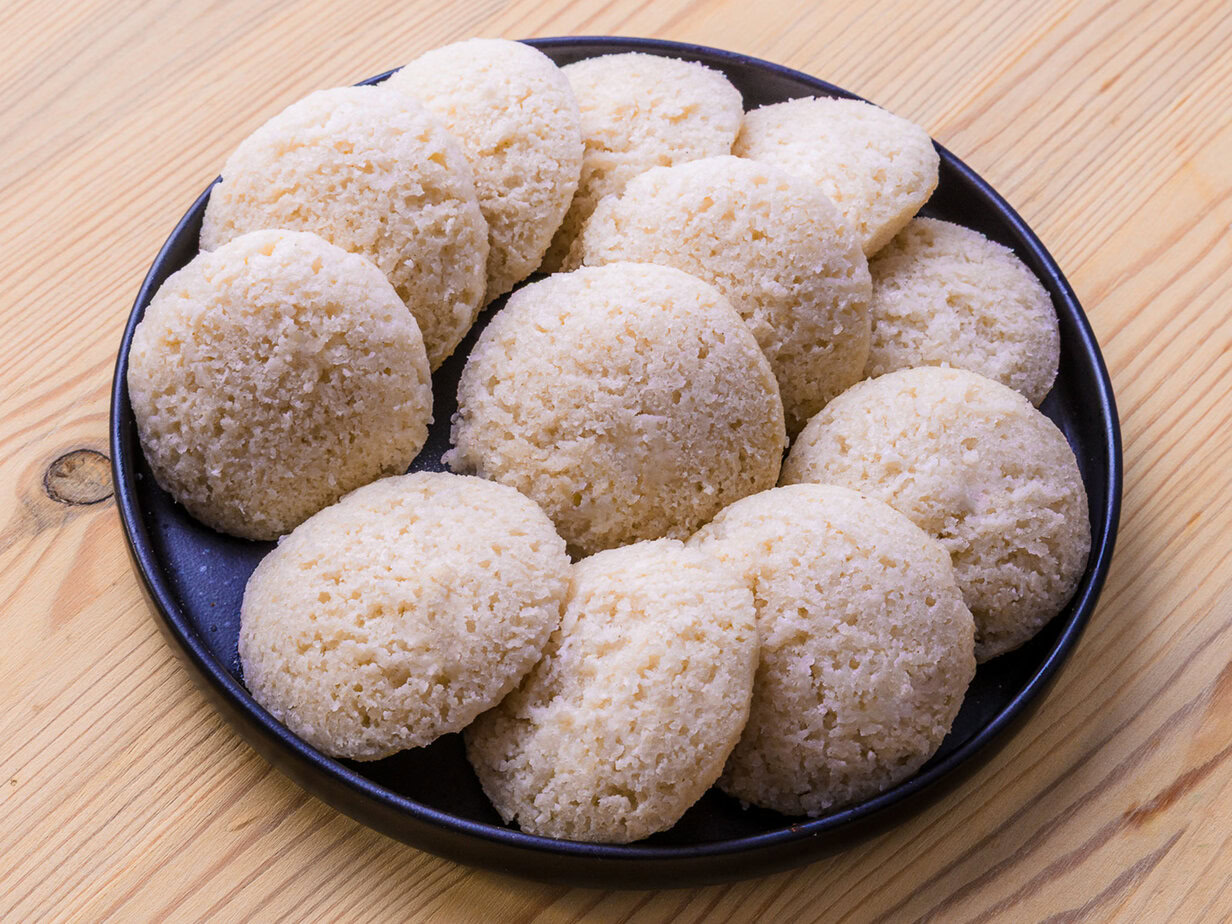
Small fermented rice cakes, steamed until sponge-light and perfect with coconut chutney or a piping-hot bowl of sambar.
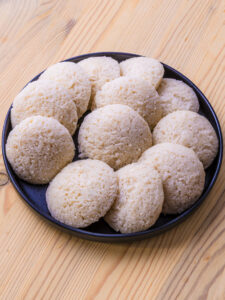
Soft, white, and springy, idlis emerge from the steamer with a warm, grainy aroma. They bounce back under your finger, then soak up sauce without falling apart.
In the broad family of fermented Asian rice batters, their gentle flavor sometimes recalls bánh bò nướng, but in a savory, more understated form.
What is idli?
Idli is a small savory cake from South India, made with short-grain parboiled rice and hulled white urad dal. The two are soaked separately, ground separately, then fermented together before a brief steaming. The urad adds airiness and softness, while the rice provides structure, a bit like how the grind determines the texture of a chapati or how different doughs create contrast in samosas.
The name has appeared in several forms across the languages of the subcontinent, from iddalige to itali. The earliest references mainly describe cakes made with urad, sometimes without rice.
Modern idli, however, depends on the balance of rice and urad, an overnight fermentation, and gentle steam. In spirit, it is closer to a well-mastered bánh xèo than to an instant batter. It is still cooked like something delicate, with the same logic of steam used for baozis.
From ancient texts to South Indian breakfasts
The exact origin of idli is still debated. Some Kannada and Sanskrit texts mention similar preparations between the 10th and 12th centuries, but they do not always match today’s rice-and-urad version. The historian K. T. Achaya considered modern idli a later recipe, perhaps enriched by exchanges between South India and present-day Indonesia.
This theory is not far-fetched in a region long shaped by maritime exchange. Southeast Asian cuisines have a deep fermentation culture, from tempeh to nem chua, and Indonesia has contributed other familiar dishes and ingredients, such as nasi goreng, kecap manis, and beef rendang.
Other researchers point out that steaming already existed in South India, which keeps idli from being reduced to a simple import. Another theory links it to Arab merchants on the South Indian coast, who are said to have favored plain rice preparations before adopting local urad and regional fermentation techniques. In any case, today’s idli has become a breakfast staple, served hot, often in stacks, with chutney, sambar, and the easy conviviality of a shared table.
The main ingredients in idli
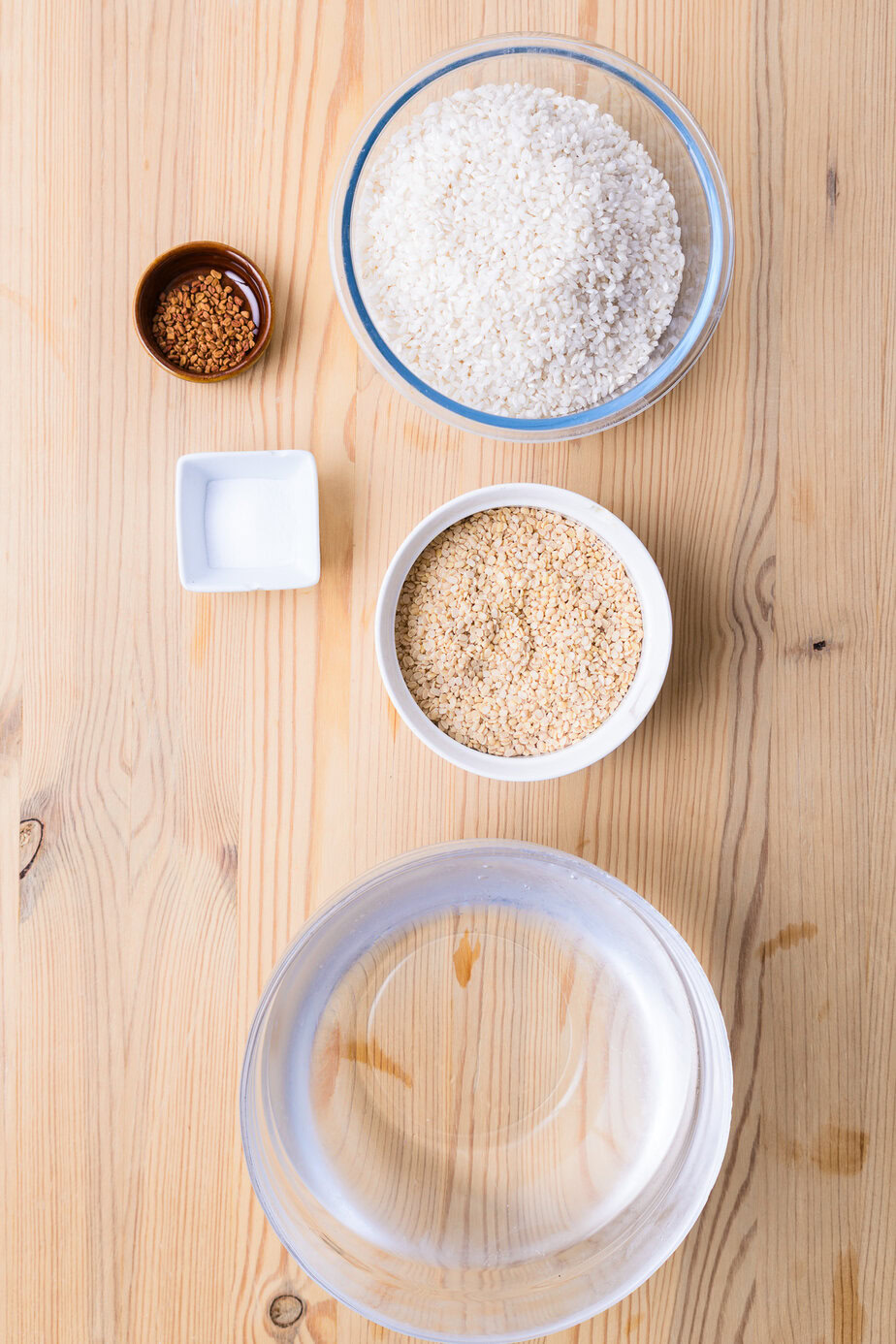
Short-grain parboiled idli rice provides the structure. It is ground until still slightly granular, which helps the batter trap steam and keep a tender crumb. Long-grain rice such as basmati more readily produces dry, crumbly idlis, while a stickier short grain, such as sushi rice, makes this approach to texture easier to understand.
Whole hulled white urad is the aerating ingredient. Once ground, it forms a light foam that traps the gases produced during fermentation. Fenugreek seeds, soaked with the urad, are subtle but useful: they support fermentation, improve softness, and help make the batter more stable.
Water is used for soaking and grinding, but its temperature matters. When using a blender, cold water helps prevent the batter from overheating, which can damage the texture and slow fermentation. Salt adds flavor and gently reins in acidity. If you plan to keep the batter for several days, it is often best to salt only the portion you are about to cook.
Ingredients
- 1.6 kg short-grain rice
- 400 g white urad dal whole and hulled
- 1 teaspoon fenugreek seeds
- salt to taste
- ice-cold water or very cold water, as needed
Instructions
- Rinse the rice, urad dal, and fenugreek seeds separately 3 to 4 times, until the water runs clear.1.6 kg short-grain rice, 400 g white urad dal, 1 teaspoon fenugreek seeds
- Soak the rice in cold water for 4 to 5 hours.
- Soak the urad dal and fenugreek seeds in cold water for 4 to 5 hours.
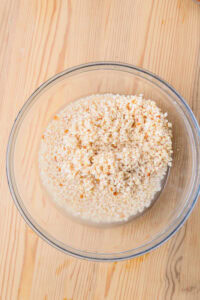
- Place the soaked urad dal and fenugreek seeds in a grinder or blender first.
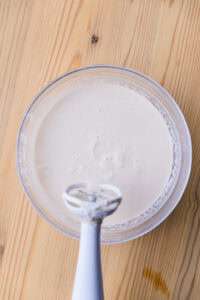
- Add the ice-cold water gradually to keep the machine from heating up.ice-cold water
- Grind until you have a light, airy, well-aerated batter.
- Add the soaked rice.

- Add a little cold water if needed, then grind until the texture is slightly finer than semolina.
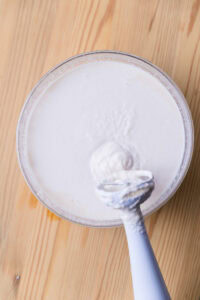
- Pour the urad dal batter and rice batter into a large container.
- Add salt to taste.salt
- Mix thoroughly with your hands for about 5 minutes, taking care not to deflate the batter.
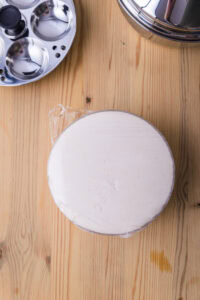
- Cover the container and let the batter ferment in a warm place for 8 to 10 hours, until it has almost doubled in volume.
Steaming
- Pour the fermented batter into idli molds.
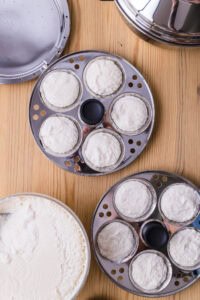
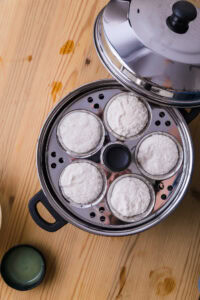
- Steam for 10 to 12 minutes.
- Serve the idlis piping hot.
Notes
- The more thoroughly the urad dal is soaked, the more easily it will foam during grinding, and the more batter you will get.
- The lighter the batter, the softer and fluffier the idlis will be.
- In winter, let the batter ferment for up to 12 hours.
- The batter is ready when it has risen well and almost doubled in volume.