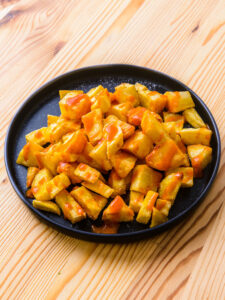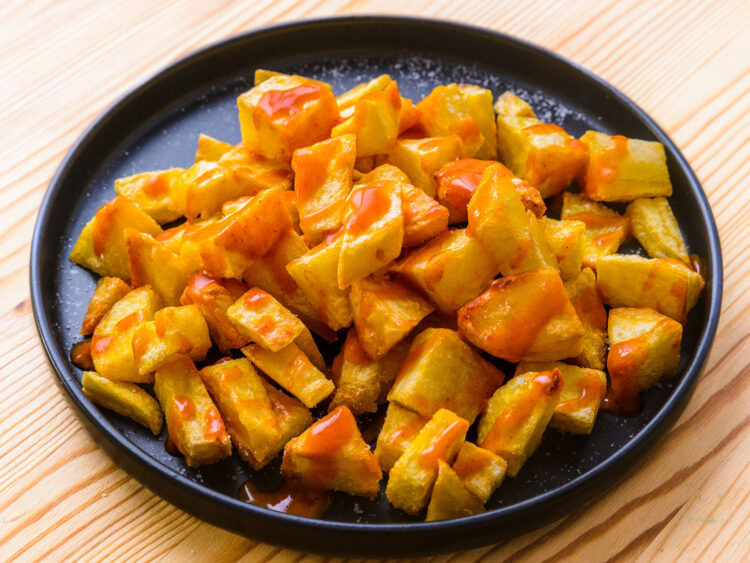
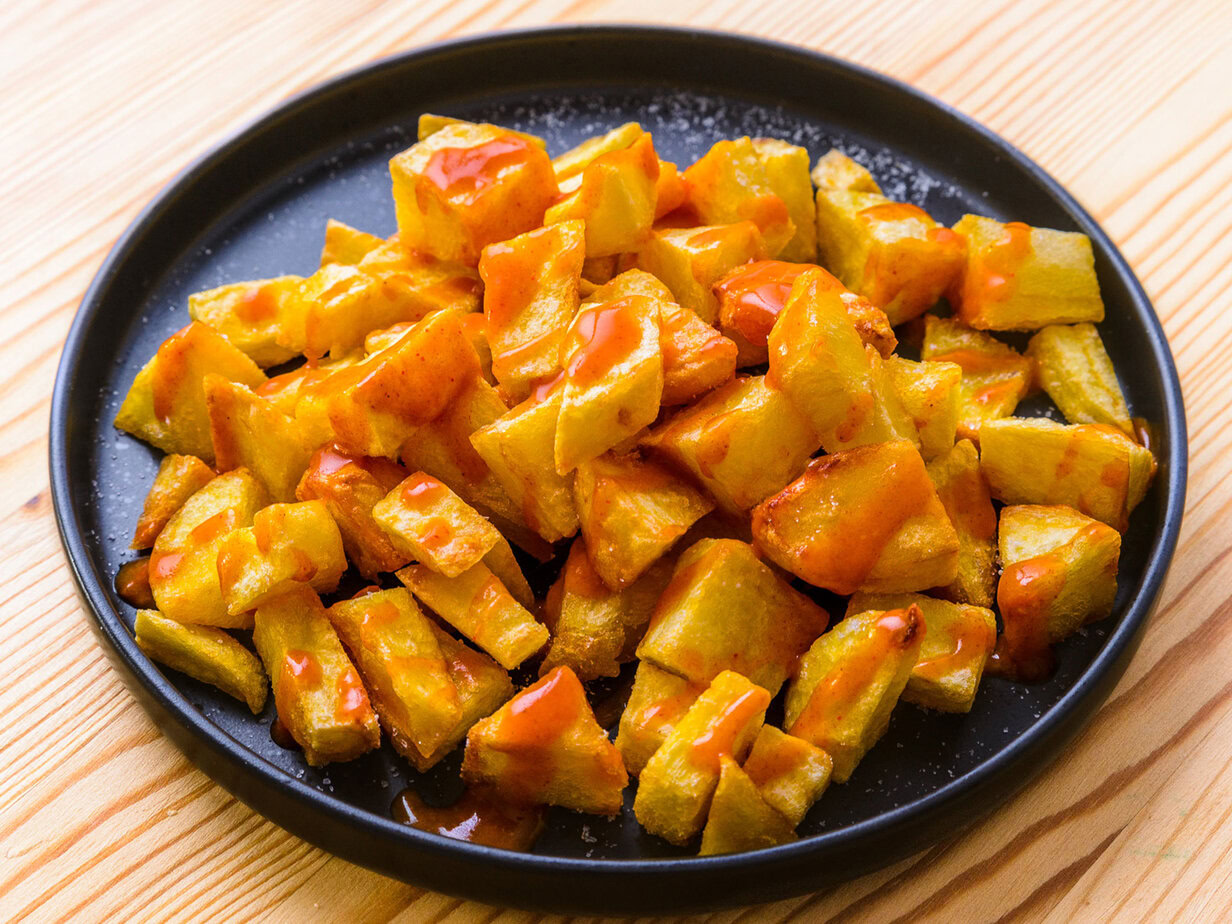
Crispy patatas bravas topped with a silky paprika-and-garlic brava sauce, just like in the bars of Madrid.
The plate lands on the counter, the red sauce still warm on top, with a caña on the side. You spear a piece with a toothpick : the edges crackle, the center is creamy and tender, and the smoked paprika hits right after.
The heat stays subtle, about on par with a mild jalapeño; it warms the palate without overpowering everything else. It’s the kind of dish you order to share and end up finishing yourself.
What makes bravas “bravas”
The name says it all. Bravas means fierce or wild, a rare nod to heat in a cuisine more often defined by garlic, olive oil, vinegar, and smoke.
The potatoes themselves are not cut neatly : Spanish cooks chascan them, pressing in the blade and then twisting the knife to break them into irregular 3 to 4 cm chunks. These jagged edges brown better and catch the sauce in their crevices.
Two sauce families dominate the serious versions. In Madrid taverns, there’s no tomato : a rustic onion-and-garlic velouté with toasted flour, stock, sherry vinegar, and a blend of sweet and hot Pimentón de la Vera, which gives the sauce its deep red color.
The other family uses tomato, popularized by Simone Ortega’s 1080 recetas de cocina in 1972 and common along the coast, often served with a very garlicky alioli.
Born in the bars of postwar Madrid
The dish emerged in post-Civil War Madrid, when rationing, in force from 1939 to 1952, dictated what people ate. Potatoes became a staple and remained rationed until March 1950, the year the United States sold Spain about 39 000 tons of surplus potatoes.
Potatoes, flour, paprika, onion, garlic, and stock bones : enough to fill a plate and flavorful enough to make you order another drink. Luis Carandell noted in 1967 that they were sometimes called patatas a lo pobre.
Casa Pellico, on Calle Toledo, and La Casona, on Calle Echegaray, both claim the dish as their own, with lines stretching onto the cobblestones and “patatas casonas” served as early as 1949 at the latter.
Docamar, opened in 1963, remains the benchmark everyone cites. Its stated base is short : hot smoked paprika, onion, wheat flour, and vinegar, though some suspect a touch of tomato.
Its potatoes are poached in olive oil until tender and lightly golden, more soft than crisp. Demand grew so strong that the bar rented neighboring premises just to peel and cut them.
The main ingredients in patatas bravas
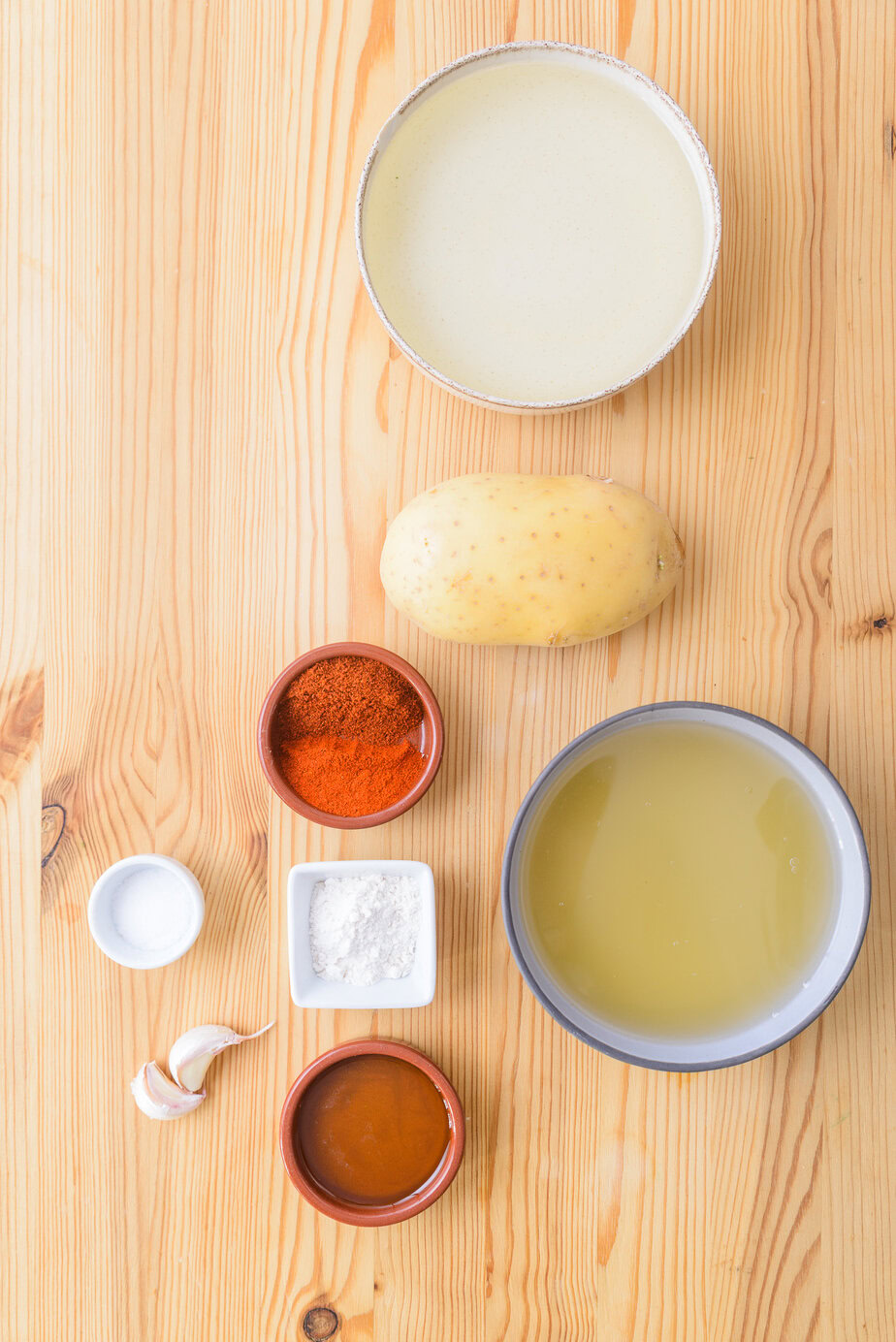
The potatoes need to hold their shape during cooking while staying creamy in the center. In Spain, Kennebec, Agria, or Monalisa are the usual choices ; elsewhere, Yukon Gold, Maris Piper, or Russet work very well. Good olive oil flavors the gentle first cook before a final blast over high heat. Salt goes on while the potatoes are still hot; that’s when it adheres best.
Spanish smoked paprika is the heart of the dish, ideally PDO Pimentón de la Vera. A blend of pimentón dulce and pimentón picante gives the sauce its brick-red color, oak-smoke notes, and controlled heat. Generic chili powder will never deliver the same result.
The rest builds the sauce. Onion brings body and sweetness, garlic brings savoriness, and wheat flour thickens it, provided it’s toasted long enough to lose its raw taste.
The stock, preferably a caldo de cocido, adds a depth that water simply can’t, and sherry vinegar cuts the richness and lifts the paprika. Tomato remains optional, as does alioli, which is more typical of Barcelona and the Levant.
Authenticity markers and pitfalls to avoid
A good plate is easy to spot : irregular, rough-edged pieces, salted while hot, and a clear aroma of Spanish smoked paprika rather than just a red color. In Madrid, brava sauce comes alone; in Barcelona and the Levant, it is paired with alioli in dollops or drizzles.
The warning signs are just as easy to spot : pink sauce made from ketchup and mayonnaise, industrial mayonnaise masquerading as alioli, barbecue sauce, or identical frozen cubes.
Adaptations can still work, as long as the paprika is the right one, whether that means using cornstarch to thicken it for a gluten-free version or finishing the potatoes in the oven after parboiling them in salted water.
Ingredients
For the potatoes
- 250 g potatoes for frying
- olive oil for frying (or sunflower oil)
- salt
For the brava sauce
- 4 tablespoons olive oil
- 1 tablespoon flour
- 200 ml chicken stock or vegetable stock, or water + MSG + salt
- 2 cloves garlic peeled, thinly sliced
- 1 tablespoon sweet paprika
- 1 teaspoon hot paprika or 1 cayenne pepper
- salt to season the sauce
- 3.5 teaspoons sherry vinegar
Instructions
Brava sauce
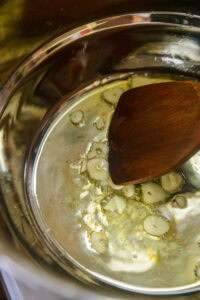
- Heat 4 tablespoons of olive oil over medium-low heat. Add the garlic and cook until lightly golden, then remove the saucepan from the heat.4 tablespoons olive oil, 2 cloves garlic
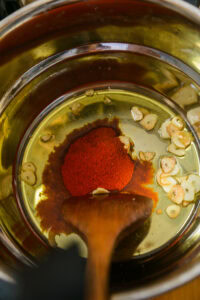
- Off the heat, add the sweet and hot paprika, then stir until evenly coated in the oil.1 tablespoon sweet paprika, 1 teaspoon hot paprika
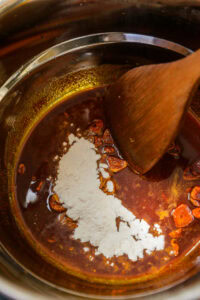
- Whisk in the flour until smooth, then return the pan to medium heat and cook for about 2 minutes.1 tablespoon flour
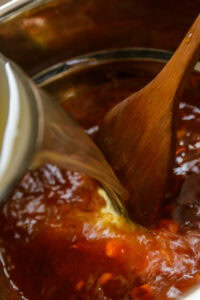
- Gradually add the stock, stirring to prevent lumps. Season, simmer until thickened, then stir in the sherry vinegar. Taste, adjust the salt and vinegar, then blend and set aside.200 ml chicken stock, salt, 3.5 teaspoons sherry vinegar
Potatoes
- Peel the potatoes and cut them into bite-size pieces. Rinse under cold water to remove the starch, then drain and dry thoroughly.250 g potatoes for frying
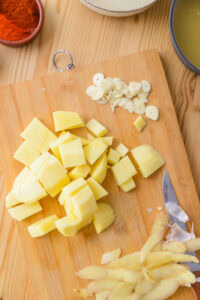
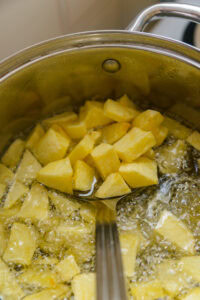
- Heat plenty of oil over medium heat (or to 150 °C in a deep fryer). Fry the potatoes for 7 to 8 minutes, until tender, then remove them.olive oil
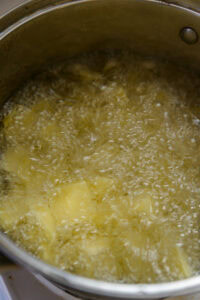
- Increase the heat to medium-high (or 170 °C) and fry again for about 2 minutes, until deeply golden. Drain on paper towels and season with salt.salt
- Spoon the brava sauce over the potatoes and serve immediately (or serve the sauce on the side).