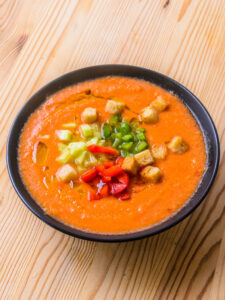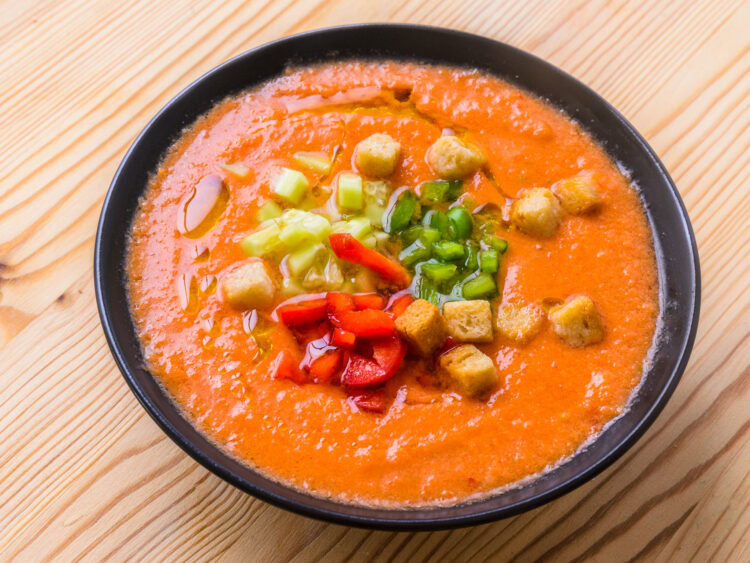
A raw, ice-cold Andalusian soup : very ripe tomatoes, peppers, cucumber, and stale bread, blended then passed through a chinois.
It’s too hot to cook, your appetite has vanished, and yet a well-chilled glass of gazpacho goes down in one gulp. Ripe tomato comes first, round and sweet, then Sherry vinegar wakes everything up and olive oil rounds out the acidity.
The cucumber leaves behind a fresh, green note, and the fried croutons still crunch even after the rest is gone. You might take it for a simple chilled tomato soup, right up to the first sip.
What is Andalusian gazpacho ?
Andalusian gazpacho is a raw, blended cold soup. Ripe tomatoes, peppers, cucumber, spring onion, garlic, stale bread, extra-virgin olive oil, Sherry vinegar, salt, and cold water : nothing is cooked; everything goes into the blender. The stale bread gives it body and a velvety texture while stabilizing the emulsion, and passing it through a chinois removes the last bits.
Its flavor is all about balance: the sweetness of the tomato, the freshness of the cucumber, the lift of the garlic and onion, the roundness of the oil, and the acidity of the vinegar.
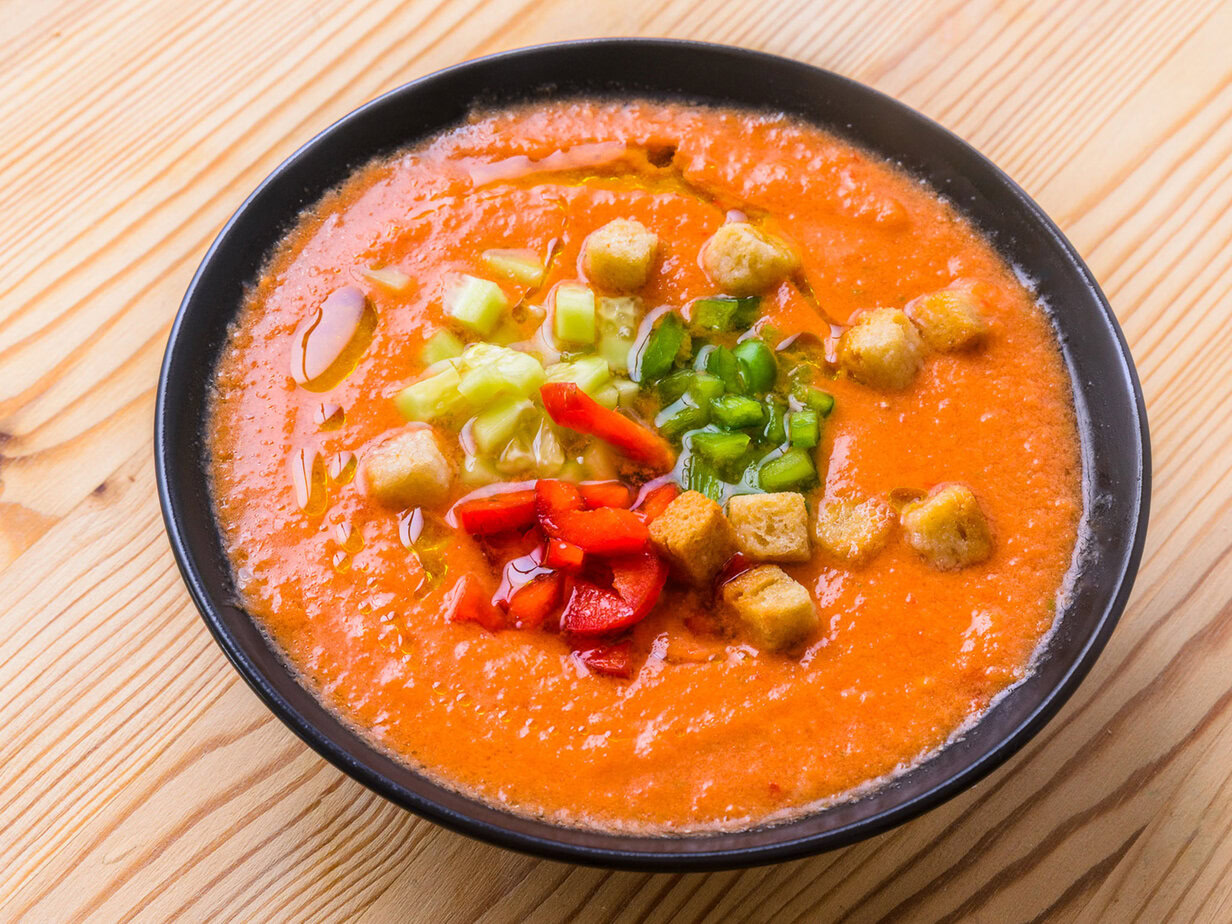
It’s served in a bowl or a glass, with fried croutons, diced pepper and cucumber, and sometimes chopped hard-boiled egg. For a complete summer meal, it pairs beautifully with spring rolls or a Thai iced tea.
Bread, oil, and garlic before tomato
Before it turned red, gazpacho was white. Andalusian day laborers pounded stale bread, garlic, olive oil, vinegar, salt, and water in a wooden mortar—enough to get them through a day in the fields on almost nothing. Málaga’s ajoblanco, made with garlic and almonds, comes from that same tomato-free base.
Tomatoes and peppers arrived from the Americas and only became part of the recipe in the 19th century. That’s when gazpacho took on the color and flavor we know today. Eugénie de Montijo, an Andalusian who became Empress of the French, helped introduce it beyond Spain around the same time.
After that, each household kept its own proportions, and the variations multiplied, starting with Córdoba’s salmorejo, thicker, heavier on the bread, and without cucumber or pepper. The electric blender did the rest in the 20th century. Today’s perfectly smooth texture was out of reach with a mortar.

The main ingredients in gazpacho
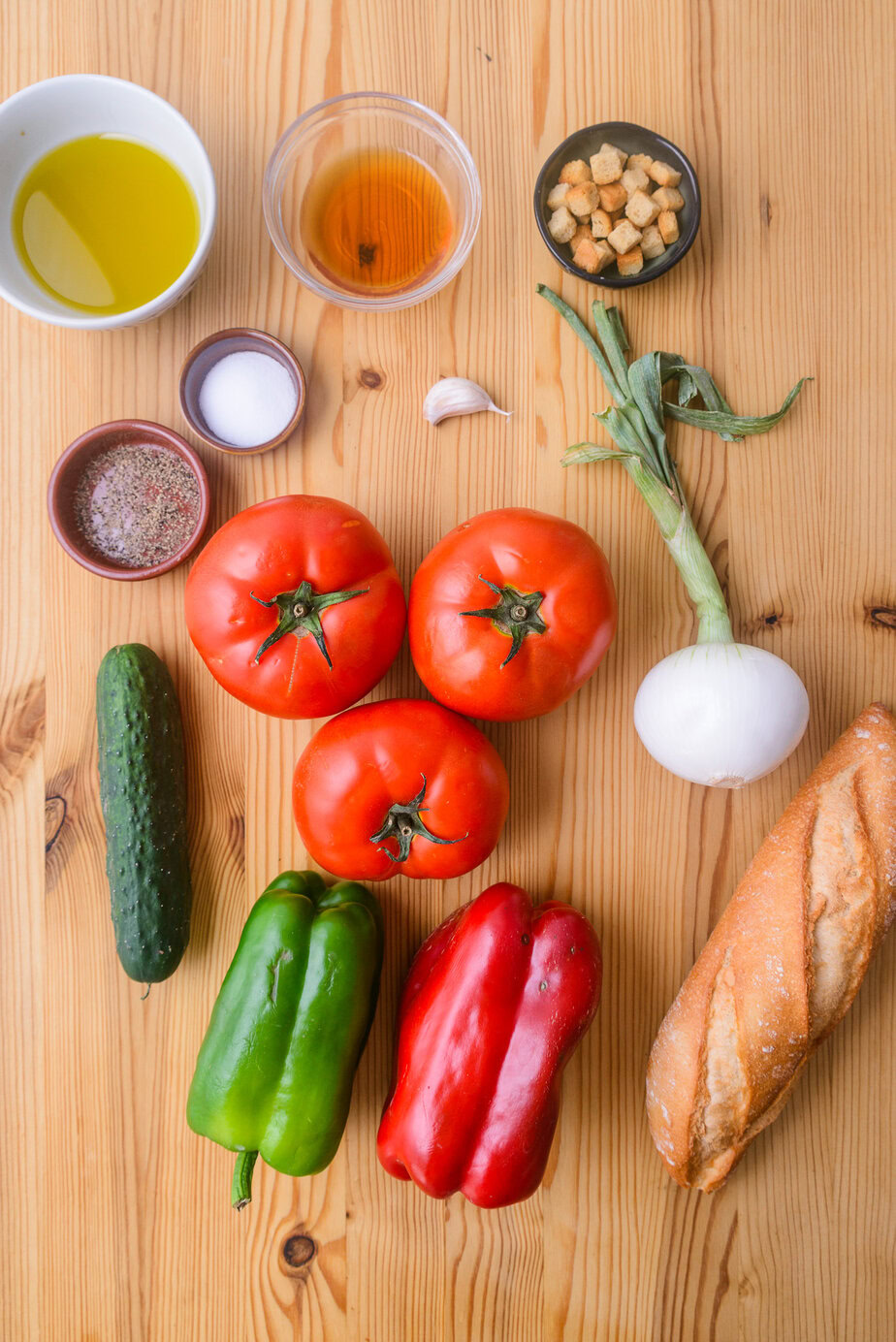
Tomatoes do most of the work. A kilo of very ripe, peeled tomatoes provides the juice, the color, and the sweet base, and the juicier they are, the less water you’ll need afterward.
Seeded cucumber brings freshness, half a red pepper and half a green pepper create the raw base, spring onion adds a gentler note than a dry onion, and a garlic clove with the germ removed adds lift without bitterness. These vegetables can be adjusted to taste.
Stale bread is what separates tomato soup from true gazpacho. It thickens the soup, stabilizes the emulsion, and gives it its velvety texture. The extra-virgin olive oil is poured in a thin stream while blending, as you would for mayonnaise, bringing body and aroma. Sherry vinegar brightens the whole thing, and even more than the tomato, it’s what makes gazpacho instantly recognizable.
Salt is not a minor detail. Without it, the soup falls flat and the tomato never quite comes through. Add the cold water last, anywhere from a splash to a full glass depending on the tomatoes, to adjust the consistency. Garnishes—fried croutons, hard-boiled egg, diced pepper, and cucumber—bring back the crunch a fully blended soup lacks.
Signs of authenticity and pitfalls to avoid
A good gazpacho is perfectly smooth, thoroughly chilled, and distinctly tangy. If the spoon catches on bits, the chinois was skipped. Add too much water at once and it turns into diluted tomato juice; too little salt and everything falls flat.
Pour the oil in a thin stream rather than all at once, otherwise the emulsion won’t come together and the fat will rise to the surface.
Ingredients
- 1 kg very ripe tomatoes peeled
- 0.5 medium cucumber seeded
- 0.5 medium red bell pepper
- 0.5 medium green bell pepper
- 0.5 medium spring onion Spanish spring onion (cebolleta)
- 1 clove garlic germ removed
- 70 g stale bread crumbs
- 60 ml extra-virgin olive oil
- 20 ml sherry vinegar
- 2 teaspoons salt
- 50-200 ml cold water adjust to desired texture
- pepper to taste
For serving
- fried croutons
- 1 hard-boiled egg optional
- diced bell pepper and cucumber optional
Instructions
Preparation
- Wash the vegetables.1 kg very ripe tomatoes, 0.5 medium cucumber, 0.5 medium red bell pepper, 0.5 medium green bell pepper, 0.5 medium spring onion
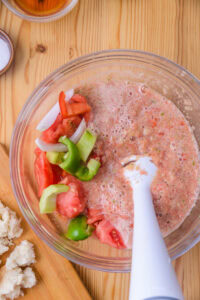
- Roughly chop the vegetables and place them in a large pot.
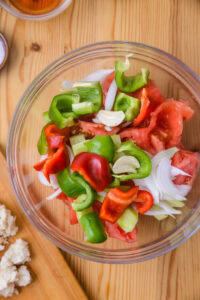
- Blend with an immersion blender.
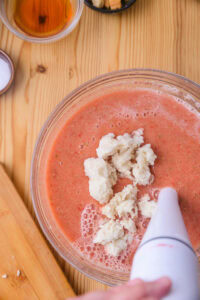
- Add the stale bread crumbs and blend again until fully incorporated.70 g stale bread crumbs
- If the gazpacho is too thick, add a little cold water and blend again.50-200 ml cold water
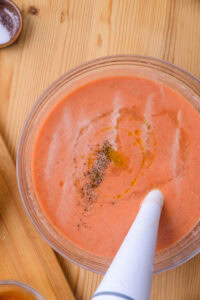
- Drizzle in the olive oil while continuing to blend to emulsify.60 ml extra-virgin olive oil

- Season with the vinegar, salt, and pepper, then taste and adjust as needed.20 ml sherry vinegar, 2 teaspoons salt, pepper
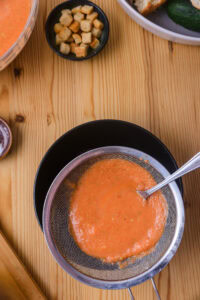
- Strain through a chinois (only if you have a very powerful blender; otherwise, the particles will not be fine enough and you will end up with flavored water instead of gazpacho).
- Refrigerate until the gazpacho is thoroughly chilled.
- Serve well chilled with the fried croutons, and add the hard-boiled egg and diced bell pepper and cucumber, if desired.fried croutons, 1 hard-boiled egg, diced bell pepper and cucumber