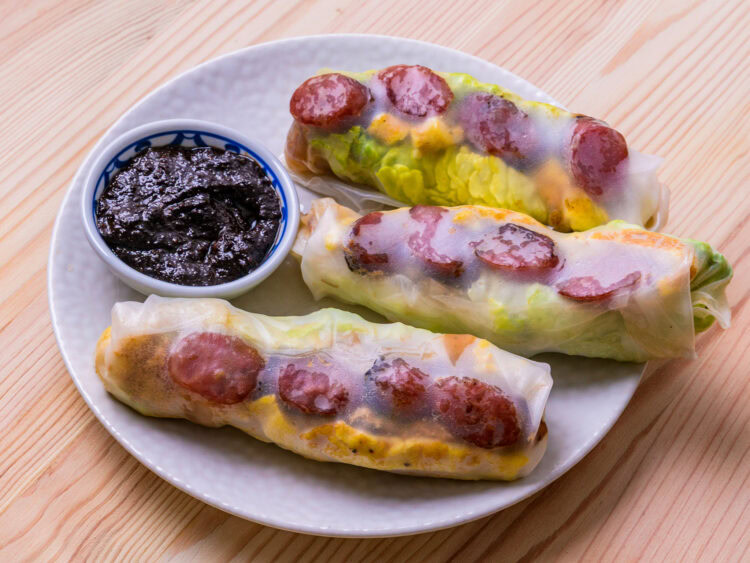
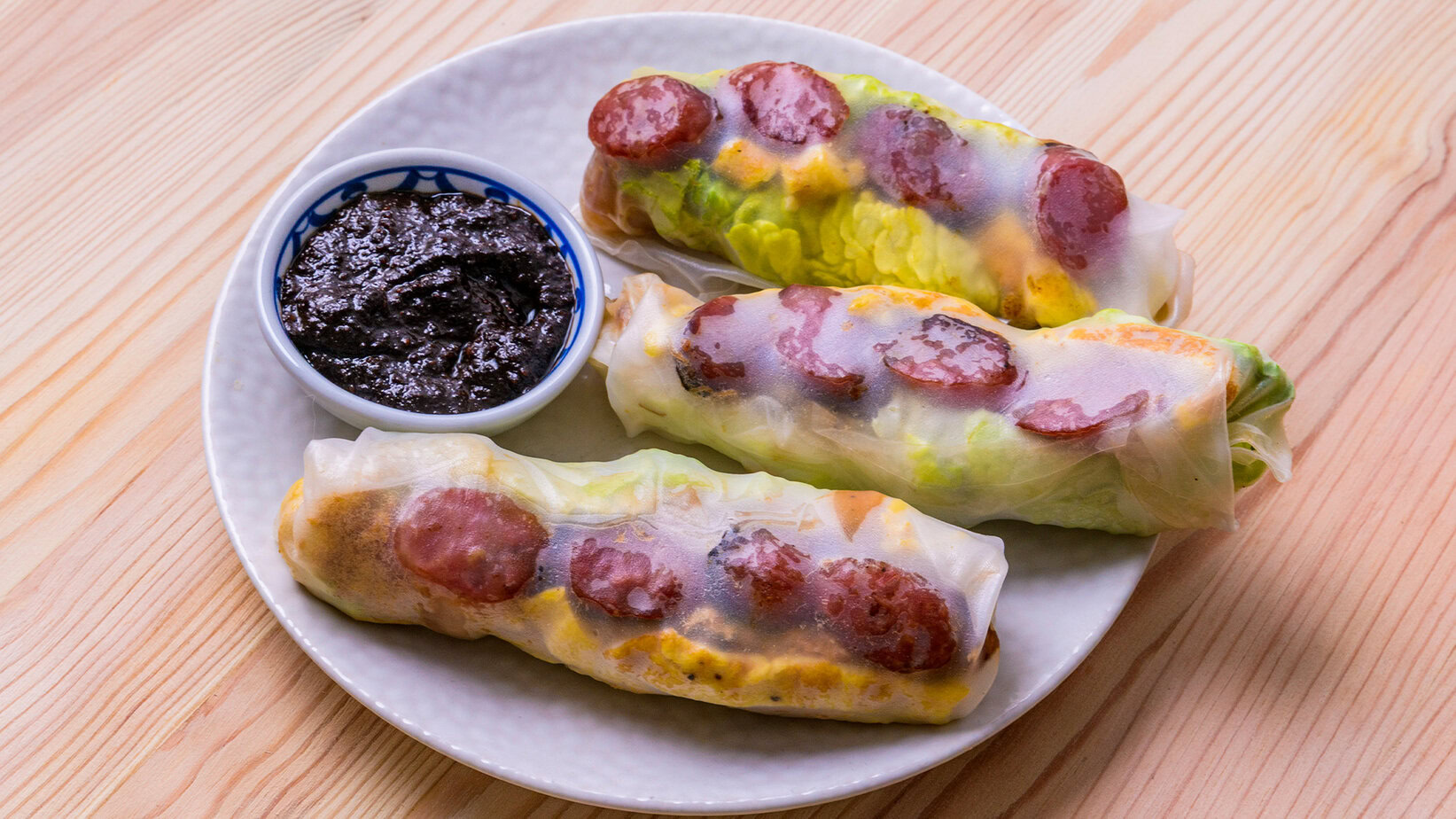
Savory Vietnamese rice paper rolls filled with sautéed jicama, egg, Chinese sausage, and fresh herbs, served with a creamy hoisin-peanut sauce.
In Ho Chi Minh City’s 5th district, a vendor lifts a translucent sheet of rice paper, swishes it through warm water with a practiced flick, then tucks in glossy batons of jicama. Thin slices of deep red lạp xưởng mingle with golden ribbons of egg and a scattering of dried shrimp, while a sweet-savory aroma rises in the heat of southern Vietnam.
She rolls it tightly, then dips it into a thick, glossy black sauce made with hoisin sauce and topped with peanuts. The contrasts are what make it so good: crisp, fresh vegetables, slightly springy sausage, and fragrant basil running through every bite.
That, in one bite, is bò bía: a Vietnamese street snack of Chinese origin, defined by its crunch and its signature dark dipping sauce.
What exactly is Bò Bía?
Bò bía, more precisely bò bía mặn, is a fresh, non-fried Vietnamese roll wrapped in softened rice paper. It is usually filled with julienned jicama, Chinese sausage, egg, dried shrimp, and Thai basil, then served with a peanut-hoisin sauce.
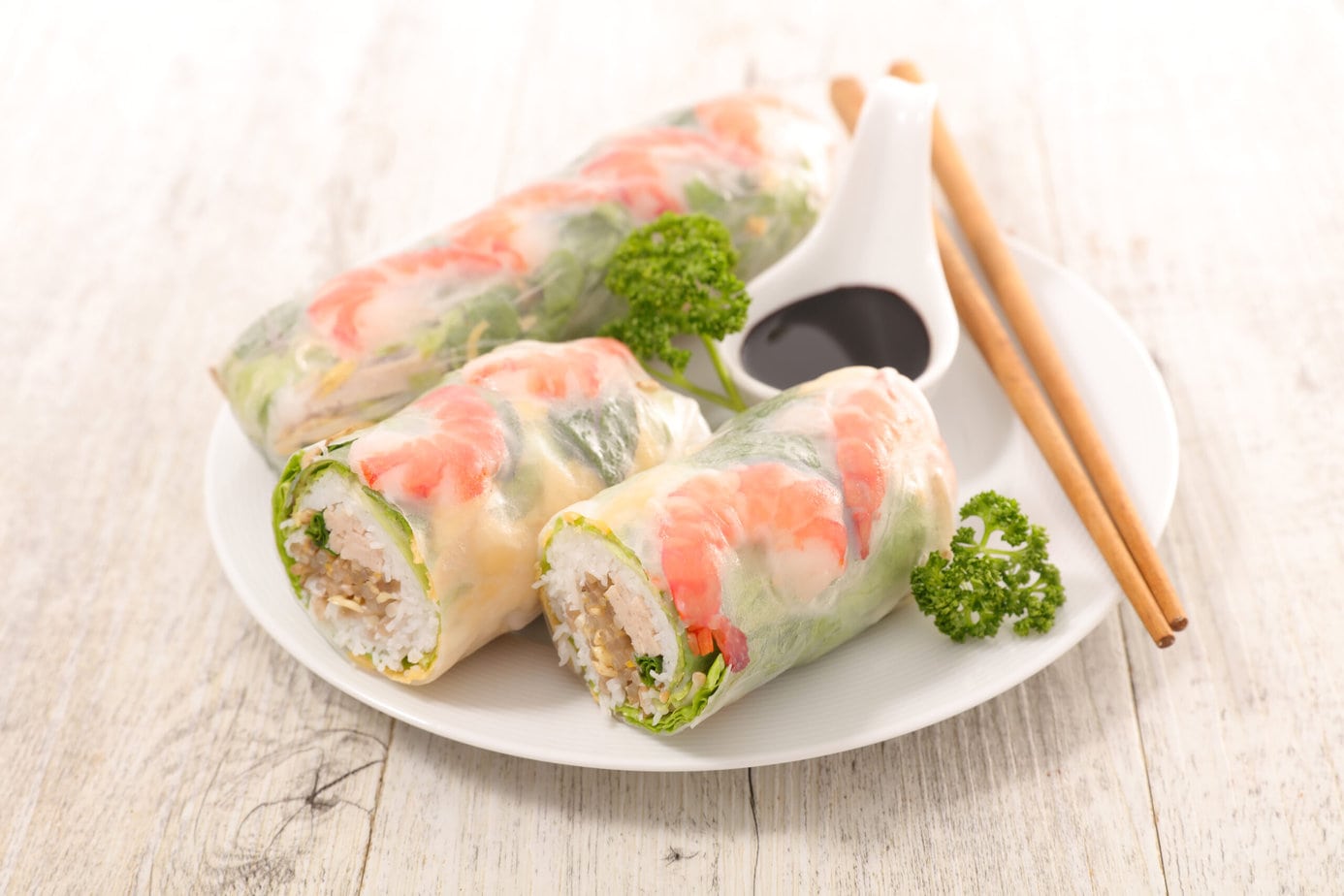
The name often causes confusion: “bò” usually suggests beef, but here the term is actually a Vietnamese echo of the Hokkien pȯh-piáⁿ (薄餅卷), meaning “thin pancake roll.” In other words, there is no beef in bò bía.
The filling is built around a simple contrast: a mild, crunchy vegetable base (jicama, sometimes carrot), bolder ingredients for depth (Chinese sausage and dried shrimp), egg for softness, and basil for fragrance.
Two Vietnamese variations share the same name. In the South, the savory bò bía mặn is the version most commonly found on the street and outside schools. In the North, bò bía ngọt replaces the sausage with grated coconut, malt syrup (mạch nha) or sweet molasses, and toasted sesame seeds, all rolled in a soft wheat crepe.
The choice of wrapper says a lot, too: today, Vietnamese rolls tend to use rice paper, while their popiah ancestor was made with thin wheat crepes. That shift reflects how the dish evolved alongside a Vietnamese pantry centered on rice. During my travels in Thailand, I also tasted a version with the same Hokkien roots, but there the wheat wrapper has been preserved.
The origins of Bò Bía
The roll arrived in Saigon with Teochew and Fujianese migrants, many of whom settled in the Chợ Lớn district, a major hub for dim sum. They brought with them popiah, traditionally eaten during Qingming in the Chaoshan region and around Xiamen.
Over time, these rolls began to be sold from street carts. Wheat crepes quickly gave way to Vietnamese rice paper, which was more readily available, but the basic idea stayed the same: build volume with jicama, then layer in salty, aromatic accents.
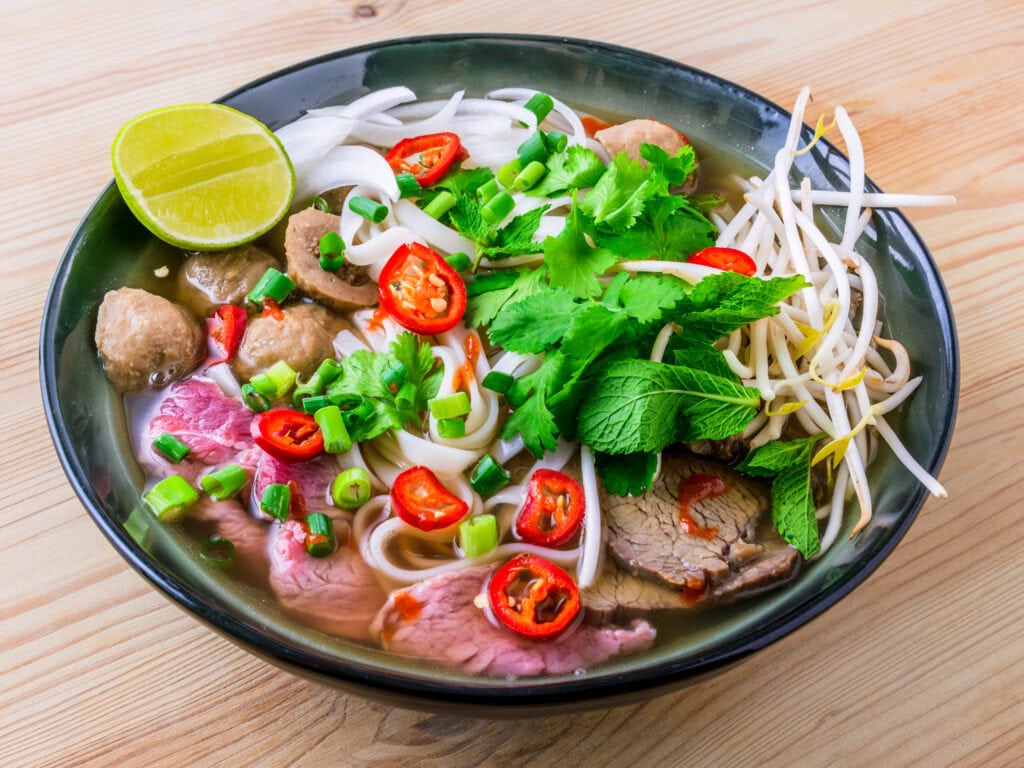
From Chợ Lớn, the snack spread to schoolyards and markets. In the South, especially in Saigon, you mostly find bò bía mặn, often near stalls selling Vietnamese phở, bò bún, or bò kho. In Hanoi and the North, “bò bía” more often refers to the sweet version (bò bía ngọt), in the same broad snack category as bún chả.
Each adaptation followed the local pantry while preserving the structure of the Chinese “thin pancake roll”: a mild vegetable center that carries more assertive flavors.
The main ingredients in Bò Bía
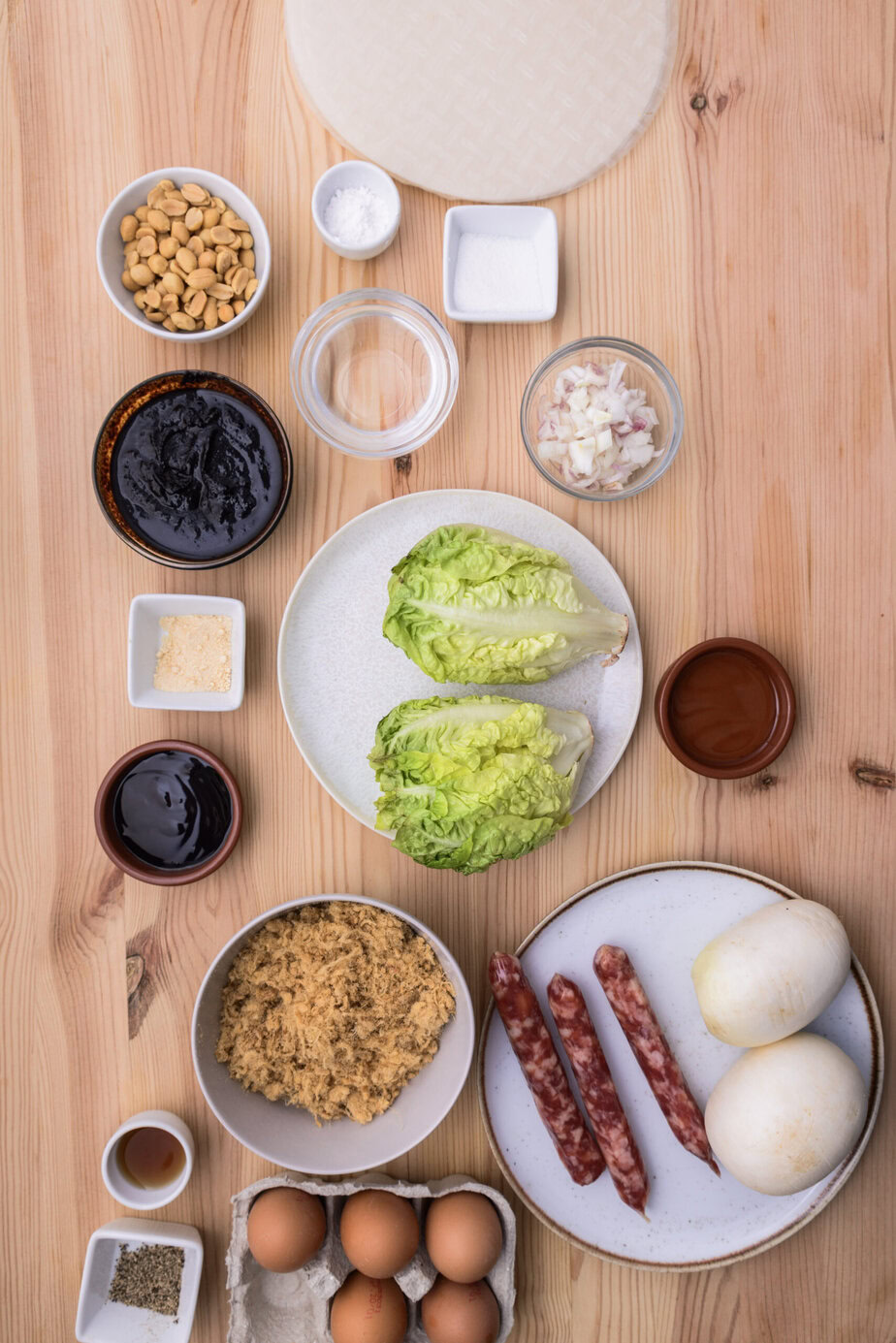
Rice paper (bánh tráng): Thin, slightly elastic, and translucent enough to show off the colors of the filling. It softens quickly, but can tear if soaked for too long; vendors often dip it in water for just a moment rather than letting it sit.
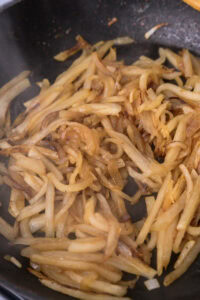
Jicama (củ sắn) and carrot: Lightly sautéed until glossy but still crunchy, they bring volume and freshness. Jicama adds juicy crunch and gentle sweetness; carrot, once considered a more “luxury” addition, now brings color and an extra touch of sweetness.
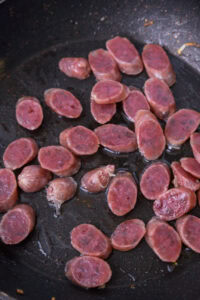
Chinese sausage (lạp xưởng/lap cheong): Often quickly blanched or pan-fried, then cut into sticks, it adds sweet richness and the savory aroma of salted, dried pork, often strongly marked by five-spice. When shopping, do not confuse it with Vietnamese nem chua.
Thai basil (húng quế): The anise-scented herb that makes every bite taste clean and fresh. Without it, the roll feels flatter, even if the sausage is perfect, much like in Thai basil chicken.
Lettuce: It adds moisture and extra crunch while supporting the basil, though its role remains secondary.
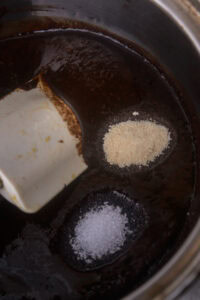
Peanut-hoisin sauce: A thick sauce made with sweet bean paste (tương đen/tương ngọt), often simmered with a little pork or chicken liver for depth, then topped with crushed peanuts, fried shallots (or fried garlic), and chili to taste. Gỏi cuốn (classic spring rolls) can also be served with peanut-hoisin sauce in the South. What really sets bò bía apart is the filling: jicama, lạp xưởng, dried shrimp, and so on.
Serving and signs of authenticity
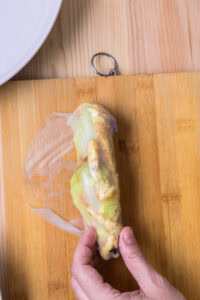
The finished roll is fairly slim, meant to be eaten in two bites, and best enjoyed within minutes of being assembled. On Saigon sidewalks, vendors line up ready-made rolls in glass display cases, with a jar of glossy black sauce and a jar of bright red chili alongside them.
Groups of students leaving school grab a roll, spread on the sauce with a small wooden stick, add chili according to their tolerance, and walk off happily chewing.
Essential for authenticity: a jicama base, lạp xưởng, dried shrimp, egg ribbons, Thai basil, and peanut-hoisin sauce.
What to avoid: beef, sliced pork or whole shrimp inside, rice vermicelli (whether as noodles or as “filler”), fish sauce-based nước chấm (such as nem sauce), fried wrappers like nems, or wrappers that are too thick and not pliable enough.
Acceptable variations: vegetarian versions (chay) on Buddhist observance days, kohlrabi instead of jicama in the North, or a home-style sauce thinned with coconut water rather than enriched with liver, as long as the base remains hoisin and the topping stays peanut-based.
Ingredients
Main Ingredients
- 300 g lettuce
- 150 g Thai basil leaves húng quế
- 750 g jicama củ sắn, optional
- 100 g ruốc dried shredded pork
- 5 eggs chicken or duck eggs
- 3 Chinese sausages lạp xưởng
- 50 rice paper wrappers medium thickness
- roasted peanuts
- shallots chopped
- cooking oil
Omelet Seasoning
- 1 teaspoon fish sauce nước mắm
- 0.5 teaspoon black pepper ground
Sautéed Jicama Seasoning
- 1 tablespoon oyster sauce
- 1 teaspoon hạt nêm chicken bouillon powder
- 0.5 teaspoon black pepper ground
Tương Chấm (Dipping Sauce)
- 50 g peanuts roasted
- 200 g hoisin sauce tương đen
- 0.5 teaspoon tapioca starch
- 300 g water
- 0.5 teaspoon hạt nêm chicken bouillon powder
- 1.5 tablespoons sugar
Instructions
Prepare the Vegetables
- Wash the lettuce and Thai basil thoroughly, then drain well and pat dry.300 g lettuce, 150 g Thai basil leaves
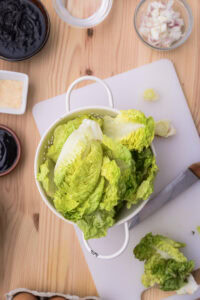
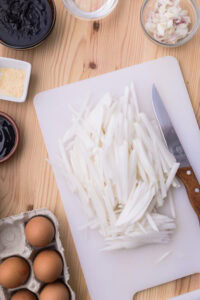
- Peel the jicama and cut it into fine julienne strips. Peel and chop the shallots.750 g jicama, shallots
Prepare the Omelet
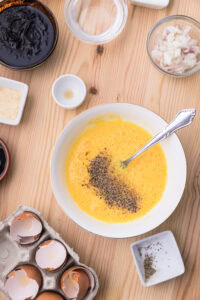
- Beat the eggs with the fish sauce and black pepper. Cook into a thin omelet in a little oil, then let cool and cut into strips.5 eggs, 1 teaspoon fish sauce, 0.5 teaspoon black pepper, cooking oil
Sauté the Jicama
- Heat a drizzle of oil in a pan and sauté the shallots until fragrant. Add the julienned jicama and stir-fry, then season with oyster sauce, hạt nêm, and pepper. Let cool.1 tablespoon oyster sauce, 1 teaspoon hạt nêm, 0.5 teaspoon black pepper
Cook the Sausages
- Boil the Chinese sausages until cooked through. Let cool, slice thinly, then quickly brown them if desired.3 Chinese sausages
Prepare the Dipping Sauce
- Blend the roasted peanuts, tương đen, tapioca starch, and water until smooth. Pour into a saucepan, bring to a boil while stirring, then season with hạt nêm and sugar and cook until thickened.50 g peanuts, 200 g hoisin sauce, 0.5 teaspoon tapioca starch, 300 g water, 0.5 teaspoon hạt nêm, 1.5 tablespoons sugar
Assemble the Rolls
- Place a rice paper wrapper on the work surface. Add lettuce, sautéed jicama, omelet strips, sausage slices, and ruốc, then fold in the sides and roll tightly. Repeat until all the ingredients are used.50 rice paper wrappers, 100 g ruốc
To Serve
- Serve the bò bía immediately, tightly rolled, with the hoisin-peanut dipping sauce.
Notes
- Choose pliable rice paper wrappers to help prevent tearing.
- Adjust the amount of jicama to taste, or omit it if you prefer.
Nutrition
Culinary sources
• 3 ways to make bò bía, the dish of an entire childhood – Bếp Gia Đình (Vietnamese)
• What is bò bía? A simple, tasty recipe for savory bò bía – Hướng Nghiệp Á Âu (Vietnamese)
• Bò bía (Vietnamese spring rolls with Chinese sausage) – Wandering Chopsticks (English)
• Popiah – Wikipedia (English)
• Bò bía in the old days – Hoài niệm Tây Ninh (Vietnamese)
• Vietnamese spring rolls with jicama, carrot, egg, and Chinese sausage (bò bía) – Vicky Pham (English)
• Vietnamese spring rolls recipe (bò bía recipe) – Hungry Huy (English)
• Bò bía – Vietnamese rolls with jicama, carrot, Chinese sausage, egg, and dried shrimp – Gastronomy (English)
• Bò bía – Wikibooks (Vietnamese)
• Vietnamese summer rolls (bò bía) – Everyday Inclusion 2022: Foods That Connect Us (English)
• What is the peanut sauce recipe Chinese restaurants use for their dumplings? – Reddit (English)