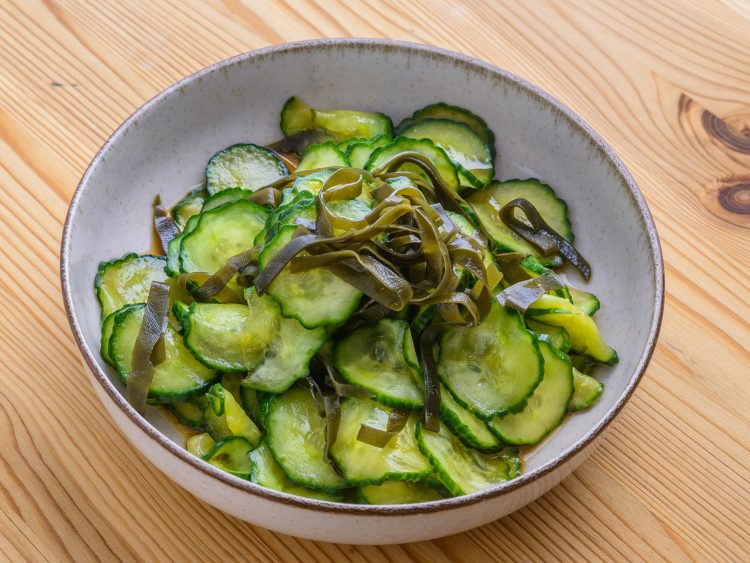
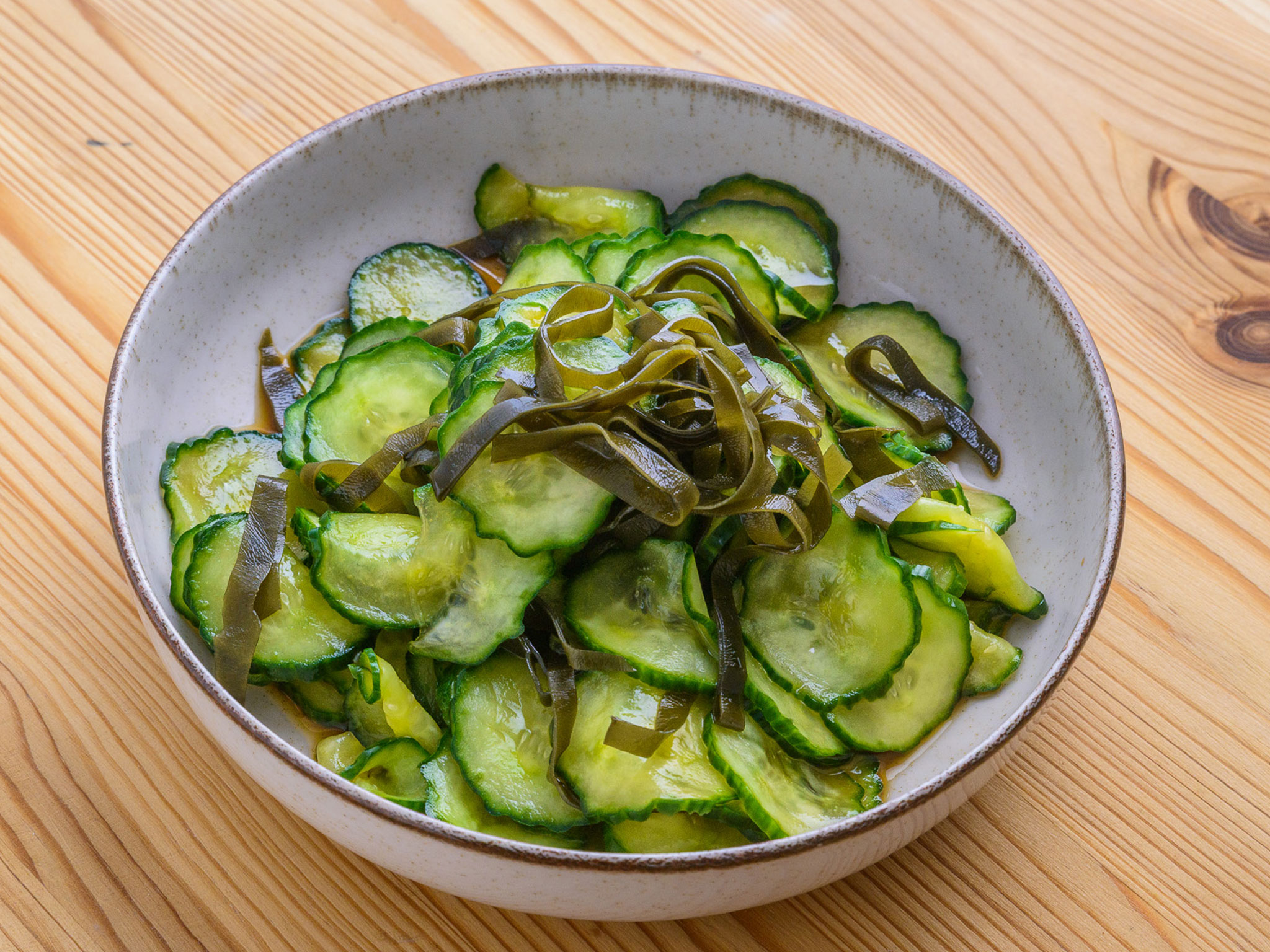
A small Japanese cucumber and wakame salad, dressed with rice vinegar, sugar and soy sauce.
Grilled fish, a bowl of rice, something a little rich, and on the side a handful of cucumber slices that freshen everything up. Sunomono is for nibbling between bites: the cucumber crunches, the wakame slips by with its briny taste of the sea, and the rice vinegar, mellowed with a little sugar and soy sauce, wakes up the palate.
It needs no heat and no pan, just a pinch of salt and two hands to squeeze the cucumber.

What Is Sunomono?
Sunomono is a small salad from Japanese cuisine, served as a side dish. The most common version, the one in this recipe, is kyuri to wakame no sunomono: slices of Japanese cucumber and wakame, dressed with rice vinegar, sugar and soy sauce. The sugar softens the sharpness of the vinegar, the soy sauce brings salt and umami, and the wakame its taste of the sea.
The word is written 酢の物 and means “vinegared things”: su is vinegar, mono means things. In Japan, it refers to a whole family of small vegetable or seafood dishes dressed with vinegar, closely related to tsukemono, Japanese pickles.
A Seaweed Eaten in Japan for More Than 1,300 Years
Wakame has been part of the Japanese diet for more than 1,300 years. In 701, the Taihō Code even accepted it, along with other seaweeds, as payment of taxes. That date applies to the seaweed: no written source makes it possible to date the cucumber and wakame salad.
The dressing follows an age-old formula. Sanbaizu, “three-cup vinegar,” combined vinegar, soy sauce and mirin in equal parts; today, sugar often replaces the mirin, as it does here. Nihaizu, “two cups,” is just vinegar and soy sauce.
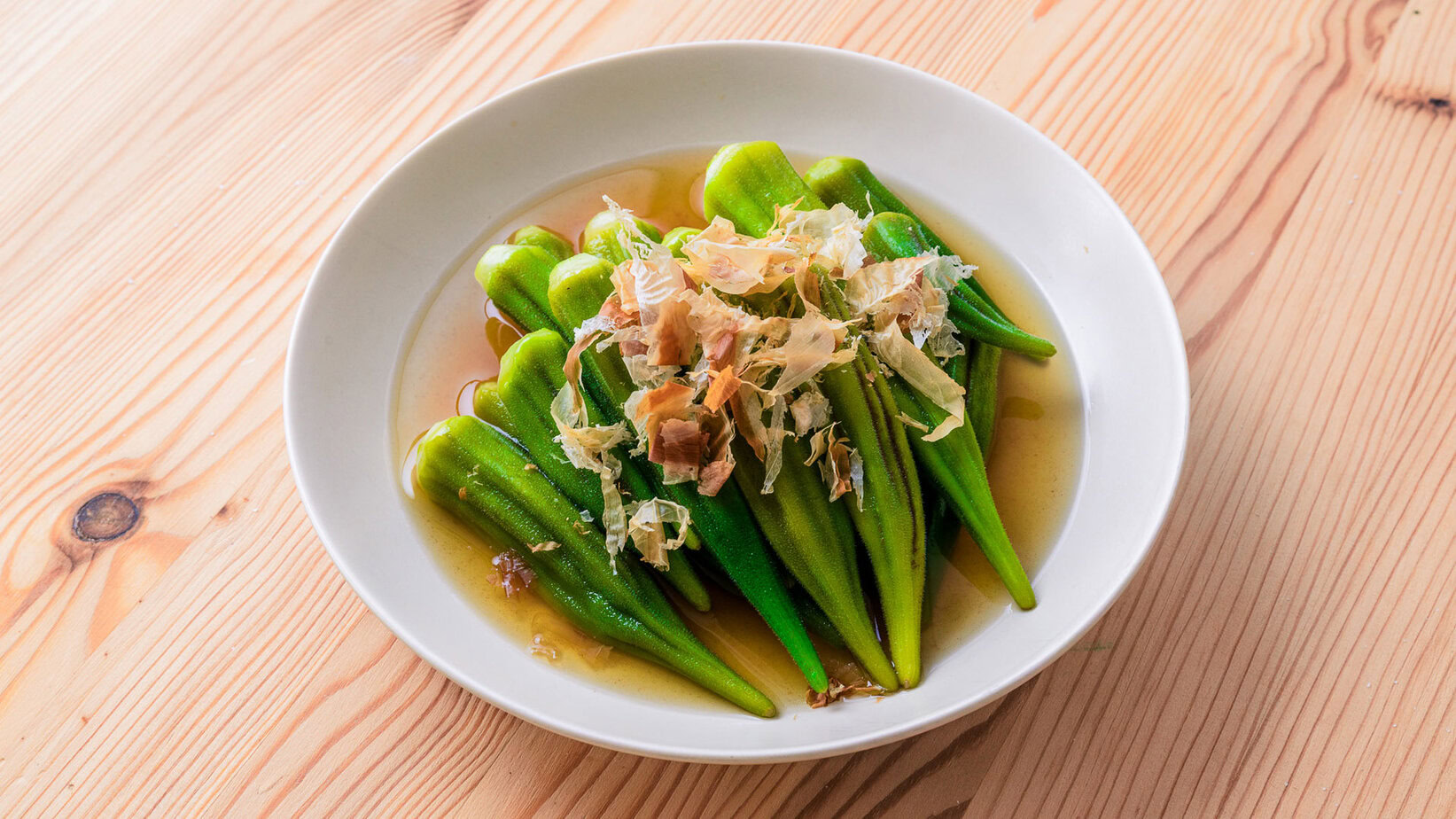
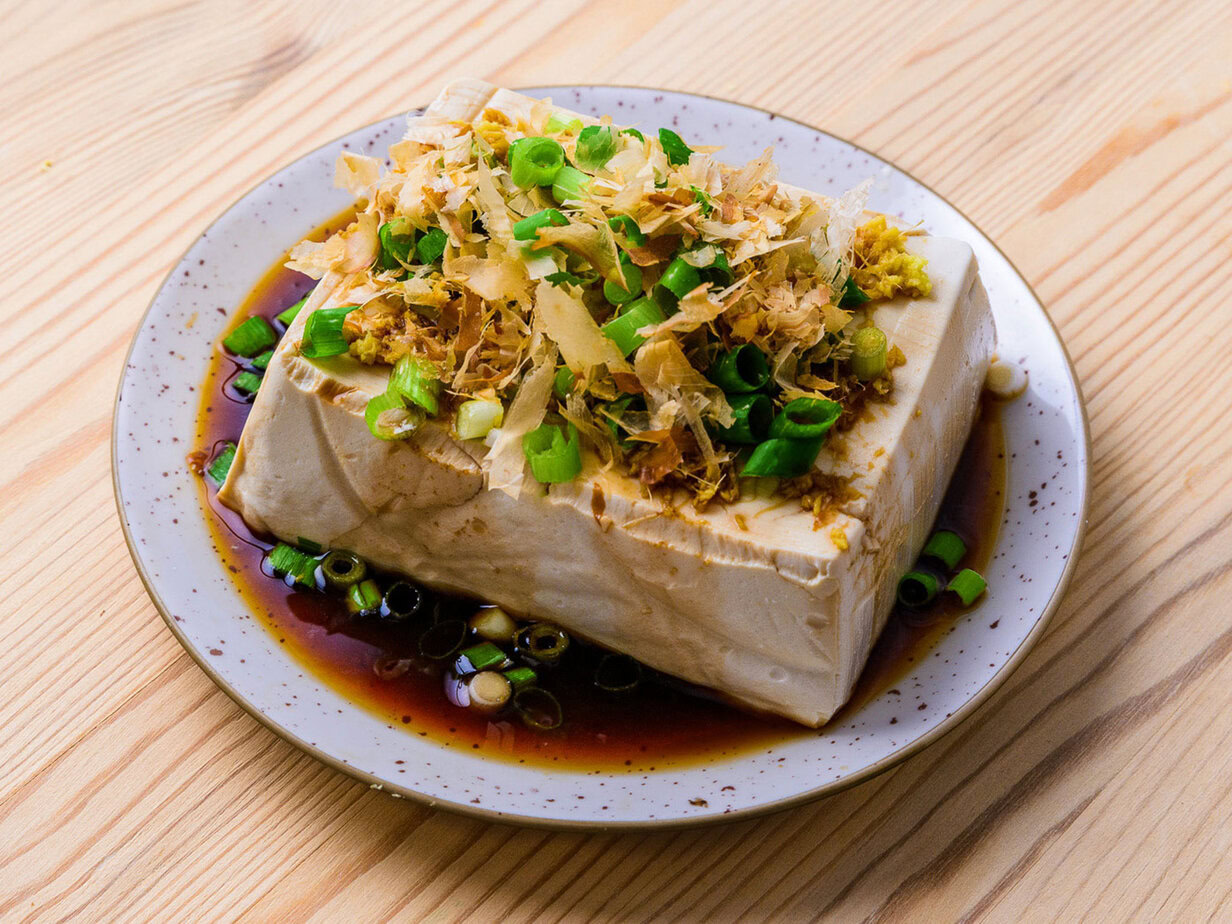
Sunomono is served in small portions in an individual bowl, the kobachi. It is a hashi-yasume, literally a “rest for the chopsticks”: you come back to it between the other dishes, and its acidity lightens grilled fish, pork tonkatsu or chicken karaage.
The Main Ingredients in Sunomono
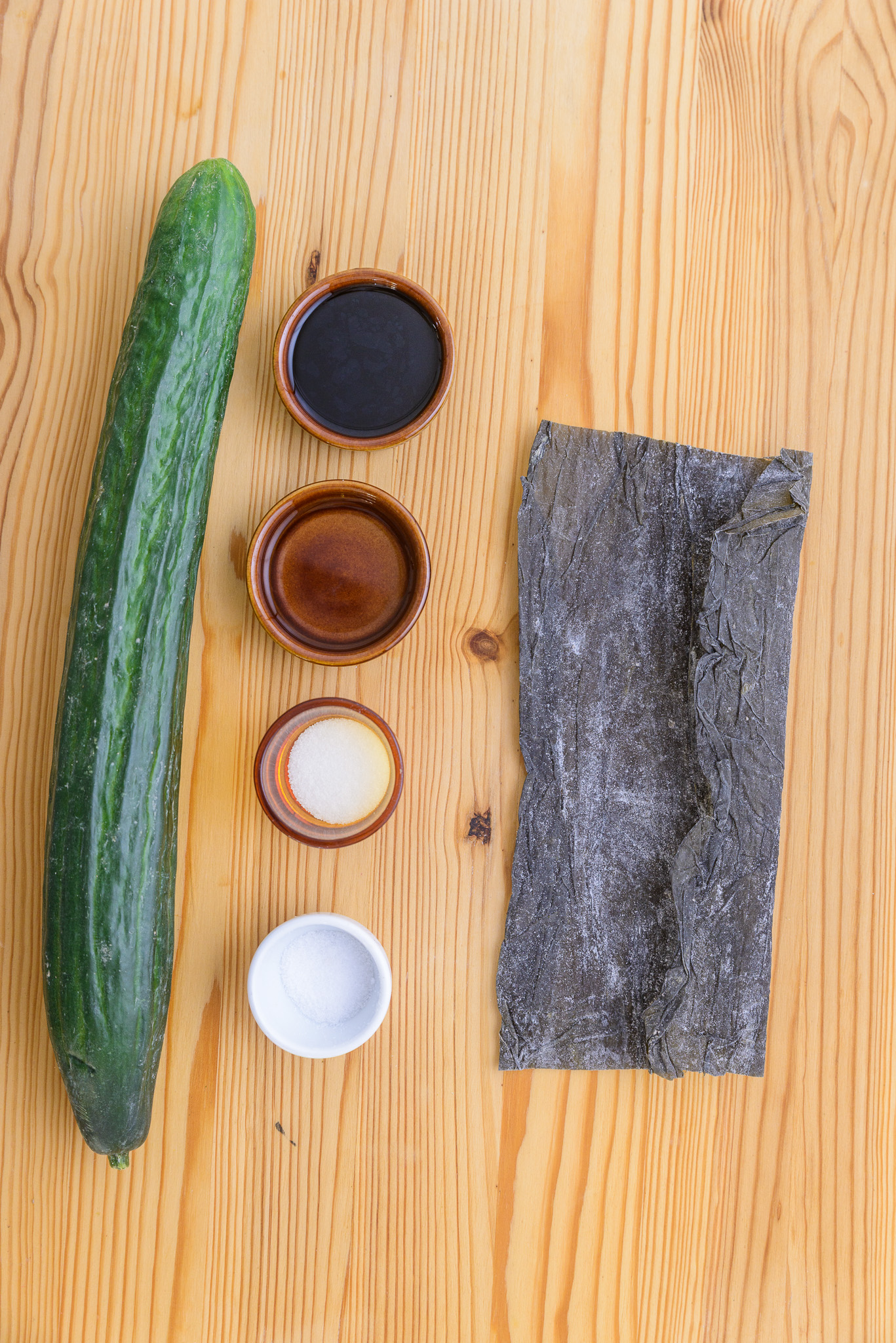
Japanese cucumber, or kyuri, is slender, thin-skinned and almost seedless, and it stays crunchy. A Lebanese-style mini cucumber makes a good substitute; so does a European cucumber, once seeded. Salt draws the water out of the slices and softens them, so they can be squeezed without breaking.
Wakame is sold dried or packed in salt at Asian grocery stores. Dried wakame is rehydrated in water; salted wakame is rinsed and then soaked to remove the salt. Soft and a little slippery, it contrasts with the crunch of the cucumber.
The dressing comes down to three ingredients: rice vinegar for acidity, a little sugar to round it out and a teaspoon of soy sauce for salt. It goes straight onto the cucumber and wakame, with no need to mix it separately.
Technique Tips for Good Sunomono
The cucumber needs to release its water before it is dressed, or it will dilute the dressing. Cut it into slices 1 to 2 mm thick, with a mandoline if possible, so they all release their water at the same rate.
Squeeze the cucumber firmly, but only once it has softened: any sooner and it breaks. Squeeze the wakame as well before mixing it in.

For a variation, add bias-cut slices of cooked octopus, cooked shrimp or surimi sticks, with the same dressing. A little julienned ginger or finely sliced shiso, scattered on at the end, adds freshness. In Brazil’s sushi bars, surimi sunomono is sweeter, made without soy sauce, and sprinkled with toasted sesame seeds. For another wakame dish, try the wakame salad.
Ingredients
Cucumber
- 1 cucumber Japanese (kyuri)
- 0.25 teaspoon salt
Wakame
- 2 g wakame dried, or 20 g salted wakame
Dressing
- 1 tablespoon rice vinegar
- 0.5 tablespoon sugar
- 1 teaspoon soy sauce
Instructions
Cucumber
- Cut the cucumber into thin slices.1 cucumber
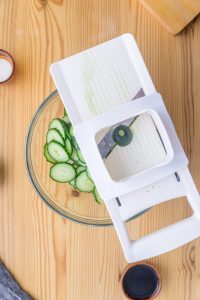
- Put the slices in a bowl.
- Sprinkle with the salt and toss to coat them well.0.25 teaspoon salt
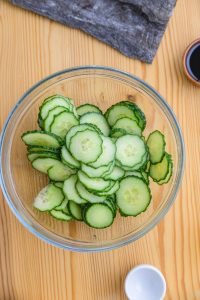
- Let sit for about 5 minutes, until the cucumber is pliable and has released some water.
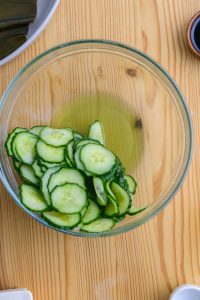
- Firmly squeeze the cucumber by hand to press out the water: if squeezed before it is pliable, it will break and lose its shape.
Wakame
- Rehydrate the dried wakame in water for about 5 minutes.2 g wakame
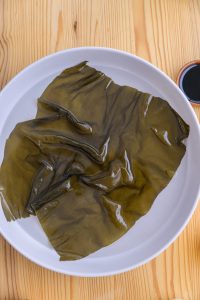
- If using salted wakame, rinse it quickly.
- Then soak it in a large amount of water for 5 to 10 minutes to remove the salt.
- Then cut it into bite-size pieces.
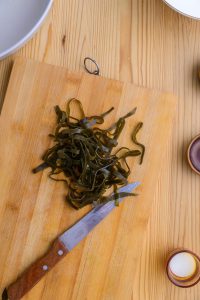
- Squeeze the wakame to drain it.
Dressing
- Put the cucumber and wakame in a bowl.
- Add the rice vinegar, sugar and soy sauce.1 tablespoon rice vinegar, 0.5 tablespoon sugar, 1 teaspoon soy sauce
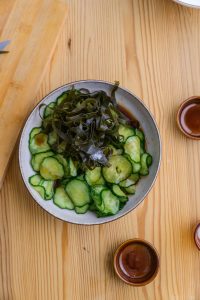
- Mix.