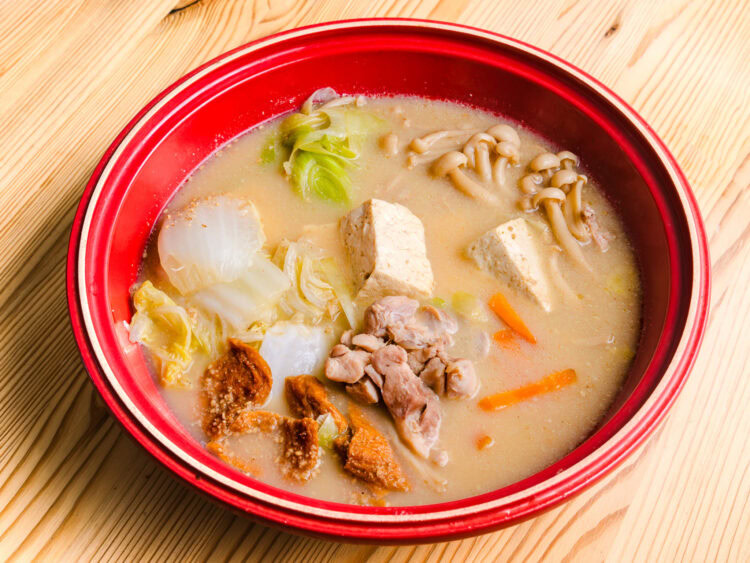
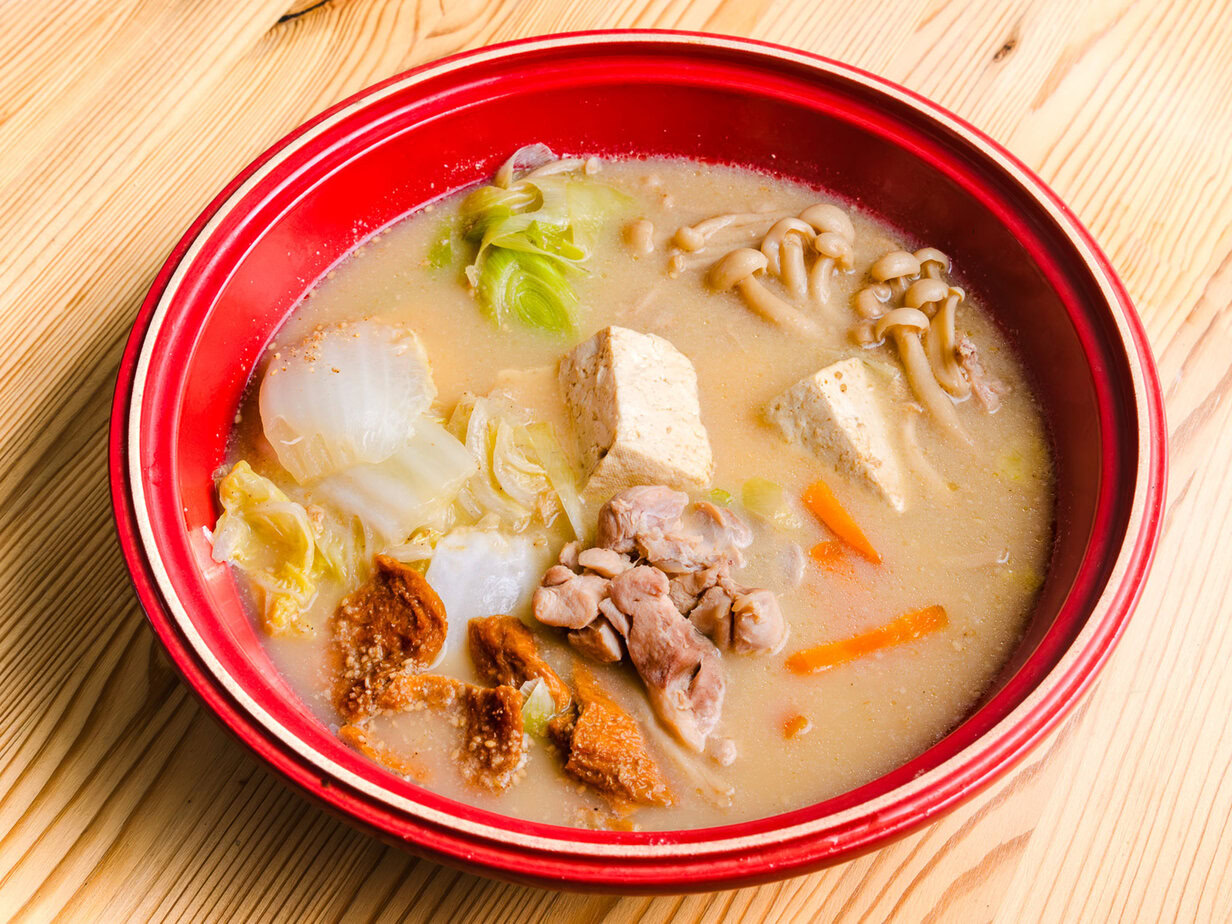
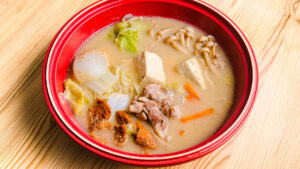
A comforting Japanese nabe in a creamy shiro-dashi and soy milk broth, with chicken, tofu, vegetables, and mushrooms for a complete yet delicate meal.
It’s grey outside, and on the table a donabe sends up gentle wisps of steam over its milky-white broth. Unsweetened soy milk, white miso, and dashi lend it a light, rounded mellowness without any heaviness.
Chicken, tofu, aburaage, and vegetables simmer gently under the lid while everyone helps themselves straight from the pot. There is just one golden rule: never let the broth boil.
What is tōnyū nabe?
“Tōnyū” means soy milk, and “nabe” means pot. The dish belongs to the nabemono family — those Japanese hot pots shared at the center of the table.
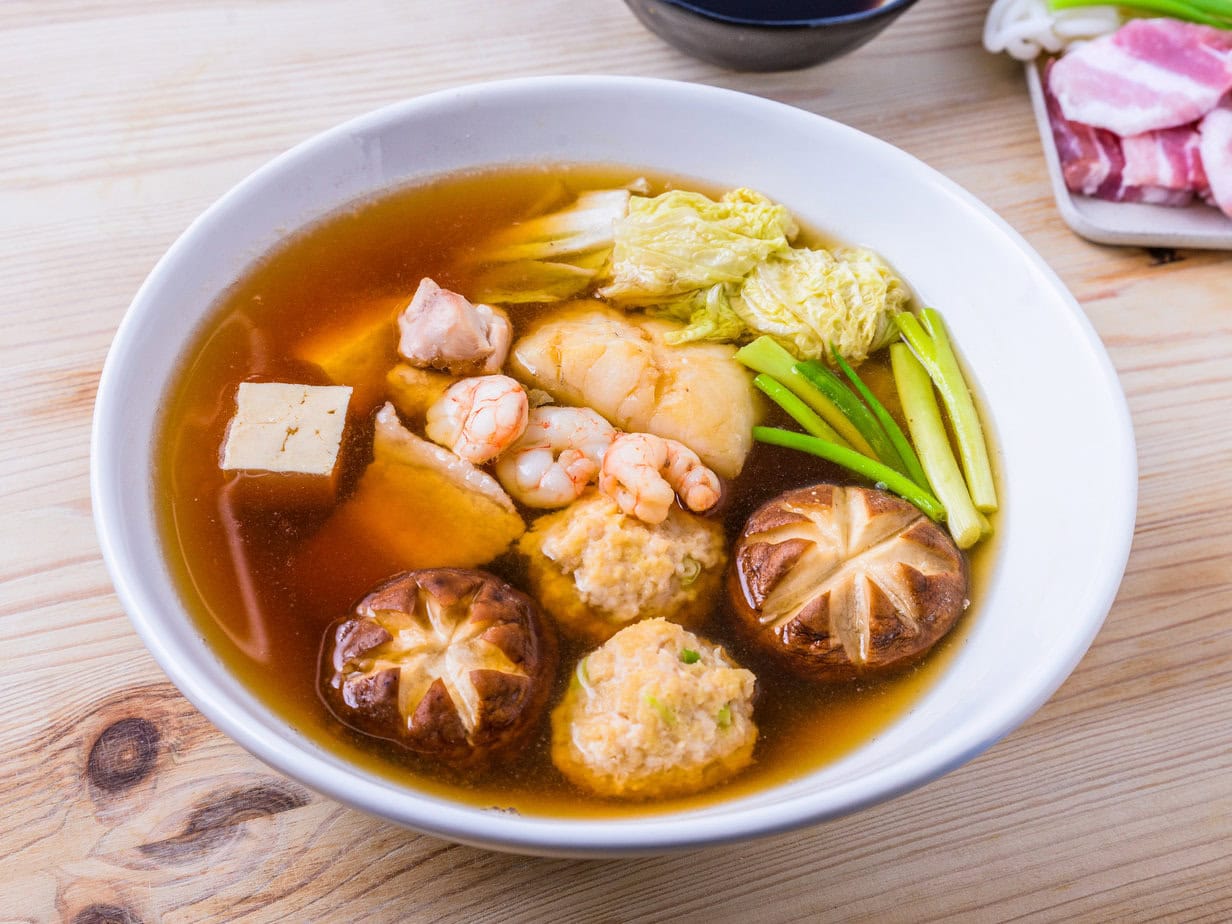
Unlike a classic clear, salty broth, its base is pale and creamy, built on kombu and bonito dashi, white miso and unsweetened soy milk. Thin slices of pork or chicken, tsukune, tofu, aburaage, napa cabbage, and mushrooms are simmered right in it.
Texture is everything. The soy milk goes in late and is warmed gently, to around 63 °C, so it stays silky-smooth instead of curdling. Once the main ingredients are gone, finish with udon or rice, which soak up a broth enriched with mushrooms, miso, and savory meat juices.
A Tokyo invention from 1991
Despite its traditional look, tōnyū nabe is a recent creation. Its best-documented origin dates to 1991 at Zantei Irori, a kappō restaurant in Nishi-Shinbashi, Tokyo. There, Chef Matsuda created a soy milk hot pot at a time when soy milk was still seen as beany and astringent.
His formula: equal parts dashi and fresh, house-pressed raw soy milk, seasoned with white miso and served with delicate garnishes. Some accounts mention kamoniku — duck — added to deepen the dashi without overpowering the broth.
The dish gained recognition after several features in the lifestyle press, including Hanako magazine, gradually evolving from restaurant curiosity to seasonal favorite. Other sources trace its origins to Terakoya in Kyoto — a city with a long tofu tradition of yudōfu and yuba — though without as clear a date or original recipe as Zantei Irori.
The idea of a mild, milky hot pot is older, though. Asuka nabe, from the Nara region between 592 and 710, already simmered chicken and vegetables in a milk-and-dashi broth; Yamato nabe revives the idea by swapping cow’s milk for soy. From the 2000s onward, soy’s healthy image brought tōnyū nabe into home kitchens: soy milk production reached 303,000 kilolitres in 2015, and ready-made broths like Mizkan’s (2005) popularized the sesame version.
The main ingredients in tōnyū nabe
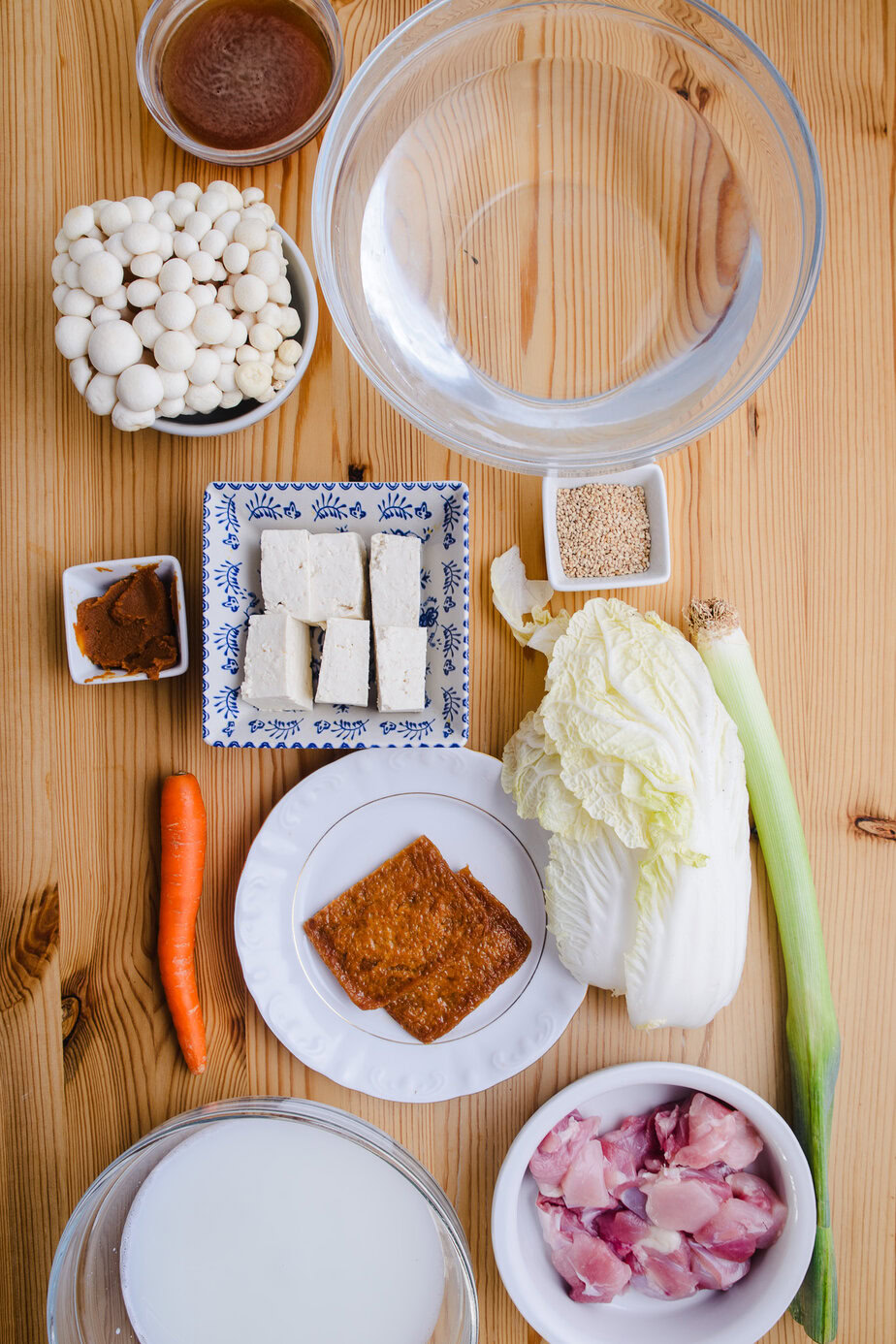
The broth starts with a kombu and katsuobushi dashi, which lends umami depth and keeps the soy milk from tasting flat. Shiro miso adds sweetness, pale color, and body — rounder and milder than red miso. A touch of sake, mirin and usukuchi shōyu seasons everything while keeping the base pale. At the heart of the dish is unsweetened soy milk (mu-chōsei tōnyū), made from just soybeans and water: avoid sweetened or flavored versions.
For protein, thin slices of pork or pieces of chicken cook quickly while enriching the broth, often joined by tsukune — juicy meatballs that soak up flavor. Medium-firm tofu and aburaage drink in the broth and release it with every bite, while a white fish like cod can slip in without taking over. Ground sesame or sesame paste optionally adds the nutty richness of goma-tōnyū.
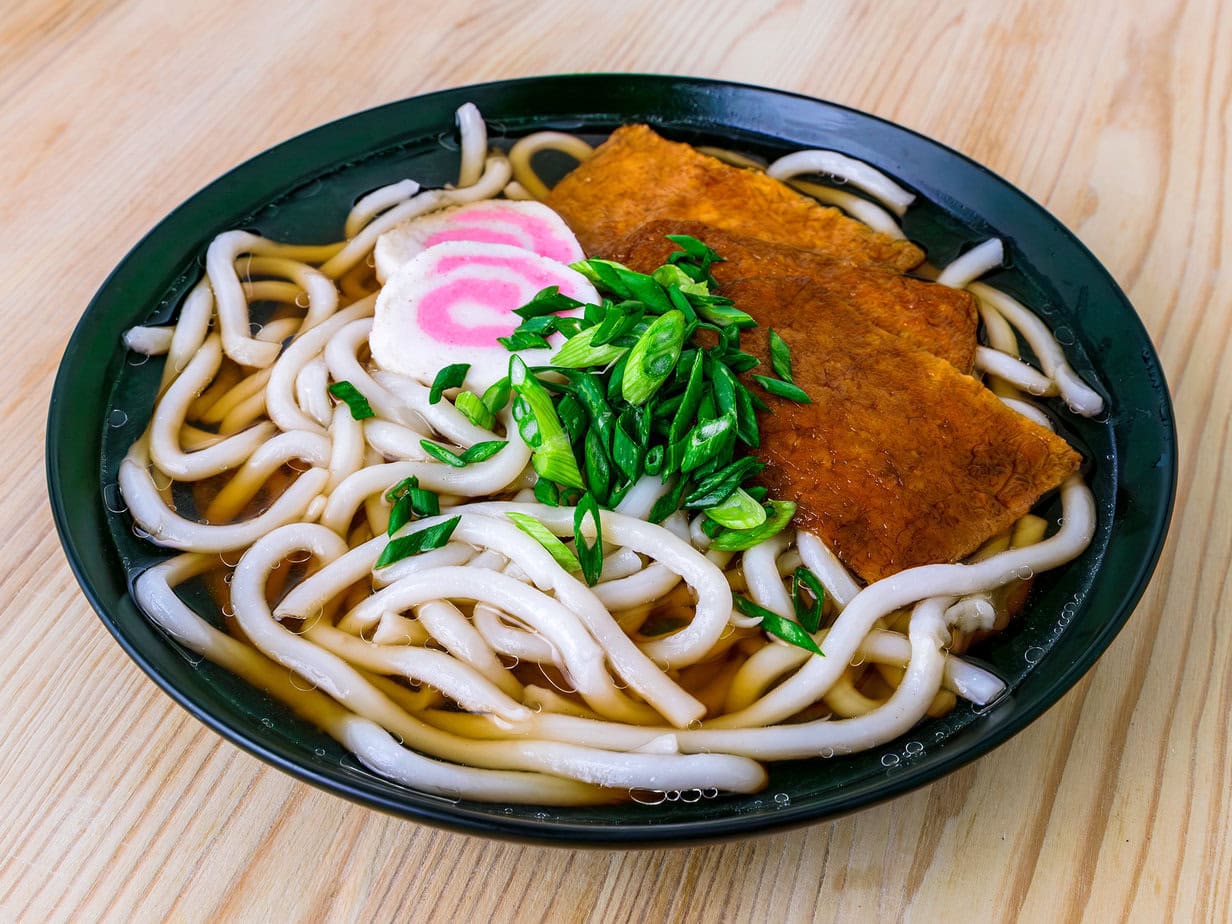
Vegetables provide the contrast: napa cabbage stays crisp at the ribs and meltingly tender in the leaves, while negi, shungiku, carrot, and daikon cut through the broth’s gentle sweetness. Shiitake, shimeji, and enoki add earthy notes and varied textures. To finish, udon or a little rice transform the remaining broth into a soft, comforting zōsui.
The secret to a silky-smooth broth
The real challenge is curdling. Soy milk is an emulsion of water, fat, and protein; too much heat or an acidic ingredient will make it split — just as in tofu-making — leaving the broth grainy.
The fix comes down to three simple steps: add the soy milk after the meat and firm vegetables are cooked, keep the heat very low once it goes in (below about 63 °C — just a faint tremble), and avoid stirring too vigorously.
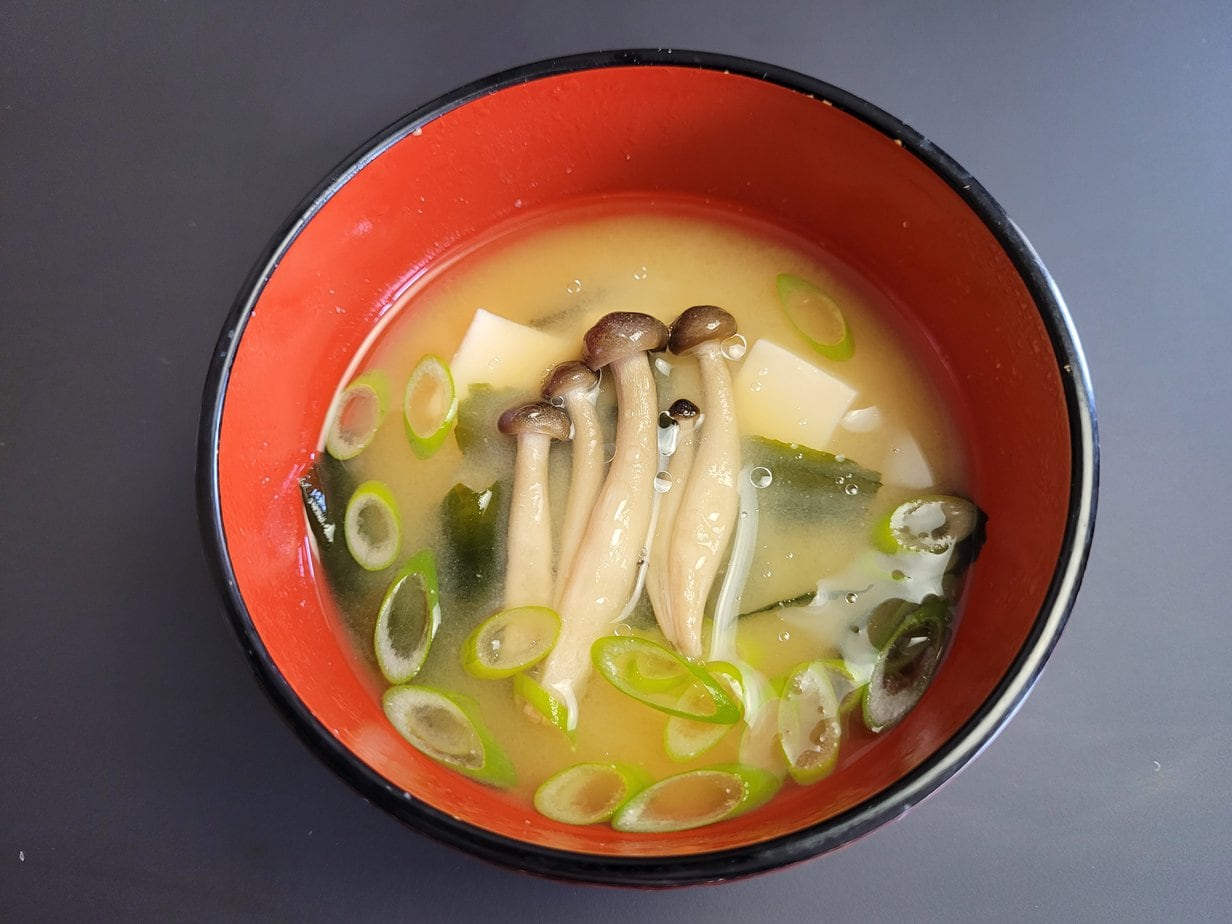
Use unsweetened, unflavored soy milk for the purest flavor; sweetened or vanilla versions will throw it off balance. Skip tomatoes and other acidic ingredients, as well as beef, which is too assertive for this delicate base. Variations that stay true to the spirit of the dish include a kombu-shiitake dashi for a vegan version, or sesame for the rich goma-tōnyū style.
Ingredients
Hot Pot Ingredients
- 1 chicken thigh cut into bite-sized pieces
- 0.5 block tofu cut into bite-sized pieces
- 2 sheets aburaage (fried tofu) cut into bite-sized pieces
- 3 cm carrot cut into thin strips
- 1 pack maitake mushrooms separated into small clusters (optional)
- 1 pack shimeji mushrooms separated into small clusters
- 3 leaves Chinese cabbage roughly chopped
- 0.25 bunch mizuna roughly chopped (optional)
- 1 Japanese leek thinly sliced diagonally
- 2 tablespoons sesame seeds ground
Broth
- 400 ml water
- 3 tablespoons white dashi (shirodashi, concentrated)
Soy Milk
- 400 ml unsweetened soy milk
- 1 tablespoon white miso heaped
Instructions
Preparation
- Bring the water and white dashi to a boil.400 ml water, 3 tablespoons white dashi (shirodashi, concentrated)
- Add the chicken, tofu, aburaage, carrot, and mushrooms.1 chicken thigh, 0.5 block tofu, 2 sheets aburaage (fried tofu), 3 cm carrot, 1 pack maitake mushrooms, 1 pack shimeji mushrooms
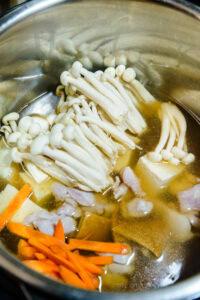
- Return to a boil.
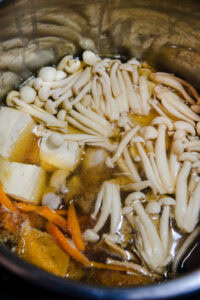
- Reduce the heat to medium and simmer for 3 to 5 minutes.
- Once the chicken is cooked through, whisk the white miso into the unsweetened soy milk, then stir the mixture into the pot.400 ml unsweetened soy milk, 1 tablespoon white miso
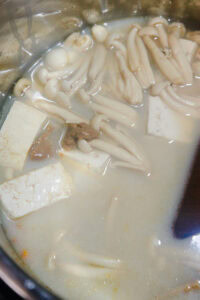
- As soon as it begins to simmer, add the Chinese cabbage, mizuna, Japanese leek, and ground sesame.3 leaves Chinese cabbage, 0.25 bunch mizuna, 1 Japanese leek, 2 tablespoons sesame seeds
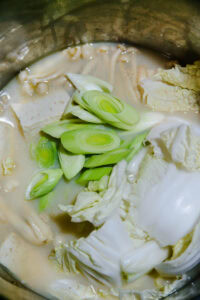
- Maintain a gentle simmer; do not let it boil.
- Enjoy straight from the pot as it cooks.
Notes
- Add the soy milk at the end of cooking and never let it boil: past a gentle simmer, it will curdle and the broth will split.
- Keep the heat low once the soy milk has been added.
- Use unsweetened soy milk (無調整豆乳), not a sweetened or flavored soy drink.
- White dashi (shirodashi) is highly concentrated: adjust the amount to suit your brand.