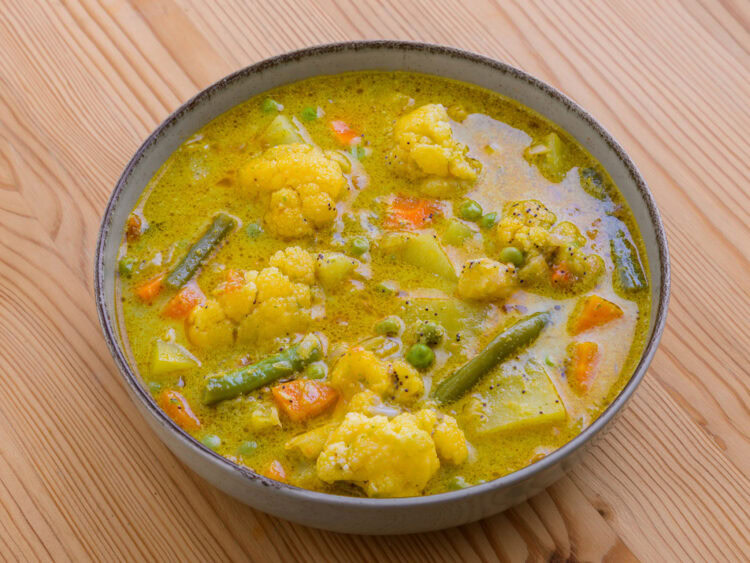
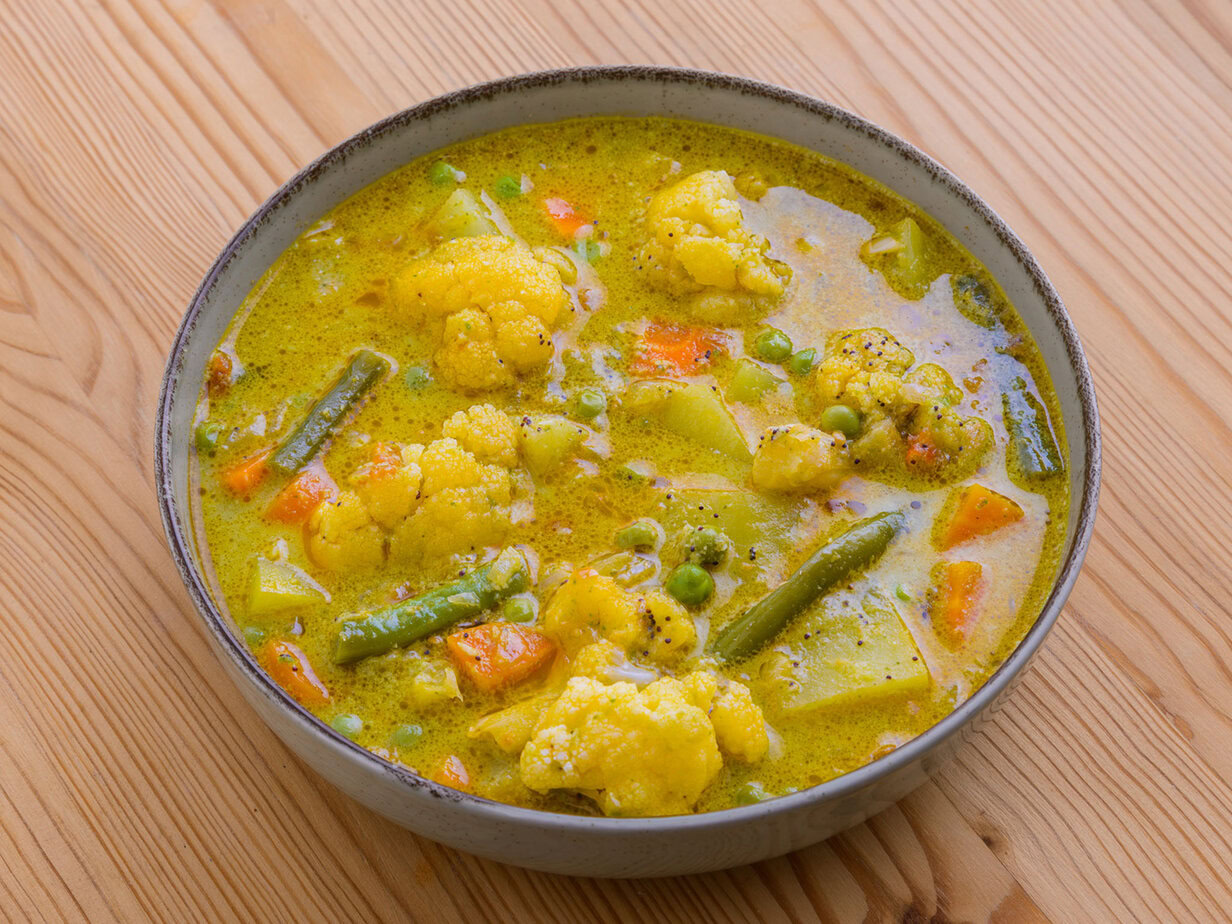
A South Indian vegetable kurma, simmered in a coconut, cashew and fennel sauce.
It’s a weeknight, and all that’s left is a carrot, a piece of cauliflower, two potatoes and a handful of green beans. In the sauté pan, cinnamon, cardamom and cloves sizzle in the oil, then the onion slowly turns golden.
The coconut and cashew paste goes in at the end and turns the broth into a pale, velvety, barely sweet sauce, livened up by green chilies. The vegetables stay whole and tender. Dip a first piece of puri into it, and the evening is taken care of.
What Is Vegetable Curry?
This vegetable curry is a South Indian kurma: carrot, cauliflower, peas, potato and green beans boiled in water, then bound with a blended paste of coconut, cashews, poppy seeds, coriander and fennel.
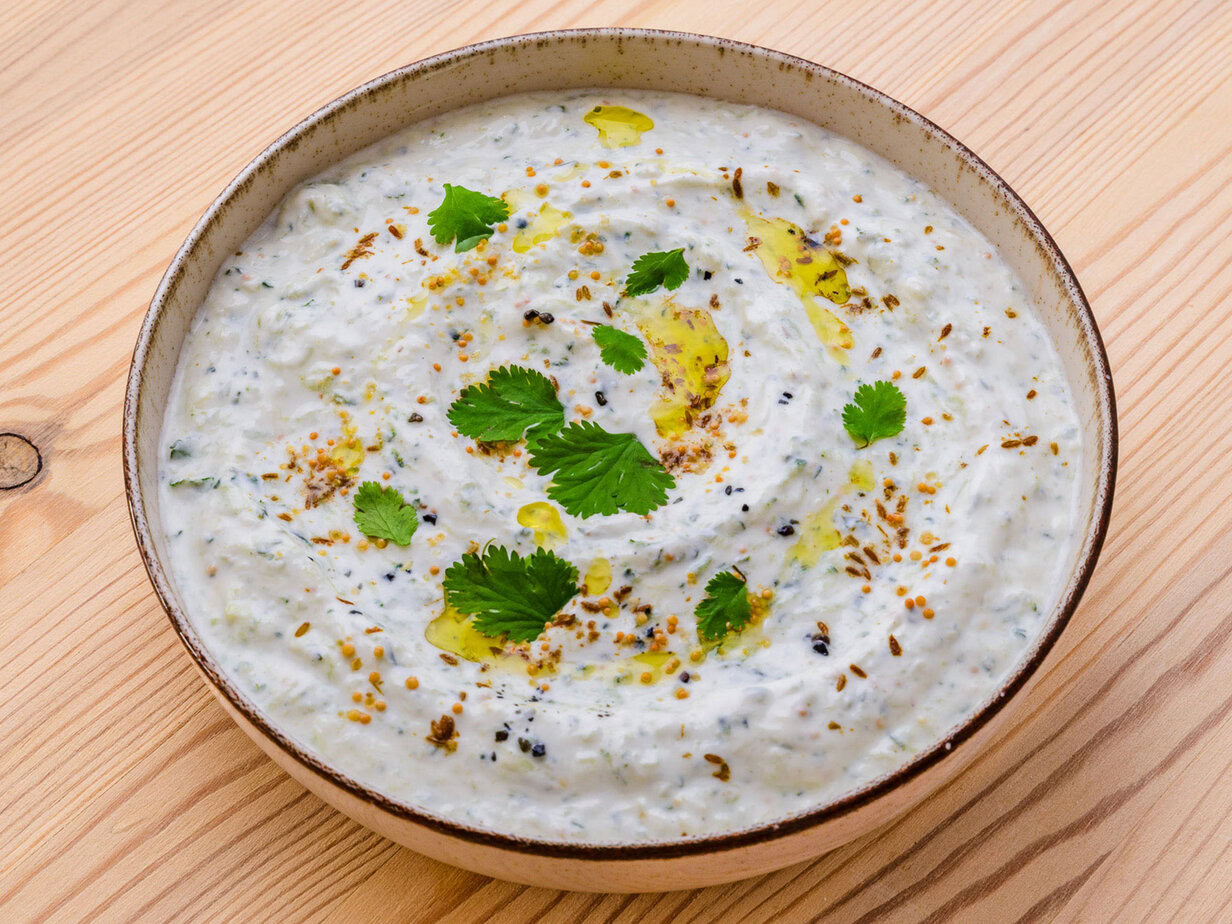
The sauce is mild, creamy and slightly sweet, with no cream, no yogurt and no butter. Among the Indian cuisines, it stands clearly apart from the tomato-and-onion curry of the North: here the tomato stays in the background and the coconut carries the dish. It’s served with puris or chapatis.
Kurma is the South Indian form of korma, the name for dishes braised in a rich sauce, handed down from Mughal kitchens. The word curry is a catch-all term popularized by the British; in India, every dish with a sauce keeps its own name and its own spice blend.
From Mughal Kitchens to the Nilgiri Hills
Korma took shape in the 16th century in Akbar’s imperial kitchens, where meats were braised in ghee with yogurt, cream or almond and cashew pastes, scented with cardamom, cloves and cinnamon. An often-told story credits its name to the Rajput cooks of the court.
Over time, the meat dish branched out into vegetarian versions that keep the same principle: vegetables simmered in a thickened sauce.
The South replaced the dairy with fresh coconut, blended with cashews and green chilies. There, fennel takes the place that cumin holds in the North.
In Kerala, kurma is often cooked in coconut oil, with coconut milk. In the Nilgiri Hills of Tamil Nadu, the kitchens of British-era clubs created a green kurma with mint and cilantro, as a way to use the English vegetables grown locally.
In the South, vegetable kurma goes with flaky parotta, idiyappam (steamed rice noodles) or appam. The North tends to make a drier mixed vegetable sabzi, built on a base of long-cooked onion and tomato. Here, it’s served with puris or chapatis, and a flaky paratha works well too.
The Main Ingredients in Vegetable Curry
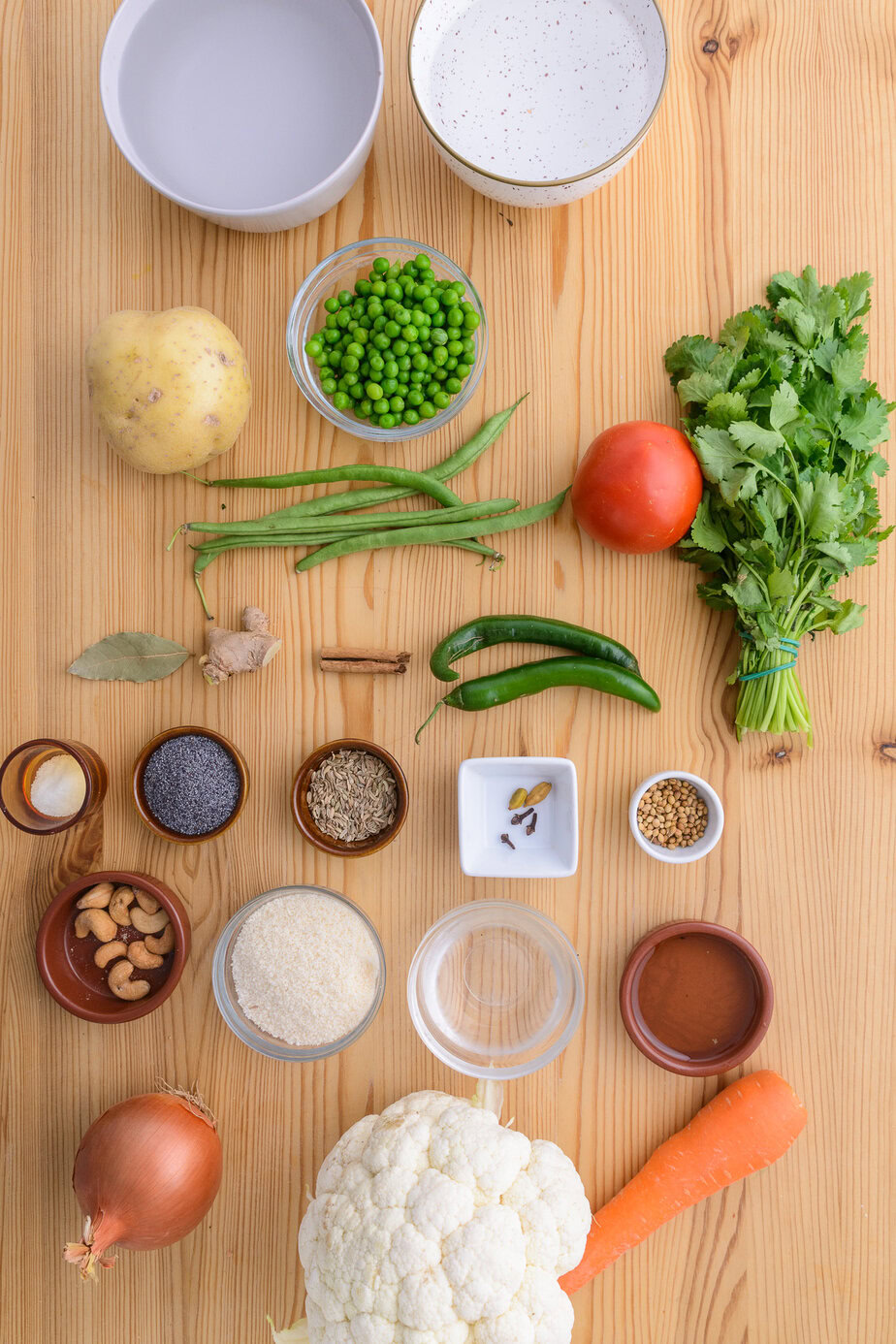
The vegetables in this version, carrot, cauliflower, peas, potato and green beans, can be found everywhere in France. A traditional kurma sometimes adds moringa drumsticks or wax gourd, both rare here: replace them with a few more green beans, or with zucchini added during the last 10 minutes. Keep the pieces whole rather than mashing them.
The paste makes the sauce. Use fresh grated coconut, or frozen grated coconut from an Asian grocery store; bagged desiccated coconut works after soaking for 10 minutes in warm water, with a slightly different texture.
The cashews give the sauce its velvety texture and the poppy seeds (khus khus) thicken it: the gray or blue poppy seeds sold in France work perfectly well. Ginger, garlic, green chilies, coriander seeds, fennel and a handful of fresh cilantro complete the mix.
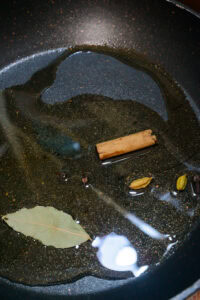
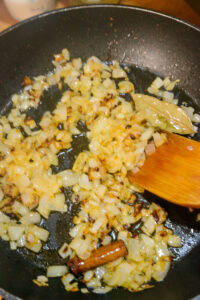
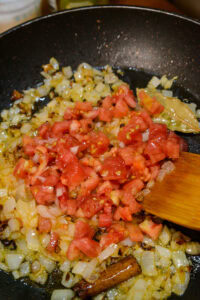
The aromatic base comes down to four whole spices heated in oil: bay leaf, cinnamon, green cardamom and cloves. Next the onion turns golden, then a single tomato melts down in the sauté pan, just enough for a touch of acidity. The dish is cooked in oil, with no ghee: it’s entirely plant-based.
Technique Tips for a Good Vegetable Curry
The vegetables first boil, covered, for 10 minutes and only meet the paste once they’re almost cooked, which keeps them whole. The masala paste then cooks with them for 2 minutes, and the water for the sauce loosens it. At the end, the sauce should be light in color, pale yellow to greenish, and creamy enough to coat the spoon. If it turns red, the tomato has taken over.
Ingredients
For the masala paste
- 80 g coconut grated
- 8 cashews
- 1 piece ginger 2.5 cm
- 1 clove garlic
- 2 chilies green
- 2 tablespoons poppy seeds
- 1 teaspoon coriander seeds
- 0.5 teaspoon fennel seeds
- 1 handful cilantro fresh
- 60 ml water
For the curry
- 4 teaspoons oil
- 1 bay leaf
- 1 cinnamon stick 2.5 cm
- 2 cardamom pods green
- 3 whole cloves
- 1 onion finely chopped
- 1 tomato finely chopped
- 0.5 carrot diced
- 10 cauliflower florets
- 3 tablespoons peas
- 1 potato diced
- 5 green beans cut into pieces
- 1 teaspoon salt
- 500 ml water for cooking the vegetables
- 375 ml water for the sauce
Instructions
For the masala paste
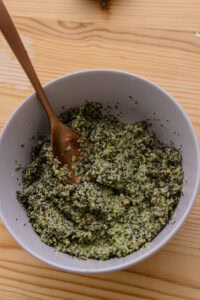
- Put the coconut in a blender.80 g coconut
- Add the cashews, ginger, garlic, chilies, poppy seeds, coriander seeds, fennel seeds and fresh cilantro.8 cashews, 1 piece ginger, 1 clove garlic, 2 chilies, 2 tablespoons poppy seeds, 1 teaspoon coriander seeds, 0.5 teaspoon fennel seeds, 1 handful cilantro
- Pour in the water.60 ml water
- Blend until you have a smooth paste.
For the curry
- Heat the oil in a large sauté pan.4 teaspoons oil
- Add the bay leaf, cinnamon, cardamom and cloves, then sauté them.1 bay leaf, 1 cinnamon stick, 2 cardamom pods, 3 whole cloves
- Add the onion and sauté until it starts to brown.1 onion
- Add the tomato and cook until it breaks down.1 tomato
- Add the carrot, cauliflower, peas, potato, beans and salt.0.5 carrot, 10 cauliflower florets, 3 tablespoons peas, 1 potato, 5 green beans, 1 teaspoon salt
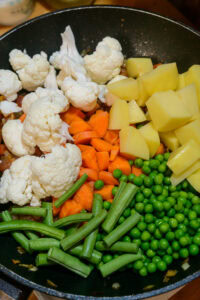
- Sauté for 2 minutes.
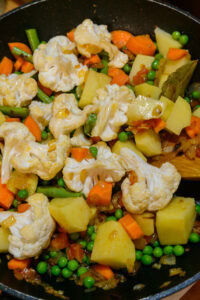
- Pour in the water for cooking the vegetables and stir.500 ml water
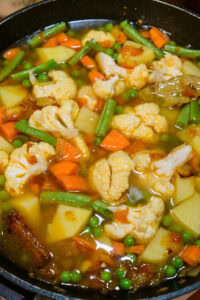
- Cover and let boil for 10 minutes, until the vegetables are almost cooked.
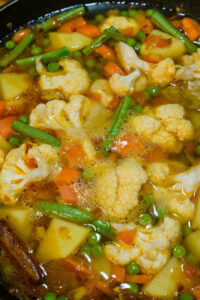
- Add the masala paste and sauté for 2 minutes.
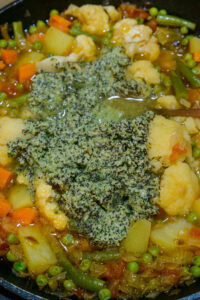
- Pour in the water for the sauce and stir.375 ml water
- Cover and cook for 10 minutes, until the vegetables are tender.
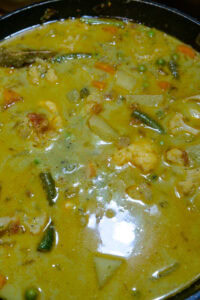
- Serve with puris or chapatis.