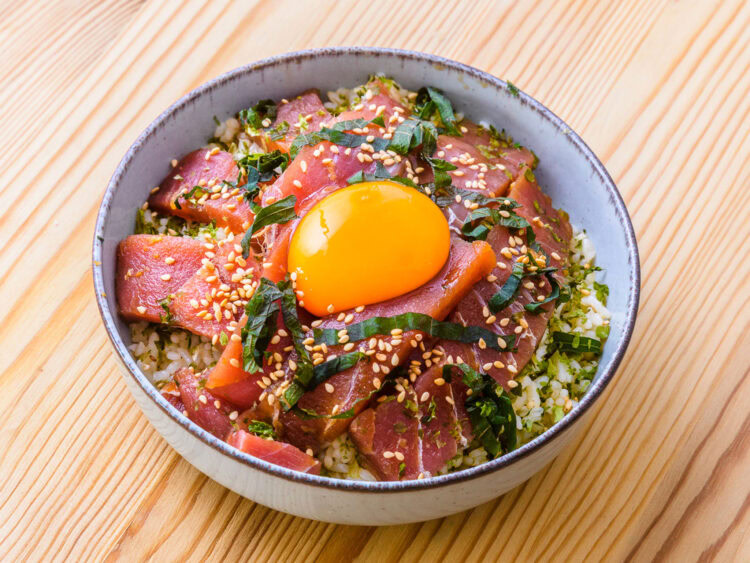
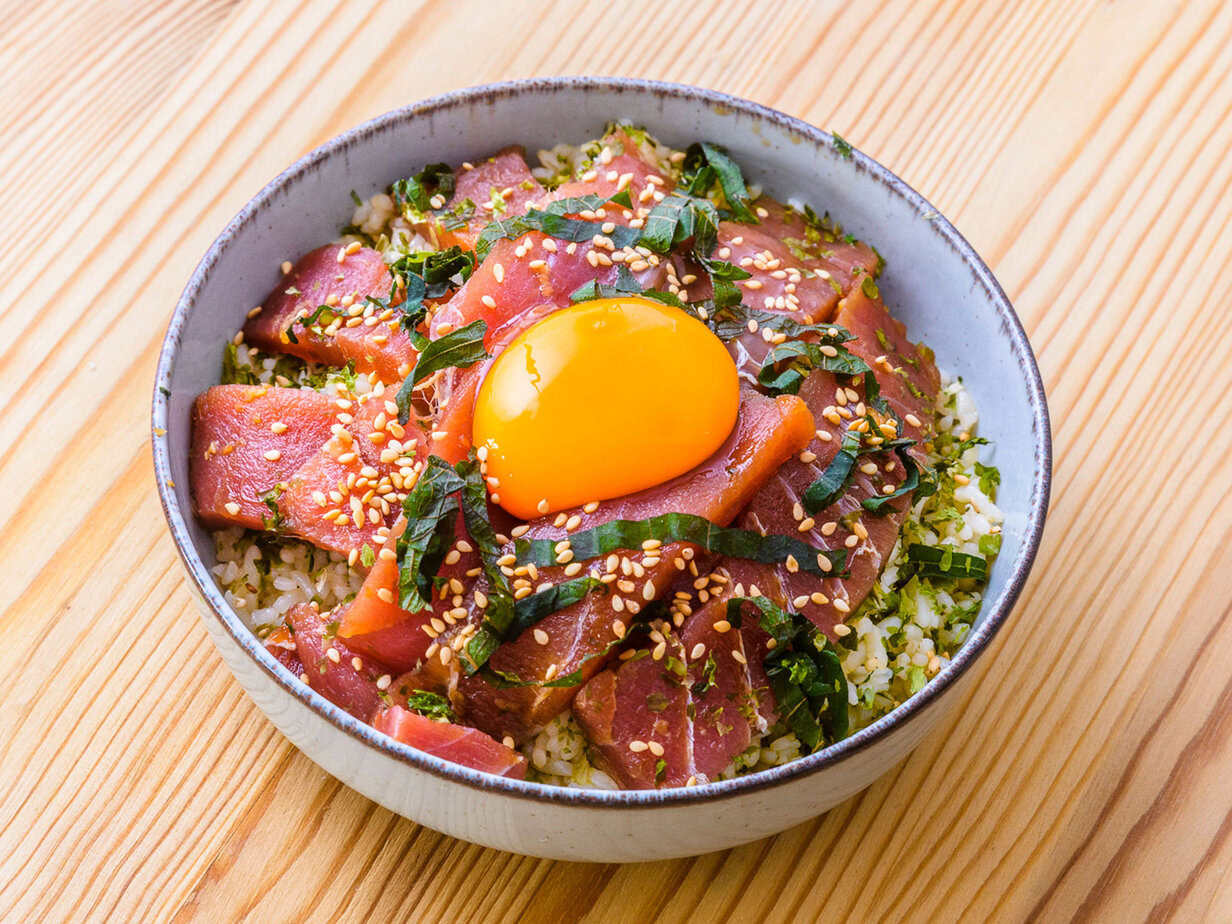
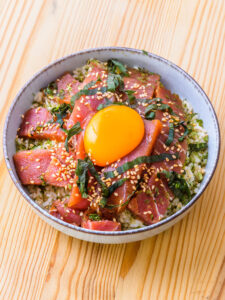
A bowl of rice topped with tuna marinated in soy sauce, mirin, and sake, brightened with ginger and finished with shiso, nori, egg yolk, and sesame.
The tuna comes out of the marinade almost lacquered, a deep, glossy red. Set over barely warm rice with a pinch of nori and a dab of fresh wasabi, the bowl is ready in minutes.
The first bite is savory and rounded, with tender fish and rice just tangy enough to tie it all together. Born from a need to preserve fish, it has become one of Japan’s finest rice bowls.
What is maguro zuke don ?
Maguro means tuna, zuke means soaked or marinated, and don comes from donburi, a rice bowl. The fish is usually akami, the lean red cut, marinated in cooled nikiri : two parts soy sauce to one part mirin and one part sake.
It is served over shari, vinegared sushi rice, never over hot plain rice. That is what sets it apart from maguro don, made with plain tuna, and tekka don, where the tuna is left unmarinated.
Meticulous cooks add yubiki, a blanching step of just a few seconds that sears the surface of the tuna block. It removes any surface odor, firms the exterior, and slows salt absorption, so the fish is seasoned without becoming oversaturated.
The rice matters just as much : in the Edomae tradition, it is served close to body temperature, often seasoned with akazu, a red vinegar made from sake lees.
Born from the need to preserve tuna in Edo
The dish comes from Edo, present-day Tokyo, and from a very practical problem : how to keep fish edible without refrigeration. Street vendors needed tuna that was safe, quick to serve, and tasty. That is the logic of Edomae, the meticulous prep work cooks call shigoto—the very same approach that gave rise to the first nigiri-zushi near Ryogoku Bridge at the start of the 19th century.
Tuna needed it more than most fish. Before freezing, it browned quickly and its fatty parts turned rancid. It was classed among the gezakana, second-rate fish, and some called it neko-matagi, the kind a cat would step over without a second glance.
Soy sauce changed everything. When dark koikuchi spread through Kantō, around Chōshi and Noda, Edo cooks gained an inexpensive preservative, salty and rich in glutamates.
Akami responds especially well: the sauce draws out some of the moisture, firms the flesh, and gives it depth, while fatty toro, so prized today, did not take to it as well and was worth far less at the time. What began as a method of preservation became a flavor prized in its own right.
The key ingredients in maguro zuke don
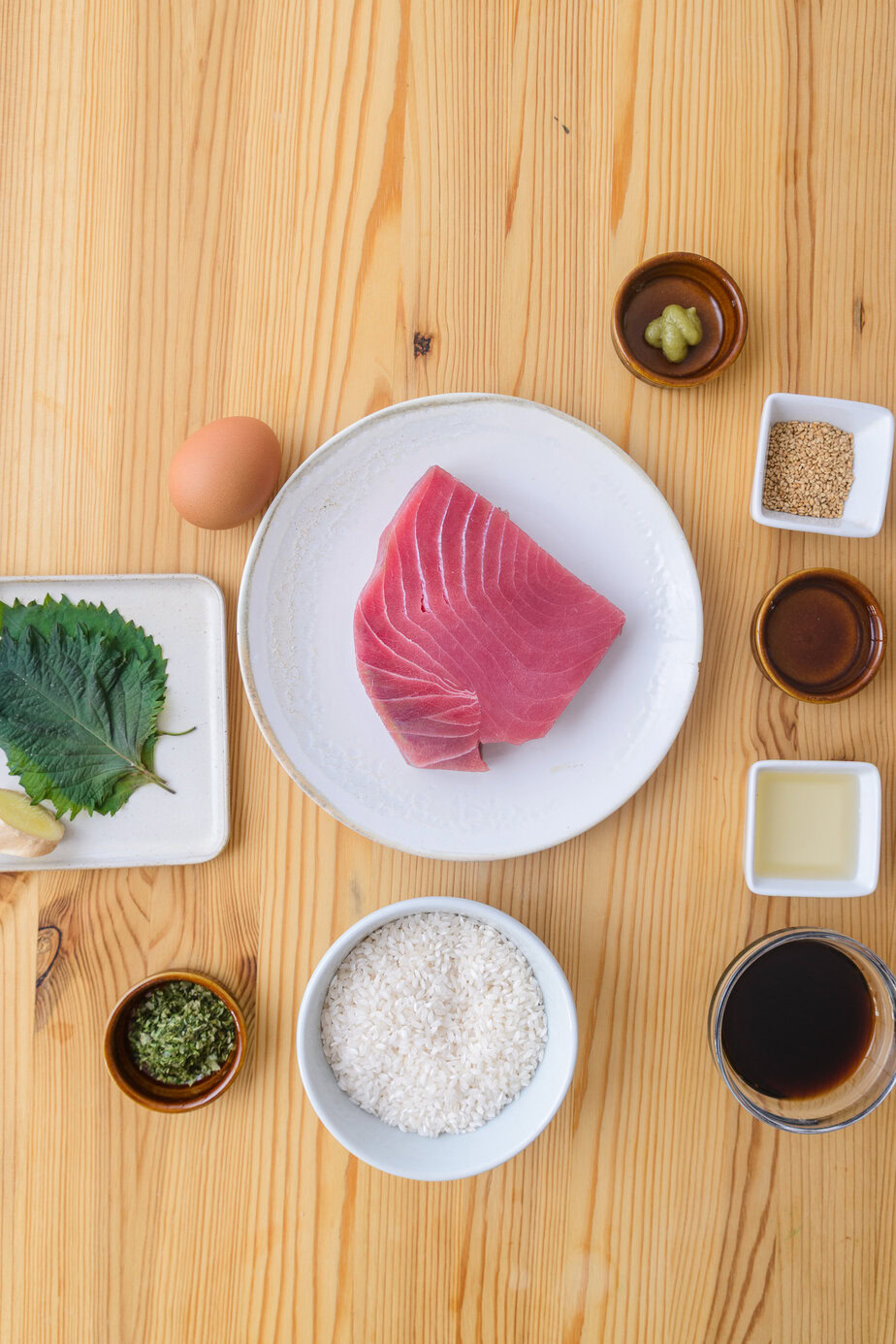
Akami is the standard cut, usually bluefin or yellowfin tuna, with firm, lean flesh that takes seasoning cleanly. Under the fish, shari—short-grain rice seasoned with vinegar and gently cooled—brings acidity and gentle warmth. White rice vinegar adds brightness, while akazu contributes deeper, more caramelized, yeasty notes in the Edomae style.
The marinade relies on just three ingredients. Koikuchi soy sauce provides salt, color, and most of the umami. Mirin rounds everything out and adds shine. Sake lifts the aroma and softens fishy notes, provided the alcohol is cooked off before it comes into contact with the tuna.
Fresh wasabi perks up the tuna without overwhelming it, and shredded nori adds an iodine note and a slight crunch. Sesame, scallion, and shiso are more modern additions, welcome for freshness but entirely optional. Purists keep the bowl simple.
Ingredients
- 150 g rice
- 100 g sashimi-grade tuna
Toppings
- nori cut into thin strips, to taste
- 3 leaves shiso
- 1 egg yolk
- wasabi to taste
- white sesame seeds toasted, to taste
Instructions
Prepare the toppings
- Remove the stems from the shiso leaves, then slice them into thin strips.3 leaves shiso
Prepare the marinade
- Heat the mirin and sake until the alcohol evaporates.1 tablespoon mirin, 1 tablespoon sake
- Remove from the heat and let cool completely.
- Add the soy sauce and ginger, then stir to combine.2 tablespoons soy sauce, 1 teaspoon ginger
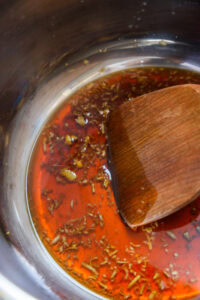
Marinate the tuna
- Place the tuna and marinade in a freezer bag, then gently massage to coat.100 g sashimi-grade tuna
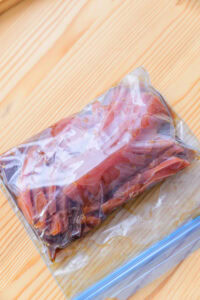
- Refrigerate for 20 minutes to marinate.
Assemble the bowl
- Spoon the rice into a bowl.150 g rice
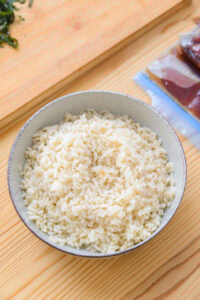
- Scatter the nori over the rice, then arrange the marinated tuna on top.nori
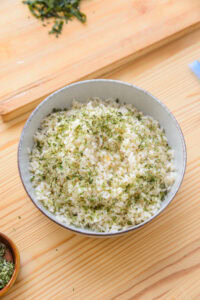
- Top with the shiso, egg yolk, and wasabi, then sprinkle with sesame seeds.1 egg yolk, wasabi, white sesame seeds
Notes
- The tuna needs 20 minutes to marinate in the refrigerator (not included in the total time).
- For the best texture, use cooked Japanese rice that is still slightly warm.