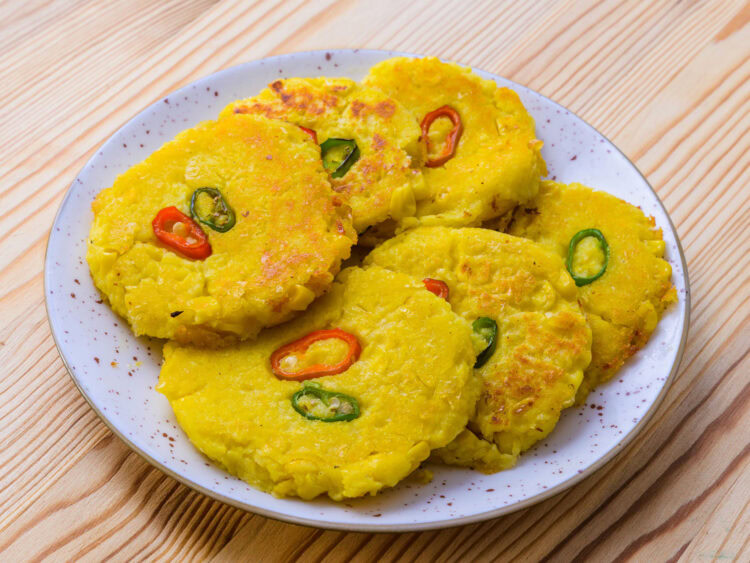
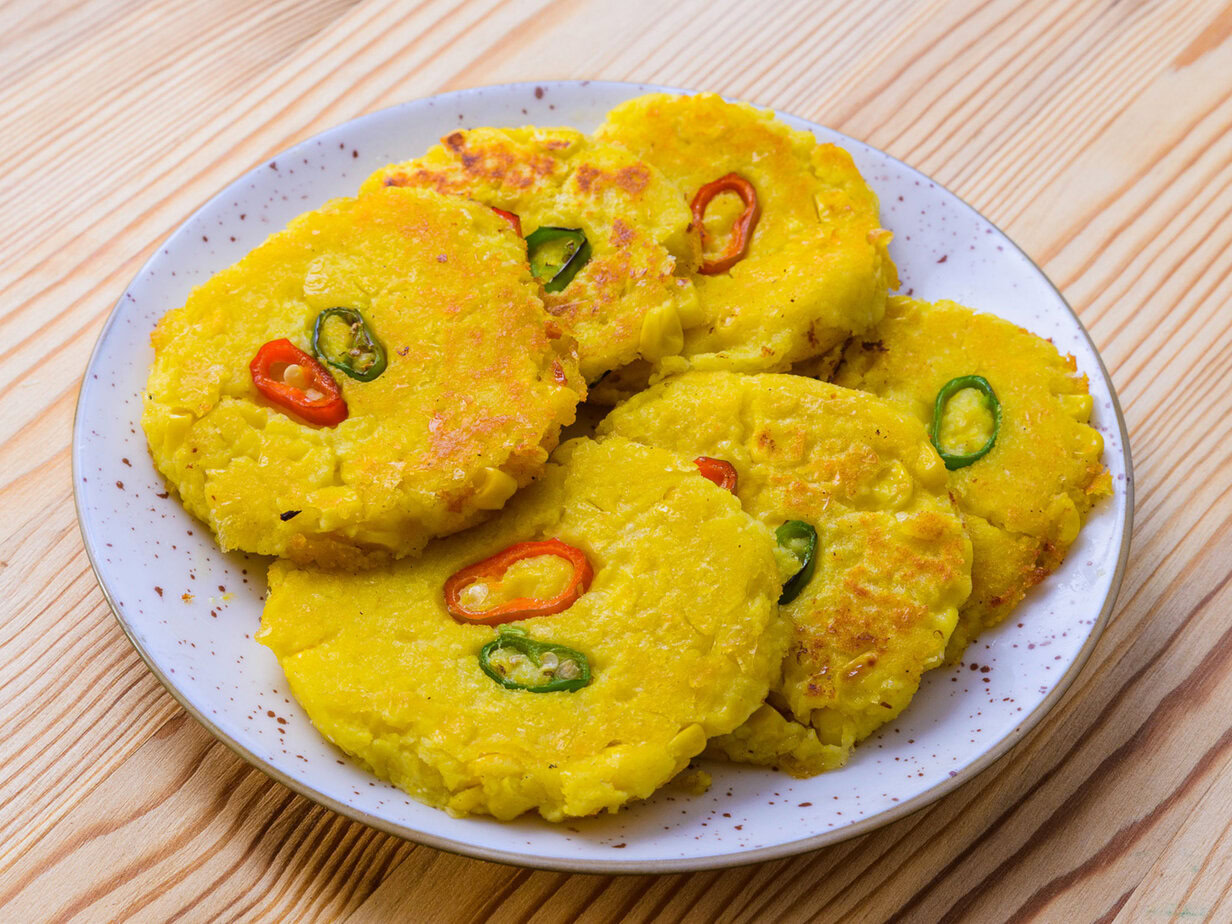
A Korean pancake made with fresh waxy corn, crisp and lacy at the edges, stretchy and warm at the center, with green and red chilies for a lively kick.
In late summer, corn is at its peak, and a simple craving sets in : something hot, crisp, and easy to eat with your fingers. The pancake sizzles the moment it hits the oil, the edges turn lacy and golden, and the center stays tender and elastic, with that distinctive Korean chew known as jjolgit-jjolgit.
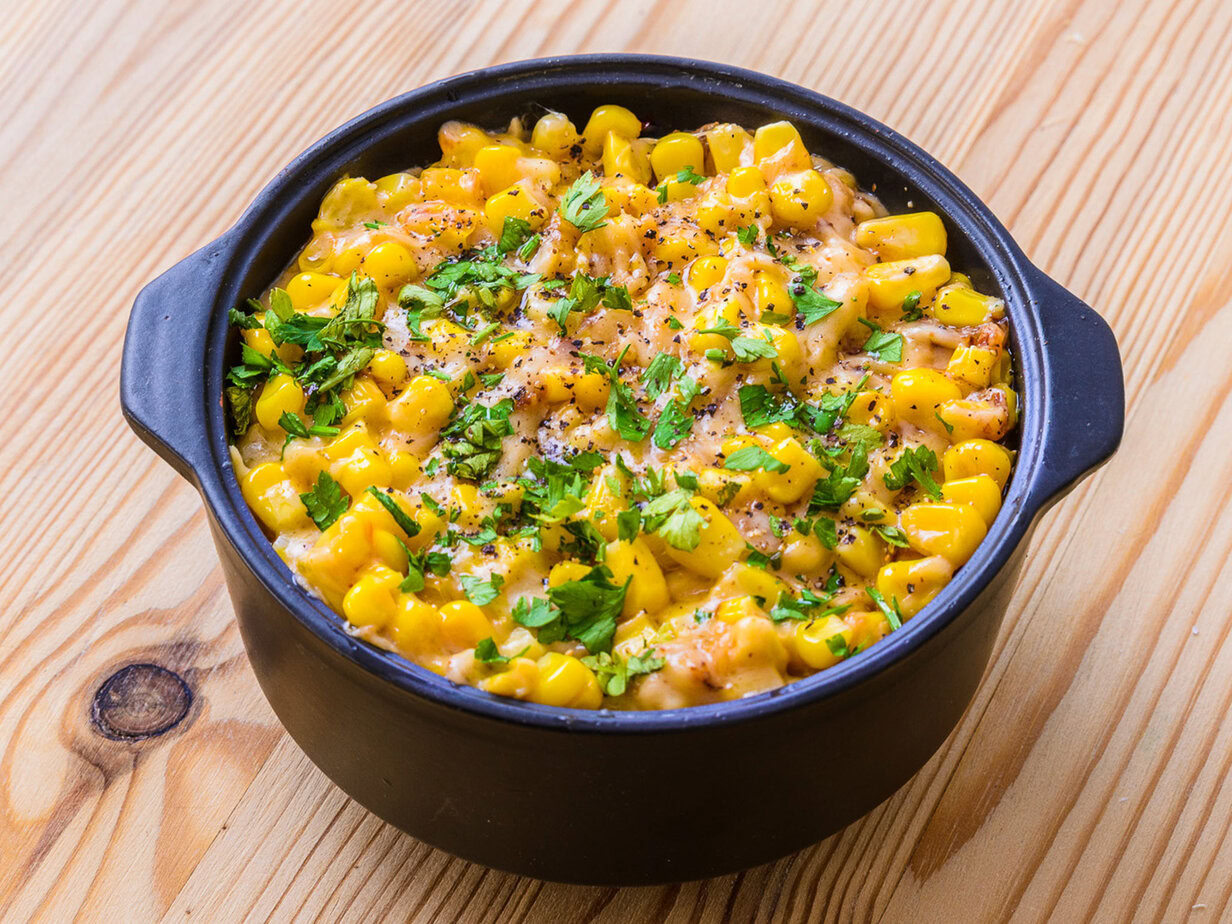
Grated waxy corn stands perfectly well on its own : no cheese, no sugar, just the kernels, a touch of roasted salt, and two chilies to wake everything up. It sounds almost too restrained to leave an impression, right up until the first piping-hot bite.
What is oksusu jeon ?
Oksusu means corn, and jeon refers to a pan-fried pancake, something like a flat fritter, and a classic of Korean cuisine. The Gangwon-do version is made with chal-oksusu, Korean waxy corn, which is rich in amylopectin rather than simple sugars.
When grated and heated, the kernels release starch that forms a dense, elastic batter, enough to hold the pancake together without any wheat flour. That’s what sets it apart from an ordinary sweet corn pancake and from corn cheese, a much cheesier dish typically served as a side.
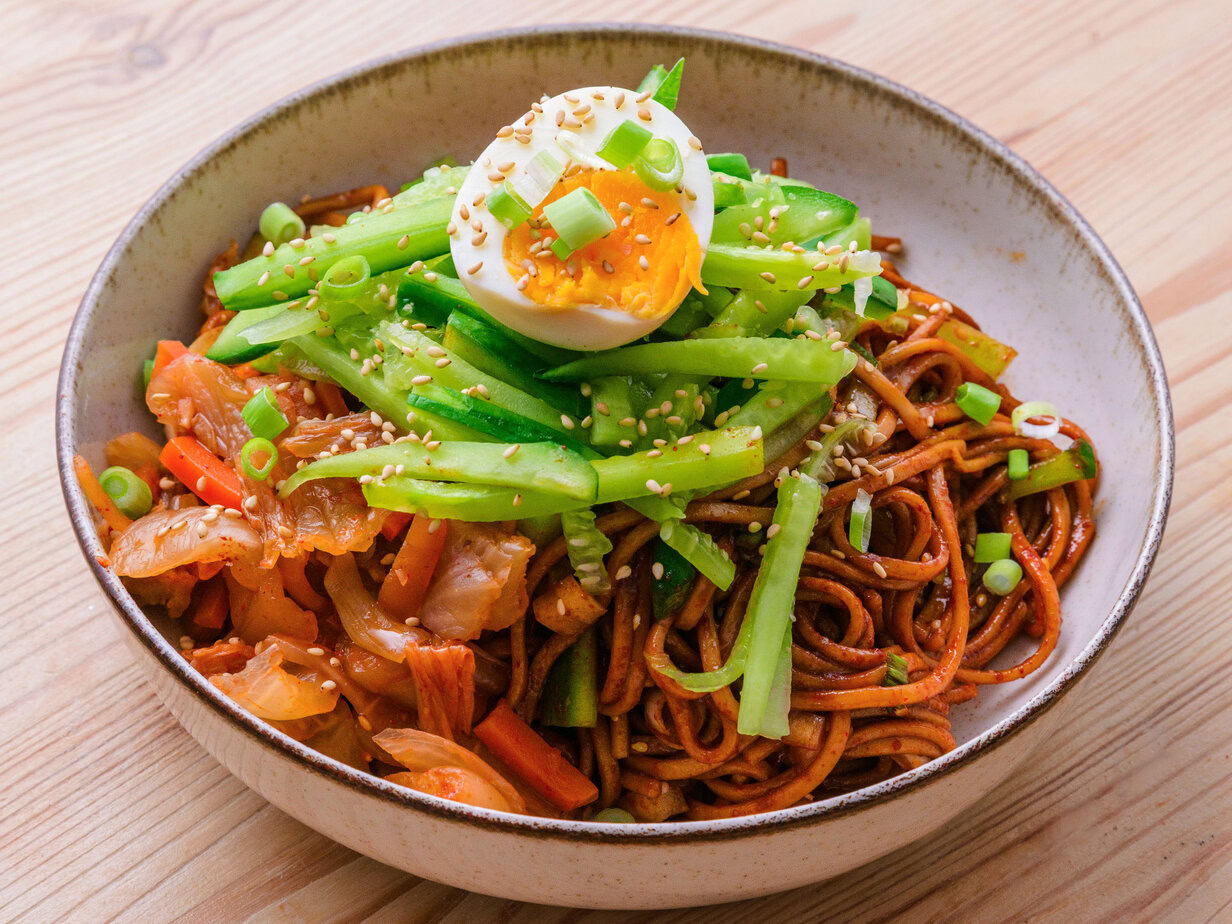
In the pan, the best versions develop a golden, almost lacy crust around a supple center reminiscent of tteok.
Roasted salt brings out the kernels’ nutty aroma, green Cheongyang and red chilies add a fresh, herbal heat, and rice bran oil gives crisp edges without masking the corn.
From hardship staple to the emblem of Gangwon-do
Oksusu jeon comes from Gangwon-do, a mountainous northeastern province where mountains cover more than 80% of the land. Cold winters, high altitude, and poorly drained stony soils long made rice cultivation difficult there.
Corn, introduced to Korea via China in the 16th century, became a substitute for rice and barley there, a dependable crop in places where rice struggled.
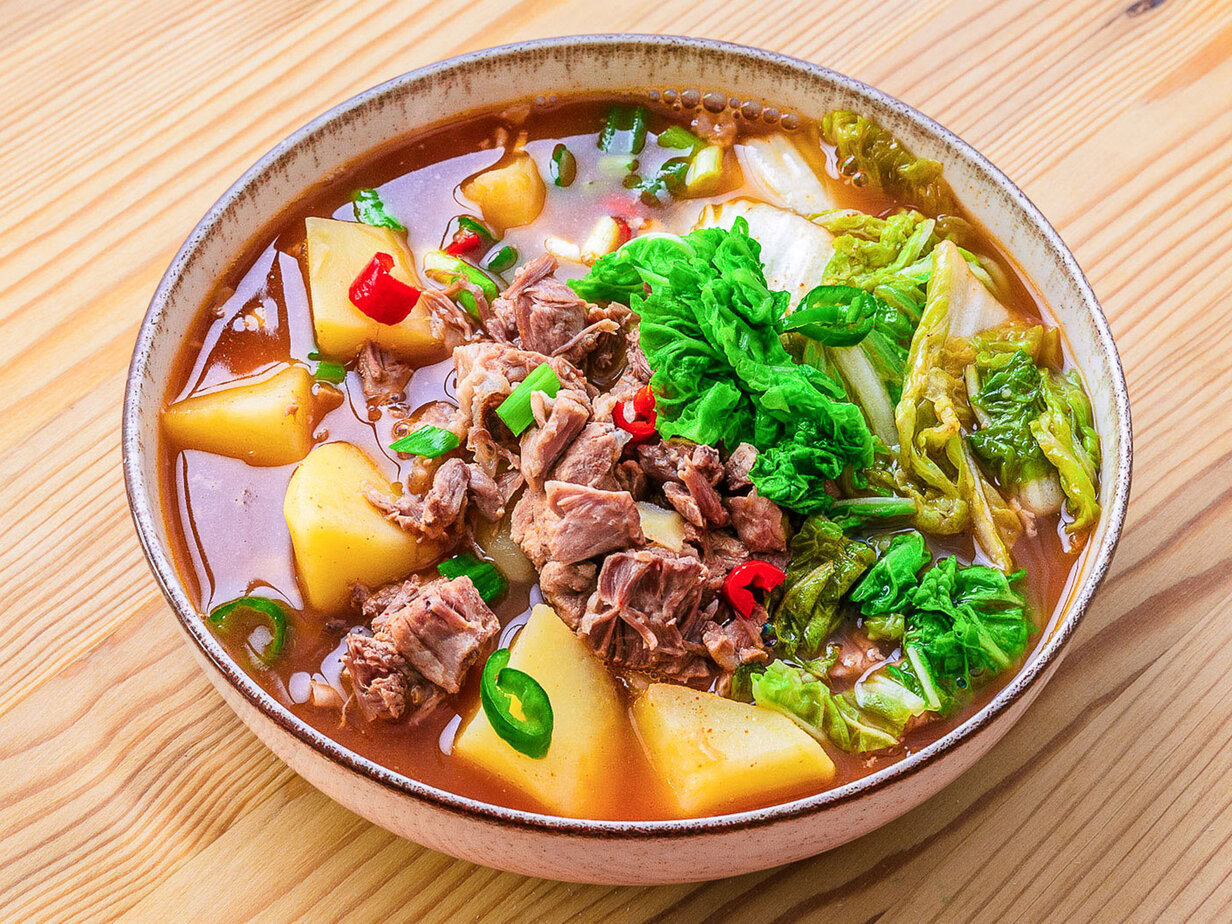
This reliance on corn gave rise to a whole local cuisine : gangnaengi beombeok, a thick bean porridge ; olchaengi guksu, tadpole-shaped cornstarch noodles ; hwangol yeot, a malt-fermented corn caramel ; and oksusu jeon, the summer pancake made with fresh corn. Texts from the 19th century already described a finely ground waxy corn batter made without water, able to set with heat alone, without any wheat flour.
The chal-oksusu of Hongcheon, classified as geographical indication no. 15, remains the most renowned. It grows in well-drained sandy-loam soils, with wide swings between day and nighttime temperatures that concentrate starch in the kernels. In Hongcheon, where cultivation exceeds 1 000 hectares, the corn festival still gives pride of place to freshly pan-fried oksusu jeon.
The main ingredients in oksusu jeon
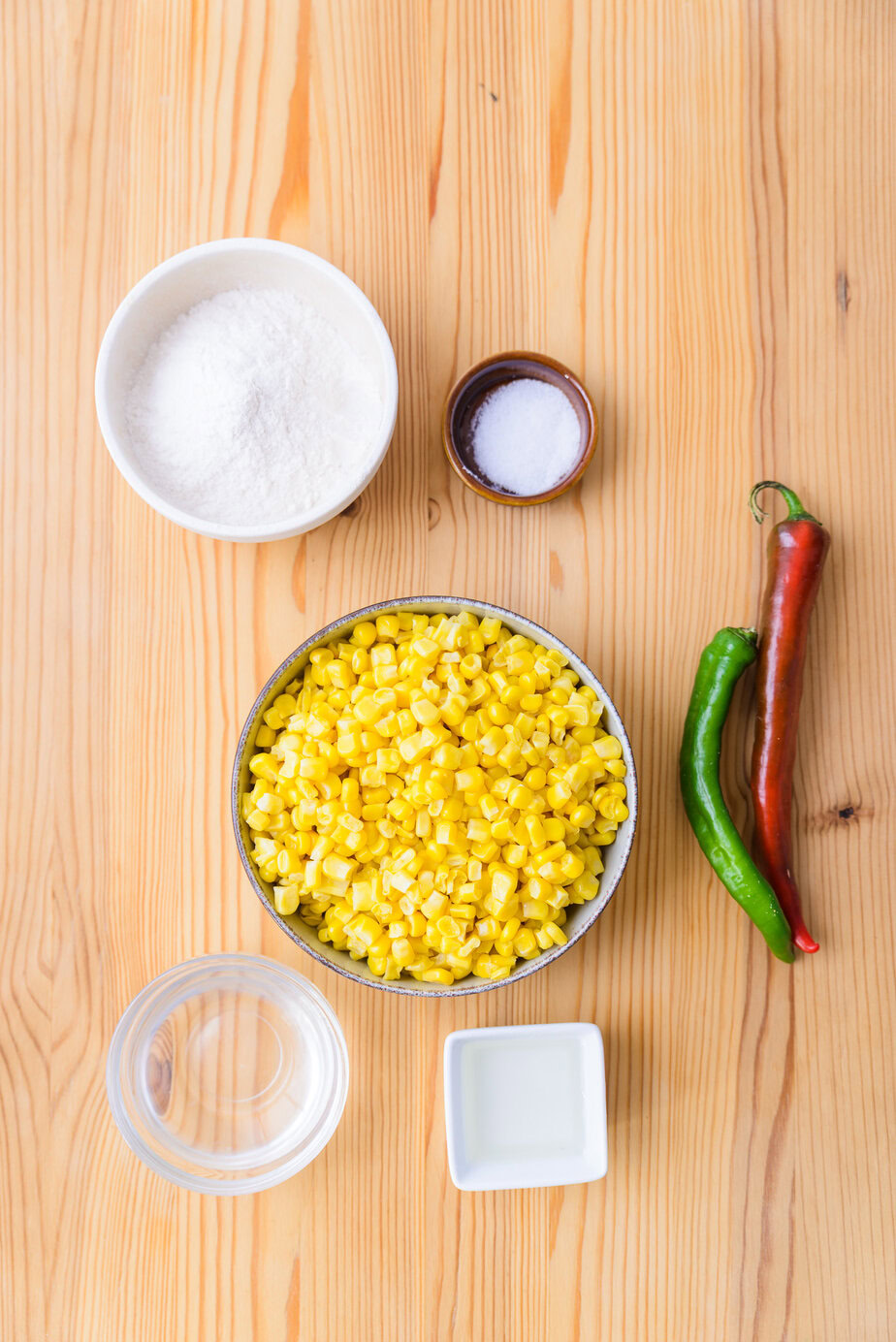
chal-oksusu is both the base and the binder : when grated, it releases a milky juice rich in amylopectin that turns supple and elastic as it cooks, with a slightly sweet, nutty flavor. Oyster mushrooms (neutari beoseot) add umami and a meaty texture without making the batter watery, while finely sliced onion rounds everything out with a gentle sweetness.
The seasoning is simple and savory. Green Cheongyang chili brings a sharp heat; red chili adds a gentler warmth and a touch of color. Roasted salt (bokkeun-sogeum) seasons without the bitterness of raw sea salt, and rice bran oil (hyunmi-yu), with its high smoke point and neutral flavor, creates crisp, lacy edges.
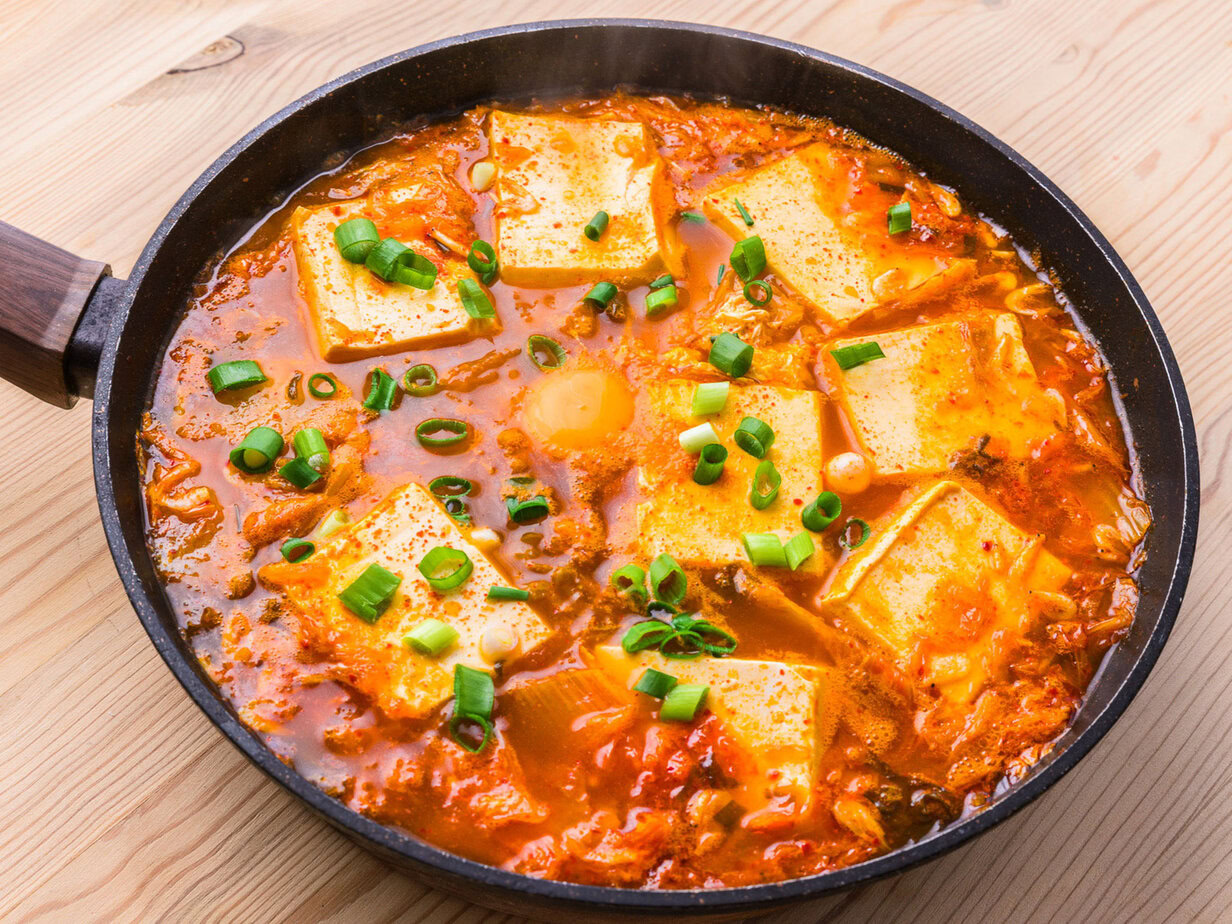
Just as important is what does not go into it : no wheat flour, no buchimgaru, no twigimgaru, no sugar, condensed milk, butter, mayonnaise, or cheese. A pinch of glutinous rice flour (chapssal-garu) can help if the corn is too wet, without dulling the chew or adding wheat, but the idea is always to keep the corn front and center.
Ingredients
- 2 ears of corn fresh, raw
- cooking oil for the pan
- 1 green chili pepper
- 1 red chili pepper
- 6 tablespoons of water
- jangajji in soy sauce Korean pickles, optional
Batter
- 70 g rice flour or all-purpose flour
- 5 g salt
Instructions
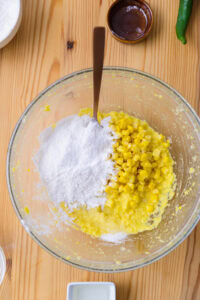
- Cut the kernels off the corn cobs with a knife, then blend half of the corn with the water.2 ears of corn, 6 tablespoons of water
- Combine the blended corn with the remaining corn kernels and the batter ingredients.70 g rice flour, 5 g salt
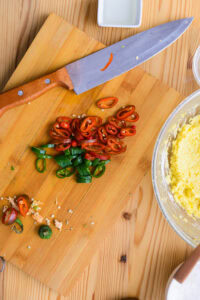
- Seed the green and red chili peppers, then slice them into rings.1 green chili pepper, 1 red chili pepper
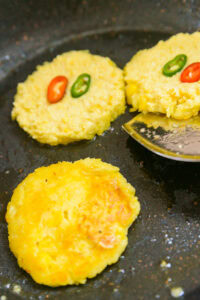
- Heat a pan, add the cooking oil, and cook the corn pancakes until golden. Top with the chili rings and continue cooking until they are nicely seared. Serve, if you like, with jangajji.cooking oil, jangajji in soy sauce
Notes
- For thinner, crispier pancakes, spoon the batter into small mounds and flatten them lightly with a spatula.
- Jangajji (Korean pickles in soy sauce) are optional, but they add a lovely tangy-salty contrast.