


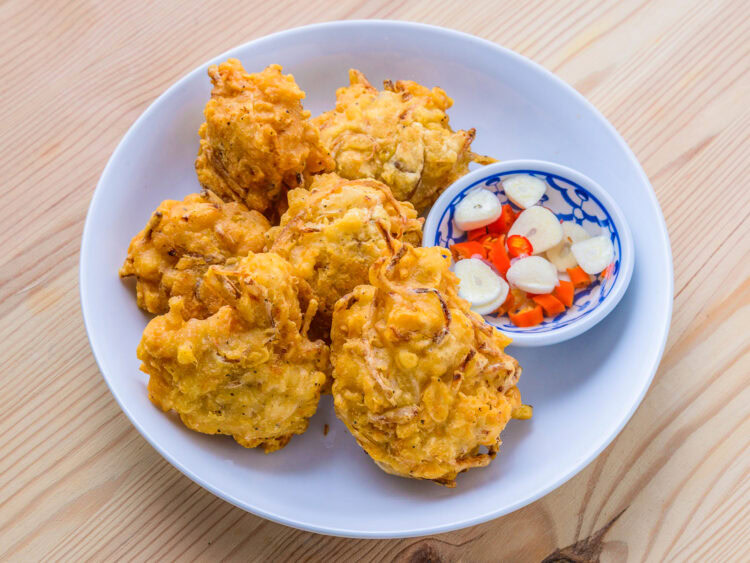
Ultra-crispy shrimp fritters with mung bean sprouts, served with a garlicky, chili-spiked vinegar dipping sauce.
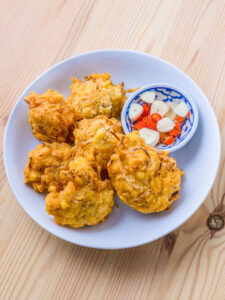
Okoy is a thin, golden fritter—shatter-crisp at the edges and a little more substantial in the center. On the surface, you can spot the tiny shrimp, nicely browned, plus the gentle sweetness of squash, which balances the briny punch of the little hipon, traditionally left unpeeled (shell on)
It’s at its best with a bright, punchy vinegar—like a gyoza dipping sauce—loaded with garlic (especially with fried garlic) and perked up with sambal oelek. In markets and street stalls, okoy is a classic merienda in Filipino cuisine, alongside dishes like sisig, lumpia, and chicken adobo. It’s also eaten for agahan with hot rice—or even with stir-fried shrimp noodles.
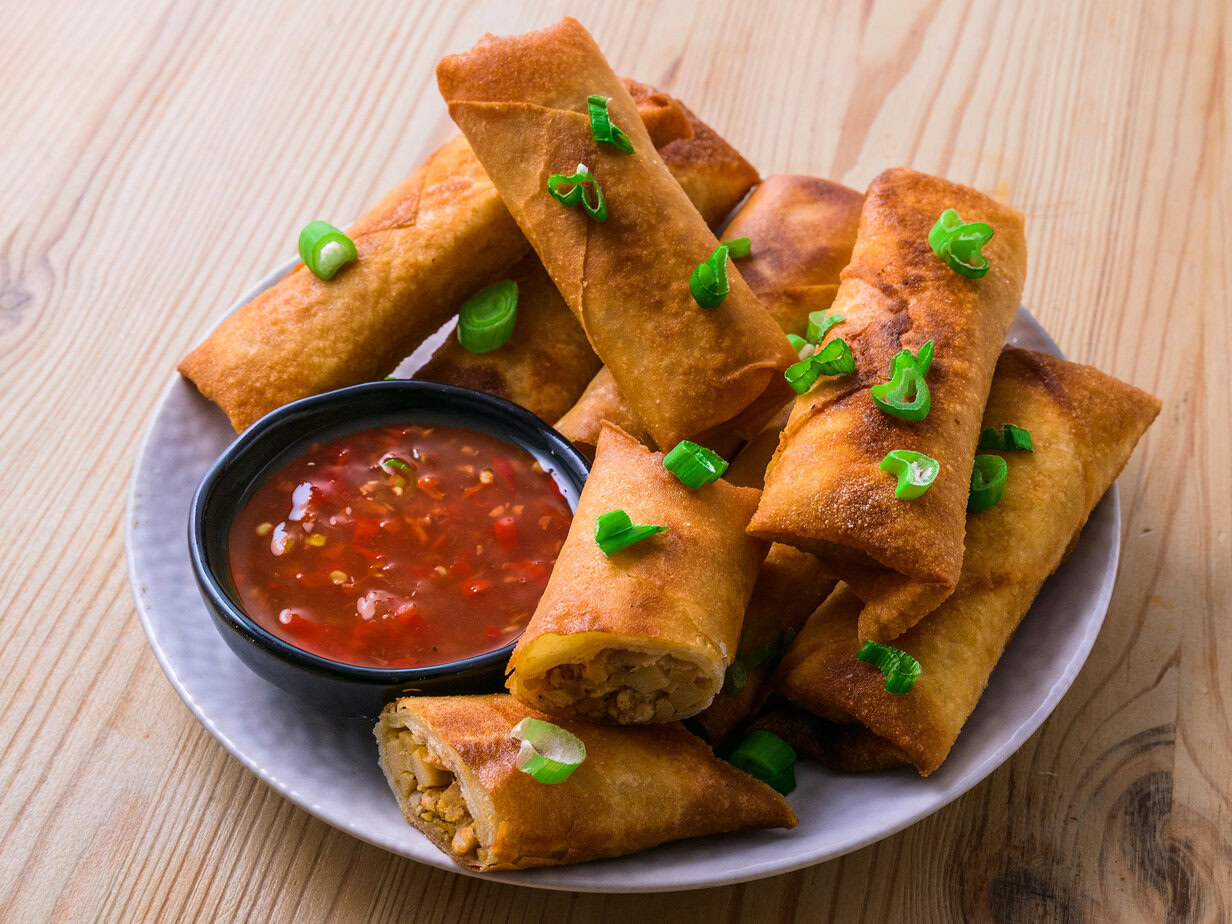
Okoy isn’t so much a rigid recipe as it is a set of defining traits (especially in the shrimp version): tiny shrimp or other small seafood, a rice-based batter (ideally galapong—wet-ground malagkit, like the rice base used for mango sticky rice), a thin fritter fried in plenty of very hot oil (deep-fried or pan-fried, with a double fry if needed), and suka (vinegar) served alongside.
Okoy: what it is (and what it isn’t)
Okoy (also spelled ukoy) is sometimes linked by name to the Hokkien ō-kuè / ō-kóe (芋粿), literally “taro cake.” It’s an interesting connection if you’re thinking about culinary borrowing—Chinese communities have long shaped the Filipino pantry—but it’s more of a shared word than a shared recipe.
The broad idea is similar: a fritter plunged into hot oil. But Filipino okoy has become its own thing—a fried shrimp-and-vegetable fritter eaten as a snack with vinegar—rather than a taro cake, which tastes different and plays a different role at the table.
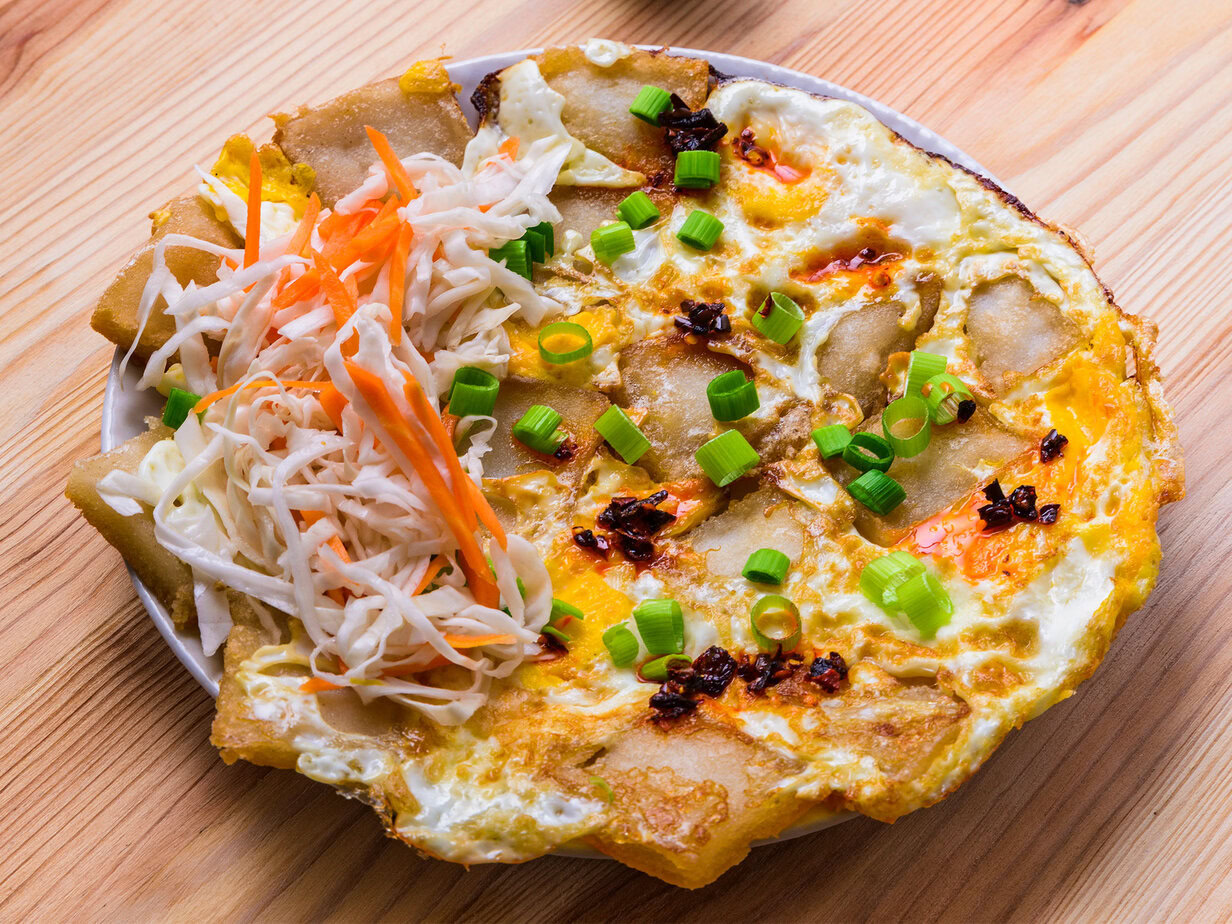
Vietnamese banh bot chien can be made with taro
In short, okoy is a thin, crispy fritter of small shrimp and vegetables, held together with a rice-based batter—traditionally galapong. That’s a wet-ground sticky rice (malagkit) paste, though many cooks today use rice flour (or blends). This rice base is key: when fried, it turns out lighter and crisper than an all-wheat batter, with a clean snap rather than a thick, bready chew.
A great okoy stays pleasantly irregular and lets the ingredients shine: the shrimp bring briny depth (and, when they’re small enough, extra crunch from the shells), the vegetables add sweetness and texture, and achuete (annatto) often gives the orange hue associated with “classic” okoy. The vinegar dip plays a precise role: it cuts through the frying, brightens the seafood, and keeps the whole thing from feeling heavy.
The term can also be confusing. In some families and older sources, ukoy/okoy may refer to vegetable fritters (with or without shrimp) and, depending on context, dishes closer to a squash or sweet-potato omelet.
Here, “okoy” means the classic shrimp-and-vegetable fritter—thin, crisp, and served with vinegar—rather than an egg-forward omelet like tortang hipon or tortang kalabasa, where egg is the primary binder (in okoy, egg is traditionally minimal). And okoy isn’t meant to be thick and fluffy like okonomiyaki: the batter should support the shrimp and vegetables, not bury them.
The origins of okoy
Okoy is often said to have originated in Laguna, south of Luzon. In a province shaped by fishing and market cooking (palengke), the dish follows a simple logic: stretch a small handful of tiny shrimp by binding them with rice batter and inexpensive vegetables such as kalabasa, togue, or green papaya, then fry everything into a crisp, satisfying fritter that’s easy to sell by the piece.
As it traveled through the archipelago, okoy adapted to local ingredients without losing its recognizable shape. Older sources tend to emphasize the same foundation: simple seasoning, a rice-based batter, and frying in plenty of very hot oil until the edges lace and turn deeply golden.
Over time, home kitchens have sometimes tweaked the formula for convenience (a little wheat flour, a touch of egg, a pinch of baking powder), but the balance stays the same: shrimp (or other small seafood) first, vegetables second, with the batter there to hold it all together.
Main ingredients for okoy
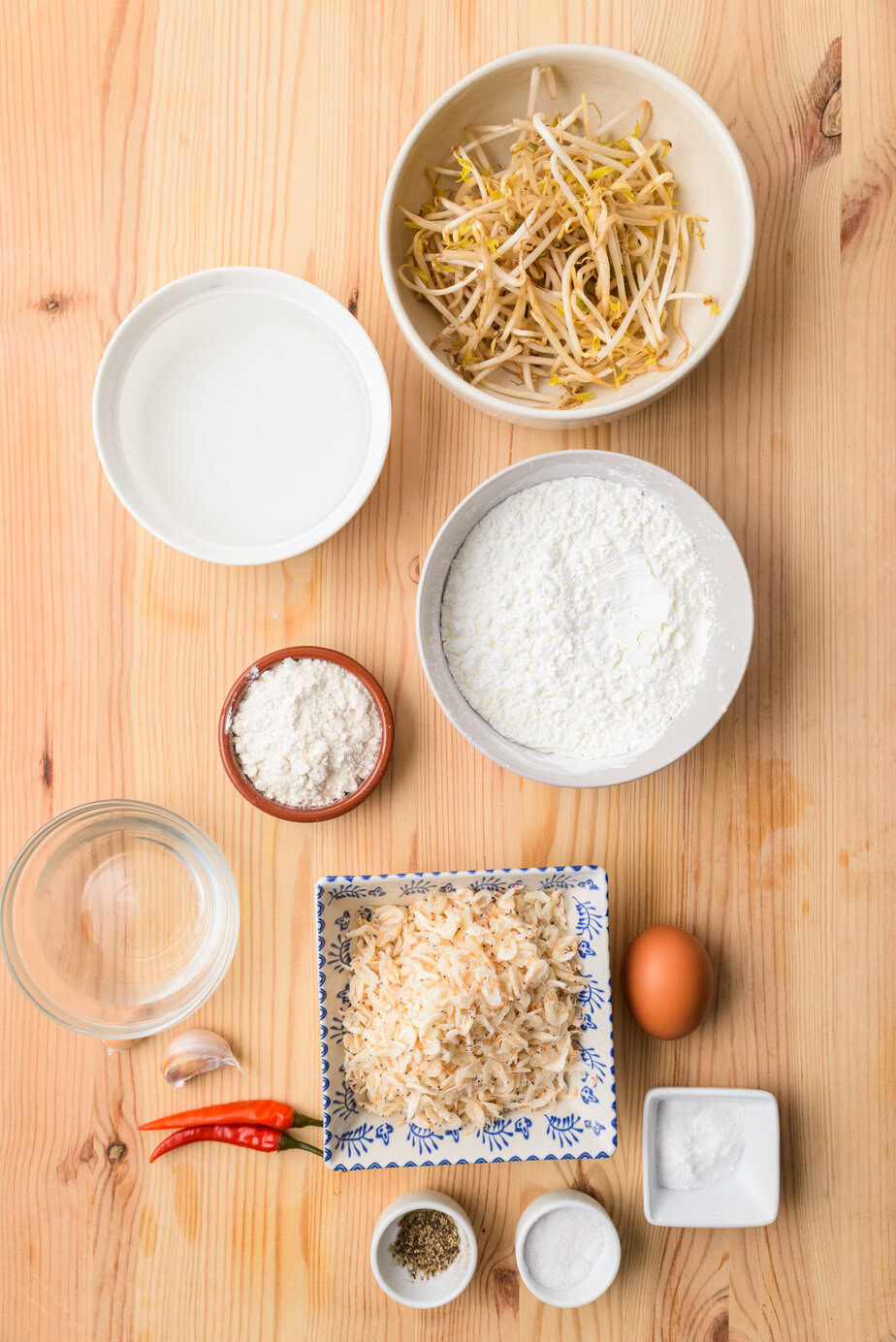
- Small shrimp (often shell-on): the star ingredient; they bring briny flavor and aroma. The tiny shells can fry up remarkably crisp—much like salt and pepper shrimp, just with smaller shrimp.
- Galapong (sticky rice paste) and/or rice flour: the traditional binder; when fried, it gives a light, crackly texture—less “cake-like” than batters heavy on wheat flour. Cornstarch can be a useful substitute.
- Kalabasa (squash): sweetness and color; often mashed or grated, it also helps the mixture hold together without making it thick.
- Togue (mung bean sprouts): gentle crunch without too much moisture; they also help create those signature lacy edges (often sold as bean sprouts).
- Aromatics (garlic, onion, scallion or chives): a savory backbone that rounds out the shrimp without overpowering it.
- Seasoning (salt, pepper; sometimes fish sauce): kept intentionally simple to let the seafood lead.
- Achuete/annatto: mainly for color, with a very mild flavor; it deepens the orange tint associated with “classic” okoy.
- Optional vegetables (by region/household): green papaya for volume and texture; sweet potato for sweeter notes and extra crunch; carrot for color and bite.
- Oil for frying: the real cooking medium; plenty of very hot oil (deep-fried or pan-fried) is what gives you a thin, crisp fritter.
- Spicy vinegar sawsawan: typically vinegar with garlic and chilies (sometimes peppercorns or onion), and occasionally a pinch of chili powder. The acidity resets your palate between bites.
Technique is what brings all these ingredients together. A traditional method (especially in Laguna) often works in “layers”: a thin stream of batter hits the oil first, shrimp and vegetables are scattered over it, then a light veil of batter “seals” everything as it fries. This keeps the shrimp visible—little dots across the surface—without turning the fritter into a thick slab.
Some older rural methods, documented by Amy Besa in Memories of Philippine Kitchens, even use a banana leaf as a frying aid, or sometimes a cacao leaf. The leaf acts as a temporary support: slide it into the oil with the batter, then remove it once the fritter sets—a handy trick for keeping delicate okoy intact.
Regional character, serving culture & authenticity today
Regional variations
- Laguna (Tagalog): a squash-forward version, often orange thanks to kalabasa and/or achuete, with togue for crunch. The rice batter stays thin, and the shrimp should remain visible.
- Vigan (Ilocos): very shrimp-forward and especially lacy, with a distinctive binder made from mashed tomato and red onion or local shallot. Depending on the recipe, this base is incorporated differently (rice flour, or sometimes wheat flour and egg), but the goal is similar: a savory, tangy coating that clings to the tiny shrimp, without bulky vegetables.
- Street food in Malabon/Manila: larger, more generous fritters that still aim for crispness and a distinct rice character. A common formula highlights shrimp, squash, and togue; some vendors add green papaya for volume, and extras (like tofu or small pieces of pork such as lechon kawali) are more a stall signature than a hard rule.
- Visayas and Mindanao: the idea extends to other small seafood and local products while keeping the okoy logic (thin, fried, crunchy, served with vinegar), as in ukoy nga dilis (anchovy fritters) or versions using dulong (tiny fish, like fry) in place of shrimp.
Wherever you eat it, okoy is best enjoyed immediately: straight out of the oil, drained, and sold while it’s still crackling. In many places, it’s wrapped in a banana leaf or plain paper and eaten by hand, on the go (a takeaway merienda, breakfast with coffee, or a snack while the rice cooks).
The vinegar matters as much as the frying, and regional preferences show up in the bottle: cane or coconut vinegar in many Tagalog areas; sukang Iloko in the north; sinamak or pinakurat styles elsewhere, each with its own bite, heat, and aroma.
In practice, authenticity is less about insisting on one “correct” vegetable and more about preserving the essentials: a thin, irregular fritter, true crispness, and vinegar as its traditional partner. If you love this style of fried fritters, you’ll often enjoy aehobak jeon (zucchini) or gochu twigim as well.
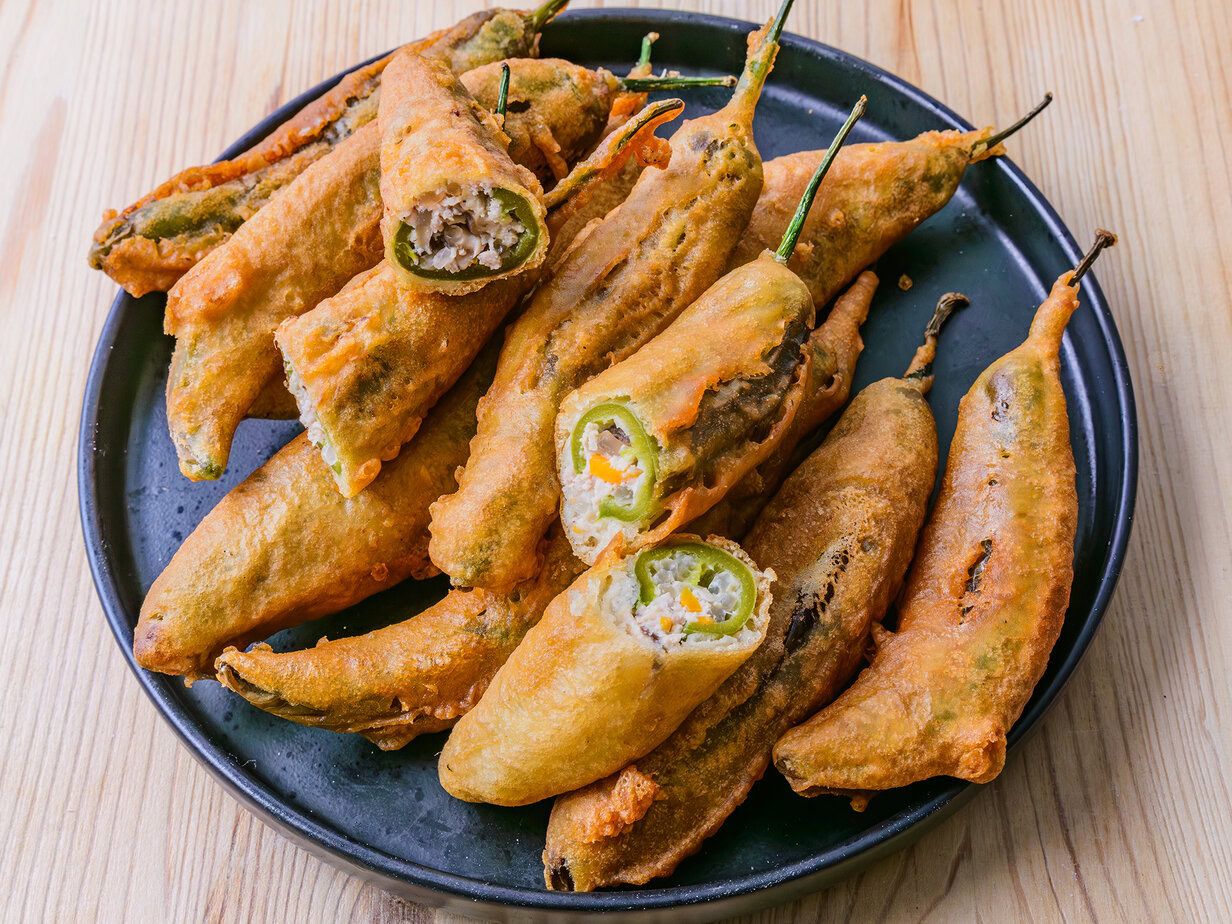
Despite spelling and regional differences, you can spot okoy by its thinness, its delicate lacy edges, and the starring role of shrimp (or another small seafood). For shrimp okoy in particular, tiny shrimp—often shell-on—are the signature, though some regions also sell “okoy-style” fritters made with other small seafood, and even vegetable-heavy versions called ukoy.
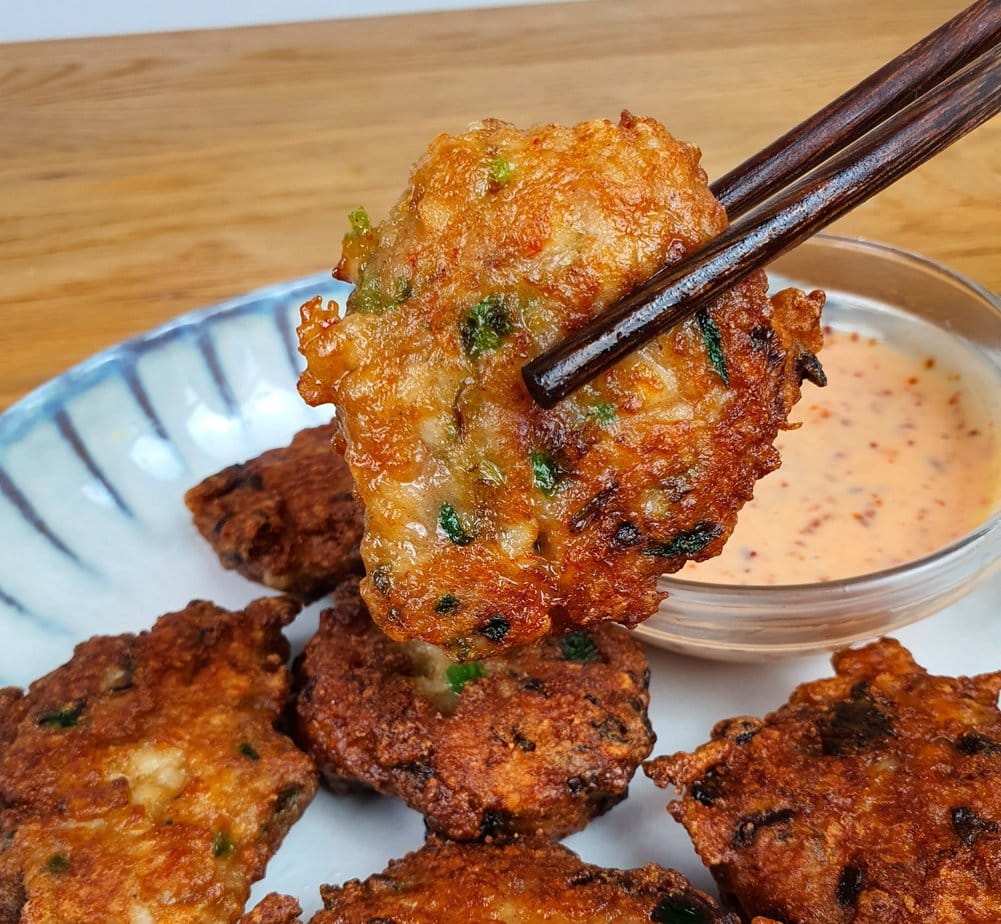
Modern tweaks (missing from many traditional versions)—like adding an egg for binding, a pinch of baking powder for lightness, or mixing rice flour with cornstarch for a drier, extra-crunchy finish—can work beautifully, as long as the fritter stays flat, thin, and lacy.
The biggest pitfall is moisture: watery vegetables—especially green papaya—can soften the crust if they aren’t thoroughly drained or balanced with drier shreds (sweet potato, carrot). A few telltale signs you’re drifting away from okoy: a thick, fluffy pancake-style batter, a heavy coating, novelty add-ins (like cheese), or default condiments (ketchup, sweet and sour sauce) instead of suka.
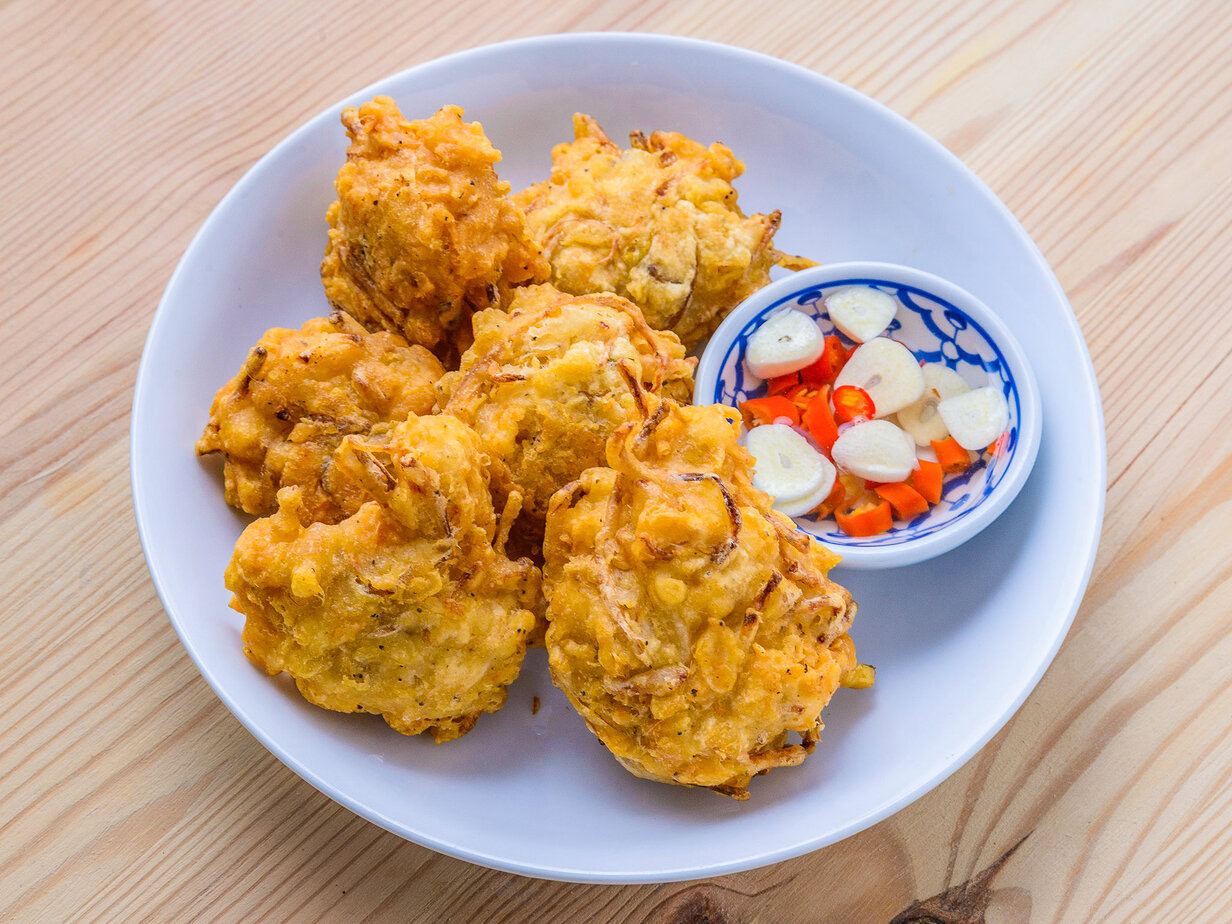
Ingredients
For the fritters
- 200 g small shrimp cleaned (fresh or dried)
- 140 g cornstarch
- 40 g all-purpose flour
- 2 handfuls mung bean sprouts
- 0.5 teaspoon salt
- 0.5 teaspoon black pepper freshly ground
- 1 egg
- 0.25 teaspoon baking powder
- 300 ml water cold (ideally ice-cold)
- neutral-flavored oil for frying
For the dipping sauce
- 120 ml spiced vinegar sinamak or pinakurat (or rice vinegar)
- 2 Thai chilies finely chopped
- 2 cloves garlic finely chopped
Instructions
Prepare the batter
- In a large bowl, whisk together the cornstarch, flour, baking powder, salt, and black pepper.140 g cornstarch, 40 g all-purpose flour, 0.25 teaspoon baking powder, 0.5 teaspoon salt, 0.5 teaspoon black pepper
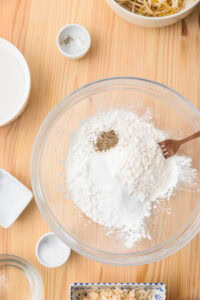
- Add the egg, then pour in the cold water.1 egg, 300 ml water
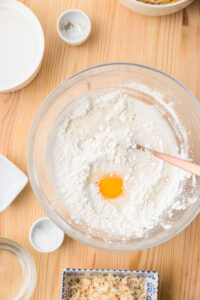
- Stir just until smooth and lump-free; do not overmix.
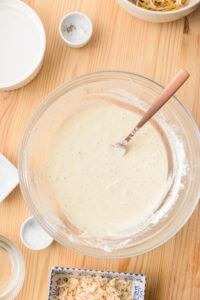
- Fold in the shrimp and mung bean sprouts until evenly coated.200 g small shrimp, 2 handfuls mung bean sprouts
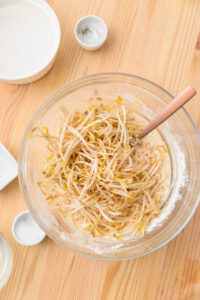
Fry the okoy
- Pour the oil into a deep pot and heat over medium-high heat.neutral-flavored oil
- Test the oil by dropping in a small spoonful of batter: it should sizzle right away and float to the surface.
- Scoop 2 to 3 tablespoons of batter into the hot oil, then gently spread it out to form a thin fritter.
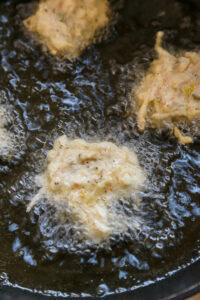
- Fry for 2 to 3 minutes per side, until crisp and golden, working in batches (2 to 3 pieces at a time).
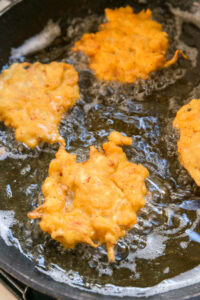
- Lift out with a slotted spoon and drain on paper towels.
Dipping sauce & serving
- Stir together the spiced vinegar, Thai chilies, and garlic. Serve the fritters right away—hot and crispy—with the dipping sauce.120 ml spiced vinegar, 2 Thai chilies, 2 cloves garlic
Storage and reheating
- Let any leftover fritters cool completely, then store in an airtight container.
- Reheat in the oven or air fryer at 180°C for 3 to 5 minutes to crisp them back up.
Notes
- Use ice-cold water for a lighter, crispier batter.
- Mix only until combined; overmixing can make the fritters tough.
- Pat the shrimp and sprouts dry before adding to keep the batter from getting watery.
- Keep the oil temperature steady for even frying.
- Spread the batter thin for maximum crispiness.
- Frying in fresh oil yields noticeably crispier fritters.


These okoy took me straight back to after-school merienda at my lola’s house, when she’d fry up thin, lacy fritters and the whole kitchen smelled like garlic and hot oil. The punchy spiced vinegar dip is exactly how she served it too, and that first crackly bite feels like childhood all over again 😊
Didn’t expect my picky kid to go for these okoy at all, but the ultra-crispy edges and that garlicky spicy vinegar dip had them asking for seconds 😊
Made these okoy extra thin and lacy and the garlicky chili vinegar was perfection, so I intentionally doubled the batch. Leftovers reheated in the air fryer were honestly just as good the next day 😋
These ultra-crispy okoy with that garlicky chili vinegar are the ultimate comfort food, all cozy vibes and crunchy-salty goodness. Perfect for a rainy day snack when you just want something warm and comforting.