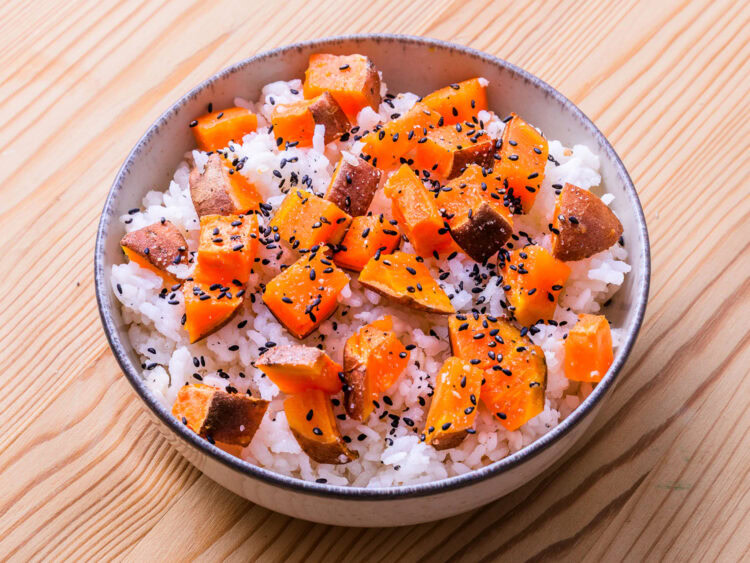
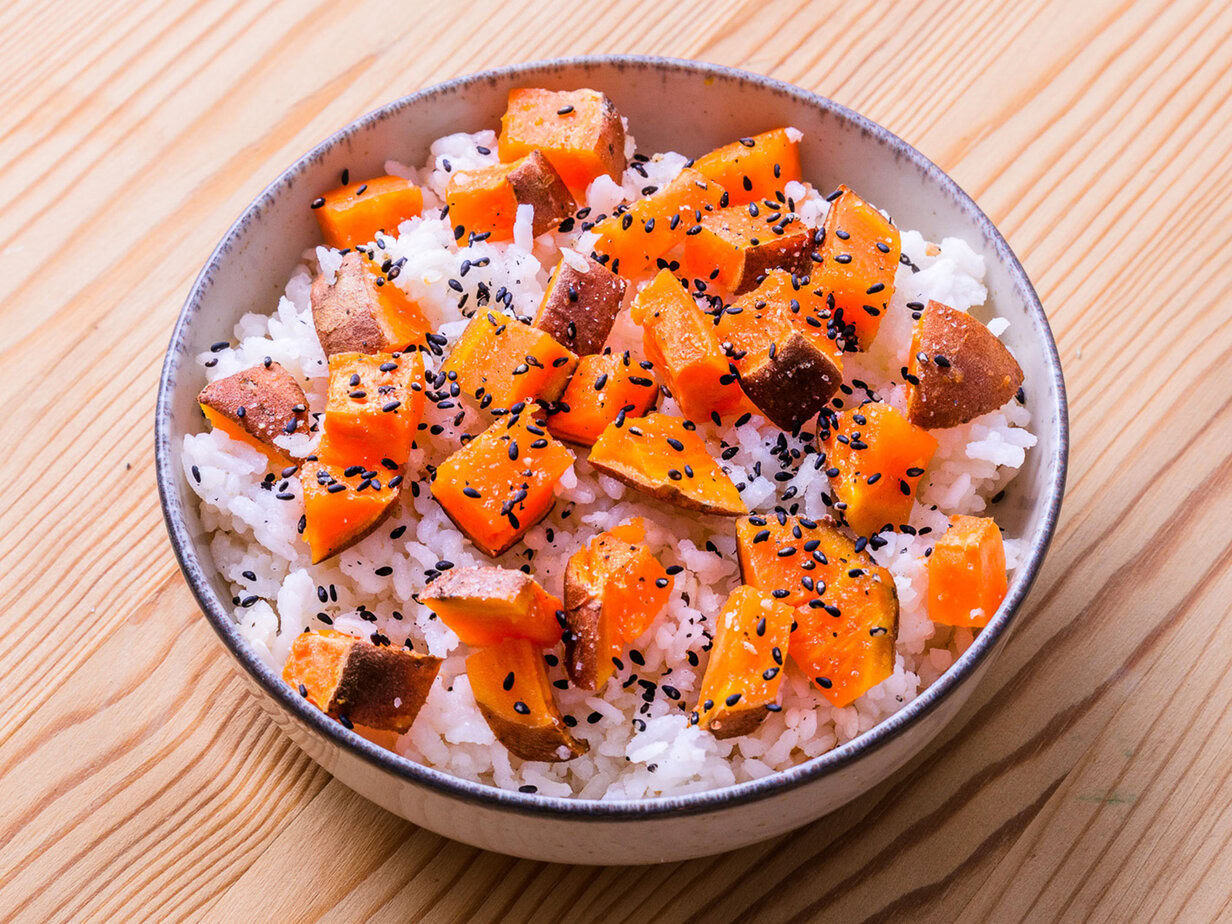
A specialty from Kagoshima: Japanese rice cooked with cubes of floury sweet potato, finished simply with a pinch of salt and black sesame.
The evenings are turning cooler, and a bowl of still-steaming rice, studded with golden cubes of sweet potato, is enough to warm the whole table.
The aroma recalls chestnut, gentle but restrained, far from anything dessert-like. A pinch of salt lifts the grains, and a scattering of black sesame adds crunch. It seems too simple to be memorable, until the first spoonful.
What is satsumaimo gohan?
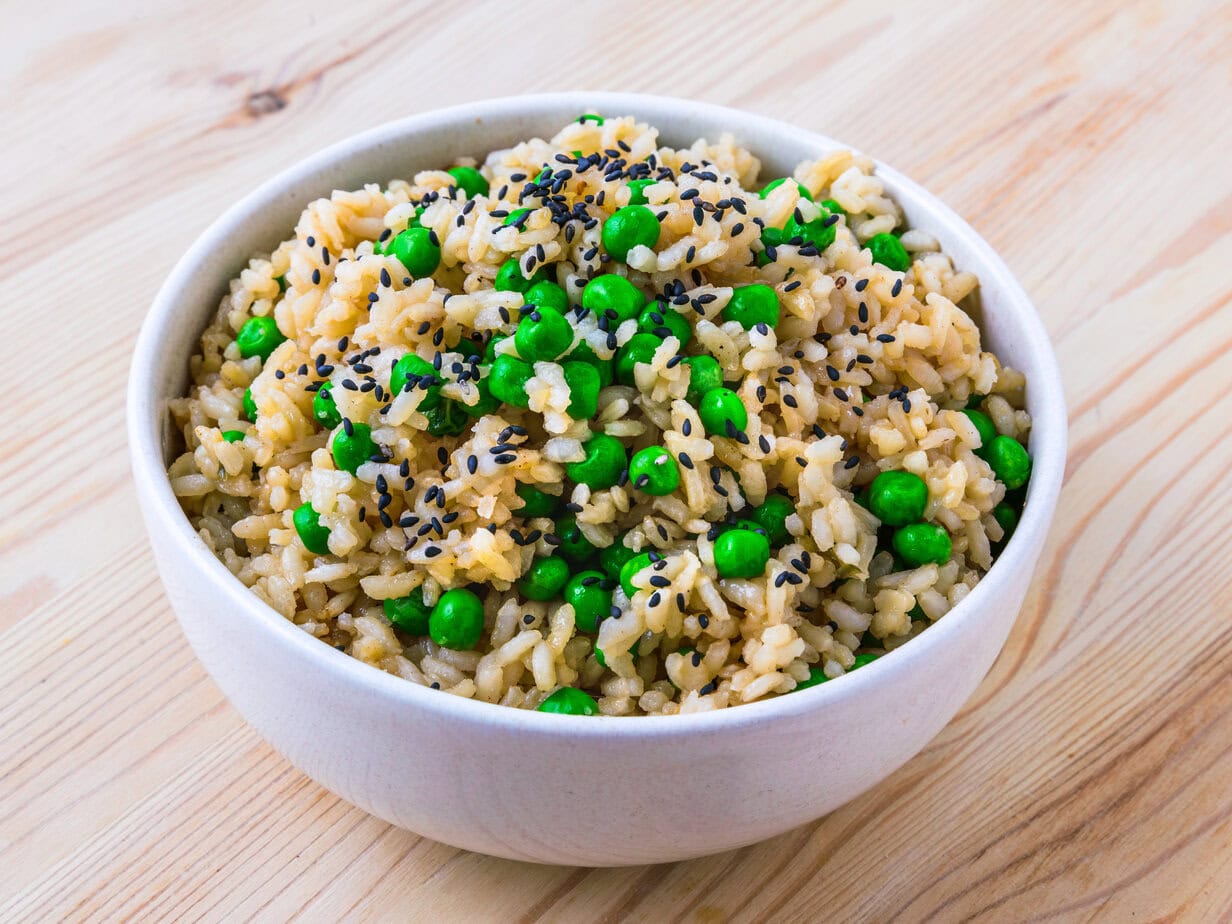
In its most classic form, the dish sticks to the essentials: short-grain Japanese white rice, cubes of hokuhoku sweet potato, water, and salt. The skin is left on or only partially peeled, and the floury flesh holds its shape as it cooks: the golden cubes stay intact instead of breaking down into the rice.
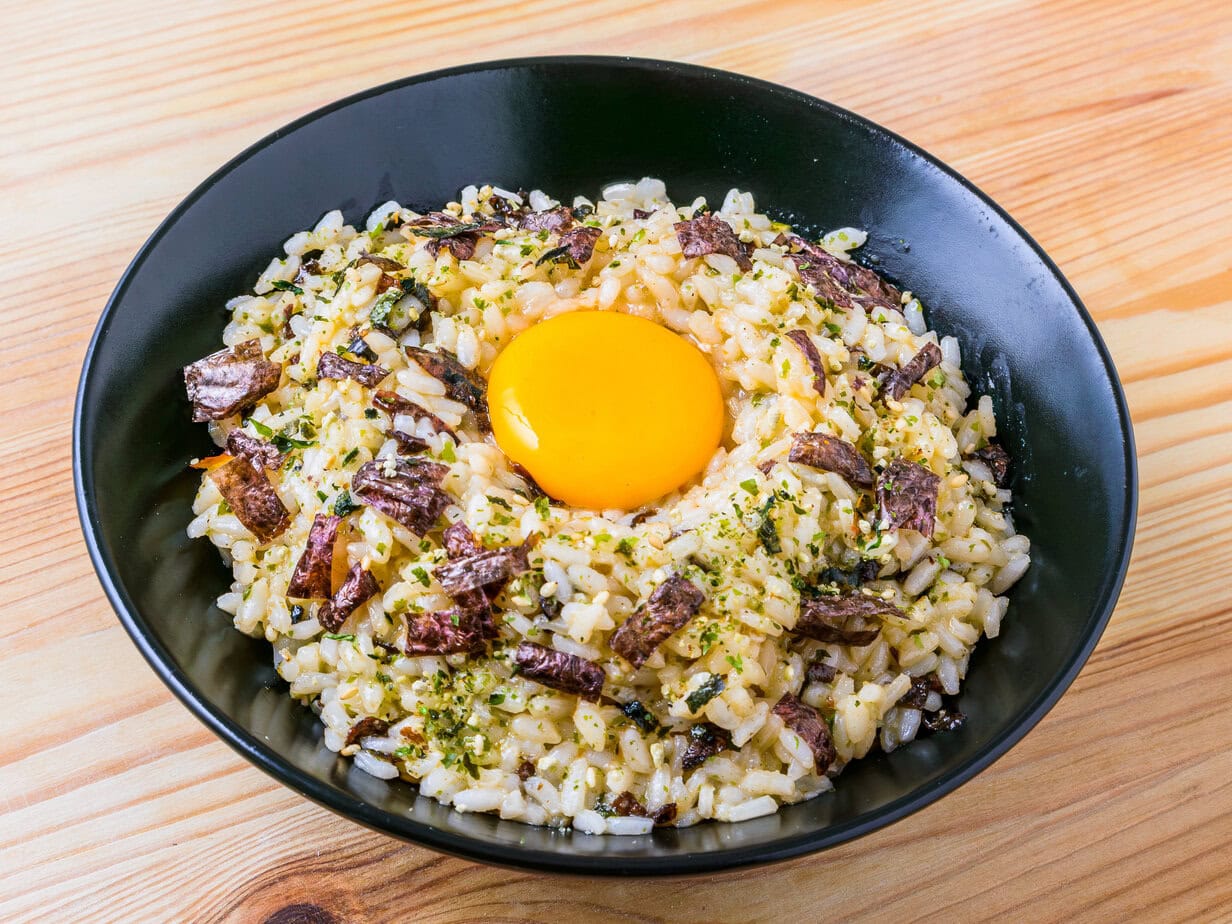
Sake lends a subtle aroma, shio-kombu brings a briny touch of umami, and goma-shio provides the finishing touch. In Kagoshima, soy sauce, mirin, and dashi are usually left out: they darken the grains and mask the delicate flavor of the sweet potato.
Satsumaimo means “Satsuma sweet potato,” named after the old domain that became Kagoshima Prefecture; locally, it is also called karaimo, the “foreign potato.” Gohan means “rice,” so the dish is also sometimes known as karaimo gohan.
From survival food to a seasonal staple
Sweet potato reached Japan by way of China and the Ryūkyū Kingdom, then took root in the Satsuma domain at the turn of the 18th century. In 1698, Tanegashima Hisamoto obtained seedlings; in 1705, Maeda Riemon cultivated it in Yamakawa and spread it throughout the region.
Kagoshima’s terrain explains its importance. The Shirasu plateau, made of porous volcanic ash, drains water too quickly for paddy rice, and typhoons have long battered the exposed fields.
Sweet potato, by contrast, matures underground in poor yet well-drained soil: a reliable crop where rice struggled. The region still accounts for nearly 40% of Japan’s production.
Satsumaimo gohan also began as a katemeshi, a way to stretch scarce rice with a filling ingredient; sweet potato was once nicknamed kōkō-imo, the “filial piety potato,” because it helped families endure times of famine. Today, the dish evokes the warmth of tsukimi gatherings, even if it still divides opinion: for some, sweet potato pushes rice too close to dessert. Kagoshima’s answer can be summed up in one word: restraint, with just enough salt to keep the sweetness in check.
The main ingredients in satsumaimo gohan
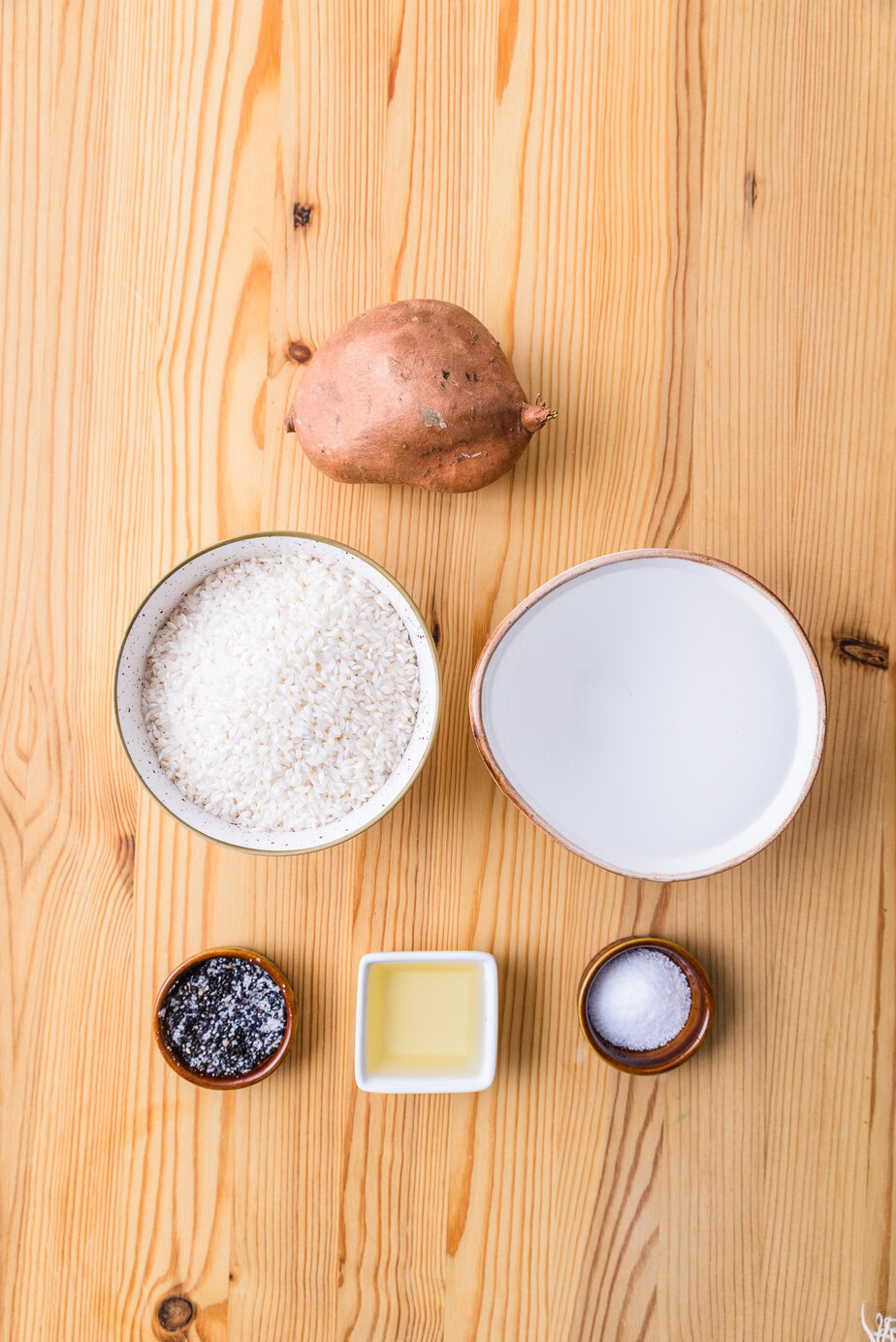
The dish rests on two key elements. Short-grain Japanese rice, rinsed and soaked, yields glossy grains with a tender bite.
The sweet potato should ideally be a hokuhoku variety, floury and dry, such as Benisatsuma, Beniazuma, or Naruto Kintoki: the cubes hold their shape and develop a gentle, rounded sweetness instead of melting away. If not, use a regular sweet potato; it will still be delicious.
The seasoning remains minimal. Salt does most of the work: it brightens the rice and keeps the dish firmly on the savory side. A splash of sake adds fragrance without tinting the grains, and a pinch of shio-kombu brings umami with its fine, briny strands.
The finishing touch is goma-shio, a blend of black sesame and salt that adds toasted crunch. For a heartier version, replace part of the rice with mochigome: the dish then takes on the pleasantly chewy texture of okowa, made with glutinous rice.
Ingredients
Instructions
Preparation
- Rinse the rice, then drain it in a colander.450 g sushi rice
- Transfer the drained rice to a saucepan and add the water.600 ml water
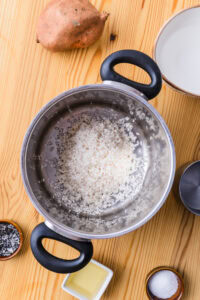
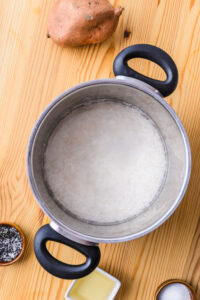
- Soak the rice for at least 30 minutes (optional: add a small strip of kombu to the soaking water).1 small strip kombu
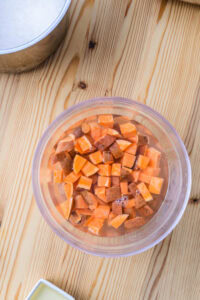
- Leave the skin on the sweet potato and cut it into 1 cm cubes.250 g sweet potato

- Briefly soak the sweet potato cubes in water to remove the aku (bitterness) and reduce oxidation, then drain.
- Add the sake and salt to the soaked rice.3 tablespoons sake, 1 teaspoon salt
- Arrange the drained sweet potato cubes over the rice without stirring.
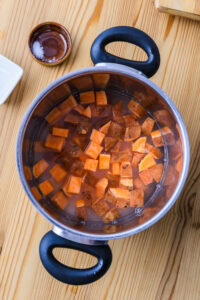
- Cover and cook over medium heat for about 10 minutes, then over low heat for about 15 minutes. Turn off the heat and let it rest, covered, for about 15 minutes.

- Serve in bowls and sprinkle with goma-shio.goma-shio (salted sesame)