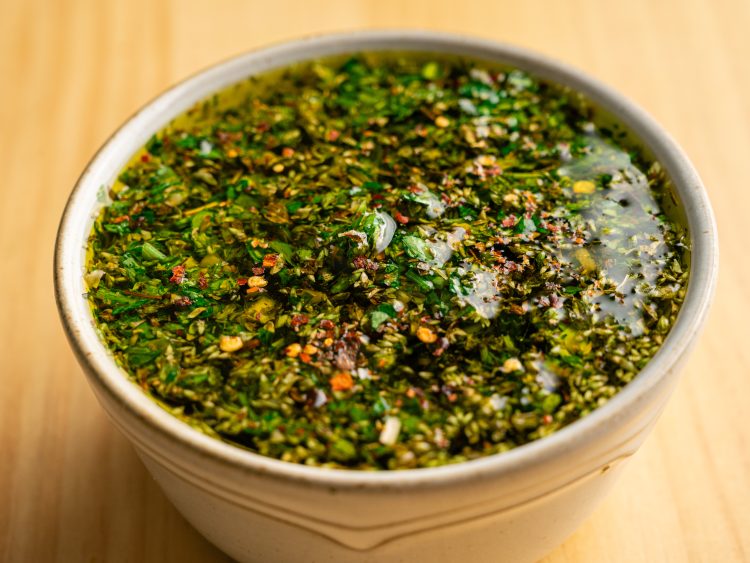
A raw Argentine sauce of flat-leaf parsley, garlic, dried oregano and red wine vinegar, spooned over grilled meats.
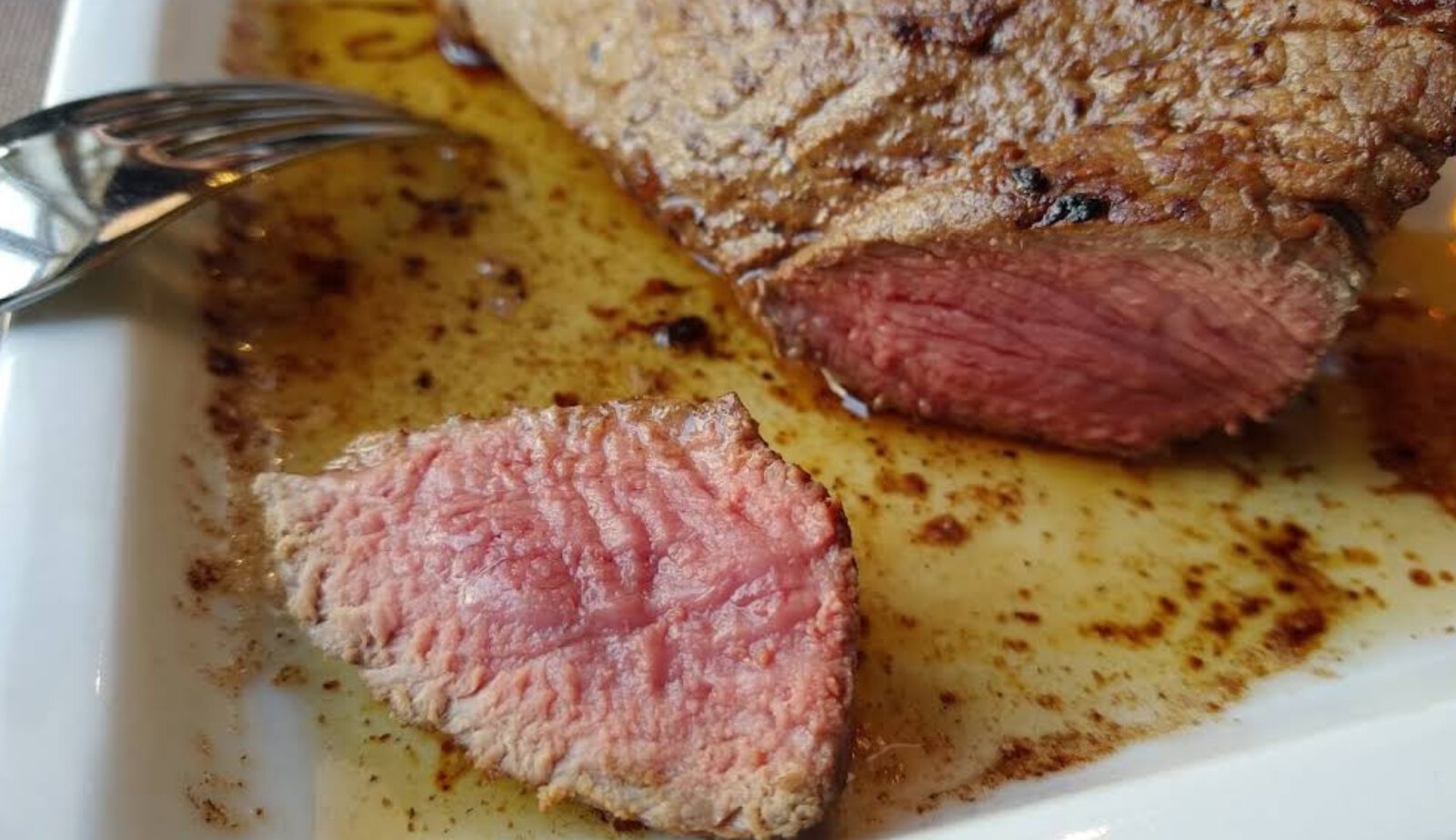
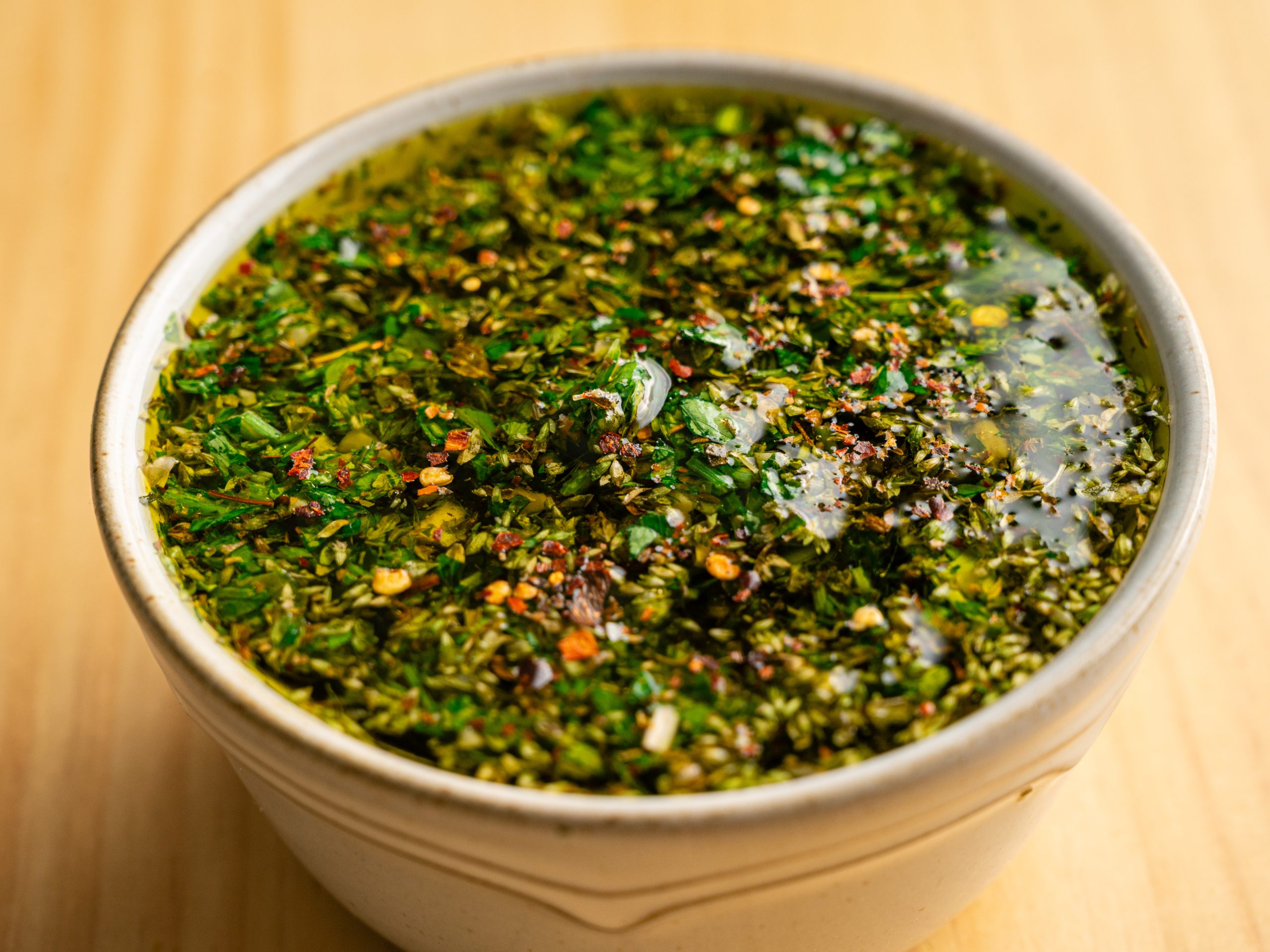
The meat comes off the coals with its crust still sizzling, and the green bowl is already waiting in the middle of the table. A spoonful of chimichurri runs over the slice: raw parsley and garlic, the bite of vinegar, a hint of chile, oil mingling with the meat juices. Everyone goes back for more straight from the bowl, and a piece of bread gets dipped in while everyone waits for what comes next. Once you’ve tasted it, grilled meat served without its sauce looks pretty bare.
What Is Chimichurri?
Chimichurri is a raw sauce from Argentina and Uruguay: flat-leaf parsley and garlic chopped by hand, dried oregano, chile, black pepper, red wine vinegar and olive oil, built on a brine of warm water and coarse salt. The sauce stays loose, with the herbs floating in the oil and vinegar, a far cry from a thick emulsion like Japanese mayonnaise. Like sauce chien from the French Caribbean, it relies on raw herbs and acidity to wake up grilled meats.
The origin of the name is still debated. The most credible theory points to the Basque tximitxurri, roughly translated as “a mix of several things,” which arrived with Basque immigrants in the late 19th century. Another theory links it to Quechua, and the story of an Irishman named Jimmy McCurry is the stuff of legend.

A Sauce Born Around the Asado
In the 19th century, the gauchos of the Pampas lived off their herds and cooked beef slowly over a wood fire, the forerunner of the asado. Always on horseback, with no way to keep fresh herbs, they carried dried goods: oregano, garlic, chile. Their meat was basted with a simple brine of water and coarse salt, sometimes with a bay leaf.
Vinegar and oil later joined that brine along with the herbs, and the basting sauce became a condiment in its own right. No one knows who invented it or when, and every family sticks to its own version.
During an asado, the bowl of chimichurri is passed around between the platters of meat and everyone helps themselves. The vinegar cuts through the fat of the vacío or the tira de asado, and the herbs play off the smoky flavor. In Thailand, crying tiger beef takes the same approach, with a sour, spicy sauce served alongside the grilled meat.
The Main Ingredients in Chimichurri
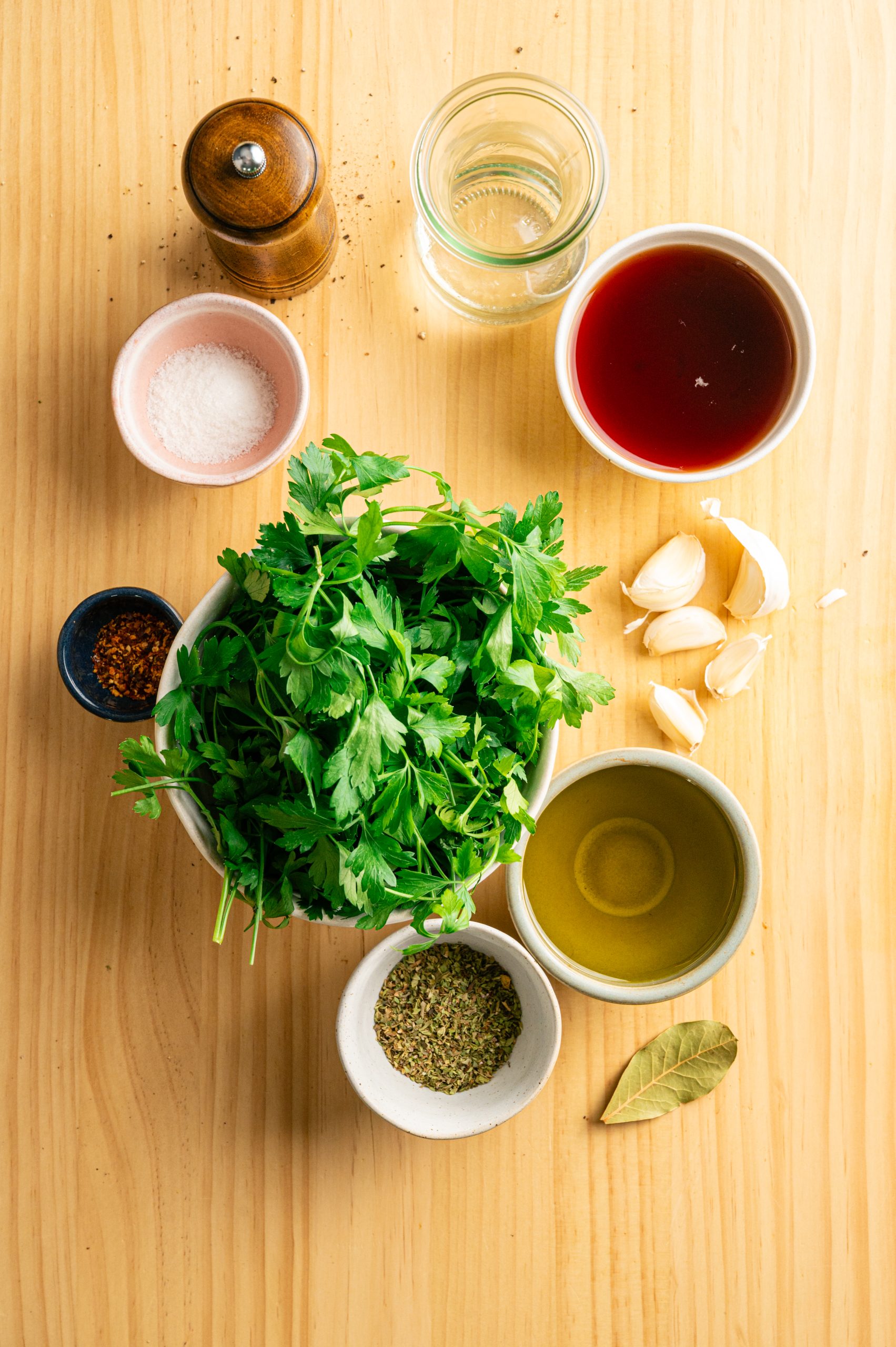
Flat-leaf parsley forms the body of the sauce, with 60 g for eight servings. It is chopped by hand into small, distinct pieces, because a food processor bruises the leaves and turns the sauce dark and bitter. Five cloves of raw garlic, chopped just as finely, add a clean bite, much sharper than that of fried garlic.
The oregano is dried: it provides the base resinous note, a legacy of the gauchos’ provisions, and fresh oregano doesn’t have the same punch. Argentine ají molido is a coarsely ground dried chile, mild and fruity. If you can’t find it, red pepper flakes will do, using half the amount if they’re very hot. It is nothing like chili powder, which is a blend of several spices.
The brine of warm water and coarse salt seasons every bit of parsley evenly. Red wine vinegar provides the acidity: white wine vinegar or sherry vinegar make good substitutes, but balsamic is too sweet and rice vinegar too mild. Olive oil brings everything together and mellows the vinegar.
Technical Tips for a Good Chimichurri
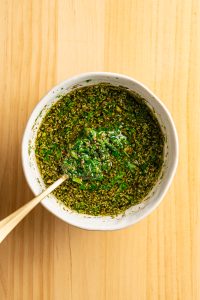
The brine comes first, then the herbs go in, and the oil is added last. A good chimichurri runs off the spoon, with clearly distinct green pieces. If the herbs form a paste, add oil a spoonful at a time.
Resting time matters: at least 2 hours at room temperature, or overnight in the refrigerator, to mellow the garlic and vinegar. A sauce straight from the fridge should come back to room temperature before serving, because cold oil thickens and dulls the flavors. Tasted on a piece of bread, it should seem a little too salty and sharp: the grilled meat will soak up both.
What Goes with Chimichurri?
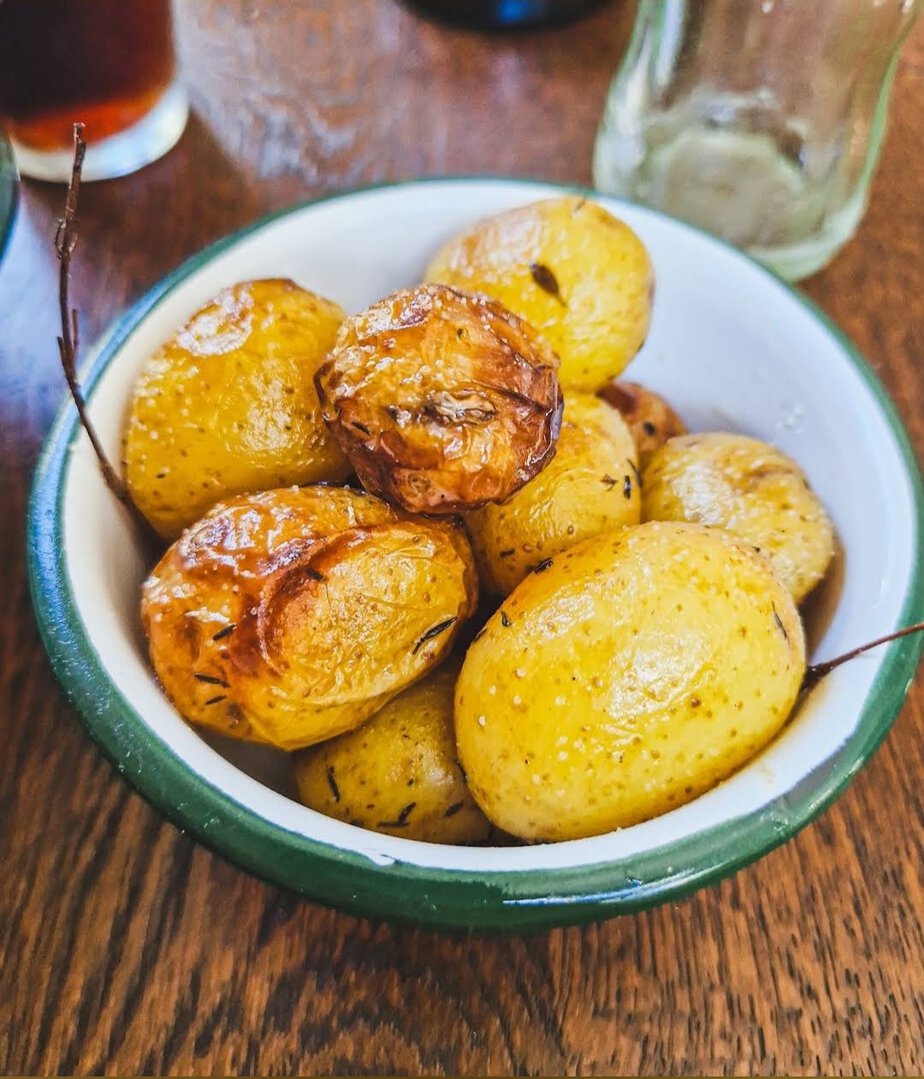
Chimichurri is spooned over meat that has already been cooked. Added before cooking, it burns and masks the flavor of the meat, whereas a yakiniku sauce also works as a marinade. It goes with choripán, a grilled sausage sandwich, provoleta, a cheese cooked on the grill, an air fryer tenderloin or roasted potatoes.
Air fryer eggplant or air fryer zucchini can also be drizzled with chimichurri as soon as they come out. It keeps for 2 weeks in the refrigerator in a sealed jar, under a layer of oil, but the parsley loses its bright green color after about four days. It can be frozen for 3 months in an ice cube tray.
Ingredients
Brine
- 60 ml water lukewarm
- 2 teaspoons coarse salt
- 120 ml red wine vinegar
Herbs and Oil
- 60 g parsley flat-leaf
- 5 cloves garlic
- 2 tablespoons oregano dried
- 2 teaspoons chili flakes or ají molido
- 1 teaspoon pepper black
- 200 ml olive oil
Resting and Seasoning
- 1 leaf bay optional
Instructions
Brine
- Pour the lukewarm water into a bowl.60 ml water

- Add the coarse salt.2 teaspoons coarse salt

- Stir until the salt has dissolved and you can no longer feel any grains against the bottom of the bowl.
- Add the red wine vinegar: the brine is made before everything else, because it is what seasons every leaf evenly.120 ml red wine vinegar
Herbs and Oil
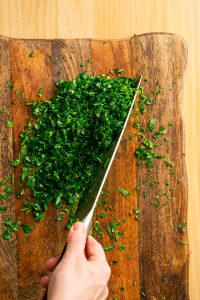
- Finely chop the parsley with a sharp knife, never in a food processor, keeping the pieces separate rather than reducing it to a wet green paste.60 g parsley
- Chop the garlic just as finely.5 cloves garlic
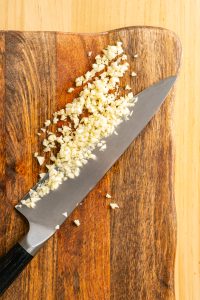
- Check that the cutting board smells strongly of parsley and garlic, and that the parsley still looks leafy, neither crushed nor darkened.
- Put the parsley, garlic, dried oregano, chili and black pepper into the brine.2 tablespoons oregano, 2 teaspoons chili flakes, 1 teaspoon pepper
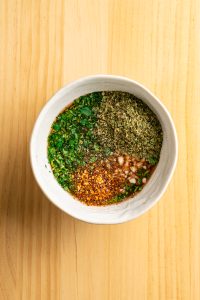
- Stir to spread the herbs through the brine.
- Pour in the olive oil.200 ml olive oil
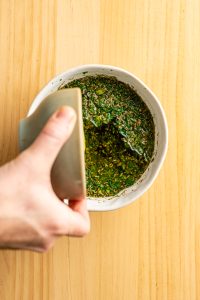
- Stir again: the herbs should float freely in the liquid.
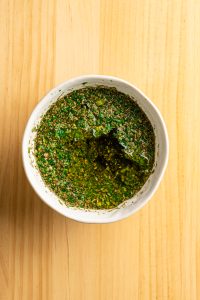
- If the herbs clump into a paste, add more oil a spoonful at a time, until the sauce runs off the spoon.
Resting and Seasoning
- Add the bay leaf, if using.1 leaf bay
- Cover the bowl.
- Let stand for at least 2 hours at room temperature, or overnight in the refrigerator: resting mellows the raw bite of the garlic and vinegar.
- The sauce is ready when the oil above the herbs has taken on a greenish tint and the vinegar no longer catches in your throat.
- If the sauce has rested in the refrigerator, bring it back to room temperature before serving: cold oil is thick and dulls the flavors.
- Stir the sauce.
- Taste it on a piece of bread rather than straight from the spoon.
- Adjust with salt, vinegar or oil: on its own, the sauce should taste a little too salty and sharp, because grilled meat absorbs both.