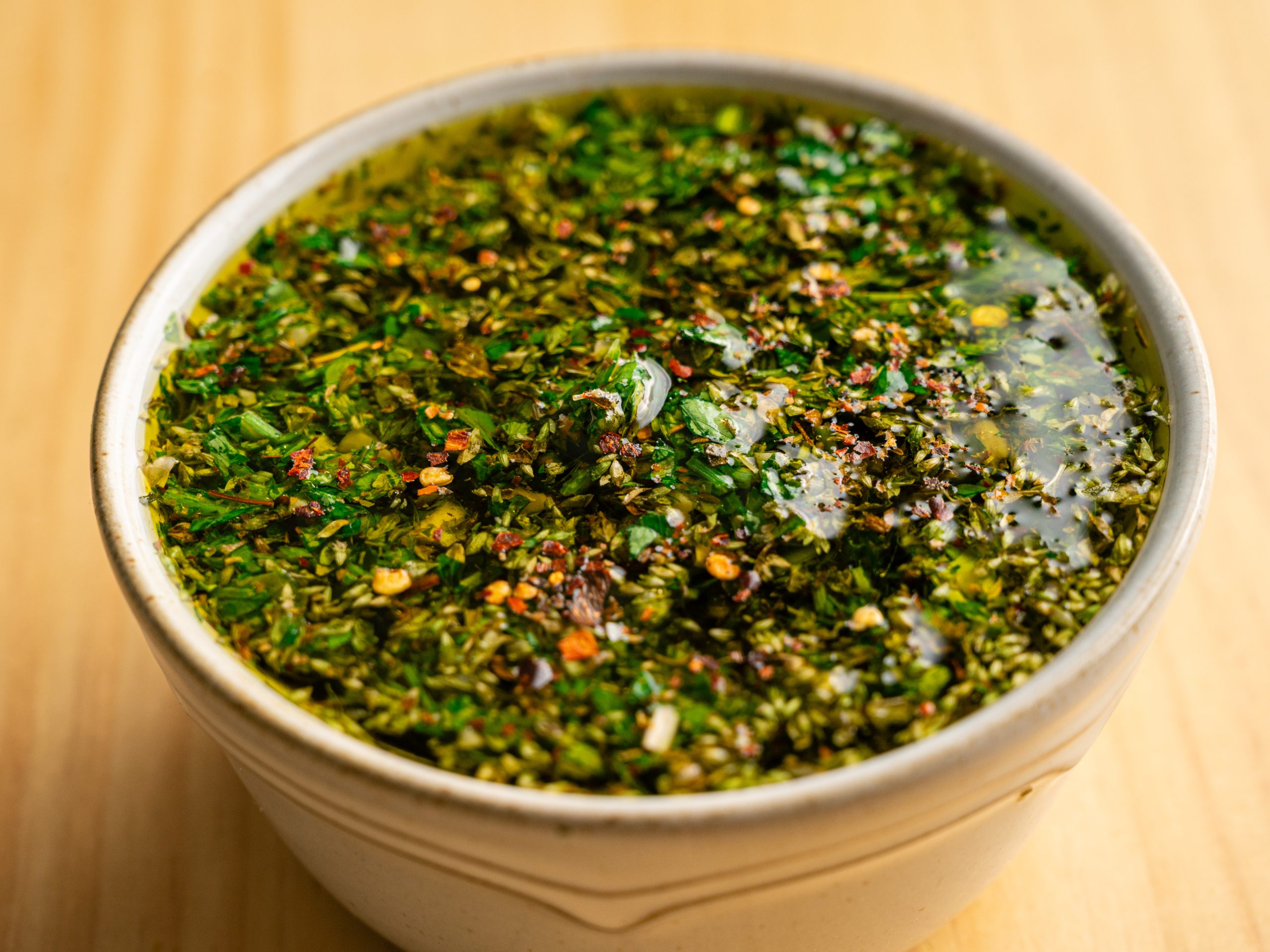
Servings: 8 servings
Ingredients
Brine
- 60 ml water lukewarm
- 2 teaspoons coarse salt
- 120 ml red wine vinegar
Herbs and Oil
- 60 g parsley flat-leaf
- 5 cloves garlic
- 2 tablespoons oregano dried
- 2 teaspoons chili flakes or ají molido
- 1 teaspoon pepper black
- 200 ml olive oil
Resting and Seasoning
- 1 leaf bay optional
Procédé
Brine
- Pour the lukewarm water into a bowl.60 ml water
- Add the coarse salt.2 teaspoons coarse salt
- Stir until the salt has dissolved and you can no longer feel any grains against the bottom of the bowl.
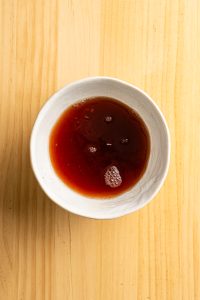
- Add the red wine vinegar: the brine is made before everything else, because it is what seasons every leaf evenly.120 ml red wine vinegar
Herbs and Oil
- Finely chop the parsley with a sharp knife, never in a food processor, keeping the pieces separate rather than reducing it to a wet green paste.60 g parsley
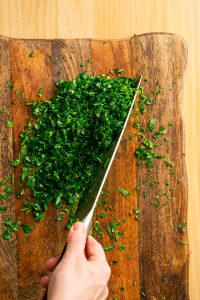
- Chop the garlic just as finely.5 cloves garlic
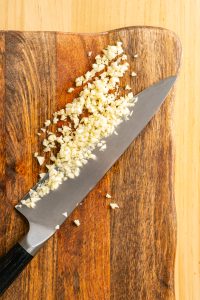
- Check that the cutting board smells strongly of parsley and garlic, and that the parsley still looks leafy, neither crushed nor darkened.
- Put the parsley, garlic, dried oregano, chili and black pepper into the brine.2 tablespoons oregano, 2 teaspoons chili flakes, 1 teaspoon pepper
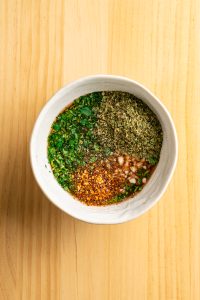
- Stir to spread the herbs through the brine.
- Pour in the olive oil.200 ml olive oil
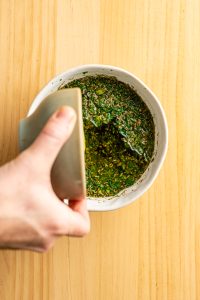
- Stir again: the herbs should float freely in the liquid.
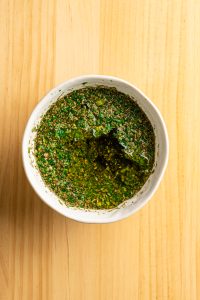
- If the herbs clump into a paste, add more oil a spoonful at a time, until the sauce runs off the spoon.
Resting and Seasoning
- Add the bay leaf, if using.1 leaf bay
- Cover the bowl.
- Let stand for at least 2 hours at room temperature, or overnight in the refrigerator: resting mellows the raw bite of the garlic and vinegar.
- The sauce is ready when the oil above the herbs has taken on a greenish tint and the vinegar no longer catches in your throat.
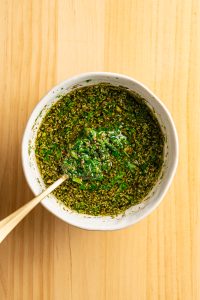
- If the sauce has rested in the refrigerator, bring it back to room temperature before serving: cold oil is thick and dulls the flavors.
- Stir the sauce.
- Taste it on a piece of bread rather than straight from the spoon.
- Adjust with salt, vinegar or oil: on its own, the sauce should taste a little too salty and sharp, because grilled meat absorbs both.
Notes
All the chopping is done with a knife: food processor blades bruise the leaves, and the sauce turns dark and bitter. A dull knife crushes instead of cutting, with the same result. The oregano must be dried, not fresh: it is what gives the sauce its underlying resinous note.
Resting is not optional: served right after mixing, chimichurri tastes harsh. After resting, it needs less salt than you might think: taste again before adjusting.
Substitutions: red wine vinegar can be replaced with white wine vinegar, sherry vinegar, or half vinegar and half lemon juice. Avoid balsamic vinegar, which is too sweet, and rice vinegar, which is too mild.
Argentine ají molido is a coarsely ground chili powder, mild and fruity; if you can't find it, use chili flakes, or 1 teaspoon of sweet paprika with a pinch of cayenne pepper. If your flakes are very hot, halve the quantity: chimichurri is not meant to burn.
A small handful of cilantro added with the parsley is not traditional in Argentina but is common in Uruguay; never replace all of the parsley, since it is the body of the sauce.
Storage: 2 weeks in the refrigerator, in a sealed jar, under a layer of oil that keeps the parsley from turning black. The flavor deepens over the first few days, but the parsley loses its bright green color after about four days. It freezes for 3 months in an ice cube tray; the thawed cubes work well in a slow-cooked dish, with a softer texture than when fresh.
Chimichurri rojo, heavier on sweet paprika and ají molido, is a common variation in northwestern Argentina and in Uruguay.
Did you make this recipe?Tag @marcwiner on Instagram!