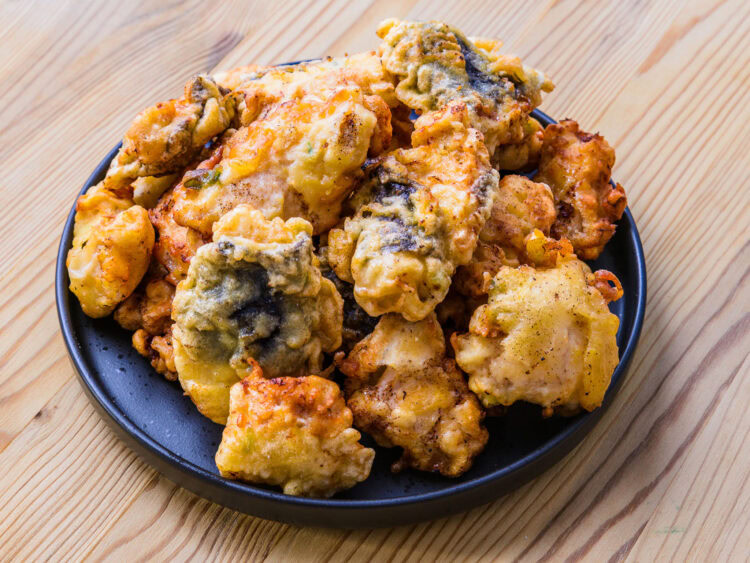
Oita’s delicately fried chicken, dipped in tempura batter and finished with kabosu and karashi mustard.
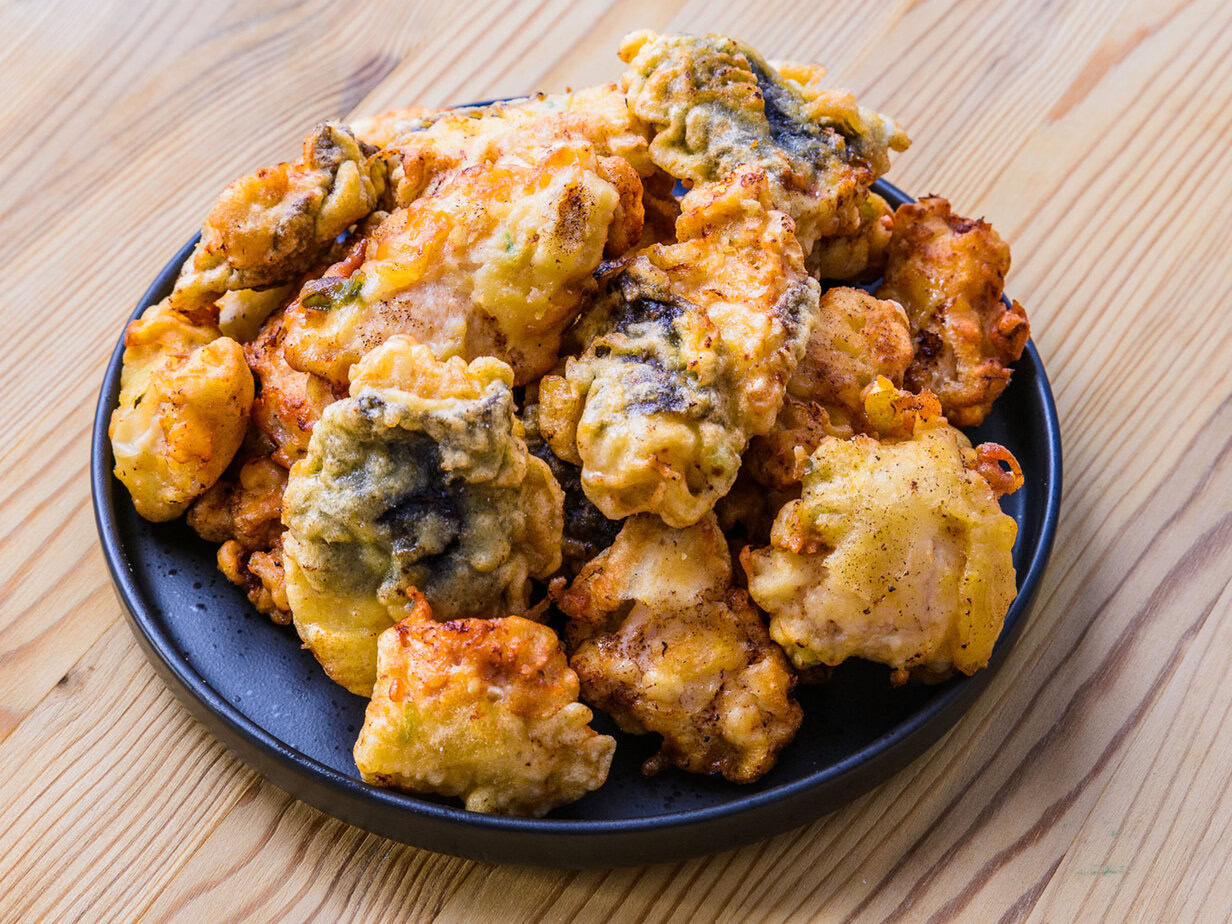
The chicken arrives hot, pale gold, and lightly crisp. Steam softens the finely shredded cabbage underneath. A splash of kabosu ponzu brings bright acidity, while a dab of karashi adds a clean, nose-tingling heat.
It’s a light style of fried chicken, defined by citrus and the distinctive Oita approach.
Unlike chicken katsu, it doesn’t rely on a thick panko crust, and it isn’t karaage: toriten is cleaner, paler, and more delicate, meant to be finished at the table with citrusy acidity and mustard.
- Origin
- Oita Prefecture, Kyushu (Japan)
- Time
- 50 min (35 min prep + 15 min cooking)
- Creation
- 1926, at Toyoken in Beppu
- Type
- Light fried chicken, tempura-style
- Frying
- ≈ 170 °C, 3 to 4 min
- Serving
- Kabosu ponzu or sujoyu, with karashi mustard
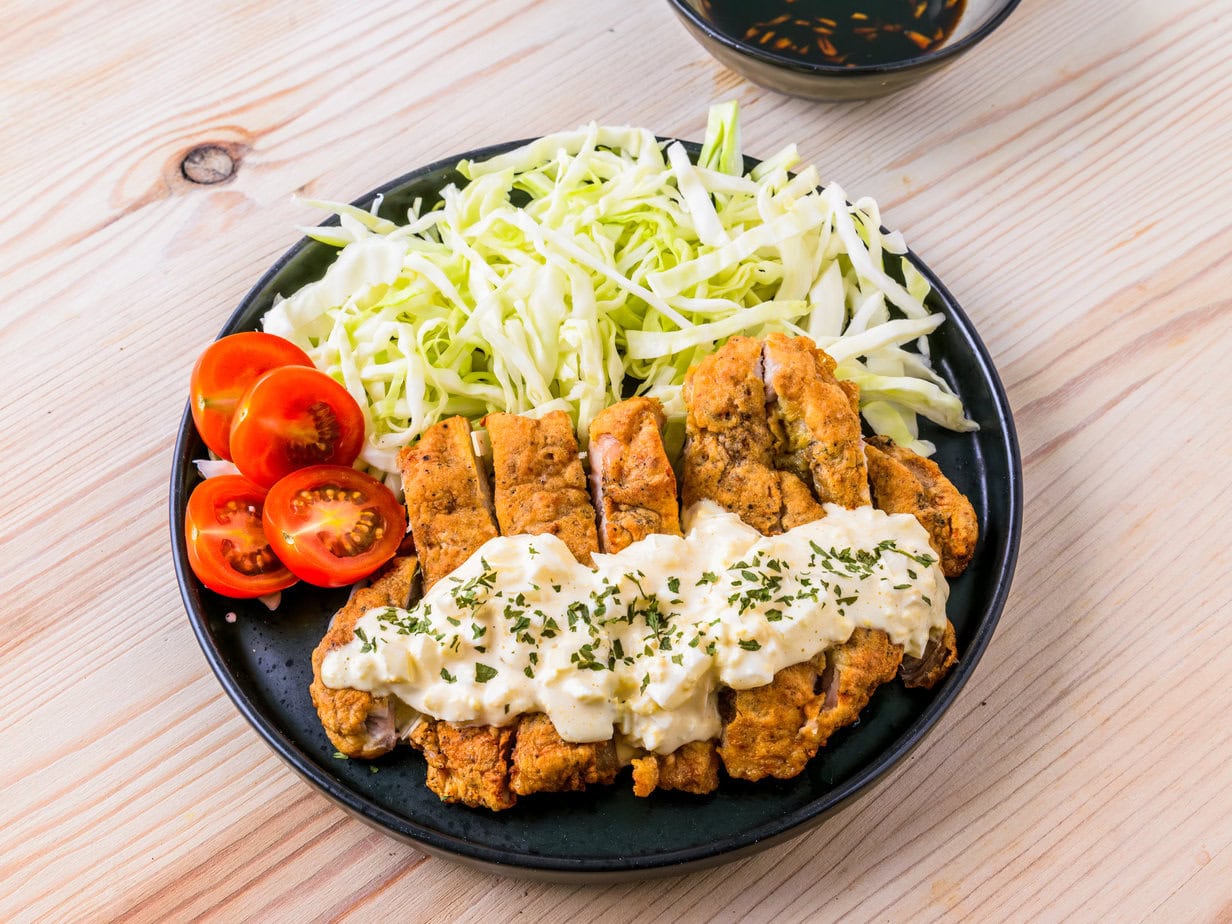
What exactly is toriten ?
Toriten, written 鳥天 or とり天, is a contraction of tori, chicken, and ten, from tempura. It’s a specialty of Oita Prefecture, on the island of Kyushu, where it is as much a part of everyday life as it is of restaurant menus.
Its hallmarks are clear: skinless chicken, restrained seasoning, a wet, tempura-style batter, moderate frying, then a lively finish of kabosu ponzu or sujoyu with a dab of karashi mustard.
It’s not karaage, which relies on skin-on pieces, thigh meat, a dry starch coating, and sometimes a double (or even triple) frying. Versions that stray from the Oita model add skin-on chunks, a dry coating, sweet glazes, or tartar sauce borrowed from Miyazaki’s chicken nanban.
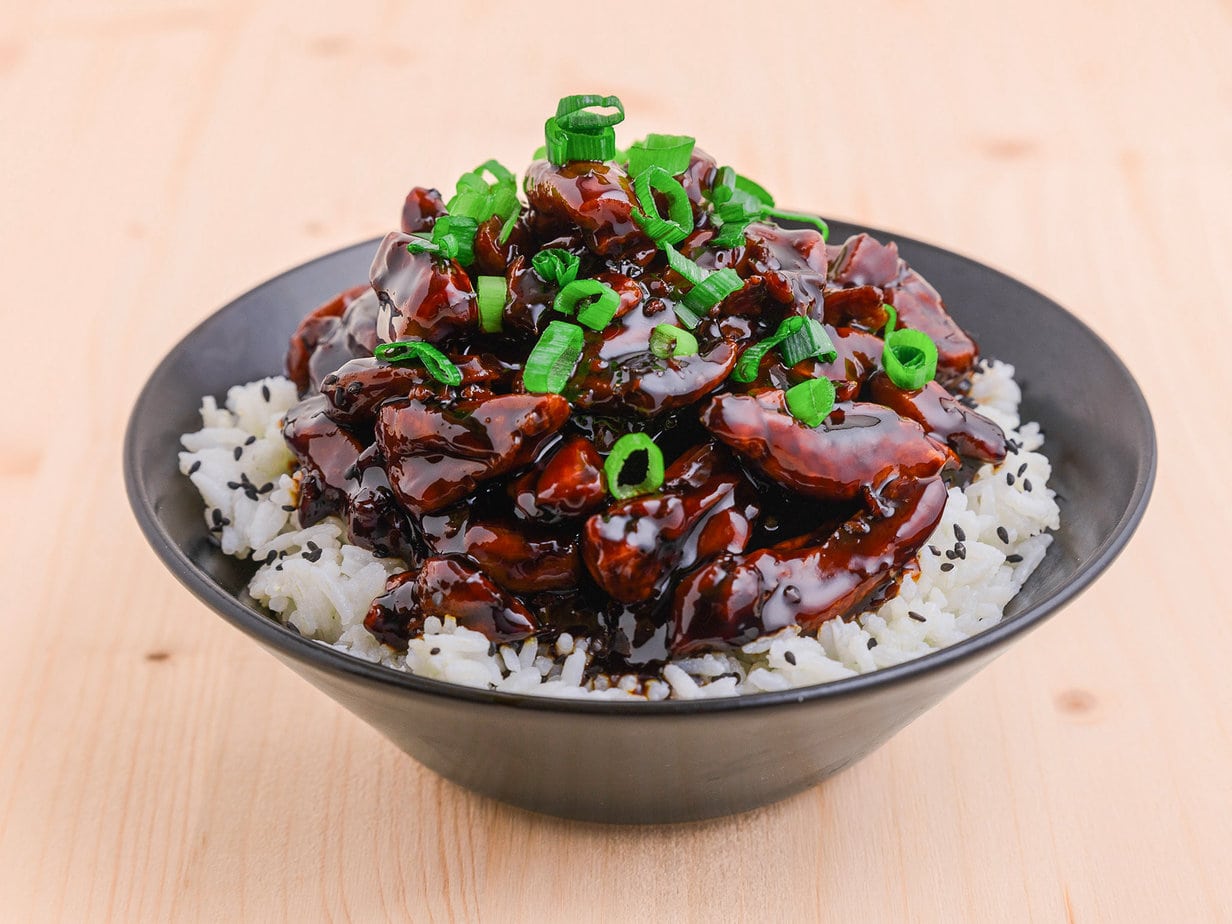
Unlike pork tonkatsu, toriten isn’t after a thick, deeply browned crust: it stays pale, tender, and made to be eaten with sauce.
The two origin stories of Oita toriten
The story of toriten follows two threads: Beppu, where the Toyoken method was born, and Oita City, where a lighter postwar version spread. In Beppu, it begins in 1926 at Toyoken, where founder Shiro Miyamoto adapted Chinese cooking to Japanese tastes.
Local jidori chickens had excellent flavor but firm flesh, and bone-in fried pieces were awkward to eat. Miyamoto deboned the chicken, sliced it thinly using sogigiri, then coated it in a tempura batter that trapped steam and tenderized the meat. The dish was then called “Chicken Kamaboko Tempura,” and the batter also helped stretch what was still an expensive ingredient to feed more guests.
A second lineage emerged in Oita City in the late 1950s, around Kitchen Ikoi and Kitchen Maruyama. Yoshio Watanabe of Kitchen Ikoi noticed that customers kept asking for fried chicken, but without the heaviness of darker, greasier versions.
His answer was sappari: freshness and clarity that make you want to keep eating. With a wet batter, modest seasoning, and acidity added at the table, toriten gained a lightness that soon let it outsell classic fried chicken. Kitchen Ikoi closed in 2014 after 45 years, and the dish returned as early as 2015 under the name Toriten Ikoi.
As it spread, toriten diversified without losing its identity. In Taketa, Marufuku became known for a salty, soy-free version, proof that the soul of the dish lies more in skinless chicken, the tempura method, and its ritual accompaniments than in any fixed seasoning.
Today it shows up in bentos and supermarket deli counters. It also tops bukkake udon, not far in spirit from niku udon, and other dishes built around Asian noodles. Products such as Toyoken’s “Toriten King” and kabosu sujoyu have taken this Oita signature beyond the restaurant.
The main ingredients of toriten
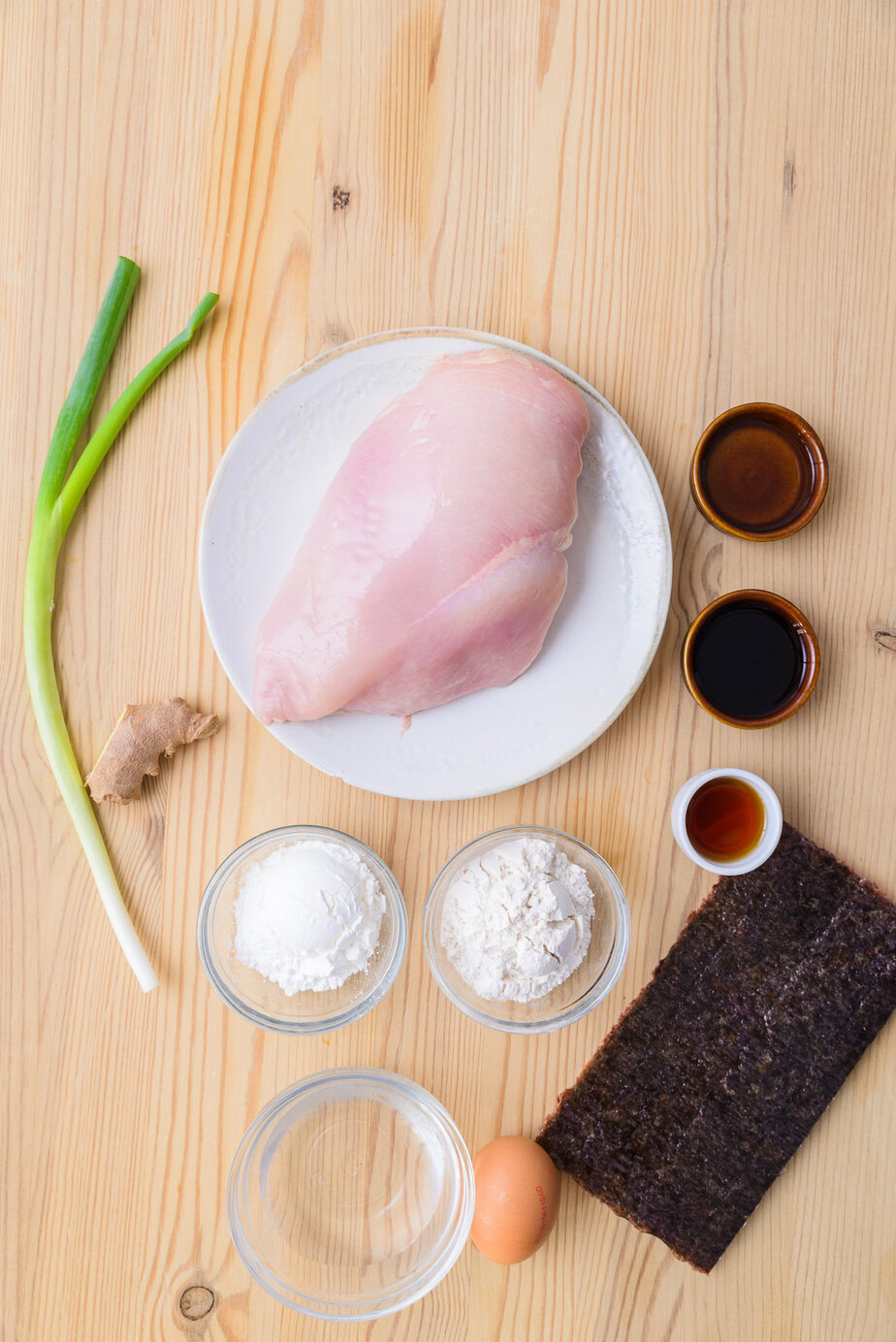
Chicken thigh, or momoniku, brings tenderness and stays juicy under the batter, a quality also prized in oyakodon. Breast meat, or muneniku, gives an even lighter sappari profile when sliced thinly. Removing the skin is essential : the fat keeps the water-based batter from adhering and makes the dish heavier.
To be completely honest about the “thigh or breast” question, I’m lucky to have contacts in Japan’s restaurant world thanks to my time on TV there, and their answer was: “Use whichever you prefer; the skin is the most important variable.”
The marinade—just a little soy sauce, a touch of garlic, sesame oil, and sometimes sake or salt—adds subtle umami without darkening the crust. It is seasoned more lightly than teriyaki chicken. Wheat flour gives the batter structure, potato starch adds crispness that lasts, and a whole egg helps it cling to the meat. Some versions use ice-cold or sparkling water to limit gluten development and keep the coating light.
At the table, ponzu or sujoyu, bright with kabosu, cleanses the palate, while karashi mustard adds a clean heat that rises to the nose. Finely shredded green cabbage, sometimes brightened with cherry tomatoes, absorbs the juices while staying crisp. That trio—citrus, mustard, and cabbage—is what sets toriten apart from ordinary fried chicken.
Serving ritual and side dishes
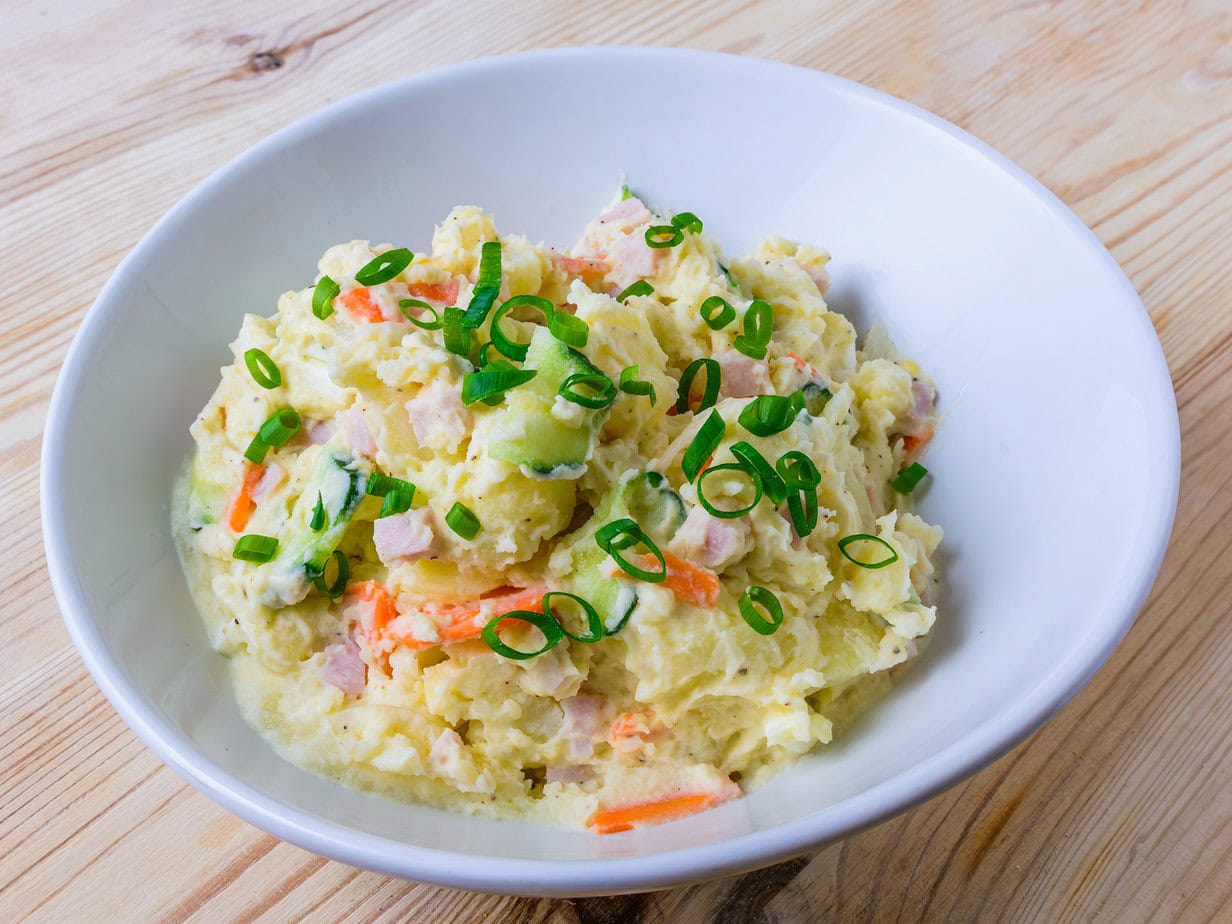
At the table, the hot chicken is first paired with citrus acidity, then with a touch of karashi. Classic sujoyu combines two parts soy sauce, two parts rice vinegar, and one part mirin, along with fresh kabosu, whose acidity cuts through the fat and refreshes the palate—sharper than the mentsuyu served with noodles.
Karashi mustard gives off a nose-tingling heat without lingering on the tongue. Toriten pairs especially well with miso soup, with a brighter finish than a bite dipped in tonkatsu sauce.
Ingredients
- 300 g chicken breast
Marinade
- 1 large knob ginger grated
- 1 tablespoon sake
- 1 tablespoon soy sauce Japanese-style (such as Kikkoman) or light soy sauce
- 1 teaspoon sesame oil
- 1 stalk green onion green part only, cut into pieces
Batter
- 3 tablespoons flour
- 3 tablespoons potato starch
- 1 egg
- 4 tablespoons water
- 0.5 sheet nori
Condiments
- Japanese mustard to taste, for serving
- ponzu sauce to taste, for serving
Instructions
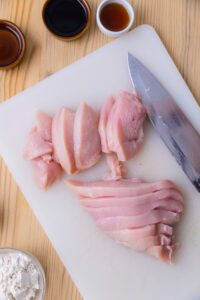
- Slice the chicken breast diagonally against the grain.300 g chicken breast
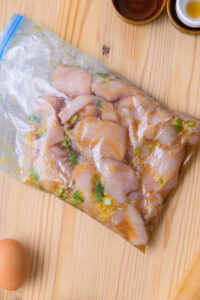
- Place the chicken in a bag or bowl with the ginger, sake, soy sauce, sesame oil, and green onion. Toss to combine, then marinate for 20 to 30 minutes.1 large knob ginger, 1 tablespoon sake, 1 tablespoon soy sauce, 1 teaspoon sesame oil, 1 stalk green onion
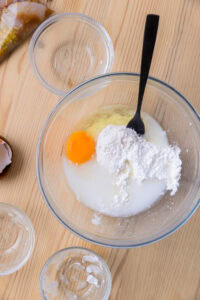
- Make the batter by whisking together the flour, potato starch, egg, and water until smooth.3 tablespoons flour, 3 tablespoons potato starch, 1 egg, 4 tablespoons water
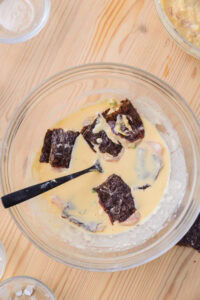
- Wrap the nori around half of the marinated chicken pieces, leaving the rest plain.0.5 sheet nori
- Dip each piece of chicken into the batter, coating it well.
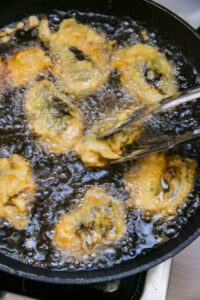
- Deep-fry at 170 °C for 3 to 4 minutes, turning the pieces as they cook, until golden brown and cooked through.
- Serve immediately with Japanese mustard and ponzu sauce.Japanese mustard, ponzu sauce
Notes
- To slice the chicken diagonally, hold the knife nearly flat and cut at an angle, as if shaving off thin strips.
- You can remove the chicken skin before slicing.
- The chicken can also be shallow-fried in a smaller amount of oil.
- Yuzu kosho is also an excellent accompaniment for this dish.
- Thanks to the marinade, toriten stays flavorful even when cold, making it a great choice for bento.