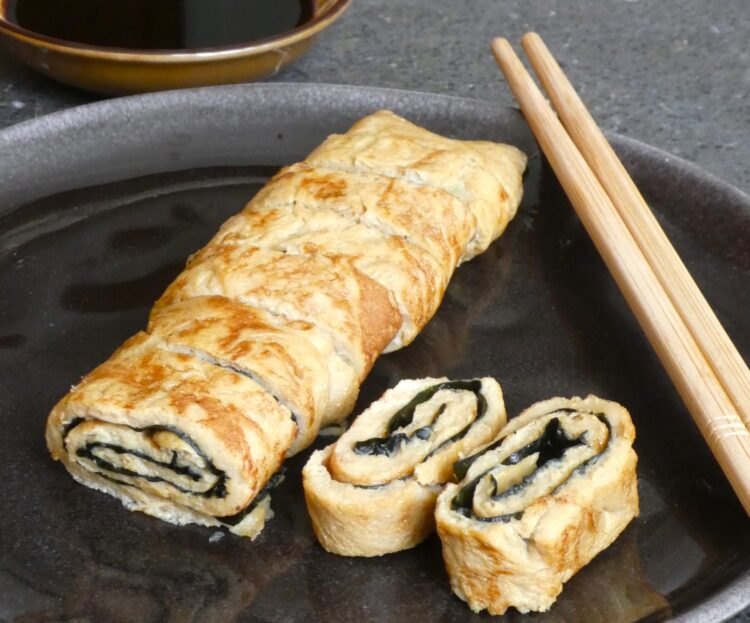
A Korean omelette rolled into a spiral around a sheet of nori, then sliced into bite-sized pieces, in the style of a simplified gyeran mari.
A thin, pliable omelette reveals a spiral of nori and a subtle hint of sesame. This Korean omelette captures the spirit of rolled eggs served in bite-sized pieces, but simplifies the method: a single thin layer replaces the layers added during cooking. For one serving, allow 5 minutes in total. One to add to my keto breakfasts.
What is a Korean omelette?
It is an egg dish rolled into a spiral, then sliced into even, bite-sized pieces. It takes just a few steps: beat the eggs with half a teaspoon of soy sauce or tamari, add a few drops of sesame oil and a splash of water to loosen the mixture. Place a small sheet of nori on top when the eggs begin to set.
The egg layer should stay thin and cook gently, just set enough underneath to lift with a spatula, but still moist on top so the nori sticks and the roll stays tender. Aim for a pale exterior with no browning and a soft centre, with no runny egg. With no starchy ingredients, flour or added sugar, it is suitable for a low-carb meal.
Origins of the dish
Eggs that are rolled and then sliced, sometimes filled with seaweed, are characteristic of gyeran mari, the Korean rolled omelette. This version retains its recognisable features: the spiral, the tenderness and the bite-sized format.
It simplifies the technique: a single thin layer of egg, rather than adding several layers in the pan. It is still quick to prepare, convenient for a single serving and elegant as an appetiser. It has its place in Korean cuisine, alongside small side dishes known as banchan.
The main ingredients
The two eggs form the base: well beaten, they hold together when rolled and give a tender texture that slices without crumbling. Half a teaspoon of soy sauce or tamari seasons the mixture and adds umami; there is no need to add salt, especially as a small bowl of sauce can be served alongside.

Tamari is suitable if you avoid gluten, after checking the label; used in the same quantity, coconut aminos offer a soy-free alternative, replacing the soy sauce rather than being added to it. Two drops of sesame oil are enough to add flavour without overpowering; for a more neutral flavour, two drops of avocado oil will do the job, without combining the two. The teaspoon of water loosens the eggs and helps form a thin, even layer.
The small sheet of nori plays a dual role: a subtle taste of the sea and the dark spiral at the centre of the roll. For cooking, a thin film of avocado oil, mild olive oil or high-oleic sunflower oil makes it easier to release the omelette, a different purpose from the drops mixed into the eggs. In France, nori can be found in the Asian food aisle, ideally in unseasoned sheets, and tamari in organic shops or Asian grocery stores.
Technique tips and serving
Watch the surface: the bottom holds together, the edges come away from the pan and the top retains a moist sheen. This is when the nori sticks and the omelette rolls without tearing; a very brief further cooking then finishes setting the centre while keeping it tender. Excessive heat dries out or browns the layer, waiting too long makes it fragile, and a completely dry surface cracks.
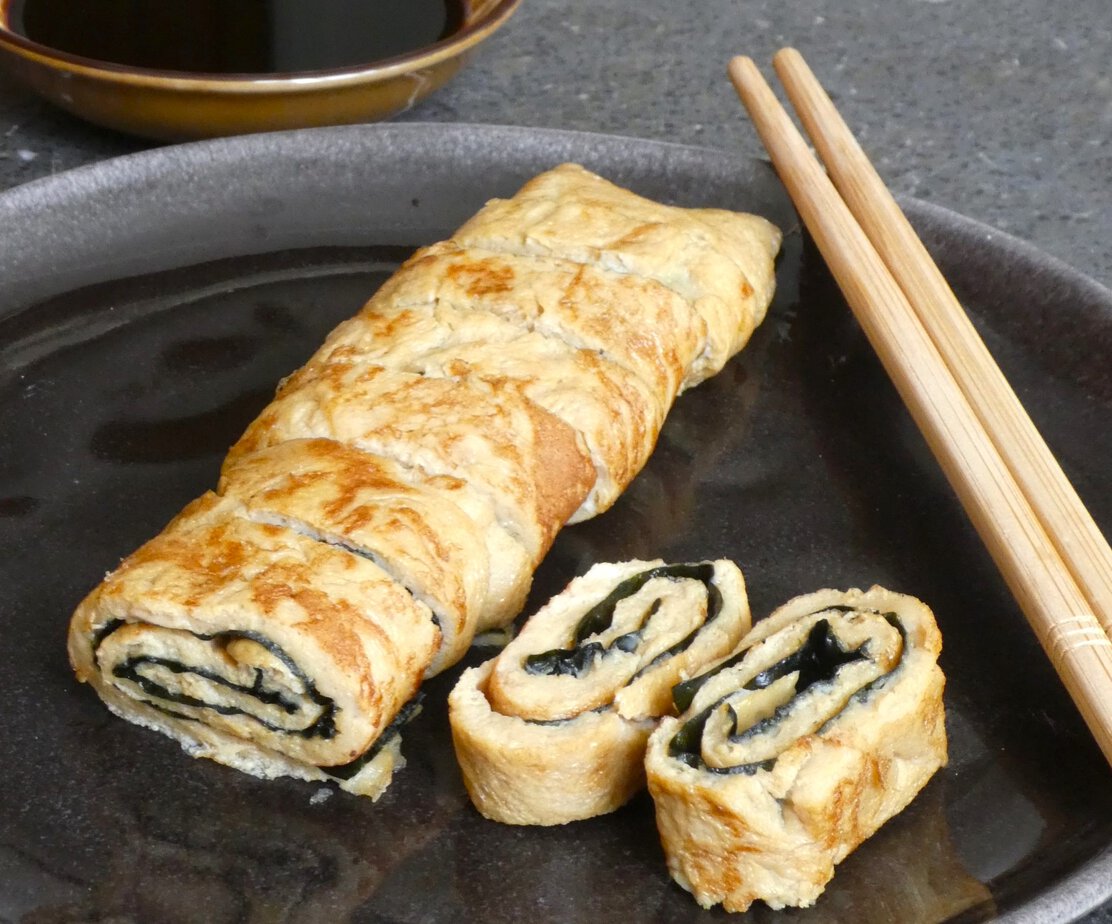
Choose just one seasoning option, soy sauce, tamari or coconut aminos, and just one oil for the drops, sesame or avocado. Slice the roll into even, bite-sized pieces, eight pieces to serve as an appetiser, with a small bowl of soy sauce alongside for very light dipping. For similar dishes, also take a look at mayak gyeran or tamagoyaki.
Find all my keto recipes.
Korean Omelette
Ingredients
- 2 eggs
- 2 drops sesame oil or 2 drops of avocado oil
- 0.5 teaspoon soy sauce or tamari or 0.5 teaspoon of coconut aminos, for a soy-free version
- 1 small sheet nori (seaweed)
- 1 teaspoon water
- avocado oil, mild olive oil or high-oleic sunflower oil for cooking
Instructions
- Beat the eggs with the soy sauce, sesame oil and water.2 eggs, 0.5 teaspoon soy sauce or tamari, 2 drops sesame oil, 1 teaspoon water
- Heat the frying pan and add a little oil. Pour the egg mixture into the pan and spread it in a thin layer over the base.avocado oil, mild olive oil or high-oleic sunflower oil
- Place the small sheet of nori on the egg mixture as it begins to set slightly.1 small sheet nori (seaweed)
- Roll up the omelette while it is still slightly soft. Then let it cook very briefly.
- Transfer the roll to a plate. Cut into sushi-sized pieces. Serve with a small bowl of soy sauce.