


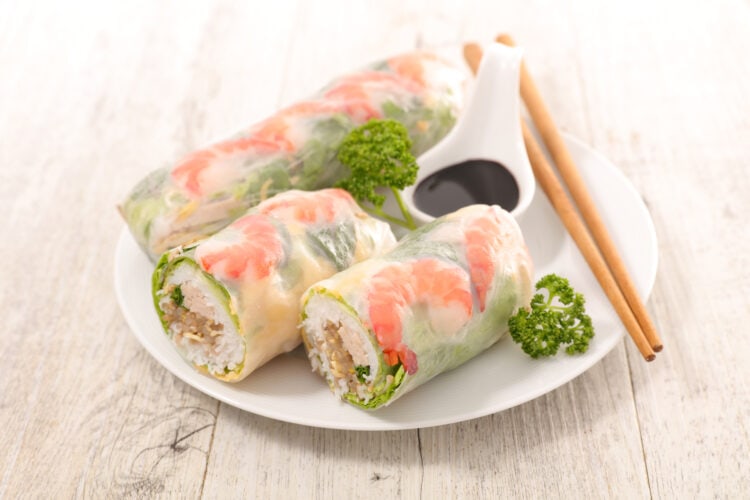
Spring rolls, or Gcfi cuốn, are among the Vietnamese dishes that are easiest to recreate at home. They make a light, healthy starter of seafood and vegetables wrapped in delicate, translucent rice paper.
What are spring rolls?
Unsurprisingly, theyre Vietnamese. Originally named Gcfi cuốn, theyre also known as summer rolls. gcfi cuốn literally means salad roll, a nod to the fresh vegetable filling, and they are thought to have originated in the hot southern climate, where people favor light, refreshing food. But Ill come back to that later in the article.
The classic filling includes lettuce, Thai basil, perilla leaves, dried shrimp, boiled pork, fresh shrimp… all neatly rolled in rice paper. Its pretty straightforward, no fuss. If youre searching for the right wrappers in a shop, ask for bánh tráng.
Origins of spring rolls
Spring rolls are often linked with Vietnamese cuisine, yet their story is more complex and their exact birthplace is still debated. While some claim they were first created in China, their true origin remains uncertain. What is clear is that the roll has evolved over time, adapting to the tastes and ingredients of every region.
Historians sometimes discuss the influence of the Chinese popiah (bò bía in Vietnamese), a fresh spring roll from Fujian/Teochew, on the creation of gcfi cuốn. Popiah and Vietnamese gcfi cuốn certainly share some traits: both use a wrapper to hold vegetables and proteins and are often paired with a hoisin based sauce.
Back in the day, street vendors in Saigon sold bò bía stuffed with jicama, egg, dried shrimp, Chinese sausage and a rich peanut sauce. That roll may have inspired locals to craft their own version with regional produce. Gcfi cuốn soon took on a distinctly Vietnamese identity: lighter and fresher, wrapped in rice paper instead of wheat crêpes, free of stir fried fillings or oil, and bursting with herbs.
As a Vietnamese article notes, gcfi cuốn is prized for preserving the pure, natural flavors of its ingredients without oil and with an abundance of greens. In short, even if the idea of a rolled snack was introduced by Chinese immigrants, Vietnamese gcfi cuốn has forged its own identity and is now hailed as a quốc hồn quốc tfay (national soul) dish of Vietnam.
The traditional version of spring rolls
The recipe at the end of this article is slightly adapted but still close to what restaurants serve here. This section is for anyone who wants to dive deeper into the world of spring rolls.
Through historical descriptions and studies devoted to gcfi cuốn, some key ingredients remain unchanged in the version considered authentic. The traditional filling includes:
- Pork e28094 generally boiled pork belly (with the rind), then thinly sliced. Some specify that it should be thedt heo ba chec hai f011ea1u da (pork belly with skin on both sides) to achieve the perfect balance between lean and fat.
- Shrimp e28094 usually boiled shrimp (or prawns), peeled and then halved lengthwise. Their bright orange colour, visible through the thin wrapper, gives the roll its appetising look. The pork—shrimp pairing is so iconic that the classic version is often called gcfi cuốn tôm thedt (shrimp and meat roll).
- Rice vermicelli (bún) e28094 these soft rice noodles add volume and a pleasantly elastic texture. They also help absorb the sauce. A small bundle of vermicelli is slipped into each roll.
- Fresh herbs and greens: an array of raw leaves and herbs is essential to give gcfi cuốn its fragrance. Commonly used are lettuce (soft green leaf lettuce as the base), Thai basil (húng queb), rice paddy herb (ngò om), mint (húng bea1c hà), and sometimes coriander (ngò red). Southern recipes often add chives (heb), with a sprig sticking out of the end of the roll for a characteristic touch. In some regions, perilla leaf (tía tô) and diebp ca1 (known as fish mint) are also included for a stronger herbal note (more common in the North and Centre). The abundant presence of herbs and leaves gives gcfi cuốn its salad roll character: without them it would lack freshness and authenticity.
- Vegetables: traditional gcfi cuốn generally contains cucumber (cut into thin strips) to bring crunch and freshness. Some families add blanched bean sprouts. Depending on the region, you may also find sticks of pickled carrot or radish, and in the Mekong Delta they sometimes add green mango for a slight acidity.
Dipping sauce
In southern Vietnam, the original traditional sauce is a t1b201ng xay, a thick, savory sauce made from fermented soybeans and often enriched with crushed peanuts. In the earliest versions, glutinous rice and soybeans were cooked into a purée, then left to ferment until they formed a smooth paste. A classic recipe for gcfi cuốn sauce sautés garlic and shallot, then blends t1b201ng (Vietnamese fermented soybean paste, similar to hoisin), a splash of stock or coconut water and sugar before adding roasted peanuts and chilli.
The result, sometimes called t1b201ng 11e1u phed1p (peanut sauce based on t1b201ng), is both savoury, slightly sweet and thicker than n1b7bc cha9m. Over time, a simpler hoisin—peanut sauce (made with store—bought hoisin sauce and peanut butter) has spread, especially abroad, because it comes close to the taste of the original t1b201ng sauce.
Besides peanut sauce, there is another authentic sauce: n1b7bc me1m chua ngedt, the famous slightly sweet fish—sauce with garlic and chilli, known as n1b7bc cha9m. Made from fish sauce, lime juice, water, sugar, garlic and chilli, it is more common in central and northern Vietnam to accompany fresh rolls, or serves as an alternative in the south. Both sauces are considered authentic; the choice often depends on local preferences or the filling. Thus, n1b7bc cha9m is more likely to be offered if the roll contains strongly flavoured herbs or seafood, while peanut sauce is preferred for the classic pork—and—shrimp version. It is in fact common to see both sauces on the table.
Regional names and variations
In the South (where this dish probably originated), it is universally called g1ecfi cuốn. In the North, it often goes by nem cuốn (nem roll), because the term nem can designate rolled preparations in northern Vietnamese cuisine. In the Centre, people sometimes say bánh tráng cuốn (rice—paper rolls). Despite these vocabulary differences, the concept remains the same. Regional taste preferences, however, influence the accompaniment: in the North, nem cuốn is generally served with a mixed fish sauce (n1b7bc me1m pha) and local herbs such as kinh gif3i (Vietnamese balm) or perilla (tía tô). In the South, soybean sauce (t1b201ng) and a slightly sweeter taste are preferred.
Vietnam also boasts countless fillings that still belong to the broad family of món cuốn (rolled dishes). The classic shrimp—and—pork version (tôm thedt) is the best known, yet many other recipes have long been part of Vietnams culinary heritage:
- G1ecfi cuốn chay: Vegetarian rolls, often filled with fried tofu or tempeh for protein, plus extra vegetables such as carrot, jicama or chives. They have existed for centuries within Buddhist cuisine. Vietnamese vegetarian rolls may swap the meat for slices of fried tofu, omelette or sauteed mushrooms.
- Bec cuốn: Rolls packed with shredded pork skin (bec) tossed with roasted rice powder, alongside lettuce and herbs. A southern specialty, bec cuốn is considered an authentic dish in its own right, simply with a different filling.
- Nem nb01d1ng cuốn: Rolls featuring grilled pork; seasoned pork patties (nem nb01d1ng) are wrapped with lettuce, cucumber, pickles and herbs in rice paper. They are often served with a sweet chilli—peanut sauce. This dish is popular in the Central and South—Central regions of Vietnam.
- Phf5 cuốn: A Hanoi specialty where wide noodle sheets (used for the phf5) replace the dried rice papers. Beef, herbs and lettuce are rolled inside, then dipped in fish sauce.

- Bò bía: Mentioned above, it is sometimes considered in Vietnam to be part of the same family as the g1ecfi cuốn. Its a direct adaptation of the Chinese popiah, made with a wheat crêpe filled with sauteed jicama and carrot, Chinese sausage, egg and dried shrimp, then dipped in a hoisin—peanut sauce. Sold by different vendors, it is nevertheless seen as the cousin of the g1ecfi cuốn.
What do spring rolls taste like?
The taste and texture of spring rolls create a unique culinary experience. When the roll is wrapped tightly, the rice paper offers slight resistance at the first bite, giving a pleasant chew.
Once the wrapper yields, the filling releases a medley of textures and flavours. The rice vermicelli, which often form much of the core, provide a soft, light base that contrasts with the crunch of fresh vegetables and proteins.
Vegetables such as carrot, cucumber, lettuce and mint lend fresh, herbal notes that balance the richer ingredients. The protein, whether shrimp, pork, chicken or tofu, adds heft and umami, rounding out each bite.
Finally, the dipping sauce brings everything together. Sweet, spicy or salty, it ties the ingredients into a balanced, delicious mouthful.
Ingredients for spring—roll filling
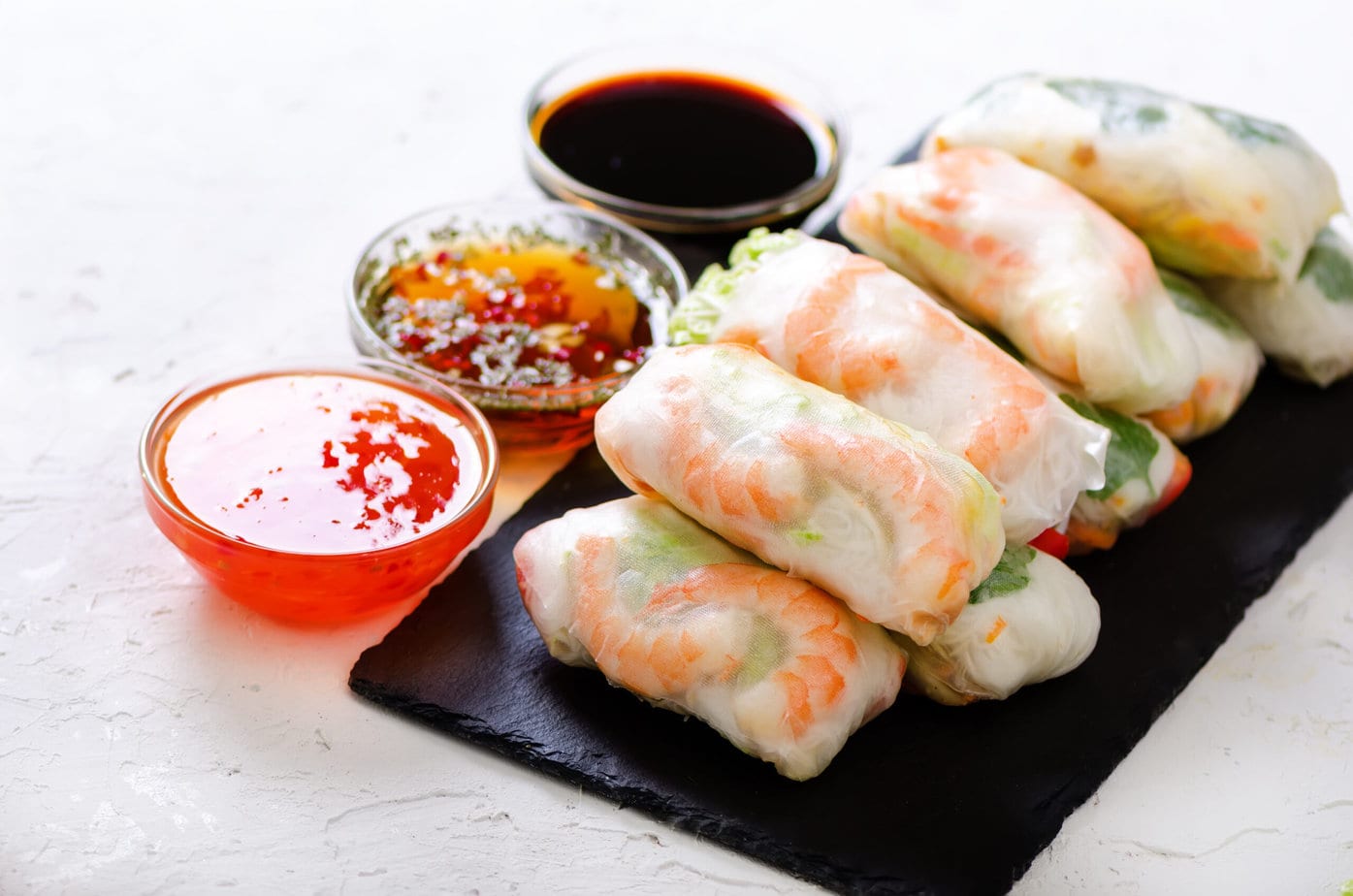
For traditional Vietnamese spring rolls, use a mix of crunchy lettuce, grated carrot, shredded red cabbage and bean sprouts paired with shrimp. Rice vermicelli make each roll a touch more filling yet still airy. (For once Im offering something light, and no ones going to complain!)
I also tuck in two or three sprigs of fresh herbs such as mint and coriander so every bite has a bright herbal note. Dont overfill the sheets or roll them too tightly or they might tear.
Yes, theres hoisin sauce for dipping. You can replace it with half as much oyster sauce and 1 tablespoon of sugar. If you have trouble finding hoisin, the linked article includes a homemade version.
Preparing the shrimp for spring rolls
Buy precooked shrimp or simply blanch raw ones in boiling water for about 1e280942 minutes, until they turn pink and opaque. Slice them in half lengthwise so they lie flatter in the roll.
Rice papers for spring rolls
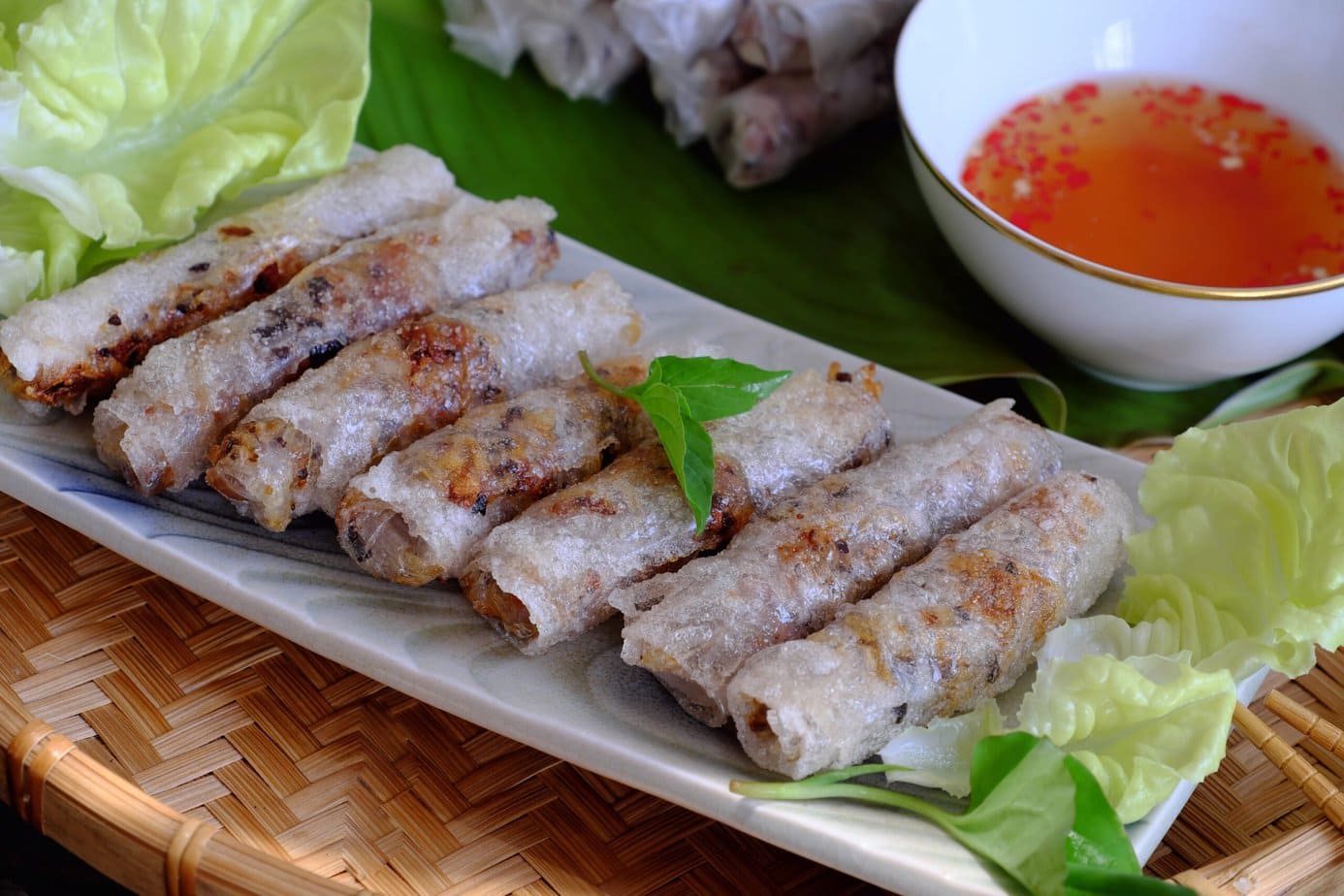
Rice papers for Vietnamese spring rolls are stocked in most big French supermarkets and Asian grocery stores. They are very thin, dry, translucent circles made from rice. Each sheet measures about 22 cm across and can be filled with whatever your heart desires.
The main trick is mastering the soaking time so the sheets roll easily. It takes only a few seconds, so have all the filling ready before you start assembling.
Alternative filling suggestions
Proteins : grilled chicken, char siu pork, Chinese red pork, tofu, Vietnamese pâté
Vegetables : sliced bell pepper, cucumber, spiralized vegetables, do chua
Fruits : mangoes, pineapple, strawberries
How to store spring rolls?
Its best to eat them fresh within an hour or two of rolling. However, you can cover them with plastic wrap, refrigerate and enjoy them within 24 hours.
I have also noticed that the rice paper becomes firmer as it loses moisture in the fridge.
Culinary sources
- Món cuốn Vie1t: Cud9c 8bvicn du9 của món ăn bình dân e28094 phunuonline.com.vn (https://www.phunuonline.com.vn/mon-cuon-viet-cuoc-vien-du-cua-mon-an-binh-dan-a1433418.html)
- History of Spring Rolls e28094 juleeho.com (https://juleeho.com/food-history-101-blog/history-of-spring-rolls)
- G1ecfi cuốn Sài Gòn e28094 dantri.com.vn (https://dantri.com.vn/van-hoa/goi-cuon-sai-gon-1414668002.htm)
- G1ecfi cuốn e28094 vi.wikipedia.org (https://vi.wikipedia.org/wiki/G%E1%BB%8Fi_cu%E1%BB%91n)
- G1ecfi cuốn: A Fresh and Tasty Story e28094 mrlinhadventure.com (https://www.mrlinhadventure.com/en/vietnam/travel-blog/mrlinh-adventures/1317-goi-cuon–a-fresh-and-tasty-story.aspx)
- G1ecfi cuốn Sài Gòne28094 dantri.com.vn (https://dantri.com.vn/van-hoa/goi-cuon-sai-gon-1414668002.htm)
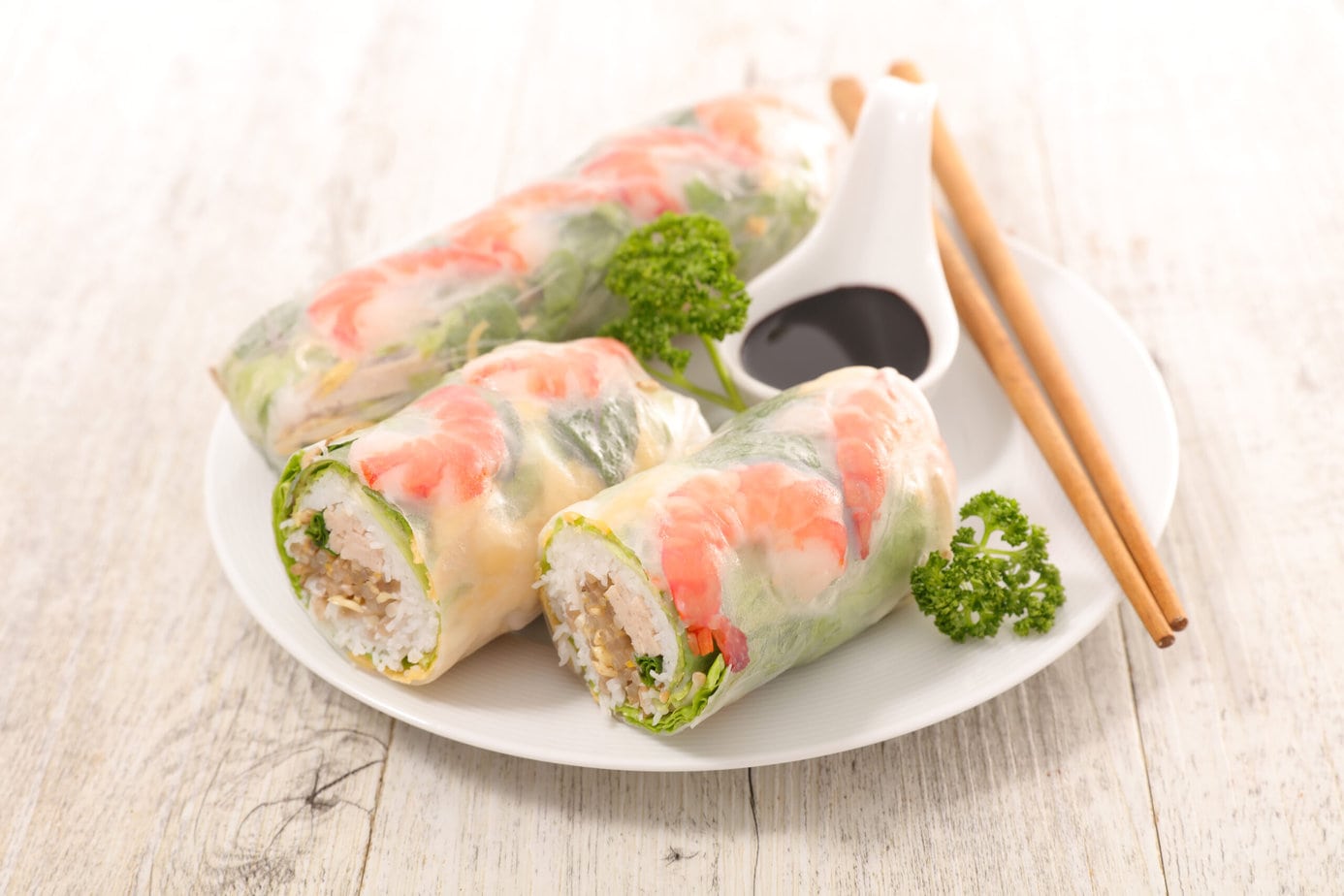
Fresh Vietnamese Spring Rolls (Gỏi Cuốn) with Shrimp
Ingredients
Peanut Satay Dipping Sauce
- 120 ml hoisin sauce
- 60 ml peanut butter
- 60 ml water
- 15 ml rice vinegar
- 10 g crushed peanuts
Shrimp Spring Rolls
- 170 g rice vermicelli
- 265 g pink shrimp 16–20 count
- 10 sheets round rice paper wrappers
- 10 leaves lettuce stems removed, halved
- 60 g carrots grated
- 75 g red cabbage finely grated
- 45 g bean sprouts
- 20 leaves mint
- 2 g cilantro leaves
Instructions
Peanut Satay Dipping Sauce
- Whisk all the sauce ingredients in a bowl until smooth, adding a splash more water if you like a thinner consistency.120 ml hoisin sauce, 60 ml peanut butter, 60 ml water, 15 ml rice vinegar, 10 g crushed peanuts
- Pour into a serving bowl and sprinkle with a little extra crushed peanuts.
Shrimp Spring Rolls
- Bring 3 litres of water to a boil in a medium saucepan. Drop in the rice vermicelli and cook until tender but still springy, 4–6 minutes or as the package directs.170 g rice vermicelli
- Drain in a colander, rinse under cold water, and chill until needed. Keep the cooking water.
- Return the pot to a boil, add the shrimp, and poach for 1–1½ minutes, just until they turn pink and opaque.265 g pink shrimp
- Scoop the shrimp out, drain well, and chill in the fridge.
- When cool enough to handle, peel (if needed) and slice each shrimp in half lengthwise. Set aside.
- Fill a pie dish or shallow bowl large enough to fit a rice-paper sheet with cold water.
- Spread a damp kitchen towel over a cutting board. Submerge one rice-paper sheet for 15–20 seconds.10 sheets round rice paper wrappers
- Lift it out, shake off excess water, and lay it flat on the towel. It may feel a little firm; it will continue to soften as you build the roll.
- Place a lettuce half on the lower third of the wrapper. Top with 2–3 tablespoons of vermicelli, 1 tablespoon of carrots, 1 tablespoon of cabbage, and a sprinkle of bean sprouts.10 leaves lettuce, 60 g carrots, 75 g red cabbage, 45 g bean sprouts
- Roll the wrapper up halfway into a tight log, then fold in the sides like an envelope.
- Arrange 2 shrimp halves, cut-side down, along the fold, tuck in a few cilantro and mint leaves, and finish rolling into a neat cylinder.20 leaves mint, 2 g cilantro leaves
- Repeat with the remaining ingredients, placing each roll seam-side down. Serve right away with the peanut satay sauce.


Déjà réalisée environ 4 fois et c’est toujours un succès, surtout avec la sauce cacahuète bien onctueuse. Les rouleaux sont frais, faciles à rouler avec l’astuce du torchon humide, et on en redemande à chaque fois 🙂
Super frais et très facile à suivre, la sauce cacahuète est addictive et j’ai volontairement fait double portion pour en avoir le lendemain, les rouleaux étaient encore aussi bons après une nuit au frigo 🙂
Made these last night and loved how balanced and nutritious they felt with all the fresh herbs and crunchy veg, yet still totally satisfying with the shrimp and peanut sauce 🙂
Super frais et vraiment facile à rouler grâce à l’astuce du torchon humide, et la sauce cacahuète est addictive; j’en ai fait exprès en plus et les rouleaux restants étaient tout aussi bons le lendemain 😋