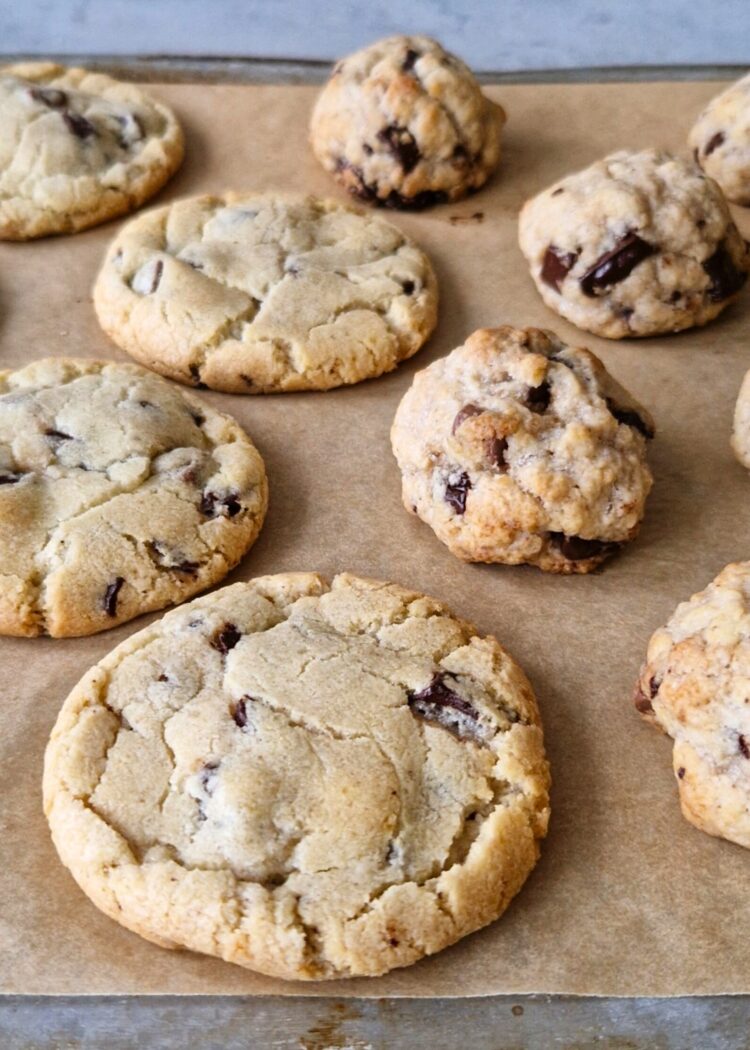
Erythritol replaces sugar weight for weight, or so the packet claims. I put it to the test in three basic recipes: a meringue, a caramel, and a batch of chocolate chip cookies. Only one turns out reasonably well, one fails completely, and the third leaves an aftertaste that my tasters mistook for mint.
Erythritol in a nutshell
It’s a polyol, also known as a sugar alcohol. It occurs naturally in grapes and melons; the kind we buy is produced through fermentation. It comes in white crystals that look a lot like granulated sugar.
Two numbers are enough to explain how it behaves. It’s about 70 % as sweet as sugar, so a recipe made with the same weight will be less sweet. And it provides practically zero calories, which explains its popularity in low-carb and ketogenic recipes.
Two properties matter even more in baking, and neither is mentioned on the packaging: erythritol dissolves poorly when cold, and dissolving it absorbs heat. Hence the cooling sensation in the mouth, the one that makes people say there’s mint in it.
The testing method
Only one variable changes: white sugar is replaced with erythritol by weight, gram for gram. Everything else is identical, and each test was carried out alongside its sugar version to provide a side-by-side control. A few grams can make all the difference in these tests, so everything is weighed, never measured by volume, and gram-level precision changes the result even more in gluten-free baking.
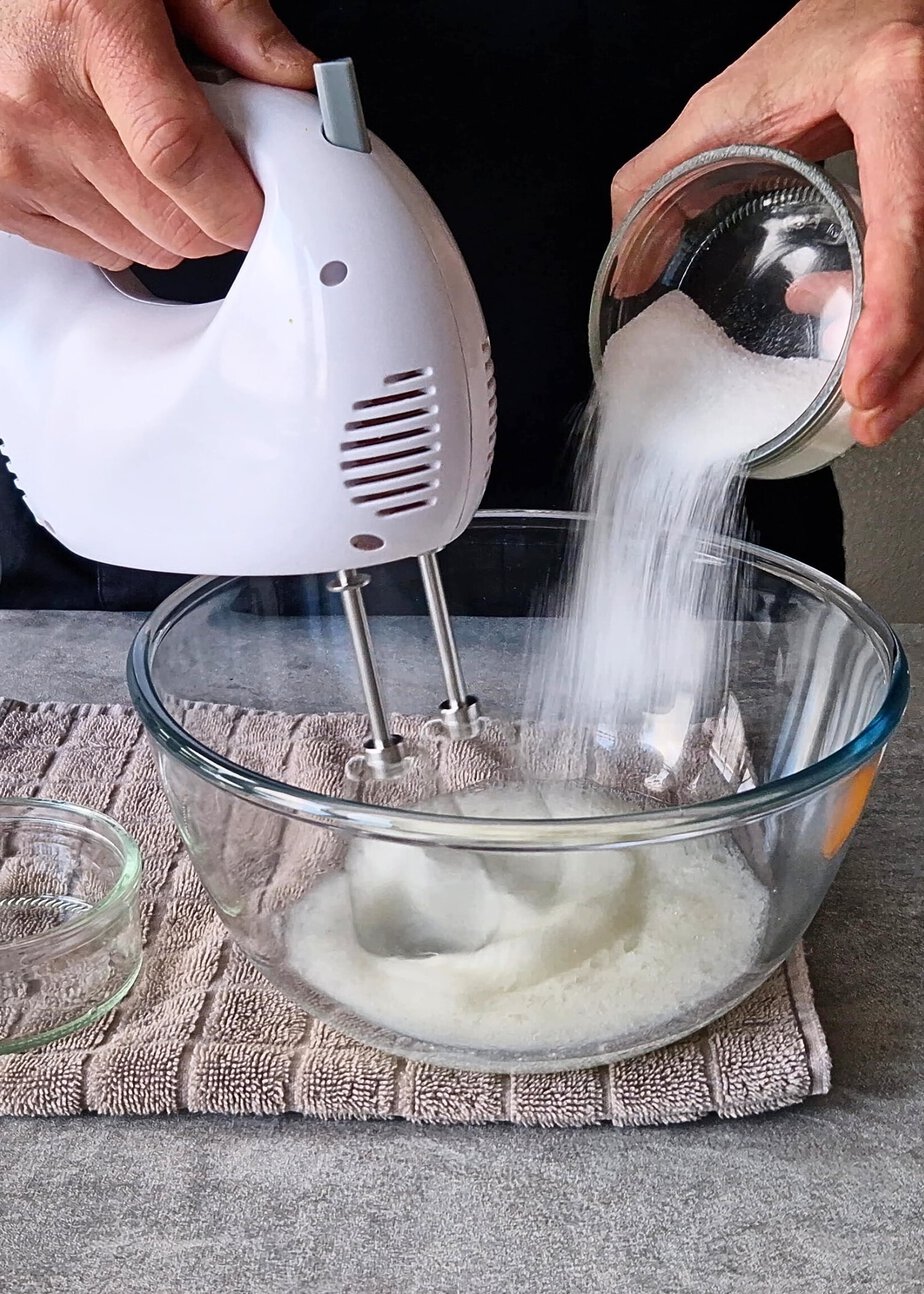
- Meringue: 50 g egg whites, 50 g erythritol sprinkled in while whipping, baked at 110 °C for 45 minutes.
- Caramel: 50 g erythritol heated without water over high heat until completely melted.
- Cookies: 60 g melted butter, 75 g erythritol, 30 g egg, 4 g vanilla extract, 2 g baking soda, 2 g salt, 110 g flour (wheat flour in one batch, a gluten-free blend in the other), 50 g chocolate chips, 9 to 10 minutes at 175 °C.
Meringue: it whips up, but it’s gritty
First, the good news: the egg whites whip up. Erythritol doesn’t break down the foam; you get firm peaks with a slight curl, a little less glossy than with sugar. On this specific point, it does the job.
You can feel the problem with your fingers. The mixture stays grainy because the crystals never dissolve completely in the egg whites. Powdered erythritol performs better, but never matches sugar.
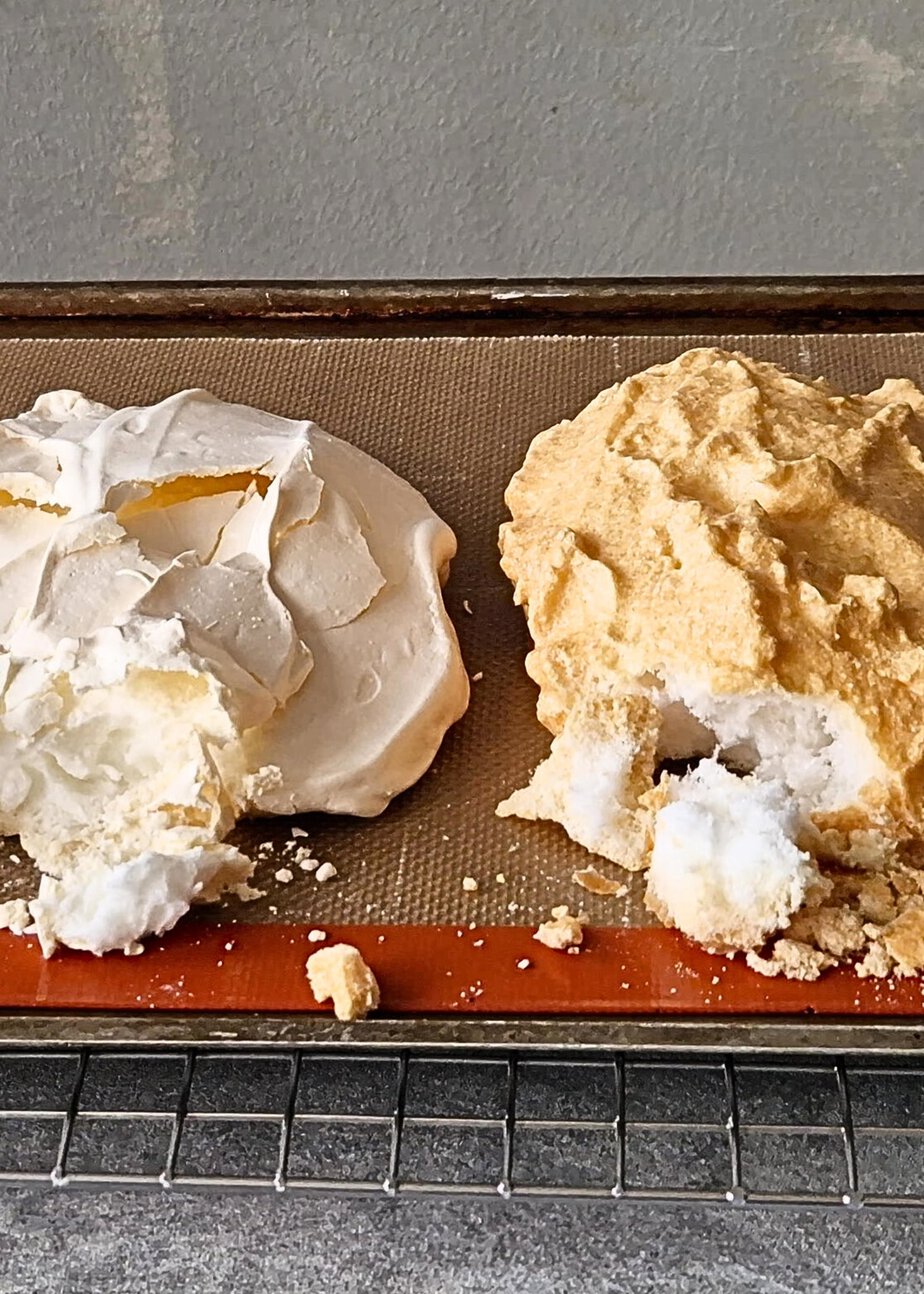
Baking seals its fate. While the sugar meringue comes out ivory and dry, the erythritol version turns a distinct golden yellow and stays lumpy in the centre. For a meringue or pavlova, where texture is everything, that’s a deal-breaker: I’m sticking with sugar, as in our vegan meringue with potato protein or our vegan pavlova.
Caramel: an outright failure
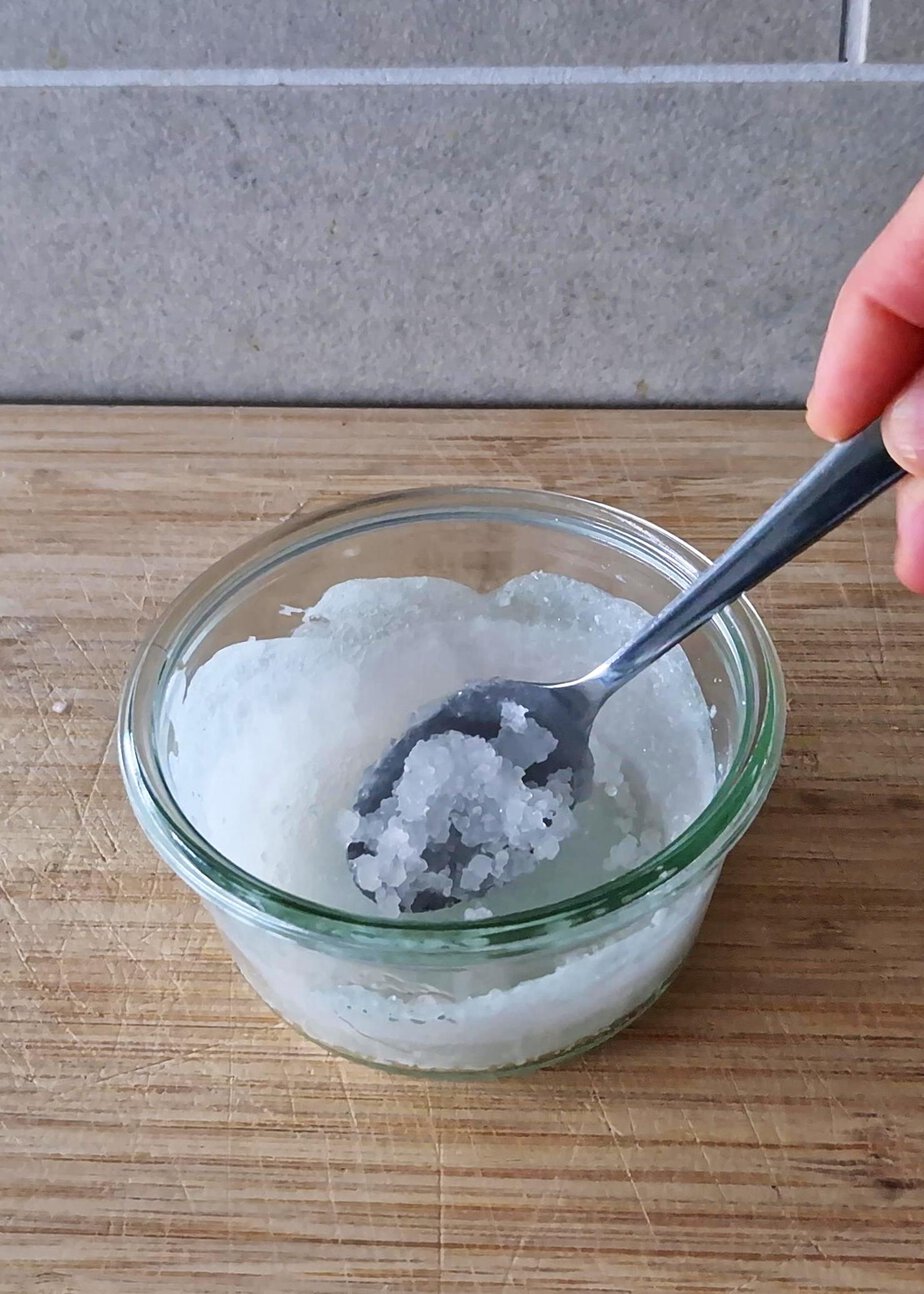
Erythritol melts at around 120 °C into a perfectly clear liquid. It doesn’t brown, has no smell, and develops no caramel flavour. You can leave it on the heat; nothing more will happen.
As it cools, it does worse than nothing: it recrystallises into hard white grains that look like coarse salt. There’s no way to use it as a coating.
The explanation fits into one sentence. Caramelisation is the breakdown of sugars under heat, and a polyol is chemically too stable to break down in that way. It doesn’t take part in browning reactions with proteins either, the ones that give biscuits and crusts their colour. For real caramel, you need real sugar: our 3-ingredient caramelised almonds only work on that basis.
Cookies: edible, but unconvincing
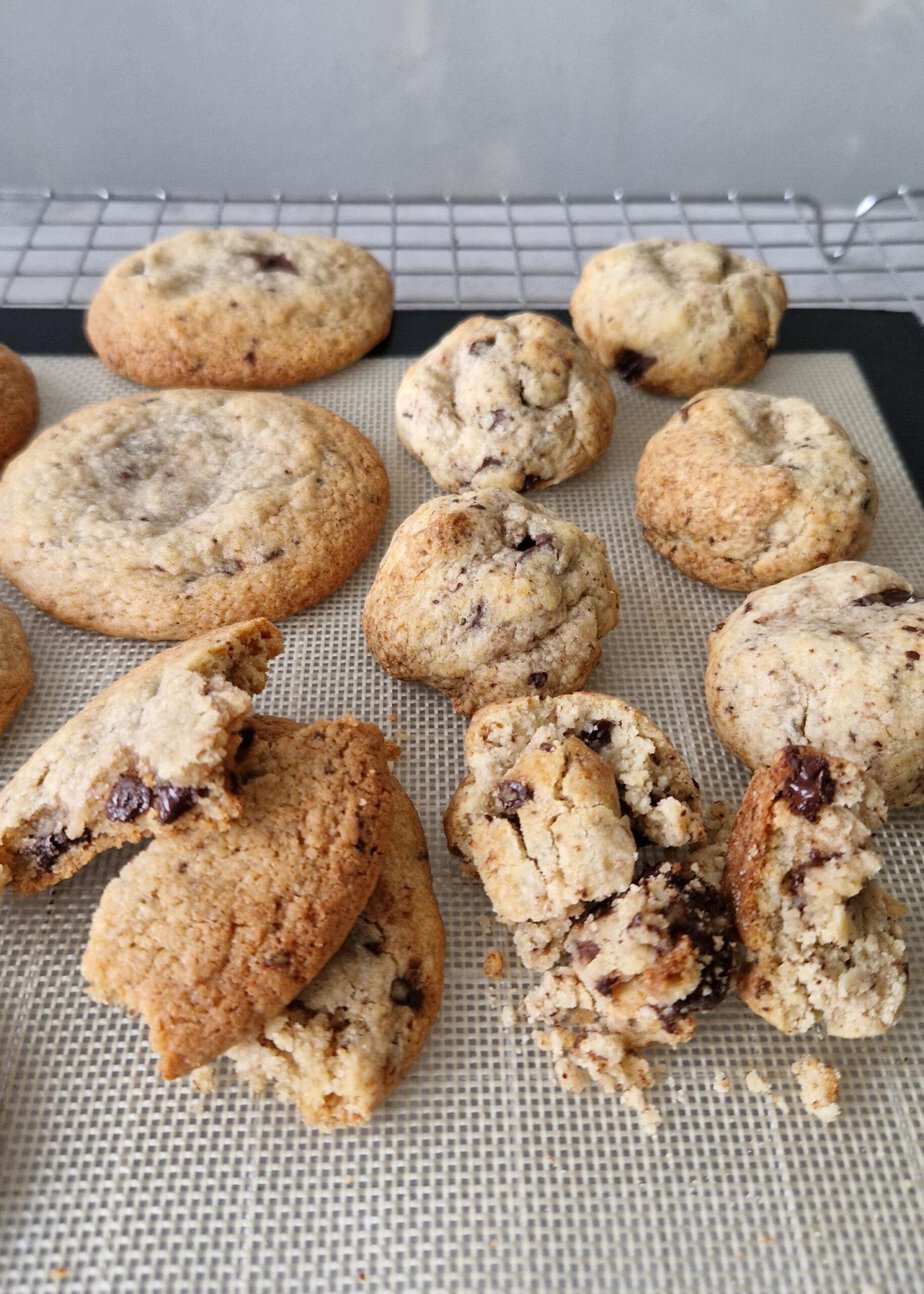
The dough already tells the story: it’s dry, sandy, and hard to roll into balls. Sugar retains water; erythritol does so much less effectively, and you can feel it in your hands before it even goes into the oven.
The cookies don’t spread as they bake. They stay domed, with a crumb that’s closer to a small cake than a soft cookie. The flavour is fine: sweet and clean, but followed by that cooling effect that half my tasters attributed to mint, even though there wasn’t any.
A useful detail for anyone baking gluten-free: there’s no difference between the wheat flour version and the one made with a good gluten-free flour blend. The problem comes from replacing the sugar, not from the flour.
You can salvage the texture by adding fat, either butter or oil. I wouldn’t: at that point you’re no longer making the same recipe, and you’ve lost some of the calorie-saving benefit of the swap. When I want a biscuit that holds together without compromise, I go for ganache-filled shortbread biscuits.
Verdict: where to use it, and where to avoid it
Erythritol isn’t a sugar replacement; it’s a sweetener with bulk. That distinction makes all the difference. Wherever sugar does nothing but sweeten, it works. Wherever sugar does a job, whether browning, helping things melt and spread, retaining water, or providing structure, it falls short.
That rules out two types of preparation. Meringues and pavlovas whip up, but they feel gritty between your teeth and turn yellow in the oven. Caramel and nougatine never set: it melts without colouring, then recrystallises into hard grains.
Biscuits that need to spread are passable, with reservations: dry dough, domed cookies, a cooling aftertaste. I haven’t tested soft cakes or sponge cakes here, but their structure comes mainly from eggs and fat, so there’s a chance of success. And anything that doesn’t need cooking, such as mousses, chilled creams, and truffles, can accommodate it without losing anything: none of the missing functions is needed.
In practice, I save it for chilled and no-cook recipes. A chocolate mousse or matcha truffles with no added sugar need neither browning nor spreading: that’s where the swap does no damage. In a gluten-free sponge cake, it’s worth a try, provided you taste it before building an entremets on top of it.
Frequently asked questions
How much erythritol should you use to replace sugar?
The packet says “weight for weight”, and that’s doable, but the result will be about a third less sweet, since it’s only 70 % as sweet as sugar. Increasing the amount to compensate adds more crystals, and therefore more dryness and graininess. It’s better to stick to 1:1 and accept a less sweet dessert, or choose an erythritol-stevia blend formulated to match sugar’s sweetness in equal quantities.
Does erythritol have a laxative effect?
It’s the best-tolerated polyol: it’s absorbed in the small intestine and eliminated through urine, so it undergoes little fermentation, unlike maltitol or sorbitol. Discomfort starts with high doses taken in one sitting, roughly the amount in a large slice of very sweet cake. With a normal portion of dessert, it isn’t an issue for most people.
Can you use it at high temperatures?
It withstands cooking without breaking down or losing its sweetness; that isn’t the issue. The issue is that it melts at around 120 °C without ever colouring, and recrystallises as it cools. Anything that relies on caramel, browning, or a golden crust is therefore beyond its capabilities.
Where can you buy it in France?
In organic shops in the sugar and sweetener aisle, in supermarket health food sections, and online, where the price per kilo is lowest. It’s sold under the name erythritol or its additive code E968, in granulated or powdered form. The finer, powdered version is the one to choose for anything where it needs to dissolve: creams, mousses, and icings.
Guide developed with chef Rommel Reyes. Find his work on Instagram, his Substack newsletter, and his YouTube channel.